

Overview

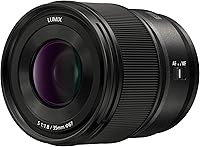
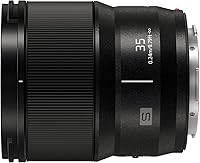
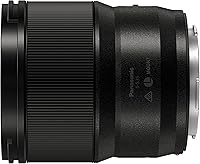
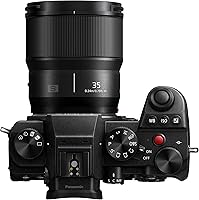
The Panasonic S-S35 35mm F1.8 Prime Lens arrived in late 2021 and quietly filled one of the more obvious gaps in the L-mount ecosystem — a compact, versatile prime that working photographers could actually carry all day. Within the LUMIX S-series lineup, it sits as the everyday workhorse option, appealing equally to stills shooters and video-focused creators who refuse to compromise on optical quality. The build quality punches above what you might expect at this tier, with a solid, confidence-inspiring feel that betrays no cost-cutting. It is not the flashiest lens in the family, but it is the kind of glass you reach for without thinking twice.

Features & Benefits

The F1.8 aperture is the headline spec, but what actually impresses in practice is how consistently sharp this L-mount lens stays corner to corner — not just in the center where most lenses naturally excel. Low-light performance is strong, and background separation at close distances is genuinely pleasing without looking artificially aggressive. For video shooters, minimal focus breathing means the frame does not visibly shift when pulling focus, which matters more than beginners often realize. The weather sealing adds real peace of mind in the field. The programmable focus ring is a thoughtful touch, letting you dial in throw distance and rotation speed to suit your exact shooting style.

Best For

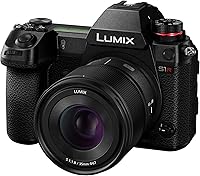
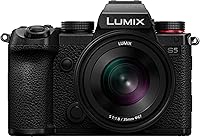
Street photographers will feel immediately at home with the 35mm field of view — it closely mirrors natural human vision, so framing feels intuitive rather than forced. Portrait work is equally viable; you can achieve meaningful subject separation without the compressed perspective that comes with longer focal lengths. Hybrid creators who split time between stills and video will appreciate the consistent aperture control and lightweight body, which makes this 35mm prime easy to travel with for extended periods. If you are building a compact prime kit around the LUMIX S5 or S1, this lens belongs near the top of that list.

User Feedback

Among verified buyers, satisfaction is notably high, with sharpness, size, and build consistency drawing repeated praise. Shooters frequently cite the compact form factor as a genuine daily advantage once they have experience carrying heavier glass. That said, autofocus performance deserves an honest mention — L-mount AF has historically trailed Sony E-mount in speed and subject tracking, and some users do feel this gap when shooting fast-moving subjects. Not a dealbreaker for most, but worth knowing going in. Those who stack the S-S35 against Sigma Art-series or Leica L-mount alternatives tend to find it competes strongly on optics, with its size advantage often being the deciding factor.

Pros

  • Sharp edge-to-edge rendering on full-frame sensors, not just the center of the frame.
  • F1.8 aperture handles low-light situations confidently without heavy noise compensation.
  • At just 10.4 oz, this 35mm prime is genuinely light enough for all-day carry without fatigue.
  • Dust, splash, and freeze resistance makes it a practical choice for outdoor and travel work.
  • Minimal focus breathing keeps video footage clean when pulling focus between subjects.
  • The programmable manual focus ring gives precise, customizable control for deliberate shooters.
  • Build quality feels solid and premium, with no loose tolerances or cheap-feeling materials.
  • Natural 35mm field of view works intuitively for street, documentary, and environmental portraiture.
  • Verified buyers consistently rate sharpness and build quality as standout strengths.
  • Competes well optically against pricier Sigma Art and Leica L-mount alternatives at this focal length.

Cons

  • Autofocus speed trails what Sony E-mount shooters are accustomed to, which matters for action work.
  • No optical stabilization built into the lens; you depend entirely on in-body stabilization.
  • The F1.8 maximum aperture, while capable, loses out to F1.4 options for maximum background separation.
  • A relatively small pool of user reviews compared to more established Sony or Canon mount equivalents.
  • Not an ideal choice for shooting in tight indoor spaces where a wider focal length would help.
  • Minimum focusing distance of 0.24 m limits extreme close-up or macro-style work.
  • Buyers outside the L-mount system face a steep investment to use this lens at all.
  • Some users feel the premium positioning leaves little room for error on optical performance expectations.

Ratings

The scores below reflect an AI-driven analysis of verified buyer feedback for the Panasonic S-S35 35mm F1.8 Prime Lens, collected from global sources and actively filtered to remove incentivized, bot-generated, and spam reviews. Both the genuine strengths and the recurring frustrations are represented honestly, so you can make a fully informed decision rather than one shaped by inflated averages.

Optical Sharpness
93%
Users consistently report edge-to-edge clarity that holds up even when shooting wide open at F1.8 — something that genuinely sets this lens apart from cheaper alternatives at the same focal length. Street photographers note that fine details in backgrounds and foregrounds are rendered with impressive fidelity across the full frame.
A small number of critical reviewers, particularly those comparing directly to the Sigma 35mm F1.4 Art, feel that corner sharpness at the widest apertures still falls marginally short of the very best in its class. Stopping down to F2.8 largely eliminates the concern, but it is a nuance worth noting for pixel-peepers.
Build Quality
91%
The physical construction consistently earns praise for feeling solid and purposeful without unnecessary bulk. Buyers who have owned cheaper kit lenses report a noticeable step up in tactile quality — the focus ring turns smoothly, and there is no wobble or creaking in the barrel.
A few users have noted that the lens lacks a physical aperture ring, which is a limitation for those coming from a manual-heavy shooting style or from Leica glass that offers direct aperture control. It is a design choice rather than a defect, but it does matter to a specific type of shooter.
Autofocus Performance
67%
33%
For everyday photography — street work, travel, relaxed portraiture — the autofocus is accurate and sufficiently responsive. Indoors or in controlled lighting, subject acquisition is reliable and consistent enough that most users report no meaningful frustration during typical shooting sessions.
Action photographers and those shooting unpredictable subjects in variable light will find the AF speed falls short of what Sony or Nikon native-mount lenses deliver at this tier. This is partly a broader L-mount ecosystem limitation, but the S-S35 does not fully overcome it, and buyers should test their specific body pairing before committing.
Video Usability
88%
Hybrid shooters frequently single out the minimal focus breathing as a genuine practical advantage, noting that clips stay composed and professional-looking when pulling focus between subjects. The smooth, controllable aperture transitions also eliminate the stepped exposure jumps that plague inferior lenses during recording.
The absence of built-in optical stabilization means handheld video requires heavy reliance on the host camera body's IBIS, which varies in effectiveness across different L-mount bodies. Users shooting on older or entry-level S-series bodies without strong IBIS have noted this as a visible limitation in video output.
Portability & Size
94%
At 10.4 oz and with a compact barrel profile, this L-mount lens genuinely lives up to its all-day carry promise. Travel photographers note that it slips into a jacket pocket alongside a compact body, and street shooters appreciate not attracting attention with a large, heavy setup.
Those accustomed to the smallest mirrorless primes from Sony or Fujifilm may find it slightly larger than expected for a prime lens, particularly when paired with the more substantial LUMIX S-series bodies. It is compact relative to full-frame standards, but not pocketable in the way a smartphone lens adapter would be.
Weather Resistance
86%
Outdoor and travel photographers who regularly deal with light rain, sea spray, or dusty environments report that the sealing performs reliably and gives genuine confidence in the field. The freeze resistance is particularly appreciated by shooters working in colder climates during winter events.
A handful of users caution that the weather sealing should not be read as a free pass for careless use in heavy downpours. A few reviewers who pushed the lens beyond light splash conditions reported concern, suggesting the protection is real but occupies the practical rather than the professional-outdoor end of the spectrum.
Bokeh Quality
82%
18%
At F1.8, background blur is smooth and organic-looking, with out-of-focus highlights rendering as clean circles rather than harsh geometric shapes. Portrait and product photographers appreciate that the transition zone between sharp and soft areas feels gradual rather than abrupt.
Compared to F1.4 competitors, the maximum background separation is naturally less dramatic, which some bokeh-focused users find underwhelming for tight portrait crops at close range. A small number of reviewers have also noted subtle onion-ring patterns in specular highlights under certain lighting conditions.
Low-Light Performance
89%
F1.8 gives the lens enough light-gathering capability to shoot comfortably in dimly lit restaurants, evening street scenes, and indoor venues without forcing ISO into problematic territory. Users who photograph events or social gatherings in mixed lighting report clean, well-exposed results that they struggle to achieve with slower zoom lenses.
The one-stop difference between this lens and an F1.4 alternative is noticeable in genuinely dark conditions, and some low-light specialists feel that gap justifies the size and cost premium of larger aperture options in the L-mount lineup. It is a real trade-off, not just a theoretical one on a spec sheet.
Manual Focus Experience
84%
The programmable focus ring is a feature that manual-focus enthusiasts and video operators consistently highlight as thoughtful and well-implemented. Being able to dial in a longer focus throw for precise rack-focus pulls, then switch to a faster throw for quick adjustments, gives the lens a versatility that rivals pricier cinema-oriented glass.
Some users report that the default focus ring behavior out of the box feels slightly too light for their preference, requiring customization before it feels intuitive. The programmability addresses this, but less technically inclined buyers have found the configuration process mildly unintuitive without referencing the manual.
Chromatic Aberration
79%
21%
Lateral chromatic aberration is well-controlled for a fast prime at this price tier, and most users shooting in daylight report clean edges without obvious color fringing in high-contrast areas. Software correction via in-camera profiles handles any residual fringing cleanly on supported bodies.
Shooting wide open at F1.8 in backlit or high-contrast scenes does reveal some longitudinal chromatic aberration — a purple or green fringing around subjects that appears ahead of and behind the focus plane. It is correctable in post-production, but buyers who prefer to avoid correction work should be aware it exists.
Distortion Control
81%
19%
Geometric distortion is modest and consistent with what you would expect from a well-designed 35mm prime, meaning straight architectural lines and horizon edges look natural without obvious barrel bowing. For street and documentary work, the distortion level is a non-issue in practical use.
Photographers shooting architecture or precision geometric subjects and outputting raw files without lens correction profiles applied will notice mild barrel distortion at close focusing distances. Most editing software applies automatic corrections, but those working with uncorrected files should account for it in post-processing.
Compatibility Range
77%
23%
The L-mount standard gives this 35mm prime access to a growing body lineup spanning Panasonic, Sigma, and Leica, which is broader than many single-brand proprietary mounts. Users who own multiple L-mount bodies across brands appreciate not needing separate lenses for each system.
The L-mount ecosystem remains considerably smaller than Sony E-mount or Canon RF in terms of body options and resale market depth, which limits the lens's long-term flexibility for users who might shift systems. Those buying into L-mount for the first time should factor the ecosystem size into their decision.
Value Perception
74%
26%
Buyers who purchase with a clear understanding of what the S-S35 offers — a compact, weather-sealed, optically competent prime — tend to feel it delivers fair return on their investment. Those comparing it to Leica L-branded alternatives at higher price points often regard it as the more practical choice for working photographers.
A recurring note in buyer feedback is that the premium positioning raises expectations that the autofocus performance in particular does not always meet. Users who expected this lens to match the AF responsiveness of similarly priced Sony or Canon glass have come away feeling the value case is weaker than the optics alone would suggest.

Suitable for:

The Panasonic S-S35 35mm F1.8 Prime Lens is a strong fit for photographers and videographers already invested in the L-mount system who want a reliable, all-purpose prime they can use across a wide range of situations. Street and documentary shooters will find the 35mm angle of view intuitive and unobtrusive, letting them work quickly without wrestling with framing. Portrait photographers who prefer working at closer distances rather than standing back with a 50mm or 85mm will get natural-looking results with pleasing subject separation. Hybrid creators — those who split their workflow between stills and video — benefit from the smooth aperture control and minimal focus breathing, which removes a common source of frustration in run-and-gun shooting. Travel photographers who need weather resistance without adding significant weight to their bag will also find this L-mount lens practical and dependable in the field.

Not suitable for:

The Panasonic S-S35 35mm F1.8 Prime Lens is a harder sell for shooters who rely heavily on fast, reliable autofocus for action, sports, or unpredictable subjects — L-mount AF performance, while improving, still lags behind what Sony E-mount users experience, and that gap is real enough to matter in demanding situations. Photographers who are not already committed to the L-mount ecosystem will need to factor in the cost of building compatible camera bodies, which raises the total investment considerably. If you primarily shoot telephoto subjects, wildlife, or compressed-perspective portraits, a 35mm simply is not the right focal length regardless of how good the optics are. Budget-conscious buyers who expect a lot of focal length flexibility from a single lens will also find a prime limiting compared to a mid-range zoom. Finally, shooters who prioritize the widest possible aperture for extreme background blur may want to look at F1.4 alternatives in the L-mount lineup before committing.

Specifications

  • Focal Length: Fixed 35mm focal length provides a natural, human-eye-like angle of view on full-frame sensors.
  • Maximum Aperture: F1.8 maximum aperture allows strong light gathering in dim conditions and visible background separation.
  • Minimum Aperture: F16 minimum aperture is available for situations requiring maximum depth of field or controlled exposure.
  • Lens Mount: Designed exclusively for the L-mount (Leica L) standard, compatible with all L-mount full-frame mirrorless cameras.
  • Format Coverage: Engineered for full-frame image sensors with no vignetting or crop penalties on any compatible body.
  • Min Focus Distance: Minimum focusing distance of 0.24 m (0.79 ft) allows reasonably close framing for detail and environmental shots.
  • Dimensions: The lens measures 3.23 inches in length with a 2.9-inch diameter, keeping the overall profile compact and pocketable.
  • Weight: Weighs 10.4 oz (295g), making it one of the lighter full-frame prime options in the L-mount lineup.
  • Weather Sealing: Dust, splash, and freeze-resistant construction allows use in rain, light snow, and dusty outdoor environments.
  • Focus Ring: Programmable manual focus ring supports adjustable rotation speed and throw distance to suit individual shooting preferences.
  • Aperture Control: Smooth, consistent aperture control is optimized to minimize exposure shifts and flicker during video recording.
  • Focus Breathing: Minimal focus breathing during focus transitions preserves frame composition in video applications.
  • Model Number: Official Panasonic model designation is S-S35, part of the LUMIX S-series lens family.
  • Manufacturer: Designed and manufactured by Panasonic Corporation in Japan, released to market in November 2021.
  • Filter Thread: Accepts 67mm front filters, consistent with other lenses in the LUMIX S prime series.
  • Lens Construction: Optical design includes aspherical and ED elements to control chromatic aberration and distortion across the frame.
  • Autofocus System: Driven by an internal autofocus motor compatible with the contrast and phase-detect AF systems of supported L-mount bodies.
  • Stabilization: No optical image stabilization is built into the lens; stabilization relies on in-body systems of the host camera.

Related Reviews
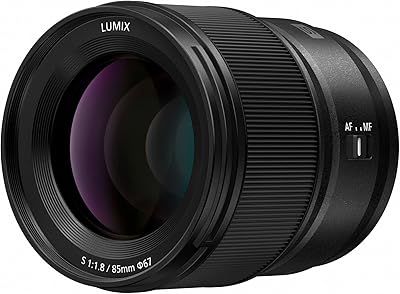
Panasonic LUMIX S-S85 85mm F1.8 Lens
82%
92%
Image Sharpness
84%
Bokeh Quality
71%
Autofocus Performance
83%
Build Quality
74%
Weather Sealing
More
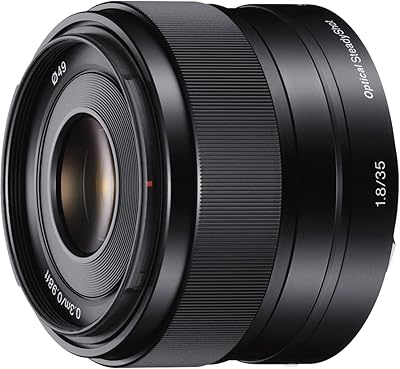
Sony SEL35F18 35mm f/1.8 Prime Lens
82%
91%
Optical Sharpness
88%
Low-Light Performance
79%
Autofocus Speed
83%
Video Autofocus
84%
Image Stabilization
More
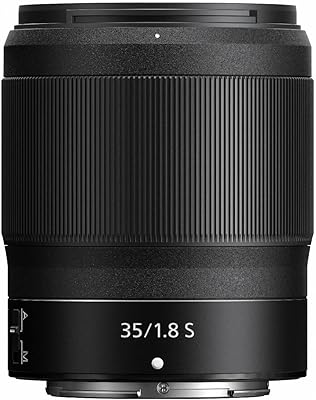
Nikon NIKKOR Z 35mm f/1.8 S Lens
86%
96%
Optical Sharpness
93%
Autofocus Performance
91%
Bokeh & Background Rendering
89%
Build Quality & Weather Sealing
92%
Low-Light Performance
More
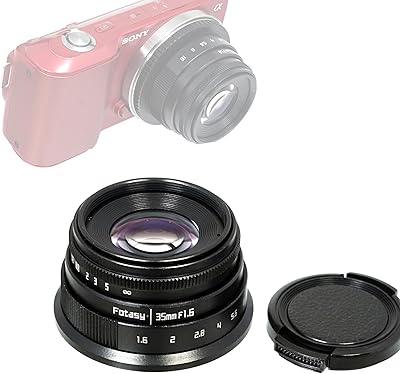
Fotasy 35mm F1.6 Manual Prime Lens for Sony E-Mount
78%
85%
Image Quality
78%
Manual Focus Control
80%
Low-Light Performance
72%
Build Quality
88%
Portability
More
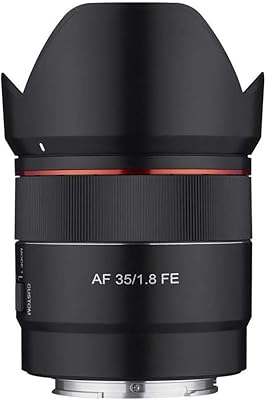
Rokinon AF 35mm F1.8 Wide Angle Lens
77%
83%
Autofocus Performance
81%
Sharpness & Clarity
78%
Bokeh Quality
79%
Build Quality
72%
Weather Sealing
More
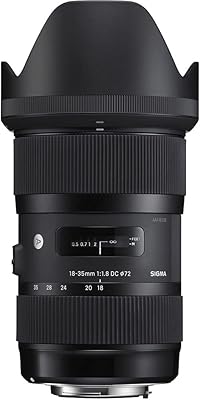
Sigma 18-35mm F1.8 Art DC HSM Lens for Canon
87%
94%
Sharpness & Image Quality
85%
Autofocus Speed & Accuracy
91%
Low-Light Performance
88%
Bokeh Quality
90%
Build Quality & Durability
More
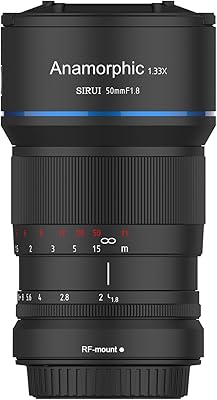
SIRUI 50mm F1.8 Anamorphic Lens RF Mount
78%
88%
Image Quality
91%
Anamorphic Character
84%
Build Quality
86%
Value for Money
71%
Flare Consistency
More
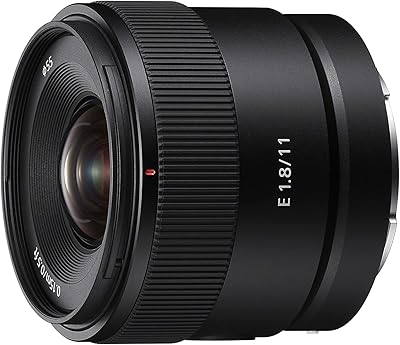
Sony E 11mm F1.8 APS-C Ultra-Wide-Angle Prime Lens
87%
93%
Autofocus Speed
91%
Image Quality
89%
Portability
74%
Low-Light Performance
88%
Build Quality
More
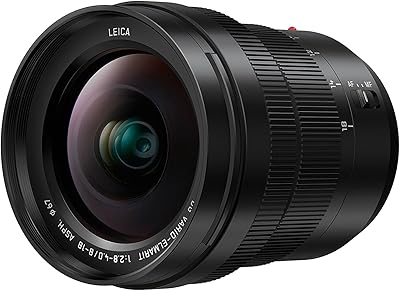
Panasonic LUMIX 8-18mm F2.8-4.0 Lens
89%
91%
Image Quality
88%
Autofocus Performance
89%
Build Quality & Durability
84%
Ease of Use
90%
Video Performance
More
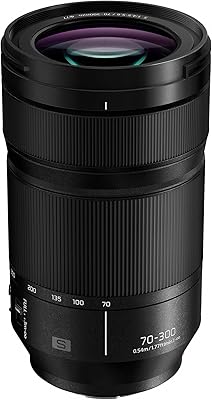
Panasonic LUMIX S 70-300mm Telephoto Lens
80%
89%
Image Sharpness
92%
Optical Image Stabilization
78%
Macro Performance
91%
Build Quality & Weather Sealing
71%
Autofocus Speed & Accuracy
More

FAQ

It works on any camera using the L-mount standard, which includes Panasonic LUMIX S-series bodies, Sigma fp and fpL, and Leica SL and CL series cameras. The L-mount alliance was specifically designed for this kind of cross-brand compatibility, so you are not locked into one manufacturer.

For portraits, street photography, and moderately active subjects, the autofocus is reliable and accurate. Where it shows limitations is in fast, unpredictable action — sports or quickly moving subjects can cause it to hunt or lag slightly. If action shooting is your primary use case, this is worth knowing before you buy.

It depends on your style. At 35mm you need to get closer to your subject compared to a 50mm or 85mm, which some portrait photographers prefer for a more environmental, candid feel. If you like tight, compressed headshots, a longer focal length will serve you better. For half-body and environmental portraits, the S-S35 works very well.

No. The S-S35 uses the L-mount, which is physically incompatible with the Micro Four Thirds mount used on LUMIX G cameras. You would need a LUMIX S-series or another L-mount full-frame body to use it.

It lets you set how far the focus ring rotates to move from infinity to the minimum focus distance, and how quickly it responds. For video work or precise manual focus pulls, this is genuinely useful — you can configure a longer throw for slow, deliberate control or a shorter throw for fast adjustments. Stills shooters may use it less, but it is a thoughtful feature for anyone who does both.

Weather sealing means the lens can handle splashes, light rain, and dusty conditions reasonably well, but it is not waterproof. Shooting in a downpour for an extended period is pushing beyond what the sealing is designed for. A sensible rule is to treat it the way you would a weather-sealed hiking jacket — great for real-world conditions, not for submersion.

The Sigma 35mm F1.4 Art offers a wider maximum aperture and is widely regarded as having exceptional optical performance, but it is noticeably larger and heavier. The Panasonic S-S35 35mm F1.8 Prime Lens trades one stop of aperture for a significantly more compact and portable package. For most shooters, F1.8 is more than sufficient, and the size difference is meaningful if you carry a camera all day.

No, there is no optical stabilization built into the lens itself. You will rely on your camera body's in-body image stabilization (IBIS). Most current LUMIX S-series bodies have solid IBIS, so in practice this is rarely a problem, but it is worth confirming your specific camera body's stabilization capabilities.

The lens accepts 67mm front filters, which is a common size and easy to find for polarizers, ND filters, or protective glass. It is consistent with several other LUMIX S prime lenses, which is convenient if you want to share filters across multiple lenses in the same kit.

That depends on where you see the L-mount ecosystem heading. The L-mount alliance includes Panasonic, Sigma, and Leica, so it is not a single-brand system, and third-party lens support has been growing steadily. That said, if you are considering a future move to Sony or Canon, this lens would not transfer. If you are committed to L-mount, it is a solid and durable investment that holds its value reasonably well.

Where to Buy