Overview

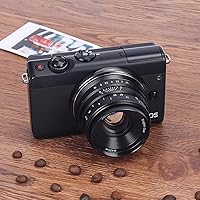
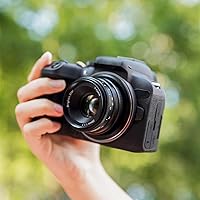
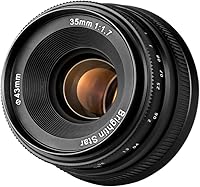
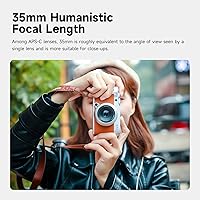
The Brightin Star 35mm F1.7 Mirrorless Camera Lens is a compact manual prime built for Nikon Z-mount APS-C shooters who want capable glass without a heavy price tag. Right away, one thing deserves clarity: there is no autofocus. If that's a dealbreaker, this lens isn't for you. But if you're open to manual focus — or actively prefer it — the proposition becomes genuinely interesting. The all-metal body feels solid and well-machined, far removed from the plastic kit lenses it typically sits beside on a shelf. At just 171g, it barely registers on your camera, and the 35mm focal length lands at roughly 50mm full-frame equivalent — a natural, walk-around perspective.
Features & Benefits

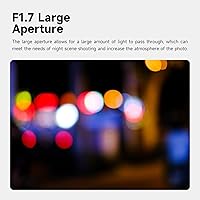
The F1.7 maximum aperture is where this compact prime earns its keep. In practice, it draws enough light to shoot comfortably in dim restaurants, evening streets, or indoor gatherings without leaning hard on high ISO settings. The 10-blade aperture produces background blur that's noticeably smooth and rounded — not the jittery, nervous bokeh you sometimes get from cheaper optics. Center sharpness wide open is respectable, though edges soften as you'd expect from a budget prime at this aperture. Stop down to F2.8 or F4 and the image tightens up considerably. The stepless aperture ring is a genuine perk for video work, letting you shift exposure mid-shot without the stepped clicks that create jarring jumps in footage. The 28cm minimum focus distance also opens up close-up compositional possibilities.

Best For

This manual prime was made for a specific kind of shooter, and it knows it. Street photographers and hobbyists who actually enjoy the slower, more deliberate process of manual focusing will feel right at home. It pairs especially well with the Z50, Z30, and Z-fc — compact APS-C bodies that match the lens's small footprint and tend to attract photographers who lean toward a more hands-on shooting experience. Beginners who want to learn manual focus without risking a large sum will find it a low-stakes way to develop that skill. Lightweight travel shooters will appreciate slipping it into a jacket pocket. It's also a solid choice for videographers who want clean exposure control and a rig that won't fatigue them on long shoots.

User Feedback

Buyers who've spent time with the 35mm Brightin Star tend to split into two camps, though most land on the positive side. The most consistent praise goes to build quality — people genuinely don't expect a metal barrel at this price, and it shows in their reactions. Sharpness in the center at F1.7 earns appreciation, though some note that edges trail off, which is fair and not unusual for a prime in this category. Bokeh gets a warm reception, described as soft and pleasing rather than clinical. The manual focus-only design does trip up a handful of buyers who didn't read the specs closely, but those who understood it going in rarely list it as a complaint. A few users mention the focus ring can feel stiff initially and note minor lens breathing when racking focus for video.

Pros

  • The all-metal build feels surprisingly premium and durable for a lens at this price point.
  • F1.7 aperture delivers genuinely usable low-light performance without pushing ISO uncomfortably high.
  • At roughly 171g, this compact prime barely adds weight to smaller Nikon Z bodies.
  • Center sharpness wide open is solid and holds up well for portraits and street work.
  • The 10-blade aperture produces smooth, rounded bokeh that looks far more expensive than it is.
  • A stepless aperture ring makes exposure adjustments during video recording clean and gradual.
  • The 28cm minimum focus distance adds flexibility for detail shots and tighter compositions.
  • Build quality consistently surprises buyers who expect plasticky construction at this price tier.
  • The 43mm filter thread is a common, affordable size that makes accessorizing easy and cheap.
  • Pairs exceptionally well with compact Z-mount bodies like the Z-fc and Z30 in both size and style.

Cons

  • No autofocus at all — a hard stop for anyone shooting moving subjects or fast-paced events.
  • Edge softness at F1.7 is noticeable and may frustrate photographers seeking corner-to-corner clarity.
  • Some users report the focus ring feels stiff out of the box and requires a break-in period.
  • Lens breathing is visible when racking focus, which can be distracting in video applications.
  • Requires enabling the release-without-lens setting on the camera body, which catches some buyers off guard.
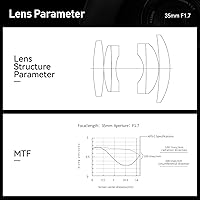
  • Limited optical design of 4 groups and 6 elements means it cannot match the rendering of pricier primes.
  • Not compatible with Nikon DSLR bodies, which creates confusion for buyers transitioning from older systems.
  • No image stabilization, which amplifies any handshake when shooting handheld in low light at slower shutter speeds.

Ratings

The scores below reflect our AI-driven analysis of verified global user reviews for the Brightin Star 35mm F1.7 Mirrorless Camera Lens, with spam, bot-generated, and incentivized feedback actively filtered out before scoring. Each category is weighted against real-world shooting experiences reported by buyers across street, portrait, travel, and video use cases. Both the genuine strengths and the recurring frustrations are represented transparently so you can make a genuinely informed decision.

Build Quality
88%
Buyers consistently express surprise at how solid this manual prime feels in hand — the all-metal barrel gives it a heft and rigidity that most expect from lenses costing several times more. On a compact Z50 or Z-fc, it feels balanced and purposeful rather than cheap.
A small number of users report minor play in the focus ring mechanism after extended use, and the lens cap fit is occasionally described as loose. Nothing that affects image quality, but it nudges the overall tactile experience down slightly from outstanding.
Image Sharpness
76%
24%
Center sharpness wide open at F1.7 earns consistent praise for a lens in this price tier — detail in portraits and street subjects looks clean and well-resolved when the subject sits in the middle of the frame. Stopping down to F4 noticeably tightens the whole image.
Edge and corner softness at F1.7 is a recurring observation, with some buyers noting that it becomes distracting in landscape or architecture shots where sharpness across the full frame matters. It is an expected characteristic of the optical design but worth knowing upfront.
Bokeh Quality
83%
The 10-blade aperture design delivers background blur that buyers describe as soft, rounded, and flattering — particularly in portrait and food photography where busy backgrounds need to melt away cleanly. At F1.7 the out-of-focus rendering has genuine character rather than looking clinical.
At closer focus distances some users notice slightly busy bokeh fringing near high-contrast edges, which is more visible in certain lighting conditions. It does not ruin shots, but pixel-peepers shooting against complex backgrounds will notice it compared to premium optics.
Low-Light Performance
81%
19%
The F1.7 aperture makes a real practical difference when shooting indoors or in the evening — users report being able to keep ISO at manageable levels in dim restaurants, markets, and indoor events where a slower kit zoom would force noisier settings. It genuinely opens up available-light shooting.
Without any optical image stabilization, handshake becomes a limiting factor in very dark environments where shutter speeds drop below safe handheld thresholds. Pairing it with a body that has in-body stabilization helps, but on bodies like the Z50 and Z30 that lack IBIS, it requires more care.
Value for Money
91%
This is consistently the highest-rated aspect in user feedback — buyers feel the combination of metal construction, F1.7 aperture, and smooth bokeh at this price point is nearly impossible to argue with. Many describe it as the best optical purchase they have made relative to cost.
A handful of buyers feel the absence of any electronic contacts — meaning no EXIF data, no focus confirmation beep, and no aperture reporting to the camera — is a limitation that matters more once you start using the lens regularly and miss those conveniences.
Manual Focus Feel
69%
31%
Photographers who shoot deliberately and prefer the control of manual focus report that the focus ring travel is well-judged for slow, considered work like street photography or still life. The ring is smooth enough for careful framing without feeling imprecise.
Stiffness out of the box is a common complaint, with multiple buyers noting it requires a break-in period before the ring moves freely. For video users attempting smooth focus pulls, the initial stiffness and inconsistent damping make rack focusing more challenging than it should be.
Lens Breathing
54%
46%
For casual photography and general video work where focus is set and held rather than pulled mid-shot, breathing is essentially a non-issue and most users never encounter it as a problem in practice.
Buyers using this compact prime for cinematic video work with intentional focus transitions report visible changes in framing when racking focus, which requires correction in post or careful shooting technique. It is a structural limitation of the optical design rather than a quality control issue.
Compatibility & Setup
72%
28%
Once the release-without-lens setting is enabled on the camera body, the 35mm Brightin Star works reliably across the Nikon Z APS-C lineup including the Z50, Z30, and Z-fc without further configuration or firmware requirements.
The setup step of enabling the release-without-lens mode catches a meaningful number of buyers off guard, and the lack of any electronic communication means features like focus peaking indication from lens data and automatic aperture display in EXIF are unavailable, which surprises users coming from native Z lenses.
Size & Portability
93%
At 171g and barely over two inches long, this lens genuinely disappears into a jacket pocket alongside a compact Z body — buyers who travel light or shoot street photography cite the size as a primary reason they reached for it over larger options. It transforms the Z-fc in particular into a truly pocketable kit.
The very compact dimensions mean the focus ring surface area is limited, which some users with larger hands find slightly awkward to grip precisely during careful manual focusing. It is a minor ergonomic trade-off that comes with the pocketable form factor.
Aperture Ring
84%
Videographers and photographers who value physical lens controls appreciate the stepless aperture ring, which allows smooth, continuous exposure adjustment during a shot without the jarring click-stops that make aperture changes audible or abrupt in video recordings.
A few users note that the aperture ring position on the barrel sits close to the focus ring, leading to occasional accidental adjustments when gripping the lens during fast-moving street shooting. Separating the rings more clearly would improve the handling ergonomics.
Close-Focus Capability
77%
23%
The 28cm minimum focus distance opens up compositional options that a standard 50mm equivalent lens typically cannot match — food photographers and product shooters appreciate being able to move in close enough to fill the frame with small subjects without switching lenses.
It does not reach true macro territory, so buyers hoping to photograph very small subjects like insects or fine jewelry details at high magnification will find the close-focus limit restricting. It works well for medium detail shots but should not be confused with dedicated close-up optics.
Flare & Contrast
66%
34%
In controlled lighting situations and when shooting with the sun outside the frame, contrast holds up adequately and colors render with decent saturation that post-processing handles well without heavy correction.
Shooting directly into strong light sources or bright windows reveals that flare resistance is limited — ghosting and contrast reduction appear more readily than on lenses with modern multi-coating. Using a lens hood and being mindful of light angles reduces but does not eliminate the issue.
Finish & Aesthetics
86%
The clean matte black metal finish draws genuine compliments from buyers who pair it with the stylish Z-fc or Z30 — it looks considerably more premium than the price suggests, and the minimal branding gives it a classically understated appearance that photographs and handles well.
Cosmetic scratches on the metal barrel appear after regular use in bag pockets or on-camera surfaces, which bothers buyers who care about keeping their gear looking new. The finish is durable functionally but does show wear over time more visibly than rubberized or coated alternatives.

Suitable for:

The Brightin Star 35mm F1.7 Mirrorless Camera Lens is a strong fit for Nikon Z-mount APS-C shooters who are comfortable with — or genuinely excited about — manual focus. Street photographers who enjoy slowing down and being intentional with each frame will find the focal length and fast aperture a natural pairing for candid, documentary-style work. Beginners looking to build manual focus discipline without spending heavily on glass will get real optical and tactile feedback from this lens without the financial risk. Compact mirrorless users on the Z50, Z30, or Z-fc who want a pocketable prime with a solid metal feel — rather than another plastic kit zoom — will appreciate how well it matches both the size and spirit of those bodies. Videographers running lightweight rigs will also benefit from the stepless aperture ring, which allows smooth, silent exposure adjustments mid-shot.
Not suitable for:

Photographers who rely on autofocus — whether for fast-moving subjects, event work, or simply personal preference — should look elsewhere, because the Brightin Star 35mm F1.7 Mirrorless Camera Lens offers no autofocus whatsoever, and there is no workaround. Sports, wildlife, and action shooters will find manual focusing at F1.7 frustrating rather than rewarding. Anyone expecting edge-to-edge sharpness wide open will also be disappointed; the corners soften noticeably at F1.7 and only tighten meaningfully when stopped down. Full-frame Nikon Z body owners get limited value here since the lens is designed around the APS-C image circle. Finally, buyers who haven't used manual focus before and expect to jump straight into fast-paced or unpredictable shooting situations may find the learning curve steeper than anticipated in real conditions.
Specifications

  • Focal Length: Fixed 35mm focal length, equivalent to approximately 50mm on a full-frame camera when used on an APS-C sensor body.
  • Maximum Aperture: F1.7 maximum aperture allows significant background separation and performs well in low-light shooting conditions.
  • Minimum Aperture: The aperture closes down to a minimum of F16 for situations requiring deep depth of field or controlled exposure in bright light.
  • Optical Design: The lens uses a 4-group, 6-element optical construction balancing compact size with center sharpness across the aperture range.
  • Aperture Blades: Ten rounded aperture blades produce smooth, circular bokeh when shooting at wider aperture settings.
  • Focus System: Manual focus only with no electronic autofocus motor or communication chip for focus confirmation via the camera body.
  • Minimum Focus: The closest focusing distance is 28cm, enabling moderately close-up compositions such as food details or small objects.
  • Filter Thread: A 43mm front filter thread accepts standard circular polarizers, ND filters, and other common 43mm accessories.
  • Mount Compatibility: Designed exclusively for the Nikon Z bayonet mount; not compatible with Nikon F-mount DSLR bodies or any other brand.
  • Sensor Format: Optimized for APS-C sensor cameras and will produce vignetting if used on Nikon Z full-frame bodies.
  • Aperture Ring: A physical, stepless aperture ring on the lens barrel allows smooth, continuous aperture adjustment without audible clicks.
  • Body Material: The outer barrel is constructed from metal, with glass optical elements, giving the lens a solid, premium feel.
  • Weight: The lens weighs approximately 171g, making it a lightweight addition to compact Nikon Z mirrorless camera bodies.
  • Dimensions: Physical dimensions measure 1.5 x 2.2 x 2.2 inches, resulting in a pocketable profile that pairs well with smaller camera bodies.
  • Field of View: The horizontal field of view angle is approximately 42 degrees when mounted on an APS-C format camera body.
  • Brand: Manufactured and sold by Brightin Star, a brand specializing in affordable manual focus prime lenses for mirrorless systems.

Related Reviews

Viltrox 35mm F1.7 E-Mount Prime Lens
81%
93%
Value for Money
88%
Build Quality
79%
Autofocus Performance
82%
Optical Sharpness
86%
Bokeh Quality
More
Sony Alpha 7 IV
Sony Alpha 7 IV
80%
94%
Autofocus Performance
92%
Image Quality
89%
Video Capabilities
83%
In-Body Image Stabilization
58%
Battery Life
More
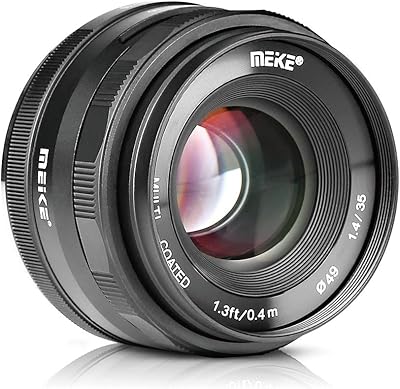
Meike 55mm F1.4 Nikon Z Mount Lens
77%
91%
Value for Money
86%
Bokeh Quality
78%
Image Sharpness
69%
Autofocus Performance
74%
Build Quality
More
Brightin Star 35mm F0.95 Prime Lens
80%
91%
Bokeh & Background Separation
88%
Aperture & Low-Light Performance
67%
Sharpness Wide Open
89%
Build Quality & Finish
72%
Manual Focus Experience
More
Brightin Star 7.5mm F2.8 III Fisheye Lens
75%
78%
Image Sharpness
88%
Value for Money
71%
Low-Light & Astrophotography Performance
82%
Build Quality & Construction
61%
Manual Focus Usability
More
Meike 35mm F1.4 MFT Lens
84%
89%
Sharpness & Image Quality
74%
Manual Focus Usability
91%
Build Quality
87%
Low Light Performance
92%
Value for Money
More
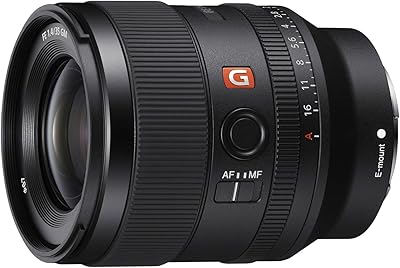
Sony FE 35mm F1.4 GM Prime Lens
86%
96%
Optical Sharpness
93%
Autofocus Performance
91%
Bokeh Quality
88%
Build Quality
67%
Vignetting Control
More
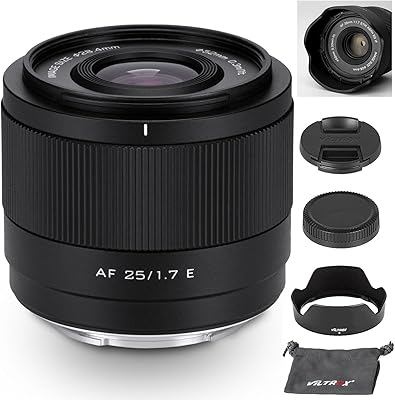
Viltrox 25mm f/1.7 E-Mount Prime Lens
81%
88%
Autofocus Performance
83%
Image Sharpness
86%
Aperture & Background Rendering
71%
Build Quality & Feel
87%
Low-Light Capability
More
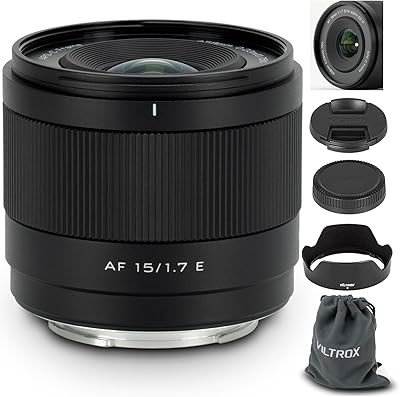
Viltrox 15mm F1.7 Wide-Angle Lens
83%
91%
Center Sharpness
72%
Edge & Corner Sharpness
83%
Autofocus Speed & Accuracy
88%
Aperture & Bokeh Quality
86%
Video Performance
More
Panasonic S-S35 35mm F1.8 Prime Lens
83%
93%
Optical Sharpness
91%
Build Quality
67%
Autofocus Performance
88%
Video Usability
94%
Portability & Size
More

FAQ

No, the Brightin Star 35mm F1.7 Mirrorless Camera Lens is strictly manual focus and contains no autofocus motor or electronic contacts. You will need to focus by hand using the focus ring on the lens barrel regardless of which Nikon Z body you attach it to.

This is a common setup step that catches people off guard. Go into your camera menu and enable the option labeled something like release without lens or shoot without lens. Once that setting is turned on, the shutter will fire normally with this manual prime attached.

It will physically mount and shoot on full-frame Z bodies, but the image circle is designed for APS-C sensors, so you will see heavy vignetting around the edges at full frame. You can use the APS-C crop mode on those cameras to work around it, though that reduces your effective resolution.

Center sharpness at F1.7 is genuinely good for a lens at this price tier, producing clean, detailed images in the middle of the frame. The edges and corners do soften noticeably wide open, which is typical for compact budget primes. Stopping down to around F4 brings the whole frame into much tighter focus if edge sharpness matters to you.

Most users describe the bokeh from this compact prime as pleasingly smooth and rounded, largely thanks to the 10-blade aperture design. At F1.7, background elements blur into soft, circular shapes rather than hard-edged polygons. It is not at the same level as a high-end prime, but for the price it holds up well in portrait and street work.

Yes, the 43mm filter thread at the front of the lens accepts any standard 43mm circular filter. That size is affordable and widely available, so building out a filter kit for this lens is straightforward and inexpensive.

It works well for video in several respects. The stepless aperture ring lets you shift exposure mid-shot without the abrupt clicks you get from stepped aperture rings, which is a practical advantage for run-and-gun videography. The main caveat is that lens breathing — a slight shift in framing when adjusting focus — is noticeable, so if precise focus pulls are central to your video work, that is worth keeping in mind.

Some users do report that the focus ring feels tighter than expected straight out of the box. For most people it loosens up after regular use over a few weeks. If you are used to the buttery-smooth damping of higher-end manual lenses, it may feel different at first, but it is generally functional and controllable for everyday shooting.

Honestly, yes — this is one of the more sensible ways to get into manual focus without a large financial commitment. The focus ring gives you direct, tactile feedback, and the F1.7 aperture creates a shallow depth of field that makes it easy to see when you have nailed focus. Pairing it with focus peaking on your Nikon Z body will speed up your learning considerably.

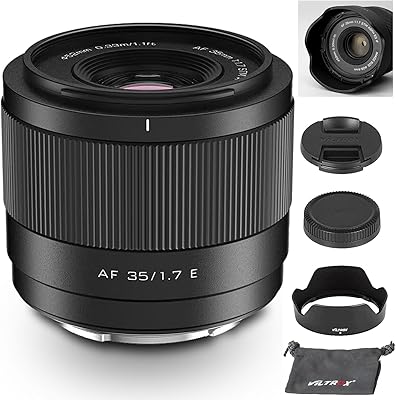
Accessories bundled with the 35mm Brightin Star can vary, so it is worth checking the specific listing at time of purchase for what is included. Typically, budget manual primes in this category ship with front and rear lens caps, but a dedicated hood is not always in the box. A 43mm screw-on hood is inexpensive to add separately if you need one.