Overview

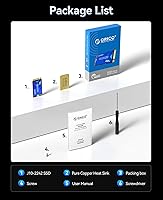
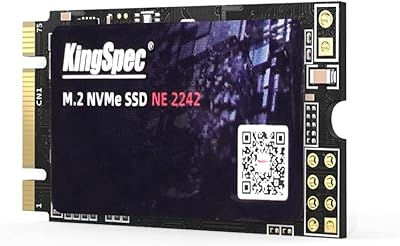
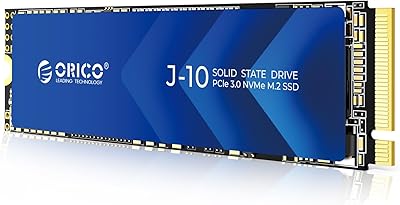
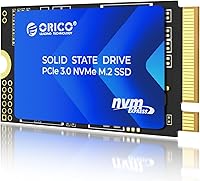
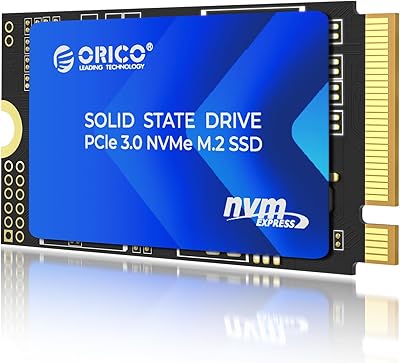
The ORICO J10-2242 256GB NVMe M.2 SSD fills a genuinely underserved niche: the M.2 2242 form factor, a shorter 42mm drive that many slim laptops, mini PCs, and embedded devices require but most brands ignore. While the dominant 2280 drives get all the attention, plenty of real-world machines — certain Lenovo ThinkPads, Intel NUC variants, and compact ARM boards — only accept this shorter slot. This 2242 NVMe drive arrives as a retail-boxed unit, not a pulled OEM part, which matters when you want a clean warranty and predictable lifespan. The inclusion of a copper heatsink at this price point is also worth noting — it is not something you typically see on budget-tier compact storage.
Features & Benefits

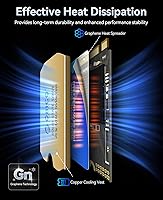
On paper, the ORICO J10-2242 hits respectable numbers for a PCIe 3.0 drive — sequential reads fast enough to load a Windows install in under 20 seconds on most systems, and writes that handle large file moves without obvious stalling. The TLC NAND paired with dynamic cache technology helps smooth out the performance curve under mixed read/write loads, though like all TLC-based drives, sustained heavy writes can see speeds drop once the cache fills. Thermal management gets a real boost from the copper and graphene heatsink, which is more than cosmetic — 2242 drives in enclosed spaces genuinely run hot. The 120TBW endurance rating is honest; for light daily use or an OS drive, it is more than adequate.

Best For

This compact SSD is a practical choice for a specific type of buyer — not everyone, but the right buyer will find it hard to beat at this tier. If your mini PC or slim laptop only accommodates the 2242 slot, options are limited and this drive covers the bases well. DIY builders assembling a portable NVMe enclosure for light backups or media transfer will appreciate the compact footprint. It also works well as a dedicated boot drive in systems where primary storage stays on a larger drive; 256GB is tight for an everything drive but perfectly sized for Windows or Linux plus a handful of apps. IoT and embedded builders get a thermally managed, shock-resistant option that does not require sourcing second-hand OEM parts.

User Feedback

Buyers consistently report fast boot times after swapping out older SATA drives, with several users specifically calling out the drop from 45-second cold boots to under 10 seconds on mini PC builds. Installation feedback skews positive — the M-Key interface seats cleanly and the heatsink does not complicate fitment in tight bays. On the critical side, a handful of reviewers note that the ORICO J10-2242 throttles more noticeably than expected during prolonged sequential writes, consistent with TLC cache exhaustion on heavy workloads. A few users also question whether the heatsink provides meaningful cooling in fully sealed enclosures. Overall, sentiment leans favorable, particularly from buyers who compared it against name-brand 2242 options and found the performance-to-cost ratio compelling for their specific setup.

Pros

  • Fills a genuine gap in the market — quality 2242 NVMe drives at this price tier are scarce
  • Copper and graphene heatsink provides real thermal protection, not just cosmetic hardware
  • Retail-boxed packaging means you get a new drive with a clean warranty, not a pulled OEM unit
  • PCIe 3.0 x4 interface delivers NVMe-class read speeds that make old SATA drives feel immediately obsolete
  • M-Key interface works across a wide range of mini PCs, slim laptops, and embedded boards
  • Dynamic cache helps sustain reasonable performance under typical mixed-use workloads
  • Three-year warranty offers solid peace of mind for a budget-tier storage upgrade
  • Lightweight and compact enough for truly tight builds where every millimeter counts
  • 256GB capacity is right-sized for a dedicated boot drive or secondary OS install

Cons

  • Sustained write speeds drop noticeably once the dynamic cache is saturated on heavier workloads
  • 120TBW endurance rating leaves limited headroom for write-intensive or high-turnover use cases
  • 256GB is restrictive if you need a single drive for both the OS and a growing media or game library
  • Performance under thermal stress in fully sealed enclosures may undercut the heatsink benefit
  • Brand recognition is limited compared to established storage names, which can affect resale confidence
  • No included installation hardware or documentation for less experienced builders
  • Write speeds lag behind premium PCIe 3.0 competitors when benchmarked under sustained sequential loads
  • Limited capacity options mean you cannot simply upsize within the same product line if needs change

Ratings

The scores below were generated by AI after analyzing verified buyer reviews from multiple global markets, with spam, incentivized, and bot-flagged submissions actively filtered out before scoring. The ORICO J10-2242 256GB NVMe M.2 SSD earned consistently practical praise from niche upgrade buyers, but the data also surfaces some honest limitations that anyone considering this drive should weigh carefully. Both the strengths and the friction points are reflected transparently in each category score.
Read Speed Performance
83%
Buyers replacing SATA drives in mini PCs and slim laptops report a dramatic difference in boot times and application load speeds, with many describing cold boots dropping from 40-plus seconds down to single digits. For an OS drive or light application install, the real-world read throughput holds up well under typical daily workloads.
A handful of technically minded reviewers note that real-world sequential reads in enclosures and bandwidth-limited slots fall short of peak advertised figures. The gap is not unusual for this class of drive, but buyers expecting to consistently hit maximum rated speeds may find the results modest.
Write Speed & Sustained Performance
61%
39%
For short bursts — saving documents, installing software, or transferring a handful of files — write speeds feel snappy and responsive. The dynamic cache does its job well enough for the everyday workloads this drive is designed to handle.
Once the cache is saturated during prolonged sequential writes, speeds drop noticeably, which is a known characteristic of TLC NAND without a large dedicated DRAM buffer. Users copying large video files or running continuous write tasks will hit this ceiling faster than expected, and it is the single most common complaint in buyer feedback.
Thermal Management
78%
22%
The copper and graphene heatsink combination is genuinely appreciated by buyers who installed this compact SSD in enclosed mini PCs, where heat buildup would otherwise cause throttling. Several users measured temperature drops compared to bare drives in the same chassis, confirming the heatsink is more than decorative.
In fully sealed laptop bays with no airflow, the heatsink provides limited benefit since there is nowhere for the dissipated heat to go. A small number of buyers in passively cooled enclosures still report thermal throttling under sustained loads, suggesting the heatsink is most effective in builds with at least some passive ventilation.
Value for Money
88%
Among the very limited pool of retail-boxed 2242 NVMe drives available at this price tier, this 2242 NVMe drive consistently comes out ahead on cost per gigabyte versus name-brand alternatives. Buyers who had previously paid significantly more for a comparable WD or SK Hynix 2242 unit specifically call out the pricing as a genuine advantage.
Value perception drops slightly for buyers who later discover cheaper 2280 alternatives with better endurance specs — the 2242 format premium is real, and not everyone initially realizes the form factor is what is driving the cost, not brand positioning.
Build Quality & Packaging
81%
19%
The retail-boxed presentation builds confidence right out of the packaging — this does not look or feel like a gray-market or reconditioned part. The heatsink is firmly attached, the PCB feels solid, and buyers consistently note the drive arrived in good condition with no cosmetic issues.
A few buyers found the packaging somewhat minimal beyond the box itself, with no installation guide or mounting hardware included. For first-time SSD installers who are not familiar with M.2 retention screws, this omission can create unnecessary friction during setup.
Installation Ease
82%
18%
Most buyers report a clean, straightforward installation experience — the M-Key connector seats firmly and the drive fits the 2242 slot without modification. Users upgrading compact laptops and mini PCs specifically mention that the shorter form factor made positioning and screw alignment easier than expected.
Compatibility confusion is the most common installation pain point: some buyers ordered without confirming their slot was NVMe-capable rather than SATA-only, leading to the drive not being detected. The issue is not with the drive itself, but the lack of upfront guidance about protocol compatibility adds unnecessary return friction.
Compatibility
76%
24%
The M-Key interface and 2242 form factor cover a wide range of compact devices, and buyers across laptop upgrades, mini PC builds, and DIY enclosure projects all report successful installations. The drive plays nicely with both Windows and Linux without requiring additional drivers.
The niche form factor is also a compatibility limiter by definition — buyers with standard 2280-only slots cannot use it, and a few users with hybrid slots found the shorter drive required a careful check of their motherboard standoff position. Gaming handhelds requiring the even shorter 2230 format are also incompatible.
Endurance & Longevity
67%
33%
For typical consumer workloads — booting an OS daily, running productivity software, occasional file moves — the 120TBW rating translates to multiple years of comfortable use before warranty concerns arise. Buyers using this as a secondary or cache drive are unlikely to push endurance limits in normal conditions.
The 120TBW ceiling is on the lower end for a 256GB drive, and buyers who understand TBW ratings have flagged it as a potential concern for write-heavy use cases. Compared to some MLC-based competitors, the long-term write durability of this TLC implementation requires more mindful workload planning.
Noise & Vibration
93%
As a solid-state drive, the ORICO J10-2242 produces no acoustic noise or vibration under any workload, which is especially relevant in silent mini PC builds and media center setups where mechanical drive noise would be disruptive.
There are no meaningful negatives in this category for an SSD — the score reflects the inherent advantage of flash storage over HDDs, and no buyer complaints exist in this area.
Form Factor Availability
71%
29%
Finding a retail-boxed 2242 NVMe drive with a heatsink and a clear warranty is genuinely difficult, and buyers who had been searching for months before finding this compact SSD note it as one of the few accessible options in the format without resorting to OEM channels.
The limited 2242 market means buyers have fewer alternatives to compare against, which makes it harder to confirm whether this drive represents best-in-class for the form factor or simply the most visible option. Capacity options above 256GB carry a higher cost jump than equivalent 2280 upgrades.
Software & Driver Support
86%
Plug-and-play compatibility on Windows 10, Windows 11, and major Linux distributions means buyers can get up and running without hunting for drivers or firmware utilities. TRIM support is confirmed active, which helps maintain long-term performance consistency.
ORICO does not offer a dedicated SSD management utility for health monitoring or firmware updates, which is a gap that more advanced users — particularly those tracking TBW consumption or drive health over time — will notice compared to brands like Samsung or WD.
Warranty & Brand Support
73%
27%
A 3-year warranty from a manufacturer with an established presence in storage accessories gives buyers more confidence than typical no-name options. The retail packaging and clear warranty terms are a genuine differentiator from OEM pulls that come with no support path.
ORICO is less known in the Western market than established storage brands, and some buyers express uncertainty about how straightforward the warranty claim process would be in practice. The combined condition of 3 years or 120TBW — whichever comes first — also means heavy users could lose warranty protection well before the time period expires.

Suitable for:

The ORICO J10-2242 256GB NVMe M.2 SSD is the right call for anyone whose device physically requires the shorter 2242 form factor — a constraint that immediately narrows the field and makes budget-friendly options rare. Mini PC owners, particularly those running Intel NUC-style builds or compact ARM-based systems, will find this drive slots in cleanly where standard 2280 drives simply do not fit. It is also a strong pick for DIY builders assembling portable NVMe enclosures who want a thermally managed drive without paying a premium for a name brand. Buyers replacing a sluggish OEM SATA drive in a supported laptop will notice a genuine real-world difference in boot times and app load speeds. IoT developers and embedded system builders benefit from the retail-boxed packaging and clear warranty terms, which remove the uncertainty that comes with sourcing pulled or gray-market parts.
Not suitable for:

Buyers expecting this compact SSD to behave like a high-endurance workstation drive should reconsider. The 120TBW ceiling is realistic for light daily use or a dedicated OS install, but anyone planning sustained heavy writes — video editing scratch disks, continuous logging pipelines, or intensive virtual machine workloads — will exhaust the rated endurance faster than expected. The 256GB capacity is also a hard constraint; if you need a single drive that holds your OS, applications, and a media library, this is not the right size. Users with standard 2280 slots in their systems have access to a far wider and more competitive range of drives at similar price points, making the ORICO J10-2242 256GB NVMe M.2 SSD a purpose-specific purchase rather than a general recommendation. Anyone chasing top-tier sustained write speeds for professional workloads should look at higher-endurance MLC or enterprise-grade options instead.

Specifications

  • Form Factor: This drive uses the M.2 2242 form factor, measuring 22mm wide and 42mm long — noticeably shorter than the standard 2280 drives found in most consumer laptops.
  • Interface: It connects via PCIe 3.0 x4, offering NVMe-class bandwidth that is several times faster than SATA-based M.2 drives.
  • Key Type: The drive uses an M-Key edge connector, which is compatible with the vast majority of M.2 slots found in laptops, mini PCs, and embedded boards.
  • Capacity: Available in this configuration at 256GB, with additional capacity options up to 1TB offered within the same product family.
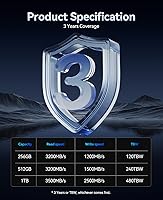
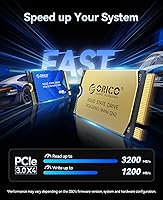
  • Sequential Read: Rated sequential read speeds reach up to 3200MB/s under optimal conditions on a PCIe 3.0 x4 interface.
  • Sequential Write: Rated sequential write speeds reach up to 1200MB/s, with real-world sustained performance subject to dynamic cache availability.
  • NAND Type: Storage cells use TLC (Triple-Level Cell) NAND flash, which balances cost and density at the expense of slightly lower write endurance compared to MLC alternatives.
  • Cache Tech: A dynamic caching layer accelerates burst write performance by temporarily treating a portion of the TLC NAND as faster SLC cache.
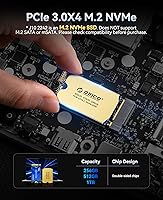
  • Heatsink: A copper heatsink with a graphene heat spreader is pre-installed on the drive to assist with thermal dissipation during sustained workloads.
  • Endurance: The drive is rated for 120TBW (terabytes written) for the 256GB variant, which is the endurance ceiling before warranty coverage on write-related wear begins to apply.
  • Warranty: ORICO provides a 3-year limited warranty, or until the 120TBW endurance threshold is reached, whichever occurs first.
  • Weight: The drive weighs 0.176 ounces, making it light enough to be a non-factor in weight-sensitive portable builds.
  • Installation: Designed for internal installation, the drive mounts directly into any compatible M.2 2242 slot using a standard M.2 retention screw.
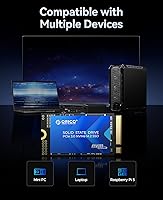
  • Compatible Devices: Confirmed compatible device categories include slim laptops, mini PCs, IoT devices, and DIY external NVMe enclosures that accept the 2242 form factor.
  • Package Type: Sold as a retail-boxed unit with full manufacturer support, not as a pulled OEM or white-label part.

Related Reviews
ORICO J10-2242 256GB M.2 NVMe SSD
78%
88%
Value for Money
83%
Read Performance
67%
Write Performance
93%
Form Factor Compatibility
76%
Thermal Management
More
GAMERKING 256GB M.2 2242 NVMe SSD
79%
93%
Form Factor Compatibility
88%
Value for Money
74%
Read/Write Performance
86%
Installation Experience
76%
Warranty & Support
More
ORICO Y20M-2242 256GB M.2 SATA SSD
77%
93%
Form Factor Accuracy
78%
Read Performance
71%
Write Performance
88%
Installation Ease
84%
Value for Money
More
ORICO Dual M.2 NVMe SSD Enclosure
79%
88%
Build Quality
84%
Thermal Management
82%
Transfer Speed
71%
Drive Compatibility
91%
Ease of Installation
More
ORICO M.2 NVMe SSD 512GB with Heatsink
86%
89%
Performance
92%
Cooling Efficiency
85%
Installation Ease
90%
Read/Write Speeds
88%
Capacity for Gaming & Everyday Use
More
ORICO IG740PRO 2TB NVMe SSD
83%
93%
Read & Write Speed
91%
Endurance & Longevity
84%
Thermal Management
88%
Data Security & Protection
92%
PS5 Compatibility & Installation
More
ORICO IG740PRO 4TB M.2 NVMe SSD
79%
91%
Sequential Read Performance
88%
Endurance & Longevity
84%
Thermal Management
79%
Value for Money
74%
PS5 Compatibility
More
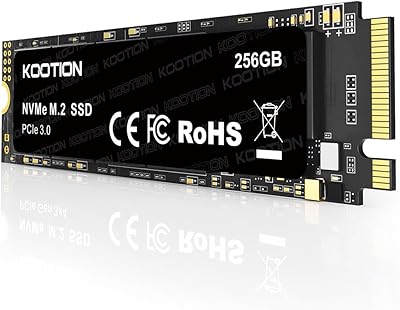
KOOTION 256GB NVMe M.2 Internal SSD
77%
88%
Value for Money
82%
Sequential Performance
71%
Real-World Speed
93%
Installation Ease
86%
Compatibility
More
ORICO TCM2 M.2 NVMe SSD Enclosure
78%
83%
Transfer Speed
61%
Thermal Management
74%
Build Quality
91%
Ease of Installation
86%
Cable Bundle Quality
More
KingSpec NE-512 2242 512GB M.2 NVMe SSD
77%
88%
Value for Money
79%
Read Performance
71%
Write Performance
93%
Installation Ease
91%
Form Factor Compatibility
More

FAQ

Check your device manual or motherboard specs — the M.2 slot will usually be labeled with the supported lengths (e.g., 2242, 2260, 2280). Physically, a 2242 slot has its retention screw hole positioned 42mm from the connector end rather than the standard 80mm. Some devices support multiple lengths, but many compact systems only have the shorter standoff available.

Not necessarily. While the physical slot may look the same, NVMe and SATA are different protocols. You need to confirm your device supports NVMe over its M.2 slot — some older or budget machines only support SATA M.2, and installing an NVMe drive in those will result in the drive not being detected at all. Check your device spec sheet before ordering.

Yes, the copper heatsink on this 2242 NVMe drive is typically attached with thermal tape and can be carefully removed if your enclosure or laptop bay has strict height clearances. Just be aware that removing it may increase operating temperatures during sustained use, especially in poorly ventilated builds.

After the operating system reserves space and the drive is formatted, you can expect roughly 220 to 230GB of usable space. For a dedicated Windows 11 boot drive with a handful of applications, that is workable but not spacious — plan your storage layout accordingly if you have a growing software library.

TLC stores three bits per cell, which makes it denser and cheaper to produce than older MLC or SLC NAND, but it does wear out faster under heavy write workloads. For everyday use — booting an OS, running applications, occasional file transfers — the 120TBW endurance rating on this compact SSD is more than sufficient for several years of normal use. It becomes a concern only if you are doing constant large-scale writes, like running a database or encoding video continuously.

Yes, but you will need a 2242-compatible NVMe enclosure — standard enclosures designed for 2280 drives will not physically secure this shorter drive properly. Once paired with the right enclosure and a USB 3.2 Gen 2 or Thunderbolt adapter, it performs well as a portable external drive, though maximum speeds will be capped by the USB interface rather than the drive itself.

On Windows 10 and 11, it works plug-and-play with no additional drivers needed. Linux kernels from recent years also recognize it natively. You will need to initialize and format the drive through Disk Management (Windows) or a disk utility (Linux/macOS) if it is being used as a secondary drive rather than a boot device.

Name-brand 2242 drives — when you can find them — tend to carry a significant price premium and are often marketed as OEM components rather than retail products. The ORICO J10-2242 offers comparable sequential read performance and comes with clearer retail warranty terms. The trade-off is brand familiarity and, in some benchmarks, slightly lower sustained write consistency compared to premium alternatives.

The Steam Deck uses a 2230 form factor, which is even shorter than 2242, so this drive will not physically fit. For other handhelds or gaming-focused mini PCs with a 2242 slot, compatibility depends on whether the device supports NVMe — always verify the slot specification before purchasing.

Not immediately. TBW is a warranty threshold, not a hard failure point. Most TLC drives continue to function beyond their rated endurance, though reliability becomes less predictable over time. If you hit 120TBW within the 3-year warranty window, ORICO covers it — but for typical home or office use, reaching that threshold within three years would require writing roughly 110GB to the drive every single day, which is far beyond what most users do.