Overview

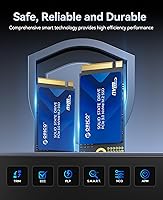
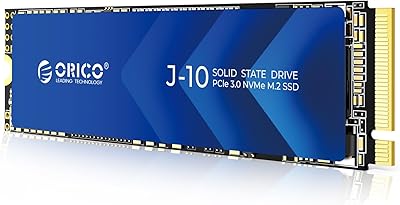
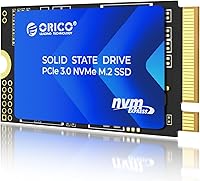
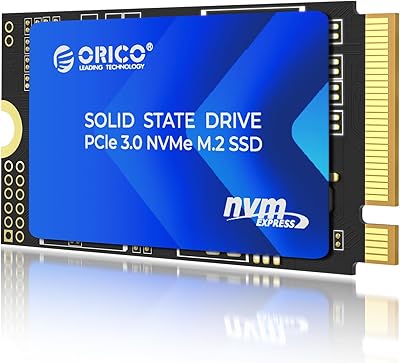
The ORICO J10-2242 256GB M.2 NVMe SSD arrived quietly in late 2024, filling a niche that larger brands have largely ignored: the 2242 form factor. While most NVMe drives ship in the longer 2280 size, a surprising number of mini PCs, older ultrabooks, and IoT boards require the shorter 42mm length — and affordable options for those devices have always been scarce. ORICO, a Shenzhen-based brand known for budget-friendly storage accessories, is positioning this drive squarely at cost-conscious builders and upgraders. Don't expect flagship speeds here. What you do get is a practical, well-priced option with a copper heatsink — a detail you rarely see at this price point.
Features & Benefits

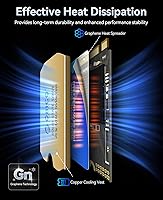
Running on a PCIe 3.0 x4 interface, this compact NVMe drive delivers read performance comfortably in the range typical of mid-generation PCIe 3.0 drives, with writes that are adequate for everyday tasks but will taper off during large, sustained transfers — that is the honest reality of TLC NAND with a dynamic write cache. Once the cache fills, speeds settle to native TLC rates, which is worth knowing upfront. For the intended use cases, though, that is rarely a dealbreaker. The copper heatsink and graphene spreader are a genuine thermal consideration for enclosed builds, not just cosmetic additions. A 3-year warranty paired with a 120TBW endurance rating rounds out a sensible package for a 256GB budget drive.

Best For

The ORICO 2242 SSD is most obviously the right call for anyone upgrading a device that physically cannot accept a standard 2280 drive — certain ThinkPads, Intel NUC units, and various ARM-based mini PCs all ship with 2242-only slots. DIY builders assembling compact external NVMe enclosures will also find it useful, since the smaller footprint fits neatly in tight enclosure designs. For IoT projects or embedded systems where storage needs are modest and reliability matters more than raw throughput, this short-form factor drive makes a lot of sense. It works well as a lightweight OS boot drive or for general document and media storage — just don't lean on it for heavy video editing or large sequential write workloads.

User Feedback

With around 86 ratings and a solid 4.4-star average, early reception has been broadly positive. Buyers consistently praise how straightforward the installation is — especially in devices where a longer drive simply won't fit. Real-world boot times and everyday responsiveness draw favorable comments, with most users noting a clear step up from the SATA SSDs this drive replaces. On the critical side, a few reviewers flag that write speeds under sustained loads do not hold up as strongly as the headline figures suggest, which is expected TLC cache behavior but worth knowing. Thermal complaints are largely absent, suggesting the heatsink earns its keep. Direct competitor comparisons are rare, likely because affordable 2242 NVMe options remain genuinely hard to find.

Pros

  • One of the few affordable NVMe options specifically available in the 2242 form factor.
  • Real-world boot and load times are noticeably faster than the SATA drives it typically replaces.
  • The copper heatsink and graphene spreader provide meaningful thermal management in enclosed builds.
  • M-Key connector design supports both internal slots and DIY external NVMe enclosure projects.
  • A 3-year warranty provides reasonable coverage for a budget-tier storage drive.
  • Lightweight at under two-tenths of an ounce, making it a non-issue for portable or weight-sensitive builds.
  • Buyers report straightforward installation, even in tight chassis with limited clearance.
  • Strong early sales rank suggests good supply reliability and active seller support.
  • Available in capacities up to 1TB for users who need more headroom down the line.
  • TLC NAND with dynamic caching handles everyday mixed workloads without any noticeable hiccups.

Cons

  • Write speeds drop significantly under sustained large transfers once the dynamic cache is exhausted.
  • 256GB feels limiting if you plan to use this as a primary drive for anything beyond a lean OS install.
  • ORICO lacks the brand trust and long-term track record of established storage names like WD or Samsung.
  • The 120TBW endurance rating for the 256GB model is on the lower end for users with write-heavy habits.
  • Independent benchmark data from third-party reviewers is still sparse given the late 2024 release.
  • No DRAM cache onboard, which can affect random read and write consistency in some workloads.
  • Thermal performance claims rely on the heatsink doing real work — drives installed without airflow may still throttle.
  • Gaming console compatibility is listed in marketing materials but is not reliably verified for most current consoles.

Ratings

The ORICO J10-2242 256GB M.2 NVMe SSD scores below are generated by AI after analyzing verified global buyer reviews, with spam, bot activity, and incentivized feedback actively filtered out. The ratings reflect a balanced picture — where this compact drive genuinely impresses and where it falls short — so you can make a confident, informed decision.
Value for Money
88%
For buyers stuck needing a 2242 form factor drive, the price-to-performance ratio here is hard to argue with. Most alternatives at this length either cost significantly more or come from less reputable sources, making this compact NVMe drive a genuinely competitive option in a thin market.
Buyers who compare it against 2280 NVMe drives at similar price points will find more performance per dollar elsewhere. The value proposition depends almost entirely on whether your device actually requires the 2242 length — without that constraint, the calculus changes.
Read Performance
83%
Users consistently report fast, snappy boot times and quick application launches that feel like a meaningful upgrade over the SATA drives this typically replaces. For everyday OS usage, the real-world read experience matches expectations for a PCIe 3.0 NVMe drive in this class.
Peak sequential read figures are marketing-optimistic — real-world sustained reads land somewhat below the ceiling quoted on the box. In mixed workloads with simultaneous reads and writes, throughput can feel less consistent than on drives with dedicated DRAM caches.
Write Performance
67%
33%
For typical tasks like saving documents, downloading files, or installing applications, write speeds feel perfectly adequate and responsive. Light users moving smaller files will likely never notice any limitation in day-to-day operation.
This is where the drive shows its budget-tier nature most clearly. Once the dynamic SLC write cache fills during large sequential transfers, speeds drop noticeably — a known characteristic of TLC NAND without a dedicated DRAM buffer. Users copying large video folders or doing disk-to-disk backups will feel this ceiling acutely.
Form Factor Compatibility
93%
The 2242 length is the entire reason most buyers choose this drive, and it delivers exactly what it promises — fitting cleanly into devices that simply cannot accommodate a standard-length NVMe module. Installation in Intel NUC units, compact ThinkPad models, and DIY external enclosures has been consistently smooth according to buyers.
The pre-attached heatsink adds marginal height that can cause clearance issues in the tightest chassis designs. A small number of users in ultra-slim laptop upgrades have had to carefully assess whether the heatsink clears the device's internal shield before committing.
Thermal Management
76%
24%
The copper heatsink and graphene heat spreader are a genuine differentiator at this price tier, and buyers using the drive in open or moderately ventilated mini PC builds report stable temperatures even during extended workloads. It is not a cosmetic addition — it does measurable thermal work in the right environment.
In fully sealed, fanless enclosures with no active airflow, the passive heatsink has limited ability to dissipate heat under sustained write loads. A handful of users in deeply enclosed IoT or embedded setups noted occasional thermal throttling, though this is more a placement issue than a hardware defect.
Build Quality
78%
22%
The drive feels solid in hand, and the heatsink is firmly bonded rather than loosely clipped on — a detail buyers appreciate when seating it in tight spaces. For a budget-oriented product, the physical construction does not feel cheap or flimsy.
ORICO is not yet in the same conversation as WD or Samsung when it comes to established manufacturing confidence. Some buyers remain cautious about long-term component consistency across production batches, a concern that is difficult to fully assess with a product that only launched in late 2024.
Installation Experience
91%
Across the board, buyers call out how painless the installation process is — the standard M-Key connector seats correctly on the first try, and no drivers or configuration steps are needed beyond what the OS handles automatically. Even less experienced builders have completed the upgrade without issues.
The heatsink height adds one small variable to check before installing, particularly if the slot has a cover plate. This is a minor consideration but worth verifying for anyone upgrading a device they have never opened before.
Endurance & Longevity
63%
37%
For light to moderate everyday use — booting an OS, storing documents, occasional media files — the 120TBW endurance rating is realistic and sufficient. Most home users will not approach that threshold for several years under typical workloads.
120TBW is a conservative figure for a 256GB drive, and buyers who write data heavily — frequent large backups, continuous logging, or scratch disk use — will burn through that endurance budget faster than expected. Prosumer and workstation users should budget for a drive with a more generous TBW rating.
Random I/O Performance
69%
31%
For a DRAM-less TLC design, random read performance is acceptable for OS and application responsiveness in everyday use. Users running lightweight operating environments report no noticeable lag in typical multitasking scenarios.
Without a dedicated DRAM cache, random write performance under queue depth pressure is weaker than on drives with onboard memory. This becomes perceptible in scenarios that involve many small simultaneous write operations, such as database activity or aggressive system indexing.
Warranty & Support
72%
28%
A 3-year warranty is a credible commitment for a budget drive and provides reasonable reassurance for buyers who are cautious about off-brand storage. ORICO has an active Amazon seller presence, which simplifies the returns and claims process for most buyers.
The warranty expires at 120TBW if that limit is reached before the 3-year window closes, which is a conditional coverage model that some buyers find less reassuring than a flat time-based guarantee. Long-term post-warranty support infrastructure from ORICO is less established than from tier-one storage brands.
OS & Software Compatibility
89%
The drive works out of the box on Windows 10, Windows 11, and mainstream Linux distributions with zero driver installation required. TRIM support is confirmed, meaning the OS can actively maintain performance health over time without any manual intervention.
ORICO does not bundle any SSD management or health monitoring software, which means users who want drive diagnostics need to source third-party tools independently. This is a minor gap, but brand-name alternatives typically offer polished companion apps as part of the package.
Availability & Sourcing
74%
26%
The ORICO 2242 SSD is straightforward to purchase through major online channels, and its strong Amazon subcategory ranking confirms it is an in-stock, actively sold product rather than a hard-to-find specialty item. For a niche form factor, that accessibility is genuinely useful.
Offline retail availability is essentially nonexistent, and buyers outside major markets may face slower shipping or limited return options. The relatively small review base also means the long-term reliability picture is still developing.
Packaging & Unboxing
71%
29%
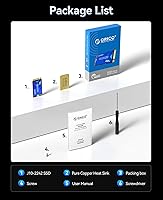
The drive arrives in clean, compact retail packaging that protects the hardware adequately during transit. Buyers report no damage on arrival in the vast majority of cases, and the included contents match expectations for a standalone drive at this tier.
There are no accessories included beyond the drive itself — no mounting screw, no installation guide beyond basic documentation. Buyers new to M.2 upgrades may need to source a compatible screw separately, which is a small but occasionally frustrating omission.

Suitable for:

The ORICO J10-2242 256GB M.2 NVMe SSD is built for a specific and underserved group of buyers: people whose devices physically require the shorter 2242 form factor and who have struggled to find affordable, modern NVMe options for them. If you are reviving an older ultrabook, upgrading an Intel NUC or similar mini PC, or slotting storage into an ARM-based single-board system, this compact NVMe drive addresses a real gap in the market. It also makes good sense for DIY builders who want to pair a small NVMe drive with a compact external enclosure without overspending. As a boot drive for a lightweight OS, or for storing documents, photos, and casual media, it performs well above what you would expect from a SATA SSD. Budget-conscious IoT developers and hobbyists who need dependable, low-profile storage for embedded projects will find it a practical and well-priced choice.
Not suitable for:

The ORICO J10-2242 256GB M.2 NVMe SSD is not the right tool if your device accepts a standard 2280 drive — at that point, you have far more competitive options available at similar or lower prices. Anyone planning to use this drive for sustained, heavy write workloads — think large video file transfers, continuous logging at high data rates, or frequent large backup operations — should temper expectations, since TLC NAND with a dynamic cache will slow down noticeably once that cache saturates. The 256GB capacity is also a limiting factor for users who need ample room for games, large media libraries, or professional project files. If you are prioritizing long-term endurance for a write-intensive server or NAS application, the 120TBW rating on the 256GB model is modest. And if brand recognition and an established service network matter to you, a drive from WD, Samsung, or Sabrent may offer more peace of mind despite the tighter availability in the 2242 size.

Specifications

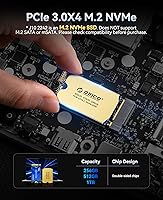
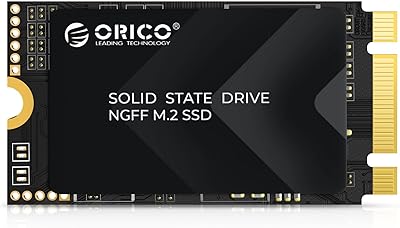
  • Form Factor: M.2 2242 format, measuring 42mm in length — shorter than the standard 2280 drives found in most consumer laptops and desktops.
  • Interface: PCIe 3.0 x4 with an M-Key M.2 connector, compatible with any M.2 slot that supports NVMe over PCIe 3.0.
  • Protocol: Operates on the NVMe protocol, offering substantially lower latency and higher throughput than legacy AHCI-based SATA SSDs.
  • Capacity: Available in a 256GB configuration for this base model, with higher capacity variants in the same family reaching up to 1TB.
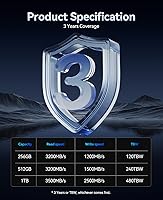
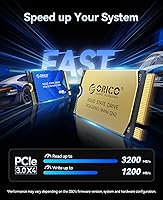
  • Read Speed: Sequential read performance reaches up to approximately 3200MB/s under optimal, sustained conditions on a compatible PCIe 3.0 host.
  • Write Speed: Sequential write speeds peak near 1200MB/s within the dynamic write cache window before settling to native TLC NAND rates during large transfers.
  • NAND Type: Uses TLC (Triple-Level Cell) NAND flash paired with a dynamic SLC write cache to balance everyday performance with reasonable cell endurance.
  • Thermal Design: Ships with a pre-attached copper heatsink and graphene heat spreader to help manage operating temperatures inside enclosed or thermally constrained systems.
  • Weight: The drive weighs approximately 0.176 ounces, making it one of the lightest storage upgrade options available for compact and portable builds.
  • Warranty: Covered by a 3-year manufacturer warranty, or until the drive reaches its 120TBW (terabytes written) endurance limit — whichever condition occurs first.
  • Endurance Rating: The 256GB model is rated for 120TBW, which is adequate for light to moderate everyday use but modest compared to prosumer or enterprise-class drives.
  • Shock Resistance: As a solid-state drive with no moving parts, it offers inherent resistance to physical shock and vibration compared to traditional hard disk drives.
  • TRIM Support: Supports the TRIM command, allowing compatible operating systems to actively manage unused blocks and help maintain long-term write performance.
  • Manufacturer: Designed and produced by Shenzhen ORICO Technologies Co., Ltd., a China-based company with a broad catalog of storage accessories and consumer peripherals.
  • Launch Date: First made available in October 2024, making it a relatively recent release with an early but growing pool of verified user feedback.
  • Package Dimensions: The retail packaging measures approximately 5.04 x 3.5 x 0.87 inches, compact enough for standard postal or courier shipping.
  • Compatible Uses: Intended for use in laptops, mini PCs, IoT devices, and DIY external NVMe enclosures that support the 2242 M-Key form factor.

Related Reviews
GAMERKING 256GB M.2 2242 NVMe SSD
79%
93%
Form Factor Compatibility
88%
Value for Money
74%
Read/Write Performance
86%
Installation Experience
76%
Warranty & Support
More
ORICO J10-2242 256GB NVMe M.2 SSD
78%
83%
Read Speed Performance
61%
Write Speed & Sustained Performance
78%
Thermal Management
88%
Value for Money
81%
Build Quality & Packaging
More
ORICO Y20M-2242 256GB M.2 SATA SSD
77%
93%
Form Factor Accuracy
78%
Read Performance
71%
Write Performance
88%
Installation Ease
84%
Value for Money
More
ORICO Dual M.2 NVMe SSD Enclosure
79%
88%
Build Quality
84%
Thermal Management
82%
Transfer Speed
71%
Drive Compatibility
91%
Ease of Installation
More
ORICO TCM2 M.2 NVMe SSD Enclosure
78%
83%
Transfer Speed
61%
Thermal Management
74%
Build Quality
91%
Ease of Installation
86%
Cable Bundle Quality
More
ORICO M.2 NVMe SSD 512GB with Heatsink
86%
89%
Performance
92%
Cooling Efficiency
85%
Installation Ease
90%
Read/Write Speeds
88%
Capacity for Gaming & Everyday Use
More
ORICO IG740PRO 2TB NVMe SSD
83%
93%
Read & Write Speed
91%
Endurance & Longevity
84%
Thermal Management
88%
Data Security & Protection
92%
PS5 Compatibility & Installation
More
ORICO IG740PRO 4TB M.2 NVMe SSD
79%
91%
Sequential Read Performance
88%
Endurance & Longevity
84%
Thermal Management
79%
Value for Money
74%
PS5 Compatibility
More
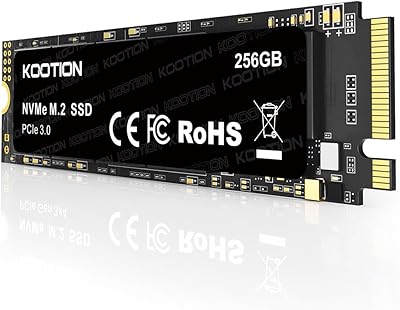
KOOTION 256GB NVMe M.2 Internal SSD
77%
88%
Value for Money
82%
Sequential Performance
71%
Real-World Speed
93%
Installation Ease
86%
Compatibility
More
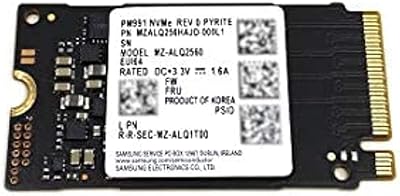
Samsung PM991 256GB M.2 2242 NVMe SSD
78%
94%
Form Factor Fit
78%
Read/Write Performance
88%
Build Reliability
83%
Value for Money
91%
Installation Ease
More

FAQ

Check your device's service manual or the manufacturer's spec page — it will list the supported M.2 slot lengths. Physically, a 2242 slot has its mounting screw hole at 42mm from the connector end, while a 2280 slot positions it at 80mm. If your chassis only has a screw hole at the 42mm position, a standard 2280 drive simply will not seat correctly.

Yes, it works with Windows 11 without any special drivers — the OS natively supports NVMe storage over PCIe. Just make sure your system's BIOS has NVMe boot support enabled if you plan to use it as your primary OS drive.

It can, depending on your build. The copper heatsink adds a small amount of height to the drive, so if your device has a very low-clearance slot cover or a metal shield directly above the M.2 slot, measure carefully before installing. In most mini PCs and open DIY builds it fits without issue, but ultra-slim laptops with tight internal tolerances could be a problem.

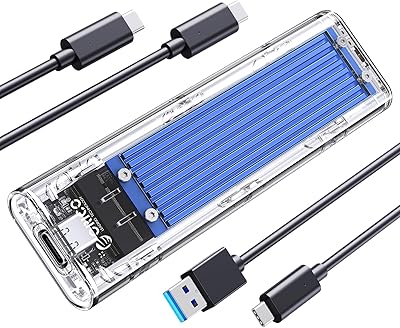
Yes, as long as the enclosure accepts M.2 M-Key drives and supports the 2242 length. Many popular enclosures designed for 2280 drives include a secondary mounting point for 2242 as well — check the enclosure's listed compatible form factors before buying.

For occasional large transfers it will be fine, but under sustained, continuous writes the drive will slow down once its dynamic SLC cache fills. This is normal behavior for TLC NAND at this price tier — it is not a defect. If you are regularly moving tens of gigabytes at a time, a drive with a larger or dedicated DRAM cache would serve you better.

Absolutely. Linux has had solid NVMe support for years, and most modern distributions will recognize the drive immediately during installation. Just confirm your system's UEFI firmware supports NVMe boot, which is standard on any machine made in roughly the last seven or eight years.

The drive does not immediately fail at 120TBW — that figure is the manufacturer's conservative rated minimum. Most TLC drives continue functioning well past their rated endurance under normal use. The warranty, however, does expire at that threshold, so any failure beyond that point would not be covered.

The WD SN520 and Sabrent options have longer track records and more third-party benchmark data available, which gives them an edge in verified confidence. In everyday tasks — booting an OS, opening applications, handling documents — the performance difference between these drives will be essentially invisible to most users. Where brand-name drives may pull ahead is in sustained write consistency and long-term reliability data.

No additional drivers are needed on Windows 10, Windows 11, or modern Linux distributions. ORICO does not bundle proprietary SSD management software, so for drive health monitoring you would use a third-party tool like CrystalDiskInfo on Windows or smartctl on Linux.

It depends entirely on your use case. For a lean Linux install, a Chromebook-style lightweight Windows setup, or a dedicated application drive alongside other storage, 256GB is workable. If you want to install a full Windows environment with a few applications and still have breathing room, the 512GB variant in the same family is worth the modest price difference.