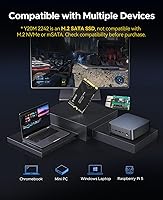
Overview

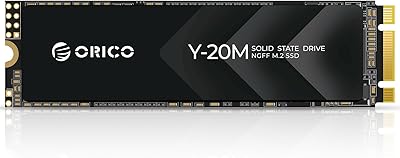
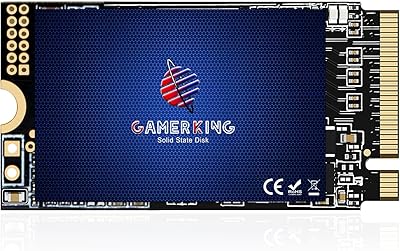
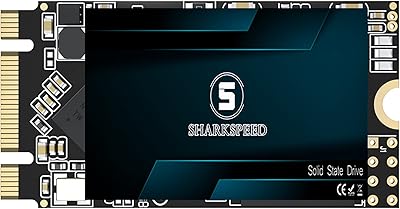
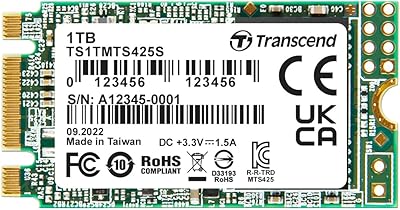
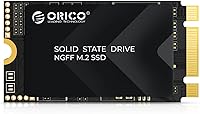
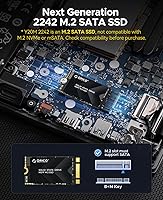
The ORICO Y20M-2242 256GB M.2 SATA SSD is built for a specific problem: finding a drive that actually fits in devices designed around the shorter 2242 form factor. Most SSDs ship in the longer 2280 size, which leaves mini PC owners and ultrabook users stuck. This compact M.2 SATA drive measures just 42mm long and weighs under 0.2 oz — practically unnoticeable once installed. It connects via SATA III, not NVMe, so verify your slot type before purchasing. ORICO, a well-established Chinese accessories brand, launched it in late 2024 as an affordable way to breathe new life into compact or aging hardware.

Features & Benefits

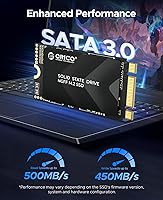
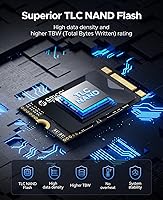
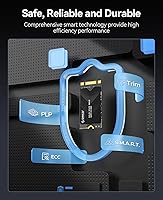
The ORICO 2242 SSD uses double-sided TLC NAND, which packs more storage into its tiny frame — though worth contextualizing honestly: TLC is not the most write-enduring NAND type, making it a stronger fit for moderate workloads than relentless daily writing tasks. TRIM support helps the drive manage itself over time and slows unnecessary performance degradation. Real-world read speeds approach the 500MB/s SATA III ceiling, which is genuinely quick for everyday use — just don't compare it to NVMe drives running multiples of that. Low power draw is a practical bonus for laptop users watching battery life, and no special drivers or setup software are required on most systems.

Best For

This slim-form-factor SSD is designed for a narrow but underserved audience: people with mini PCs or compact laptops that physically cannot accommodate a standard 2280 drive. Think older ThinkPads, Intel NUC variants, industrial embedded boards, or small form factor desktops with a 2242-only slot. It handles light-to-moderate daily use well — browsing, document editing, photo libraries, and occasional gaming. If you need a primary drive for a demanding workstation, this is not the right pick. But for a secondary storage expansion, a budget OS refresh on an older machine, or a Linux hobbyist project, this compact M.2 SATA drive covers the essentials without unnecessary cost.

User Feedback

Early buyer reception for the ORICO 2242 SSD is encouraging. With a 4.4-star average across 164 ratings and a top-350 rank in its Amazon category, it has built real traction for a drive that only launched in late 2024. Positive reviews frequently highlight fit accuracy — buyers confirm it physically slots into 2242-spec machines without issues — and note how noticeably snappier a machine feels after the swap. On the critical side, some users report sustained write performance lagging behind the advertised ceiling under heavy load, which is typical behavior for TLC-based drives. Long-term durability remains an open question given how recently this model entered the market.

Pros

  • Fits the rare 2242 form factor that most competing drives skip entirely.
  • Plug-and-play installation — no drivers or proprietary software needed on Windows or Linux.
  • TRIM support helps maintain consistent performance over time without manual intervention.
  • Low power consumption makes it a practical choice for battery-dependent ultrabooks and tablets.
  • Available in capacities up to 1TB, so buyers can scale storage to actual needs.
  • Early user ratings average 4.4 stars, with many confirming accurate form-factor fit.
  • Ranked in the top 350 internal SSDs on Amazon, indicating genuine market traction.
  • Double-sided NAND layout maximizes capacity within an extremely compact physical footprint.
  • B+M Key interface offers broad compatibility across a wide range of M.2 SATA motherboards.

Cons

  • SATA III interface caps real-world speeds well below what modern NVMe drives can achieve.
  • TLC NAND is less write-enduring than MLC or SLC, making it a weaker choice for heavy daily writes.
  • Only 164 ratings to date — too early to draw firm conclusions about long-term reliability.
  • 256GB feels limiting for users who plan to use this as a sole system drive.
  • No published endurance rating (TBW) listed, making it hard to benchmark expected lifespan.
  • Buyers must confirm their device has an M.2 SATA slot — NVMe-only slots will not recognize this drive.
  • Sustained write workloads may cause performance throttling typical of TLC-based budget drives.
  • No mention of included mounting hardware, which some 2242 installations require separately.

Ratings

Our AI rating engine analyzed verified global buyer reviews for the ORICO Y20M-2242 256GB M.2 SATA SSD, actively filtering out incentivized, duplicate, and bot-generated feedback to surface what real users genuinely experienced. The scores below reflect both where this compact M.2 SATA drive earns its keep and where it falls short — no softening of the rough edges. Whether you are upgrading a mini PC or rescuing an aging ultrabook, these ratings are designed to give you an honest picture before you commit.

Form Factor Accuracy
93%
Buyers consistently confirm the drive physically fits 2242-slot devices without modification — a genuine relief given how niche this format is. For mini PC owners and ThinkPad upgraders who have been burned by incorrect-length drives before, this accurate sizing is the single most important thing the ORICO 2242 SSD gets right.
A small number of users noted that the mounting screw hole alignment felt slightly tight on certain boards, requiring careful seating. No drive failures were attributed to this, but it adds a minor friction point to what should otherwise be a straightforward install.
Read Performance
78%
22%
For SATA III, sequential read speeds are close to the rated 500MB/s ceiling in real-world benchmarks, which translates to noticeably faster boot times and snappier application launches compared to older HDDs or worn eMMC storage. Users upgrading from spinning disks report the difference as dramatic.
Buyers coming from NVMe backgrounds find the throughput underwhelming, which is a framing issue as much as a product one. Real-world speeds on sustained large-file reads can dip below the advertised peak, and a handful of users flagged that benchmarking tools showed figures 10–15% below the maximum spec.
Write Performance
71%
29%
For everyday write tasks — saving documents, downloading files, installing apps — this slim-form-factor SSD performs solidly and without hesitation. Users handling photo libraries and light data transfers rarely report any bottleneck under normal workloads.
Sustained write workloads expose the TLC NAND's ceiling more clearly, with some users observing noticeable slowdowns during large sequential writes once the SLC cache is exhausted. This is expected behavior for budget TLC drives, but it is worth knowing if you plan to move large video files regularly.
Installation Ease
88%
The plug-and-play nature of this drive earned consistent praise from users who had never installed an SSD before. No drivers, no ORICO software, no formatting headaches on Windows — just slot it in, initialize via Disk Management, and it is ready to use within minutes.
Some users wished a mounting screw was included in the package, since 2242 slots on certain boards require one that is not always bundled with the host device. Linux users with less common distributions also occasionally reported needing to manually trigger TRIM configuration, which is a minor but real extra step.
Value for Money
84%
In the 2242 SATA niche, options are genuinely limited, and the ORICO drive delivers a competitive price-per-gigabyte ratio without cutting corners on the essentials. Buyers upgrading budget mini PCs or giving a second life to an older laptop consistently describe it as money well spent.
A few users noted that slightly more budget stretching opens the door to 2242 NVMe options with meaningfully faster throughput. For buyers whose devices support NVMe in a 2242 slot, the value case for this SATA drive weakens considerably.
Build Quality
76%
24%
The double-sided PCB construction feels solid for the price tier, and the drive's minimal weight means it exerts no stress on the M.2 connector. Nothing about the physical construction suggests corners were cut in a way that would compromise normal operation.
The lack of any heat spreader or protective coating is noticeable on closer inspection, though temperatures in typical 2242 devices are rarely extreme. ORICO does not publish an operating temperature range prominently, which left some more technically minded buyers wanting more transparency.
Long-Term Reliability
63%
37%
Early returns from users who have had the drive in service for several months report no failures or significant performance degradation under light daily use. TRIM support working in the background appears to be helping maintain consistency over time.
The drive only launched in October 2024, which makes multi-year reliability data simply unavailable. TLC NAND has a lower write endurance ceiling than MLC alternatives, and ORICO has not published a TBW figure — both factors introduce uncertainty for users planning to rely on this drive heavily over several years.
Compatibility Range
81%
19%
The B+M Key interface covers a wide range of M.2 SATA motherboards across Windows and Linux systems, and users on niche platforms like embedded Linux boards report it working without issue. The broad OS support is a genuine asset for hobbyists running non-standard setups.
The SATA-only protocol is a hard limit that catches some buyers off guard — devices with NVMe-only M.2 slots will not recognize the drive at all. This incompatibility is fundamental, not a defect, but it generates confusion among buyers who assume all M.2 drives are interchangeable.
Power Efficiency
86%
Users in battery-sensitive setups — particularly ultrabook owners — report no meaningful impact on battery life after installation, with some noting slight improvements over the spinning drives they replaced. The low idle power draw suits always-on compact devices well.
ORICO does not publish precise watt figures for idle or active states, making it difficult to compare rigorously against competing drives. For most buyers this will not matter, but power-conscious embedded system builders sometimes want that data.
Packaging & Presentation
67%
33%
The packaging is functional and protective enough to ensure the drive arrives undamaged, and the no-frills approach aligns with the budget-conscious positioning of this product. Buyers ordering for straightforward upgrades are not paying for unnecessary packaging.
Several users mentioned the absence of any accessory bundle — no mounting screw, no thermal pad, no installation guide — which feels like a small but avoidable omission at this price point. Competitors in the same segment occasionally include these items, making ORICO look slightly bare by comparison.
Thermal Management
69%
31%
Under light to moderate workloads in typical mini PC or laptop environments, users have not flagged overheating as a concern. The compact form factor means the drive tucks away in well-ventilated spaces without generating noticeable heat.
No heat spreader is included, and sustained heavy workloads in poorly ventilated enclosures could theoretically push temperatures higher than ideal for TLC NAND longevity. Users running this drive in fanless industrial enclosures should monitor temperatures during initial setup.
Brand Trustworthiness
74%
26%
ORICO is a recognized name in the storage accessories space with a track record across USB hubs, enclosures, and drives. Buyers familiar with the brand generally approach this purchase with reasonable confidence, and the 4.4-star aggregate rating reinforces that early adopters are satisfied.
ORICO is not in the same trust tier as established SSD specialists like Samsung or Western Digital, and the absence of a clearly stated warranty duration in the listing gives some buyers pause. First-time ORICO buyers occasionally express uncertainty about after-sales support responsiveness.
Capacity Usefulness
72%
28%
For secondary storage, a dedicated Linux partition, or a clean Windows install with selective app loading, 256GB covers most light-to-moderate use cases without feeling constrained. Buyers using it as an expansion drive alongside existing storage find the capacity well matched to the price.
As a sole system drive, 256GB fills up faster than expected once a modern OS, updates, and everyday apps settle in. Users who did not account for this have reported needing to manage storage more actively than anticipated, which undercuts the convenience of the upgrade.

Suitable for:

The ORICO Y20M-2242 256GB M.2 SATA SSD was built for a specific kind of upgrader: someone whose device physically requires the shorter 2242 form factor and who simply cannot use the far more common 2280-length drives. That includes owners of compact mini PCs like Intel NUC variants, certain older ThinkPad models, and thin-and-light laptops where the M.2 slot was designed around this smaller footprint. It also suits hobbyists running Linux on single-board computers or embedded platforms that expect a standard B+M Key SATA interface. Budget-conscious DIY builders looking to add secondary storage without overspending will find the price-to-capacity ratio sensible for light workloads. If your daily computing involves web browsing, document editing, photo management, or casual gaming, this slim-form-factor SSD delivers a noticeable improvement over an old HDD or worn-out eMMC drive without requiring any driver setup or special configuration.

Not suitable for:

The ORICO Y20M-2242 256GB M.2 SATA SSD is a poor fit for anyone expecting NVMe-level throughput — it is a SATA III drive with a hard speed ceiling, and buyers who confuse M.2 form factor with NVMe protocol will be disappointed. Content creators, video editors, or developers who regularly move large files or run read/write-intensive applications should look at higher-endurance MLC or SLC-based drives instead, since TLC NAND under sustained write pressure can throttle noticeably. It is also not the right pick as a primary OS drive in a performance workstation, where faster NVMe options exist at competitive prices. Anyone with a standard 2280 slot in their device gains nothing from the shorter 2242 length and should shop accordingly. Finally, buyers expecting long-term durability data should note this drive only hit the market in late 2024, so multi-year reliability track records simply do not exist yet.

Specifications

  • Form Factor: M.2 2242, measuring 42mm x 22mm — shorter than the standard 2280 drives found in most consumer laptops.
  • Interface: SATA III 6Gb/s with a B+M Key edge connector, compatible with M.2 SATA slots but not NVMe slots.
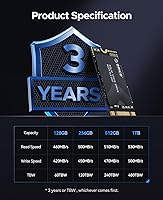
  • Capacity: 256GB usable storage, with the same model family also available in 128GB, 512GB, and 1TB variants.
  • Read Speed: Sequential read speed rated at up to 500MB/s under optimal conditions, consistent with the SATA III throughput ceiling.
  • Write Speed: Sequential write speed rated at up to 450MB/s, suitable for everyday file transfers and system operations.
  • NAND Type: Double-sided TLC (Triple-Level Cell) NAND flash, which balances storage density and cost at the expense of some write endurance.
  • TRIM Support: TRIM command is supported, allowing the operating system to actively manage unused data blocks and preserve long-term drive performance.
  • Power Draw: Low power consumption design makes it appropriate for battery-operated devices such as ultrabooks and compact tablets.
  • OS Compatibility: Compatible with Windows and Linux operating systems; no proprietary drivers or formatting software are required for installation.
  • Weight: The drive weighs approximately 0.176 oz (about 5g), making it negligible in any weight-sensitive portable device build.
  • Compatible Devices: Designed for ultra-thin laptops, mini PCs, and desktops that feature an M.2 SATA slot — not suitable for NVMe-only M.2 slots.
  • Installation Type: Internal installation only; the drive slots directly into an M.2 2242 socket and typically secures with a single small retaining screw.
  • Manufacturer: Produced by Shenzhen ORICO Technologies Co., Ltd, a Chinese electronics accessories brand with a broad range of storage and connectivity products.
  • Release Date: This model first became available in October 2024, making it a relatively new entry in the M.2 2242 SATA segment.
  • User Rating: Holds a 4.4 out of 5 star average based on 164 customer ratings at the time of this review.
  • BSR Ranking: Ranked #344 in the Internal Solid State Drives category on Amazon, indicating above-average market traction for a recently launched product.

Related Reviews
ORICO M.2 2242 NVMe SSD 256GB
88%
94%
Performance
91%
Speed (Read/Write)
88%
Heat Management
92%
Ease of Installation
87%
Value for Money
More
ORICO Y20M M.2 2280 SATA SSD 4TB
85%
96%
Storage Capacity
91%
Value for Money
82%
Read Speed Performance
80%
Write Speed Performance
89%
Energy Efficiency
More
GAMERKING 256GB M.2 2242 NVMe SSD
85%
89%
Performance (Read/Write Speeds)
92%
Value for Money
85%
Ease of Installation
82%
Thermal Management
90%
Form Factor/Compatibility
More
ORICO M.2 2280 SATA SSD 2TB
86%
88%
Overall Performance
93%
Ease of Installation
90%
Value for Money
85%
Compatibility with Devices
82%
Data Transfer Speed
More
ORICO Y20M 512GB M.2 SATA SSD
78%
61%
Compatibility Clarity
78%
Read/Write Performance
88%
Installation Experience
84%
Value for Money
74%
Long-Term Reliability
More
ORICO Y20M 1TB M.2 SATA SSD
80%
71%
Compatibility Clarity
78%
Read/Write Performance
91%
Installation Ease
83%
Value for Money
74%
Drive Longevity & Health Features
More
ORICO M.2 2242 NVMe SSD 1TB
87%
89%
Performance
92%
Value for Money
88%
Heat Dissipation
75%
Installation Ease
91%
Build Quality
More
S SHARKSPEED 4TB M.2 2242 SATA SSD
84%
92%
Performance
89%
Value for Money
90%
Reliability
86%
Durability
91%
Speed
More
KingSpec NT Series 256GB M.2 SATA SSD
85%
89%
Performance
92%
Value for Money
81%
Compatibility
88%
Speed (Read/Write)
85%
Durability
More
KingSpec NT Series 1TB M.2 2242 SATA SSD
86%
89%
Performance Boost Over HDDs
93%
Ease of Installation
85%
Compatibility with Devices
88%
Speed (Read/Write)
92%
Value for Money
More

FAQ

It depends on two things: the physical length of your slot and whether it supports SATA or NVMe. This drive is 42mm long (2242 form factor), so your laptop needs to have a 2242-compatible mounting point. More critically, it only works in M.2 SATA slots — if your device has an NVMe-only slot, the drive will not be recognized even if it physically fits.

Check your laptop or mini PC manual, or look up the motherboard/chassis specs online using the model number. Some boards support both lengths with multiple mounting holes, while others are fixed. When in doubt, physically open the device and measure the distance from the M.2 connector to the nearest screw hole — 42mm means 2242, 80mm means 2280.

Yes, both share the M.2 connector format, which causes a lot of confusion. But the ORICO Y20M-2242 256GB M.2 SATA SSD uses the SATA III protocol, not NVMe. NVMe drives use the PCIe bus and can reach speeds several times higher. This compact M.2 SATA drive is a solid performer for everyday tasks, but it operates within SATA III limits — roughly 500MB/s read versus the 3,000MB/s+ that entry-level NVMe drives achieve.

On Windows, you will need to initialize and format the drive through Disk Management if it is being used as a secondary drive — but that takes about two minutes and requires no special tools. If you are doing a clean OS install, just boot from your installer media and point it at the new drive. On Linux, standard partitioning tools like fdisk or GParted work fine. No ORICO software is required.

For light daily workloads — web browsing, document editing, photo storage — TLC-based drives like this one typically hold up well for several years. The concern with TLC NAND is write endurance under heavy sustained use, such as frequent large file transfers or constant database writes. ORICO has not published a TBW (terabytes written) figure for this model, which makes it harder to quantify. For light use, it should serve you reliably; for write-intensive work, a drive with a published TBW rating and MLC NAND would be a safer long-term bet.

It can work as a primary OS drive for lighter setups, and plenty of users install Windows or Linux on it without issues. That said, 256GB fills up faster than you might expect once the OS, apps, and updates settle in. If this is your only drive, consider whether 256GB gives you enough headroom. For a secondary storage role — offloading files, running a second OS, or expanding a mini PC — it is a natural fit.

ORICO does not prominently advertise an included mounting screw in the product listing. Most M.2 2242 installations require a small retention screw that is typically supplied with the motherboard or laptop. If your device did not come with a spare, they are widely available and cost almost nothing — just match the thread size (usually M2 x 3mm).

Common devices with 2242 M.2 slots include certain Intel NUC generations, some Lenovo ThinkPad E and L series models, and various industrial or fanless mini PCs. Some Beelink and Minisforum mini PCs also use this form factor. Always verify your specific model before ordering — even within the same product line, different revisions sometimes use different M.2 slot lengths.

If anything, it should improve battery life compared to a traditional hard drive, since SSDs consume significantly less power. The ORICO 2242 SSD is specifically designed with low power consumption in mind, which makes it a good pairing for ultrabooks and other battery-sensitive devices. The difference versus another SSD of similar spec will be minimal, but you should not see any battery regression from switching.

The 2242 form factor is a niche segment, so options are fewer than in the more common 2280 space. Some brands offer 2242 NVMe drives that deliver significantly faster speeds, but they are harder to find and typically cost more. Within the 2242 SATA category specifically, this slim-form-factor SSD is competitive in both price and rated throughput. If raw speed is your priority and your device supports 2242 NVMe, it is worth exploring that avenue before committing to a SATA drive.