Overview

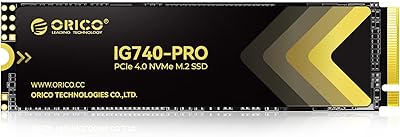
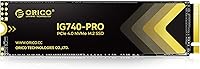
The ORICO IG740PRO 2TB NVMe SSD enters a crowded PCIe 4.0 market with an angle most consumer drives don't bother with: industrial-grade reliability engineering at a price that actually makes sense for regular buyers. ORICO isn't a household name the way Samsung or WD is, but that's not necessarily a red flag — it's a well-established Shenzhen-based manufacturer with a broad product catalog and real engineering credentials. What genuinely sets the IG740PRO apart from similarly priced competitors is the included copper heatsink and the emphasis on endurance specs that go well beyond marketing. This isn't a certified data-center unit, but for enthusiasts, PS5 upgraders, and light industrial users, it checks boxes that pricier drives often ignore.
Features & Benefits

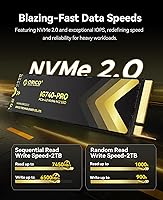
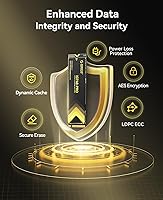
At its core, this industrial-grade NVMe drive runs on PCIe 4.0 x4 with the NVMe 2.0 protocol, hitting sequential reads of up to 7,450MB/s. That number sounds impressive in benchmarks, but in practice it means large file transfers — video projects, game installations, OS boots — finish noticeably faster than on a PCIe 3.0 drive. The 1200 TBW endurance rating on the TLC NAND is worth highlighting: at typical home or office write volumes, you'd be looking at well over a decade of use before hitting that ceiling. Power-loss protection and LDPC ECC error correction add a meaningful safety net against data corruption, and hardware-level AES encryption covers users who handle sensitive files. The MTBF figure of 1.5 million hours is well above consumer-grade averages.

Best For

The IG740PRO makes the most sense for a few specific types of buyers. PS5 owners will find it particularly attractive — the copper heatsink is already included, so there's no separate purchase to worry about, and 2TB gives plenty of room for a large game library. Creative professionals and home office workers who move big files regularly will appreciate the speed without needing to pay a premium for a brand-name drive. It also fits comfortably in edge computing setups or light industrial applications where MTBF and error correction matter but a full enterprise solution is overkill. And for anyone migrating from PCIe 3.0, the performance jump here is real and noticeable day-to-day.

User Feedback

Across 418 ratings, this ORICO SSD holds a 4.6-star average — a score that reflects genuine satisfaction rather than a small sample size. Buyers consistently call out the speed and value combination as the main draw, and the PS5 installation experience draws frequent praise, with many noting the heatsink fits cleanly without hassle. On the critical side, a handful of users flag concerns about long-term brand support and whether ORICO's warranty service is as accessible as that of larger competitors. A few laptop users also mention that sustained write performance can dip under heavy continuous load — not unusual for TLC-based drives, but worth knowing. Brand skepticism is real, yet most reviewers say the real-world performance quieted their doubts quickly.

Pros

  • PCIe 4.0 speeds translate to noticeably faster boot times, file transfers, and game loads in real daily use.
  • The included copper heatsink saves PS5 owners a separate purchase and fits the expansion bay cleanly.
  • A 1200 TBW endurance rating is genuinely strong for a TLC-based drive at this price tier.
  • Hardware-level AES encryption protects sensitive data without requiring any software configuration.
  • Power-loss protection and LDPC ECC error correction add a meaningful data safety layer most consumer drives skip.
  • Broad compatibility covers desktops, laptops, PS5, and VR devices with no special drivers needed.
  • The MTBF rating exceeds 1.5 million hours, comfortably above typical consumer-grade SSD averages.
  • Backward compatibility with PCIe 3.0 slots gives older-system owners a viable upgrade path.
  • At its price point, the overall feature-to-cost ratio is difficult to match from established brand-name alternatives.

Cons

  • No dedicated drive management software for monitoring health, temperatures, or firmware updates is included.
  • Sustained sequential write performance drops under prolonged heavy load, consistent with TLC NAND architecture.
  • ORICO's after-sales warranty service is less accessible than Samsung or WD for buyers in Western markets.
  • The heatsink adds physical height that can conflict with RAM clearance in compact ITX builds or slim laptops.
  • No printed installation guide is included, which can frustrate less experienced builders.
  • Older motherboards or pre-2020 laptops may require a BIOS update before the drive is recognized.
  • Thermal throttling can occur in enclosed environments with poor airflow, even with the copper heatsink installed.
  • The heatsink thermal pad contact quality has been reported as inconsistent across some units.
  • Brand skepticism remains a real friction point for buyers who have not previously used ORICO products.

Ratings

The ORICO IG740PRO 2TB NVMe SSD earned an overall 4.6-star rating across 418 verified purchases, and our AI-driven scoring system analyzed that global feedback — filtering out incentivized reviews, one-line spam, and unverified outliers — to produce the category scores below. What emerges is a picture of a drive that genuinely over-delivers in speed and endurance for its price tier, while carrying a few real trade-offs that buyers should weigh honestly. Both the standout strengths and the legitimate friction points are reflected in full.
Read & Write Speed
93%
Buyers upgrading from PCIe 3.0 drives consistently describe the speed difference as immediately noticeable — game load times, large video file transfers, and OS responsiveness all improve in ways that feel tangible, not just benchmark-deep. The 7,450MB/s sequential read holds up well in real desktop and laptop workloads.
Sustained write performance under continuous heavy load — think long video renders or bulk file migrations — can throttle below peak speeds, which is typical of TLC NAND but catches some buyers off guard. A few laptop users noted the drive settled into a lower sustained write rate after extended sessions.
Endurance & Longevity
91%
The 1200 TBW rating on a 2TB drive is genuinely strong for this price range — at average home or office write loads of around 40GB per day, that translates to roughly 80+ years of rated lifespan, which is far beyond what most buyers will ever approach. The MTBF figure adds further confidence for long-term ownership.
Some technically minded users point out that TLC NAND endurance figures are tested under controlled conditions, and real-world write amplification can narrow that margin in write-heavy edge computing scenarios. The rating is still competitive, but buyers running sustained industrial workloads should track drive health actively.
Thermal Management
84%
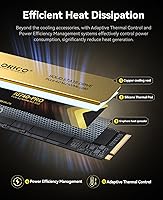
The bundled copper heatsink is a practical inclusion that most competing drives at this price point skip entirely. PS5 users especially appreciate not needing a separate purchase, and several reviewers confirmed the heatsink keeps temperatures stable during extended gaming sessions without throttling.
In tightly packed laptop bays or compact mini-ITX builds with poor airflow, the heatsink can only do so much — a handful of users reported thermal throttling under sustained heavy loads in enclosed environments. The heatsink is a solid addition, but it is not a substitute for adequate system-level airflow.
Data Security & Protection
88%
Hardware-level AES encryption, power-loss protection, and LDPC ECC error correction working together give this drive a data safety profile that most consumer SSDs simply do not offer at this tier. Home office users handling client files or personal financial records cited this as a key reason they chose it over cheaper alternatives.
There is no bundled software to manage encryption settings or monitor drive health out of the box, so users who want visibility into their security configuration need to rely on third-party tools. For non-technical buyers, the encryption feature exists but may never be actively utilized or verified.
PS5 Compatibility & Installation
92%
This is arguably the IG740PRO's most celebrated use case in the review pool. Buyers praise the straightforward M.2 installation, the heatsink dimensions fitting cleanly into the PS5 expansion bay, and the immediate recognition by the console without any formatting complications. Many called it the most painless PS5 storage upgrade they had done.
A small number of users reported needing to trim or reposition the heatsink slightly to close the PS5 cover flush, suggesting minor dimensional variance between units. It is not a widespread issue, but buyers should have a small screwdriver and patience on hand during the install.
Value for Money
89%
At its price point, the combination of PCIe 4.0 speeds, 2TB capacity, a 1200 TBW endurance rating, and an included copper heatsink is difficult to beat from established brands. Buyers repeatedly noted they felt they were getting more drive than the price suggested, especially compared to similarly priced Samsung or WD alternatives.
Brand-loyal buyers who prioritize long-term warranty service and domestic support infrastructure may feel the savings come with a trust trade-off. ORICO's after-sales support is functional but less accessible than what Samsung or WD offer, which factors into the long-term value equation.
Build Quality & Packaging
81%
19%
The drive itself feels solid, and the copper heatsink has a premium tactile quality that reviewers appreciated — it does not feel like an afterthought tacked on to justify a higher price. Packaging is clean and protective, and the included components arrived intact across the large majority of reported orders.
A few buyers noted that the heatsink thermal pad adhesion felt inconsistent between units, with some pads not making full contact across the drive surface. It is a minor point, but for buyers prioritizing thermal efficiency, it is worth checking the contact surface on installation.
Compatibility Across Devices
86%
Beyond PS5, reviewers confirmed solid compatibility across a range of laptops, desktop motherboards, and mini PCs. The drive handles PCIe 3.0 slots via backward compatibility, which gave upgraders on older platforms a viable path without needing a full system refresh.
A handful of users with older motherboards or specific laptop models reported needing a firmware or BIOS update before the drive was recognized. These are edge cases, but buyers with pre-2020 systems should verify M.2 NVMe slot support before purchasing.
Brand Trust & Reputation
67%
33%
Buyers who researched ORICO before purchasing generally found enough evidence of legitimate manufacturing credentials and a broad product catalog to feel comfortable. Many reviewers noted their skepticism dissolved once the drive was up and running and benchmarks matched advertised figures.
ORICO simply does not carry the brand equity of Samsung, WD, or Seagate in most Western markets, and that gap shows in the review pool — a recurring theme is buyers admitting they were hesitant at first. For buyers who weight brand assurance heavily in their purchasing decision, that uncertainty is real and not entirely irrational.
Software & Ecosystem Support
58%
42%
The drive works plug-and-play across Windows, macOS, and PS5 without any required software, which is exactly what most buyers want. For straightforward storage expansion, there is nothing to install and nothing to configure.
There is no dedicated drive management software for monitoring health, temperature, wear indicators, or firmware updates — features that Samsung Magician or WD Dashboard provide for free. Power users who like to keep tabs on drive status need to rely on generic tools like CrystalDiskInfo, which works but is not as polished.
Random IOPS Performance
83%
The rated 1,000K random IOPS translates to snappy application launches and quick file access in day-to-day desktop use. Buyers using the drive as a primary OS disk in both laptops and desktops reported consistently responsive system behavior even under multitasking loads.
Under queue depths more representative of real single-user desktop workloads rather than server-style synthetic benchmarks, the random performance advantage over mid-range PCIe 3.0 drives narrows considerably. The IOPS headline is accurate under specific conditions but less dramatic in everyday single-threaded use.
Heatsink Inclusion & Design
85%
Getting a copper heatsink in the box rather than as a paid add-on is a genuine differentiator that resonated strongly with PS5 upgraders and compact PC builders. Copper as a material conducts heat more effectively than the aluminum alternatives often bundled with competing drives.
The heatsink adds height that may conflict with certain laptop configurations or RAM clearance in tightly packed ITX builds. Buyers should measure available clearance in their target system before assuming the heatsink is universally usable — it is removable, but that defeats part of its purpose.
Installation Experience
88%
The physical installation process drew consistently positive feedback across all use cases — laptop upgrades, desktop builds, and PS5 expansions alike. The M.2 2280 form factor is standard and well-documented, and most reviewers described the install as straightforward even for first-timers.
No installation guide or quick-start card is included in the box, which a minority of less experienced buyers found frustrating. While the installation process is genuinely simple, a basic printed guide would eliminate the handful of support queries that arise from first-time builders.
Reliability Under Sustained Load
74%
26%
For typical workloads — gaming, everyday computing, moderate creative work — the IG740PRO holds up well over time, and the long-term reliability specs back that up on paper. Users running it as a primary drive for several months reported no stability issues or unexpected errors.
Users stress-testing the drive with sustained sequential writes over extended periods did observe performance stepping down as the drive manages heat and cache saturation. This behavior is consistent with TLC NAND architecture broadly, but buyers planning heavy continuous write workloads should set expectations accordingly.

Suitable for:

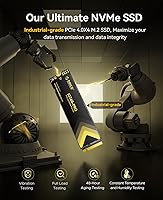
The ORICO IG740PRO 2TB NVMe SSD is a strong fit for PS5 owners who want to expand their console storage without hunting separately for a heatsink — the copper unit in the box covers that requirement cleanly. PC builders moving from PCIe 3.0 will notice a real, everyday performance lift in boot times, application launches, and large file handling, not just in synthetic benchmarks. Creative professionals — video editors, photographers, designers — who regularly move large files between drives will find the read speeds meaningfully reduce waiting time on actual work. Home office users who handle sensitive client data will also appreciate the hardware-level AES encryption, which works passively without requiring any setup or software. Light industrial or edge computing operators who need above-average endurance metrics and error correction in a standard M.2 form factor will find the IG740PRO punches above its retail price tier for those requirements.
Not suitable for:

The ORICO IG740PRO 2TB NVMe SSD is not the right call for buyers who place significant weight on brand-name warranty support and domestic after-sales service — ORICO simply does not have the service infrastructure that Samsung, WD, or Seagate maintain in most Western markets. Users running sustained, continuous write workloads — large database operations, constant surveillance recording, or professional video ingest at scale — should be aware that TLC NAND under extended sequential write pressure will throttle, and this drive is no exception to that architectural reality. It is also not suited for buyers with older systems lacking a PCIe 4.0 M.2 slot who are hoping to capture top-tier speeds; while the drive is backward compatible, the performance advantage shrinks considerably on PCIe 3.0 hosts. Laptop users with ultra-slim chassis where heatsink clearance is constrained may find the included heatsink unusable, which eliminates one of the drive's headline differentiators. And anyone seeking a certified, validated industrial storage solution for regulated or mission-critical environments should look at purpose-built industrial product lines — the IG740PRO draws on industrial engineering principles but is ultimately a retail-grade consumer drive.
Specifications

  • Capacity: The drive offers 2TB of usable storage, suitable for large game libraries, video projects, and operating system installations.
  • Form Factor: It uses the M.2 2280 form factor, the most widely supported M.2 size across modern desktops, laptops, and the PS5.
  • Interface: The drive connects via PCIe 4.0 x4, delivering up to four times the bandwidth of PCIe 3.0 x4 slots.
  • Protocol: It runs on the NVMe 2.0 protocol, which reduces latency and improves command queue efficiency compared to older NVMe generations.
  • Sequential Read: Maximum sequential read speed is rated at up to 7,450MB/s under optimal conditions.
  • Random IOPS: The drive is rated for up to 1,000K random read IOPS, supporting responsive multitasking and fast application launches.
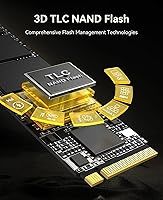
  • NAND Type: Storage cells use TLC (Triple-Level Cell) NAND flash, balancing capacity, cost, and endurance for consumer and light industrial use.
  • Endurance Rating: The rated endurance is 1,200 TBW (Terabytes Written), which exceeds what most home and office users will realistically accumulate over the drive's lifetime.
  • MTBF: Mean Time Between Failures is specified at over 1.5 million hours, notably higher than typical consumer-grade SSD averages.
  • Error Correction: LDPC (Low-Density Parity-Check) ECC is implemented at the hardware level, actively detecting and correcting data errors during read and write operations.
  • Data Security: The drive supports AES (Advanced Encryption Standard) hardware encryption, securing stored data without requiring third-party software.
  • Power Protection: Built-in power-loss protection preserves data integrity in the event of sudden power interruptions, reducing the risk of corruption or partial writes.
  • Heatsink: A copper heatsink is included in the box and pre-fitted with a thermal pad for direct contact with the drive surface during installation.
  • Compatibility: Confirmed compatible with desktops, laptops, PS5 consoles, VR devices, and edge computing hardware supporting M.2 NVMe slots.
  • Backward Compatibility: The drive is backward compatible with PCIe 3.0 M.2 slots, though maximum speeds are limited by the host interface in that configuration.
  • Weight: The drive package weighs 2.11 ounces, inclusive of the copper heatsink and packaging components.
  • Package Contents: The retail box includes the 2TB NVMe SSD and the copper heatsink unit; no installation screws or software media are bundled.
  • Manufacturer: The drive is manufactured by Shenzhen ORICO Technologies Co., Ltd, a China-based hardware company with a broad consumer and industrial product catalog.
  • Release Date: The IG740PRO was first made available for purchase in November 2024.
  • Firmware Control: The drive uses controlled BOM (Bill of Materials) and firmware management to ensure component consistency across production batches.

Related Reviews

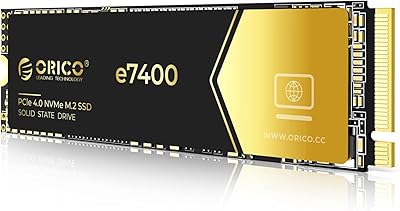
ORICO e7400 2TB M.2 NVMe SSD
81%
91%
Sequential Speed
78%
Random Read/Write
86%
Thermal Management
83%
PS5 Compatibility
88%
Value for Money
More
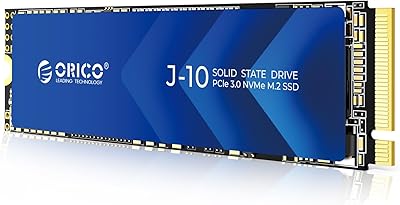
ORICO J10 256GB M.2 NVMe Internal SSD
76%
83%
Read Speed Performance
61%
Write Speed & Cache Behavior
88%
Heatsink Quality
74%
Compatibility
79%
Value for Money
More
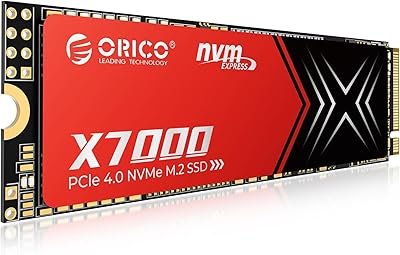
ORICO X7000 2TB NVMe SSD
89%
93%
Performance
96%
Read Speed
90%
Write Speed
89%
Cooling Efficiency
91%
Compatibility with PS5
More
ORICO IG740PRO 4TB M.2 NVMe SSD
79%
91%
Sequential Read Performance
88%
Endurance & Longevity
84%
Thermal Management
79%
Value for Money
74%
PS5 Compatibility
More
ORICO O7000 2TB NVMe SSD
78%
88%
Read Performance
74%
Write Performance
91%
Thermal Management
73%
PS5 Compatibility
86%
Value for Money
More
SanDisk 2TB SSD Plus M.2 NVMe SSD
86%
89%
Performance
92%
Ease of Installation
88%
Reliability
91%
Value for Money
90%
Capacity
More
TEAMGROUP MP33 2TB NVMe SSD
86%
91%
Performance
89%
Value for Money
85%
Ease of Installation
88%
Compatibility
82%
Reliability
More
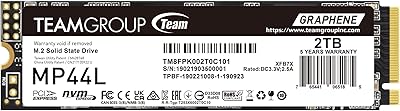
TEAMGROUP MP44L 2TB NVMe SSD
90%
94%
Performance
89%
Thermal Management
91%
Ease of Installation
87%
Value for Money
93%
Build Quality
More
Fikwot FN955 2TB M.2 NVMe SSD
81%
88%
Read Performance
74%
Write Performance
92%
Value for Money
93%
PS5 Compatibility
67%
Thermal Management
More
GiGimundo G7400 2TB NVMe SSD
85%
93%
Performance
94%
Speed
72%
Thermal Management
88%
Ease of Installation
91%
Compatibility
More

FAQ

Yes, the IG740PRO is fully compatible with the PS5 expansion slot, and no separate heatsink purchase is needed — a copper heatsink is already included in the box. Most buyers find it fits cleanly into the PS5 bay, though a small number have mentioned needing to adjust the positioning slightly to close the console cover flush. Overall it is one of the more straightforward PS5 storage upgrades available at this capacity.

It will work, but you will not get the full PCIe 4.0 speeds — the drive will operate at PCIe 3.0 bandwidth instead, which still delivers solid performance in the 3,000–3,500MB/s range for most workloads. Before installing, confirm that your laptop's M.2 slot supports NVMe protocol and not just SATA, as those are different standards even though the physical connector can look similar.

TBW stands for Terabytes Written and represents the total data you can write to the drive over its rated lifetime. If you write around 40GB per day — which is fairly heavy home or office use — 1,200 TBW works out to over 80 years at that pace. In practice, the vast majority of users will never approach that ceiling, making the endurance rating a non-concern for everyday workloads.

ORICO is a well-established manufacturer based in Shenzhen with a long product history in storage accessories and hardware, though it does not have the same brand recognition in Western markets as Samsung or WD. The ORICO IG740PRO 2TB NVMe SSD has over 400 verified ratings averaging 4.6 stars, and most buyers who were initially skeptical report that the drive performed as advertised once installed. The main trade-off is that ORICO's after-sales warranty support is less accessible than what the major brands offer, which is worth factoring in if long-term service coverage matters to you.
No dedicated management software is included. The drive works plug-and-play on Windows, macOS, and PS5 without any required software, but if you want to monitor drive health, temperatures, or wear indicators, you will need a third-party tool like CrystalDiskInfo on Windows or DriveDx on macOS. Both are free and work reliably with this drive.

For typical video editing workflows — opening project files, scrubbing timelines, exporting finished renders — the drive performs well. That said, like all TLC NAND drives, sustained sequential write performance will step down after the SLC write cache fills, which can happen during very long continuous writes such as multi-hour ingest sessions. For occasional large exports it will be fine; for constant, high-volume professional ingest at scale, a higher-endurance drive may serve you better.

Yes, the heatsink is removable and the drive operates perfectly without it. The heatsink is a thermal aid, not a functional requirement. If your laptop bay does not have clearance, simply leave the heatsink off — just ensure your laptop's chassis provides reasonable airflow to the M.2 area during heavy workloads.

The AES encryption is hardware-level, meaning it is built into the drive controller and operates transparently. However, to actually leverage it for securing your data, you typically need to enable it through your operating system's disk encryption tool — BitLocker on Windows or FileVault on macOS — or through a compatible security application. Without enabling encryption at the OS level, the hardware capability exists but is not actively protecting your data.

Possibly, yes. Some pre-2020 motherboards require a BIOS update to properly recognize PCIe 4.0 NVMe drives, even when operating in PCIe 3.0 backward compatibility mode. Check your motherboard manufacturer's support page for the latest BIOS version and release notes before installing. It is a straightforward update in most cases, but worth doing before you commit to the install.

Power-loss protection is a hardware feature that preserves data already in the process of being written to the drive if power suddenly cuts out — it prevents partial writes from corrupting existing data. It is not a substitute for backup; it does not duplicate or recover your files. Think of it as a safeguard against a specific failure scenario rather than a full data protection strategy. Regular backups to a separate drive or cloud service remain essential regardless.