Overview

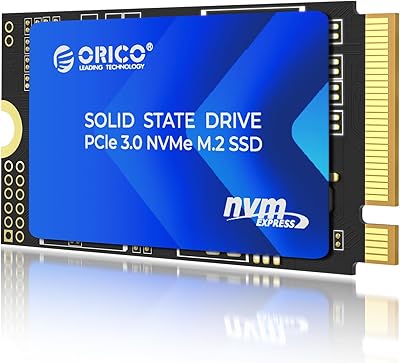
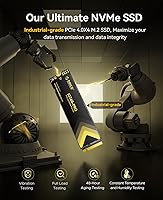
The ORICO IG740PRO 4TB M.2 NVMe SSD arrives at an interesting moment — the 4TB PCIe 4.0 tier is getting crowded, and ORICO, long known for external enclosures and USB hubs, is now making a genuine push into internal drive hardware. The industrial-grade label on the box carries real weight here: this isn't marketing shorthand for a standard consumer drive with a fancier sticker. What it actually signals is a stricter manufacturing and testing regimen aimed at environments where failure is costly. For everyday buyers, that translates to a drive built with tighter tolerances than typical consumer options — though whether that advantage justifies the price over established names is worth examining closely.
Features & Benefits

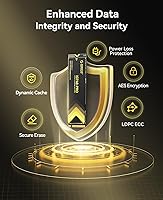
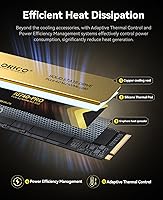
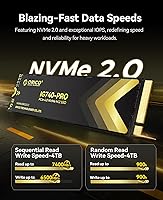
The IG740PRO runs on a PCIe 4.0 x4 interface with NVMe 2.0 support, pushing sequential reads up to 7,400MB/s — a figure that puts it alongside drives like the WD Black SN850X and Samsung 990 Pro at 4TB. The 2400 TBW endurance is particularly notable for a TLC NAND drive at this capacity; in practical terms, that covers writing 200GB daily for well over three decades before hitting rated wear limits. Power-loss protection and LDPC ECC error correction add genuine data safety, not just checkbox features. AES encryption covers security-minded workloads. And the included copper heatsink isn't decorative — it meaningfully helps sustain peak speeds under load rather than letting thermal throttling quietly chip away at performance.

Best For

This 4TB PCIe 4.0 SSD makes the most sense for a few specific buyers. PS5 owners looking to expand storage should find it compatible with Sony's M.2 expansion slot — though confirm the included heatsink clears your specific console model's bay cover before committing. Content creators and editors moving large raw files regularly will notice the speed headroom in daily transfers. It also suits industrial PC builds and edge computing rigs where firmware stability and endurance certification matter more than brand recognition. Upgraders stepping up from SATA or a PCIe 3.0 drive will feel an especially meaningful jump. And for anyone wanting massive single-slot capacity without flagship-brand pricing, this industrial NVMe drive offers a worthwhile trade-off.

User Feedback

With a 4.6-star average across over 400 ratings, buyer response to the IG740PRO has been broadly positive. Real-world read speeds and the quality of the bundled copper heatsink draw consistent praise, and several buyers confirm that benchmark results track reasonably close to advertised figures. PS5 users in particular report smooth installation and noticeable improvements in game load times. On the cautious side, some flag ORICO's thin track record in internal SSDs compared to Samsung or WD — and that's a fair concern. Long-term durability simply cannot be verified for a drive that only launched in late 2024. If you're risk-averse, factor that in; if you're comfortable with a newer entrant, the early owner data looks genuinely encouraging.

Pros

  • Sequential read speeds up to 7,400MB/s put it squarely in the top tier of PCIe 4.0 drives.
  • The 2400 TBW endurance rating is exceptional for TLC NAND, suggesting a very long usable lifespan under normal conditions.
  • An included copper heatsink helps maintain sustained performance and reduces thermal throttling out of the box.
  • Power-loss protection adds a layer of data safety that many consumer drives in this price range omit.
  • AES encryption support makes the IG740PRO practical for security-conscious users and light enterprise workloads.
  • At 4TB in a single M.2 slot, it eliminates the need to juggle multiple drives in space-constrained builds.
  • Early buyer benchmarks track closely to advertised speeds, suggesting the marketing numbers are not inflated.
  • Compatible with PS5, desktops, and laptops, making it a versatile purchase across different setups.
  • The rigorous multi-level manufacturing testing standard goes beyond what typical consumer-grade NVMe drives require.

Cons

  • ORICO has a limited track record in internal SSDs, making long-term reliability harder to predict than with established competitors.
  • The drive launched in late 2024, so there is minimal multi-year real-world durability data available yet.
  • PS5 heatsink compatibility requires manual verification — the included cooler may not clear all console bay covers.
  • Users with PCIe 3.0 systems will see none of the speed advantage and are paying for headroom they cannot use.
  • Firmware maturity is an open question; newer entrants sometimes require updates to resolve early stability issues.
  • The price point is hard to justify for buyers who only need 1TB or 2TB of storage.
  • Brand recognition among enthusiast buyers remains low, which could affect resale value compared to Samsung or WD alternatives.
  • No standalone software suite or health monitoring tool is confirmed, which some power users rely on for drive management.

Ratings

The scores below for the ORICO IG740PRO 4TB M.2 NVMe SSD were generated by our AI engine after analyzing verified purchase reviews from buyers worldwide, with spam, incentivized, and bot-pattern submissions actively filtered out. Each category reflects the honest distribution of praise and frustration found across real ownership experiences — not a sanitized average. Where buyers disagreed strongly, the score and commentary reflect that tension directly.
Sequential Read Performance
91%
Buyers running large file transfers — think raw video footage, virtual machine images, or multi-gigabyte game installs — consistently report that real-world speeds track very close to the advertised 7,400MB/s ceiling. On PCIe 4.0 systems, the performance difference versus a mid-range PCIe 3.0 drive is immediately tangible rather than something you only notice in benchmarks.
A small subset of users noted that sustained sequential writes over long periods produce more modest numbers than reads, which is expected for TLC NAND but caught a few buyers off guard. Performance is also entirely bottlenecked on PCIe 3.0 systems, where the drive's speed advantage essentially disappears.
Endurance & Longevity
88%
The 2400 TBW rating genuinely stands out at this price tier — it is higher than what competing consumer drives typically offer at 4TB, and buyers with write-heavy workflows like video editing or database management appreciated seeing that figure on paper. The MTBF specification signals a manufacturing standard a step above commodity consumer drives.
The drive only launched in late 2024, which means multi-year field data simply does not exist yet. Buyers who have owned SSDs that failed before their rated TBW were understandably cautious, and no amount of spec sheet confidence fully substitutes for years of proven real-world endurance across a large installed base.
Thermal Management
84%
The bundled copper heatsink earned consistent praise for being a genuine functional accessory rather than a cosmetic add-on. Users running sustained workloads — extended file copies, continuous rendering jobs — reported noticeably more stable speeds compared to bare drives in the same chassis, with fewer instances of thermal throttling cutting into throughput.
The heatsink's thickness creates complications for PS5 installations, where bay cover clearance is tight and not universally compatible. A few desktop users also noted the heatsink adds enough height to potentially interfere with RAM slots or PCIe lane covers on compact motherboards.
Value for Money
79%
21%
At 4TB in a single M.2 slot with PCIe 4.0 speeds and a copper heatsink included, the package holds up well against comparably priced options from more established brands. Buyers building high-capacity workstations who do not want to juggle multiple drives found the capacity-to-cost ratio compelling enough to choose this over a smaller Samsung or WD alternative.
The value argument weakens if you only need 1TB or 2TB — the pricing structure rewards buyers specifically at the 4TB tier. Some users also noted that paying a slight premium for a Samsung 990 Pro or WD Black SN850X buys you considerably more brand confidence and ecosystem tooling, which matters to buyers doing a long-term cost-benefit calculation.
PS5 Compatibility
74%
26%
PS5 users who successfully installed the drive report noticeable improvements in game load times and appreciated having 4TB of fast expandable storage in a single slot. The PCIe 4.0 interface meets Sony's recommended spec, and several buyers confirmed smooth detection and formatting without any BIOS or console firmware complications.
The heatsink clearance issue is a real friction point — some PS5 owners found the included cooler too thick to fit with the bay cover reinstalled and had to improvise or skip it entirely. This is not a defect, but it does require pre-purchase research that not all casual console buyers expect to do.
Data Safety Features
86%
Power-loss protection and LDPC ECC error correction address scenarios that most budget drives ignore entirely, and buyers using the IG740PRO in workstations handling active project files or databases genuinely valued this. AES encryption support is a bonus for anyone deploying the drive in a work environment where data compliance matters.
Enabling AES encryption requires OS-level configuration and is not automatic, which surprised some buyers who assumed hardware encryption was active out of the box. There is no bundled software to surface or manage these security features, leaving less technical users without clear guidance.
Build Quality
83%
The physical construction of both the drive and the copper heatsink impressed buyers who handled them before installation. The heatsink in particular felt substantive rather than the thin foil-style coolers bundled with some competing drives, and the overall package suggested a manufacturing standard consistent with the industrial-grade positioning.
ORICO's internal SSD lineup is new enough that there is limited data on how the drive holds up physically over years of thermal cycling. A handful of buyers noted the heatsink attachment mechanism requires care during installation to avoid misalignment, which is a minor but real friction point.
Brand Trustworthiness
67%
33%
ORICO is a recognizable name in storage accessories, and buyers familiar with their enclosures and docks felt a baseline level of confidence in the company's engineering competence. Customer service interactions reported in reviews were generally described as responsive and cooperative when issues arose.
For internal SSDs specifically, ORICO carries none of the institutional trust that Samsung, WD, or Crucial have accumulated over a decade of consumer NVMe products. Skepticism about firmware maturity and long-term support commitments surfaced repeatedly among more experienced buyers, and that uncertainty is a legitimate concern rather than brand snobbery.
Installation Experience
88%
The M.2 2280 form factor is universal enough that most buyers reported a plug-and-play installation experience on both desktops and laptops, with immediate detection by the system BIOS. The heatsink installation is straightforward and does not require special tools in most desktop configurations.
No cloning or migration utility is included, which means buyers transferring an existing OS need to source third-party software independently — a small but real extra step that brands like Samsung bundle into their offering. Laptop installations also require confirming M.2 slot orientation, which tripped up a few first-time upgraders.
Random Read / Write Performance
81%
19%
At 900K IOPS on random reads, the IG740PRO handles workloads involving thousands of small simultaneous file requests — database queries, OS multitasking, application launches — with confidence. Buyers using it as an OS drive noted snappy application startup times and smooth day-to-day responsiveness that outperformed their previous PCIe 3.0 drives clearly.
Random write IOPS figures are less prominently specified, and a few benchmark-oriented buyers found the random write numbers more modest than the headline read figures suggest. This is typical of high-density TLC drives, but buyers coming from SLC-cached competitors may notice a difference under write-heavy mixed workloads.
Software & Ecosystem
51%
49%
The drive functions without any software installation, which keeps the setup clean and uncomplicated for users who just want storage that works without background applications running. Compatibility with standard OS health monitoring tools like CrystalDiskInfo means basic SMART data is still accessible.
There is no dedicated drive management utility from ORICO, meaning features like firmware updates, health dashboards, and secure erase tools require third-party workarounds. Compared to Samsung Magician or WD Dashboard, this is a meaningful gap — particularly for users who want proactive drive health monitoring over a multi-year ownership period.
Backward Compatibility
76%
24%
The drive is electrically backward compatible with PCIe 3.0 slots and will function correctly in older systems without any configuration changes. Buyers using it temporarily in an older machine before upgrading their platform found it a practical bridging solution.
Operating in a PCIe 3.0 slot cuts available bandwidth roughly in half, negating the primary speed advantage buyers are paying for. For anyone on a PCIe 3.0 platform with no upgrade path planned, the price premium over a purpose-built PCIe 3.0 drive is difficult to justify on performance grounds alone.
Packaging & Accessories
77%
23%
Buyers appreciated receiving a functional copper heatsink in the box rather than just the bare drive — it removes the need for a separate accessory purchase and represents genuine added value at this price point. Packaging was consistently described as protective and appropriately presented for a premium storage product.
Beyond the heatsink, there are no additional accessories — no mounting screws, no thermal pads beyond what is pre-applied, and no documentation beyond basic setup instructions. Buyers who needed a screwdriver or standoff for their specific motherboard had to source those separately.

Suitable for:

The ORICO IG740PRO 4TB M.2 NVMe SSD is a strong fit for buyers who want serious storage capacity without paying flagship-brand premiums. PS5 owners who have exhausted their console's internal storage will find the drive's PCIe 4.0 speeds and compact M.2 2280 form factor well-matched to Sony's expansion slot — just verify heatsink clearance against your specific console revision before purchasing. Content creators shuttling large video or photography libraries between drives will genuinely benefit from the headroom those top-end read speeds provide in day-to-day transfers. Industrial PC builders and edge computing operators get meaningful peace of mind from the rigorous endurance certification, power-loss protection, and stable firmware — features that typical consumer SSDs skip entirely. Anyone upgrading from a SATA drive or an older PCIe 3.0 SSD will notice the performance difference immediately, and the 4TB capacity means fewer compromises about what to keep on the primary drive.
Not suitable for:

Buyers who prioritize brand pedigree and years of verified field data should think carefully before choosing this drive. ORICO is a reputable accessories brand, but its track record specifically in internal NVMe hardware is short — the IG740PRO only launched in late 2024, which means there simply is not enough long-term ownership data to draw confident conclusions about multi-year reliability. Mission-critical workloads where a drive failure carries serious consequences would be better served by established names with longer proven histories in this category. The ORICO IG740PRO 4TB M.2 NVMe SSD is also not the right pick for systems limited to PCIe 3.0 slots, where its speed advantage collapses and cheaper alternatives become more sensible. Budget-focused buyers who only need 1TB or 2TB will find better value elsewhere, since the pricing makes the most sense specifically at the 4TB tier.
Specifications

  • Capacity: The drive offers 4TB of usable storage, suitable for large media libraries, game collections, or data-intensive workloads.
  • Form Factor: Built on the standard M.2 2280 form factor, measuring 80mm in length and compatible with the vast majority of modern motherboards and laptops.
  • Interface: Uses a PCIe 4.0 x4 interface, delivering double the bandwidth ceiling of PCIe 3.0 and backward compatible with PCIe 3.0 slots at reduced speeds.
  • Protocol: Operates on the NVMe 2.0 protocol, which reduces latency and CPU overhead compared to older NVMe 1.x implementations.
  • Sequential Read: Rated sequential read speeds reach up to 7,400MB/s under optimal conditions, placing it among the faster PCIe 4.0 drives at this capacity.
  • IOPS: Random read performance is rated at up to 900,000 IOPS, which benefits workloads involving large numbers of small, simultaneous file operations.
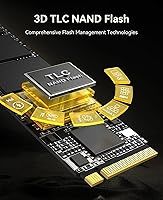
  • NAND Type: Uses TLC (Triple-Level Cell) NAND flash, a widely adopted technology that balances storage density, cost, and write endurance effectively.
  • Endurance: Rated at 2400 TBW (terabytes written), meaning the drive can sustain heavy write workloads for many years before approaching its rated wear threshold.
  • MTBF: Mean Time Between Failures exceeds 1.5 million hours, reflecting the elevated reliability standards applied during the manufacturing and testing process.
  • Error Correction: Implements LDPC (Low-Density Parity-Check) ECC, which actively detects and corrects data errors before they can affect stored files or system stability.
  • Data Protection: Includes power-loss protection circuitry that safeguards in-flight data during unexpected power interruptions, reducing the risk of file corruption.
  • Encryption: Supports AES (Advanced Encryption Standard) hardware encryption, allowing compatible systems to secure stored data without significant performance impact.
  • Heatsink: Ships with a copper heatsink that attaches directly to the drive to dissipate heat during sustained read and write operations, helping reduce thermal throttling.
  • Weight: The complete package, including the copper heatsink, weighs approximately 2.08 ounces, keeping it lightweight for internal laptop and desktop installations.
  • Compatibility: Officially compatible with desktops, laptops, gaming consoles including PS5, and other devices with an available M.2 PCIe slot.
  • Manufacturer: Designed and produced by Shenzhen ORICO Technologies Co., Ltd, a Chinese electronics company primarily known for storage accessories and peripheral hardware.
  • Model Series: The IG740PRO designation identifies this as part of ORICO's industrial-grade product line, differentiated by stricter testing and firmware control standards.
  • Launch Date: First made available in November 2024, making it a relatively new entrant with limited multi-year field reliability data as of early 2025.

Related Reviews
ORICO IG740PRO 2TB NVMe SSD
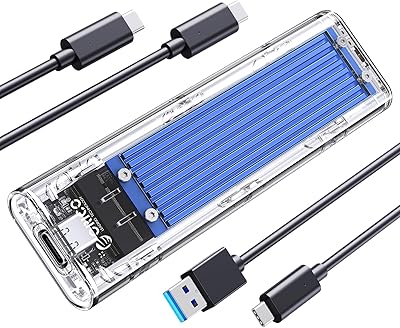
83%
93%
Read & Write Speed
91%
Endurance & Longevity
84%
Thermal Management
88%
Data Security & Protection
92%
PS5 Compatibility & Installation
More
ORICO TCM2 M.2 NVMe SSD Enclosure
78%
83%
Transfer Speed
61%
Thermal Management
74%
Build Quality
91%
Ease of Installation
86%
Cable Bundle Quality
More
ORICO Dual M.2 NVMe SSD Enclosure
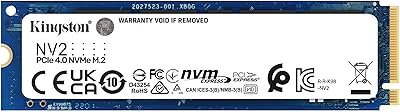
79%
88%
Build Quality
84%
Thermal Management
82%
Transfer Speed
71%
Drive Compatibility
91%
Ease of Installation
More
fanxiang S660 4TB NVMe M.2 SSD
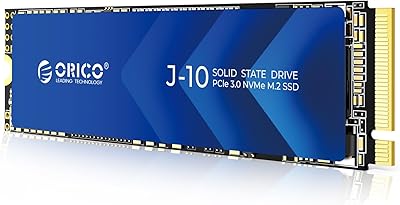
88%
92%
Performance
89%
Cooling Efficiency
91%
Ease of Installation
96%
Compatibility with PS5
87%
Build Quality
More
ORICO M.2 2242 NVMe SSD 256GB
88%
94%
Performance
91%
Speed (Read/Write)
88%
Heat Management
92%
Ease of Installation
87%
Value for Money
More
ORICO M.2 NVMe SSD 512GB with Heatsink
86%
89%
Performance
92%
Cooling Efficiency
85%
Installation Ease
90%
Read/Write Speeds
88%
Capacity for Gaming & Everyday Use
More
ORICO M.2 2242 NVMe SSD 1TB
87%
89%
Performance
92%
Value for Money
88%
Heat Dissipation
75%
Installation Ease
91%
Build Quality
More
fanxiang S770 4TB NVMe M.2 SSD
84%
88%
Read Speed Performance
82%
Write Speed Consistency
93%
PS5 Compatibility
86%
Thermal Management
84%
Value for Money
More
TEAMGROUP MP44Q 4TB M.2 NVMe SSD
88%
95%
Read Speed
92%
Write Speed
90%
PS5 Compatibility
75%
Thermal Performance
88%
Value for Money
More
Kingston NV2 4TB M.2 NVMe SSD
90%
94%
Read Performance
88%
Write Performance
91%
Reliability
95%
Installation Ease
89%
Compatibility
More

FAQ

The drive uses the standard M.2 2280 form factor and PCIe 4.0 interface that Sony's expansion slot requires, so it is compatible in that regard. The important thing to check before installing is whether the included copper heatsink fits within your PS5's M.2 bay cover clearance — some aftermarket heatsinks are too thick. If it does not fit, you can install the drive without the heatsink since the PS5 bay itself provides passive cooling, though managing temperatures becomes more important in that case.

Yes, it will work in a PCIe 3.0 slot, but you will not get anywhere near the rated 7,400MB/s read speeds. PCIe 3.0 x4 caps out at around 3,500MB/s, so you would essentially be using a faster drive at reduced bandwidth. It still functions and performs well by PCIe 3.0 standards, but buying a 4TB PCIe 4.0 drive specifically for a PCIe 3.0 system is not the most cost-efficient decision.

For most people, 2400 TBW is an enormous buffer. If you write around 100GB to the drive every single day — which is already heavy usage for typical home or workstation users — it would take over 65 years to reach that threshold. Even demanding creators writing 200–300GB daily are looking at decades of headroom. In practice, other components will likely be replaced long before endurance becomes a concern.

ORICO does not bundle dedicated cloning or migration software with the ORICO IG740PRO 4TB M.2 NVMe SSD. If you are migrating an existing OS drive, you will need a third-party tool — Macrium Reflect Free and Clonezilla are popular free options that work well with NVMe drives. It is a minor inconvenience, but not unusual for drives in this category.

The heatsink attaches with thermal pads and typically snaps or screws into place without tools, so installation is straightforward. As for whether it matters — yes, under sustained workloads like large file transfers or long video renders, NVMe drives can get warm enough to throttle. The copper heatsink helps keep temperatures in check during those extended sessions, which translates to more consistent speeds rather than periodic slowdowns.

On paper, the speed figures are competitive. Where the difference shows up is in brand heritage and ecosystem support — Samsung and WD offer dedicated software tools, longer proven track records in internal SSDs, and more extensive community benchmarking data. The IG740PRO makes a reasonable case on specs and pricing, but it is a newer entrant, and buyers who prioritize established reliability data may prefer the incumbents despite paying a bit more.

It works perfectly well as a primary OS drive. In fact, the fast random read performance and low latency of an NVMe drive are most noticeable during OS boot and application launches. Just make sure your system BIOS supports NVMe boot, which virtually all modern motherboards do. There is no technical reason to limit this to secondary storage use.

It significantly reduces the risk. Power-loss protection uses onboard capacitors to complete in-progress write operations and flush the cache safely when power is cut unexpectedly. It is not a guarantee against all data loss in severe situations, but it does protect against the most common corruption scenarios — particularly important for workloads where data integrity matters, like databases or active project files.

Hardware AES encryption on NVMe drives is typically managed through your system's security settings — on Windows, this integrates with BitLocker; on Linux, it works through dm-crypt or similar tools. It is not something that automatically protects your data out of the box without configuration. If encryption is important to your workflow, you will need to enable and set it up through your operating system rather than assuming it is active by default.

ORICO has a solid reputation for storage accessories — enclosures, docking stations, USB hubs — and that engineering foundation carries over into their hardware design approach. That said, their internal SSD lineup is newer territory, and the honest answer is that consumer confidence in any brand for internal drives is earned over years of field data. Early buyer feedback for this drive is encouraging, but it would be fair to keep expectations appropriately calibrated until more long-term ownership data accumulates over the next year or two.