Overview

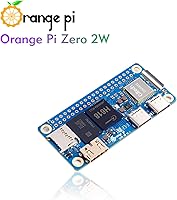
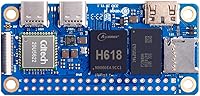
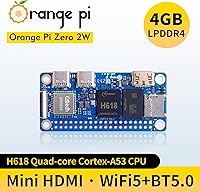
The Orange Pi Zero 2W 4GB Single Board Computer arrived in late 2023 as a credible challenger to the Raspberry Pi Zero 2W, bringing a meaningful RAM advantage to a form factor that fits in your palm. At just 30mm x 65mm, this Orange Pi board packs a quad-core processor, dual-band Wi-Fi 5, and Bluetooth 5.0 onto a PCB barely larger than a stick of gum. It supports a surprisingly broad range of operating systems — Android 12 TV, Ubuntu, Debian, and Orange Pi OS among them — which gives it flexibility most boards at this price tier struggle to match. No dongles required for wireless connectivity.
Features & Benefits

The Allwinner H618 processor runs at 1.5GHz across four Cortex-A53 cores, handling lightweight Linux workloads, automation scripts, and media playback without issue. What sets the Zero 2W 4GB apart from cheaper options in the same family is the 4GB LPDDR4 RAM — enough headroom to run a modest web server or keep a desktop environment responsive. The Mali G31 MP2 GPU covers OpenGL ES 3.2 and Vulkan 1.1, so GPU-heavy rendering is off the table, but video decoding and light graphical tasks are fine. The 40-pin GPIO header maintains broad HAT compatibility, and the 16MB SPI Flash lets you store a bootloader independently of your microSD card.

Best For

This Orange Pi board hits a sweet spot for makers and students who need a capable, wireless-ready Linux machine in the smallest possible package. If you are building a smart home hub, an IoT sensor node, or a lightweight automation server, the built-in dual-band Wi-Fi and BT 5.0 mean you can get running without hunting for USB adapters. The Android 12 TV support makes it worth exploring for screen-casting prototypes or low-power media box experiments. One caveat: wired Ethernet and full-size USB ports require a separate adapter board — factor that into your budget and project plan before ordering, as it catches many first-time buyers off guard.

User Feedback

With around 119 ratings and a 4.0-star average, the Zero 2W 4GB earns mostly positive marks — particularly for its value-to-performance ratio given the price. Buyers frequently highlight how much hardware capability you get for the cost. That said, recurring concerns center on the community and documentation gap versus Raspberry Pi: official resources exist but are thinner and less polished. Some users flag occasional OS stability quirks, and a few note that sustained workloads in enclosed cases push thermals higher than expected — relevant if your build has limited airflow. The adapter board requirement for Ethernet also surprises new buyers who assume basic wired connectivity is included out of the box.

Pros

  • 4GB of LPDDR4 RAM is genuinely generous for a board this size, giving real multitasking headroom.
  • Built-in dual-band Wi-Fi 5 and Bluetooth 5.0 mean most wireless projects need zero extra hardware.
  • The 40-pin GPIO header keeps this compact SBC compatible with a wide range of existing HATs and add-ons.
  • Supports six operating systems, including Android 12 TV, Ubuntu, and Debian, offering real OS flexibility.
  • 16MB SPI Flash lets you store a bootloader separately, reducing dependence on microSD card reliability.
  • Tiny 30mm x 65mm footprint fits into enclosures and project builds where larger boards simply will not go.
  • Buyers consistently rate the value-to-performance ratio as one of the strongest arguments in its favor.
  • The Allwinner H618 handles lightweight server tasks, automation scripts, and media playback without struggling.

Cons

  • Community documentation is noticeably thinner than Raspberry Pi resources, which slows troubleshooting for less experienced users.
  • Wired Ethernet and full-size USB ports require a separate adapter board that does not come included.
  • OS images and drivers can lag behind upstream Linux kernels, causing occasional stability or compatibility issues.
  • Thermal management under sustained workloads is a real concern, especially inside compact or sealed enclosures.
  • The Allwinner H618 GPU cannot handle demanding graphics or hardware video transcoding at a meaningful level.
  • Software support relies heavily on the Orange Pi team; third-party driver availability is inconsistent.
  • New buyers sometimes receive boards without adequate getting-started guidance, leading to a steeper initial learning curve.
  • Long-term software update cadence from the manufacturer is less predictable than established Pi alternatives.

Ratings

The Orange Pi Zero 2W 4GB Single Board Computer scores here reflect an AI-driven analysis of verified global buyer reviews, with spam, bot activity, and incentivized feedback actively filtered out before scoring. Ratings cover the dimensions that matter most to real makers, developers, and hobbyists — from raw performance and wireless reliability to software maturity and long-term usability. Both the genuine strengths and the recurring frustrations are reflected transparently so you can make a fully informed decision.
Value for Money
88%
Buyers consistently single this out as one of the best-value compact SBCs on the market. Getting 4GB of LPDDR4 RAM, dual-band Wi-Fi 5, and Bluetooth 5.0 in a board this small, at this price point, is genuinely hard to beat for IoT and home automation budgets.
The value calculation shifts once you factor in the separately purchased adapter board needed for Ethernet and USB ports. For buyers who assumed those were included, the real total cost lands noticeably higher than the base price suggests.
Performance
79%
21%
For the workloads this board targets — lightweight Linux servers, automation scripts, MQTT brokers, and basic media playback — the Allwinner H618 at 1.5GHz handles things capably. The 4GB RAM configuration adds meaningful headroom compared to lower-tier options in the same family.
Push it toward sustained CPU loads or anything GPU-adjacent and the cracks show quickly. Hardware video transcoding and graphically demanding applications are outside its realistic operating envelope, and some users report noticeable slowdowns when running multiple services simultaneously.
Software & OS Support
67%
33%
Six officially supported operating systems give this compact SBC real flexibility — Android 12 TV, multiple Ubuntu and Debian releases, and Orange Pi OS cover most common use cases. Orange Pi does publish updated images with some regularity, and the board boots cleanly into Ubuntu or Debian for most users.
OS images sometimes lag behind upstream Linux kernel versions, and driver maturity is inconsistent across configurations. A subset of buyers encountered stability issues, particularly with newer OS builds, and the overall polish of the software stack is noticeably behind what Raspberry Pi OS delivers out of the box.
Community & Documentation
54%
46%
Orange Pi does provide official user manuals and maintains a dedicated forum where some active community members share project builds and troubleshooting tips. For straightforward setups following the official guides, most users find enough to get started.
This is arguably the board's biggest practical weakness. The community is small compared to Raspberry Pi, and when you hit an edge case or an obscure driver issue, answers can be hard to find. Documentation quality is inconsistent, and some manuals feel translated rather than written for a technical English-speaking audience.
Wireless Connectivity
86%
Dual-band Wi-Fi 5 with an onboard antenna performs reliably across most home and lab environments. Buyers running the Zero 2W 4GB as a wireless IoT hub or home automation node report stable connections on both 2.4GHz and 5GHz bands without needing any external hardware.
A small number of users noted that the onboard antenna placement inside certain enclosures can reduce signal strength. Bluetooth 5.0 performs well for BLE sensor connections, but pairing reliability with some non-standard peripherals drew occasional complaints.
Build Quality
81%
19%
The PCB feels solid and well-manufactured for its price class, with components seated cleanly and the board arriving undamaged in the vast majority of reported cases. The compact 30mm x 65mm footprint is impressively tidy for how much is packed onto it.
There is no onboard protection circuitry for GPIO pins, which is standard at this tier but still a risk for beginners. A few buyers noted that solder joints near the expansion connectors felt less robust than expected when attaching adapter boards repeatedly.
Thermal Management
63%
37%
Under light daily workloads — running a small home server or an IoT gateway — the board stays within acceptable temperature ranges without any active cooling. Many users run it passively in open-air setups without issues.
Sustained loads push the board warm fast, and enclosed cases without ventilation make this worse. Users running the board at high utilization for extended periods strongly recommend adding at least a small heatsink, as thermal throttling under load has been observed.
Form Factor & Size
91%
At 30mm x 65mm and just over an ounce, this is one of the most physically compact boards available with this feature set. It slots into project enclosures, custom cases, and embedded builds where a larger board simply would not fit.
The extreme compactness means almost no peripheral connectivity is exposed on the bare board itself — you need the adapter board for anything beyond Wi-Fi, Bluetooth, and GPIO. For desktop-style use or bench testing, this layout is less convenient than larger boards.
GPIO & Expandability
77%
23%
The 40-pin header maintains physical compatibility with a broad range of common HATs and breakout boards. For makers building sensor arrays, relay controllers, or custom peripherals, this is a meaningful practical advantage that keeps existing hardware investments usable.
Software-level HAT compatibility is not guaranteed — anything relying on Raspberry Pi-specific libraries needs extra configuration work. The 24-pin expansion connector for Ethernet and USB is non-standard and requires the proprietary Orange Pi adapter board rather than off-the-shelf solutions.
Setup & Initial Configuration
69%
31%
Flashing an OS image to a microSD card and booting into Ubuntu or Debian is a familiar process for anyone with SBC experience, and the board generally boots on the first attempt. The 16MB SPI Flash bootloader adds a layer of reliability to the startup process.
First-time SBC users often struggle with the initial setup due to sparse beginner-oriented guidance. Finding, downloading, and verifying the correct OS image from Orange Pi's site is less polished than comparable platforms, and initial Wi-Fi configuration under Android can be unintuitive.
Android TV Experience
62%
38%
Android 12 TV boots and runs on this board, which is a genuine functional achievement for hardware at this price and size. For simple IPTV clients or screen-casting prototypes, it provides a usable baseline that many competing budget boards cannot match.
The Android TV experience is functional rather than polished — app performance is inconsistent, the Play Store requires manual setup or alternative solutions, and heavier streaming apps push the hardware noticeably. It works best as a development testbed rather than a finished product replacement.
Power Efficiency
82%
18%
The Cortex-A53 architecture is inherently power-efficient, and the Zero 2W 4GB draws modest current during typical workloads. For battery-backed projects or always-on IoT nodes where power draw matters, this board competes well against alternatives with similar performance profiles.
Peak power consumption during CPU-intensive tasks can spike enough to cause instability with underpowered USB-C supplies. Users running the board from marginal 5V adapters sometimes report random reboots, making a quality 5V 2A or better power supply a non-optional accessory.
Long-Term Reliability
71%
29%
Users who have run this compact SBC continuously for several months in stable, temperature-controlled environments report no significant hardware failures. The build quality appears adequate for sustained embedded deployment in appropriate conditions.
Long-term software support is less certain — Orange Pi's update cadence for older boards has historically slowed over time. Buyers planning multi-year deployments should factor in the possibility that OS image updates become infrequent after the first year or two.

Suitable for:

The Orange Pi Zero 2W 4GB Single Board Computer is a strong pick for hobbyists, students, and self-taught developers who want a capable Linux or Android platform without spending much. If your project lives in the IoT or home automation space — think MQTT brokers, sensor hubs, smart home gateways, or lightweight dashboards — this compact SBC has the RAM and wireless connectivity to handle it without extra hardware. Makers prototyping screen-casting devices or small Android TV boxes will find the Android 12 TV support genuinely useful, not just a spec-sheet checkbox. It also suits developers who are comfortable troubleshooting on their own, searching forums, and adapting Raspberry Pi guides to a slightly different platform. For anyone upgrading from a lower-RAM SBC and wanting wireless built in, this board delivers real, tangible headroom at a fair price.
Not suitable for:

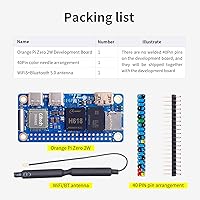
The Orange Pi Zero 2W 4GB Single Board Computer is not the right choice for users who rely on a large, well-maintained community for support and ready-made tutorials. If you are new to single board computers and expect the same hand-holding documentation you find in the Raspberry Pi ecosystem, frustration is likely. The board is also a poor fit for workloads demanding sustained CPU performance or serious GPU tasks — this is not a platform for machine learning inference, video transcoding, or running multiple heavy applications simultaneously. Anyone who needs wired Ethernet or full-size USB ports out of the box should know upfront that those require a separate 24-pin adapter board, which adds cost and complexity. Projects with enclosed, low-airflow enclosures should also plan for thermal management, as the board can run warm under sustained load.
Specifications

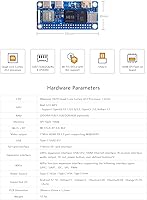
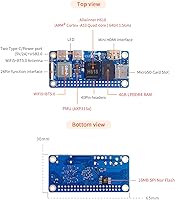
  • Processor: The board runs on an Allwinner H618 quad-core Cortex-A53 CPU clocked at up to 1.5GHz, designed for efficient low-power computing tasks.
  • RAM: 4GB of LPDDR4 memory is installed, making this the highest-memory configuration available in the Zero 2W lineup.
  • Flash Storage: 16MB of onboard SPI Flash is included for bootloader storage, allowing the system to initialize without relying solely on a microSD card.
  • GPU: A Mali G31 MP2 graphics processor handles rendering with support for OpenGL ES 3.2, OpenCL 2.0, and Vulkan 1.1.
  • Display Output: The board supports 4K display output, suitable for basic video playback and Android TV interface rendering at high resolution.
  • Wi-Fi: Dual-band Wi-Fi 5 covers both 2.4GHz and 5GHz bands via an onboard antenna, with no external adapter required.
  • Bluetooth: Bluetooth 5.0 with BLE support is built in, enabling low-energy peripheral connections alongside standard BT device pairing.
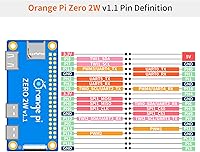
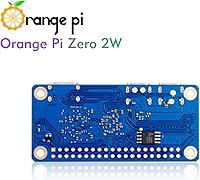
  • GPIO Header: A standard 40-pin GPIO expansion header is present on the board, maintaining broad compatibility with common HATs and peripheral modules.
  • Expansion Port: A 24-pin connector allows attachment of an optional adapter board that adds USB 2.0 ports, 100Mbps Ethernet, IR receiver, audio output, and TV-out.
  • PCB Dimensions: The board measures 30mm x 65mm x 1.2mm, placing it among the most compact full-featured single board computers currently available.
  • Weight: The bare board weighs 1.13 ounces, making it practical for weight-sensitive embedded or portable project builds.
  • Operating Systems: Officially supported operating systems include Android 12 TV, Ubuntu 22.04, Ubuntu 20.04, Debian 11, Debian 12, and Orange Pi OS based on Arch Linux.
  • CPU Architecture: The Cortex-A53 cores use a 64-bit ARMv8 architecture, enabling compatibility with modern 64-bit Linux distributions and Android builds.
  • Ethernet: 100Mbps wired Ethernet is available only through the optional 24-pin adapter board and is not accessible on the bare PCB alone.
  • USB Ports: USB 2.0 connectivity requires the separate 24-pin adapter board; no full-size USB ports are exposed directly on the base PCB.
  • Market Rank: As of available data, this board holds a rank of #247 in the Single Board Computers category on Amazon with a 4.0-star average from 119 ratings.
  • Manufacturer: The board is designed and manufactured by Shenzhen Xunlong Software Co., Limited, the company behind the Orange Pi product line.
  • Release Date: The Orange Pi Zero 2W was first listed for sale in September 2023, making it a relatively recent entry in the compact SBC market.

Related Reviews
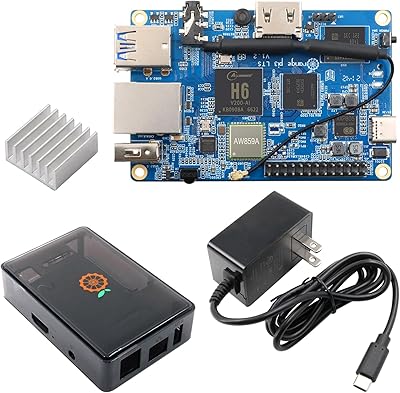
Orange Pi 3 LTS Single-Board Computer
65%
83%
Value for Money
81%
eMMC Storage Performance
67%
CPU Performance
54%
Thermal Management
79%
Networking & Connectivity
More
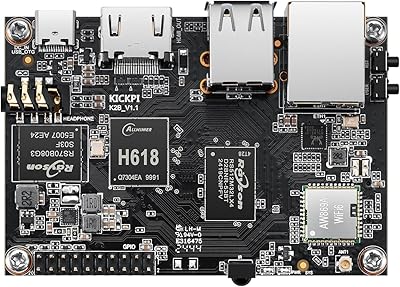
KICKPI K2B Single Board Computer
70%
82%
Value for Money
67%
Performance
74%
Build Quality
88%
Connectivity
79%
GPIO & Expandability
More
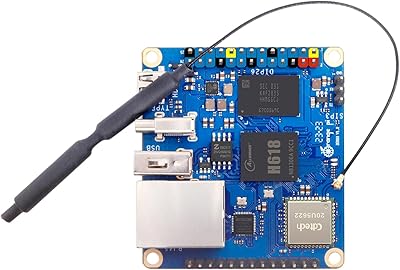
Orange Pi Zero 3 1.5GB Single Board Computer
72%
88%
Value for Money
84%
Connectivity
71%
Performance
52%
Thermal Management
67%
OS & Software Support
More
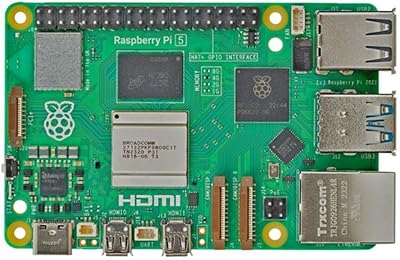
Raspberry Pi 5 4GB
Raspberry Pi 5 4GB
82%
93%
CPU Performance
91%
Storage & Boot Speed
78%
Value for Money
67%
Thermal Management
74%
GPU & Graphics Capability
More
Orange Pi 5 8GB Single Board Computer
73%
91%
Raw CPU Performance
83%
AI & NPU Capability
88%
Storage & I/O Speed
47%
Connectivity & Wireless
62%
Thermal Management
More
Arduino MKR Zero ABX00012
80%
88%
Processing Performance
91%
Built-in SD Card Integration
79%
Audio Capability
86%
Portability & Power Options
63%
3.3V Logic Compatibility
More
Orange Pi 5 Plus 16GB Single-Board Computer
78%
93%
Raw CPU Performance
91%
Memory & Multitasking
96%
Networking Capability
89%
Storage Performance
72%
NPU & Edge AI Usability
More
Raspberry Pi Zero 2 WH Kit
87%
88%
Performance
91%
Ease of Setup
94%
Size & Portability
90%
Wireless Connectivity (Wi-Fi/Bluetooth)
85%
Build Quality
More
Raspberry Pi Zero 2 W
80%
91%
Processing Performance
88%
Value for Money
73%
RAM & Memory Adequacy
86%
Wireless Connectivity
93%
GPIO & Ecosystem Compatibility
More
Vilros Raspberry Pi 5 4GB Starter Kit
82%
92%
Ease of Setup
89%
Cooling Performance
91%
Build Quality
84%
Value for Money
74%
RAM Adequacy
More

FAQ

Yes, wired Ethernet is not available on the bare board itself. You will need the separate 24-pin expansion adapter board, which adds a 100Mbps Ethernet port along with USB 2.0, audio out, and IR receiver. That adapter is sold separately, so factor it into your total project cost before ordering.

It runs Android 12 TV and can handle basic media playback and app usage reasonably well. That said, do not expect the same performance as a dedicated streaming stick or a higher-end board. For casual screen-casting prototypes or lightweight IPTV setups it works, but demanding Android apps or heavy multitasking will push its limits.

The main advantages this Orange Pi board has over the Raspberry Pi Zero 2W are the higher RAM ceiling (up to 4GB versus 512MB) and faster Wi-Fi 5 connectivity. For most home automation tasks those differences are meaningful. The trade-off is a smaller community and fewer ready-made tutorials, so you may need to adapt guides written for Raspberry Pi hardware.

Ubuntu 22.04 or Debian 12 are generally the most stable starting points for Linux-based projects. Orange Pi publishes official images for both on their website. If you want Android, the Android 12 TV image is the recommended route, though setup can be less intuitive than on more popular platforms.

Under light workloads the board runs warm but manageable. If you plan to run it at sustained load — a small server, continuous data processing, or media playback — adding a small heatsink is a sensible precaution, especially if it will sit in a compact or enclosed case with limited airflow.

Physically the pinout is similar to a standard 40-pin Raspberry Pi header, but software compatibility is not guaranteed. HATs that rely on generic protocols like I2C, SPI, or UART typically work, but HATs that depend on Raspberry Pi-specific libraries or firmware may need extra configuration or may not work at all.

The 16MB SPI Flash is primarily used for bootloader storage rather than as a full boot drive for an OS image. It allows the board to initialize the boot process independently, which can improve reliability, but your main operating system will still live on a microSD card.

Orange Pi maintains an official forum and publishes user manuals on their website at orangepi.org. That said, the community is considerably smaller than Raspberry Pi forums, so answers to niche questions can take longer to surface. Some users find that Allwinner H618 forums and general ARM Linux communities fill the gap for lower-level issues.

No, the board typically ships without a power supply, case, or microSD card. You will need a 5V USB-C power source capable of delivering at least 2A, and a microSD card with your chosen OS image written to it. A case is optional but recommended if the board will see regular handling.

It depends on your expectations. If you are comfortable reading technical documentation, adapting instructions from other platforms, and doing some independent troubleshooting, this compact SBC is a rewarding and cost-effective choice. If you want a fully guided experience with extensive beginner tutorials and plug-and-play OS tools, the Raspberry Pi ecosystem will feel more accessible to start with.