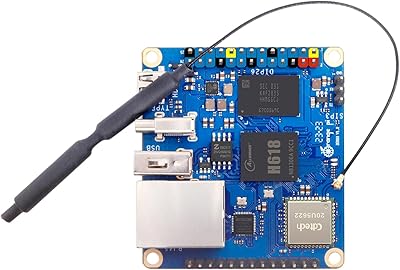
Orange Pi 5 Plus 16GB Single-Board Computer

Overview
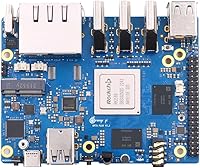
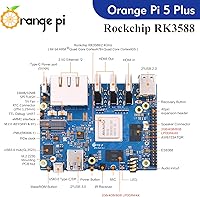
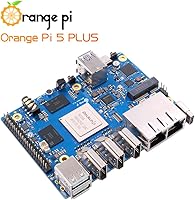
The Orange Pi 5 Plus 16GB Single-Board Computer is Shenzhen Xunlong's most capable board to date, built around the Rockchip RK3588 — an 8nm octa-core chip that brings genuine desktop-class performance to a 100mm x 75mm footprint. Where cheaper SBCs struggle with multitasking or video workloads, this Orange Pi board holds its own thanks to that chip's raw throughput. The 16GB RAM variant opens doors the 4GB and 8GB versions simply can't — think containerized services, heavier inference models, or a full desktop environment without constantly hitting memory ceilings. It supports Android 12, Debian 11, Ubuntu 22.04, and Orange Pi's own OS, giving developers real choice. Just be clear-eyed: this is a developer-grade board, not a consumer appliance.
Features & Benefits
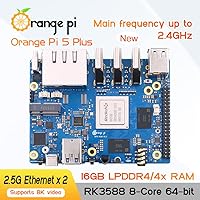
The OPi 5 Plus runs an octa-core setup split between four high-performance Cortex-A76 cores at 2.4GHz and four efficiency-oriented A55 cores — a configuration that handles heavy tasks without burning excess power during lighter workloads. The 16GB LPDDR4x RAM is genuinely useful here: running multiple Docker containers, a lightweight inference server, and a remote desktop session simultaneously is realistic, not aspirational. A built-in 6 TOPS NPU handles on-device AI tasks like object detection or basic image classification without offloading to the cloud. The dual 2.5G Ethernet ports — both running over PCIe, not USB — are rare at this price tier and ideal for routing or NAS builds. Storage options span a PCIe 3.0 x4 NVMe slot, an eMMC socket, and microSD.
Best For
This RK3588-powered SBC hits a sweet spot for a fairly specific type of builder. Edge AI developers will appreciate the NPU for running inference models locally — think YOLO-based object detection on a live camera feed, not full language model training. Home lab users get a compelling mini server platform with dual 2.5G networking and fast NVMe boot capability. Makers outgrowing the Raspberry Pi ecosystem will find the raw performance jump substantial. That said, if you expect plug-and-play simplicity or a Raspberry Pi-sized support community, this board will frustrate. The 40-pin GPIO header and MIPI CSI/DSI interfaces keep it strong for embedded prototyping, and hardware video decode makes it capable for Android media center builds.
User Feedback
Buyers who have put this Orange Pi board through its paces tend to praise its raw processing power and the reliability of both 2.5G Ethernet ports under sustained load — things that matter when running a homelab around the clock. NVMe boot speeds draw consistent compliments as well. On the flip side, documentation is a recurring pain point: the official wiki is improving, but it is nowhere near the depth of Raspberry Pi's community resources. Several buyers were caught off guard discovering that Wi-Fi and Bluetooth require a separately purchased M.2 E-key module. Power supply compatibility has also caused headaches for some. Overall sentiment sits solidly positive among technically confident users, with frustration mostly from those who underestimated the setup investment.
Pros
- The RK3588 chip delivers desktop-class CPU performance that most ARM SBCs at this price tier cannot match.
- 16GB LPDDR4x RAM makes running multiple Docker containers or a full desktop environment genuinely practical.
- Dual 2.5G Ethernet over PCIe is rare on compact boards and holds up well under sustained network load.
- NVMe M.2 slot (PCIe 3.0 x4) enables fast storage that transforms boot times and application responsiveness.
- The 6 TOPS NPU handles real-world inference tasks like object detection without relying on cloud compute.
- Multiple OS options — including Android 12, Ubuntu, and Debian — give developers genuine flexibility.
- Dual HDMI 2.1 output plus an HDMI input port make multi-display and capture setups unusually straightforward.
- The 40-pin GPIO header with support for SPI, I2C, CAN, and I2S keeps embedded prototyping well covered.
- At 100mm x 75mm and 86.5g, the OPi 5 Plus is compact enough to fit inside custom enclosures or small cases.
- Hardware video decode up to 8K@60fps handles high-resolution media without taxing the CPU.
Cons
- Wi-Fi and Bluetooth are not built in — you must budget for and source a compatible M.2 E-key wireless module separately.
- Official documentation is inconsistent and sometimes incomplete, making initial setup harder than it needs to be.
- The community around this RK3588-powered SBC is significantly smaller than Raspberry Pi forums, so finding answers takes longer.
- Power supply compatibility is not universal — some users report instability with third-party chargers that technically meet the 5V/4A spec.
- Accessories designed for Raspberry Pi, including many cases and HATs, do not physically fit this board.
- Android support, while officially listed, requires extra effort to get fully functional and is not maintained as actively as Linux images.
- No onboard eMMC storage is included — the socket is present, but the module must be purchased separately.
- Thermal management under sustained heavy load may require an active cooling solution, which adds cost and planning.
- The learning curve for newcomers is steep, particularly around bootloader configuration and device tree customization.
- Limited availability of pre-built OS images compared to more established boards means more manual setup work for niche use cases.
Ratings
Our AI scoring system analyzed verified global buyer reviews for the Orange Pi 5 Plus 16GB Single-Board Computer, actively filtering out incentivized, duplicate, and bot-generated submissions to surface authentic user sentiment. The scores below reflect both the genuine strengths that keep experienced builders coming back and the real friction points that have frustrated newcomers — nothing is glossed over. From homelab networking setups to edge AI prototyping rigs, the ratings capture how this board actually performs across diverse, real-world use cases.
Raw CPU Performance
Memory & Multitasking
Networking Capability
Storage Performance
NPU & Edge AI Usability
Software & OS Ecosystem
Documentation & Setup Experience
Community & Support
Thermal Management
Display & Video Output
Connectivity & Port Variety
Wireless Connectivity
Build Quality & Board Design
Value for Money
Power Efficiency
Suitable for:
The Orange Pi 5 Plus 16GB Single-Board Computer is genuinely well-suited for technically confident builders who know what they want to build and are comfortable troubleshooting their way through setup. Home lab enthusiasts will find it compelling as a compact NAS or soft router, especially given the dual 2.5G Ethernet ports that most boards in this class simply do not offer. Developers experimenting with on-device AI — running object detection models, processing camera streams locally, or prototyping edge inference pipelines — will get real mileage out of the 6 TOPS NPU without needing cloud offloading. The 16GB RAM headroom is meaningful for anyone running multiple containerized services or a persistent desktop environment simultaneously. Embedded engineers who need MIPI CSI camera input, multiple display outputs, and a rich GPIO header will also find the interface selection unusually thorough for a board this size.
Not suitable for:
The Orange Pi 5 Plus 16GB Single-Board Computer is a poor fit for anyone expecting a Raspberry Pi-style experience out of the box. If your comfort zone is flashing an SD card and following a beginner tutorial, this board will likely frustrate you — the documentation, while improving, still lags well behind established SBC communities, and troubleshooting often requires digging through forum threads in multiple languages. Casual users who just want a cheap media player or basic desktop replacement will also find the setup overhead hard to justify. Wi-Fi and Bluetooth are not included on the board itself and require a separately purchased M.2 E-key module, which catches many first-time buyers off guard. Anyone on a tight accessories budget should factor in the cost of a compatible power supply, an NVMe drive, and potentially that wireless module before committing.
Specifications
- SoC: Powered by the Rockchip RK3588, an 8nm system-on-chip that delivers strong multi-threaded performance while keeping power consumption in check.
- CPU: Octa-core 64-bit processor combining four Cortex-A76 cores at 2.4GHz for heavy workloads and four Cortex-A55 cores at 1.8GHz for efficiency-oriented tasks.
- GPU: Arm Mali-G610 GPU with support for OpenGL ES 1.1, 2.0, and 3.2, OpenCL 2.2, and Vulkan 1.2 for graphics and compute workloads.
- NPU: Integrated neural processing unit rated at 6 TOPS, supporting INT4, INT8, INT16, and FP16 hybrid operation for on-device inference tasks.
- RAM: 16GB LPDDR4x memory soldered onboard, providing ample headroom for containerized services, desktop environments, and parallel edge AI workloads.
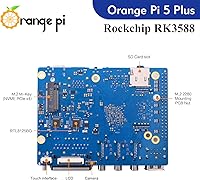
- Storage Options: Supports an M.2 2280 NVMe SSD via PCIe 3.0 x4, an external eMMC module via onboard socket, and a microSD card slot up to 128GB.
- Video Output: Two HDMI 2.1 ports support up to 8K at 60fps, and one USB-C port with DisplayPort 1.4A output supports up to 8K at 30fps.
- Video Input: One HDMI input port supports incoming video signals up to 4K at 60fps, enabling capture and pass-through use cases.
- Networking: Two 2.5 Gigabit Ethernet ports using RTL8125BG controllers connected via PCIe, offering reliable high-bandwidth wired networking.
- Wireless: Wi-Fi 6 and Bluetooth connectivity require a separately purchased M.2 E-key 2230 module; no wireless hardware is included in the box.
- USB Ports: Provides two USB 3.0 ports, two USB 2.0 ports, and two USB-C ports, with one USB-C port dedicated solely to power input.
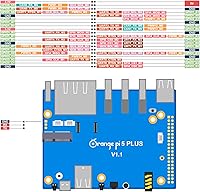
- GPIO Header: 40-pin double-row expansion header supporting UART, I2C, SPI, CAN, I2S, PDM, SDIO, PWM, and standard GPIO functions for embedded prototyping.
- Audio: ES8388 audio CODEC with a 3.5mm headphone and microphone combo jack, one MIC input, HDMI 2.1 eARC support, and a dedicated speaker connector.
- Camera Interface: One MIPI CSI 4-lane connector supports camera module attachment for computer vision and imaging applications.
- Display Interface: One MIPI DSI 4-lane output supports panel connections up to 4K at 60Hz for embedded display integration.
- Power Supply: Requires a 5V at 4A power input delivered via USB-C; using an underpowered or incompatible adapter may cause instability.
- Supported OS: Officially supported operating systems include Orange Pi OS (multiple variants), Ubuntu 22.04, Debian 11, and Android 12.
- Dimensions: The board measures 100mm x 75mm and weighs 86.5g, making it compact enough for enclosure mounting or embedded integration.
- Expansion Slots: Includes an M.2 M-key slot for NVMe storage and an M.2 E-key slot for optional wireless modules, both on separate board layers.
- Manufacturer: Designed and manufactured by Shenzhen Xunlong Software Co., Limited, the company behind the Orange Pi product line since 2014.
Related Reviews
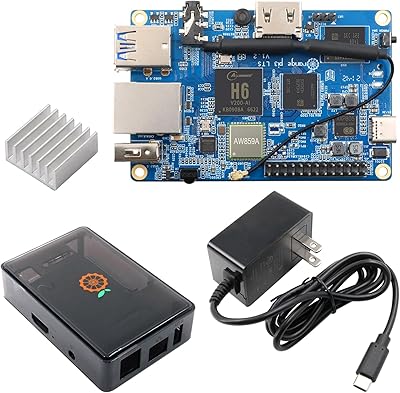
Orange Pi 3 LTS Single-Board Computer
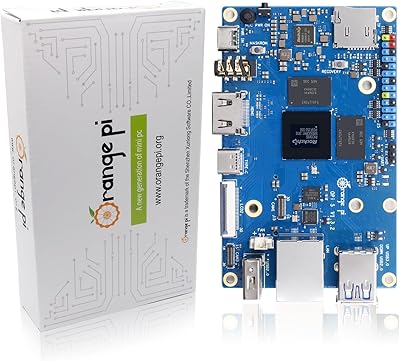
Orange Pi 5 8GB Single Board Computer
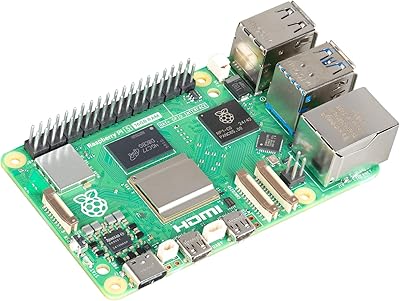
Raspberry Pi 5 (16GB)
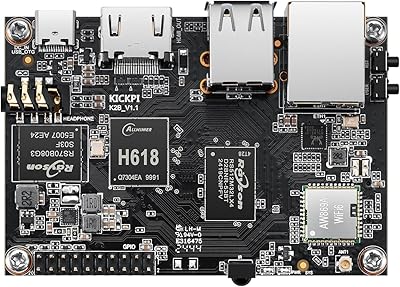
KICKPI K2B Single Board Computer
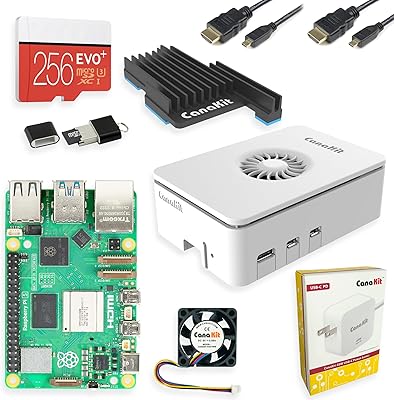
CanaKit Raspberry Pi 5 Starter Kit MAX 16GB 256GB
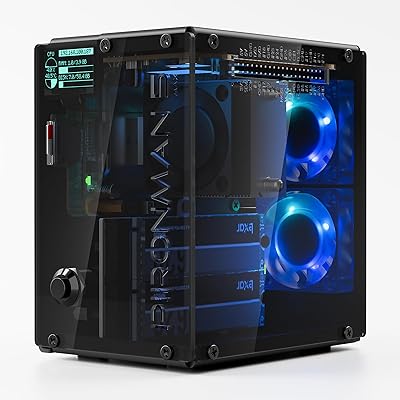
SunFounder Pironman 5-MAX Raspberry Pi 5 Case
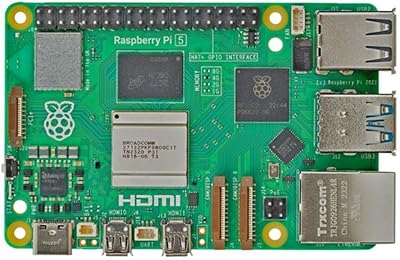
Raspberry Pi 5 4GB
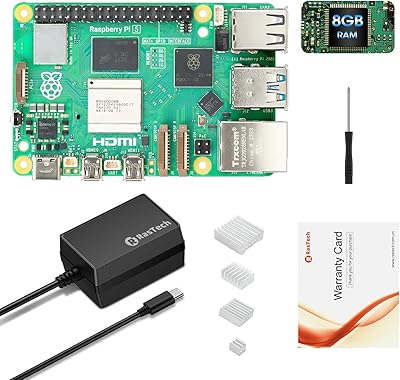
RasTech Raspberry Pi 5 8GB Kit
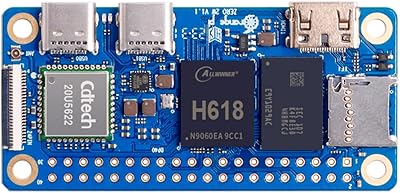
Orange Pi Zero 2W 4GB Single Board Computer