Overview

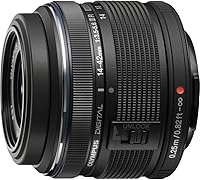
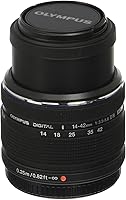
The Olympus M.Zuiko 14-42mm F3.5-5.6 2R Zoom Lens is a compact, collapsible zoom that has been around since 2011 — and honestly, it holds up better than you might expect for its age. It covers a 14–42mm range (equivalent to 28–84mm on a full-frame camera), which is genuinely useful for everything from wide street scenes to casual portraits. At under four ounces, it barely registers in your bag. It sits at a mid-range price that undercuts more specialized glass while offering more than a basic kit lens. OM SYSTEM continues to support it, which is reassuring for long-term users.
Features & Benefits

The most immediately practical feature of this collapsible zoom is the barrel that retracts when not shooting — it's the difference between a lens that fits in a jacket pocket and one that doesn't. Seven circular aperture blades mean background blur looks reasonably smooth for a zoom in this price range, though don't expect the creamy separation you'd get from a fast prime. The autofocus is notably quiet, which matters a lot if you shoot video. It also focuses down to about 25cm, close enough to fill the frame with small objects. Micro Four Thirds mount means it works across Olympus OM-D and Panasonic G-series bodies.

Best For

This Micro Four Thirds zoom is a natural fit for travelers who refuse to carry a heavy bag but still want real optical range. Street photographers will appreciate how unobtrusive it looks when collapsed — no protruding barrel drawing attention between shots. If you're a video shooter using an OM-D or a Panasonic Lumix body, the quiet focus motor is a practical asset. Beginners who received a worn or basic kit lens with a used camera body will find this a meaningful step up. Anyone who wants one lens for casual day-to-day shooting — from wide environmental shots to tighter portraits — will find it covers the essentials well.

User Feedback

Across more than 200 ratings, this collapsible zoom holds a 4.4-star average, which reflects genuine satisfaction rather than hype. The compact collapsed size comes up constantly as a highlight — buyers repeatedly mention it as the deciding factor in their purchase. Sharpness at moderate apertures earns consistent praise, though wide open at 42mm you'll notice some softness at the edges, so it pays to stop down slightly when detail matters. The main criticism centers on build quality — the plastic construction feels functional but not especially solid. Several buyers picked it up as a replacement for a damaged original lens, and most say it delivered exactly what they needed.

Pros

  • Collapsed barrel fits easily in a coat pocket — genuinely smaller than most kit zooms on the market.
  • Covers a practical wide-to-short-telephoto range that handles most everyday shooting situations.
  • Autofocus is quiet enough to use on camera during video without picking up mechanical noise.
  • Seven circular aperture blades produce more natural-looking background blur than most lenses in this category.
  • Under four ounces means you barely notice it on a small mirrorless body during a long day out.
  • Close-focus capability down to about 25cm opens up casual flat-lay and detail shots without a macro lens.
  • Compatible with both Olympus and Panasonic Micro Four Thirds bodies, giving it broad ecosystem utility.
  • OM SYSTEM continues to support and sell this lens, so finding accessories and support is straightforward.
  • At a mid-range price, it offers a meaningful quality step over cheap kit alternatives without a premium lens budget.
  • A 4.4-star average across more than 200 real buyer ratings reflects consistently solid satisfaction.

Cons

  • Plastic construction feels noticeably less solid than the price tag might lead you to expect.
  • Soft edges at 42mm wide open mean you need to stop down for critical sharpness at the long end.
  • No weather sealing makes it a poor choice for shooting in rain, dust, or harsh outdoor conditions.
  • Variable aperture drops to f/5.6 at the telephoto end, which struggles indoors without raising ISO.
  • The collapsible mechanism adds an extra step before shooting — you must twist to extend before it fires.
  • Background separation is modest compared to any fast prime; do not expect dramatic bokeh from this zoom.
  • Autofocus tracking under fast or erratic motion is adequate but not reliable for sports or action work.
  • Being a 2011 design, it lacks some of the optical coatings and refinements found in newer lens generations.

Ratings

The scores below reflect an AI-driven analysis of verified buyer reviews for the Olympus M.Zuiko 14-42mm F3.5-5.6 2R Zoom Lens, sourced globally and filtered to exclude incentivized, bot-generated, and spam submissions. Each category is scored independently to give you a transparent, ground-level picture of where this collapsible zoom genuinely earns its reputation — and where real-world users have run into genuine friction.

Portability
93%
The collapsed barrel is the lens's single most celebrated trait among buyers — it genuinely fits in a jacket pocket alongside an OM-D body, something few zoom lenses can claim. Travelers packing light for city trips consistently call it a practical difference-maker compared to traditional protruding kit zooms.
The collapse-to-shoot mechanism adds a rotation step before you can fire the shutter, which frustrates users trying to capture spontaneous moments quickly. A handful of buyers found the unlock motion stiff or awkward in cold weather when wearing gloves.
Image Sharpness
76%
24%
At mid-range apertures — roughly f/5.6 to f/8 across the zoom range — users consistently describe the output as clean, detailed, and more than adequate for travel snapshots, social media use, and moderate-size prints. Sharpness at 14mm wide open draws particular praise for landscape work.
Wide open at 42mm, edge and corner softness becomes noticeable enough that critical users flag it in pixel-level comparisons. A number of reviewers explicitly recommend stopping down by at least one stop at the telephoto end to get usable sharpness across the full frame.
Autofocus Performance
81%
19%
The near-silent focus motor is a genuine asset for hybrid shooters — video creators using OM-D and Lumix bodies specifically call out the absence of audible hunting or mechanical buzz during clips. In good light, locking onto stationary and slow-moving subjects is described as fast and reliable.
In lower light or with moving subjects, autofocus confidence drops noticeably, and some users report occasional hunting before it locks. Continuous tracking during action or sport scenarios is not where this lens performs well, and reviewers expecting DSLR-style speed will be disappointed.
Build Quality
58%
42%
The all-plastic construction keeps the weight impressively low, and most casual users appreciate that the lens feels light and balanced on compact mirrorless bodies without straining the mount. For indoor and everyday use, the build is perfectly functional.
At a mid-range price point, the plastic feel is the most consistent complaint across buyer reviews — it simply does not feel as solid as the asking price implies. There is no weather sealing, no rubberized grip ring, and the barrel wobbles slightly when extended, which erodes confidence during outdoor shooting.
Value for Money
78%
22%
Most buyers who purchased this collapsible zoom as a replacement for a lost or worn kit lens feel they got fair value — the optical performance is stronger than many true budget alternatives, and the size advantage justifies the premium over a basic bundled lens. For Micro Four Thirds users on a reasonable budget, it lands in a practical sweet spot.
Buyers comparing it directly against newer third-party alternatives or OM SYSTEM's own updated lenses sometimes feel the price-to-performance ratio has slipped as the design has aged. Those expecting weather sealing or metal construction at this price tier tend to feel shortchanged.
Bokeh Quality
67%
33%
Seven circular aperture blades produce background blur that looks softer and rounder than lenses with straight-edged diaphragms, which is a genuine step up for a zoom in this category. At 42mm with a subject close to the camera, the separation is pleasant enough for casual portrait work.
Compared to any fast prime at f/1.8 or f/2, the background rendering is clearly less dramatic and can appear busy with cluttered backgrounds. Users who prioritize subject isolation for portraits or product photography will quickly find the variable aperture a limiting factor.
Video Suitability
82%
18%
Quiet autofocus and a lightweight build make this an appealing lens for vloggers and documentary-style shooters who need a single walkaround optic on a compact mirrorless rig. The 28–84mm equivalent range covers interview framing and wide establishing shots without swapping glass.
There is no optical image stabilization built into the lens itself, so handheld video smoothness depends entirely on the body's in-body stabilization. Manual focus control via the zoom ring is imprecise for smooth focus pulls, which limits its appeal for more deliberate cinematic work.
Zoom Range Versatility
79%
21%
The 3× zoom range from wide-angle to short telephoto covers the majority of everyday shooting situations — architecture, street scenes, group shots, and casual portraits all fall within reach without changing lenses. It is the kind of range that lets you leave the bag behind on short outings.
At 42mm on a Micro Four Thirds sensor, the reach is not long enough for wildlife, sports, or stage performances where you need to compress distance. Users who frequently shoot subjects beyond casual portrait distances will find themselves wishing for a longer telephoto more often than the range allows.
Close-Focus Capability
72%
28%
A minimum focusing distance of about 25cm means users can get surprisingly detailed shots of small objects — food styling, product flat-lays, and flower detail all fall within reach without a separate macro lens. Several reviewers specifically mention using it for casual tabletop photography with good results.
It does not qualify as a true macro lens, and users expecting 1:1 reproduction will be disappointed. The working distance at minimum focus is also short enough that the lens itself can cast a shadow on the subject in bright overhead light, requiring some compositional adjustment.
Compatibility
88%
The Micro Four Thirds mount is one of the most thoughtfully standardized ecosystems in mirrorless photography — this lens works correctly with full autofocus and electronic aperture control on Olympus OM-D bodies and Panasonic Lumix G-series cameras alike, giving it wide practical reach.
It is entirely incompatible with the older Four Thirds DSLR mount without an adapter, and autofocus behavior with adapters is unreliable. Users migrating from Olympus DSLRs sometimes purchase it assuming backward compatibility, which is a source of frustration.
Size When Extended
63%
37%
Even fully extended to 42mm, the lens profile remains compact relative to most standard zoom lenses in other systems, and the camera-plus-lens combination is still pocketable in a large jacket or small shoulder bag.
The physical extension from collapsed to shooting-ready nearly doubles the visible barrel length, which surprises some buyers who expected the shooting profile to match the collapsed one. In crowded or tight shooting environments, the extended barrel is more conspicuous than the collapsed impression suggests.
Low-Light Performance
54%
46%
At 14mm and f/3.5, the lens gathers enough light for dusk street photography or indoor scenes with reasonable ambient light, especially when paired with a body that has strong high-ISO performance. Wide-angle shots in moderate low light remain usable with some noise from the sensor.
At the 42mm end, f/5.6 forces ISO values high enough that noise becomes a real issue on older Micro Four Thirds sensors in dim environments. Users shooting evening events or indoor venues without flash will find this lens limiting, and upgrading to a fast prime becomes a more compelling proposition in those situations.
Longevity
69%
31%
The lens has been on the market since 2011 and continues to receive support from OM SYSTEM, which says something about the baseline reliability of the optical and mechanical design. Many buyers report using it for years without issues as a walkaround or backup lens.
The plastic construction raises questions about long-term durability under frequent use — the collapsible mechanism in particular involves repeated mechanical cycling that some users report feeling looser over time. Compared to a metal-barreled lens of similar vintage, the physical aging is more apparent.

Suitable for:

The Olympus M.Zuiko 14-42mm F3.5-5.6 2R Zoom Lens is a smart pick for Micro Four Thirds shooters who want one capable, pocketable lens for everyday and travel use. If you carry an Olympus OM-D or a Panasonic G-series body and regularly find yourself wishing your current lens were smaller and lighter, this collapsible zoom directly solves that problem. Street photographers will appreciate how discreet it looks when the barrel is retracted — it draws far less attention than a traditional protruding zoom. Video creators working with mirrorless bodies will also benefit meaningfully from the near-silent autofocus, which keeps ambient sound clean without a blimp or external recorder workaround. Beginners stepping up from a worn or basic bundled lens will find the image quality and focus performance a genuine improvement without a steep learning curve. For anyone whose shooting style sits somewhere between casual documentary and light travel photography, this lens covers the practical range comfortably.
Not suitable for:

Photographers chasing maximum optical performance or premium build quality should be clear-eyed about what the Olympus M.Zuiko 14-42mm F3.5-5.6 2R Zoom Lens is and is not. This is a plastic-bodied kit-class lens, and it feels like one in hand — there is no weather sealing, no metal construction, and no sense of robustness for demanding outdoor conditions. Shooters who regularly work in rain, dust, or cold environments will want a weather-sealed alternative. The variable aperture also becomes limiting in low light, particularly at the 42mm end where f/5.6 forces you toward higher ISO settings indoors. If you shoot portraits or product work where subject separation and background blur are priorities, a dedicated fast prime will produce noticeably better results — this lens can render smooth blur, but it cannot compete with an f/1.8 lens in that regard. Sports or wildlife photographers who need fast, continuous tracking will also find the autofocus speed adequate at best, not confident under pressure.
Specifications

  • Focal Length: The lens covers a 14–42mm zoom range, equivalent to 28–84mm on a full-frame camera, spanning wide-angle landscapes through short telephoto portraits.
  • Maximum Aperture: Aperture opens to f/3.5 at the wide end and narrows to f/5.6 at 42mm, which is typical for a variable-aperture kit zoom in this class.
  • Aperture Blades: Seven circular aperture blades form the diaphragm, producing rounded, relatively smooth background blur compared to lenses with fewer straight-edged blades.
  • Minimum Focus: The closest focusing distance is approximately 9.84 inches (about 25cm), allowing the lens to capture small subjects with reasonable detail without a dedicated macro lens.
  • Mount: Designed exclusively for the Micro Four Thirds mount standard, ensuring electronic and mechanical compatibility with Olympus OM-D and Panasonic Lumix G-series mirrorless bodies.
  • Barrel Design: The collapsible barrel retracts when not in use, reducing the lens profile significantly for storage and transport.
  • Autofocus: An internal, nearly silent autofocus motor drives focus without audible mechanical noise, making it suitable for video recording alongside stills.
  • Weight: The lens weighs 3.95 ounces (approximately 112g), keeping the overall camera-and-lens combination light enough for extended handheld use.
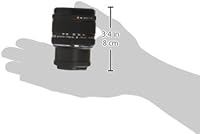
  • Dimensions: When extended for shooting, the lens measures approximately 1.9 inches in diameter and 2.2 inches in length (about 2.2 × 2.2 inches total footprint).
  • Zoom Range: The 3× optical zoom ratio provides a practical balance between wide-angle coverage and moderate telephoto reach in a single compact optic.
  • Build Material: The lens body is constructed primarily from engineering plastic, which keeps weight low but does not provide the tactile feel of a metal-barreled lens.
  • Weather Sealing: This lens does not include weather sealing or dust resistance, so it should be used with caution in rain, heavy humidity, or dusty environments.
  • Brand: Manufactured and supported by OM SYSTEM (formerly Olympus), a brand with a long history in precision optical engineering for camera systems.
  • Model Number: The official manufacturer model number is V314050BU000, which can be used to verify authenticity and identify compatible accessories.
  • Color: Available in black, with a matte finish that keeps the lens visually low-profile and consistent with most Olympus and Panasonic mirrorless bodies.
  • First Available: This lens was first made available in July 2011, making it a mature product with an established track record across a wide user base.
  • Filter Thread: The lens accepts 37mm screw-in filters, which is a compact thread size consistent with the overall small form factor of the optic.
  • Lens Type: Classified as a wide-angle-to-standard zoom lens, covering the most commonly used focal lengths for everyday, travel, and casual portrait photography.

Related Reviews
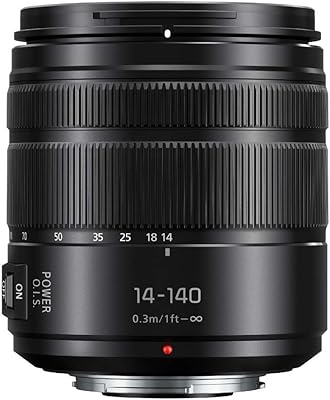
Panasonic Lumix G Vario 14-140mm Zoom Lens
81%
88%
Image Sharpness
93%
Zoom Range Versatility
86%
Optical Image Stabilization
61%
Low-Light Performance
82%
Build Quality & Durability
More
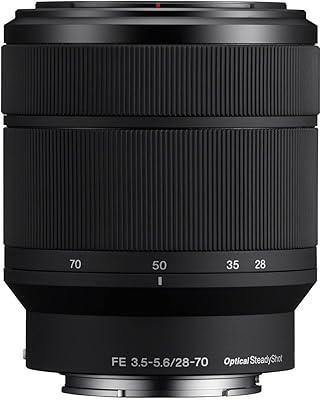
Sony 28-70mm F3.5-5.6 FE OSS Lens
86%
92%
Value for Money
87%
Image Quality
72%
Autofocus Performance
88%
Image Stabilization
83%
Build Quality
More
Panasonic LUMIX G Vario 12-60mm Mirrorless Lens
80%
88%
Image Sharpness
91%
Zoom Range Versatility
86%
Optical Stabilization
83%
Weather Sealing
84%
Autofocus Performance
More
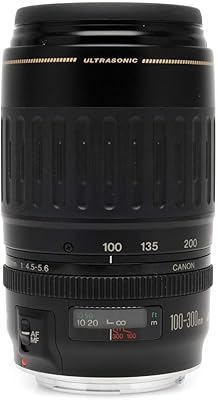
Canon EF 100-300mm f/4.5-5.6 Telephoto Zoom Lens
75%
88%
Autofocus Speed
91%
Autofocus Noise
67%
Image Sharpness
43%
Image Stabilization
78%
Build Quality
More
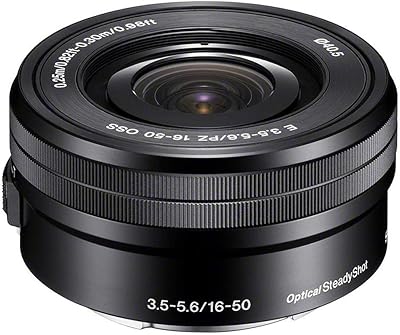
Sony 16-50mm f/3.5-5.6 OSS Alpha E-Mount Retractable Zoom Lens
85%
91%
Value for Money
87%
Image Quality
93%
Portability/Size
88%
Ease of Use
82%
Build Quality
More
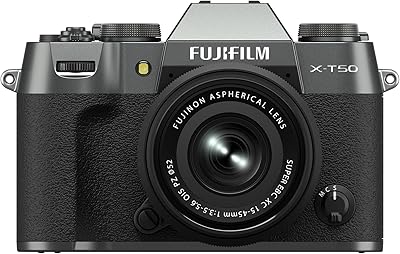
Fujifilm X-T50 Mirrorless Camera 15-45mm Kit
79%
93%
Image Quality
91%
Film Simulation & JPEG Output
78%
Build Quality & Design
72%
Autofocus Performance
88%
Video Capabilities
More
Canon RF-S 18-150mm Mirrorless Zoom Lens
79%
93%
Zoom Versatility
88%
Image Stabilization
76%
Autofocus Performance
84%
Video Quality
67%
Image Sharpness
More
OM System E-M10 Mark IV
77%
83%
Image Quality
89%
Image Stabilization
86%
Build Quality & Design
71%
Autofocus Performance
68%
Video Capabilities
More
Olympus M.Zuiko 60mm F2.8 Macro Lens
84%
93%
Optical Sharpness
71%
Autofocus Performance
89%
Build Quality & Weather Sealing
91%
Macro Magnification & Working Distance
86%
Bokeh & Background Rendering
More
Canon EF-S 55-250mm f/4-5.6 IS II Telephoto Zoom Lens
82%
91%
Value for Money
88%
Image Stabilization Performance
65%
Autofocus Speed in Low Light
93%
Portability & Size
85%
Image Quality & Sharpness
More

FAQ

It works on any Micro Four Thirds body, so Panasonic Lumix G-series cameras are fully compatible. The Micro Four Thirds mount is a shared standard between Olympus and Panasonic, meaning autofocus and all electronic functions work correctly across both brands.

You rotate the zoom ring toward the wide end (14mm) to extend and unlock the lens — there is a small lock indicator on the barrel. It becomes second nature quickly, but new users sometimes forget and wonder why the shutter will not fire; the camera will not shoot while the lens is in its collapsed, locked position.

Yes, it is a reasonable choice for casual and travel video. The autofocus motor is quiet enough that it does not bleed into audio recorded by the camera's built-in microphone during focus pulls, which is a real advantage over older or noisier kit lenses. It is not a cinema-grade optic, but for vlogging and documentary-style footage it performs well.

You can get background separation, especially at 42mm with the subject close and the background far away, but do not expect dramatic blur. The f/5.6 maximum aperture at the long end limits how shallow the depth of field can get, and a fast prime at f/1.8 will always outperform it for bokeh. Seven circular blades do make the blur look reasonably smooth when it does occur.

No, it has no weather sealing at all. A light mist probably will not cause immediate damage, but shooting in rain, blowing dust, or very cold humid conditions is a real risk with this lens. If weather resistance matters to you, you would need to pair it with a weather-sealed body and look at a sealed lens option instead.

A dedicated prime lens will generally be sharper, especially wide open, but that is true of almost every zoom versus prime comparison. This collapsible zoom is sharp at moderate apertures — stopping down to f/5.6 or f/8 at 14mm produces clean, detailed images. At 42mm wide open, edges soften noticeably, so if critical sharpness across the frame matters, close the aperture down a stop or two.

It uses a 37mm filter thread, which is on the smaller side. Filters in this size are widely available but slightly less common than 52mm or 58mm threads, so check your filter kit before assuming they will fit.

No. The lens is designed for Micro Four Thirds, which is a different and smaller mount than the older Four Thirds standard used in Olympus DSLRs. You would need a physical adapter to attach it, and autofocus would likely not work correctly. If you have a Four Thirds DSLR, this is not the right lens.

For most practical purposes, yes. The optical design covers everyday shooting needs well, and the collapsible form factor remains genuinely useful — that benefit has not aged. Where you notice the age is in build quality expectations and some corner softness at the long end compared to newer designs. If small size and light weight are priorities and you are not pixel-peeping extensively, it still delivers solid results.

A lens hood is not included in the standard retail package. Given the 37mm filter thread and the collapsible design, using a third-party hood is possible but can interfere with the collapse mechanism, so most users skip it. A lens cap is included and offers adequate protection during transport.

Where to Buy