Overview

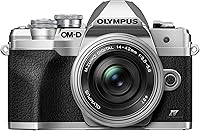
The OM System E-M10 Mark IV is a compact mirrorless camera that sits at the crossroads of beginner accessibility and enthusiast capability within the Micro Four Thirds ecosystem. The silver colorway gives this Olympus-lineage mirrorless a retro charm that stands out among all-black bodies — a small but meaningful detail for photographers who care how their gear looks. Compared to its predecessor, the Mark IV adds a flip-down selfie screen and refined in-body stabilization. The included 14-42mm kit lens gets you shooting immediately, though it is more of a starting point than an endpoint. Worth noting: Micro Four Thirds sensors are physically smaller than APS-C or full-frame alternatives, and that trade-off does show in demanding low-light conditions.
Features & Benefits

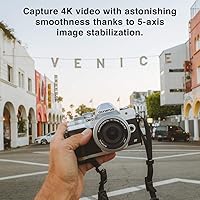
The 20MP Live MOS sensor produces files with pleasing color rendition and solid detail across most shooting scenarios. What stands out in daily use is the 5-axis stabilization — rated at 4.5 stops of compensation, it makes handheld shooting at slower shutter speeds genuinely practical, though competitors at this tier also offer IBIS, so it is less of a differentiator than it once was. The flip-down monitor automatically triggers a selfie mode on rotation, which content creators will appreciate. Burst shooting at 15fps handles fast subjects reasonably well. The 16 Art Filters, including the Instant Film option, add real in-camera creative value. Connectivity via Bluetooth and Wi-Fi ties into the OI Share app for straightforward photo transfers to your phone.

Best For

The E-M10 IV kit makes the most sense for photographers stepping up from smartphones or point-and-shoots who want a real camera without committing to a heavy system. Vloggers and casual content creators will find the flip screen and compact footprint genuinely useful on the go. Travel photographers benefit from the lightweight build — roughly 1.1 lbs with the kit lens attached. Existing Olympus or OM System users with a collection of Micro Four Thirds glass are natural fits, since this body makes smart use of that investment. Creatively inclined hobbyists who enjoy film-look aesthetics in-camera will get real mileage from the filter suite. It is less suited to action, wildlife, or demanding low-light work where a larger sensor becomes necessary.

User Feedback

With a 4.5-star average across over 500 ratings, this compact system camera earns praise mainly for its build quality, handling feel, and stabilization performance in real shooting situations. Repeat Olympus users frequently describe it as a worthwhile step forward from earlier Mark iterations. That said, the electronic viewfinder draws fair criticism — the 1.23x magnification feels modest at this price point, and some buyers find it less comfortable than rival EVFs. The kit lens is consistently called adequate for beginners but limiting as skills grow, which nudges serious shooters toward additional glass fairly quickly. Battery life comes up repeatedly as a frustration, a known category-wide weakness that most owners solve by simply carrying a spare.

Pros

  • The 5-axis in-body stabilization makes handheld shots at slow shutter speeds genuinely reliable in everyday use.
  • At roughly 1.1 lbs with the kit lens, the E-M10 IV kit travels light without feeling like a toy.
  • The flip-down touchscreen auto-activates selfie mode — a practical, thoughtful feature for solo creators.
  • 20MP files deliver strong color accuracy and detail for hobbyist and travel photography in good light.
  • 16 Art Filters with 31 variations, including Instant Film, add real creative value straight out of camera.
  • The retro silver design stands out from generic all-black bodies and appeals to style-conscious buyers.
  • Bluetooth and Wi-Fi connectivity makes sharing photos to a smartphone low-effort during or after a shoot.
  • Existing Micro Four Thirds glass works natively, making this a low-friction upgrade for Olympus ecosystem users.
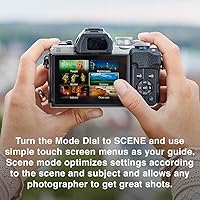
  • Approachable menu system and guided shooting modes help beginners build confidence without a steep learning curve.
  • 15fps continuous shooting handles everyday fast action well enough for most casual sports and events.

Cons

  • Battery life drains noticeably fast, especially with Bluetooth and Wi-Fi running — carrying a spare is a practical necessity.
  • The electronic viewfinder feels underwhelming at this price tier, with modest magnification and noticeable dimness in low light.
  • Contrast-detection autofocus struggles with fast or erratic subjects, lagging behind phase-detection rivals in the same category.
  • The kit lens hits its limits quickly — edge sharpness and low-light performance push most enthusiasts toward replacement soon.
  • 4K video comes with a crop factor and a 30-minute cap, limiting usefulness for longer or more cinematic projects.
  • No weather sealing leaves this compact system camera vulnerable on unpredictable outdoor shoots.
  • High-ISO noise handling trails behind APS-C alternatives, making low-light image quality a genuine trade-off.
  • The OI Share companion app has inconsistent reviews, with reported connection dropouts frustrating some users.
  • Physical controls are limited by the compact body, making direct dial access for manual settings feel cramped.
  • Buyers without existing Micro Four Thirds lenses face a harder value comparison against larger-sensor APS-C kits at similar prices.

Ratings

The OM System E-M10 Mark IV scores below are generated by AI after analyzing thousands of verified global buyer reviews, with spam, bot activity, and incentivized feedback actively filtered out. This Olympus-lineage mirrorless earns a strong overall reception — but the scores reflect the full picture, including the recurring frustrations that real owners encounter after the honeymoon period ends.
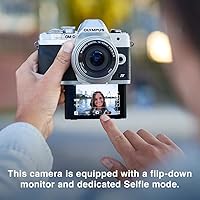
Image Quality
83%
In good light, the 20MP Live MOS sensor produces files with pleasing color accuracy and enough detail to satisfy most hobbyists and travel shooters. Users frequently praise how natural skin tones render straight out of camera, particularly with the standard color profile.
At higher ISOs — especially above 3200 — noise handling trails behind APS-C competitors at a similar price, and this gap becomes noticeable when shooting indoors or at dusk without stabilization to compensate with a slower shutter.
Image Stabilization
89%
The 5-axis in-body stabilization is one of the most talked-about strengths among owners, with many reporting usable handheld shots at shutter speeds they would never have attempted otherwise. Walking shots and low-light street photography are noticeably more consistent than with unstabilized bodies.
While the stabilization is effective, competitors from Sony and Fujifilm at comparable price points also offer strong IBIS, so it is not a standalone reason to choose this system. A small number of users report that at very long exposures, micro-jitter still creeps in.
Build Quality & Design
86%
The retro-styled silver body feels solid and well-assembled for its weight class, and many buyers specifically cite the aesthetic as a deciding factor. The grip, while compact, gets positive marks for feeling intentional rather than plasticky.
There is no weather sealing, which disappoints buyers who shoot outdoors in unpredictable conditions. A few users also note that the button layout feels cramped, making one-handed operation mildly awkward during quick adjustments.
Autofocus Performance
71%
29%
The 121-point contrast-detection system works reliably for stationary and slow-moving subjects in decent light. Street and portrait shooters generally report accurate focus locks without hunting in standard conditions.
Contrast-detection AF visibly struggles with fast or erratic movement compared to phase-detection systems found in rivals at this price tier. Sports, pets, and children in motion expose the system's limits, and continuous AF tracking is inconsistent enough to frustrate action-oriented users.
Video Capabilities
68%
32%
4K recording is available and appreciated by casual vloggers who want more than 1080p for cropping flexibility in post. The stabilization carries over meaningfully into video, helping handheld walkalong footage stay watchable.
The 30-minute recording cap and 4K crop factor limit its usefulness for longer shoots or cinematic work. Rolling shutter is noticeable when panning quickly, and without a microphone input, serious video creators will hit a ceiling fast.
Display & Selfie Functionality
88%
The flip-down touchscreen that auto-activates selfie mode is consistently praised by content creators and vloggers as one of the most practical features for solo shooting. The 3-inch 1,040,000-dot panel is sharp, responsive to touch, and easy to read outdoors.
The screen only tilts downward, limiting angles for low or overhead compositions compared to fully articulating displays on competing models. A small subset of users report that the touchscreen occasionally misfires when shooting with gloves or in cold conditions.
Electronic Viewfinder
62%
38%
Having an EVF at this price point is genuinely useful in bright sunlight where screens wash out. For photographers transitioning from DSLRs, it offers a familiar eye-level shooting experience that the screen alone cannot replicate.
The 1.23x magnification and modest resolution draw consistent criticism from buyers who compare it to mid-range rivals. It feels like a checkbox feature rather than a refined tool — small, slightly dim in low light, and noticeably behind the EVF quality found on Fujifilm X-series bodies in the same category.
Battery Life
57%
43%
Under light shooting conditions with connectivity features turned off, the battery can handle a few hours of casual use. Users who carry a spare report no practical disruption to their day, and spare cells are affordable and widely available.
Battery drain is a recurring complaint, particularly with Wi-Fi and Bluetooth enabled — a combination that can cut a session short faster than most buyers anticipate. It is a well-documented category-wide weakness of Micro Four Thirds bodies, but the E-M10 IV does not outperform expectations here.
Kit Lens Quality
72%
28%
The M.Zuiko 14-42mm collapsible lens is compact, covers a practical focal range for everyday shooting, and produces acceptably sharp images at moderate apertures. For a first mirrorless kit, it covers the basics without getting in the way.
The F3.5-5.6 aperture range limits low-light use significantly, and sharpness drops at the edges of the frame at wider focal lengths. Most enthusiasts report wanting to replace it within six months, which means budgeting for additional glass is a realistic expectation.
Ease of Use
84%
Beginners consistently praise how approachable the menu system feels, especially compared to more complex enthusiast bodies. The auto mode and guide modes help first-time mirrorless users get confident results quickly without reading a manual cover to cover.
Advanced customization requires navigating a layered menu system that some intermediate users find unintuitive. Physical controls are limited by the compact body size, meaning users who prefer direct dial access for aperture and shutter speed may find it slightly fiddly.
Creative Filters & In-Camera Processing
81%
19%
The 16 Art Filters with 31 variations — including the Instant Film mode — receive genuine enthusiasm from hobbyists who enjoy stylized JPEGs straight from the camera. The Instant Film filter in particular earns frequent mentions for its nostalgic, analog-adjacent results.
For photographers who shoot RAW and process in Lightroom or Capture One, the Art Filters are effectively invisible in their workflow. The filters also cannot be previewed in real time through the EVF as smoothly as through the rear screen, which limits their usefulness in eye-level shooting.
Connectivity & App Integration
76%
24%
Always-on Bluetooth with Wi-Fi handoff via the OI Share app makes transferring photos to a smartphone genuinely low-effort for casual sharing. Remote shooting via the app is a practical bonus for self-portrait or group photo scenarios.
The OI Share app has mixed reviews on both iOS and Android, with some users reporting connection dropouts and an interface that feels dated. Enabling Bluetooth consistently in the background also accelerates battery drain, forcing a trade-off between convenience and longevity.
Portability & Travel Friendliness
91%
At roughly 1.1 lbs with the kit lens attached, this compact system camera slots into a daily bag without taking over it. Travel photographers frequently cite it as their go-to choice precisely because it does not feel like a sacrifice compared to bulkier interchangeable-lens systems.
The collapsible kit lens requires an extra twist to extend before shooting, which adds a half-second delay that occasional photographers find mildly annoying when trying to capture spontaneous moments. Dedicated bag organization helps, but it is a small friction point worth noting.
Value for Money
74%
26%
For buyers entering the Micro Four Thirds ecosystem or expanding an existing OM System lens collection, the E-M10 IV kit offers a coherent package with real imaging capability. The IBIS and sensor combination represent genuine value for travel and hobbyist use cases.
At its price point, APS-C alternatives from Sony and Fujifilm offer larger sensors and — in some cases — phase-detection autofocus, making the value proposition less clear-cut for buyers without a prior investment in Micro Four Thirds glass. The relatively modest EVF and battery life add to the hesitation for some.

Suitable for:

The OM System E-M10 Mark IV is a strong match for anyone making their first serious step away from smartphone photography and wanting a real interchangeable-lens camera that does not require a backpack to carry around. Travel photographers who shoot casually but care about image quality will appreciate how naturally this Olympus-lineage mirrorless fits into a day bag alongside everything else. The flip-down selfie screen and auto-activating selfie mode make it a genuinely practical tool for solo content creators and vloggers who shoot themselves frequently without an assistant. Hobbyists who enjoy creative experimentation will find the Art Filter suite — Instant Film mode included — adds real in-camera fun that goes beyond spec-sheet numbers. Perhaps the clearest fit of all is the existing Olympus or OM System user upgrading from an older body, since the Micro Four Thirds mount means every lens they already own transfers over immediately without adapters or compromises.
Not suitable for:

Buyers who regularly shoot in challenging low-light conditions — indoor sports, evening events, dimly lit venues — should think carefully before committing to the OM System E-M10 Mark IV, because the Micro Four Thirds sensor size does put it at a measurable disadvantage compared to APS-C and full-frame alternatives at a similar price point. Photographers who prioritize fast, reliable autofocus for tracking moving subjects like children, athletes, or wildlife will find the contrast-detection system frustrating; it is capable in static scenarios but loses its footing with erratic motion. Serious video creators will hit the ceiling quickly — a 30-minute recording cap, a 4K crop factor, and no microphone input are meaningful limitations that a dedicated video camera or hybrid body handles far better. Anyone hoping the included kit lens will carry them through advanced work will likely feel the urge to replace it within months, which means factoring additional glass into the total budget from day one. If you have no prior investment in the Micro Four Thirds ecosystem, the value argument becomes harder to make against APS-C rivals offering larger sensors and phase-detection autofocus at comparable prices.

Specifications

  • Sensor: 20MP Live MOS sensor in the Micro Four Thirds format, delivering a 2x crop factor relative to full-frame.
  • Image Stabilization: 5-axis in-body stabilization rated at up to 4.5 stops of shutter speed compensation.
  • Autofocus: 121-point contrast-detection autofocus system supporting single, continuous, and manual focus modes.
  • ISO Range: Native ISO range of 200–25600, expandable to a low of 100 and a high of 256000.
  • Shutter Speed: Mechanical shutter range spans 1/4000s at the fastest to 60 seconds at the slowest.
  • Continuous Shooting: Burst shooting at up to 15fps for capturing fast-moving subjects in stills mode.
  • Video: Records 4K DCI (2160p) video with a maximum continuous clip length of 30 minutes.
  • Display: 3-inch tilting touchscreen LCD with 1,040,000 dots of resolution and capacitive touch input.
  • Viewfinder: Built-in electronic viewfinder with 1.23x magnification for eye-level framing.
  • Kit Lens: Includes M.Zuiko Digital ED 14-42mm F3.5-5.6 EZ collapsible zoom lens with a 37mm filter thread.
  • Mount: Micro Four Thirds lens mount, compatible with the full OM System and legacy Olympus MFT lens catalog.
  • Art Filters: 16 Art Filter types with 31 total variations, including the Instant Film filter for analog-style JPEG output.
  • Connectivity: Built-in Bluetooth (always-on) and Wi-Fi pair with the OI Share app; Micro HDMI and Micro USB ports included.
  • Memory: Single SD/SDHC/SDXC card slot with UHS-II compatibility and support for cards up to 2TB.
  • File Formats: Captures RAW (12-bit), JPEG (Basic, Fine, Normal), and simultaneous RAW+JPEG; maximum image size approximately 21.75MB.
  • Battery: Rechargeable Lithium-Ion battery pack included; charges via Micro USB.
  • Weight: Approximately 1.1 lbs (around 500g) with the kit lens attached, making it one of the lighter mirrorless kits available.
  • Dimensions: Body height is approximately 3.3 inches; overall form factor is classified as ultracompact for a mirrorless interchangeable-lens camera.
  • Flash: Built-in pop-up flash with a guide number of 5.1m at ISO 100 and a sync speed of 1/250s.
  • Warranty: Covered by a 1-year manufacturer warranty from OM SYSTEM.

Related Reviews

OM System OM-1 Mark II with M.Zuiko 12-40mm f/2.8 PRO II
81%
93%
Autofocus Performance
91%
Weather Sealing & Durability
84%
Image Quality
71%
Autofocus in Low Light
92%
Lens Quality (M.Zuiko 12-40mm f/2.8 PRO II)
More
Bose Wave Music System IV
87%
95%
Sound Quality
91%
Ease of Use
89%
Design & Build Quality
82%
Value for Money
88%
Connectivity
More
Canon EOS 5D Mark IV
82%
93%
Image Quality
89%
Autofocus Performance
94%
Build Quality & Durability
61%
Video Capabilities
88%
Low-Light Performance
More
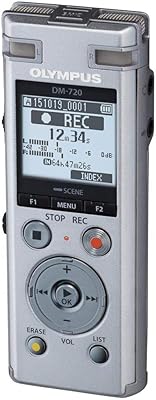
OM SYSTEM Olympus DM-720 Voice Recorder
85%
94%
Audio Quality
91%
Portability
89%
Ease of Use
86%
Battery Life
84%
Build Quality
More
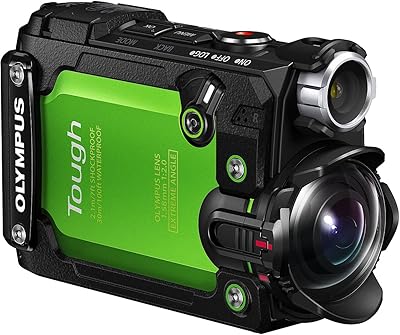
OM SYSTEM Olympus TG-Tracker Action Camera
81%
91%
Build Quality & Durability
88%
4K Video Performance
94%
Waterproofing & Ruggedness
68%
Battery Life
85%
Portability & Size
More
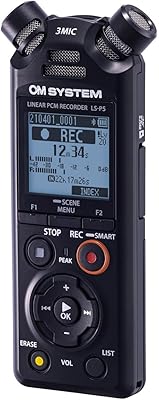
OM System LS-P5
OM System LS-P5
79%
91%
Audio Recording Quality
88%
Microphone Versatility
93%
Portability & Form Factor
67%
Build Quality & Durability
84%
USB Microphone Mode
More
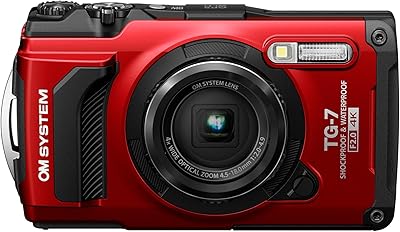
OM System Olympus Tough TG-7 Underwater Camera
86%
94%
Build Quality & Durability
88%
Image Quality
71%
Battery Life
85%
Usability & Ease of Use
92%
Waterproof Performance
More
OM System WS-882 Digital Voice Recorder
78%
88%
Audio Clarity (PCM Mode)
63%
Background Noise Handling
84%
Battery Life
74%
Ease of Use
77%
Build Quality & Durability
More
OM SYSTEM VN-541PC
OM SYSTEM VN-541PC
77%
93%
Ease of Use
71%
Audio Recording Quality
68%
Noise Cancellation
84%
Battery Life
62%
Build Quality & Durability
More
Billy Jealousy Marked IV Complete Tattoo Care Kit
87%
90%
Effectiveness in Healing
88%
Skin Sensitivity Compatibility
93%
Moisturization and Hydration
91%
Tattoo Vibrancy Maintenance
85%
Gentleness on Skin
More

FAQ

It is one of the more approachable options in its category. The OM System E-M10 Mark IV has intuitive auto modes, a touchscreen interface that feels familiar to smartphone users, and the in-body stabilization helps beginners get sharper shots before they have fully mastered technique. The learning curve is real, but it is gentler here than on more complex enthusiast bodies.
The included 14-42mm lens covers travel, portraits, and general photography well enough for a beginner. That said, most shooters start wanting more reach or a faster prime lens within six to twelve months, so it is worth budgeting for an additional lens eventually — it is a starting point, not a complete kit for every situation.

It is a genuine limitation. With Bluetooth and Wi-Fi active, heavy shooters can drain a battery in a few hours of active use. The practical fix most owners land on is carrying one or two spare batteries, which are inexpensive and small. Turn off wireless features when you do not need them and you will get noticeably more life per charge.

Yes, all Micro Four Thirds lenses — including the full range of legacy Olympus M.Zuiko optics — mount and communicate natively with this compact system camera. Autofocus, image stabilization coordination, and aperture control all work as expected with compatible lenses.

The screen flips downward rather than rotating fully around, and when you pull it down to face forward, the camera automatically switches into a dedicated selfie mode with a touch shutter option. It is a clever, practical implementation for solo shooting, though it does mean you cannot angle it upward for overhead or low-angle shots the way a fully articulating screen would allow.

For casual YouTube uploads and social media content, yes — the 4K footage looks clean in decent light and the stabilization keeps handheld footage watchable. Keep in mind there is a 4K crop factor that slightly narrows your field of view, and the 30-minute recording cap will interrupt longer shoots. There is also no external microphone input, which limits audio quality for serious creators.

This is where the Micro Four Thirds sensor size trade-off becomes real. In decent indoor light or at dusk, the stabilization helps you get usable shots at slower shutter speeds, which compensates somewhat. But at high ISOs — above 3200 or so — noise becomes more noticeable compared to APS-C bodies at a similar price. It is capable, but it is not a low-light specialist.

It depends on what you are used to. The EVF is useful in bright sunlight where the rear screen washes out, and it gives a more traditional eye-level shooting feel. That said, the magnification and resolution are modest compared to rivals — if you have used a Fujifilm or Sony EVF at a similar price, this one will feel like a step down. Most casual shooters end up using the rear screen more often.

Yes, the camera captures 12-bit RAW files, and Adobe Lightroom supports them fully — you may need to ensure your Lightroom version is up to date for this specific body. You can also shoot RAW and JPEG simultaneously, which is handy while you are still learning your preferred editing workflow.

The camera uses always-on Bluetooth to maintain a low-power background connection with your smartphone, then hands off to Wi-Fi for actual file transfers through the OI Share app. In practice, it works well when it connects smoothly, but the app has mixed reviews — some users find it reliable and others experience occasional dropouts. It is worth downloading and testing before a critical shoot to make sure your specific phone pairs consistently.