Overview

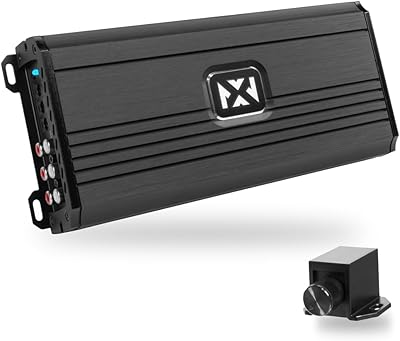
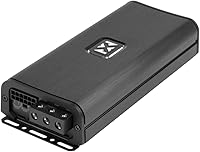
The NVX VADM5 v2 5-Channel Car Amplifier is NVX's updated attempt at squeezing real amplifier performance into a chassis small enough to hide under a seat. At 750W RMS across five channels, it sits comfortably in the mid-range tier — capable for a solid street system, but not aimed at competition builds. The 1500W peak figure is standard marketing language; the RMS number is what actually matters for daily listening. What sets this micro 5-channel amp apart from similarly sized competitors is its marine certification, making it a credible choice for boats, ATVs, and UTVs where moisture exposure is a genuine concern, not just a theoretical one.

Features & Benefits

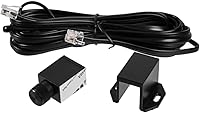
The VADM5 v2's onboard crossover controls are among its most practical strengths. A variable high-pass filter (40–400 Hz) and low-pass filter (50–250 Hz) let you dial in speaker and subwoofer crossover points without adding an external processor to the mix. The 18 dB bass boost range gives the sub channel enough headroom to sound full even on modest subwoofers. Speaker-level inputs with signal-sensing turn-on are a real convenience for anyone keeping a factory head unit — no aftermarket radio required. Balanced differential inputs help reject noise in electrically busy vehicles. The included remote bass knob lets the driver nudge sub levels without ever reaching behind the dash.

Features & Benefits

Best For

This compact amplifier makes the most sense for builders who want a single-unit solution — someone replacing a factory system who needs both full-range channel power and a dedicated sub output without mounting two separate amps. The under-seat dimensions (roughly 8 by 3 inches) genuinely open up install spots that a standard amp would never fit. For marine and powersports applications, the certification adds a layer of confidence a non-rated amp simply cannot offer. DIY installers sticking with a stock head unit will especially appreciate the speaker-level input support. If the goal is a clean, all-in-one install on a sensible budget, this micro 5-channel amp covers the bases.

User Feedback

Since the VADM5 v2 arrived in 2024, the review pool is still growing, so treat early feedback as directional rather than definitive. On the positive side, buyers consistently highlight the size-to-power ratio as a genuine win — installers who struggled fitting traditional amps report it sliding into tight spaces with room to spare. The speaker-level input setup also draws praise for being straightforward to wire. On the critical side, a handful of users question whether sustained output at higher volumes fully matches the rated RMS figures, and there are occasional mentions of heat buildup during long high-volume sessions. The remote bass knob earns generally positive remarks for feel and responsiveness, with no widespread reliability issues reported yet.

Pros

  • Fits in genuinely tight spaces — under seats, inside panels, or behind trim — where standard amps simply will not go.
  • Speaker-level inputs make wiring to a factory head unit straightforward, with no extra converter hardware required.
  • Having full-range and subwoofer channels in one unit simplifies the install and reduces wiring complexity considerably.
  • Marine certification is a real differentiator for boat, ATV, and UTV builds where competing products lack any weather resistance rating.
  • Onboard high-pass and low-pass filters cover a wide enough range to tune most speaker and sub combinations without external crossovers.
  • The included remote bass knob is a practical addition that lets the driver adjust low-end output without touching the amp directly.
  • Balanced differential inputs actively reduce noise, which matters in vehicles with noisy electrical systems or long RCA runs.
  • THD under 0.1% is a clean distortion figure for this class and price tier, pointing to decent signal integrity at moderate output levels.
  • The 4-way protection circuitry adds a reasonable safety net against thermal, overload, and short-circuit failures during daily use.

Cons

  • Real-world sustained RMS output at higher volume levels may fall short of the advertised figures, a common issue in this amplifier category.
  • The 1500W peak rating is a marketing number — buyers focused on continuous power should anchor expectations around the 750W RMS spec instead.
  • Heat management under prolonged heavy use has drawn some early criticism, particularly in installs with limited airflow around the chassis.
  • With only around 230–350W dedicated to the sub channel, this compact amplifier will underwhelm anyone running a high-power subwoofer.
  • As a mid-2024 release, long-term reliability data is still limited — early adopters are taking on more uncertainty than with an established model.
  • The 8 AWG wiring requirement means buyers need to budget for a proper amp kit if one is not already on hand.
  • Five-channel output is divided across a lot of speakers, which keeps per-channel power modest — not ideal for inefficient or demanding speaker sets.
  • No built-in Bluetooth or digital signal processing means this is a straightforward amplifier with no smart features for those who want them.

Ratings

Our AI rating engine processed verified global buyer reviews for the NVX VADM5 v2 5-Channel Car Amplifier, actively filtering out incentivized submissions, duplicate accounts, and bot-pattern feedback to surface what real installers and enthusiasts actually experienced. The scores below reflect a balanced picture — where this compact amp genuinely earns its keep and where it leaves buyers wanting more. Both the standout strengths and the recurring frustrations are weighted transparently into every category score.

Compact Form Factor
93%
Buyers consistently single out the physical size as the amp's most immediately impressive quality. Installers working with under-seat cavities in compact sedans, crew-cab trucks, and UTVs report fitting it in spots where every previous amp candidate had failed. For tight builds, that alone justifies serious consideration.
A handful of users note that the small footprint comes with closely spaced terminals, which can make wiring in a cramped location fiddly — especially with thicker 8 AWG cable. It is a minor complaint, but worth knowing before you commit to a very enclosed mounting spot.
Installation Ease
88%
The speaker-level inputs with automatic signal-sensing turn-on genuinely simplify integration with factory head units, and multiple buyers mention completing the install without needing a line output converter or any additional hardware. DIY installers with moderate experience report clean, straightforward wiring runs.
A few users without prior car audio experience found the crossover tuning controls — particularly setting the high-pass and low-pass filters correctly — less intuitive than expected. The manual, while adequate, leaves some gap-filling to do for complete beginners.
Power Output (RMS)
67%
33%
At moderate listening volumes, the VADM5 v2 drives a set of mid-efficiency speakers and a modest subwoofer with noticeable improvement over factory sound. The 2-ohm configuration extracts more usable output, and buyers running efficient speakers and a single 10-inch sub report being satisfied with the result.
The gap between the 1500W peak marketing claim and the 750W RMS reality frustrates buyers who read the headline number without digging into the specs. At higher sustained volumes, some users report the output feeling softer than competitors rated similarly on paper, suggesting the amp may not hold its full RMS under continuous stress.
Sound Clarity
81%
19%
THD under 0.1% translates to clean, low-distortion audio at reasonable listening levels, and buyers upgrading from factory amplification notice a clear improvement in midrange definition and stereo separation. The balanced differential inputs help in vehicles with noisy electrical systems, reducing hum and interference audibly.
At the upper end of the volume range, a small number of users report the sound becoming slightly compressed or strained — a limitation more tied to output headroom than to the amp's signal quality. This is unlikely to affect casual listeners but may bother more critical ears.
Thermal Management
62%
38%
During normal daily driving at moderate volumes, the chassis stays warm but manageable, and the Class D topology is genuinely more heat-efficient than older amplifier designs. Buyers using it in open-air marine or powersports installs with natural airflow report no thermal issues worth noting.
Extended high-volume sessions — particularly in enclosed under-seat installs with limited airflow — draw consistent complaints about the amp running hot. A few buyers report thermal protection triggering during sustained loud listening, which is the amp protecting itself but also an interruption that should not be happening at moderate to high output for well-rated hardware.
Marine & Weather Resistance
84%
The marine certification is a meaningful differentiator for buyers building audio systems in pontoon boats, side-by-side ATVs, and open-air vehicles where humidity and splash exposure are routine. Owners using it in these environments report no corrosion or moisture-related failures in early ownership, which is encouraging.
The certification covers moisture and humidity resistance, not submersion — and a few marine buyers expected a higher degree of waterproofing than the spec actually delivers. Positioning the amp where direct water spray can reach it regularly is still inadvisable, and some buyers learned that the hard way.
Bass Performance
78%
22%
The 18 dB bass boost range gives the sub channel real flexibility, and buyers running a single 10-inch or 12-inch subwoofer report satisfying low-end output with the boost set conservatively. The remote bass knob adds genuine day-to-day usability — being able to dial back the sub for late-night driving without reaching behind a panel is consistently appreciated.
Buyers running larger or less efficient subwoofers hit the ceiling of the sub channel's output more quickly than expected. The 230–350W sub channel is adequate for mid-sized subs but falls short for high-power setups, and the bass boost at maximum settings can introduce audible distortion on some subwoofer pairings.
Remote Bass Knob
82%
18%
The wired remote is included in the box rather than sold as an add-on, which buyers appreciate at this price tier. It operates smoothly with a responsive feel, and users report it holding its set position reliably without drifting — a basic but important quality for a control used daily.
The cable length is adequate for most installations but has caught out a few buyers with longer runs from the amp to the driver area, requiring an extension. The knob itself feels functional rather than premium, which is not a dealbreaker but does not quite match the amp's overall build quality either.
Build Quality
76%
24%
The chassis feels solid and well-assembled for its size, and buyers handling it out of the box generally report a positive first impression — no flex, no rattling internals, no sharp edges on the housing. The terminal blocks and input connectors feel secure rather than plasticky.
Some buyers note that the overall construction, while adequate, does not feel substantially better than competing amps at a similar price point. The finish shows minor scuffs from install handling more easily than expected, which matters less functionally but is a small disappointment for buyers expecting a premium feel.
Crossover Flexibility
83%
Having variable high-pass and low-pass filters onboard eliminates the need for an outboard crossover in most single-amp builds, which simplifies the install considerably. The tuning ranges — 40 to 400 Hz for the HPF and 50 to 250 Hz for the LPF — cover the most common speaker and subwoofer configurations buyers encounter.
The filter controls are small trim pots without detents or clear position markings, making precise repeatable settings difficult without a reference measurement. Buyers who tune by ear may find this fine, but those who want to return to a known setting after adjusting will need to document their positions manually.
Value for Money
74%
26%
For a buyer who needs a single-amp solution covering four speakers and a subwoofer in a space-constrained vehicle, the value proposition is real — buying a separate 4-channel amp and mono block at this performance tier would cost noticeably more. The marine certification adds practical value that is not easy to find at the same price.
Buyers who push the amp hard and run into thermal or sustained output limitations start to feel the value case weaken, since the headline power figures do not fully hold up under scrutiny. At the price, the expectation is a unit that performs consistently at its rated output, and not everyone finds that to be the case.
Noise Floor
79%
21%
The balanced differential inputs make a measurable difference in electrically noisy vehicles, and buyers who have dealt with alternator whine and ground loop hum in previous builds report cleaner results with this compact amplifier than with similarly priced single-ended-input alternatives. At moderate gain settings, the noise floor is acceptably low.
A few buyers report residual hiss at higher gain settings, particularly when the amp is paired with sensitive tweeters. This is partly a gain-staging issue and partly a limitation of the amp's internal noise floor, but it shows up consistently enough in feedback to be worth flagging for buyers running high-efficiency speaker setups.
Compatibility & Versatility
86%
The combination of speaker-level inputs, RCA inputs, multiple impedance configurations, and marine certification makes this micro 5-channel amp genuinely versatile across car, marine, and powersports applications — a meaningful range for a single unit. Buyers running it in secondary vehicles like work trucks and ATVs appreciate not needing a purpose-built product for each context.
The five-channel layout assumes a fairly conventional setup — four speakers plus one subwoofer — and buyers with non-standard configurations, like a three-way front stage or multiple subs, will find the channel count limiting. It is designed for a specific install type and does not stretch much beyond it.

Suitable for:

The NVX VADM5 v2 5-Channel Car Amplifier is a strong fit for anyone who wants to upgrade a complete audio system — full-range speakers plus a subwoofer — without mounting two separate amplifiers. Its compact footprint makes it especially practical for vehicles with tight real estate, like compact cars, trucks with shallow under-seat cavities, or sport utility vehicles where cargo space is precious. DIY installers keeping their stock head unit will find the speaker-level inputs with signal-sensing turn-on genuinely useful, cutting out the need for a line output converter in most cases. Marine and powersports builders get an added layer of reassurance from the certified construction, which is not something every amp at this price tier can claim. If the priority is a clean, consolidated install that handles the whole system from one chassis, this micro 5-channel amp is well-suited to the job.

Not suitable for:

The NVX VADM5 v2 5-Channel Car Amplifier is not the right tool for builders chasing serious output levels or planning a dedicated high-power subwoofer stage. The 750W RMS rating is split across five channels, which means the sub channel alone is delivering around 230–350W depending on configuration — respectable, but not enough to push large or power-hungry subwoofers to their potential. Audiophiles or competition builders who want maximum headroom on each channel will hit the ceiling of this compact amplifier fairly quickly. There are also open questions about sustained thermal performance during extended high-volume use, which matters in hot climates or enclosed mounting locations with poor airflow. Buyers who already own a capable 4-channel amp and only need a mono sub channel would be paying for functionality they do not need. And anyone expecting the 1500W peak figure to represent real-world continuous power should adjust expectations before purchasing.

Specifications

  • RMS Power: The amplifier delivers 750W total RMS output across all five channels under continuous operation.
  • Peak Power: Peak power is rated at 1500W, a burst-condition figure not representative of sustained daily performance.
  • Channel Count: Five channels are provided: four full-range channels and one dedicated subwoofer channel.
  • 4-Ohm Output: At 4 ohms, the amp produces 65W per full-range channel and 230W on the sub channel.
  • 2-Ohm Output: At 2 ohms, full-range channels each deliver 100W and the sub channel outputs 350W.
  • Bridged Output: In bridged mode, full-range pairs produce 200W each and the sub channel maintains 350W.
  • Dimensions: The chassis measures 7.95″ long by 3.3″ wide by 1.48″ tall, designed for under-seat or panel installs.
  • Weight: The unit weighs 5 pounds, keeping it manageable for single-person installation in confined spaces.
  • HPF Range: The variable high-pass filter is adjustable from 40 Hz to 400 Hz for full-range channel tuning.
  • LPF Range: The variable low-pass filter covers 50 Hz to 250 Hz, controlling the subwoofer channel rolloff point.
  • Bass Boost: An onboard bass boost control is adjustable from 0 to 18 dB for added low-frequency emphasis.
  • Distortion (THD): Total harmonic distortion is rated at less than 0.1%, indicating clean signal reproduction at rated output.
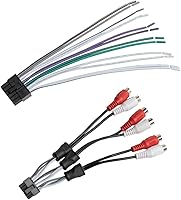
  • Input Types: Accepts both balanced differential RCA inputs and speaker-level inputs with automatic signal-sensing turn-on.
  • Wiring Requirement: Installation requires an 8 AWG amplifier wiring kit for proper power delivery and safe operation.
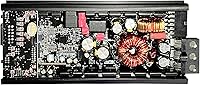
  • Protection: Four-way protection circuitry guards against thermal overload, short circuits, overload conditions, and DC faults.
  • Certification: The amplifier carries a Marine Certified rating, indicating resistance to moisture and humidity for outdoor environments.
  • Included Accessories: A wired remote bass level knob is included in the box for driver-seat subwoofer adjustment.
  • Model Number: The official model designation is VADM5v2, the second revision of NVX's V-Series micro amplifier platform.

Related Reviews
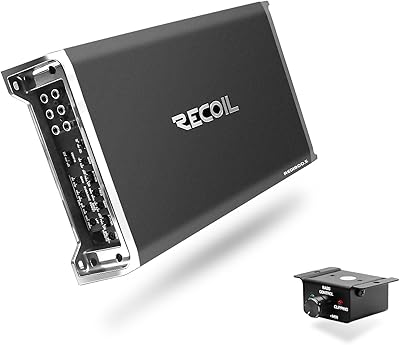
Recoil RED1800.5 5-Channel Car Amplifier
77%
91%
Value for Money
88%
Mono Channel Power
86%
Installation Experience
63%
Gain Calibration Ease
74%
Full-Range Channel Performance
More
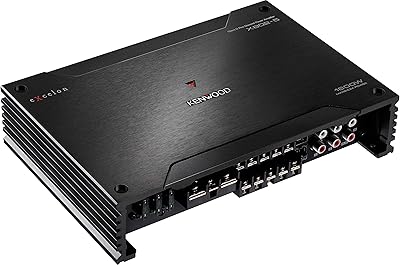
Kenwood X802-5 eXcelon 5 Channel Car Audio Amplifier
88%
92%
Sound Quality
85%
Installation Ease
88%
Build Quality
90%
Performance at High Volume
87%
Bass Enhancement
More
Stinger MT-1000.5 5-Channel Car Amplifier
75%
81%
Value for Money
84%
Ease of Installation
58%
Real-World Power Output
63%
Thermal Management
88%
Built-in Crossover Filters
More
NVX NDA11005 5-Channel Class-D Car Amplifier
80%
88%
Value for Money
91%
Installation Ease
79%
Sound Quality
63%
Thermal Management
67%
Power Accuracy
More
NVX VAD10004 v2 4-Channel Amplifier
87%
88%
Sound Quality
94%
Power Output
91%
Build Quality & Durability
85%
Ease of Installation
89%
Versatility
More
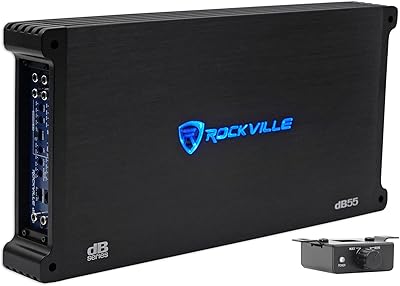
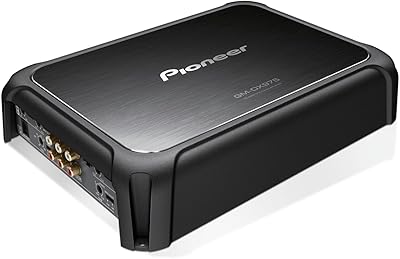
Rockville dB55 5-Channel Car Amplifier
75%
91%
Value for Money
83%
Sound Quality at Moderate Volumes
78%
Bass Output & Subwoofer Performance
62%
Power Accuracy & Transparency
58%
Thermal Management & Heat
More
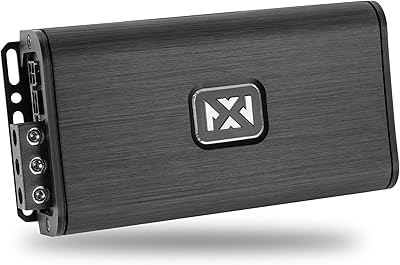
Pioneer GM-DX975 5-Channel Car Amplifier
81%
88%
Sound Quality
83%
Power Delivery
81%
Build Quality
71%
Thermal Management
74%
Ease of Installation
More
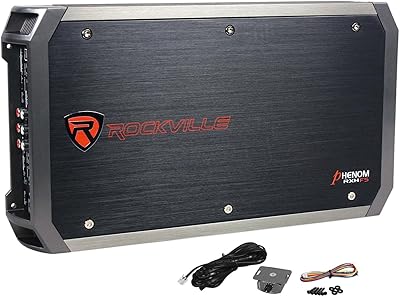
NVX VADM4 v2 4-Channel Amplifier
84%
93%
Power Accuracy
91%
Compact Form Factor
89%
Marine & Weather Durability
88%
Thermal Management
84%
Crossover Flexibility
More
Planet Audio MB2200.5D 5-Channel Car Amplifier
71%
83%
Value for Money
81%
Ease of Installation
86%
Channel Configuration
54%
Power Output (Real-World)
77%
Thermal Management
More
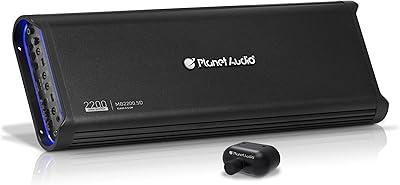
Rockville RXH-F5 5-Channel Car Amplifier
74%
88%
Value for Money
74%
Power Accuracy
83%
Installation Ease
79%
Sound Quality
68%
Subwoofer Performance
More

FAQ

You can absolutely use it with a stock head unit. The speaker-level inputs handle the signal directly off your factory speaker wires, and the signal-sensing circuit handles the remote turn-on automatically, so there is no need for a separate line output converter or an aftermarket radio.

No — that figure is a peak burst rating, not a sustained output number. The 750W RMS is the meaningful specification for daily listening. Peak ratings in this product category are mostly a marketing convention, and the VADM5 v2 is no different in that regard.

At roughly 8 inches long and just under 1.5 inches tall, the NVX VADM5 v2 5-Channel Car Amplifier fits in spots that standard-sized amps cannot touch. That said, measure your available space first — under-seat clearance varies quite a bit between vehicle models, especially with seat rail hardware in the way.

Marine certified means the amplifier is built to handle humidity, moisture, and splash exposure better than a standard car amp, which matters on boats, UTVs, and ATVs. It is not submersible or fully waterproof, so you should still protect it from direct prolonged water exposure and standing moisture.

You will need to purchase an 8 AWG amplifier wiring kit separately — that includes the power cable, ground cable, remote wire, fuse holder, and RCA cables if you are not using the speaker-level inputs. The remote bass knob is included, which is a nice touch since some competitors sell that separately.

Yes. At 2 ohms the sub channel puts out 350W, which is the highest output configuration this compact amplifier offers for the low-frequency channel. Just make sure your subwoofer's RMS power handling is in that range to avoid overpowering or underpowering it.

Class D amps run cool relative to older topologies, but airflow still matters. Try to leave at least an inch of clearance around the top and sides of the chassis, and avoid mounting it completely enclosed with no ventilation. A few early users have noted warmth during extended high-volume sessions, so airflow is worth thinking through before you finalize the mounting location.

Yes, the amp supports bridged mode where the four full-range channels become two bridged pairs, each delivering 200W. This is useful if you are running two high-power speakers rather than four standard ones, and still want the sub channel active at the same time.

The remote knob controls the bass level on the subwoofer channel only. Your full-range channels are unaffected, so you can pump up or dial back the sub output on the fly without changing the overall volume or tone of your speakers.

It is one of the more practical options at this price tier for that use case specifically because of the marine certification. Most compact amps in this range carry no weather resistance rating at all. Just be realistic about output expectations — the sub channel power is solid for a moderate-sized marine sub, but not enough for a large high-power marine subwoofer setup.