Overview

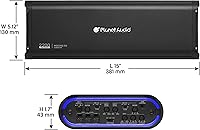
The Planet Audio MB2200.5D 5-Channel Car Amplifier is a budget-oriented unit built around a straightforward premise: power your entire car audio system from a single amp. It runs on a Class D topology, which keeps heat output low enough to survive installs where airflow is limited — think under-seat mounting or a shallow trunk corner. Before getting excited about the 2200W headline figure, know that this reflects peak wattage, not continuous RMS output; real-world numbers are considerably more modest. At roughly 15 inches long, it has a reasonably compact footprint for a five-channel unit. This is value-tier hardware, and it performs best when treated as exactly that.

Features & Benefits

The Class D design is arguably this single-amp solution's strongest practical asset — it generates far less heat than older AB-class amps, which matters when you're mounting inside a car where temperatures already push limits. Five discrete channels handle four full-range speakers and a dedicated sub simultaneously, eliminating the need for a second amp and extra wiring runs. The onboard variable crossovers — both high-pass and low-pass — let you filter frequencies at the amp itself rather than relying on your head unit. A MOSFET power supply helps keep the signal clean, and the variable bass boost on the sub channel lets you dial in low-end response to suit your enclosure without touching any other settings.

Best For

This 5-channel amp makes the most sense for first-time installers who want to upgrade their entire audio system without the complexity of running multiple amplifiers. If you're pulling out a stock head unit, adding aftermarket speakers, and dropping in a subwoofer all in one go, this single-amp solution keeps the wiring tidy and the cost manageable. Trunk space is often a real constraint in daily drivers, and at just over 15 inches long, it fits where bulkier units won't. The included remote knob is a small but genuinely useful addition for anyone who adjusts bass levels regularly while driving. Budget-focused installers working on client builds will also appreciate the competitive cost-per-channel ratio.

User Feedback

Buyers consistently point to easy installation and solid value as the standout positives — for a first build, this 5-channel amp delivers a real improvement over factory audio without demanding a huge investment. Friction tends to arise around the wattage marketing; experienced buyers who understand RMS versus peak figures note the real output is significantly lower than the 2200W number suggests. Some users also report needing extra care during setup to avoid ground loop interference, particularly around the sensitivity controls. Long-term reliability falls somewhere in the middle: plenty of owners report years of trouble-free use, but enough accounts of failure under heavy sustained use suggest this is a solid starter amp rather than a long-haul performer.

Pros

  • Five channels in a single unit means clean, simple wiring without running multiple amps in parallel.
  • Class D efficiency keeps the amp cool enough for under-seat or confined trunk installs.
  • Onboard variable crossovers remove the need for external signal processors on a basic build.
  • The included remote subwoofer knob lets you adjust bass from the driver seat without touching the amp.
  • Accepts both high-level and low-level inputs, making it compatible with factory or aftermarket head units.
  • MOSFET power supply keeps voltage stable and reduces background noise compared to older amp designs.
  • At this price point, the cost-per-channel value is genuinely hard to beat for a starter system.
  • Compact dimensions for a five-channel unit make it viable in smaller vehicles with limited install space.
  • 2-8 ohm impedance stability gives some flexibility when pairing with different speaker loads.

Cons

  • Advertised peak wattage is significantly higher than actual continuous RMS output — a gap that can mislead first-time buyers.
  • Some users report ground loop noise and interference issues that require careful grounding during setup.
  • Sensitivity controls can be finicky to dial in correctly without test equipment, leading to distortion at higher volumes.
  • Long-term durability under heavy sustained use is inconsistent — failure reports do appear after extended high-volume periods.
  • Build quality reflects the budget tier; internal components and chassis feel noticeably less substantial than mid-range alternatives.
  • No built-in protection indicator lights or diagnostic features make troubleshooting harder for inexperienced installers.
  • The sub channel bass boost, while useful, lacks the precision of a dedicated outboard processor for serious tuning.

Ratings

The scores below reflect AI-assisted analysis of verified global buyer reviews for the Planet Audio MB2200.5D 5-Channel Car Amplifier, with spam, bot-generated, and incentivized feedback actively filtered out before scoring. Each category is graded to reflect the honest consensus — strengths and frustrations alike — so you can make a confident, realistic purchase decision. Where real-world performance diverges from marketing claims, the scores show it.

Value for Money
83%
For buyers coming from a factory audio setup, the cost-per-channel ratio here is genuinely hard to argue with. Getting a five-channel solution — speakers and sub covered in one unit — at this price point is the core reason most buyers pull the trigger, and for that use case it delivers.
Users who stretch the amp's capabilities quickly feel the ceiling of what budget hardware can do. Once you start comparing it to mid-tier alternatives in real listening conditions, the gap in output quality and headroom becomes noticeable enough to sting a little.
Ease of Installation
81%
19%
First-time installers consistently praise how straightforward the wiring process is, especially the high-level input option that works directly with factory head unit speaker outputs. The included manual covers the basics adequately for someone with no prior amp install experience.
Getting the sensitivity controls and crossover points dialed in correctly without a multimeter or signal generator is genuinely tricky. Several users report spending significant time chasing distortion or muddiness that turned out to be a misconfigured sensitivity setting rather than a hardware fault.
Channel Configuration
86%
The five-channel layout is the amp's single most practical feature for daily drivers. Being able to power four door speakers and a subwoofer from one unit saves trunk space, simplifies wiring, and removes the cost and complexity of running a second amp entirely.
The channel separation is functional rather than precise — users with more demanding speaker setups occasionally notice crosstalk at higher volumes. It is not a dealbreaker for casual listening but is noticeable if you've previously used a dedicated two-channel amp for mids and highs.
Power Output (Real-World)
54%
46%
For a first audio upgrade over stock speakers, the actual output is sufficient to produce clear, noticeably louder sound at everyday listening volumes. Daily commuters running modest aftermarket speakers in smaller vehicles tend to be reasonably satisfied with the performance at moderate gain.
The gap between the advertised 2200W peak and actual continuous RMS delivery is the most common buyer complaint by a wide margin. Users familiar with RMS ratings feel the real-world output is meaningfully lower than what the marketing implies, and pushing the amp hard at sustained volumes reveals those limits quickly.
Thermal Management
77%
23%
Class D efficiency is a genuine advantage here — under normal listening conditions in a ventilated install, the amp runs noticeably cooler than older Class AB equivalents would at similar load. This makes it a workable choice for under-seat mounting where airflow is restricted.
Under sustained high-volume use in warm climates or poorly ventilated enclosures, thermal throttling becomes a real concern. Some users in hot-weather regions report the amp cutting out during long drives with the bass cranked — a protection circuit doing its job, but still disruptive.
Signal Clarity & Noise Floor
61%
39%
At moderate gain settings with a properly grounded install, most users get acceptably clean output through the full-range channels. The MOSFET power supply does help keep background noise manageable by the standards of this price category.
Ground loop hum is a recurring issue, particularly in vehicles with complex factory electronics or poor chassis grounding points. Several users note that the amp is more sensitive to grounding quality than expected, and achieving a genuinely quiet noise floor often requires extra effort and sometimes additional filtering components.
Subwoofer Channel Performance
72%
28%
The dedicated sub channel with its own variable low-pass crossover and bass boost gives users meaningful tuning control without external hardware. For a sealed or ported box running a single 10-inch or 12-inch driver, the output is satisfying and punchy at daily listening levels.
Users running dual subwoofers or large ported enclosures that need sustained high output will find the fifth channel underwhelming. The bass boost also adds some audible compression at higher settings, which reduces definition in the low end rather than purely increasing it.
Build Quality
58%
42%
The chassis is compact and the heatsink feels adequately robust for the amp's size. For the price tier, the unit is put together well enough that most buyers don't have obvious quality complaints right out of the box.
Longer-term durability is where confidence drops. Reports of component failures after 12 to 24 months of regular use appear frequently enough in buyer feedback to suggest the internal components are spec'd tightly to the budget. The terminal blocks and input jacks also feel less substantial than those on comparably sized amps from premium brands.
Crossover Flexibility
74%
26%
Having both variable high-pass and low-pass crossovers built in is a meaningful feature at this price — it removes the need for an outboard processor for a basic build and gives installers a usable range of tuning options for different speaker and subwoofer combinations.
The crossover controls lack the precision of dedicated external units, and the adjustment range, while adequate for simple builds, feels limiting once you try to fine-tune a more complex setup. Users upgrading from a processed system often find the onboard crossovers too coarse for their preferences.
Remote Subwoofer Control
79%
21%
The included remote bass knob is one of the more practically useful things in the box. Being able to turn sub output up or down from the driver seat without touching the amp is genuinely convenient for daily use — it is the kind of feature that makes the amp feel more complete than its price suggests.
The remote knob itself feels inexpensive and the cable supplied is short enough to limit mounting location options in some vehicles. A few users report the knob developing an intermittent connection after extended use, which causes the sub volume to fluctuate unexpectedly.
Compatibility
82%
18%
Support for both high-level and low-level inputs, combined with a wide 2 to 8 ohm impedance range, makes this 5-channel amp compatible with a broad variety of head units and speaker loads. It adapts well to factory setups without requiring significant additional hardware.
Users pairing this amp with factory-amplified head units in newer vehicles sometimes encounter impedance matching issues or signal level incompatibilities that require additional adapters. The amp does not include a built-in signal sensing turn-on feature, which can be an inconvenience in factory integration scenarios.
Long-Term Reliability
51%
49%
Many buyers do report months or years of trouble-free daily use, particularly those who keep gain settings conservative and ensure good ventilation. Under these conditions, the amp performs its basic function without drama.
The reliability track record beyond the one-year mark is inconsistent enough to be a genuine concern. Failure patterns — including blown channels and power supply issues — appear at a higher rate than comparable amps from more established brands, particularly among users who push output levels regularly.
Package Contents
68%
32%
Including a remote subwoofer level knob and a user manual in the box shows some practical consideration for the target buyer. For a first-time installer, having the remote included removes one additional purchase from the list.
No installation hardware, wiring, or RCA cables are included, which means a first-time buyer still needs to source everything else separately. The manual covers the basics but lacks the detail needed to troubleshoot setup issues like noise problems or sensitivity calibration without outside research.

Suitable for:

The Planet Audio MB2200.5D 5-Channel Car Amplifier is a strong fit for anyone doing their first full car audio build who wants to keep things simple and affordable. Rather than sourcing a separate amp for speakers and another for a subwoofer, this single-amp solution handles everything in one box — a genuine convenience when you're still learning the ropes of wiring and installation. It works particularly well in compact vehicles or hatchbacks where trunk real estate is tight, since the physical footprint stays manageable for a five-channel unit. Budget-focused installers doing entry-level builds for paying clients will also find the cost-per-channel ratio hard to argue with at this price point. Daily drivers who simply want noticeably better sound than the factory system — with the bonus of a remote knob to tweak bass on the go — will get good mileage out of this 5-channel amp without overcomplicating their setup.

Not suitable for:

Buyers chasing serious output or competition-level sound quality should look elsewhere — the Planet Audio MB2200.5D 5-Channel Car Amplifier carries a 2200W peak figure that sounds impressive until you realize continuous RMS power is substantially lower, and real-world performance reflects that gap. Audiophiles or experienced enthusiasts who prioritize low noise floors, tight channel separation, and long-term build durability will likely find this amp falls short of their expectations over time. If you're running power-hungry subwoofers or high-impedance speaker configurations that demand sustained, clean headroom, this single-amp solution may struggle under sustained heavy load. Users who have already experienced mid-range or high-end amplifier brands will probably notice the difference in signal transparency and build quality fairly quickly. This is also not the right choice for someone planning to push the system hard at high volumes for extended periods — the reliability ceiling at that level of use is lower than what more robustly engineered amps in higher price brackets can offer.

Specifications

  • Channels: This amplifier features 5 discrete output channels, allowing simultaneous power delivery to four full-range speakers and one subwoofer.
  • Peak Output: Total system peak output is rated at 2200W across all five channels combined under ideal conditions.
  • 4-Channel Power: The four full-range channels deliver up to 300W each at 2 ohms or 150W each at 4 ohms under maximum conditions.
  • Bridged Power: Any two of the four main channels can be bridged to produce up to 600W combined at 4 ohms for driving larger speakers.
  • Sub Channel: The dedicated fifth channel outputs up to 1000W at 2 ohms or 500W at 4 ohms for subwoofer use at peak ratings.
  • Amp Class: Class D topology is used throughout, significantly reducing heat generation and improving overall power efficiency compared to Class AB designs.
  • Power Supply: A MOSFET-based internal power supply regulates output voltage precisely and reduces signal noise across all channels.
  • Impedance Range: The amplifier is stable across a 2 to 8 ohm impedance range, offering compatibility with a wide variety of speaker configurations.
  • Input Types: Both low-level RCA inputs and high-level speaker wire inputs are supported, making the amp compatible with factory and aftermarket head units.
  • Crossover: Onboard variable high-pass and low-pass crossovers allow frequency filtering to be set directly at the amp without external processors.
  • Bass Boost: A variable bass boost control on the subwoofer channel lets users increase low-frequency output to suit their specific enclosure and taste.
  • Supply Voltage: The amplifier requires a minimum supply voltage of 12V DC, standard for all automotive electrical systems.
  • Mounting Type: Designed for surface mounting, the unit can be secured to a flat surface in a trunk, cargo area, or under a seat.
  • Dimensions: The unit measures 15.01 x 5.12 x 7.7 inches, a relatively compact footprint for a five-channel amplifier.
  • Weight: The amplifier weighs 5.6 pounds, keeping installation manageable for a single installer working alone.
  • In the Box: Package contents include the amplifier itself, a remote subwoofer level control knob, and a printed user manual.
  • Brand: Manufactured and sold under the Planet Audio brand, a consumer electronics company focused on value-oriented car audio products.
  • Model Number: The official model designation for this amplifier is MB2200.5D, as listed by the manufacturer.

Related Reviews

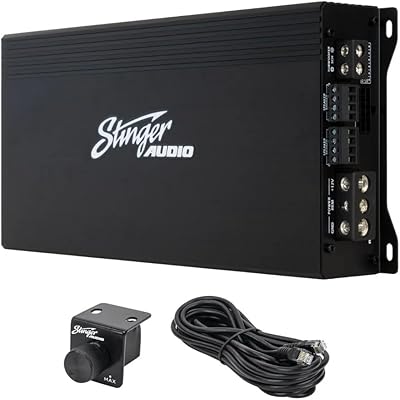
Stinger MT-1000.5 5-Channel Car Amplifier
75%
81%
Value for Money
84%
Ease of Installation
58%
Real-World Power Output
63%
Thermal Management
88%
Built-in Crossover Filters
More
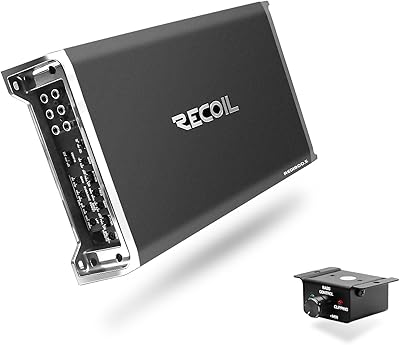
Recoil RED1800.5 5-Channel Car Amplifier
77%
91%
Value for Money
88%
Mono Channel Power
86%
Installation Experience
63%
Gain Calibration Ease
74%
Full-Range Channel Performance
More
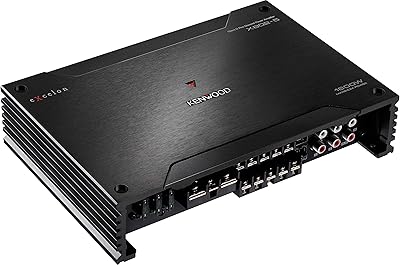
Kenwood X802-5 eXcelon 5 Channel Car Audio Amplifier
88%
92%
Sound Quality
85%
Installation Ease
88%
Build Quality
90%
Performance at High Volume
87%
Bass Enhancement
More
Planet Audio BB4.1200 4-Channel Car Amplifier
74%
83%
Value for Money
61%
Power Output Accuracy
88%
Ease of Installation
67%
Build Quality
58%
Thermal Management
More
Planet Audio PL1600.4 4-Channel Car Amplifier
72%
88%
Value for Money
84%
Ease of Installation
74%
Sound Quality
58%
Power Output (Real-World)
61%
Build Quality
More
Planet Audio AC1200.2 2-Channel Car Amplifier
72%
84%
Value for Money
67%
Power Output
88%
Ease of Installation
71%
Sound Quality
58%
Thermal Performance
More
Planet Audio AC2400.4 4-Channel Car Amplifier
84%
95%
Power Output
89%
Sound Clarity
87%
Bass Performance
82%
Ease of Installation
65%
Thermals/Heat Management
More
Planet Audio AC1200.4 4-Channel Car Amplifier
73%
88%
Value for Money
67%
Power Output
83%
Installation Ease
74%
Sound Quality
61%
Build Quality
More
Planet Audio AC1600.4 Anarchy Series 4-Channel Car Amplifier
82%
94%
Power Output
88%
Sound Quality
70%
Ease of Installation
92%
Value for Money
85%
Build Quality
More
Soundstream PN5.640D 5-Channel Car Amplifier
75%
88%
Ease of Installation
91%
Compact Form Factor
61%
Thermal Management
67%
Power Output Accuracy
74%
Sound Quality
More

FAQ

Not in the way most people expect. The 2200W figure is a peak rating across all five channels under ideal laboratory conditions. The continuous RMS output — which is what actually matters for real listening — is considerably lower. If you go in with realistic expectations about actual usable power, you won't be disappointed, but don't plan a build around that headline number.

Yes, you can. This single-amp solution accepts high-level inputs directly from speaker wire outputs, which is exactly what a factory head unit provides. You won't need an aftermarket head unit or a line output converter to get it connected, though a LOC can help you get cleaner signal levels if your factory unit doesn't have RCA outputs.

Possibly, depending on the vehicle. The amp measures just over 15 inches long and 5 inches wide, which fits under many rear bench seats with adequate clearance. That said, always measure your available space before buying — clearance varies a lot between vehicle models, and you'll want airflow around the unit even with its efficient Class D design.

No separate amp needed. The Planet Audio MB2200.5D 5-Channel Car Amplifier includes a dedicated fifth channel specifically for a subwoofer, with its own low-pass crossover and bass boost control. You can run four speakers and a sub all from this one unit, which is the main appeal of a five-channel design.

Planet Audio recommends consulting the user manual for exact fuse sizing, but as a general guideline for an amp in this output class, a 4-gauge power wire and an 80 to 100 amp fuse at the battery are reasonable starting points. Always follow the manual's specifications and match your wiring gauge to the expected current draw to avoid heat buildup in the power cable.

Yes, the main four channels are bridgeable in pairs, giving you up to 600W per bridged pair at 4 ohms. This is useful if you want to run two larger speakers with more headroom rather than four individual ones. Just make sure the speakers you're bridging into are rated for 4 ohms or higher, as bridging reduces the impedance load the amp sees.

That's almost certainly a ground loop, and it's a common issue with budget amplifiers in general. Start by checking that your amp's ground wire is connected to bare metal on the vehicle chassis — not to a painted or coated surface. Keep your RCA cables away from the vehicle's power wires and routed along the opposite side of the car if possible. Most buzz problems in installs like this come down to grounding quality and cable routing.

Yes, a remote subwoofer level control is included in the package. It lets you adjust the sub channel's output volume from the driver seat without reaching back to the amp itself. For a daily driver, this is one of the more practical features this 5-channel amp offers — being able to dial bass up or down depending on the music is genuinely useful.

Longevity varies depending on how hard you push it. Plenty of owners report two to three years of reliable daily use without issues. However, if the amp is consistently driven at or near its limits — high volume, heavy bass, hot environment — some users have reported component failures earlier than expected. Treat it as a solid entry-level amp rather than a long-term cornerstone of a high-demand build.

The amp is rated to handle 2-ohm loads on the four main channels, with output specified at 300W per channel at that impedance. Technically it's within spec, but running all four channels at 2 ohms simultaneously puts more stress on the power supply and thermal management than a 4-ohm load would. It's doable, but keep an eye on operating temperatures, especially in a warm install environment.

Where to Buy