Overview

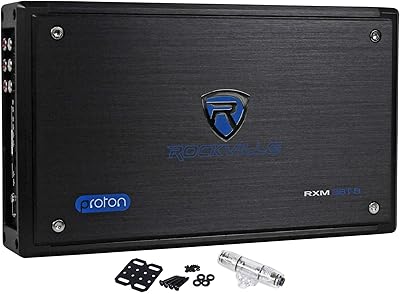
The Rockville dB55 5-Channel Car Amplifier has carved out a solid niche since its 2017 debut as a single-amp solution for enthusiasts who want to power four speakers and a subwoofer without running two separate units. Rockville earns some genuine credit for publishing three power ratings side by side — CEA-2006, RMS, and peak — rather than hiding behind inflated marketing numbers like many competitors do. At its mid-range price, this Rockville unit sits below Rockford Fosgate and Kicker territory but offers comparable feature depth to brands like Hifonics, making it worth a serious look.
Features & Benefits

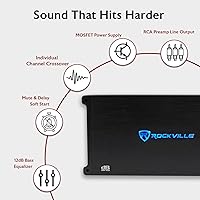
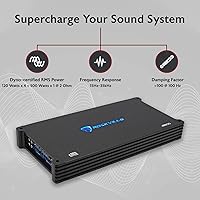
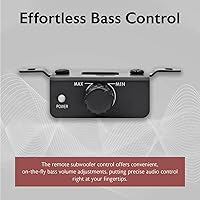
The 5-channel layout delivers 120 watts per channel into 2 ohms for your speakers, plus a dedicated 500-watt mono channel for the sub — practically, that means one power wire run, one amp rack, and a much cleaner install. The high-speed MOSFET supply keeps the amp running efficiently under load, which matters more for long drives than peak bursts. What really stands out is the onboard signal chain: a fully adjustable 12dB crossover, subsonic filter, and 12dB bass EQ mean you can tune the system without bolting on a separate processor. The remote subwoofer control is a small but genuinely useful touch for daily driving.

Best For

This 5-channel amp is the right call if you are doing a full front-to-back audio build and want one box handling everything. It suits first-timers upgrading from a factory head unit just as well as experienced DIYers who simply want a tidy, space-efficient install. The clear RCA routing and labeled terminals reduce guesswork during installation, which anyone who has fought with poorly documented amps will appreciate. If your vehicle has a cramped trunk or limited mounting real estate, consolidating into the dB55 instead of stacking two amps makes a real practical difference. It is less ideal for builders chasing extreme output numbers on a dedicated sub stage.

User Feedback

Owners consistently highlight how clean this Rockville unit sounds at everyday listening volumes, and most report a straightforward install experience. The value-to-feature ratio draws repeated praise, especially from buyers who compared it against pricier names. The honest criticism worth noting: some users report the chassis runs noticeably warm during extended high-volume sessions, so proper ventilation during mounting is not optional. A handful of reviewers also flag that real-world output falls short of the peak figures, which aligns with the CEA-2006 rating being roughly a quarter of the advertised peak — set expectations accordingly. Warranty support experiences appear mixed, with some customers reporting smooth resolutions and others finding the process slow.

Pros

  • Combines four speaker channels and a subwoofer channel in one unit, cutting wiring complexity significantly.
  • Onboard adjustable crossover, subsonic filter, and bass EQ eliminate the need for a separate signal processor.
  • Rockville publishes CEA-2006, RMS, and peak ratings together — more transparency than most budget competitors offer.
  • The included remote subwoofer knob lets you adjust bass on the fly without reaching behind the seat.
  • 2-ohm stability across all channels pairs well with standard aftermarket speakers without special impedance matching.
  • Most users report clean, well-separated sound at everyday commute volumes — a genuine step up from any factory system.
  • Clear terminal labeling and logical RCA layout make this a friendly install for first-time DIY builders.
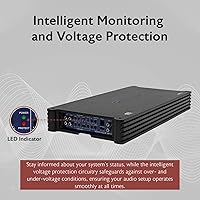
  • IC-controlled protection circuitry provides a reliable safety net during installation mishaps and voltage irregularities.
  • At its price point, the feature depth — five channels, tunable EQ, remote control — is hard to match from competing brands.

Cons

  • Real-world output falls well short of the peak power headline; expect performance closer to the CEA-2006 figure.
  • The amp runs noticeably warm under sustained high-volume use, making ventilation planning non-negotiable.
  • Some units arrive with slightly loose RCA ports that need attention before a clean permanent install is possible.
  • The mono subwoofer channel struggles to satisfy builds centered on high-excursion or dual-driver subwoofer setups.
  • The remote subwoofer control knob feels cheap and can develop a scratchy response after several months of daily use.
  • Warranty support experiences vary widely — resolution speed and outcome appear inconsistent across buyers.
  • Channel separation and stereo imaging lose precision at higher volumes compared to pricier amplifier tiers.
  • A visible number of reviews report unit failures within the first year, suggesting quality control is not fully consistent.
  • Tuning controls lack the fine resolution of outboard processors, making precise adjustments harder than they should be.

Ratings

The Rockville dB55 5-Channel Car Amplifier has been on the market long enough to accumulate a wide, diverse pool of buyer experiences — and our AI has combed through verified global reviews, actively filtering out incentivized, spam, and bot-generated submissions to surface what real installers and daily drivers actually think. The scores below reflect both where this amp genuinely punches above its weight and where it falls short, with no category glossed over.
Value for Money
91%
For buyers who would otherwise need two separate amplifiers — one for speakers, one for a sub — consolidating into a single unit at this price point is a meaningful saving. Reviewers repeatedly note that the onboard crossover and bass EQ alone would cost extra in a competing budget setup.
A small but vocal group of buyers feel the value proposition weakens slightly if you push the amp hard at high volumes for long periods, since thermal management then becomes a real concern that can shorten the unit's lifespan.
Sound Quality at Moderate Volumes
83%
Most users describe a clean, well-separated soundstage during everyday city and highway driving. At sensible listening levels, the four speaker channels handle vocals and midrange detail with more clarity than buyers coming from a factory head unit typically expect at this price.
At high volumes, some listeners notice the overall presentation gets a little compressed and loses some of the spatial separation that made it appealing at lower levels. It is not a problem unique to this amp at this price, but worth knowing before you expect audiophile performance.
Bass Output & Subwoofer Performance
78%
22%
The dedicated 500-watt mono channel handles a single subwoofer convincingly in most sedan and SUV installs. Paired with the onboard bass EQ, owners report getting tight, impactful low-end without needing a separate bass processor — a genuine convenience for straightforward builds.
Buyers running demanding dual-subwoofer setups or high-excursion drivers often find the mono channel underpowered for their needs. Real-world output at this impedance falls noticeably short of the advertised peak figure, so expectations need to be anchored to the CEA-2006 number instead.
Power Accuracy & Transparency
62%
38%
Rockville deserves credit for publishing all three power ratings openly — CEA-2006, RMS, and peak — rather than burying the more conservative numbers. Buyers who read the specs carefully know exactly what they are getting, which is more honesty than many competitors at this tier offer.
The gap between the 4000W peak headline and the 980W CEA-2006 figure is significant, and some buyers feel the marketing leans too hard on peak numbers in the product title. Anyone who did not dig into the spec sheet may feel misled once they compare real-world output against premium-brand amps.
Thermal Management & Heat
58%
42%
Under normal daily driving conditions — 30 to 60 minute commutes with moderate volume — most users report no heat-related issues. The MOSFET power supply does contribute to reasonably efficient operation compared to older class AB designs at the same output level.
Extended high-volume sessions, particularly in enclosed trunk spaces with limited airflow, produce noticeable heat buildup that several reviewers flagged as a concern. A few owners reported thermal shutdowns during summer road trips, suggesting that mount location and ventilation planning are not optional for this unit.
Ease of Installation
88%
DIY installers consistently praise the clearly labeled terminals and logical RCA input and output layout. For someone tackling their first full-system build, having a single amp that covers all five channels removes a significant layer of wiring complexity and confusion.
At 10.75 pounds and with surface-mount requirements, finding a clean mounting spot in smaller vehicles can take more planning than buyers initially expect. A couple of reviewers noted that the included documentation could be more detailed for total beginners.
Build Quality & Chassis
69%
31%
The chassis feels solid enough for the price bracket, and the LED-illuminated logo gets consistently positive reactions from buyers who care about the visual element of their install. Terminal connections are generally described as firm and secure after proper torquing.
Compared to Rockford Fosgate or Kicker units in a higher price tier, the overall chassis rigidity and component finish feel a step down. A handful of reviewers reported slightly loose RCA ports out of the box, which required attention before the amp could be mounted permanently.
Crossover & Tuning Flexibility
86%
Having a fully adjustable 12dB crossover, a subsonic filter, and a 12dB bass EQ all onboard means buyers can tailor the system to their specific speakers and subwoofer without spending extra on a line output converter or signal processor. For a budget build, this depth of control is genuinely uncommon.
The tuning controls are functional but lack the fine precision of outboard processors. Users who want channel-level time alignment or parametric EQ will still need to look elsewhere, and the adjustment knobs on some units feel slightly imprecise when trying to find an exact setting.
Remote Subwoofer Control
84%
The included dashboard remote for subwoofer level adjustment is one of the most appreciated small details in user feedback. Being able to dial the bass back for late-night driving or crank it up on an open highway without reaching behind the seat is a practical quality-of-life feature.
The remote unit itself feels lightweight and plasticky compared to the amp, and a few buyers reported the knob developing a scratchy feel after several months of daily use. It works, but do not expect it to feel like a premium accessory.
2-Ohm Stability
81%
19%
Running the amp at 2 ohms across all channels is where this unit extracts its best output numbers, and most users pairing it with standard aftermarket 2-ohm speakers report stable, consistent performance without clipping or protection-circuit trips during regular use.
A small number of buyers attempting to push the amp at 2 ohms under demanding conditions — particularly the subwoofer channel at near-maximum gain — report occasional protection shutdowns, suggesting the thermal and current limits get tested more quickly than the specs might imply.
Protection Circuitry Reliability
74%
26%
The IC-controlled protection system does its job in normal operating conditions, and most owners report the amp recovering cleanly from minor issues like accidental ground faults during installation. It is a reassuring safety net for less experienced installers.
The protection circuit trips somewhat easily under high sustained loads, which some users interpret as the amp being conservative about its own limits. While this protects the hardware, it can be frustrating during a listening session if the threshold is reached unexpectedly.
Long-Term Reliability
66%
34%
A meaningful portion of the dB55 review base has owned the unit for two or more years without significant problems, particularly among users who installed it with proper ventilation and did not run it at its limits constantly. That track record is encouraging for a mid-range product.
There is a visible tail of reviews describing failures in the first year — channel dropout, protection faults that do not reset, or complete unit failure — that pull the long-term reliability score down. The failure rate appears higher than premium competitors but is not unusual for the price tier.
Customer Service & Warranty Experience
61%
39%
Some buyers report prompt and helpful responses from Rockville support when issues arose, with warranty replacements processed without excessive friction. For a value-tier brand, having any responsive support channel is a step above several direct competitors.
The warranty support experience appears inconsistent. A notable share of reviewers describe slow response times, difficulty reaching a resolution, or being asked to pay return shipping costs that felt unfair. The outcome seems to depend significantly on individual circumstances rather than a reliable process.
Channel Separation & Stereo Imaging
72%
28%
For a 5-channel amp at this price, channel separation is adequate and most listeners report a satisfying stereo image during music playback in normal vehicle acoustics. Front-to-rear staging works well when the crossover is properly configured.
Audiophiles or anyone coming from a higher-end amplifier will notice that the stereo imaging lacks the precision and depth of pricier units. Crosstalk between channels becomes slightly perceptible at higher volumes, which is a real limitation for critical listening rather than casual daily use.

Suitable for:

The Rockville dB55 5-Channel Car Amplifier is the right tool for anyone doing a full car audio build who wants to keep the install clean and manageable. If you are stepping up from a weak factory system for the first time and want a single unit to drive four door speakers plus a subwoofer, this amp removes a lot of the complexity that comes with running two separate amps — one power wire, one ground, one amp rack. It suits DIY installers particularly well because the labeled terminals and logical RCA layout make the process less intimidating than comparable multi-channel setups. Buyers working with limited trunk or under-seat space will also appreciate consolidating everything into one chassis. And if you want real tuning control — an adjustable crossover, a subsonic filter, a bass EQ — without paying extra for a separate processor, this Rockville unit punches well above its price in that regard.
Not suitable for:

The Rockville dB55 5-Channel Car Amplifier is not the right choice for buyers who are serious about raw output and plan to push the system hard for hours at a time. The gap between the advertised 4000W peak figure and the 980W CEA-2006 rating is substantial, and anyone benchmarking it against premium brands like Rockford Fosgate or Kicker on real measured power will be disappointed. If your build centers on a demanding subwoofer setup — large dual-driver enclosures, high-excursion woofers, or competition-level SPL goals — the mono channel simply will not keep up. Buyers in hot climates who plan to mount the amp in an enclosed, poorly ventilated space should also think twice, since thermal management under prolonged stress is a documented weakness. Finally, anyone who needs rock-solid long-term reliability backed by a consistently responsive warranty process may want to spend more for a brand with a stronger support track record.
Specifications

  • Channels: 5 total channels: four full-range channels for speakers and one dedicated mono channel for a subwoofer.
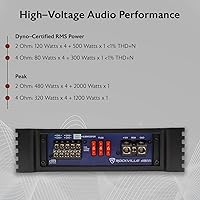
  • Peak Power: Total peak power output is rated at 4000W across all five channels combined.
  • RMS Power: Total RMS power output is 2000W, representing continuous sustained output under normal operating conditions.
  • CEA-2006 Power: Independently standardized CEA-2006 rated output is 980W, the most accurate figure for comparing against premium competing brands.
  • Speaker Output: Each of the four full-range channels delivers 120W at 2 ohms and 80W at 4 ohms.
  • Sub Output: The mono subwoofer channel delivers 500W at 2 ohms and 300W at 4 ohms.
  • Impedance: All five channels are 2-ohm stable, allowing direct use with standard low-impedance aftermarket speakers and subwoofers.
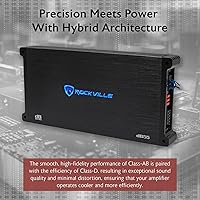
  • Power Supply: Uses a high-speed MOSFET power supply for improved thermal efficiency and stable output under sustained load.
  • Crossover: Fully adjustable 12dB per octave crossover with differential circuitry for precise speaker and subwoofer frequency management.
  • Bass EQ: Onboard bass equalizer with 12dB of adjustment range for tuning low-frequency response without an external processor.
  • Subsonic Filter: Includes a subsonic filter to block infrasonic frequencies that waste amplifier power and can damage subwoofer drivers.
  • Signal Input: Accepts signal via RCA line inputs and also provides RCA line outputs for daisy-chaining additional components.
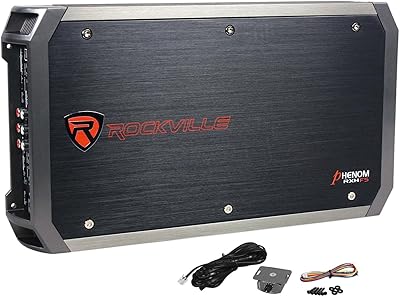
  • Remote Control: Includes a wired remote dashboard control for adjusting subwoofer output level from the driver seat while in motion.
  • Protection: IC-controlled protection circuitry guards against overheating, short circuits, and voltage fluctuations with automatic shutdown and reset.
  • Mounting Type: Designed for surface mounting, requiring a flat, ventilated mounting surface such as a trunk floor or under-seat panel.
  • Weight: Unit weighs 10.75 pounds, making single-person installation practical without requiring additional assistance.
  • Indicator: Features an LED-illuminated Rockville logo that confirms the unit is powered on during operation.
  • Availability: First made available in May 2017, providing a substantial long-term ownership and review record across multiple buyer cohorts.

Related Reviews

Rockville RXH-F5 5-Channel Car Amplifier
74%
88%
Value for Money
74%
Power Accuracy
83%
Installation Ease
79%
Sound Quality
68%
Subwoofer Performance
More
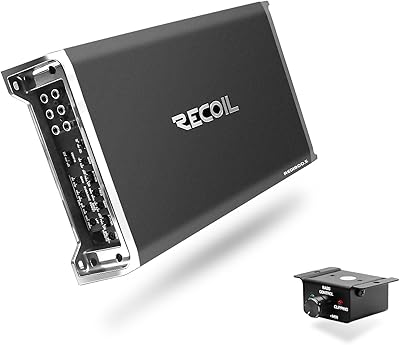
Recoil RED1800.5 5-Channel Car Amplifier
77%
91%
Value for Money
88%
Mono Channel Power
86%
Installation Experience
63%
Gain Calibration Ease
74%
Full-Range Channel Performance
More
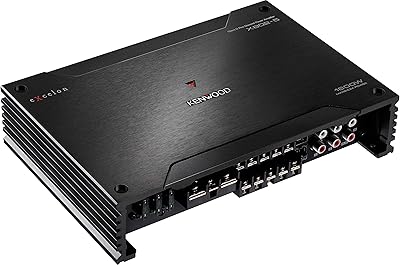
Kenwood X802-5 eXcelon 5 Channel Car Audio Amplifier
88%
92%
Sound Quality
85%
Installation Ease
88%
Build Quality
90%
Performance at High Volume
87%
Bass Enhancement
More
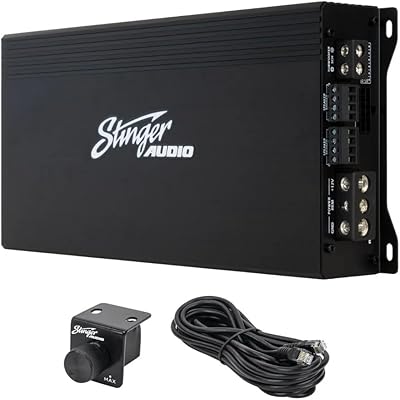
Stinger MT-1000.5 5-Channel Car Amplifier
75%
81%
Value for Money
84%
Ease of Installation
58%
Real-World Power Output
63%
Thermal Management
88%
Built-in Crossover Filters
More
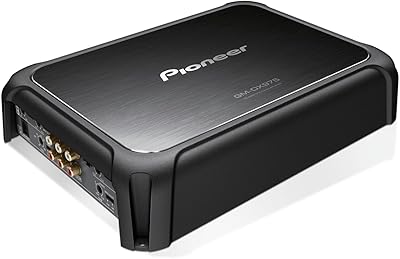
Pioneer GM-DX975 5-Channel Car Amplifier
81%
88%
Sound Quality
83%
Power Delivery
81%
Build Quality
71%
Thermal Management
74%
Ease of Installation
More
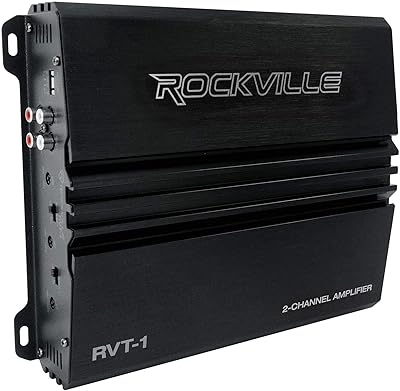
Rockville RVT-1 2-Channel Car Amplifier
68%
83%
Value for Money
67%
Power Output
58%
Build Quality
61%
Thermal Management
72%
Audio Clarity
More
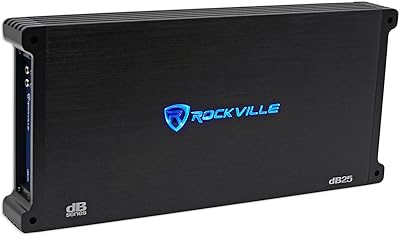
Rockville dB25 2800W 2-Channel Car Amplifier
86%
94%
Power Output
89%
Sound Quality
85%
Ease of Installation
91%
Bass Control
82%
Durability
More
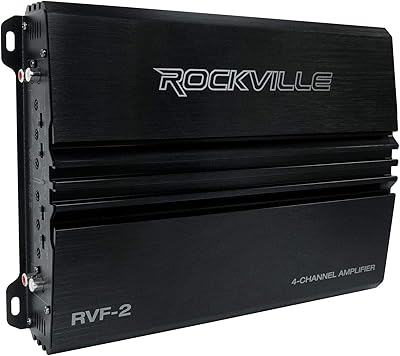
Rockville RVF-2 4-Channel Car Amplifier
84%
88%
Audio Quality
91%
Power Output
85%
Build Quality
72%
Thermals (Heat Management)
80%
Installation Ease
More
Rockville KRYPTON F2 3200W 4-Channel Car Amplifier
84%
94%
Power Output
89%
Sound Clarity
76%
Ease of Installation
88%
Build Quality
90%
Efficiency (Power Handling)
More
Rockville RXA-F1 1600W 4-Channel Car Amplifier
82%
88%
Sound Quality
93%
Power Output
84%
Ease of Installation
92%
Value for Money
79%
Durability
More

FAQ

Yes, all five channels operate simultaneously. The four speaker channels and the mono subwoofer channel are independent, so your front and rear speakers and your sub all run from a single unit with no switching required.

The 4000W figure is peak power, which represents brief transient bursts at the loudest moments in a track — not what the amp sustains. A more realistic number for everyday performance is the CEA-2006 rated output of 980W total across all channels. The Rockville dB55 5-Channel Car Amplifier is actually one of the few budget amps that publishes all three rating tiers openly, which lets you make a fair comparison against premium brands.
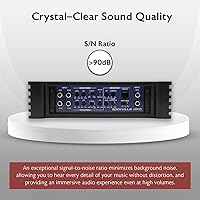
The dB55 has a surprisingly capable onboard signal chain for a single-amp build. You get a fully adjustable 12dB crossover, a subsonic filter to protect your subwoofer, and a 12dB bass EQ — all without adding a separate processor. The included remote knob also lets you adjust subwoofer level from the dashboard while driving.

Heat management is a genuine concern with this unit under prolonged high-volume use, and enclosed spaces make it worse. The MOSFET design runs more efficiently than older amp topologies, but proper ventilation is still non-negotiable. Mount it on a surface with clear airspace around the heat sink, and avoid sealing it inside a sealed cavity — especially in warm climates.

Most factory head units do not have preamp RCA outputs, so you would typically need either an aftermarket head unit with RCA outputs or a line output converter to step the speaker-level signal down to RCA level. Once you have a proper RCA signal, the dB55 accepts it cleanly.

Bridging is possible on many 5-channel amplifiers, but check the manual for the dB55 specifically before attempting it — bridging reduces the load impedance the amp sees, and running a bridged channel below the minimum stable impedance can trigger the protection circuit or cause damage. The safest approach is to use the dedicated mono channel for your subwoofer as intended.

Most first-time DIY installers report a manageable experience thanks to the clearly labeled terminals and logical RCA layout. The main things to get right are proper wire gauge for the power and ground runs, a clean ground connection to bare metal, and a fused power wire close to the battery. If you follow a basic install guide and take your time, this is a reasonable first amp project.

At moderate everyday listening volumes, most users find the sound quality genuinely satisfying and a significant improvement over any factory system. At higher volumes or in critical listening scenarios, the gap between this Rockville unit and premium brands becomes more noticeable — particularly in stereo imaging precision and headroom. If you are building a daily driver system rather than a competition or audiophile setup, the difference may not justify the higher cost.

For a 2000W RMS amplifier, a 4-gauge power wire is the typical minimum, though some installers prefer 1/0 gauge for the cleanest current delivery. For fusing, a 150A to 200A fuse close to the battery is a common starting point — refer to the included manual or a trusted install guide for the manufacturer-recommended specification, as undersizing either can create reliability or safety issues.

An unexpected shutdown almost always means the IC protection circuit tripped, not that the amp has failed. The most common causes are heat buildup from poor ventilation, a gain setting that is too high causing the amp to clip, or a wiring issue like a loose ground connection. Check your mounting location for airflow, verify your ground connection, and try reducing the gain before assuming there is a hardware fault.

Where to Buy