Overview

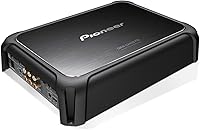
The Pioneer GM-DX975 5-Channel Car Amplifier sits in a sweet spot within Pioneer's GM lineup — capable enough for serious enthusiasts, yet practical for someone tackling their first full system build. Rather than running a separate amp for the front stage and another for the subwoofer, this Pioneer amp handles everything from a single chassis. That alone cuts down on wiring complexity, mounting space, and overall cost. The Class D topology keeps the footprint surprisingly small while still delivering real headroom for demanding listening sessions. If you've been frustrated juggling two amps in a cramped trunk, the consolidation appeal here is hard to argue with.

Features & Benefits

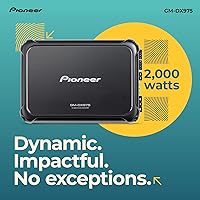
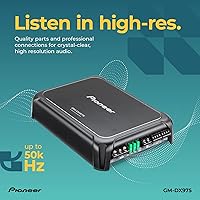
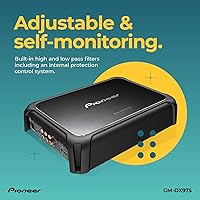
The power figures on the GM-DX975 deserve a quick reality check: that 2,000W headline is a maximum rating, and the more useful RMS output is what actually matters for sustained, clean listening — Pioneer is CTA-2006 compliant, which at least means the numbers aren't invented. The Class D design runs noticeably cooler than Class A/B alternatives, which matters when your amp is tucked under a seat in August. A variable low-pass filter spanning 40 to 240 Hz gives real tuning flexibility for different subwoofer enclosures, and the frequency response reaching 50,000 Hz means it won't compress Hi-Res audio files. Gold-plated RCA terminals and an onboard protection circuit round out a feature set that punches well above its price tier.

Best For

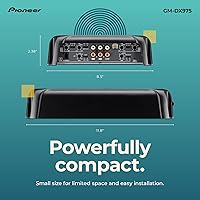
This 5-channel amplifier is a natural fit for anyone building out a full front stage plus subwoofer in one install run. Compact SUV and sedan owners will especially appreciate the slim dimensions — at under 12 inches wide, it doesn't eat up the trunk floor the way stacked multi-amp setups do. If you're playing FLAC files or streaming lossless audio, the Hi-Res certification means the amp keeps up with your source. Intermediate DIY installers will find the single-unit approach manageable; you're dealing with one set of power wires, one ground, one signal chain. It's also a strong consolidation choice if you're retiring a two-amp system and want to simplify without downgrading.

User Feedback

Across close to 1,000 ratings, this Pioneer amp holds a strong average, and the pattern in reviews is fairly consistent. Most buyers highlight the clean power delivery and the fact that wiring a 5-channel unit turned out to be less intimidating than expected. The remote bass knob gets mentioned regularly as a small but genuinely useful addition. On the critical side, the instruction manual draws complaints — it's not terrible, but it assumes more prior knowledge than a beginner might have. A handful of users report occasional thermal shutdown in poorly ventilated installs, which is a minority issue but worth keeping in mind during mounting. Professional installers tend to rate it higher than first-timers, which probably says as much about installation quality as the amp itself.

Pros

  • Running all five channels from one amp dramatically simplifies wiring and reduces the number of components to troubleshoot.
  • Class D operation keeps heat output low, which matters a lot in vehicles with limited amp mounting ventilation.
  • Hi-Res Audio certification means the GM-DX975 handles lossless and high-resolution audio files without becoming the weak link.
  • The variable low-pass filter range is wide enough to dial in almost any subwoofer and enclosure combination accurately.
  • Gold-plated RCA terminals resist corrosion and ensure a stable signal connection over the long haul.
  • The remote bass knob ships in the box — a small but genuinely appreciated convenience that competitors often charge extra for.
  • Built-in protection circuitry actively monitors voltage, current, and temperature to prevent damage during sustained listening.
  • Close to 1,000 ratings averaging strong marks suggests consistent real-world performance across diverse installs and vehicle types.
  • The compact chassis fits in spaces that would reject a traditional Class A/B amp of comparable output.
  • CTA-2006 compliance means the power ratings are honest and independently verifiable, not inflated marketing figures.

Cons

  • The included instruction manual lacks detail for less experienced installers, often requiring supplemental research online.
  • A small but consistent group of users report thermal shutdown events when the amp is mounted in poorly ventilated spots.
  • The maximum power figure is frequently misread as usable continuous output, which can lead to mismatched expectations at purchase.
  • Five channels in one chassis means a single hardware failure potentially takes down your entire audio system at once.
  • Professional installers rate it more favorably than DIY first-timers, suggesting the setup process has a steeper learning curve than the marketing implies.
  • No onboard crossover display or digital controls means tuning requires careful manual adjustment by ear or with external tools.
  • For buyers with a dedicated, high-power subwoofer setup, the sub channel output may feel limiting compared to a standalone monoblock.
  • Availability of matching Pioneer accessories and replacement parts can be inconsistent depending on region and retailer.

Ratings

Our AI rating system analyzed verified owner reviews for the Pioneer GM-DX975 5-Channel Car Amplifier from buyers worldwide, actively filtering out incentivized, bot-generated, and suspiciously timed submissions to ensure the scores reflect genuine hands-on experience. Each category below is scored independently, surfacing both the strengths that earn consistent praise and the friction points that real users actually encounter. Nothing is softened or glossed over.

Sound Quality
88%
Owners consistently describe the audio output as clean and composed even at higher volumes, with no notable distortion creeping in during demanding listening sessions. The Hi-Res certification translates to a noticeably open top end for those feeding it lossless files, and the channel separation holds up well across the full front stage.
A small segment of audiophile-leaning buyers feel the sub channel lacks the last degree of tightness compared to a dedicated monoblock, particularly on fast, articulate bass lines. At its absolute limits, some listeners detect a slight compression that a higher-end dedicated setup avoids.
Power Delivery
83%
Under real driving conditions — varied volume levels, mixed source material, normal listening durations — the GM-DX975 delivers stable, consistent output without the fluctuations that plague lower-tier amps. The CTA-2006 compliance gives buyers confidence that the numbers on paper have a genuine relationship to what the amp actually produces.
The gap between the peak figure and the real-world RMS output trips up buyers who do not research before purchasing, leading to mismatched speaker pairings and disappointment. Those pushing the sub channel hard alongside four active speaker channels may find the available headroom tighter than expected under simultaneous full-load conditions.
Build Quality
81%
19%
The chassis feels solid and purposefully constructed for a unit in this category, with gold-plated RCA terminals that resist the corrosion issues seen on cheaper connectors after a year or two of temperature cycling inside a vehicle. The overall fit and finish aligns with what experienced installers expect from a mid-to-high-tier Pioneer product.
A handful of reviewers noted that the terminal block covers and smaller plastic components feel slightly less robust than the main chassis suggests. For a unit intended to live in a trunk for years, a few buyers expressed mild concern about long-term durability of those secondary parts under repeated vibration.
Thermal Management
71%
29%
The onboard protection system does its job reliably — monitoring voltage, current, and temperature simultaneously and stepping in before any real damage can occur. Buyers who mount the unit with adequate clearance and airflow report zero thermal issues even during extended summer road trips in hot climates.
Thermal shutdown complaints represent a genuine recurring thread in the review pool, particularly from installers who fitted the amp in confined, poorly ventilated spaces. The amp runs warm enough under sustained load that airflow is not optional — tight or enclosed mounting locations will trigger the protection circuit with frustrating regularity.
Ease of Installation
74%
26%
The 5-channel layout simplifies the overall wiring job considerably compared to running two separate amps, and experienced DIY installers report that the terminal layout is logically organized and easy to work with. The compact footprint opens up mounting locations that a larger Class A/B unit simply could not fit.
The instruction manual draws consistent criticism across the review base for assuming installer knowledge that many buyers — especially first-timers — do not yet have. Several users reported spending significant extra time cross-referencing online resources because the printed documentation left critical wiring steps ambiguous or underdeveloped.
Value for Money
79%
21%
When you factor in that this amp replaces two separate units, the effective cost per channel compares favorably against building an equivalent system with a 4-channel amp plus a monoblock. The inclusion of the remote bass knob — often a paid add-on elsewhere — adds genuine practical value without inflating the price.
At its price point, buyers expect a more complete documentation and accessory package than what ships in the box. Competing brands at a similar price occasionally include wiring kits or more detailed setup guides, making the unboxing experience feel slightly underwhelming relative to the asking price.
Bass Performance
77%
23%
The variable low-pass filter spanning 40 to 240 Hz is genuinely one of the more flexible ranges in this category, giving owners real latitude to tune the sub channel for sealed, ported, or bandpass enclosures without fighting arbitrary cutoff limits. Most listeners report satisfying, musical bass that integrates well with the full-range channels.
Buyers upgrading from a high-powered dedicated monoblock will likely notice that the sub channel output ceiling is lower than what they are accustomed to. For large, inefficient subwoofer drivers in ported boxes that demand serious current, this 5-channel amplifier is a compromise rather than an ideal match.
Compact Footprint
91%
The dimensions make this one of the more space-efficient 5-channel amps available, and installers working in compact sedans or smaller SUVs regularly call out the fit as a genuine selling point. It can slot into locations — shallow trunk walls, under rear seats in certain vehicles — that would reject a conventional amp of comparable output.
The slim profile comes with thermal implications, as the reduced surface area means heat dissipation relies more heavily on ambient airflow than on mass alone. Buyers who appreciate the size but ignore the ventilation requirement tend to be the same ones who later report protection circuit shutdowns.
Hi-Res Audio Support
86%
For listeners who have invested in a quality head unit and high-resolution source files, the certified frequency response ensures the amp is not the limiting factor in the signal chain. Owners who made the switch from an uncertified unit describe a clearly improved sense of detail and air in the upper frequencies.
The practical benefit of Hi-Res certification is only realized when the rest of the system — source unit, speakers, cabling — is also matched appropriately. Buyers pairing this amp with budget coaxial speakers or a head unit with a mediocre DAC are unlikely to hear any meaningful difference from the certification.
Remote Bass Knob
84%
Unlike the flimsy remote knobs that often accompany budget amps as an afterthought, the included control feels sturdy and responds with a smooth, predictable taper that makes real-time bass adjustment during a drive practical rather than distracting. Its inclusion in the box is consistently called out as a welcome surprise.
The cable length may require routing creativity depending on where the amp is mounted and how far it sits from the driver's position, which a few buyers found mildly inconvenient. There is no digital readout or center-detent position, so returning to a neutral baseline setting requires memorizing where you started.
Channel Separation
82%
18%
Crosstalk between the five channels is well-controlled, and owners running active front stages with separate tweeters and midwoofers report clean imaging without interference bleeding between adjacent channels. This is one area where the GM-DX975 punches above its category average.
Channel separation is not a concern that appears frequently in negative reviews, but a small number of technically focused buyers noted that extremely demanding active crossover setups exposed minor bleed at high gain levels. Under typical passive speaker configurations, this is unlikely to be a practical issue.
Protection System
80%
20%
The multi-parameter protection circuit — covering voltage, current, and temperature simultaneously — is more sophisticated than the single thermal cutoffs found on many competing amps, and it gives installers and listeners confidence that the unit is actively guarding itself. It has demonstrably prevented damage in situations where voltage drops from a weak alternator might otherwise have caused issues.
Because the protection system is sensitive by design, it can occasionally feel over-reactive in vehicles with aging electrical systems or borderline ground connections. Buyers who have not cleaned up their power and ground wiring before installation may experience nuisance shutdowns that are frustrating to diagnose without prior amp experience.
Long-Term Reliability
76%
24%
The volume of reviews spanning several years since the 2019 release date suggests the GM-DX975 has a reasonable longevity track record, with the majority of long-term owners reporting no functional issues after extended daily use. Pioneer's brand presence in the car audio space means service and support resources are more accessible than with niche alternatives.
A portion of reliability concerns trace back to installation quality rather than unit defects, but there are enough reports of early failures — often linked to thermal stress or poor power wiring — to suggest that the amp has less tolerance for imperfect installs than some competitors. Units pushed hard in hot environments without proper airflow show up in negative long-term reviews disproportionately.

Suitable for:

The Pioneer GM-DX975 5-Channel Car Amplifier is a strong match for anyone who wants to upgrade their entire car audio system in a single, clean install rather than juggling multiple amplifiers and the wiring mess that comes with them. It suits intermediate DIY builders particularly well — people who are comfortable running power and signal cables but want the confidence of a reputable brand behind them. Compact vehicle owners, like those driving sedans or smaller SUVs where trunk space is genuinely limited, will appreciate how much ground this amp covers without demanding a large footprint. Listeners who prioritize audio quality and regularly play Hi-Res or lossless files will find the certified frequency response a meaningful advantage over generic alternatives in this category. It also makes practical sense for anyone retiring an older two-amp setup who wants to consolidate without stepping down in channel count or output quality.

Not suitable for:

The Pioneer GM-DX975 5-Channel Car Amplifier is not the right tool for someone expecting to shake walls with extreme SPL output — this is a balanced full-system amp, not a competition-grade monoblock. Buyers who are brand new to car audio installs may find the included documentation frustrating, as the manual assumes a baseline of wiring knowledge that true beginners often lack. If your vehicle has very poor under-seat or trunk ventilation, the occasional thermal protection shutdowns reported by a minority of users could become a recurring annoyance rather than a rare safeguard. Those running a large, power-hungry subwoofer alongside high-demand component speakers may also want to verify that the sub channel's RMS rating alone meets their enclosure requirements before committing. Finally, if you already own a capable 4-channel amp and only need a subwoofer solution, a dedicated monoblock would likely serve you better at a lower cost.

Specifications

  • Channels: The amplifier provides 5 independent channels, allowing simultaneous power delivery to four full-range speakers and one subwoofer from a single unit.
  • Power Class: Class D topology is used throughout, offering higher efficiency and lower heat output compared to traditional Class A/B designs.
  • Max Power Output: Total maximum power output is rated at 2000W across all channels, measured in compliance with the CTA-2006 standard.
  • Frequency Response: The amplifier's frequency response extends up to 50,000 Hz, meeting the technical threshold required for Hi-Res Audio certification.
  • Hi-Res Audio: This unit carries official Hi-Res Audio certification, confirming it can reproduce high-resolution source files without frequency truncation.
  • Low-Pass Filter: A variable low-pass filter on the subwoofer channel is adjustable between 40 Hz and 240 Hz to accommodate different enclosure and driver characteristics.
  • RCA Terminals: Input connections use gold-plated RCA terminals, which resist oxidation and help maintain consistent signal integrity over time.
  • Protection System: An onboard protection circuit continuously monitors input voltage, current draw, and operating temperature to prevent damage during abnormal conditions.
  • Remote Knob: A remote bass control knob is included in the retail package, enabling convenient subwoofer level adjustment from the driver's seat.
  • Dimensions: The amplifier measures 8.5 x 11.88 x 2.38 inches (L x W x H), making it compatible with shallow mounting locations in compact vehicles.
  • Weight: The unit weighs 7.3 pounds, which is typical for a 5-channel Class D amplifier of this output class.
  • Operating Voltage: Designed to operate at 12V DC, matching the standard electrical system voltage found in passenger vehicles.
  • Mounting Type: Surface mount installation is the supported method, allowing the amp to be secured flat to trunk floors, amp racks, or under-seat panels.
  • Compliance: The GM-DX975 is CTA-2006 compliant, meaning its power ratings reflect independently verifiable real-world output rather than inflated peak figures.
  • Connectivity: Signal input is handled via RCA connections, and the unit is compatible with standard preamp outputs from head units and signal processors.
  • Manufacturer: The GM-DX975 is manufactured by Pioneer Corporation, a Japanese electronics company with decades of history in car audio engineering.
  • Package Contents: The retail box includes the 5-channel amplifier unit and a remote bass knob; additional wiring and mounting hardware are not included.
  • ASIN: The Amazon Standard Identification Number for this product is B07N7VD4ZL, which can be used to verify the exact listing.

Related Reviews
Recoil RED1800.5 5-Channel Car Amplifier
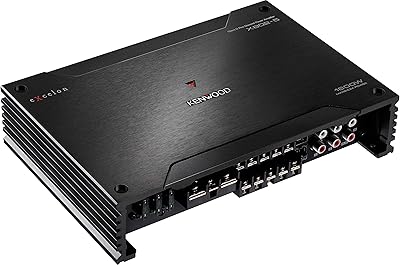
77%
91%
Value for Money
88%
Mono Channel Power
86%
Installation Experience
63%
Gain Calibration Ease
74%
Full-Range Channel Performance
More
Kenwood X802-5 eXcelon 5 Channel Car Audio Amplifier
88%
92%
Sound Quality
85%
Installation Ease
88%
Build Quality
90%
Performance at High Volume
87%
Bass Enhancement
More
Stinger MT-1000.5 5-Channel Car Amplifier
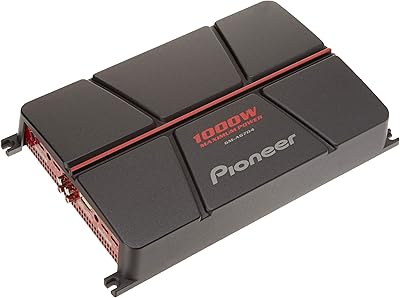
75%
81%
Value for Money
84%
Ease of Installation
58%
Real-World Power Output
63%
Thermal Management
88%
Built-in Crossover Filters
More
Pioneer GM-A6704 4-Channel Car Amplifier
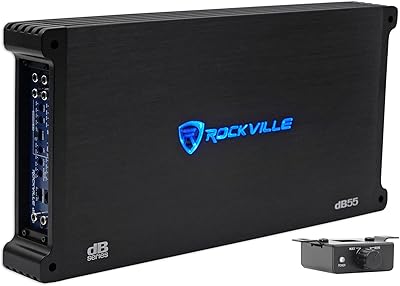
77%
83%
Sound Quality
71%
Power Delivery
81%
Installation Ease
74%
Build Quality
62%
Thermal Management
More
Pioneer GM-A3702 2-Channel Car Amplifier
79%
91%
Ease of Installation
83%
Sound Quality
67%
Power Output
78%
Build Quality
86%
Value for Money
More
Rockville dB55 5-Channel Car Amplifier
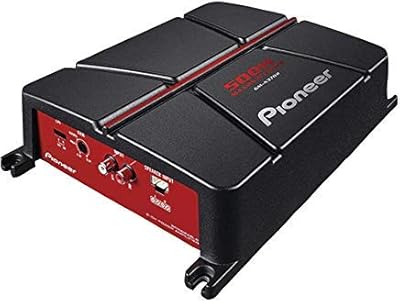
75%
91%
Value for Money
83%
Sound Quality at Moderate Volumes
78%
Bass Output & Subwoofer Performance
62%
Power Accuracy & Transparency
58%
Thermal Management & Heat
More
Planet Audio MB2200.5D 5-Channel Car Amplifier
71%
83%
Value for Money
81%
Ease of Installation
86%
Channel Configuration
54%
Power Output (Real-World)
77%
Thermal Management
More
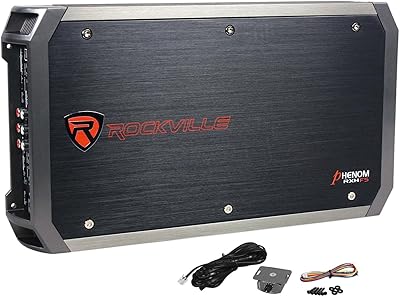
Rockville RXH-F5 5-Channel Car Amplifier
74%
88%
Value for Money
74%
Power Accuracy
83%
Installation Ease
79%
Sound Quality
68%
Subwoofer Performance
More
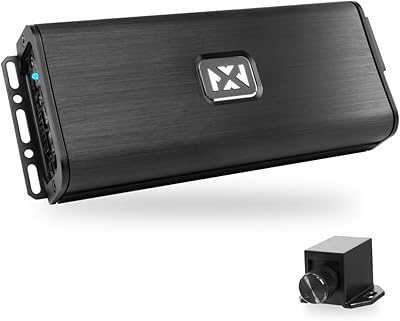
NVX VADM5 v2 5-Channel Car Amplifier
79%
93%
Compact Form Factor
88%
Installation Ease
67%
Power Output (RMS)
81%
Sound Clarity
62%
Thermal Management
More
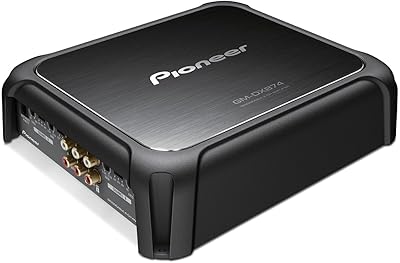
Pioneer GM-DX874 1,200 Watts 4-Channel Amplifier
86%
90%
Power Output
91%
Sound Quality
87%
Build Quality
83%
Ease of Installation
95%
Size & Portability
More

FAQ

Yes, the Pioneer GM-DX975 5-Channel Car Amplifier is specifically designed to run a full system on its own — four channels for your front and rear speakers, and a dedicated fifth channel for the subwoofer. For most builds, you genuinely will not need a second amp.

The 2000W is a maximum or peak figure, which represents short-burst headroom rather than sustained output. The more relevant number for speaker matching is the RMS rating per channel, and because this amp is CTA-2006 compliant, those continuous ratings are honest and not inflated. Check Pioneer's official spec sheet for the per-channel RMS figures before sizing your speakers.

At just under 2.4 inches tall and about 8.5 inches long, the GM-DX975 can realistically fit under many factory seats depending on clearance. That said, trunk or amp rack mounting is preferable for airflow, especially in warmer climates, since restricted ventilation is the most common reason for thermal protection triggering.

It can, yes. The Hi-Res Audio certification and frequency response extending to 50,000 Hz mean the amp is not artificially limiting the signal your source is feeding it. Whether you hear a difference also depends on your speakers and source unit, but this 5-channel amplifier will not be the bottleneck in a well-matched system.

It is manageable for someone with basic DIY confidence, but the instruction manual has been criticized by some buyers for assuming prior knowledge. If this is your first install, budget extra time, watch a few install walkthroughs online before you start, and double-check your wiring against Pioneer's support resources rather than relying solely on the printed guide.

For an amplifier in this output class, 4-gauge power and ground wiring is the commonly recommended starting point, though some installers prefer 1/0-gauge for longer runs or if the vehicle's electrical system is under additional load. Always fuse the power wire close to the battery — within 18 inches is the standard guidance.

Bridging options vary by configuration, and you should verify the specific bridging modes and minimum impedance requirements in the GM-DX975 technical documentation before attempting it. Running bridged channels into a load that is too low can trigger the protection circuit or cause long-term stress on the output stage.

In most cases this is the thermal protection circuit doing its job. It typically points to inadequate airflow around the amp — either it is mounted in an enclosed space, covered by carpet or other materials, or the outside temperature is putting the ambient heat too high. Try repositioning it with clear space on all sides and ensure air can move freely around the chassis.

Owner feedback on the remote knob is genuinely positive — it is not the flimsy afterthought you sometimes get bundled with lower-tier amps. It adjusts subwoofer level smoothly and is usable from a normal driving position without being distracting.

The main trade-off is simplicity versus specialization. A dedicated monoblock will almost always outperform the sub channel of a 5-channel amp if you are pushing a large, power-hungry woofer. But for most everyday builds, the convenience of a single power run, single ground, and single chassis is a real practical advantage, and the GM-DX975 delivers enough sub channel output to satisfy most listeners who are not chasing extreme bass levels.

Where to Buy