Overview

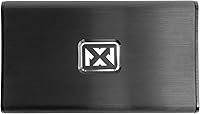
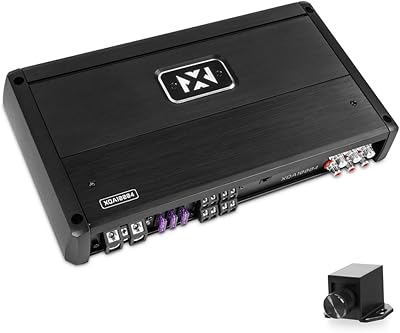
The NVX VAD10004 v2 4-Channel Class D Amplifier sits in a competitive mid-range space where enthusiasts upgrading factory sound in cars, trucks, boats, UTVs, or motorcycles shop seriously. The v2 designation marks real iterative refinements over the original model rather than a simple rebadge. Class D topology matters here because it runs cooler and draws less current than older Class AB designs — a practical advantage in tight install spaces. On power, be clear-eyed: 1000W RMS is the sustained working output you can count on daily. The 2000W peak figure is a burst number, useful to know but not the spec to build your system around.
Features & Benefits

This 4-channel amp packs genuine tuning tools directly onboard. The variable crossovers span 40–500 Hz on both high-pass and low-pass settings, plus a variable bass boost, which means you can dial in your speakers without adding an external processor to your install. Bridging flexibility is another strong point: run four channels independently at 150W each into 4-ohm loads, push harder at 250W per channel into 2-ohm speakers, or bridge two channels for 500W to feed a subwoofer. The conformally coated PCB resists moisture and salt air — useful in marine or powersports environments, though it is moisture-resistant, not waterproof. Platinum-plated RCA inputs and solid screw terminals round out a build that feels a step above the typical budget amp.

Best For

This Class D amplifier is the right call for anyone building a full four-speaker setup — component drivers up front, coaxials in the rear — without wanting to add a separate subwoofer amp to the mix right away. It is also a natural fit for marine and powersports installs: pontoon boats, side-by-sides, and motorcycles where exposure to water and humidity is a routine concern. DIY installers will appreciate having crossover and bass controls on the unit itself, which keeps the wiring tidy and removes the need for a separate line output converter in most head unit setups. If you are stepping up from a budget amp and want a noticeable improvement in output, build quality, and tuning control, this is a reasonable and practical next step.

User Feedback

Buyers consistently highlight clean, stable power as the standout quality — not flashy loudness, but a composed output that handles sustained listening well. The compact footprint for the wattage it delivers also comes up often, especially from installers working in tight spots. On the critical side, some users running the amp hard for extended periods report that heat management at the top end of its capability can be a factor, so matching your wire gauge and gains properly at setup matters. A 4-gauge power wire is a smart baseline for this build. Marine and outdoor users tend to report higher satisfaction, pointing to the conformal coating holding up over time in wet conditions.

Pros

  • Genuine 1000W RMS total output gives this 4-channel amp real, usable power rather than inflated peak numbers.
  • Onboard variable crossovers from 40 to 500 Hz eliminate the need for a separate signal processor in most installs.
  • Class D design runs cooler and draws less current than older amplifier topologies, which matters in tight spaces.
  • The conformally coated PCB provides reliable moisture resistance — a rare feature that genuinely expands where you can install it.
  • Flexible bridging options let you adapt the amp to different speaker configurations without buying additional hardware.
  • Platinum-plated RCA inputs and solid screw terminals reflect build quality that holds up over years of use.
  • Compact footprint for the power output makes installation easier in vehicles with limited mounting real estate.
  • Three-way protection circuitry — thermal, overload, and speaker short — adds a meaningful layer of long-term reliability.
  • LED status indicators simplify diagnostics during setup and make troubleshooting faster if something goes wrong later.
  • Covers an unusually wide range of vehicle types, making it a versatile choice for multi-vehicle households.

Cons

  • The 2000W peak figure is a burst spec; buyers focused on that number will set unrealistic expectations for daily performance.
  • Under sustained high-volume use, heat buildup can become a factor if the amp is mounted in a poorly ventilated enclosure.
  • At this power level, proper 4-gauge wiring is necessary — skimping on wire gauge will cause performance and safety issues.
  • The onboard bass boost, while convenient, is not a substitute for a dedicated DSP if precise audio tuning is your priority.
  • Four channels is the hard limit; anyone planning a more complex multi-zone or 5-plus-channel system will need a second amplifier.
  • Conformal coating is not waterproof, so fully exposed outdoor or marine splash-zone installs require added protective measures.
  • Gain matching at setup requires care; rushing the process often leads to distortion that gets blamed on the amp rather than calibration.
  • At its price tier the competition is dense, and shoppers who skip comparison research may overlook alternatives better suited to specific needs.

Ratings

The NVX VAD10004 v2 4-Channel Class D Amplifier earns its scores here based on AI analysis of verified global buyer reviews, with spam, bot-generated feedback, and incentivized posts actively filtered out before any score was calculated. Ratings reflect the full picture — what real installers, marine enthusiasts, and daily drivers genuinely praised, and where the unit fell short of expectations. Both strengths and recurring frustrations are transparently baked into every number below.
Sound Quality
83%
Buyers consistently describe the output as clean and composed rather than harsh or strained, particularly at moderate to high listening volumes during daily commutes. The Class D design contributes to a notably low noise floor, which component speaker users appreciate when running a front stage with tweeters and midrange drivers.
At the absolute top of its volume range, some listeners detect a slight hardening in the high frequencies, especially when the bass boost is engaged simultaneously. Audiophiles comparing it to higher-tier amplifiers in the same output class may find the overall refinement a step behind dedicated two-channel units.
Power Output Accuracy
71%
29%
Users who bench-tested or used a multimeter during install confirmed that the amp delivers honest, stable power close to its rated RMS figures under real conditions. Those running 2-ohm loads reported the step up in output was audibly noticeable and matched their expectations based on the specs.
The 2000W peak claim surfaces repeatedly in critical reviews from buyers who expected significantly louder output than what the 1000W RMS rating actually produces in practice. This disconnect between peak marketing figures and real-world listening experience is the single most common source of disappointment across forum discussions and review threads.
Build Quality
88%
The aluminum alloy chassis feels genuinely solid in hand, and the platinum-plated RCA inputs show no signs of the corrosion or loosening that budget amp inputs develop after a season or two. Screw terminals grip wire firmly without stripping, which installers doing professional builds specifically called out as a reliability win.
A few buyers noted that the cosmetic finish on the heatsink fins is susceptible to light scratching during installation in tight trunk spaces. The overall aesthetic is functional rather than premium, which matters less in a hidden install but disappointed some who mount their equipment visibly.
Thermal Management
74%
26%
Under normal listening conditions with reasonable airflow around the unit, the amp runs noticeably cooler than Class AB alternatives of similar output, which is one of the practical benefits Class D topology delivers in real-world installs. Marine and UTV users mounting the amp in semi-enclosed spaces reported it managed heat acceptably through extended use.
When pushed close to its rated ceiling in sustained high-volume sessions — long road trips at reference volume, for example — thermal protection has been known to engage if ventilation is restricted. Installers who mounted the unit in sealed under-seat cavities without accounting for airflow reported the most heat-related issues.
Installation Experience
86%
DIY installers highlighted the clearly labeled terminals, logical control layout, and onboard crossover adjustments as features that made the setup process straightforward without needing a separate processor in the signal chain. The compact footprint simplified placement in cars where trunk or under-seat real estate is limited.
A small number of buyers struggled with gain calibration when connecting to factory head units with high-level outputs, reporting that finding the right gain setting required more trial and error than expected. The owner documentation, while adequate, could offer more specific guidance for common vehicle configurations.
Marine & Outdoor Durability
81%
19%
Marine and powersports owners — particularly pontoon boat and UTV users — reported consistently positive long-term experiences with the conformal coating holding up against humidity, condensation, and incidental splash exposure across full seasons of use. This is a genuine functional differentiator that separates it from standard car amplifiers at this price point.
It is important to be clear: the coating provides moisture resistance, not waterproofing, and buyers who installed it in fully exposed positions without additional enclosure protection reported moisture damage over time. Setting accurate expectations on this point before purchase would prevent a noticeable portion of the negative marine-use reviews.
Value for Money
82%
18%
For buyers coming from budget amplifiers, the step up in output stability, component quality, and onboard tuning features at this price tier represents a meaningful improvement that most described as money well spent. The inclusion of crossovers and bass boost removes the cost of additional signal processing hardware from the total install budget.
In a competitive mid-range segment, a few buyers found similarly spec'd alternatives available for less, particularly during promotional periods. Those who purchased primarily for the marine-grade claim and later discovered its moisture-resistance limits felt the premium over a standard amp was not fully justified for their specific use case.
Crossover & Tuning Controls
79%
21%
The variable 40–500 Hz crossover range covers the most practical tuning scenarios for a four-speaker install, and the onboard bass boost is genuinely useful for dialing in low-end response without adding equipment. Buyers running component sets reported that the high-pass filter cleaned up their midrange drivers noticeably compared to running full-range.
The bass boost control, while convenient, lacks the precision of a dedicated equalizer and can introduce audible distortion at higher boost settings if gains are not properly matched first. Some experienced installers noted that the crossover slope steepness is not user-adjustable, which limits fine-tuning options for more complex speaker systems.
Compatibility & Versatility
87%
The ability to run the amp in cars, trucks, motorcycles, UTVs, and marine applications from a single model is a practical advantage for anyone managing audio across multiple vehicles. High-level input compatibility means it works with factory head units without an adapter, which simplifies installs considerably.
Four channels is a hard ceiling, and buyers who wanted to eventually expand to a 5-channel or more complex system found themselves needing an additional amplifier sooner than anticipated. Bridging to two channels for subwoofer duty sacrifices full four-speaker coverage, which is a genuine trade-off rather than a flexible upgrade path.
Protection Circuitry
84%
The three-way protection system — covering thermal events, electrical overload, and speaker shorts — has been credited by several buyers with saving their speaker investment when wiring errors occurred during install. The LED fault indication makes it easy to identify that protection has tripped, shortening troubleshooting time considerably.
A handful of buyers reported that the amp entered protection mode under conditions they considered normal, suggesting sensitivity thresholds that may be conservative in certain wiring configurations. Resetting after a protection event requires cycling power, which in a marine or UTV install with a less accessible mounting location can be inconvenient.
Noise & Signal Clarity
78%
22%
At idle and low volume, the amplifier maintains a commendably quiet background for its class, which matters most when paired with sensitive tweeters in a front-stage component setup. Buyers who properly set their gains reported a clean signal chain with no perceptible hiss through their speakers at rest.
Ground loop noise was a recurring complaint from users connecting to factory head units, with alternator whine surfacing as the most common symptom in that configuration. While a ground loop isolator typically resolves the issue, it adds cost and a troubleshooting step that less experienced installers found frustrating.
Compact Footprint
91%
At 11.2 x 7.2 x 2 inches and just over six and a half pounds, this 4-channel amp fits cleanly under rear seats, inside motorcycle audio pods, and in shallow marine compartments where larger amplifiers simply would not go. Installers specifically praised how much output the unit delivers relative to the space it occupies.
The slim 2-inch profile, while excellent for tight installs, means the heatsink surface area is smaller than on taller units, which contributes to the thermal management limitations noted at sustained high output. A few installers found the mounting hole placement awkward for certain surface configurations.
Wiring & Terminal Quality
85%
Screw terminals accept wire gauges appropriate for the amp's power requirements without needing adapters, and they hold securely enough that vibration in off-road and marine environments has not caused loosening issues in most reported long-term use cases. The platinum-plated RCA jacks make and maintain a positive connection with standard interconnects.
The terminal block spacing is tight enough that large-gauge wire with thick insulation jackets can be awkward to terminate cleanly, particularly in a compact install environment. A couple of professional installers noted that the terminals, while functional, lack the locking mechanism found on higher-end amplifiers.

Suitable for:

The NVX VAD10004 v2 4-Channel Class D Amplifier is a strong match for anyone seriously upgrading a factory sound system across a wide range of vehicles — cars, trucks, UTVs, motorcycles, or boats. If you are building a full four-speaker setup and want component drivers up front with coaxials in the rear all powered from a single amp, this unit handles that configuration cleanly without requiring a second amplifier for the lows. DIY installers will find real value in the onboard variable crossovers and bass boost, since that removes the cost and complexity of an external processor from the equation. Marine and powersports owners in particular get a meaningful advantage from the conformally coated circuit board, which holds up against moisture and salt air better than a standard car amp would. Buyers stepping up from a budget amp who want noticeably better output stability, build quality, and tuning control at a reasonable price point are precisely the audience this unit was designed for.
Not suitable for:

Serious audio enthusiasts chasing high-fidelity, reference-grade output will likely find the NVX VAD10004 v2 4-Channel Class D Amplifier too modest for their expectations, as this is a practical mid-range unit rather than a boutique performance amplifier. If your build calls for dedicated subwoofer power at high wattage alongside full-range speaker channels, you will probably outgrow this amp quickly or need a second unit in the rack. Buyers who plan to run the amp at or near its ceiling for extended sessions should be aware that thermal management under sustained heavy load requires proper installation — poor ventilation or undersized wiring will create problems. It is also not a fit for anyone expecting true waterproof protection; the conformal coating is moisture-resistant, not submersible, so fully exposed marine installs in harsh splash zones need additional protection. Finally, if you need more than four channels to run a complex multi-zone system, this amp simply will not scale to that kind of setup.
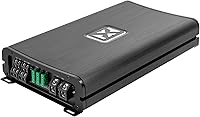
Specifications

  • Peak Power: The amplifier delivers a maximum burst output of 2000W peak across all four channels combined.
  • RMS Power: Continuous RMS output is rated at 1000W total, representing the sustained working power you can rely on during normal use.
  • Channels: This is a 4-channel amplifier with flexible bridging capability to adapt to different speaker configurations.
  • 4-Ohm Output: Running all four channels into 4-ohm loads, the amp delivers 150W RMS per channel.
  • 2-Ohm Output: At 2-ohm loads, each of the four channels produces 250W RMS, allowing more headroom with compatible speakers.
  • Bridged Output: When bridged to two channels, the amp outputs 500W RMS per channel into 4-ohm loads for subwoofer or high-power applications.
  • Amplifier Class: Class D topology is used, which operates more efficiently and generates significantly less heat than Class AB designs of comparable output.
  • Crossover Range: Variable high-pass and low-pass crossover filters are adjustable across a 40–500 Hz range for flexible speaker tuning.
  • Bass Boost: An onboard variable bass boost control allows low-frequency enhancement without requiring an external equalizer or processor.
  • Circuit Board: The PCB is conformally coated to a marine-grade standard, providing resistance to moisture, humidity, and salt air exposure.
  • Protection: Three-way protection circuitry guards against thermal overload, electrical overload, and speaker short-circuit conditions.
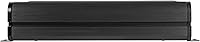
  • Heatsink: A heavy-duty aluminum alloy heatsink is integrated into the chassis to assist with thermal dissipation under load.
  • RCA Inputs: Platinum-plated RCA level inputs are included for signal connection, helping maintain signal integrity and resist corrosion over time.
  • Dimensions: The amplifier measures 11.2 x 7.2 x 2 inches (L x W x H), making it compact enough for most under-seat or trunk installs.
  • Weight: Unit weight is 6.58 pounds, which is typical for a well-built aluminum-chassis amplifier in this output class.
  • Operating Voltage: The amp is designed to operate on a 12V DC vehicle electrical system, with a functional range of 11V minimum to 12V maximum supply voltage.
  • Mounting Type: Surface mount installation is the intended method, compatible with flat surfaces in vehicle trunks, under seats, or enclosed marine compartments.
  • Compatibility: Designed for use in cars, trucks, marine vessels, UTVs, and motorcycles, covering a broad range of 12V vehicle platforms.
  • Indicators: LED status indicator lighting is included on the unit to provide visual confirmation of power status and fault conditions.
  • Terminals: Screw-type wiring terminals are used for power, ground, and speaker connections, ensuring secure and reliable contact.

Related Reviews
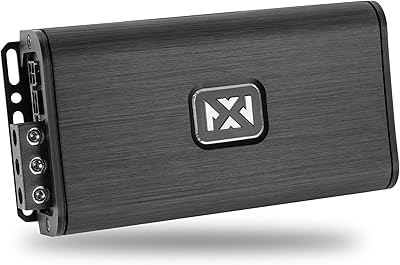
NVX VADM4 v2 4-Channel Amplifier
84%
93%
Power Accuracy
91%
Compact Form Factor
89%
Marine & Weather Durability
88%
Thermal Management
84%
Crossover Flexibility
More
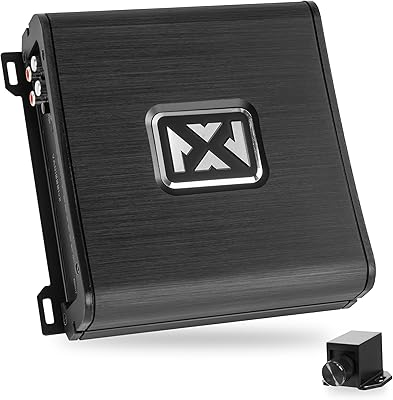
NVX VAD10001 v2 Monoblock Class D Amplifier
88%
91%
Sound Quality
93%
Build Quality
85%
Ease of Installation
88%
Bass Control Flexibility
89%
Heat Management
More
Soundstream RSM4.1200D 4-Channel Car Amplifier
71%
91%
Ease of Installation
83%
Value for Money
71%
Sound Quality
67%
Build Quality
58%
Thermal Management
More
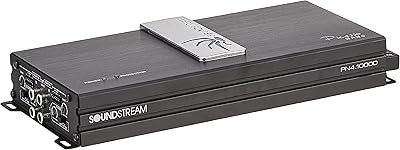
Soundstream PN4.1000D 1000W 4-Channel Class D Amplifier
85%
87%
Performance
92%
Value for Money
85%
Build Quality
89%
Ease of Installation
83%
Power Output
More
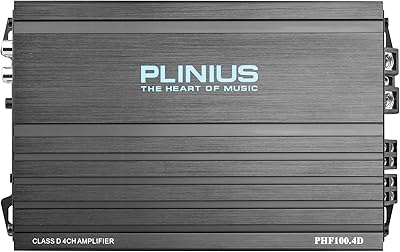
Plinius PHF100.4D 4-Channel Car Amplifier
74%
88%
Value for Money
76%
Sound Quality
63%
Power Output
54%
Thermal Management
84%
Ease of Installation
More
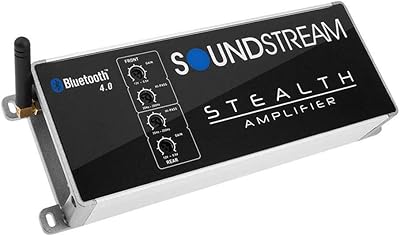
Soundstream ST4.1000DB Stealth Series 1000W Class D 4-Channel Amplifier
85%
94%
Power Output
92%
Sound Clarity
88%
Installation Ease
58%
Heat Management
91%
Build Quality
More
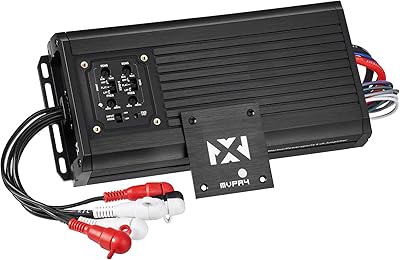
NVX MVPA4 4-Channel Marine Amplifier
80%
91%
Waterproof Protection
88%
Power Accuracy
84%
Build Quality
83%
Sound Quality
92%
Compact Form Factor
More
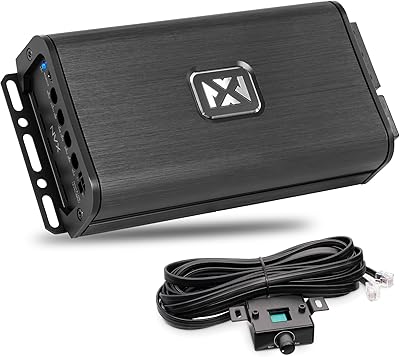
NVX VADM1v2 Monoblock Amplifier
82%
88%
Power Output
93%
Compact Form Factor
71%
Thermal Management
86%
Tuning Controls
74%
High-Level Input Usability
More
Blaupunkt AMP1704P 4-Channel Car Amplifier
72%
81%
Value for Money
84%
Ease of Installation
72%
Sound Quality
63%
Build Quality
44%
Power Accuracy & Transparency
More
NVX XQA10004 1000W RMS XQ-Series 4-Channel Amplifier
89%
93%
Sound Quality
91%
Bass Performance
85%
Ease of Installation
89%
Power Output
87%
Thermal Management
More

FAQ

For a 1000W RMS amplifier, 4-gauge power and ground wiring is the standard recommendation and a smart baseline for this install. Running undersized wire is one of the most common causes of poor performance and heat issues, so do not cut corners here. Match your fuse rating to the wire gauge and keep the power wire run as short as practical.

Not waterproof, no. The conformal coating on the circuit board makes it moisture-resistant, meaning it handles humidity, condensation, and the occasional splash reasonably well. For a pontoon boat or UTV install where the amp is protected from direct rain and submersion, it performs reliably. If you need something fully sealed for a fully exposed install, you would want to add additional enclosure protection.

Peak power is a momentary burst figure the amp can reach under ideal test conditions for a fraction of a second. RMS is the continuous, sustained power output during actual listening — that is the number that matters for matching to your speakers and understanding real-world performance. Build your system around the 1000W RMS figure and you will have accurate expectations.

You can bridge two of the channels to produce 500W RMS into a 4-ohm sub, but that leaves you with only two remaining channels for your door speakers. It is workable for a basic setup, but if you want full four-speaker coverage plus a dedicated sub, a separate mono subwoofer amplifier paired with this unit would be the cleaner solution.

Yes, it does. The amp accepts both high-level speaker inputs and RCA line-level inputs, so you can connect it to a factory head unit that lacks dedicated RCA outputs. You may want to set your gains carefully in this scenario to avoid introducing noise from the factory source signal.

Component speakers in the 4-ohm to 2-ohm range pair well with this 4-channel amp and take full advantage of its power range. Running 4-ohm components up front and 4-ohm coaxials in the rear is a common and effective configuration. Just make sure your speakers are rated to handle the continuous RMS power the amp will deliver at your chosen impedance.

If you are running full-range speakers on all four channels, set the high-pass filter between 60 and 80 Hz to keep low frequencies away from your door speakers, which protects them and improves clarity. If you are bridging two channels for a subwoofer, engage the low-pass filter and start around 80 Hz, adjusting by ear from there. Take your time with gain matching before touching the bass boost.

Class D amplifiers run cooler than older designs as a rule, and this one includes a heatsink to help manage heat. Under normal listening conditions with adequate airflow around the unit, heat is not an issue. If you mount it in a fully sealed, unventilated space and push it hard for long periods, thermal protection may kick in — so give it breathing room in your install.

Yes, and it is one of the more practical choices for a motorcycle build precisely because of the conformally coated PCB. Motorcycles expose electronics to vibration, temperature swings, and moisture that would cause problems with a standard amp. Just ensure it is mounted securely, positioned away from direct water spray, and protected from direct weather exposure.

The LED status indicator on the unit will signal a fault condition when the protection circuit has engaged. If the LED behaves abnormally after startup, check for a speaker wire short, a wiring ground issue, or whether the mounting location is causing the amp to overheat. Resolving the underlying cause and power cycling the unit typically clears a protection trip.

Where to Buy