Overview

The Rockville RXH-F5 5-Channel Car Amplifier is one of those rare mid-range units that genuinely tries to cover a full system in a single box — four full-range channels plus a dedicated subwoofer channel, no second amp required. That alone makes it worth a closer look for anyone building out a complete system on a realistic budget. What separates it from the cheaper end of the market is the Dyno-Certified RMS rating — a real, tested output figure rather than a flashy peak number. Add in MOSFET power delivery and ELNA audiophile capacitors, and this Rockville unit punches noticeably above its price class. It has been on the market since 2015 and holds a steady 4.1-star rating, which suggests it has genuinely earned its place.

Features & Benefits

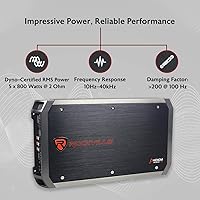
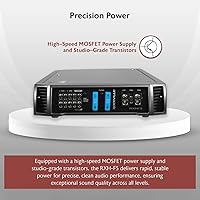
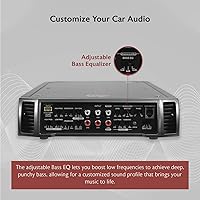
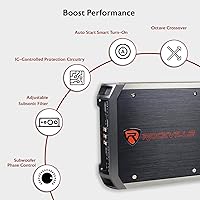
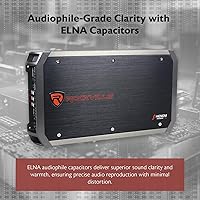
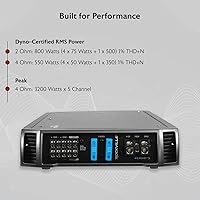
The headline number here is 800W Dyno-Certified RMS — split across four 50-watt full-range channels and a 350-watt subwoofer channel, all at 4 Ohms. That is actual, usable power, not a theoretical peak figure. The high-speed MOSFET supply keeps voltage stable even when the bass hits hard, which matters more than most buyers realize. ELNA capacitors clean up the signal path, reducing background hiss and sharpening transient detail noticeably. On top of that, the RXH-F5 includes a 12dB bass equalizer and a 12dB/octave crossover, giving you real tuning flexibility without bolting on a separate processor. High-level inputs and auto-start turn-on make wiring into an OEM or aftermarket head unit refreshingly straightforward.

Best For

This 5-channel amp is squarely aimed at the DIY installer who wants a complete front-to-back system without the complexity of running multiple amplifiers. If you are working with a factory head unit — no dedicated preamp outputs, no remote turn-on wire — the high-level input compatibility removes the biggest friction point right away. It fits neatly in compact cars where trunk space is limited, since the surface-mount design keeps the install clean. Budget-focused enthusiasts will find the value particularly strong here, given that pairing a separate 4-channel and mono amp at comparable quality would cost considerably more. If you want a single-amp full system, this Rockville unit is a logical and practical starting point.

User Feedback

Owners consistently praise the installation experience — particularly how easily the RXH-F5 pairs with factory radios through the high-level inputs. Sound quality at moderate volumes draws genuine appreciation, with several buyers specifically noting clean, distortion-free output across all five channels. Where feedback turns more mixed is around real-world power at high volumes; some users feel the sub channel falls slightly short of expectations, which is worth factoring in if loud, deep bass is your primary goal. A handful of reviews flag the included instructions as too sparse for first-time installers. Long-term reliability holds up well for most owners, though a small number report heat buildup after extended heavy use. The value-to-performance ratio remains the most consistently cited strength.

Pros

  • Dyno-Certified RMS rating means the power spec is actually tested, not a theoretical peak number.
  • Covers all five channels in one box, saving both money and installation time versus a two-amp setup.
  • High-level inputs make wiring into a factory head unit straightforward with no extra adapter needed.
  • ELNA audiophile capacitors noticeably reduce background hiss compared to budget-tier alternatives.
  • Auto-start smart turn-on eliminates a common DIY wiring headache right out of the box.
  • The 12dB bass equalizer lets you tune low-end response without purchasing a separate processor.
  • Surface-mount design keeps the install clean and compact, ideal for smaller trunks.
  • Solid build quality and reliable long-term performance reported by the majority of owners.
  • Strong value-to-performance ratio at its price point relative to competing 5-channel options.

Cons

  • Sub channel can feel underpowered at high volumes, especially in larger cabin vehicles.
  • Included installation instructions are sparse and may frustrate less experienced DIYers.
  • Heat buildup has been reported by some owners during extended, high-volume listening sessions.
  • No wireless remote included, limiting convenient gain adjustments after installation.
  • At 9 pounds and 20 inches long, placement options can be limited in smaller trunk spaces.
  • The gap between the 3200W peak claim and usable RMS output may mislead buyers who do not research carefully.
  • A small percentage of users have reported inconsistent quality control on connectors and wiring terminals.
  • Customer support responsiveness has drawn mixed feedback from buyers who needed post-purchase assistance.

Ratings

The Rockville RXH-F5 5-Channel Car Amplifier has been scored below by our AI system after analyzing verified buyer reviews from multiple global markets, with spam, bot-generated, and incentivized feedback actively filtered out. The scores reflect a genuine cross-section of real ownership experiences — covering both what this amp does well and where it falls short. Strengths and frustrations are weighted equally so you can make a clear-eyed purchase decision.

Value for Money
88%
Among buyers shopping for a single-amp full system solution, the price-to-channel ratio consistently draws praise. Getting four full-range channels and a dedicated sub channel without the cost of two separate amplifiers is a genuine financial win that most owners appreciate immediately after install.
A handful of buyers who compared it closely to competing 5-channel options at similar price points felt the sub channel output slightly underdelivered for the money, particularly for users who prioritize bass output above everything else.
Power Accuracy
74%
26%
The Dyno-Certified RMS rating earns real trust from technically savvy buyers who have been burned by inflated peak-power claims before. Owners who benchmarked output report that the rated figures hold up reasonably well under real listening conditions, which is more than can be said for many competitors.
Some buyers expecting the 3200W peak figure to translate into tangible real-world performance were disappointed once the amp was installed. The gap between peak and RMS is significant, and the marketing does not always make that distinction clear enough for less experienced buyers.
Installation Ease
83%
The high-level inputs and auto-start smart circuit make this amp particularly friendly for DIY installs from a factory head unit — no hunting for a remote turn-on wire, no RCA adapter needed. Multiple owners with no prior install experience reported getting the unit up and running in an afternoon.
The included instruction manual draws consistent criticism for being too thin, with minimal diagrams or wiring examples. First-time installers frequently turned to online forums or YouTube guides to fill in the gaps, which adds friction to what should be a straightforward process.
Sound Quality
79%
21%
At moderate listening volumes, owners consistently describe the sound as clean and well-defined across all five channels. The ELNA capacitors appear to make a real difference in background noise reduction, with several users noting the absence of hiss or ground loop issues that had plagued their previous budget amps.
At higher volume levels, some listeners notice a subtle hardness or compression creeping into the full-range channels, particularly on complex musical passages. It is not a dealbreaker, but it is noticeable enough that critical listeners may find themselves wanting more refinement.
Subwoofer Performance
68%
32%
For a single 10-inch or compact 12-inch subwoofer in a mid-size car, the 350W RMS channel delivers a satisfying low-end punch that holds up well during daily driving. The built-in bass EQ gives enough tuning range to dial in the response without a separate processor.
In larger vehicles or when paired with high-excursion, power-hungry subwoofers, the sub channel runs out of headroom faster than owners expect. Users who later upgraded to a dedicated mono amp reported noticeably better bass authority, suggesting this channel has a clear ceiling.
Build Quality
72%
28%
The chassis feels solid and well-assembled for the price tier, and the overall physical construction gives a reassuring impression during handling and mounting. Most long-term owners report no structural issues after months of regular use.
A small but recurring group of buyers flagged inconsistent quality on the input and speaker terminals, with some reporting connectors that felt loose or required extra effort to seat properly. It does not affect all units, but it is frequent enough to be a pattern worth noting.
Heat Management
63%
37%
Under normal daily driving conditions with moderate volume levels, the amp stays within a reasonable temperature range and does not trigger any thermal protection shutdowns. Owners who mount it with adequate airflow on all sides report no heat-related issues.
Extended high-volume listening sessions — especially in warmer climates or enclosed trunk spaces with limited ventilation — push the unit into uncomfortable heat territory. Several owners reported thermal throttling or brief shutoffs during summer road trips, pointing to a heat dissipation design that has limited headroom.
Full-Range Channel Output
77%
23%
The four 50W RMS channels deliver clean, balanced output for a typical four-speaker setup in a compact or mid-size car. Paired with efficient aftermarket speakers in the 87dB or higher sensitivity range, the volume levels are more than adequate for most listening preferences.
For buyers running less efficient speakers or hoping to fill a larger cabin, 50W per channel can feel modest. A few owners noted that they had to push the gain higher than ideal to reach satisfying volumes, which in turn introduced some noise into the signal.
Crossover Flexibility
76%
24%
The 12dB-per-octave crossover with adjustable high-pass and low-pass filtering gives users meaningful control over how frequencies are divided between the full-range channels and the subwoofer. For a DIY install without a dedicated DSP, this level of built-in control is a genuine advantage.
The crossover adjustment points are set with small trim pots on the amp chassis, which can be fiddly to fine-tune after the unit is mounted in a tight trunk location. Users who remount or reposition frequently find the adjustment process more tedious than it should be.
Compatibility
86%
The combination of high-level and standard RCA inputs makes the RXH-F5 broadly compatible with virtually any head unit on the market, from a decade-old factory radio to a modern aftermarket double-DIN receiver. Owners spanning a wide range of vehicle types confirm the inputs work reliably in both scenarios.
Vehicles with factory-amplified or DSP-controlled audio systems sometimes require a line output converter or signal processor between the head unit and this amp, which adds cost and complexity that buyers may not anticipate when they first order.
Long-Term Reliability
71%
29%
The majority of owners who have run this Rockville unit for a year or more report no major failures or performance degradation. The MOSFET power supply appears to contribute to stable operation over time, and most reliability complaints are concentrated in the first few weeks of use.
A subset of buyers report unit failures or signal issues appearing after six to twelve months of regular use, suggesting that while the amp is reliable for most, there is a non-trivial tail of units that do not hold up as well as expected for the price tier.
Documentation & Support
51%
49%
The product has been on the market long enough that a reasonable body of third-party installation guides, forum threads, and video tutorials exists, which partially compensates for the thin official documentation included in the box.
Customer support responsiveness from the manufacturer has drawn mixed to negative feedback, with some buyers reporting delayed responses or unhelpful resolutions for warranty or defect-related inquiries. The sparse instruction manual compounds the problem by leaving buyers with more questions in the first place.
Physical Footprint
78%
22%
At 20 inches long and 9 pounds, this 5-channel amp is manageable in most trunk installs and does not demand the kind of dedicated amp rack space that larger separate amplifier setups require. The surface-mount design keeps the install looking intentional rather than improvised.
Despite being reasonably sized for a 5-channel unit, the footprint is still substantial enough to compete for trunk space in smaller hatchbacks or coupes. Buyers with genuinely tight installs sometimes find clearance tighter than expected once all wiring and clearance gaps are accounted for.

Suitable for:

The Rockville RXH-F5 5-Channel Car Amplifier is purpose-built for the DIY enthusiast who wants to upgrade their entire car audio system in a single install without the cost or complexity of running two separate amplifiers. It is especially well-suited to drivers who are coming from a stock head unit, since the high-level inputs let you tap into existing speaker wiring without needing a dedicated preamp output. Compact car owners will appreciate the surface-mount form factor, which keeps the trunk footprint manageable. If you are chasing a balanced system — decent full-range clarity for your door speakers plus a punchy, controlled subwoofer — this Rockville unit hits a practical sweet spot at its price tier. It also makes a solid choice for a second vehicle build where you want reliable, honest performance without spending premium money.

Not suitable for:

Serious bass-heads or anyone whose primary goal is maximum subwoofer output will likely find the Rockville RXH-F5 5-Channel Car Amplifier a bit underwhelming on the low-end channel at high volumes; the 350W RMS sub output is capable, but it is not going to rattle windows in a large vehicle. Buyers planning a high-power, competition-grade build should look at dedicated mono blocks and separate 4-channel amps with higher RMS ratings. If your vehicle has a complex DSP or factory-amplified system, integration can require additional adapters that the unit does not include. First-time installers who need detailed, step-by-step guidance may also find the documentation frustratingly thin. Finally, if you are expecting the full 3200W peak figure to translate into real-world listening performance, this amp — like every amp marketed that way — will not meet that expectation, and it is worth resetting those expectations before purchase.

Specifications

  • Channels: The amp delivers 5 discrete channels: 4 full-range channels for speakers and 1 dedicated channel for a subwoofer.
  • Peak Power: Total peak power output is rated at 3200W, which represents the maximum theoretical burst the amplifier can produce under ideal conditions.
  • RMS Power: Dyno-Certified RMS output is 800W total, split as 4x50W for the full-range channels and 1x350W for the subwoofer channel, all measured at 4 Ohms.
  • Power Supply: A high-speed MOSFET power supply manages current delivery, helping maintain stable output voltage even during dynamic, bass-heavy passages.
  • Capacitors: ELNA brand audiophile-grade capacitors are used in the signal path to reduce noise and improve transient response compared to generic alternatives.
  • Transistors: Studio-grade bipolar output stage transistors handle the amplification stage, contributing to lower distortion at higher drive levels.
  • Bass EQ: A fully adjustable 12dB bass equalizer is built in, allowing the user to boost or cut low-frequency response without an external equalizer unit.
  • Crossover: A 12dB-per-octave crossover with differential circuitry allows independent frequency filtering for the full-range and subwoofer output channels.
  • Input Type: The amp accepts both standard RCA preamp inputs and high-level speaker wire inputs, making it compatible with factory and aftermarket head units.
  • Turn-On Method: An auto-start smart circuit detects signal presence and powers the amp on automatically, eliminating the need for a dedicated remote turn-on wire in most installs.
  • Supply Current: Maximum supply current draw is rated at 60 Amps, which should be factored into fuse and power wire sizing during installation.
  • Dimensions: The unit measures 4″ high by 20″ long by 10.5″ wide, designed for surface mounting in a trunk or under a seat.
  • Weight: The amplifier weighs 9 pounds, which is typical for a class A/B 5-channel unit at this power level.
  • Mounting Type: Surface mount installation is the intended method; no recessed or flush-mount configuration is supported out of the box.
  • Voltage: The amplifier is designed to operate on a standard 12V DC vehicle electrical system.
  • Model Number: The official model identifier is RXH-F5, manufactured under the Rockville brand by Audiosavings.
  • UPC: The product UPC is 811080022987, which can be used to verify authenticity when purchasing from third-party sellers.
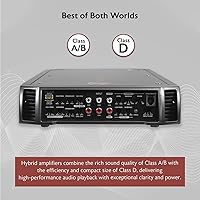
  • Amplifier Class: The full-range channels operate in Class A/B and the subwoofer channel operates in Class D, balancing audio quality with efficiency.

Related Reviews
Rockville dB55 5-Channel Car Amplifier
75%
91%
Value for Money
83%
Sound Quality at Moderate Volumes
78%
Bass Output & Subwoofer Performance
62%
Power Accuracy & Transparency
58%
Thermal Management & Heat
More
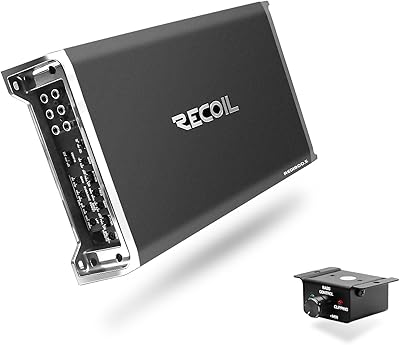
Recoil RED1800.5 5-Channel Car Amplifier
77%
91%
Value for Money
88%
Mono Channel Power
86%
Installation Experience
63%
Gain Calibration Ease
74%
Full-Range Channel Performance
More
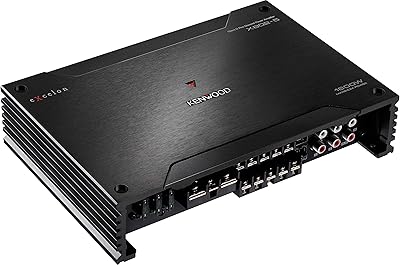
Kenwood X802-5 eXcelon 5 Channel Car Audio Amplifier
88%
92%
Sound Quality
85%
Installation Ease
88%
Build Quality
90%
Performance at High Volume
87%
Bass Enhancement
More
Stinger MT-1000.5 5-Channel Car Amplifier
75%
81%
Value for Money
84%
Ease of Installation
58%
Real-World Power Output
63%
Thermal Management
88%
Built-in Crossover Filters
More
Pioneer GM-DX975 5-Channel Car Amplifier
81%
88%
Sound Quality
83%
Power Delivery
81%
Build Quality
71%
Thermal Management
74%
Ease of Installation
More
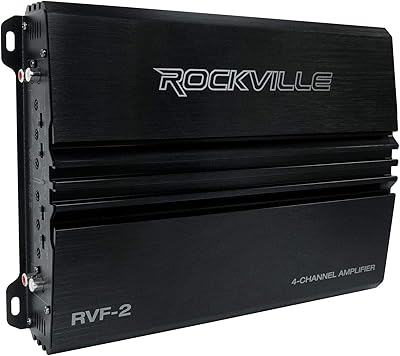
Rockville RVF-2 4-Channel Car Amplifier
84%
88%
Audio Quality
91%
Power Output
85%
Build Quality
72%
Thermals (Heat Management)
80%
Installation Ease
More
Rockville RVT-1 2-Channel Car Amplifier
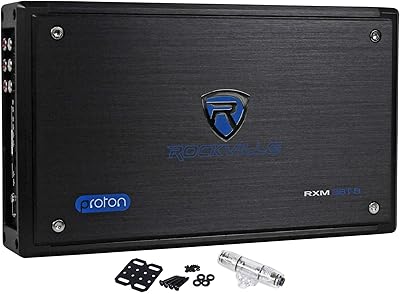
68%
83%
Value for Money
67%
Power Output
58%
Build Quality
61%
Thermal Management
72%
Audio Clarity
More
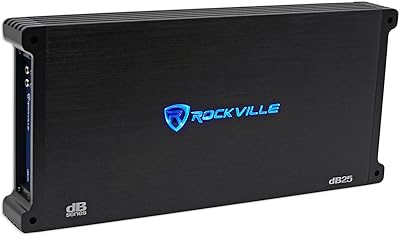
Rockville dB25 2800W 2-Channel Car Amplifier
86%
94%
Power Output
89%
Sound Quality
85%
Ease of Installation
91%
Bass Control
82%
Durability
More
Rockville RXM8BTB 8-Channel Bluetooth Car Amplifier
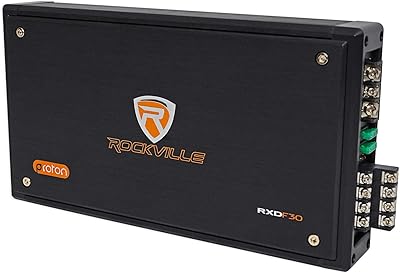
77%
78%
Value for Money
82%
Build Quality
74%
Power Output
59%
Bluetooth Performance
87%
Channel Flexibility
More
Rockville RXA-T1 1500W 2-Channel Car Amplifier
85%
88%
Audio Performance
92%
Bass Response
85%
Build Quality
89%
Compactness/Size
80%
Ease of Installation
More

FAQ

Yes, this is one of the RXH-F5's more practical features. The high-level inputs let you connect directly to the speaker wires coming out of your head unit, so you do not need RCA preamp outputs. Just tap into the existing wiring, and the amp handles the signal conversion internally.

Not necessarily. The auto-start smart circuit detects an audio signal and powers the unit on automatically, which is a real convenience for factory radio installs where a remote wire is not always easy to locate. That said, if you prefer a manual remote turn-on connection, the terminal is still available.

It depends on the subwoofer you pair it with. A single 10-inch or 12-inch woofer rated around 300 to 400W RMS will work well with this amp. Where it falls short is if you are trying to push a high-power dual voice coil sub or a pair of subs — in that case, a dedicated mono amp with more headroom would be a better fit.

Given the 60-amp max current draw, a 4-gauge power wire from the battery is the standard recommendation for this power level. Using undersized wire can cause voltage drop, which hurts performance and can create heat issues over time. Include an appropriately rated fuse within 18 inches of the battery connection.

The subwoofer channel is a dedicated mono Class D output and is not bridgeable in the traditional sense. The four full-range channels can typically be bridged in pairs to push more power to two speakers, but check the minimum impedance requirements before doing so to avoid overloading the amp.

Like any Class A/B amplifier, the RXH-F5 generates some heat during operation, particularly on the full-range channels. Under moderate to heavy use, the chassis will get warm. A small number of owners have reported more significant heat buildup during extended, high-volume sessions, so make sure there is at least a few inches of clear airflow around the unit wherever you mount it.

The amp is rated at 4 Ohms for its published RMS figures. Running 2-Ohm loads may be possible depending on the unit, but it will increase current draw and heat output. For long-term reliability, sticking to 4-Ohm speakers on the full-range channels is the safer approach.

The fundamentals are straightforward — power wire, ground, signal input, and speaker outputs — but the included documentation is fairly minimal, which can be a stumbling block for first-timers. Watching a few online install guides for 5-channel amplifiers before you start will save a lot of head-scratching. If you are comfortable with basic car audio wiring concepts, this Rockville unit is manageable as a DIY project.

Yes, that is exactly the intended use case. Channels 1 and 2 can power your front speakers, channels 3 and 4 handle the rear speakers, and channel 5 drives your subwoofer. It is a full system in a single chassis, which is the whole point of a 5-channel design.

No, a wireless or wired remote level control is not included in the box. You will need to set your gain and bass EQ levels directly on the amplifier itself. If convenient bass adjustment is important to you, check whether the amp has a remote knob terminal before assuming you can add one aftermarket.

Where to Buy