Overview

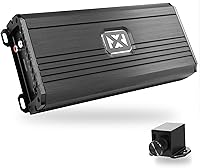
The NVX NDA15001 Class-D Monoblock Car Amplifier sits squarely in the budget-to-mid range of the car audio market, where buyers want real bass output without spending a fortune. NVX has carved out a reasonable reputation at this price tier — not a boutique name, but one that car audio hobbyists recognize. What sets this monoblock amp apart is its 1-ohm stability, which means it can handle low-impedance subwoofer loads that would trip up lesser designs. At this price point, you are not buying reference-grade hardware. You are, however, getting a purpose-built mono amp with a strong power-to-size ratio that punches well above its weight in modest installs.
Features & Benefits

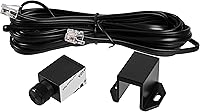
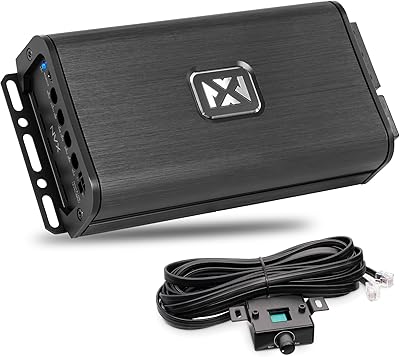
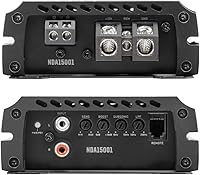
The NDA15001 packs in a surprisingly useful set of controls for a compact unit. The variable low-pass filter, adjustable from 50 to 250 Hz, lets you dial in the crossover point without needing an external processor — a genuine time-saver during install. Pair that with the subsonic filter and you can protect your sub from wasted energy on frequencies it simply cannot reproduce. The included wired remote knob handles bass boost adjustments up to 18 dB right from the dash, which matters more than people realize in day-to-day driving. Speaker-level inputs are a practical touch for anyone running a factory head unit. Four-way protection circuitry rounds things out for long-term reliability.

Best For

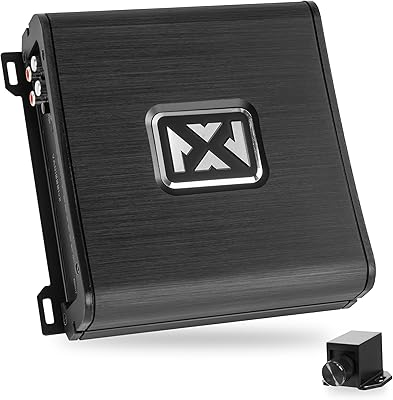
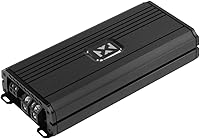
This Class-D amplifier is an easy recommendation for anyone doing a first subwoofer install on a budget. If you are coming from a stock head unit and do not want to deal with a line output converter, the high-level inputs solve that problem cleanly. The compact chassis — barely over 10 inches long — slips under a seat or into a small trunk enclosure where a traditional full-size amp would never fit. It is also a sensible pick for a single 1-ohm build, since that load rating is explicitly part of the design rather than a stretched claim. Casual listeners and weekend enthusiasts will get the most from it; hardcore competition-level installs will eventually outgrow it.

User Feedback

Buyer sentiment around this monoblock amp skews positive, with most owners citing easy installation and solid bass output as the main wins. The wired remote knob gets consistent praise for its usability in real driving situations — small detail, meaningful impact. On the flip side, a handful of buyers report that the chassis runs noticeably warm during extended high-volume sessions, so give it adequate airflow if you plan on pushing it hard regularly. It is also worth being clear-eyed about the wattage figures: the 3000W number is peak only; the 1500W RMS rating is the honest working spec. The review pool for this model remains relatively modest, so treat broad conclusions with appropriate caution.

Pros

  • 1-ohm stable design handles demanding subwoofer loads that would push less capable amps into protection mode.
  • Speaker-level inputs eliminate the need for a line output converter in most factory head unit installs.
  • Compact footprint makes under-seat and space-constrained trunk installs genuinely practical.
  • The included wired remote knob puts real-time bass control at your fingertips while driving.
  • Variable low-pass and subsonic filters allow meaningful tuning without adding external processors to the chain.
  • Four-way protection circuitry — thermal, overload, short, and DC offset — adds a real safety net for daily drivers.
  • Signal-sensing remote turn-on simplifies wiring and reduces the chance of install errors for first-timers.
  • The NDA15001 delivers competitive power output for its size and price tier, punching well above its weight in modest builds.
  • Class-D topology keeps energy waste and idle heat generation lower than older amplifier designs.
  • Up to 18 dB of bass boost gives listeners extra headroom to dial in the low-end character they prefer.

Cons

  • The chassis can run noticeably warm under sustained high-volume use; ventilation planning is not optional.
  • The 3000W peak figure is largely a marketing number — the 1500W RMS spec is the honest working power rating.
  • NVX lacks the brand recognition and established reputation of Pioneer, Rockford Fosgate, or JL Audio at this price point.
  • The review pool for this model remains relatively small, making long-term reliability difficult to assess with real confidence.
  • Not designed for multi-subwoofer or bridged high-wattage configurations; output ceiling is firm.
  • Some buyers have noted inconsistent NVX customer service experiences, particularly around warranty claims.
  • The recommended 4 AWG wiring kit is not included in the box, adding a small but real hidden cost to the install.
  • No digital interface or visual feedback for tuning; all adjustments depend entirely on manual knob positions.
  • SPL-focused or competition builds will outgrow the output limits faster than the price tag might suggest.
  • Online support resources and third-party documentation for this amp are thin compared to more established brands.

Ratings

Our AI-generated scores for the NVX NDA15001 Class-D Monoblock Car Amplifier were produced by analyzing verified global user reviews, with algorithmic filters applied to exclude spam, bot activity, and incentivized submissions. Each category score reflects a genuine synthesis of real buyer experiences — what worked well in daily-use conditions and where consistent frustrations surfaced. Both strengths and pain points are represented transparently, with no category inflated to flatter the product.

Value for Money
83%
For a single-subwoofer build on a modest budget, this monoblock amp delivers a level of output and feature depth that typically costs more from established names. Buyers consistently note that the combination of onboard filters, speaker-level inputs, and included remote knob represents genuine bang for the dollar at this price tier.
A few buyers feel the value proposition is undercut when they realize the wiring kit is sold separately, adding an unexpected line item to the total install cost. At the upper edge of this price band, alternatives from brands like Rockford Fosgate or Skar Audio occasionally offer better-documented power specs and stronger long-term support.
Bass Output
81%
19%
Most buyers are impressed by the low-end punch this amp delivers relative to its size and price, particularly when paired with a matched single subwoofer in a sealed or ported enclosure. Daily commuters report a clearly audible upgrade over factory audio systems, with the bass feeling tight and present at moderate volumes.
At higher volumes over extended sessions, some listeners notice a slight softening in bass definition — likely a byproduct of the amp approaching its thermal limits rather than a fundamental design flaw. Users chasing competition-grade sound pressure or audiophile-level bass articulation will find the output ceiling noticeably constrictive.
Installation Ease
88%
This is one of the most consistently praised aspects across buyer reviews. The speaker-level inputs and signal-sensing turn-on eliminate two of the most common hurdles for first-time installers, and the compact chassis makes physical placement far more flexible than traditional full-size amps. Most buyers report completing the install in under two hours.
The included documentation is thin — a basic wiring diagram rather than a thorough step-by-step guide — which leaves true beginners relying on YouTube tutorials or forum threads to fill the gaps. The wiring kit being absent from the box is a mild friction point that catches some first-time buyers off guard.
Heat Management
58%
42%
Under typical daily driving conditions — moderate volume, stop-and-go commutes — the amp handles heat adequately without triggering protection mode. The Class-D design is inherently more efficient than older Class-AB topologies, and in well-ventilated installs it runs at a manageable temperature during normal listening sessions.
Extended high-volume listening is where buyers report real frustration — the amp gets noticeably hot and the thermal protection kicks in, cutting audio until it cools down. Owners who mount it in tight, low-airflow spots like a sealed under-seat compartment experience this more frequently, and the heatsink surface area feels undersized for sustained hard use.
1-Ohm Stability
86%
Running a 1-ohm load is where this amp earns the most straightforward praise from experienced car audio hobbyists — it is stable, consistent, and does not drop into protection mode under normal 1-ohm subwoofer configurations. This makes it a reliable foundation for a single dual-voice-coil subwoofer wired in parallel.
A small number of buyers running unconventional wiring configurations or lower-quality subwoofer cables report occasional instability, suggesting the 1-ohm rating assumes a clean, properly gauged install. The amp does not appear to have meaningful headroom below 1 ohm, so attempting sub-1-ohm loads is not advisable.
Tuning Flexibility
74%
26%
The onboard variable low-pass and subsonic filters give most users enough control to tune for their specific enclosure type without needing an external processor or equalizer. The 18 dB bass boost range is wide enough to satisfy listeners who like their sub output felt as well as heard.
All tuning is done via manual analog knobs without any display or digital feedback, which makes repeatable precise settings difficult — especially in dim trunk or under-seat environments. Enthusiasts accustomed to digital signal processors or DSP-equipped amps will find the interface noticeably rudimentary by comparison.
Remote Bass Knob
77%
23%
Buyers who use the wired remote knob daily tend to appreciate it more than they expected — the ability to turn bass up or down from the driver seat without accessing the amp directly is a practical convenience that genuinely improves the everyday listening experience. Most users describe the action as smooth and responsive.
The knob is purely analog with no markings or center detent, so there is no intuitive way to return to a known baseline setting after adjusting. A few buyers mention that the cable length feels restrictive depending on where the amp is mounted relative to the preferred dash mounting position.
Input Compatibility
82%
18%
The speaker-level input capability opens this amp to users with factory head units who would otherwise need a separate converter, keeping the install clean and the total cost down. Signal-sensing turn-on works reliably for most head unit types in buyer reports, making the initial setup largely plug-and-play.
A minority of users with certain OEM head units — particularly those with non-standard speaker output voltages — report inconsistent signal-sensing behavior, where the amp occasionally fails to power on or activates unexpectedly. Upgrading to an aftermarket head unit with RCA outputs resolves the issue but adds cost.
Protection Circuitry
73%
27%
The four-way protection suite is a genuine safeguard for daily drivers who are not actively monitoring their system, covering thermal events, electrical overloads, speaker short circuits, and DC offset without any user intervention required. Most buyers report that protection mode trips appropriately and resets cleanly once conditions normalize.
Under sustained high-volume use, the thermal protection trips more often than buyers expect, effectively acting as an involuntary volume limiter rather than a true safety backstop. A small number of users report the amp entering protection mode during initial install despite correct wiring, suggesting some unit-to-unit calibration variance.
Power Accuracy
62%
38%
The 1500W RMS rating at 1 ohm is a credible and defensible specification for this amplifier class and price tier, and buyers who understand how amplifier ratings work generally report that the output feels consistent with that figure. For a typical single-subwoofer car audio build, the amp delivers what its RMS number suggests.
The 3000W peak figure prominently displayed in product listings creates expectations the real-world working output cannot meet, and this is a source of genuine disappointment in a notable share of reviews. Buyers who did not research the peak versus RMS distinction before purchasing feel misled, which meaningfully erodes overall trust in the product.
Compact Design
87%
At just over 10 inches long and under 2 inches tall, this amp fits in spaces most competitors cannot reach — under a seat, in a narrow trunk partition, or alongside a subwoofer box in a compact hatchback. Buyers who prioritized stealth and space-saving in their build consistently highlight the footprint as a genuine advantage.
The compact size brings a trade-off in heat dissipation — there is simply less heatsink surface area available, which contributes directly to the thermal management concerns noted consistently across buyer feedback. Buyers who start with this amp and later try to scale up their system will likely hit physical and electrical limits at the same time.
Brand Reliability
63%
37%
NVX has built a functional reputation in the budget-to-mid car audio segment, and for buyers who never encounter hardware issues during the warranty period, the ownership experience is typically smooth. The brand maintains an active online presence with some community visibility across car audio forums.
Buyers who have needed to invoke the warranty or contact NVX support describe inconsistent and sometimes slow response times, which erodes confidence in the brand for longer-term ownership. Compared to more established names at a moderately higher price point, NVX post-sale support infrastructure feels noticeably thinner when something goes wrong.
Setup Documentation
69%
31%
The terminal labeling on the amp itself is clear enough that buyers with basic car audio knowledge can complete the install without referring to the manual. For RCA-based installs especially, the connection process is straightforward and the labeled gain, filter, and boost knobs are logically positioned for intuitive setup.
The included printed documentation amounts to little more than a basic wiring diagram with no explanatory text, and NVX does not offer a detailed downloadable guide or model-specific video tutorial. True beginners are left to piece together installation knowledge from third-party sources, adding unnecessary friction to what should be a simple process.

Suitable for:

The NVX NDA15001 Class-D Monoblock Car Amplifier is a well-matched option for everyday drivers who want to add a single subwoofer without tearing apart their entire audio setup or blowing their budget. If your vehicle still uses a factory head unit, the high-level speaker inputs let you connect directly without the added expense and wiring complexity of a line output converter — a genuine practical advantage for beginners. The compact chassis is a real asset in vehicles where trunk space is tight or under-seat mounting is the only viable option. Anyone building a dedicated 1-ohm subwoofer system will also appreciate that the design is explicitly rated for that load, rather than leaning on a stretched specification. Weekend enthusiasts and commuters looking for a noticeable bass upgrade at a mid-range price point will find this monoblock amp a capable and approachable choice.
Not suitable for:

The NVX NDA15001 Class-D Monoblock Car Amplifier is not the right fit for buyers with serious output ambitions or competition-level builds. The 1500W RMS working power is solid for casual listening, but dedicated SPL competitors or anyone chasing high-output, multi-sub configurations will hit the ceiling quickly. Since it is a monoblock, it only powers a single channel — if you need to drive both a subwoofer and a set of door speakers from one unit, this format simply does not apply. Heat management under prolonged high-volume operation is a real concern, so anyone planning to run this amp hard for extended stretches needs to ensure proper ventilation, or risk triggering the thermal protection repeatedly. Buyers who prioritize boutique build quality, advanced digital tuning interfaces, or the brand assurance of an established name like JL Audio or Rockford Fosgate at a similar spend will likely find this amp falls short of those expectations.
Specifications

  • RMS Power: Rated continuous output is 1500W RMS at a 1-ohm load, representing the real-world working power level during normal operation.
  • Peak Power: Peak power is rated at 3000W, reflecting a brief maximum under ideal test conditions rather than sustained output.
  • Amplifier Class: Operates as a Class-D switching amplifier, which prioritizes efficiency and reduced heat generation compared to Class-AB designs.
  • Configuration: Single-channel monoblock design dedicated entirely to driving one subwoofer or a parallel multi-subwoofer load.
  • Min Impedance: Rated stable at loads as low as 1 ohm, accommodating single-coil subwoofers and dual-coil units wired in parallel.
  • Low-Pass Filter: Variable low-pass crossover filter is continuously adjustable between 50 Hz and 250 Hz for precise subwoofer integration.
  • Subsonic Filter: Built-in subsonic filter sweeps from 10 Hz to 55 Hz, protecting subwoofer cones from over-excursion on ultra-low frequencies.
  • Bass Boost: Onboard bass boost is adjustable from 0 to 18 dB and controllable remotely via the included wired knob.
  • Dimensions: Physical footprint measures 10.15″ long by 4.42″ wide by 1.73″ tall, suited for under-seat or compact trunk installations.
  • Weight: Unit weighs 4.01 pounds, making positioning and securing during installation manageable without additional assistance.
  • Input Type: Accepts speaker-level (high-level) inputs with an integrated signal-sensing automatic remote turn-on circuit, compatible with factory and aftermarket head units.
  • Wiring Gauge: Manufacturer recommends 4 AWG power and ground cabling to ensure adequate current delivery at the rated output level.
  • Protection: Four-way protection circuitry monitors for thermal overload, electrical overload, speaker short circuit, and DC offset conditions.
  • Included Remote: A wired bass level remote control is included in the box for convenient driver-seat bass adjustment without accessing the amp directly.
  • Model Number: Official model designation is NDA15001, part of the NVX N-Series amplifier product line.
  • Brand: Designed and sold by NVX, a U.S.-based car audio brand focused on the budget-to-mid-range performance segment.

Related Reviews

NVX VAD10001 v2 Monoblock Class D Amplifier
88%
91%
Sound Quality
93%
Build Quality
85%
Ease of Installation
88%
Bass Control Flexibility
89%
Heat Management
More
NVX VADM1v2 Monoblock Amplifier
82%
88%
Power Output
93%
Compact Form Factor
71%
Thermal Management
86%
Tuning Controls
74%
High-Level Input Usability
More
Audiobank P6001 Monoblock Car Amplifier
61%
74%
Value for Money
38%
Power Accuracy
56%
Build Quality
52%
Thermal Management
78%
Installation Ease
More
TORO TECH R3 Monoblock Car Amplifier
77%
88%
Power Accuracy
83%
Bass Output Quality
81%
Installation Ease
62%
Thermal Management
76%
Build Quality
More
Hifonics ZXX-1200.1D Monoblock Car Amplifier
80%
88%
Value for Money
83%
Bass Output Quality
91%
Ease of Installation
86%
Thermal Management
74%
Build Quality
More
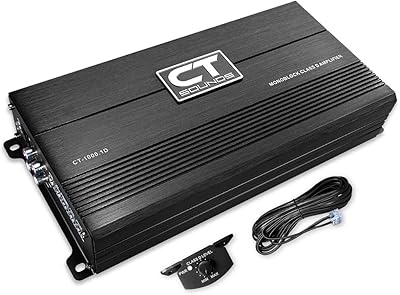
CT Sounds CT-1000.1D Monoblock Car Amplifier
77%
88%
Value for Money
79%
Power Output
84%
Thermal Management
72%
Build Quality
71%
Installation Ease
More
BOSS Audio Systems PD5000 Phantom 5000-Watt Class D Monoblock Car Amplifier
87%
94%
Power Output
91%
Sound Quality
88%
Ease of Installation
93%
Bass Performance
63%
Thermals/Heat Dissipation
More
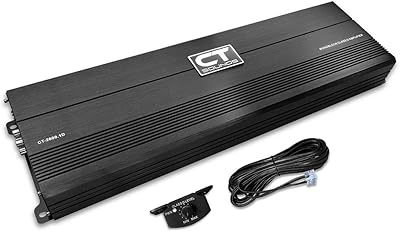
CT Sounds CT-2000.1D Monoblock Amplifier
77%
88%
Value for Money
74%
Power Output
71%
Build Quality
69%
Thermal Management
86%
Ease of Installation
More
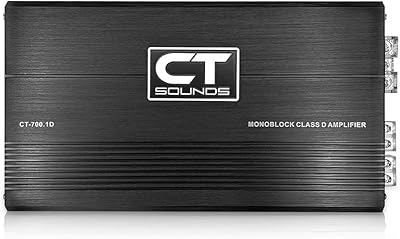
CT Sounds CT-700.1D Monoblock Amplifier
80%
91%
Value for Money
88%
Bass Output
86%
Thermal Performance
87%
Ease of Installation
74%
Build Quality
More
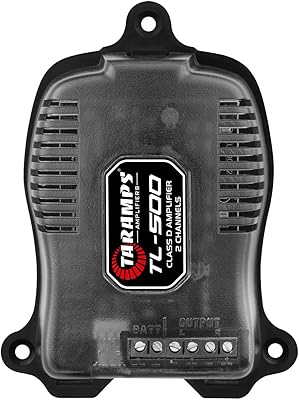
Taramp's TL 500 2-Channel Car Amplifier
74%
88%
Value for Money
91%
Ease of Installation
74%
Sound Quality
62%
Power Output
67%
Build Quality
More

FAQ

Yes, and this is one of its most practical strengths for everyday installs. The speaker-level inputs let you tap directly into your factory head unit's existing speaker wiring without buying a separate line output converter. The signal-sensing turn-on circuit also handles the remote wire issue automatically — it detects audio signal and powers the amp on without needing a dedicated remote wire from the head unit.

The 3000W figure is a peak rating, meaning a brief maximum under ideal laboratory conditions — it is not the power level you will hear during regular listening. The number that actually matters is the 1500W RMS, which is the continuous working output. The NVX NDA15001 Class-D Monoblock Car Amplifier delivers genuinely capable bass at that RMS level for its price tier, but matching your subwoofer to the RMS spec rather than the peak number will set you up for a better result.
In most cases, no. The high-level speaker inputs allow you to connect directly to your existing speaker wiring, which is particularly useful when working with a factory head unit. If your head unit has RCA preamp outputs, you can use those as well through the standard low-level inputs — the amp handles both signal types.

NVX recommends 4 AWG power and ground wiring for this amp, and that kit is not included in the box. Using undersized wiring limits how much current the amp can draw on demand, which can cause audible clipping or trigger the protection circuit during bass hits. Budget for a quality 4 AWG amplifier wiring kit as part of your total install cost.

Yes, the amp handles any load from 1 ohm and up, so 2-ohm and 4-ohm subwoofers are fully within its safe operating range. You will simply see a proportionally lower output power at higher impedance loads compared to the 1-ohm maximum — that is normal behavior for any amplifier. If you have a dual-voice-coil subwoofer, you can wire it to whichever final impedance suits your power needs.

The package includes the amplifier and the wired bass remote knob, but the wiring kit is sold separately. A 4 AWG amp wiring kit — typically containing power cable, ground cable, RCA or speaker signal cable, and an inline fuse holder — is the main additional purchase you will need. If this is your first install, also set aside time to plan your cable routing before you start pulling panels.

A good starting point for the low-pass filter is somewhere between 80 Hz and 120 Hz, which blends well with most full-range door speaker setups. Adjust from there by ear until the subwoofer integrates smoothly without sounding disconnected from the rest of the audio. For the subsonic filter, a setting around 25 to 35 Hz works well for ported enclosures; you can set it lower for sealed boxes since they naturally roll off more gently at the low end.

Some warmth during operation is completely expected from a Class-D amplifier, especially at moderate to high volume. The main thing to avoid is mounting it in an enclosed space with no airflow — tight against carpet with no clearance will cause the thermal protection to kick in and cut the audio. If it is running unusually hot at moderate listening levels, double-check your gain settings and wiring connections before assuming there is a hardware issue.

You can connect two subwoofers to this monoblock amp by wiring them in parallel, as long as the combined final impedance does not drop below 1 ohm. What you cannot do is control them independently or send them separate signals — this is a single-channel design, so both subs will receive the same mono output. If you need to run two subs with independent level control, a two-channel amplifier or a second separate amp would be the better route.

Most buyers find it genuinely handy for day-to-day use. It is an analog knob rather than a digital controller, so there are no presets or displays — just a smooth continuous adjustment you can reach from the driver seat. For most people that is exactly enough: a quick way to dial back bass during a phone call or turn it up for a track without ever reaching into a trunk or under a seat.

Where to Buy