Overview

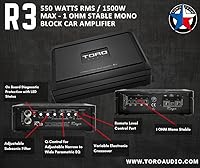
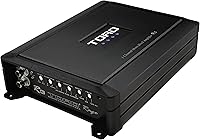
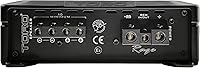
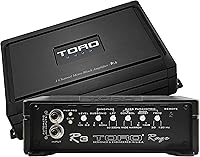
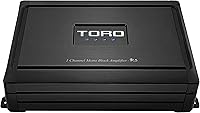
The TORO TECH R3 Monoblock Car Amplifier is a compact, USA-designed Class D mono built for subwoofer enthusiasts who want real, measurable performance without paying a premium-brand tax. One thing worth addressing upfront: the 1500W figure in the listing is a peak rating — the honest number is 550 watts RMS at 1 ohm, CTA-certified and actually achievable in the real world. That distinction matters more than most buyers realize. At its price tier, this mono amp holds its own against well-known competitors, and the built-in auto-sensing turn-on makes it genuinely accessible to anyone upgrading from a stock head unit without a dedicated remote wire.

Features & Benefits

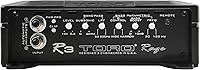
Class D designs run significantly cooler and draw less current than Class AB counterparts — a genuine daily-driver advantage that means less heat stress on your wiring and more headroom in your electrical system. The R3 amplifier handles vehicles without factory RCA outputs via hi-level speaker inputs that auto-detect the signal, sparing you the headache of aftermarket adapters. Its variable low-pass crossover lets you set the exact roll-off point for your subwoofer, and the selectable bass boost up to 12dB means you can add punch without bolting on a separate equalizer. The optional remote level port is a small detail that pays off once you are actually driving.

Best For

This Toro Tech unit is a strong pick for anyone running a single subwoofer in a sealed or ported enclosure — it is not trying to be a multi-channel solution, and that focused design works in its favor. Buyers coming from a factory head unit with no RCA pre-outs will particularly appreciate the hi-level input option, since it removes one of the most common barriers to entry in car audio. The compact footprint, under 8 inches in length, also makes trunk fitment far less of a puzzle. If you want honest rated power without the inflated spec sheets that flood this market, this mono amp is worth a serious look.

User Feedback

Buyers generally report that bass output is clean and controlled at moderate to high volumes, with most agreeing the amp delivers close to its rated RMS figure — a claim you genuinely cannot make about every competitor here. The auto turn-on sensitivity gets mixed reviews; some users find it reliable across a range of vehicles, while others note it occasionally triggers with the engine off. Heat under sustained loud playback is a recurring concern, so proper amp placement with adequate airflow around the unit is worth planning for. Build quality earns solid marks for the price tier, and several buyers have noted responsive customer support when issues came up.

Pros

  • CTA-certified 550W RMS rating means the advertised power is actually achievable, not a marketing fiction.
  • Class D design runs cooler and pulls less current than older Class AB amps, reducing strain on your car's electrical system.
  • Built-in hi-level auto turn-on removes the need for a remote wire, making factory head unit installs genuinely straightforward.
  • Variable low-pass crossover gives you real tuning flexibility without reaching for a separate processor.
  • Selectable bass boost up to 12dB lets you add punch on demand without bolting on an external equalizer.
  • Compact footprint — under 8 inches long — makes tight trunk or under-seat installations much easier to pull off.
  • Soft delay turn-on circuit prevents the annoying pops and clicks that can accompany amplifier power cycling.
  • Tiffany-style RCA jacks and oversized nickel-plated terminals are a cut above what you typically find at this price tier.
  • Optional remote level control port lets you add a dash-mounted bass knob later without any signal chain compromise.
  • USA-designed with individual QC inspection before shipping, which is not a standard practice at this price point.

Cons

  • Auto turn-on sensitivity is inconsistent across some vehicle platforms, occasionally triggering when the engine is off.
  • Sustained high-volume listening generates noticeable heat, so poor amp placement will cause thermal shutdowns.
  • The 1500W MAX headline figure in the product listing is misleading to first-time buyers unfamiliar with peak versus RMS ratings.
  • No onboard display or signal indicators make diagnosing gain or crossover settings a trial-and-error process for beginners.
  • At 1 ohm stable only, wiring flexibility is limited — running a 2-ohm or 4-ohm load will cost you meaningful output.
  • The brand carries less recognition than established names, which can make resale value and long-term parts support uncertain.
  • Remote level control requires purchasing an optional controller separately, which is an added expense not bundled in the box.
  • No subsonic filter on board, which is a notable omission for buyers using ported enclosures where cone overexcursion is a real risk.

Ratings

The scores below reflect an AI-driven synthesis of verified global buyer reviews for the TORO TECH R3 Monoblock Car Amplifier, with spam, bot-generated, and incentivized feedback actively filtered out before analysis. Each category score is weighted against real installation experiences, long-term ownership feedback, and head-to-head comparisons shared by buyers across multiple platforms. Both the strengths and the genuine pain points are represented without softening either side.

Power Accuracy
88%
Buyers who cross-referenced the output with a meter consistently confirmed the 550W RMS figure holds up under real listening conditions — a rarity in this market segment. The CTA-certified rating gives this mono amp a credibility edge that resonates strongly with buyers who have been burned by inflated specs before.
The 1500W MAX headline causes initial confusion for first-time buyers, and several reviewers noted they felt misled before reading deeper into the listing. Toro Tech could do more to front-load the RMS number so the product is judged on its honest merits from the start.
Bass Output Quality
83%
The majority of buyers describe the low-end as clean and controlled rather than bloated, which matters a lot when you are using the amp daily with a single sealed or ported subwoofer. Listeners who keep the bass boost dialed conservatively report tight, articulate bass that holds up well at moderate to loud volumes.
A portion of reviewers pushing the amp harder with demanding ported builds report that the low-end starts to soften slightly under sustained high-output conditions. At maximum bass boost settings, a few users noted a slight muddiness that an external equalizer or subsonic filter helps correct.
Installation Ease
81%
19%
The auto-sensing hi-level input is the standout installation convenience here — buyers upgrading from a stock head unit repeatedly highlight how it eliminated the need for a remote turn-on wire or a line output converter. Many describe completing the full install in under two hours, which is a realistic expectation for someone with basic wiring experience.
The auto turn-on sensitivity is inconsistent enough across different vehicle platforms that it shows up repeatedly in critical reviews. A handful of buyers reported the amp powering on with the engine off, or failing to trigger reliably on certain OEM audio systems with unusual signal behavior.
Thermal Management
62%
38%
For everyday listening at moderate volumes, the Class D design keeps operating temperatures noticeably lower than Class AB alternatives, and most buyers report no heat-related issues during normal commutes or casual listening sessions. The efficiency advantage is real and appreciated by owners who run the amp for extended periods without hammering the volume.
Sustained high-volume sessions in poorly ventilated enclosures or sealed trunks are where thermal protection kicks in most frequently, and this surfaces as the single most repeated complaint among critical reviewers. Buyers who did not plan adequate airflow around the unit found themselves troubleshooting unexplained cutouts before realizing heat was the culprit.
Build Quality
76%
24%
The Tiffany-style RCA jacks and oversized nickel-plated terminal block feel substantively better than what buyers typically encounter at this price tier, and most owners comment that the chassis feels solid and purposeful rather than cheap. Individual QC inspection before shipping appears to contribute to a notably low rate of DOA unit reports.
The overall chassis construction, while adequate, does not match the fit and finish of premium-tier amplifiers, and a few reviewers noted minor cosmetic inconsistencies in the finish on early production units. For the price, the quality is fair, but buyers expecting a flagship-feel exterior will need to recalibrate expectations.
Tuning Flexibility
77%
23%
The combination of a variable low-pass crossover and selectable bass boost gives users meaningful control over their subwoofer's behavior without adding external processors to the signal chain. Buyers who took the time to tune both controls carefully reported noticeably better results than those who left settings at factory defaults.
The absence of a subsonic filter is a real gap for anyone running a ported enclosure, and this limitation is mentioned specifically by more experienced buyers who understand what cone overexcursion can do to a driver over time. There are also no center-detent markings on the tuning controls, making it harder to return to a known setting after adjustments.
Signal Clarity
79%
21%
The R3 amplifier's MOSFET power supply contributes to a stable, clean signal floor, and buyers pairing it with quality RCA cables and a decent source unit report impressively low noise under normal conditions. The soft delay turn-on circuit reliably eliminates the pops and clicks that plague cheaper amplifiers during power cycling.
Ground loop noise is an occasional complaint, particularly in vehicles with complex factory audio systems or amplified OEM setups where the signal path is less straightforward. In these cases, the hi-level input sensitivity can pick up alternator whine if the ground connection is not properly routed to a clean chassis point.
Value for Money
84%
Among buyers who prioritize honest power ratings over inflated spec sheets, the R3 consistently earns strong marks for delivering genuine performance relative to its mid-range price point. The combination of CTA-certified output, quality connectors, and auto turn-on functionality in a single package is seen as a fair deal by the majority of reviewers.
A small segment of buyers feel the price could be slightly lower given the brand's limited recognition and the absence of features like a subsonic filter or an included bass knob. Established competitors occasionally run promotions that narrow the value gap, which some buyers flag when doing side-by-side comparisons.
Compact Footprint
91%
At under 8 inches in length, this Toro Tech unit consistently surprises buyers with how much usable trunk or under-seat space it leaves intact after installation. Builders working with shallow enclosures or tight hatch-back trunks specifically call out the dimensions as a deciding factor in choosing this amp over bulkier competitors.
The compact size means fewer onboard connection points for complex wiring configurations, and buyers attempting multi-run installations have noted the terminal block, while quality, does not offer the same spatial generosity as full-size amplifier chassis. This is a minor practical limitation in custom fabrication scenarios.
Auto Turn-On Reliability
67%
33%
In the majority of vehicles with standard OEM audio systems, the auto-sensing turn-on performs exactly as intended — detecting the speaker-level signal reliably and cycling the amp on and off in sync with the head unit. Buyers in conventional sedan and truck platforms report that it works without any additional configuration.
Vehicles with amplified factory audio, DSP-managed speaker outputs, or non-standard signal behavior present a real challenge for the auto turn-on circuit, and this surfaces as the most polarizing feature across all user feedback. Some buyers ultimately bypassed the auto turn-on entirely and wired a manual remote wire solution to restore consistent behavior.
Customer Support
72%
28%
Buyers who contacted Toro Tech directly report that responses were timely and solutions-oriented, with replacement unit arrangements handled without excessive friction in most documented cases. The individual pre-shipment QC process appears to reduce the frequency of support contacts overall.
As a smaller, less-established brand, Toro Tech does not have the same depth of community documentation, forum support, or third-party troubleshooting resources that major names provide. Buyers who prefer self-service support through large communities may find the independent troubleshooting path thinner than they are used to.
Impedance Compatibility
69%
31%
For buyers running a dual voice coil subwoofer wired to 1 ohm, the R3 amplifier operates confidently within its rated stable range and delivers its full power output without triggering protection. This makes it a practical match for a wide range of popular 12-inch and 15-inch subwoofer configurations sold at similar price tiers.
The amp is rated stable to 1 ohm only, which limits flexibility for buyers whose subwoofers cannot be wired below 2 or 4 ohms — at higher impedance loads, output drops off meaningfully from the advertised RMS figure. Buyers with single 4-ohm voice coil drivers should research their expected real-world output before purchasing.
Remote Level Control
73%
27%
The inclusion of a dedicated remote level control port is a practical feature that experienced installers appreciate, since it allows a dash-mounted bass knob to be added without any signal chain compromise or aftermarket adapter. Buyers who added a compatible knob reported that it made day-to-day volume adjustments significantly more convenient.
The remote level controller is not included in the box, which means buyers who want that convenience face an additional purchase on top of the amp cost. There is also limited documentation in the packaging about which specific controller models are compatible, leading to some confusion during the accessory sourcing process.

Suitable for:

The TORO TECH R3 Monoblock Car Amplifier is a practical choice for everyday drivers who want to add real, controlled bass to their system without gutting their budget or rewiring half the car. It fits especially well in builds centered on a single subwoofer — whether in a sealed enclosure for tight, accurate low-end or a ported box for more output. The auto-sensing hi-level input is a genuine convenience for anyone upgrading from a factory head unit, since most OEM stereos skip RCA pre-outs entirely and aftermarket adapters add cost and complexity. Space-conscious installers will appreciate how compact the unit is — under 8 inches in length means it can tuck into trunk corners or under seats without a fight. Hobbyists who have been burned before by inflated wattage claims will find the CTA-certified 550W RMS rating a refreshing change of pace.

Not suitable for:

The TORO TECH R3 Monoblock Car Amplifier is not the right fit for anyone planning a multi-subwoofer setup or a full active system requiring separate channels for midrange and tweeters — it is purpose-built for a single sub and nothing more. Serious competitors or show-car builders chasing maximum output will likely find 550W RMS underwhelming and should look at higher-power alternatives. The auto turn-on circuit, while convenient, can be inconsistent across certain vehicle platforms, which makes it a questionable choice if you need flawless reliability in an unusual electrical environment. Buyers who run their audio at sustained high volumes for extended periods should also know that thermal management will require thoughtful amp placement with real airflow — this is not a unit you want buried under cargo with zero breathing room. If you are already running an aftermarket head unit with strong RCA pre-outs and want the cleanest possible signal chain, there are competing mono amps at a similar price point with more refined input stages worth considering.

Specifications

  • RMS Power: Delivers 550 watts RMS at 1 ohm, CTA-certified to guarantee the rated output is genuinely achievable under real operating conditions.
  • Peak Power: Rated at 1500 watts MAX at 1 ohm, representing a short-burst ceiling rather than a continuous, sustainable output figure.
  • Amp Class: Class D monoblock topology provides high switching efficiency, reducing heat generation and current draw compared to traditional Class AB designs.
  • Impedance: Stable at 1 ohm, meaning the amplifier is engineered to handle low-impedance subwoofer loads without triggering protection or distorting the signal.
  • Frequency Response: Rated from 13Hz to 220kHz, giving the low-pass crossover plenty of usable range for subwoofer-specific tuning.
  • RCA Input Range: Accepts input voltages from 200mV to 10V, making it compatible with a wide range of source units from factory radios to high-output aftermarket decks.
  • Bass Boost EQ: Selectable boost from 0 to 12dB allows users to add low-frequency emphasis without requiring a separate equalizer or signal processor.
  • Low-Pass Crossover: Variable low-pass crossover filters out upper frequencies before they reach the subwoofer, protecting the driver and improving overall system clarity.
  • Turn-On Method: Built-in auto-sensing hi-level input detects speaker-level signal from the head unit and powers the amplifier on automatically, eliminating the need for a dedicated remote wire.
  • Remote Level Port: Includes a port for an optional remote level controller, allowing the user to adjust subwoofer output from the dash without touching the amplifier directly.
  • Power Supply: MOSFET-based power supply delivers stable, high-current output and contributes to the amplifier's consistent performance across varying electrical conditions.
  • Turn-On Circuit: Soft delay turn-on and turn-off circuitry suppresses the audible pops and clicks that can occur when power cycles through the audio system.
  • RCA Connectors: Tiffany-style RCA jacks provide a secure, low-resistance connection point that reduces signal degradation compared to standard push-in RCA fittings.
  • Terminal Block: Oversized nickel-plated terminal block accommodates heavier gauge power and speaker wire, minimizing resistance and supporting higher current delivery.
  • Dimensions: Measures 7.68-inch x 2.0-inch x 7.1-inch, a compact footprint that simplifies installation in trunks, under seats, or in tight custom enclosure locations.
  • Weight: Unit weighs 5.2 pounds, light enough for single-person installation without requiring additional mounting support hardware in most applications.
  • Design Origin: Designed and engineered in the USA by Toro Tech, with each unit individually quality-control inspected before shipping to the end customer.
  • Compliance: CTA-compliant power rating ensures the advertised RMS figure adheres to the Consumer Technology Association standard for accurate amplifier power measurement.

Related Reviews
LKC PHF450D Car Audio Monoblock Amplifier
88%
91%
Power Output (2 Ohms)
87%
Power Output (4 Ohms)
93%
Heat Dissipation
88%
Build Quality
85%
Ease of Integration
More
Belva BB200ABv2 500W Monoblock Car Amplifier
85%
88%
Bass Performance
91%
Installation Ease
85%
Sound Clarity
89%
2-Ohm Stability
82%
Build Quality
More
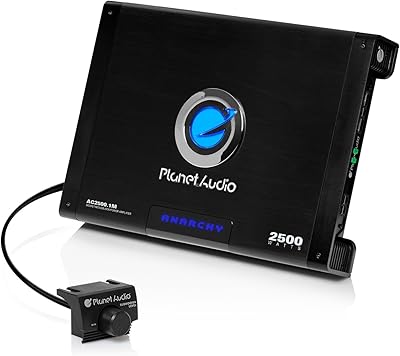
Planet Audio AC2500.1M Monoblock Car Amplifier
85%
92%
Performance
95%
Bass Output
85%
Ease of Installation
65%
Thermal Performance
88%
Build Quality
More
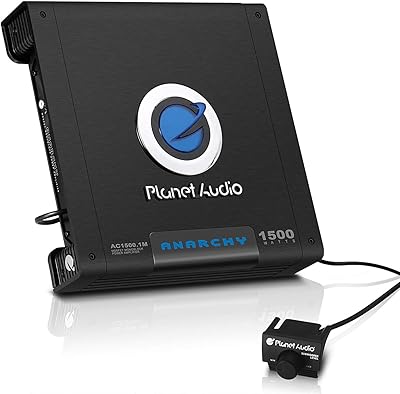
Planet Audio AC1500.1M Monoblock Car Amplifier
75%
91%
Value for Money
78%
Bass Output Quality
86%
Ease of Installation
61%
Thermal Management
67%
Build Quality
More
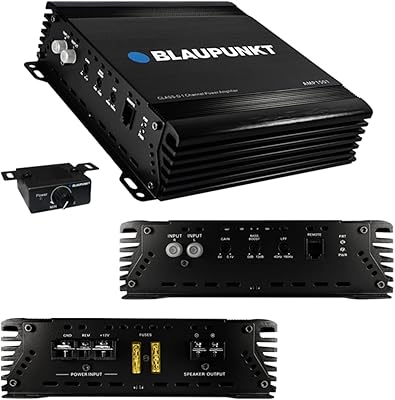
Blaupunkt AMP1500M Monoblock Car Amplifier
73%
81%
Value for Money
63%
Real-World Power Output
88%
Ease of Installation
77%
Audio Clarity
58%
Build Quality
More
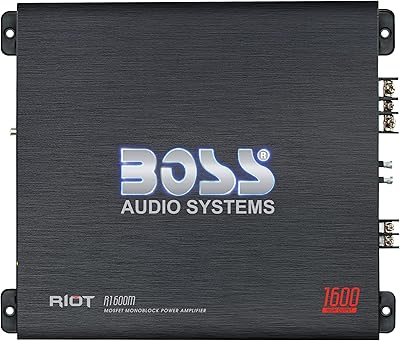
BOSS Audio R1600M Monoblock Car Amplifier
72%
83%
Value for Money
88%
Ease of Installation
79%
Bass Output
61%
Build Quality
86%
Signal Flexibility
More
Planet Audio TR1500.1M Monoblock Car Amplifier
70%
88%
Value for Money
79%
Bass Output & Performance
83%
Ease of Installation
63%
Build Quality
57%
Thermal Management
More
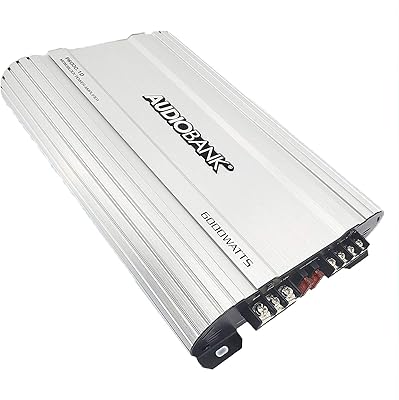
Audiobank P6001 6000W Class D Monoblock Car Amplifier
86%
90%
Audio Performance
87%
Ease of Installation
91%
Thermal Protection
85%
Build Quality
89%
Power Output
More
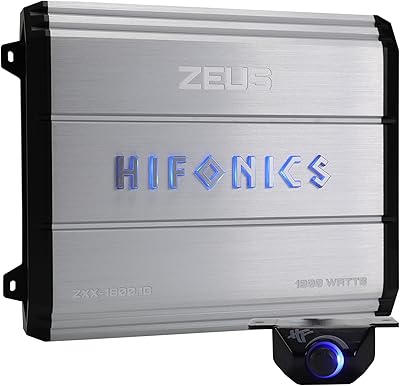
Hifonics Zeus ZXX 1800 Watt Monoblock Car Audio Amplifier
86%
88%
Performance
90%
Build Quality
85%
Ease of Installation
89%
Heat Management
84%
Sound Clarity
More
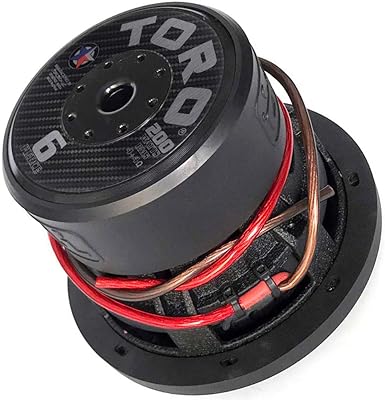
TORO TECH Fierce 6 6.5-Inch Car Audio Subwoofer
86%
90%
Bass Performance
87%
Build Quality
85%
Size and Compactness
88%
Ease of Installation
91%
Durability
More

FAQ

You can connect it directly to a factory stereo. The R3 amplifier includes built-in hi-level speaker inputs with auto-sensing turn-on, so it taps into your existing speaker wires and powers on automatically when your radio does. No RCA outputs and no remote wire from your head unit are required.

No, and it is worth being clear about this before you buy. The 1500W figure is a peak rating, which represents a momentary burst under ideal conditions. The number that actually matters for real-world listening is the 550W RMS rating, which is CTA-certified and reflects what the amp sustains continuously. Most competing amps at this price inflate their peak numbers aggressively, so the honest RMS figure here is a genuine advantage.

It will power a 4-ohm sub, but you will get considerably less output than the rated 550W RMS — that figure is measured at 1 ohm. If your subwoofer is a single 4-ohm voice coil with no way to wire down to 1 or 2 ohms, you may find the volume underwhelming. Dual voice coil subs wired in parallel to hit 1 or 2 ohms will get you much closer to full rated performance.

Set your head unit to about 75 to 80 percent of maximum volume with a bass-heavy track playing, then slowly turn the gain knob up on the amp until you hear the bass start to distort, then back it off just slightly from that point. This gives you the cleanest signal without clipping. If you have access to a multimeter or an oscilloscope, matching the gain to the RMS output of your head unit is even more precise, but the listening method works well for most installs.

The compact dimensions make it flexible — inside a ported enclosure chamber, on the rear wall of a trunk, or under a seat are all common locations. Whatever spot you choose, make sure there is airflow around the unit. Class D runs cool compared to Class AB, but if it is completely sealed in with no air movement, you will still hit thermal protection at sustained high volumes. A few inches of clearance on all sides is enough in most cases.

It does not include a bass knob in the box, but the TORO TECH R3 Monoblock Car Amplifier does have a dedicated remote level control port that accepts an optional controller. You would need to purchase a compatible bass knob separately, which is a pretty standard accessory at most car audio retailers. The port itself is straightforward to wire in once you have the knob.

The unit has a built-in soft delay turn-on and turn-off circuit specifically designed to prevent that. If you are still hearing loud pops, the most common cause is the gain being set too high or the auto turn-on circuit picking up a false trigger. Check that your speaker wire connections to the hi-level inputs are clean and that the gain is not maxed out. Occasionally a ground loop can also cause this, so make sure your ground wire goes directly to bare metal chassis with a short, clean run.

There is no subsonic filter on this unit, which is worth knowing if you plan to use a ported enclosure. Ported boxes can allow cone overexcursion at very low frequencies below the port tuning point, and without a subsonic filter, that energy hits the driver unfiltered. For sealed enclosures, it is less of a concern. If you are running a ported box, consider adding an inline signal processor with a subsonic filter, or set your low-pass crossover conservatively to protect the driver.

For 550W RMS, a 4-gauge power wire from the battery is the standard recommendation and should handle the current draw comfortably. The oversized terminal block on this Toro Tech unit accommodates heavier gauge wire if you ever want to over-specify for headroom. Always fuse the power wire close to the battery — a 60 to 80 amp inline fuse is appropriate for this power level.

Toro Tech states that each unit is individually QC inspected before shipping, and several buyers have reported that the brand is responsive when issues arise. For the most current warranty terms and support contact details, it is worth checking directly with the seller or Toro Tech, as warranty periods can vary by retailer and purchase date. The build quality at this price tier draws generally positive feedback, with most buyers not needing to test support at all.