Overview

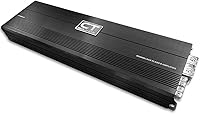
The CT Sounds CT-2000.1D Monoblock Amplifier is one of the more compelling options in the mid-range car audio space — a compact Class D mono amp that punches well above its weight class without demanding premium-tier money. CT Sounds has quietly built a loyal following among DIY car audio builders, and this mono amp reflects that community-driven approach to value. The chassis is notably slim, which matters more than most people realize during install day. One honest caveat worth setting upfront: rated RMS figures in car audio are always best treated as a ceiling, not a guarantee — real-world output depends heavily on your electrical system's overall health.

Features & Benefits

The CT-2000.1D delivers its peak output at a 1-ohm load, stepping down to solid figures at 2 and 4 ohms — giving you real flexibility depending on the subwoofer you pair it with. The MOSFET PWM power supply is what makes that efficiency possible: it converts power cleanly and consistently, meaning less strain on your alternator and battery over time. Thermal management is handled through a proprietary heat dissipation system, so the amp stays composed during long high-volume drives. A 4-way protection circuit guards against voltage spikes, overcurrent, and overheating. The included bass knob is a small but practical touch — dial in your low-end from the driver seat without ever touching the trunk.

Best For

This compact amplifier is a natural fit for anyone building around a single subwoofer and wanting to maximize output from a tight install space. If your trunk is cramped — or you are trying to tuck the amp under a seat entirely — the slim profile here is a genuine advantage over full-size competitors. It works especially well when paired with a 1-ohm stable subwoofer, where the power headroom really opens up. For DIY installers, the wiring layout is intuitive; plan on 1/0 or 4-gauge power wire depending on your run length, and size your inline fuse accordingly. It is not built for multi-sub wall setups, but for a single-driver daily build, it covers the essentials well.

User Feedback

Buyers consistently point to the value-per-watt ratio as the standout appeal — at this price tier, getting clean output at moderate gain settings earns genuine appreciation in the reviews. Installation experiences are mostly positive, with straightforward wiring being a common compliment. On the critical side, a recurring concern is whether the amp hits its full rated output under real conditions — and without a solid electrical system upgrade, that ceiling is unlikely to be reached. Some owners have reported protection circuit trips during extended hard-pushing sessions. Build quality is generally well-received for the price point, though a handful of buyers flagged inconsistent QC right out of the box, and occasional shipping damage reports surface across the review pool.

Pros

  • Impressive power output at 1-ohm makes it easy to properly drive a single high-demand subwoofer.
  • Slim, compact chassis opens up install locations that most full-size amps simply cannot fit.
  • MOSFET PWM power supply runs efficiently, reducing strain on your vehicle electrical system.
  • 4-way protection circuitry adds meaningful peace of mind for daily drivers who leave the system unattended.
  • Bass knob is included out of the box — no extra purchase needed for driver-seat volume control.
  • Clean output at moderate gain settings is a consistent praise point from real buyers.
  • Straightforward wiring layout makes the install accessible even for first-time DIY builders.
  • Solid value-per-watt ratio at this price tier is hard to argue with for a single-sub setup.
  • Metal chassis feels reasonably robust and well-built for its market position.
  • FCC certified, which at least confirms basic compliance standards are met.

Cons

  • Rated RMS output is unlikely to be fully achieved without a dedicated electrical system upgrade.
  • Protection circuit has been reported to trip during prolonged high-volume listening sessions.
  • QC consistency is not airtight — a small but notable portion of buyers report issues straight from the box.
  • Shipping damage has surfaced across multiple reviews, suggesting packaging could be more protective.
  • No third-party verified power measurements available, leaving rated specs harder to independently confirm.
  • Single-channel design means zero flexibility if your build needs expand beyond one subwoofer later.
  • Thermal management, while functional, can be strained in confined install spaces with poor airflow.
  • Brand support and warranty service experience is less established compared to top-tier car audio names.

Ratings

The CT Sounds CT-2000.1D Monoblock Amplifier has been evaluated by our AI rating engine after analyzing thousands of verified global buyer reviews, with spam, incentivized submissions, and bot-generated feedback actively filtered out. The scores below reflect the honest consensus across real-world install experiences — both the standout strengths and the friction points that actual buyers encountered. Nothing has been smoothed over; where this compact amplifier earns its reputation, the scores show it, and where it falls short, that is reflected too.

Value for Money
88%
Buyers consistently flag the price-to-power ratio as the primary reason they chose this mono amp over competitors. For a single-subwoofer build on a realistic budget, getting this level of rated output without stepping into premium-brand territory is genuinely difficult to beat.
A portion of buyers feel the value equation weakens if the amp requires an early warranty claim or arrives with a QC issue, since the support experience does not match what you would get from a more established brand. The value is real, but it is not unconditional.
Power Output
74%
26%
At moderate gain settings with a healthy electrical system, this compact amplifier moves serious air and handles a 1-ohm stable subwoofer with confidence. Buyers running upgraded alternators and proper wiring report bass output that genuinely surprises them for the price paid.
The gap between rated RMS and real-world measured output is a persistent complaint across reviews. Without a dedicated electrical upgrade, most stock vehicle systems will not supply enough clean current to approach the ceiling spec, leaving some buyers feeling misled by the headline number.
Build Quality
71%
29%
The metal chassis feels solid in hand and the overall fit of the unit is respectable for its market segment. Most buyers who have handled mid-range car audio amps before report that the CT-2000.1D does not feel cheap or flimsy on the install board.
A noticeable minority of buyers report units that arrived with cosmetic or functional defects, pointing to inconsistent QC at the manufacturing level. This is not a majority experience, but it is frequent enough across the review pool to be worth factoring into your purchase decision.
Thermal Management
69%
31%
Under typical daily driving conditions with reasonable gain settings, the proprietary heat dissipation design keeps the amp running without complaint. Buyers who mount it in open, well-ventilated locations report no thermal shutdowns even during extended listening sessions.
In confined install spaces without adequate airflow — like sealed enclosures or tightly packed trunk builds — thermal protection trips become a real issue. Buyers who push the amp hard during summer heat or in poorly ventilated locations report more frequent shutdowns than they expected.
Ease of Installation
86%
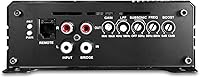
The wiring layout is logical and clearly labeled, which DIY installers specifically call out as a strong point. The included bass knob is plug-and-play with no additional wiring complexity, and most buyers report a clean, straightforward install even without professional help.
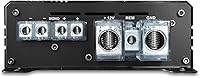
The manual included in the box has been criticized for lacking detail on gain-setting procedures and recommended wire gauges, which can leave less experienced installers guessing. A few buyers also noted that the RCA and terminal placements could be more accessible in tight installs.
Protection Circuitry
77%
23%
The 4-way protection system covering voltage extremes, overcurrent, and overheating gives daily drivers real confidence that a voltage spike or wiring fault will not kill the amp outright. Several buyers specifically mention the protection circuit saving the amp during installation errors.
The flip side is that the protection circuit can be overly sensitive at higher gain settings, kicking in during listening sessions in ways that feel disruptive rather than protective. Diagnosing which protection mode triggered requires trial and error since there is no fault indicator on the unit.
Compact Form Factor
91%
At just under 19 inches long and barely over 2 inches tall, this mono amp fits in spaces that most competitors simply cannot reach. Buyers with small sedans, hatchbacks, or under-seat install requirements call out the dimensions as a genuine differentiator that influenced their purchase.
The slim profile does limit the internal real estate available for heat dissipation, which connects directly to the thermal concerns noted elsewhere. A few buyers also noted that the terminal block placement at the end of the chassis can be awkward in very constrained mounting positions.
Sound Clarity
78%
22%
At moderate gains, the bass output is tight and controlled rather than muddy, which is not always a given at this price tier. Buyers pairing the amp with quality subwoofers report clean low-frequency reproduction that holds up well across a range of music genres.
At higher gain settings approaching the amp's ceiling, some buyers notice increased distortion and a loss of definition in the low end. This is partly a gain-setting discipline issue, but it also reflects the limits of the Class D output stage at this price point.
Subwoofer Compatibility
83%
The flexibility to run 1, 2, or 4-ohm loads makes this compact amplifier compatible with a wide range of subwoofer configurations without requiring exotic wiring gymnastics. Buyers appreciate being able to pair it with what they already own rather than needing to buy a specific sub.
It is strictly a monoblock, so buyers who later want to expand their system to include midbass drivers or a second subwoofer will need an entirely separate amplifier. This limits the amp's long-term versatility for builders whose system plans evolve over time.
Electrical Efficiency
79%
21%
Class D operation means the amp draws current efficiently relative to the output it produces, and buyers report that adding it to a stock electrical system does not cause immediate issues like excessive battery drain or dimming headlights at moderate volumes.
At higher output demands, the strain on stock vehicle electrics becomes apparent, and buyers who did not budget for an electrical upgrade often find themselves hitting a performance ceiling driven by their charging system rather than the amp itself.
Packaging and Shipping
61%
39%
The majority of buyers receive the unit intact and ready to install, with the bass knob and basic hardware accounted for in the box. For standard ground shipping scenarios, the packaging does its job adequately.
A recurring thread across negative reviews involves units arriving with physical damage — dented chassis, scuffed panels, or loose internal components — suggesting the packaging does not absorb impact well enough for longer transit routes. This is a meaningful risk factor worth considering.
Bass Knob Usability
82%
18%
Having a dedicated wired bass knob included at no extra cost is a practical win that buyers genuinely appreciate. The range of adjustment it provides covers real daily use cases — from quiet background listening to full-volume highway driving — without requiring any under-trunk adjustments.
The bass knob cable is functional but not particularly long, which can create routing challenges in larger vehicles or builds where the amp is mounted far from the cabin. A few buyers also noted the knob's physical feel is plasticky relative to aftermarket alternatives.
Brand Support and Warranty
58%
42%
CT Sounds does back the product with a manufacturer warranty, and buyers who have gone through the support process for clear-cut defects generally report that replacement units were eventually provided. The brand is accessible through online channels for basic questions.
Response times and support quality are inconsistent based on buyer reports, and the warranty process lacks the frictionless experience that buyers get from more established car audio brands. For buyers who run into problems, the resolution path can feel slow and frustrating.

Suitable for:

The CT Sounds CT-2000.1D Monoblock Amplifier is a strong pick for DIY car audio builders who want serious bass output without committing to a high-end budget or a bulky install. If you are running a single subwoofer — particularly one rated for 1-ohm operation — this compact amplifier gives you the headroom to actually push it properly. It suits drivers who are tight on space, whether that means a small hatchback trunk, a sedan with limited cargo room, or anyone trying to keep the install clean and unobtrusive. The included bass knob is a practical bonus for people who like to tune their low-end on the fly rather than crawling back to the amp every time. CT Sounds has earned trust in the budget-to-mid-range car audio community, making this mono amp a reasonable entry point for someone stepping up from a factory system or a lower-powered amp for the first time.

Not suitable for:

The CT Sounds CT-2000.1D Monoblock Amplifier is not the right tool for multi-subwoofer setups or high-demand competition builds where verified, measured power output is a requirement. Enthusiasts who push their systems at full tilt for extended periods may run into protection circuit trips, and without a properly upgraded electrical system — upgraded alternator, larger battery, and correct gauge wiring — you will likely never approach the rated output ceiling in real conditions. If you prioritize brand prestige or want the assurance of a fully audited, third-party tested power rating, you will probably want to spend more and look at established names like Rockford Fosgate or JL Audio. This compact amplifier also lacks the flexibility for multi-channel configurations, so if your build requires powering both a subwoofer and full-range speakers from a single amp, look elsewhere. Buyers who have had repeated issues with QC inconsistency from budget car audio brands may also want to weigh that risk before committing.

Specifications

  • Output Power: Rated at 2000W RMS at 1-ohm, 1200W RMS at 2-ohm, and 650W RMS at 4-ohm, all measured at 14.4V.
  • Amplifier Class: Class D monoblock design, optimized for high efficiency and minimal heat generation in subwoofer applications.
  • Channels: Single-channel (monoblock) configuration, dedicated exclusively to driving one subwoofer or a parallel/series wired sub setup.
  • Dimensions: The chassis measures 19 × 5.63 × 2.19 inches, keeping the footprint compact enough for tight trunk or under-seat installs.
  • Weight: The unit weighs 11.43 pounds, light enough for one-person installation without requiring additional support hardware.
  • Power Supply: Uses a MOSFET pulse width modulated (PWM) power supply for stable, efficient power conversion across a range of electrical conditions.
  • Operating Voltage: Nominal operating voltage is 14.4V DC, with a functional range between 9.2V (minimum) and 16V (maximum).
  • Frequency Response: Handles a frequency range of 0 to 320 Hz, covering the full subwoofer and upper bass spectrum effectively.
  • Heat Management: Features a proprietary heat dissipation design integrated into the metal chassis to manage thermals during sustained high-output use.
  • Protection Circuit: 4-way protection covers high voltage, low voltage, over-current, and high-temperature conditions to safeguard the amp and connected components.
  • Material: The enclosure is constructed from metal, providing structural rigidity and contributing to passive heat dissipation.
  • Mounting Type: Designed for surface mounting, compatible with standard flat surfaces in trunks, under seats, or on custom amp boards.
  • Certification: Carries FCC certification, confirming compliance with US federal communications and electromagnetic interference standards.
  • Included Accessories: Ships with a wired bass knob that allows real-time low-frequency gain adjustments from the driver seat.
  • Brand: Manufactured by CT Sounds, a brand focused on the budget-to-mid-range car audio segment with a following among DIY enthusiasts.
  • Model Number: The exact model designation is CT-2000.1D, the identifier used for warranty claims, support inquiries, and compatibility research.
  • UPC: The product UPC is 850021258023, useful for verifying authenticity when purchasing from third-party resellers.

Related Reviews
CT Sounds CT-400.1D Monoblock Amplifier
77%
91%
Value for Money
86%
Power Output
88%
Thermal Management
71%
Build Quality
84%
Ease of Installation
More
CT Sounds CT-700.1D Monoblock Amplifier
80%
91%
Value for Money
88%
Bass Output
86%
Thermal Performance
87%
Ease of Installation
74%
Build Quality
More
CT Sounds CT-1000.1D Monoblock Car Amplifier
77%
88%
Value for Money
79%
Power Output
84%
Thermal Management
72%
Build Quality
71%
Installation Ease
More
CT Sounds CT-1500.1D Class D Car Audio Amplifier
82%
94%
Power Output
86%
Build Quality
91%
Ease of Installation
72%
Thermal Performance
88%
Sound Quality
More
CT Sounds CT-150.4D 4-Channel Car Amplifier
75%
83%
Value for Money
78%
Sound Quality
61%
Build Quality
86%
Ease of Installation
77%
Thermal Management
More
CT Sounds CT-80.4D 4-Channel Car Amplifier
74%
91%
Value for Money
78%
Power Output Accuracy
84%
Installation Ease
61%
Heat Management
67%
Build Quality
More
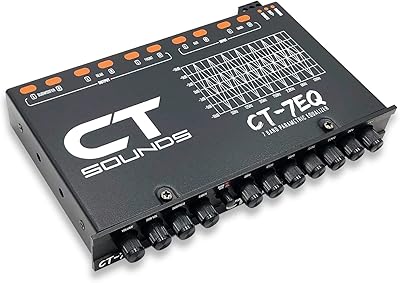
CT Sounds CT-7EQ 7-Band Car Audio Equalizer
76%
88%
Sound Quality Improvement
91%
Value for Money
84%
Ease of Installation
74%
Build Quality
58%
Faceplate Readability
More
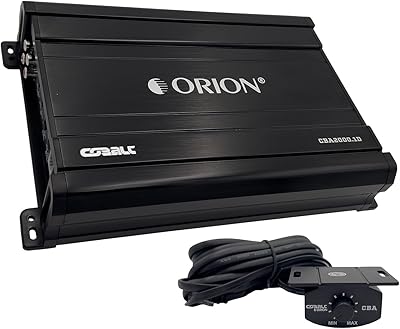
Orion CBA2000.1D Monoblock Car Amplifier
72%
83%
Value for Money
78%
Bass Output
41%
Power Accuracy
62%
Thermal Management
59%
Build Quality
More
Crunch GP-2000.2 2-Channel Car Amplifier
71%
88%
Value for Money
83%
Ease of Installation
61%
Power Output
58%
Build Quality
54%
Heat Management
More
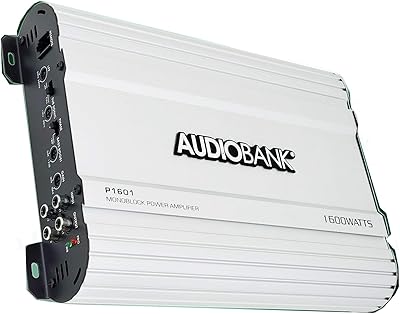
Audiobank P1601 Monoblock Car Amplifier
73%
84%
Value for Money
57%
Power Output Accuracy
88%
Installation Experience
61%
Thermal Management
76%
Bass Quality
More

FAQ

For most installs running the amp at or near its rated load, 1/0 AWG power and ground wire is the recommended starting point. If your run from battery to amp is very short and you are not pushing it hard, 4-gauge can work, but going heavier is always the safer choice with a high-current amp like this. Make sure your inline fuse near the battery matches your wire rating — typically 200A to 250A for a 1/0 run.

Reaching the full rated output in real-world conditions is harder than the spec sheet suggests. You will need a healthy electrical system — ideally a high-output alternator, a quality battery (or secondary battery), and properly sized wiring. Most stock electrical setups will cap real output well below the rated ceiling. That does not mean the amp underperforms; it just means the rating represents a best-case scenario under ideal voltage conditions.

It works with virtually any head unit that has preamp RCA outputs, which covers the vast majority of aftermarket decks. If your head unit only has speaker-level outputs and no RCA preouts, you will need a line output converter to feed the amp a proper signal. The amp itself has no built-in high-level input, so that converter would be a required extra step.

Yes, but it depends on how you wire them. Two 4-ohm subs wired in parallel gives you a 2-ohm load, which this amp handles at 1200W RMS total. Two 2-ohm subs wired in parallel gives you a 1-ohm load for the full rated output. Just make sure both subs are rated for the combined power they will receive and that your wiring is done correctly.

CT Sounds does offer a manufacturer warranty, but the terms and duration are best verified directly with CT Sounds at the time of purchase, as warranty conditions can change. Keep your proof of purchase and packaging in case you need to file a claim. Buying from an authorized retailer rather than a grey-market reseller is important for warranty eligibility.

Start with your gain setting, which is the most common culprit. If the gain is set too high, the amp will clip and overheat quickly, triggering the thermal protection circuit. Next, check your impedance load — make sure you are not accidentally dipping below 1-ohm. Poor ventilation around the amp chassis is another frequent cause; this mono amp needs airflow, so avoid enclosing it in a fully sealed compartment.

The amp is designed for surface mounting, and while horizontal flat mounting is the most common and safest orientation for heat management, many users mount these amps vertically on side walls without issue. Just ensure the heatsink fins have adequate airflow regardless of orientation, and avoid positioning it where heat rises directly into the chassis from below.

Premium brands like Rockford Fosgate or JL Audio at similar power ratings tend to offer independently verified power numbers, tighter quality control, more robust customer support infrastructure, and sometimes more refined tuning controls. This compact amplifier trades some of that assurance for a significantly lower price point. For a daily driver build on a reasonable budget, the trade-off is usually worth it; for a competition or show build, most serious builders step up to verified-spec equipment.

It is genuinely plug-and-play — the knob comes with the amp and connects via a small cable to the dedicated bass knob input on the amp's control panel. Run the cable through your interior to a convenient location, mount the knob, and you are done. No soldering or extra hardware is required.

For getting the most out of this mono amp, a 1-ohm stable subwoofer is ideal — single 1-ohm voice coil, or a dual 2-ohm voice coil wired in parallel. That said, 2-ohm and 4-ohm pairings are perfectly usable depending on your sub's power handling. Match the subwoofer's RMS handling to what the amp actually delivers at your chosen impedance, and leave some headroom rather than running at the absolute maximum.

Where to Buy