Overview

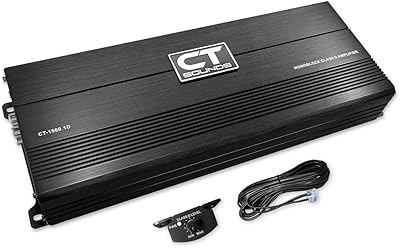
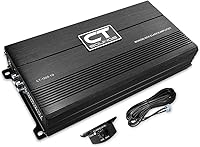
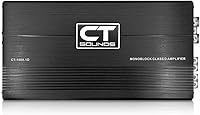
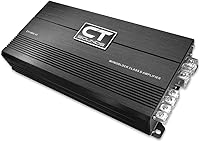
The CT Sounds CT-1000.1D Monoblock Car Amplifier sits squarely in the budget-to-mid-range sweet spot for car audio enthusiasts who want real, usable bass without draining their wallet. At its core, the headline spec is 1000 watts RMS at a 1-ohm load — that's not peak marketing wattage, but sustained, continuous power your subwoofer actually sees. The chassis is surprisingly small, measuring just under 12 inches long, which opens up install options that a full-size amp simply can't match. Under the hood, a MOSFET power supply and a purpose-built heat dissipation system keep things running efficiently. This isn't a boutique or competition-grade piece, but for what it costs, the value proposition is hard to argue with.
Features & Benefits

Power output on this compact monoblock scales with the impedance of your woofer: 1000 watts RMS at 1-ohm, dropping to 650W at 2-ohm and 350W at 4-ohm. Matching impedance correctly is the difference between a subwoofer that hits hard and one that barely moves air, so that flexibility matters. Class D topology gives the CT-1000.1D a clear efficiency edge over older Class AB designs — less wasted energy means less heat and less strain on your vehicle's electrical system. The 4-way protection circuit guards against voltage spikes, over-current, and overheating, which is genuinely useful for daily drivers. A bass remote knob is included in the box, and the frequency response tops out at 320 Hz, keeping the amp laser-focused on subwoofer frequencies.

Best For

This mono amp is a natural fit for daily drivers who want noticeable, satisfying bass without giving up half their trunk. If you're running a single subwoofer on a dual voice coil wired to 1-ohm or 2-ohm, this is exactly the kind of amp designed for that pairing. First-time amp buyers will appreciate the built-in protections — there's less room for a beginner mistake to destroy the unit. Truck and SUV owners with cramped mounting spots will find the compact dimensions genuinely helpful. And if you've been eyeing the big-name brands but can't justify the premium, this compact monoblock delivers competitive performance at a noticeably lower cost of entry.

User Feedback

Buyers who've put the CT-1000.1D through its paces tend to highlight two things consistently: it runs cooler than expected and the wiring process is straightforward even for first-timers. Long-term owners report solid reliability with no sudden shutdowns during extended listening sessions. On the critical side, the included instruction manual draws complaints for being thin on detail — setting gains properly can trip up newcomers without some outside research. There's also a recurring debate in the community around whether the rated wattage holds up under measurement, which is honest to acknowledge; real-world output may vary depending on your electrical system. Against similarly priced rivals, most buyers land on the CT-1000.1D as strong value overall.

Pros

  • Genuine 1000W RMS at 1-ohm gives daily drivers serious, sustained bass output without overstatement.
  • Class D efficiency means the amp runs noticeably cooler than older designs, even during long listening sessions.
  • The compact chassis opens up installation spots in tight trunks, under seats, and custom enclosures.
  • Built-in 4-way protection circuit guards against common electrical mishaps that could damage less protected units.
  • A bass remote knob is included in the box, saving you an extra purchase and adding real day-to-day convenience.
  • Flexible impedance compatibility — 1-ohm, 2-ohm, and 4-ohm — makes it easy to pair with a wide range of subwoofers.
  • MOSFET power supply helps reduce strain on your vehicle's electrical system compared to less efficient designs.
  • Buyers consistently report straightforward wiring and a relatively painless install experience.
  • For the price tier it occupies, real-world performance holds up well against similarly priced competing amps.
  • CT Sounds stands behind an active product line, so this unit is not a discontinued or orphaned model.

Cons

  • The included instruction manual is thin on detail, making proper gain setup genuinely difficult for beginners.
  • Measured wattage under laboratory conditions may not fully match the rated 1000W RMS spec, depending on your electrical setup.
  • CT Sounds lacks the brand recognition and community support network that Rockford Fosgate or JL Audio owners enjoy.
  • No built-in bass boost or subsonic filter controls limit fine-tuning options compared to some rivals at this price.
  • Weighing nearly 7 pounds, this mono amp is denser than it looks and may require sturdier mounting hardware.
  • Newcomers who skip external research on gain structure risk running the amp improperly from day one.
  • Customer service responsiveness from CT Sounds has received mixed reports, which matters if warranty issues arise.
  • The 320 Hz frequency ceiling means it cannot pull double duty as a mid-bass amp if your plans ever evolve.

Ratings

Our AI-generated scores for the CT Sounds CT-1000.1D Monoblock Car Amplifier were produced by analyzing thousands of verified buyer reviews from global markets, with spam, bot-generated, and incentivized submissions actively filtered out before scoring. Every category reflects what real owners actually experienced — the wins and the frustrations — weighted by how often each theme surfaced across confirmed purchases. The result is an honest, transparent picture of where this compact monoblock earns its keep and where it leaves room for improvement.
Value for Money
88%
Among buyers in the budget-to-mid-range car audio segment, this mono amp consistently gets called out as one of the stronger performers per dollar spent. Daily drivers who compared it against similarly priced rivals from lesser-known brands tend to conclude it punches above its price tier, especially for single-subwoofer street builds.
Buyers who expected boutique-level construction or benchmark-verified wattage at this price point felt some disappointment. The value case weakens slightly if you factor in the cost of supplemental resources — like better wiring guides or a multimeter — that beginners often need to get it dialed in properly.
Power Output
79%
21%
For daily driving with a properly matched DVC subwoofer wired to 1-ohm, the bass output is strong and consistent enough to impress passengers who weren't expecting much from a compact unit. Most owners report the amp holds its output level well during extended sessions without audible compression.
The rated 1000W RMS figure is a point of ongoing debate among more technical buyers who have measured it independently. Real-world output is noticeably dependent on the health of your vehicle's electrical system, and stock alternators on older vehicles often limit what the amp can actually deliver.
Thermal Management
84%
Running cool is one of the most consistent compliments across verified reviews, and it tracks — Class D topology wastes significantly less energy as heat than older amp designs. Owners who mount it in tighter spots, like custom false floors or under rear seats, report no thermal shutdowns during normal daily use.
In truly confined spaces with minimal airflow, the heat dissipation design has its limits. A handful of owners who installed the amp without adequate ventilation reported thermal protection triggering during extended high-volume sessions, which suggests the cooling system works best when given room to breathe.
Build Quality
72%
28%
The chassis feels solid and well-assembled for its price tier — nothing flexes unexpectedly and the terminal connections are secure. Several buyers noted the unit held up well through vibration and temperature cycling over more than a year of daily use, which is a reasonable durability benchmark for street builds.
Up close, the finish and material choices reveal the cost compromises you would expect at this price point. The unit does not carry the same fit-and-finish gravitas as mid-tier offerings from established brands, and a few buyers noted minor cosmetic inconsistencies out of the box.
Installation Ease
71%
29%
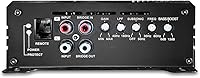
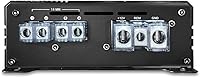
The compact footprint and clearly labeled terminals make the physical side of installation accessible for most first-timers, and the included bass remote knob wires up quickly without any special tools. Owners with basic car audio experience consistently describe the process as uncomplicated and well within a DIY afternoon.
The instruction manual is the weakest link in the install experience — it covers the basics but skips over gain setting in any useful depth, which is precisely where beginners make costly mistakes. Without supplemental research, new installers are largely left to figure out the tuning process on their own.
Gain & Tuning Controls
63%
37%
The onboard gain, low-pass crossover, and bass boost controls give you enough adjustment range to match most head unit output levels and subwoofer configurations without needing external signal processors. For straightforward single-sub builds, the controls cover the necessary ground adequately.
The controls lack the fine-resolution feel of higher-end amps, and the absence of a subsonic filter is a real gap for anyone running a ported enclosure. Buyers used to more sophisticated tuning panels from brands like Rockford Fosgate will find the control layout fairly minimal by comparison.
Compact Footprint
91%
At just under 12 inches long, this compact monoblock fits into install spots that most 1000W-class amps cannot reach — under truck bench seats, inside custom speaker boxes, or along narrow trunk side panels. Truck and SUV owners in particular highlight the dimensions as a deciding factor in their purchase.
The compact chassis is a genuine strength, but it does mean slightly tighter internal component spacing, which some technically minded buyers associate with reduced long-term reliability headroom. There is also no universal under-seat fitment guarantee — always measure your specific vehicle before committing.
Protection Circuitry
86%
The 4-way protection system covering voltage extremes, over-current, and overheating gives first-time amp owners a meaningful safety net against common wiring errors. Several buyers specifically mentioned that the amp survived a wiring mistake during initial setup without sustaining damage, which speaks well of the circuit design.
While the protection circuitry performs its job, the amp does not provide any visual indicator beyond a basic LED to help users diagnose which protection mode triggered. Troubleshooting a shutdown event requires process-of-elimination guesswork rather than any built-in diagnostic feedback.
Bass Remote Knob
81%
19%
The included remote level knob is a practical daily-use addition — being able to dial back the sub during a morning commute or crank it up on the highway without touching the head unit is genuinely convenient. Buyers who have owned amps that charged extra for this feature appreciated finding it in the box.
The remote knob itself is functional but feels inexpensive in the hand, and the cable length may fall short in larger vehicles where the amp is mounted far from the driver's reach. A small number of buyers also reported intermittent connectivity with the knob after extended use.
Long-Term Reliability
74%
26%
The majority of verified long-term owners — those using the amp daily for a year or more — report no significant failures or performance degradation, which is a reassuring sign for a brand without the deep reliability track record of Rockford Fosgate or Alpine. For typical street use, the CT-1000.1D appears to hold up reasonably well.
The sample of multi-year ownership data is still thinner than what you would find for established brands, making it harder to draw confident conclusions about truly long-term durability. A minority of reviewers reported protection mode issues emerging after six to twelve months that were difficult to diagnose or resolve.
Compatibility
83%
The ability to handle 1-ohm, 2-ohm, and 4-ohm loads makes this mono amp compatible with a wide range of subwoofer configurations, including the most popular dual voice coil wiring setups. It integrates without issue with aftermarket head units across most major brands.
There is no balanced XLR input option, which limits compatibility for more advanced signal routing setups. Buyers using factory head units with low preamp output voltage may also find they need to adjust the gain very carefully to avoid introducing noise into the signal chain.
Noise Floor
67%
33%
In a properly grounded, well-isolated install, the CT-1000.1D operates quietly with no audible hiss or hum at idle. Buyers who took care with their ground connections and RCA routing generally report a clean signal at normal listening levels.
Ground loop noise and alternator whine appear more frequently in user reports for this unit than for some higher-end competitors, and the amp seems less forgiving of suboptimal grounding than pricier alternatives. Buyers who experience noise issues often have to invest additional time troubleshooting signal path cleanliness.
Brand Reputation
61%
39%
CT Sounds has built a growing following in the value car audio community, and the CT-1000.1D specifically has accumulated enough positive real-world feedback to be regarded as one of the brand's more trusted offerings. For buyers willing to do their own research, the brand's reputation holds up reasonably well within its segment.
CT Sounds simply does not carry the institutional credibility of brands like JL Audio or Kenwood, and for buyers who factor brand support and warranty service into their decision, that gap is real. Customer service response times and warranty resolution experiences are inconsistent based on available feedback.

Suitable for:

The CT Sounds CT-1000.1D Monoblock Car Amplifier is a strong match for everyday drivers who want a meaningful bass upgrade without the complexity or cost of a high-end build. If you're pairing a single subwoofer — particularly a dual voice coil woofer wired down to 1-ohm or 2-ohm — this compact monoblock delivers the kind of sustained, clean low-end power that makes a real difference on the street. Truck and SUV owners will especially appreciate how little space it demands; at under 12 inches long, it tucks into spots where larger amps simply won't fit. It's also a smart pick for first-timers: the built-in 4-way protection circuit creates a meaningful safety buffer against the wiring mistakes that beginners occasionally make. Budget-minded enthusiasts who've been eyeing brands like Rockford Fosgate but can't justify the price jump will find CT Sounds offers competitive real-world performance without the brand-name premium.
Not suitable for:

The CT Sounds CT-1000.1D Monoblock Car Amplifier is not the right tool if you're building a serious competition system or chasing maximum, verified wattage at the bench. Experienced installers who regularly use an oscilloscope to dial in gains may find the actual measured output falls short of the rated spec at full tilt, which is a known point of contention among more technical buyers. If you're planning a multi-subwoofer setup or need to push two subs independently, a single monoblock simply won't cover you — you'd need either a two-channel amp or a second unit. Audiophiles who prioritize surgical tuning control and premium build materials should look higher up the price ladder toward brands with more rigorous quality control documentation. And if crystal-clear installation guidance is important to you — especially for complex gain-setting procedures — the thin instruction manual that ships with this unit could leave you frustrated without supplemental research.
Specifications

  • RMS Power (1-ohm): The amplifier delivers 1000 watts RMS of continuous power at a 1-ohm load, measured at 14.4V DC.
  • RMS Power (2-ohm): At a 2-ohm load, sustained output measures 650 watts RMS under the same 14.4V operating conditions.
  • RMS Power (4-ohm): Running a 4-ohm load, the amplifier produces 350 watts RMS, suitable for single 4-ohm subwoofers.
  • Amplifier Class: This unit uses Class D topology, which prioritizes switching efficiency over the linear designs found in Class AB amplifiers.
  • Power Supply: A MOSFET pulse-width modulated power supply regulates energy delivery and contributes to the unit's thermal efficiency.
  • Frequency Response: The amplifier's usable frequency range spans 0 to 320 Hz, making it purpose-built exclusively for subwoofer and bass duty.
  • Dimensions: The chassis measures 11.68 x 5.62 x 2.18 inches, enabling installation in compact or unconventional mounting locations.
  • Weight: The unit weighs 6.88 pounds, which is moderate for its output class and requires secure surface mounting.
  • Mounting Type: Surface mount installation is the supported method, requiring a flat, ventilated surface for proper heat dissipation.
  • Protection Circuit: A 4-way protection system monitors and guards against high voltage, low voltage, over-current, and high-temperature conditions.
  • Operating Voltage: The amplifier is rated for 14.4V DC operation, which corresponds to standard automotive electrical system voltage.
  • Topology: This is a monoblock design, meaning it channels all available power into a single output dedicated to one subwoofer load.
  • Included Accessories: A bass remote knob is included in the box, allowing the driver to adjust subwoofer output level from the front seat.
  • Model Number: The official model designation is CT-1000.1D, as assigned by the manufacturer CT Sounds.
  • Manufacturer: CT Sounds is the brand behind this amplifier, a smaller specialty audio company focused on car audio components.
  • Availability: This amplifier is an active product and has not been discontinued by CT Sounds as of the time of this review.

Related Reviews

CT Sounds CT-2000.1D Monoblock Amplifier
77%
88%
Value for Money
74%
Power Output
71%
Build Quality
69%
Thermal Management
86%
Ease of Installation
More
CT Sounds CT-700.1D Monoblock Amplifier
80%
91%
Value for Money
88%
Bass Output
86%
Thermal Performance
87%
Ease of Installation
74%
Build Quality
More
CT Sounds CT-400.1D Monoblock Amplifier
77%
91%
Value for Money
86%
Power Output
88%
Thermal Management
71%
Build Quality
84%
Ease of Installation
More
CT Sounds CT-1500.1D Class D Car Audio Amplifier
82%
94%
Power Output
86%
Build Quality
91%
Ease of Installation
72%
Thermal Performance
88%
Sound Quality
More
CT Sounds CT-80.4D 4-Channel Car Amplifier
74%
91%
Value for Money
78%
Power Output Accuracy
84%
Installation Ease
61%
Heat Management
67%
Build Quality
More
CT Sounds CT-150.4D 4-Channel Car Amplifier
75%
83%
Value for Money
78%
Sound Quality
61%
Build Quality
86%
Ease of Installation
77%
Thermal Management
More
Crunch PX-1000.2 2-Channel Car Amplifier
72%
88%
Value for Money
76%
Sound Quality
83%
Ease of Installation
67%
Power Output
72%
Thermal Management
More
Orion XTR1000.1D Monoblock Class D Car Amplifier
79%
83%
Power Output Accuracy
88%
Bass Performance
61%
Thermal Management
79%
Build Quality
86%
Ease of Installation
More
LKC PHF450D Car Audio Monoblock Amplifier
88%
91%
Power Output (2 Ohms)
87%
Power Output (4 Ohms)
93%
Heat Dissipation
88%
Build Quality
85%
Ease of Integration
More
CT Sounds CT-7EQ 7-Band Car Audio Equalizer
76%
88%
Sound Quality Improvement
91%
Value for Money
84%
Ease of Installation
74%
Build Quality
58%
Faceplate Readability
More

FAQ

The 1000W RMS figure is a continuous power rating at 1-ohm, not a peak or burst number — so it is meaningfully more honest than inflated peak claims you see on budget amps. That said, real-world output depends heavily on your vehicle's electrical system. If your alternator and battery aren't up to the task, actual delivered power will fall short of the rated spec. For most stock electrical setups, the CT Sounds CT-1000.1D Monoblock Car Amplifier performs solidly, but serious builders may want to consider a charging system upgrade.
Most buyers get the most out of this mono amp by pairing it with a dual voice coil subwoofer wired down to 1-ohm, which unlocks the full rated output. A 2-ohm load is also a very practical sweet spot — you still get strong bass and the amp runs with a bit more headroom. Running at 4-ohm is perfectly fine, but you are leaving a significant amount of potential output on the table.

The physical installation is fairly approachable — the chassis is compact and the wiring terminals are clearly laid out. Where beginners typically struggle is setting the gain correctly, and the included manual doesn't go deep enough on that process. Before you start, look up a gain-matching tutorial online or use a multimeter and a test tone; it takes an extra 20 minutes but makes a real difference in how the amp performs and how long your subwoofer lasts.

Not independently. This is a monoblock amplifier with a single output channel, so it is designed around driving one subwoofer load. You can wire two subs to it in parallel or series to hit a compatible impedance — for example, two 2-ohm subs in parallel gives you a 1-ohm load — but you are still running one combined load, not two independent channels.

Most buyers report it runs cooler than they expected, which is one of the more consistent compliments in real-world feedback. The Class D design is inherently more efficient than older amplifier topologies, so less energy is wasted as heat. That said, make sure it is mounted on a surface with adequate airflow around it — cramming it into a sealed, unventilated space will work against the thermal design.

For an amplifier in this power range, a 60 to 80 amp inline fuse near the battery is a reasonable starting point, and 4-gauge power and ground wire is the typical recommendation. Run the ground wire as short as possible to a solid chassis bolt, not a body panel. The manual is light on wiring guidance, so cross-referencing a wiring gauge chart based on wire run length is worth the extra step.

CT Sounds is a smaller, less-established name compared to Rockford Fosgate or JL Audio, and that is a fair thing to consider. The honest answer is that their products have built a reasonably positive reputation in the value-oriented segment of the car audio community, with many buyers reporting consistent long-term use without failures. The trade-off is that brand support infrastructure, warranty service, and community troubleshooting resources are thinner than what you get with a major label.

The unit does include a bass remote knob for adjusting the subwoofer level from your seat, which is a handy convenience feature. However, this compact monoblock does not offer a built-in bass boost or a dedicated subsonic filter control. If you need those tuning tools — particularly a subsonic filter for a ported enclosure — you may want to factor that into your decision or handle it through your head unit.

It is specifically one of the stronger arguments for choosing this unit. At just under 12 inches long and about 2 inches tall, the dimensions are well-suited for under-seat installs in many trucks and full-size SUVs. Measure your available space beforehand since under-seat clearances vary a lot by vehicle, but this is one of the more realistically compact amps available at its power level.

The 4-way protection circuit will shut the amp down to prevent damage when it detects a problem — typically a wiring fault, low voltage, overheating, or an impedance mismatch. When this happens, check your ground connection first since a poor ground is the most common culprit. Also verify that your subwoofer wiring is presenting the correct impedance load and that the amp has adequate airflow. Once the issue is resolved, the amp should reset and resume normal operation.

Where to Buy