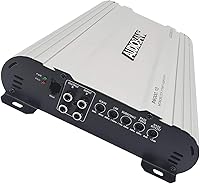
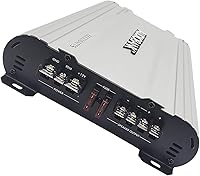

Overview

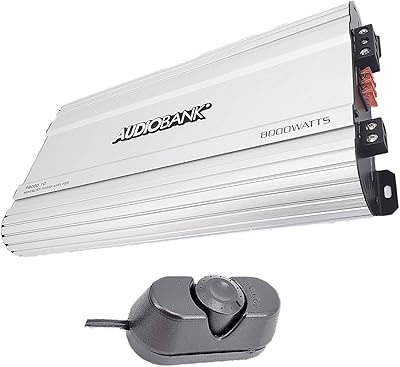
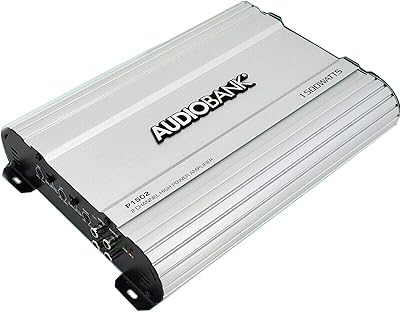
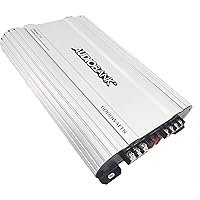
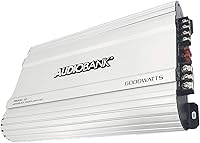
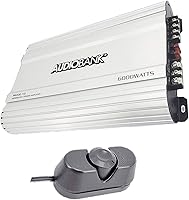
The Audiobank P6001 Monoblock Car Amplifier sits in a crowded corner of the budget car audio market, aimed at builders who want serious bass without spending serious money. Running Class D and rated stable down to 1-ohm operation, it is designed to pair with a single subwoofer in a clean mono setup. The chassis measures 4 by 9 by 14 inches — compact enough for most trunk installs. One thing worth getting straight before anything else: that 6000W figure is peak power, not RMS. Real continuous output will be a fraction of that, which is standard practice at this price tier but absolutely worth understanding upfront.

Features & Benefits

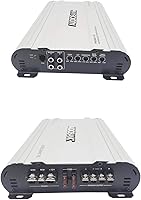
The P6001 brings a handful of genuinely useful design choices that go beyond raw spec numbers. Class D efficiency means less heat generated per watt of output, which matters when you are pushing a subwoofer hard on a long drive. The soft turn-on circuit is a small but smart touch — it prevents that jarring electrical surge when your head unit fires up. Thermal and short-circuit protection add real peace of mind during extended sessions. The aluminum alloy heatsink does meaningful work pulling heat away from the internals. LED indicators for power and protection status make it easy to spot trouble without pulling the amp from its mount.

Best For

This monoblock amp makes the most sense for a specific type of buyer. If you are building a budget bass setup — maybe a first system, a secondary vehicle, or just a daily beater — it fits that role well. It works particularly well paired with a 1-ohm or 2-ohm subwoofer where focused low-end is the priority. DIYers comfortable running wire, setting gains, and handling basic troubleshooting on their own will have a far better experience than someone expecting plug-and-play simplicity. If you need audiophile-grade output or plan on pushing it hard every single day at full tilt, this budget car amp is probably not the right call.

User Feedback

Across 143 ratings, the P6001 lands at 3.7 stars — a split that tells its own story. Buyers who went in with realistic expectations tend to come away reasonably satisfied: decent bass punch for the money, a straightforward wiring layout, and those LED indicators get mentioned repeatedly as a handy real-world convenience. On the other side, a notable portion of negative reviews point to early unit failures, overheating under sustained load, and wattage claims that do not hold up under scrutiny. Longevity is clearly the fault line. If you plan on running this amp at high volume daily, durability is a legitimate concern worth weighing carefully before buying.

Pros

  • Class D design runs efficiently, generating less heat per watt than older amplifier topologies.
  • Stable down to 1 ohm, which opens up compatibility with a wide range of subwoofer configurations.
  • Soft turn-on circuit is a thoughtful touch that protects your vehicle's electrical system at startup.
  • Compact dimensions make it easier to tuck into tighter trunk or under-seat install locations.
  • LED power and protection indicators let you quickly spot problems without dismantling your install.
  • Thermal and short-circuit protection adds a reasonable safety net during high-demand use.
  • At well under a hundred dollars, the P6001 offers a low-risk entry point into monoblock amplification.
  • Lightweight build at under 6 pounds makes handling and mounting noticeably easier during solo installs.
  • Straightforward wiring layout is consistently praised by real buyers for reducing installation headaches.

Cons

  • Advertised wattage is peak-only; real continuous output is a fraction of the headline number.
  • Longevity is a genuine concern, with multiple buyers reporting early failures or unit shutdowns under load.
  • Overheating complaints surface regularly in negative reviews, especially during sustained high-volume use.
  • Customer support responsiveness appears inconsistent based on buyer feedback patterns.
  • The 3.7-star average across 143 ratings reflects a meaningful proportion of disappointed buyers, not just a few outliers.
  • Not well-suited for demanding daily use scenarios where reliability over time is a priority.
  • Power claims without clear RMS specs make it difficult to match accurately with a subwoofer's true requirements.
  • Build quality feels commensurate with the low price point, which may translate to a shorter usable lifespan.
  • Limited brand reputation makes it harder to assess warranty support or find consistent technical documentation.

Ratings

The scores below reflect our AI-driven analysis of verified global buyer reviews for the Audiobank P6001 Monoblock Car Amplifier, with spam, bot activity, and incentivized feedback actively filtered out to preserve accuracy. We have weighted both the praise and the recurring frustrations equally, so the numbers you see here represent the honest middle ground between enthusiastic first-time builders and buyers who ran into real problems. Where this amp earns its price and where it falls short are both reflected without bias.

Value for Money
74%
26%
For buyers who go in knowing this is a budget-tier amp with inflated peak specs, the price-to-bass ratio is genuinely hard to argue against. Casual daily drivers who want audible low-end improvement without a major investment consistently call it a reasonable trade-off.
The value equation shifts considerably for anyone who experiences an early failure — getting a replacement or refund at this tier is rarely smooth. A handful of buyers felt the real-world output did not justify even the modest asking price once the watt claims were put in context.
Power Accuracy
38%
62%
The amp does move air and produce audible bass, which satisfies buyers who set their expectations around actual Class D budget performance rather than the headline watt figure. Paired with the right 1-ohm or 2-ohm sub, users report it kicks adequately for casual street-level listening.
The 6000W peak claim is one of the most cited frustrations across negative reviews — buyers feel misled when the real-world output falls noticeably short of what the number implies. This is a systemic issue at this price tier, but it damages trust in the P6001 specifically because the gap is so wide.
Build Quality
56%
44%
The aluminum alloy heatsink feels solid and is one of the better physical components on the unit, giving the amp a slightly more substantial feel than some rivals in the same bracket. The overall chassis does not feel flimsy out of the box, which reassures buyers during the initial install.
Long-term durability is where build quality concerns compound — internal component quality at this price point is reflected in early failure reports from buyers who pushed the amp regularly. The exterior may look the part, but several users found the internals could not sustain consistent real-world demands.
Thermal Management
52%
48%
The aluminum heatsink does its job under moderate, intermittent listening conditions, and buyers running the amp at sensible volumes in well-ventilated locations rarely trigger the thermal protection circuit. For casual summer commutes with the system at mid-volume, heat is not typically a problem.
Extended high-volume sessions, enclosed mounting locations, or hot climates push this amp to its thermal limits faster than many buyers expect. Overheating is one of the most consistent complaints in negative reviews, with the protection LED cutting in and killing the audio mid-drive more than occasionally.
Installation Ease
78%
22%
The compact dimensions and sub-6-pound weight make the physical mounting process noticeably easier than bulkier competition amps, and buyers with basic wiring knowledge consistently describe the hookup process as straightforward. The soft turn-on remote circuit is a genuinely helpful feature that simplifies head unit integration.
There is no wiring kit included, and the documentation is minimal — buyers without prior car audio experience may find themselves searching for guidance online before they feel confident proceeding. A few users also noted that terminal labeling could be clearer.
Bass Output Quality
63%
37%
At moderate gain settings with a well-matched subwoofer, the P6001 produces full, rounded bass that holds up fine for hip-hop, EDM, and similar bass-forward genres during everyday driving. Buyers not chasing audiophile-grade accuracy generally find the low-end output satisfying for the money.
At higher gain settings, bass quality can become loose and undefined rather than tight and punchy, which frustrates buyers looking for accurate sub performance. Without onboard crossover controls clearly documented, dialing in a clean sound requires more external tuning effort than the amp facilitates on its own.
Protection Circuitry
67%
33%
The presence of both thermal and speaker short-circuit protection is a meaningful feature at this price point, and buyers who have had poorly protected budget amps fail catastrophically appreciate having that safeguard in place. The protection circuit responding correctly to a wiring fault was cited positively by a few technically aware buyers.
The protection LED triggers more frequently than users expect — sometimes from legitimate overheating, but occasionally under conditions where a higher-quality amp would continue operating normally. This erratic behavior makes it hard for some buyers to trust whether the circuit is responding to a real issue or just the amp hitting its limits prematurely.
LED Indicators
81%
19%
The dual LED indicators for power status and protection activation are consistently mentioned as one of the most practically useful features by real buyers, especially during troubleshooting. Being able to see at a glance whether the amp is running normally or has entered protection saves significant diagnostic time.
While the indicators are helpful, the lack of more granular feedback — such as distinguishing between thermal protection and short-circuit protection — means you still have to do your own detective work when something goes wrong. A single protection light covers too many possible failure modes to be fully informative.
Compatibility
72%
28%
The 1-ohm stable rating opens this amp up to a wide variety of subwoofer wiring setups, giving buyers flexibility when matching it with dual voice coil or multiple-driver configurations. Most standard head units with RCA pre-outs connect without issue.
Without clearly published RMS specs, accurately matching this amp to a subwoofer's power requirements requires guesswork, which can result in either under-driving the sub or running the amp too hard. Buyers with more demanding subs have reported compatibility frustrations as a result.
Noise & Signal Clarity
59%
41%
In installs where grounding is done correctly and RCA cables are routed cleanly, buyers report acceptably quiet performance with no significant background hiss during normal listening. For bass-heavy content, minor noise issues are largely masked anyway.
Ground loop hum and alternator whine appear in buyer complaints with enough regularity to suggest the internal signal path is sensitive to less-than-perfect wiring conditions. Budget component tolerances are likely a contributing factor, making clean installation technique more critical than it would be with a higher-end unit.
Longevity & Reliability
44%
56%
Buyers who use the amp casually — moderate volumes, good ventilation, and moderate daily use — do report extended periods of trouble-free operation. In lighter applications it can hold up reasonably well, and some users have logged consistent use without incident.
Reliability under sustained, demanding conditions is the single biggest weakness this amp carries across all user feedback. Reports of units failing within weeks or a few months of purchase are prominent enough in the review pool to be a serious consideration, particularly for buyers planning heavy daily use.
Customer Support
41%
59%
A small number of buyers report successfully resolving issues through the seller, and when support does respond constructively, the experience is described as adequate. For simple questions at the point of purchase, response times appear reasonable.
The dominant pattern in negative reviews involving post-purchase problems is difficulty getting meaningful support from Audiobank — slow responses, unclear warranty terms, and unresolved return experiences feature prominently. At this price tier, limited after-sales infrastructure is a known risk, but it still frustrates buyers who encounter unit failures.
Packaging & Presentation
66%
34%
The amp arrives securely packed and in acceptable condition in most cases, and buyers generally report no shipping damage upon unboxing. The unit itself presents reasonably well visually for a budget product.
There is no wiring hardware, installation guide, or accessory kit included in the box, which catches some buyers off guard — especially first-time installers who assumed basic components would be provided. The overall unboxing experience does little to build confidence in the product at the moment it matters most.

Suitable for:

The Audiobank P6001 Monoblock Car Amplifier is a solid match for budget-conscious car audio enthusiasts who want to add real bass to their system without committing to a high-end spend. It works particularly well for someone building out a first subwoofer setup in a daily driver, where the goal is noticeable low-end improvement rather than competition-level output. DIYers who are comfortable handling their own wiring, setting gains by ear or with a multimeter, and troubleshooting basic issues will get the most out of this monoblock amp. It also makes sense as a secondary amp for an experimental build, a beater car, or any situation where budget is the primary constraint. Buyers pairing it with a 1-ohm or 2-ohm subwoofer in a modest enclosure should find the P6001 delivers adequate punch for everyday listening at a price that is hard to argue with.

Not suitable for:

Anyone expecting the Audiobank P6001 Monoblock Car Amplifier to deliver 6000 watts of continuous, usable power should look elsewhere — that figure is a peak rating, and real-world RMS output is substantially lower, which is a critical distinction at this price tier. Buyers planning to run their system at high volume for extended daily sessions should factor in that longevity is one of the most common complaints from real users, with some units reporting overheating or early failure under sustained load. This budget car amp is also not the right fit for audiophiles or anyone chasing clean, accurate low-frequency reproduction, since output quality at this price point reflects the cost. If you are building a dedicated competition system or want an amplifier that can handle years of hard daily use without worry, the P6001 is likely to frustrate rather than satisfy. Those without basic car audio installation experience may also struggle, as there is little indication of robust customer support to fall back on.

Specifications

  • Brand: Manufactured by Audiobank, a budget-tier car audio brand.
  • Model: Model number P6001, a single-channel monoblock amplifier.
  • Amplifier Class: Class D topology, which prioritizes power efficiency over linear amplification.
  • Channels: Single-channel (monoblock) configuration, designed exclusively for subwoofer use.
  • Peak Output: Rated at 6000W peak power; this is a maximum burst figure, not a continuous RMS rating.
  • Impedance: Stable down to 1 ohm, allowing compatibility with low-impedance subwoofer wiring configurations.
  • Supply Current: Draws up to 40 amps from the vehicle's electrical system under load.
  • Dimensions: Measures 4 x 9 x 14 inches (H x W x L), offering a compact footprint relative to its power class.
  • Weight: Weighs 5.98 pounds, light enough for straightforward single-person installation.
  • Heatsink: Heavy-duty aluminum alloy heatsink is integrated into the chassis for passive heat dissipation.
  • Protection: Built-in thermal protection and speaker short-circuit protection circuitry guard against damage during use.
  • Turn-On Circuit: Soft turn-on circuit with remote trigger input reduces electrical surge stress at system startup.
  • Indicators: Dual LED indicators display power status and protection activation for quick visual diagnostics.
  • Mounting Type: Surface mount design allows secure attachment to trunk floors, side panels, or custom amp racks.
  • Certification: FCC certified, meeting U.S. federal communications standards for electronic devices.
  • Package Contents: Comes packaged in a standard box; Audiobank branding on packaging, no installation hardware listed.
  • ASIN: Amazon standard identification number is B085HCPV47.
  • Availability Date: First made available for purchase on Amazon in October 2019.

Related Reviews
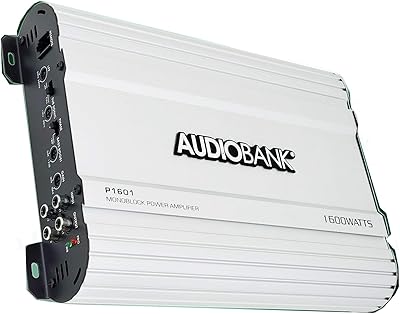
Audiobank P1601 Monoblock Car Amplifier
73%
84%
Value for Money
57%
Power Output Accuracy
88%
Installation Experience
61%
Thermal Management
76%
Bass Quality
More
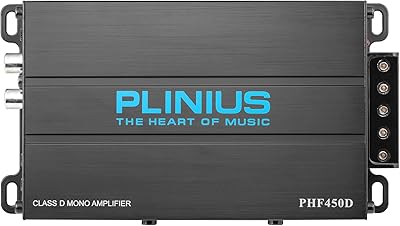
LKC PHF450D Car Audio Monoblock Amplifier
88%
91%
Power Output (2 Ohms)
87%
Power Output (4 Ohms)
93%
Heat Dissipation
88%
Build Quality
85%
Ease of Integration
More
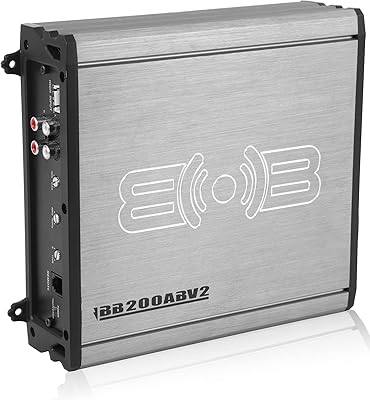
Belva BB200ABv2 Monoblock Car Amplifier
76%
88%
Value for Money
79%
Bass Output Quality
91%
Ease of Installation
61%
Thermal Management
67%
Build Quality
More
Audiobank P8001 Monoblock Car Amplifier
63%
74%
Value for Money
31%
Power Accuracy
81%
Ease of Installation
57%
Build Quality
53%
Thermal Management
More
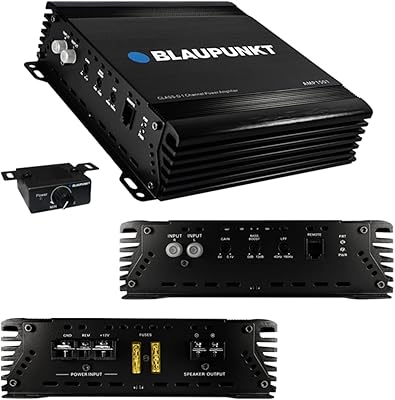
Blaupunkt AMP1500M Monoblock Car Amplifier
73%
81%
Value for Money
63%
Real-World Power Output
88%
Ease of Installation
77%
Audio Clarity
58%
Build Quality
More
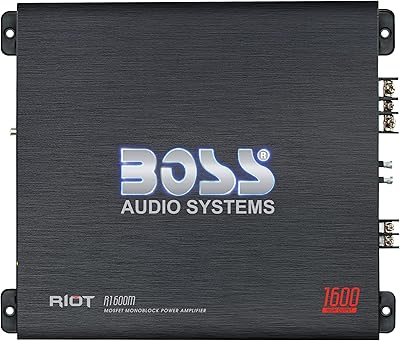
BOSS Audio R1600M Monoblock Car Amplifier
72%
83%
Value for Money
88%
Ease of Installation
79%
Bass Output
61%
Build Quality
86%
Signal Flexibility
More
Planet Audio TR1500.1M Monoblock Car Amplifier
70%
88%
Value for Money
79%
Bass Output & Performance
83%
Ease of Installation
63%
Build Quality
57%
Thermal Management
More
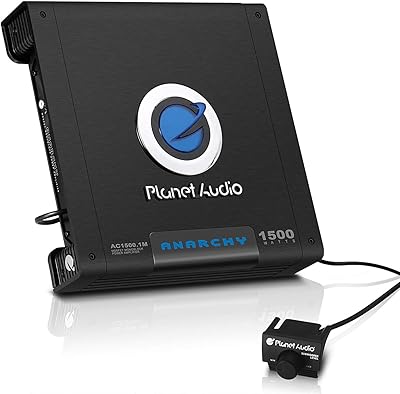
Planet Audio AC1500.1M Monoblock Car Amplifier
75%
91%
Value for Money
78%
Bass Output Quality
86%
Ease of Installation
61%
Thermal Management
67%
Build Quality
More
Planet Audio AC2500.1M Monoblock Car Amplifier
85%
92%
Performance
95%
Bass Output
85%
Ease of Installation
65%
Thermal Performance
88%
Build Quality
More
Audiobank P1004 4-Channel Car Amplifier
69%
78%
Value for Money
71%
Sound Quality
57%
Build Quality
54%
Reliability
41%
Advertised Power Accuracy
More

FAQ

The 6000W figure is a peak power rating, which represents the absolute maximum burst output under ideal conditions for a very short duration. The continuous RMS power — the number that actually matters for matching with a subwoofer — will be significantly lower. Budget amps at this price point routinely advertise peak figures that far exceed their practical output, so always check subwoofer RMS ratings and set gain levels accordingly rather than trusting the headline watt number.

You can, as long as the combined wiring configuration results in an impedance load of 1 ohm or higher. For example, two 2-ohm subs wired in parallel would present a 1-ohm load, which this monoblock amp is rated to handle. Just keep in mind that running at minimum impedance for extended sessions can increase heat buildup, so make sure there is adequate airflow around the heatsink.

The amp draws up to 40 amps from the supply current spec, so a 50-amp inline fuse near the battery is a reasonable starting point. For power and ground wire, 4-gauge cable is typically appropriate for this current draw over typical trunk-run distances. Always keep the ground wire as short and direct as possible — a bad ground is one of the most common causes of noise and protection light triggering.

A protection light typically indicates one of a few things: the amp is overheating, there is a wiring short somewhere, or the impedance load is too low. Start by checking that your subwoofer wiring is correct and that the combined impedance is not dropping below 1 ohm. Also make sure the amp has proper airflow — if it is enclosed or pressed against a surface with no clearance, heat will trigger the protection circuit quickly.

It is manageable if you have a basic understanding of car audio wiring — power from the battery, ground to chassis, remote wire from the head unit, and RCA inputs from the source. That said, there is no included wiring kit, and the product does not come with a detailed installation manual. If you have never done a car amp install before, watching a few tutorial videos beforehand will save you a lot of frustration.

The product listing does not specify onboard crossover or bass boost controls, which are common features even on budget amps. Before purchasing, it is worth confirming whether those adjustments are available on the unit itself or if you will need to rely on your head unit or an external processor for tuning.

Alternator whine is almost always a grounding issue at this price tier. Make sure your ground wire is bolted directly to bare metal chassis — not painted or coated surfaces. Also verify that the RCA cables are routed away from power wires, keeping them on opposite sides of the vehicle if possible. A ground loop isolator can help as a last resort, but fixing the ground connection properly usually resolves it entirely.

This is honestly where buyer feedback gets divided. Users who run it at moderate volumes in a casual daily listening setup tend to report reasonable satisfaction. Those who push it consistently at high output report a higher rate of early failures and overheating problems. If your typical listening involves loud, extended sessions, it is worth factoring in that durability at this price point is not guaranteed over the long term.

Single subwoofers rated at 1-ohm or 2-ohm final impedance are the best match for the P6001. Since the true RMS output is lower than the peak number suggests, pairing it with a sub that has a moderate RMS rating rather than a high-power competition driver will give you the best results. Overpowering the amp by connecting a very demanding sub can cause the protection circuit to engage frequently.

Audiobank does not prominently advertise a detailed warranty policy, and buyer feedback suggests that customer support responsiveness can be inconsistent. If post-purchase support and warranty service are important factors for you, that is worth considering before buying. For a low-cost amp used in a casual setup, many buyers simply accept the risk, but it is not the ideal choice if you need long-term manufacturer backing.