Overview

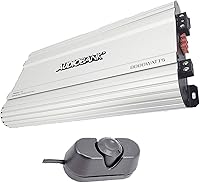
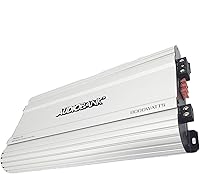
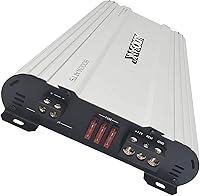
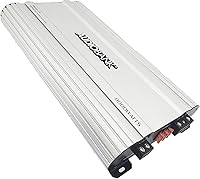
The Audiobank P8001 Monoblock Car Amplifier is a Class D single-channel amp aimed squarely at budget-conscious builders who want real bass without spending serious money. It runs stable at 1-ohm impedance, which means you can pair it directly with most budget subwoofers without hunting for an impedance-matching solution. The physical footprint — 14 by 9 by 4 inches — is manageable for trunk installs, and the aluminum alloy chassis feels reasonably solid. That said, this monoblock amp sits in a tier where the headline wattage figure deserves healthy skepticism; peak power ratings in this price range rarely match real-world measurements, so calibrate expectations accordingly before buying.

Features & Benefits

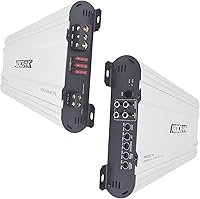
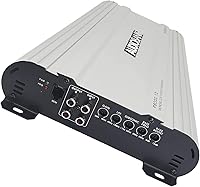
A few practical touches make the P8001 more installer-friendly than you might expect at this price point. The soft turn-on circuit reduces the voltage spike your electrical system absorbs every time you fire up the car — a small detail that adds up over time. Thermal protection and speaker short-circuit safeguards are both on board, cutting power automatically if the amp overheats or detects a wiring fault. The remote turn-on wire integrates with your head unit just like any standard amp, and the LED status indicators on the faceplate make diagnosing problems noticeably easier. The aluminum heatsink manages heat adequately during moderate listening sessions.

Best For

This budget car amp makes the most sense for someone assembling their first bass setup on a tight budget. If you're running a single 4-ohm or dual-voice-coil sub wired down to 1 ohm, the P8001 handles that configuration without issue. It also suits secondary vehicle builds — a daily driver beater, a seasonal car — where you want more low-end punch than the factory system delivers but aren't ready to invest in a higher-tier rig. Use at least 4-gauge power wire and set the gain conservatively using a multimeter or by ear; it'll perform better and hold up longer that way.

User Feedback

With a 3.8-star average across roughly 250 ratings, the reception is decent but far from unanimous. Buyers who rate it highly usually cite easy installation and the fact that it produces audible, satisfying bass for the price — reasonable praise for the segment. The recurring complaints are harder to dismiss: a number of reviewers report that real output falls noticeably short of the marketed wattage, and a subset mention heat buildup issues during longer sessions with the gain pushed up. A few also note units arriving non-functional or failing within a few months. Warranty and customer service feedback is largely absent from reviews, which is worth keeping in mind.

Pros

  • 1-ohm stable operation makes it compatible with most budget subwoofer wiring configurations out of the box.
  • Built-in thermal and short-circuit protection adds a layer of safety that not all entry-level amps include.
  • The soft turn-on circuit is a thoughtful touch that reduces electrical stress on your vehicle's system over time.
  • LED power and protection indicators make it easier to quickly diagnose issues without a multimeter.
  • Compact dimensions make trunk or under-seat installation manageable even in smaller vehicles.
  • Remote turn-on wiring integrates cleanly with standard head unit accessory outputs.
  • Buyers consistently praise how straightforward the installation process is, even for beginners.
  • Ranked among the top car mono amplifiers on Amazon, suggesting solid market traction for the price tier.
  • The aluminum alloy heatsink provides adequate thermal dissipation during moderate listening use.

Cons

  • Advertised peak wattage is heavily inflated — real RMS output is a fraction of the marketed figure.
  • Some verified buyers report units failing within a few months of regular use, raising durability concerns.
  • Heat buildup becomes a noticeable problem when the gain is pushed higher during extended sessions.
  • Warranty support and customer service are largely absent from owner feedback, which is a red flag.
  • A subset of buyers report receiving non-functional units, suggesting inconsistent quality control.
  • Not a reliable match for higher-end subwoofers that require accurate, stable RMS power delivery.
  • Gain calibration is easy to get wrong without guidance, and the manual provides minimal useful direction.
  • The 3.8-star average across 254 ratings reflects a mixed ownership experience that buyers should weigh carefully.

Ratings

The Audiobank P8001 Monoblock Car Amplifier has been evaluated by our AI rating engine after analyzing verified global buyer reviews, with spam, bot-generated, and incentivized feedback actively filtered out. The scores below reflect an honest composite of real ownership experiences — strengths and frustrations included — so you get a clear picture of where this budget car amp delivers and where it falls short.

Value for Money
74%
26%
For buyers on a tight budget who just want to feel more bass on their daily commute, the P8001 punches reasonably well relative to its price tag. Most first-time installers report being genuinely surprised by the audible output improvement over a factory system, which goes a long way at this price point.
The value calculation gets murkier when you factor in the inflated wattage claims — you're not getting anywhere near 8000W of usable power, which affects how well the amp pairs with your sub. Buyers who eventually measure real output often feel the pricing is only fair, not exceptional.
Power Accuracy
31%
69%
The amp does produce bass output that noticeably outperforms a stock head unit, and for casual listeners who aren't bench-testing the hardware, the perceived loudness improvement is real enough to satisfy.
The advertised 8000W peak figure is the single biggest sticking point in buyer feedback — verified owners who measure output consistently report real RMS delivery that is a fraction of what's marketed. This gap misleads buyers trying to properly match the amp to a subwoofer's power handling, and it's a recurring source of post-purchase disappointment.
Ease of Installation
81%
19%
First-time builders consistently praise how approachable the wiring layout is — the terminal labeling is clear, the remote turn-on wire integrates cleanly with any standard head unit, and the soft turn-on circuit means you don't get jarring startup thumps. Several buyers with zero prior experience reported completing the install in an afternoon.
The included documentation is thin, and there's little practical guidance on gain calibration or recommended wire gauge — gaps that trip up true beginners. Without that context, some users set the gain too high out of the box, which leads to distortion and premature wear.
Build Quality
57%
43%
The aluminum alloy heatsink feels solid to the touch and the overall chassis has a reasonable fit for the price tier. At just over 7 pounds, the unit has enough heft to suggest it isn't entirely hollow, and the surface-mount design sits flush without flex during installation.
A meaningful number of buyers report units arriving non-functional or developing faults within a few months of regular use, which points to inconsistent manufacturing quality control. The build impression at unboxing doesn't always translate to long-term durability, particularly for users who push the amp harder.
Thermal Management
53%
47%
During moderate listening sessions — say, a 30-minute commute at reasonable volume — the heatsink does its job and the amp stays in normal operating range. The thermal protection circuit does trigger correctly when things get too hot, which at least prevents catastrophic failure.
Extended high-volume use is where the heat management struggles become apparent. Multiple owners report the amp going into thermal shutdown during long drives or loud sessions with gain set above the midpoint, and a trunk mounted in a poorly ventilated enclosure makes the problem noticeably worse.
Protection Circuitry
72%
28%
Having both thermal shutdown and speaker short-circuit protection built into a budget amp is a genuine plus — it gives less experienced installers a safety net that prevents a wiring mistake from frying the unit or the subwoofer. The LED protection indicator responding correctly to fault conditions is also consistently noted as helpful.
Some buyers report the protection circuit triggering frequently even during normal use, which suggests the threshold may be set conservatively or that certain units have calibration inconsistencies. Frequent protection-mode trips interrupt the listening experience and raise questions about the amp's headroom.
LED Indicators
78%
22%
The dual LED setup — one for power status, one for protection events — is a practical inclusion that most buyers appreciate during setup and troubleshooting. Being able to glance at the amp and immediately know whether a protection event has occurred saves real time during diagnosis.
The indicators are functional but basic — there's no granularity to tell you whether a protection trigger was thermal, short-circuit, or another fault. Buyers dealing with recurring issues have to do additional troubleshooting to isolate the root cause.
Bass Output Quality
66%
34%
For a budget mono build, the P8001 produces bass that's punchy and satisfying enough for everyday listening in a compact or mid-size vehicle. Paired with an entry-level 10-inch or 12-inch sub at a conservative gain setting, most owners find the low-end presence meaningfully better than any factory setup.
At higher volumes, some buyers notice a looseness or muddiness to the bass that points to the amp running out of clean headroom. The lack of documented RMS output also makes it harder to optimize the sub and amp pairing, which leaves some builds underperforming their potential.
1-Ohm Stability
76%
24%
The amp genuinely handles a 1-ohm load without immediately going into protection, which is a practical advantage for buyers running dual-voice-coil subs wired down for maximum output. This removes a compatibility barrier that would otherwise require additional hardware.
Running at 1 ohm consistently does push the amp's thermal limits harder, and several buyers who specifically chose this configuration report more frequent heat-related shutdowns compared to those running at higher impedances.
Longevity & Reliability
44%
56%
A portion of buyers who use this monoblock amp conservatively — moderate volume, good ventilation, properly set gain — report months of trouble-free use. For seasonal or occasional-use setups, the lifespan concern is less acute.
Reliability is the most consistent weakness in the owner feedback pool. Reports of units failing within weeks or a few months of purchase are frequent enough to be a genuine concern, not an outlier. The absence of reliable warranty support amplifies this risk significantly for buyers who encounter problems.
Warranty & Support
29%
71%
Purchasing through a major retailer like Amazon provides at least a baseline return window, which is the most practical safety net available for buyers of this amp.
Manufacturer warranty terms are not clearly communicated, and verified buyer feedback on after-sale support from Audiobank is nearly nonexistent — which is a red flag. Buyers who experience a fault outside the retailer return window have limited recourse, making this one of the weakest aspects of the ownership experience.
Compatibility
82%
18%
The standard 12V DC input, conventional remote turn-on wiring, and broad impedance compatibility mean this budget car amp works with nearly any head unit and subwoofer combination a beginner is likely to put together. There are very few edge cases where it simply won't connect.
While electrically compatible with most setups, the amp's undocumented real RMS output creates a mismatch risk when pairing with quality subwoofers that need accurate power delivery to perform and stay protected.
Form Factor
71%
29%
At 14 x 9 x 4 inches, the P8001 fits comfortably in most trunk or hatch installations without requiring major reorganization of cargo space. The weight is manageable for a single-person install.
The 4-inch height rules out under-seat mounting in most vehicles, limiting placement flexibility compared to slimmer competitors in the same price bracket. Buyers hoping to hide the amp out of sight under a rear seat will likely need a different option.

Suitable for:

The Audiobank P8001 Monoblock Car Amplifier is a practical fit for first-time car audio builders who want to add real bass to their system without committing to a high-end budget. If you're running a single subwoofer — especially one wired down to a 1-ohm load — this amp handles that setup without requiring additional hardware. It works well as a secondary build: think a beater daily driver, a seasonal vehicle, or a car you're experimenting on before investing in something more serious. Installers who appreciate having thermal and short-circuit protection already built in will find the setup process straightforward, and the LED indicators are a genuine help when troubleshooting. For anyone whose main priority is getting more bass output for less money, the P8001 checks enough boxes to be worth considering.

Not suitable for:

The Audiobank P8001 Monoblock Car Amplifier is not the right choice for buyers who need verified, consistent power output — the claimed wattage figures are peak ratings that don't reflect real-world performance, and that gap matters if you're trying to properly match an amp to a subwoofer's RMS power handling. Enthusiasts building a serious or long-term system should look elsewhere, since durability concerns appear frequently enough in owner feedback to be a legitimate worry. This amp is also a poor fit for anyone pushing high-volume listening sessions regularly, as heat management can become an issue when the gain is set aggressively. If you're investing in a quality subwoofer, pairing it with this budget car amp risks underdriving or eventually damaging your sub due to inconsistent output. Buyers who expect responsive manufacturer support or a reliable warranty process should temper expectations significantly.

Specifications

  • Brand: Manufactured by Audiobank, a budget-focused car audio brand.
  • Model Number: The model designation for this unit is P8001.
  • Amp Class: Class D topology is used for efficient power conversion with minimal heat waste.
  • Channels: Single-channel monoblock configuration, designed exclusively for subwoofer use.
  • Peak Output: Manufacturer-rated peak output is 8000W, though real-world RMS figures will be substantially lower.
  • Impedance: Stable operation at 1-ohm load, compatible with standard 2-ohm and 4-ohm subwoofer configurations as well.
  • Input Voltage: Operates on a standard 12V DC vehicle electrical system.
  • Dimensions: Physical footprint measures 14 x 9 x 4 inches (L x W x H).
  • Weight: Unit weighs approximately 7.19 pounds, making trunk or under-seat mounting feasible.
  • Heatsink Material: Heavy-duty aluminum alloy heatsink is used to manage thermal output during operation.
  • Mounting Type: Designed for surface mounting in a vehicle trunk or cargo area.
  • Turn-On Circuit: Includes a soft turn-on circuit to reduce electrical surge stress at vehicle startup.
  • Protection: Onboard thermal protection and speaker short-circuit protection circuitry are both included.
  • Remote Circuit: Remote turn-on and turn-off circuit connects directly to a head unit accessory wire.
  • LED Indicators: Dedicated LED indicators display both power status and protection-trigger status on the faceplate.
  • Amazon Ranking: Ranked #52 in the Car Mono Amplifiers category on Amazon at the time of evaluation.
  • Customer Rating: Holds a 3.8 out of 5 star average based on 254 ratings on Amazon.
  • Release Date: First made available for purchase in October 2019.

Related Reviews
Audiobank P6001 6000W Class D Monoblock Car Amplifier
86%
90%
Audio Performance
87%
Ease of Installation
91%
Thermal Protection
85%
Build Quality
89%
Power Output
More
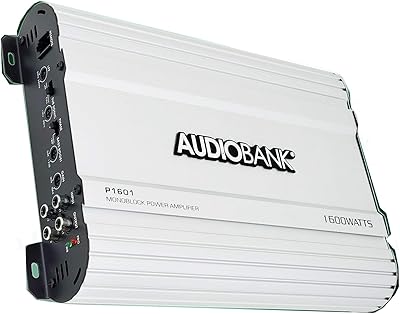
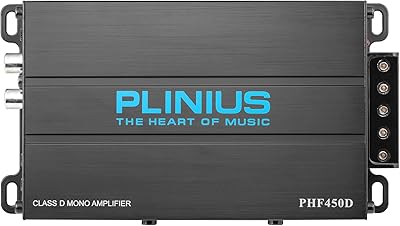
Audiobank P1601 Monoblock Car Amplifier
73%
84%
Value for Money
57%
Power Output Accuracy
88%
Installation Experience
61%
Thermal Management
76%
Bass Quality
More
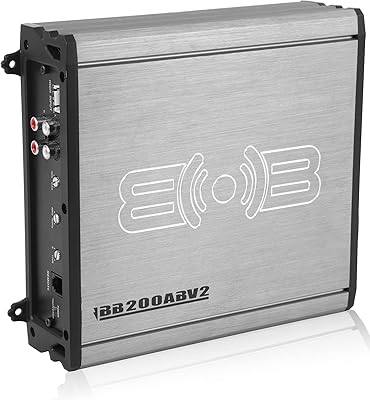
LKC PHF450D Car Audio Monoblock Amplifier
88%
91%
Power Output (2 Ohms)
87%
Power Output (4 Ohms)
93%
Heat Dissipation
88%
Build Quality
85%
Ease of Integration
More
Belva BB200ABv2 500W Monoblock Car Amplifier
85%
88%
Bass Performance
91%
Installation Ease
85%
Sound Clarity
89%
2-Ohm Stability
82%
Build Quality
More
Planet Audio AC2500.1M Monoblock Car Amplifier
85%
92%
Performance
95%
Bass Output
85%
Ease of Installation
65%
Thermal Performance
88%
Build Quality
More
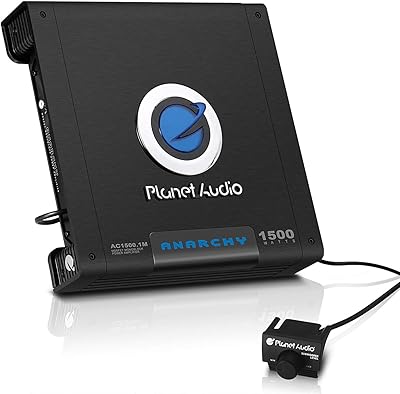
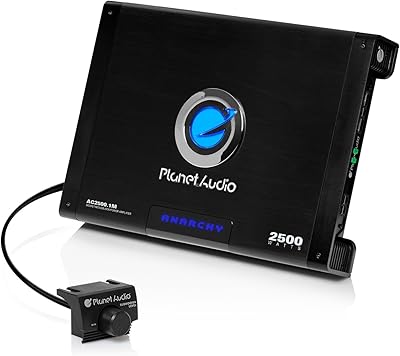
Planet Audio AC1500.1M Monoblock Car Amplifier
75%
91%
Value for Money
78%
Bass Output Quality
86%
Ease of Installation
61%
Thermal Management
67%
Build Quality
More
BOSS Audio R1600M Monoblock Car Amplifier
72%
83%
Value for Money
88%
Ease of Installation
79%
Bass Output
61%
Build Quality
86%
Signal Flexibility
More
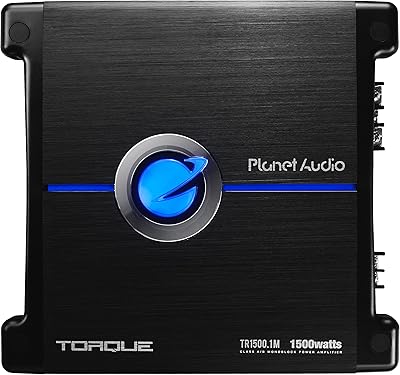
Planet Audio TR1500.1M Monoblock Car Amplifier
70%
88%
Value for Money
79%
Bass Output & Performance
83%
Ease of Installation
63%
Build Quality
57%
Thermal Management
More
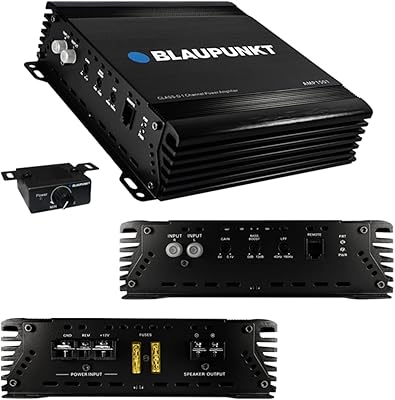
Blaupunkt AMP1500M Monoblock Car Amplifier
73%
81%
Value for Money
63%
Real-World Power Output
88%
Ease of Installation
77%
Audio Clarity
58%
Build Quality
More
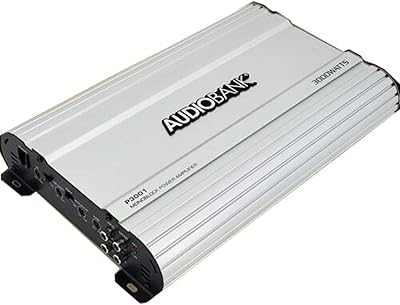
Audiobank P3001 Monoblock Car Amplifier
67%
81%
Value for Money
68%
Sound Performance
62%
Build Quality
54%
Reliability & Longevity
71%
Thermal Management
More

FAQ

For an amp in this power class, a 4-gauge power and ground wire kit is the standard recommendation. Using undersized wire — like 8-gauge — risks voltage drop, which not only limits output but can cause the amp to run hotter and trigger protection mode more often. Pick up a quality 4-gauge amp wiring kit and you should be in good shape.

Not really. The 8000W figure is a peak rating, which is essentially a burst measurement under ideal lab conditions — not what the amp sustains during real listening. In budget amps like the P8001, the actual RMS output (the continuous, usable power) is a much smaller number. Treat the headline wattage as a marketing figure rather than a spec you can rely on for subwoofer matching.

Yes, this monoblock amp is rated stable at 1 ohm, which means it handles 2-ohm and 4-ohm loads without any issue. Many buyers run it with a single dual-voice-coil sub wired to 2 ohms and get solid results. Just make sure your gain is set conservatively to avoid overdriving the sub.

The safest approach for beginners is to start with the gain turned all the way down, play a bass-heavy track at about 75-80% of your head unit's max volume, then slowly raise the gain until you hear distortion — then back it off slightly. If you have access to a multimeter, you can calculate the target output voltage for your sub's RMS rating and set gain more precisely. Avoid cranking the gain up as a substitute for more wattage; it just adds distortion.

It depends on the vehicle. At 14 x 9 x 4 inches, it's not a micro amp, and the 4-inch height can be a tight fit under most seats. Most buyers mount it in the trunk or cargo area instead. If under-seat installation is important to you, measure your available clearance carefully before purchasing.

A lit protection indicator usually means the amp has triggered thermal or short-circuit protection. First, turn everything off and let it cool down for 10-15 minutes. Then check your speaker wiring for any bare wires that might be touching the chassis or each other, since a short will trip protection immediately. If the issue persists after cooling and a wiring check, the amp may have a fault.

The P8001 is a monoblock amp designed for subwoofer use, so it includes a low-pass filter to roll off high frequencies before they reach the sub. Check that the low-pass crossover is engaged and set to an appropriate frequency — typically somewhere between 80Hz and 120Hz — for the cleanest bass response.

During moderate listening, the heatsink gets warm but manageable. Where owners run into trouble is extended high-volume sessions with the gain pushed up — that combination can cause the amp to heat up significantly and trigger thermal shutdown. Make sure there's adequate airflow around the unit and avoid mounting it in an enclosed, poorly ventilated space.

Honestly, it's hard to answer with confidence because the amp's true RMS output isn't reliably documented. If your subwoofer has a 1000W RMS rating, this budget car amp may not be able to drive it to its full potential, and there's a risk of underdriving — which can cause distortion that damages a sub over time. For higher-end subs, a more accurately rated amplifier is a safer investment.

Warranty details aren't prominently documented for this product, and buyer feedback on after-sale support is sparse — which is worth factoring into your decision. Your best protection is purchasing through a retailer with a clear return window. Amazon's standard return policy provides some coverage, but don't count on robust manufacturer support if something goes wrong outside that window.