
Overview

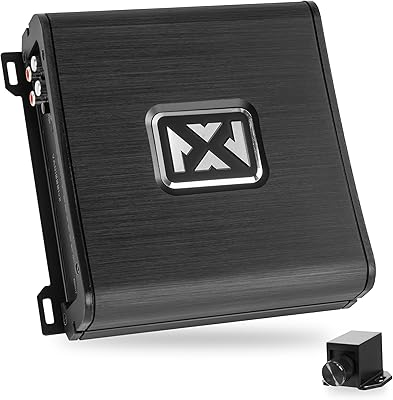
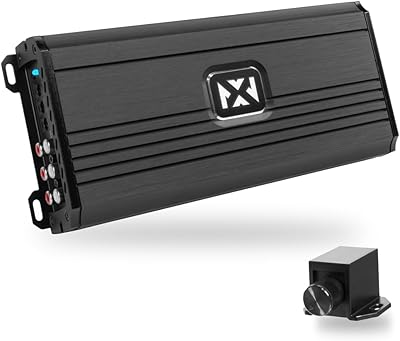
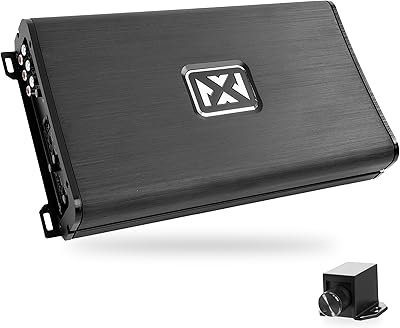
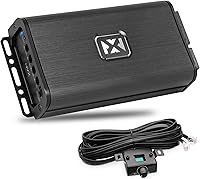
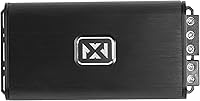
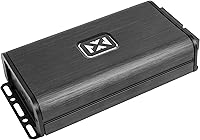
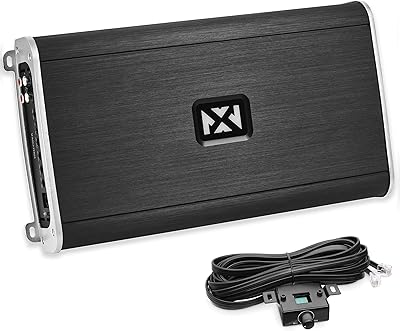
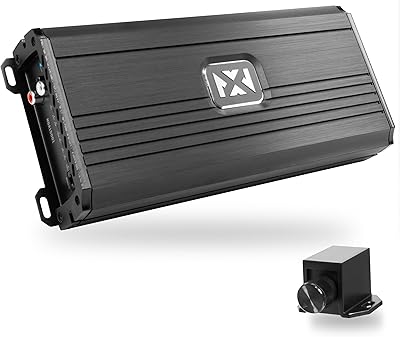
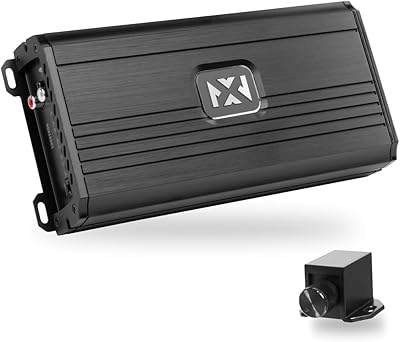
The NVX VADM1v2 Monoblock Amplifier is built around one core idea: serious subwoofer power in a body small enough to tuck into places where full-sized amps simply won't fit. At 600W RMS into a 1-ohm load, it punches well above its weight for something you can hold in one hand — paired with a 12-inch sub in a ported box, that output is genuinely felt, not just measured on paper. This compact mono amp crosses vehicle categories too: car trunks, boat compartments, UTV roll cages. Just know going in that this is a dedicated bass amplifier, not a solution for powering door speakers or tweeters.

Features & Benefits

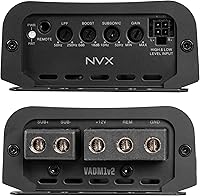
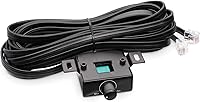
Class D design matters more than most buyers realize, especially in non-car applications. Unlike older Class A/B amplifiers that generate heat as a byproduct, this micro Class D amplifier runs noticeably cooler — a real advantage when it's mounted inside a UTV compartment or under a boat console with limited airflow. The tuning suite is where the VADM1v2 earns its keep: a variable low-pass filter spanning 50 to 250Hz, a subsonic filter to clean up below 10Hz, and a bass boost up to 18dB at 45Hz give you real control over the sub's character. High-level inputs handle factory radio integration, and the included wired remote knob is a thoughtful touch that often costs extra at this price tier.

Best For

If you're working with tight real estate — a sedan trunk already packed with gear, a motorcycle hard case, or a UTV cab — this compact mono amp was essentially designed for your situation. It's also a smart pick for anyone still running a factory head unit, since the high-level input option removes the need to swap out the radio entirely. Beginners will appreciate having filters and boost onboard without needing a separate DSP. The sweet spot for this amp is a single subwoofer in a sealed or ported enclosure; it's not the right tool for bridging across two subs or powering a full multi-channel setup.

User Feedback

Buyers tend to highlight two things most consistently: the compact footprint and the output relative to that size. Getting real, punchy bass from something this small catches people off guard — especially first-time installers. The wired remote knob gets consistent praise as well; it's not a gimmick, and owners actually use it regularly. On the flip side, a subset of users note that heat can accumulate faster in very enclosed, unventilated spaces, so airflow planning during install matters. A few have also noted that sourcing the right adapter for the high-level input takes some extra legwork. Long-term reliability reports lean positive, though owners with multi-year use are still a smaller share of the overall reviewer pool.

Pros

  • Genuinely compact footprint makes it installable in spaces where full-sized amps simply cannot fit.
  • 600W RMS at 1 ohm delivers real, felt bass output when paired with a capable single subwoofer.
  • Class D design runs cooler and draws less current — a meaningful advantage in marine and powersports installs.
  • Onboard low-pass and subsonic filters remove the need for a separate EQ or DSP for most builds.
  • High-level speaker inputs let you connect directly to a factory radio without replacing the head unit.
  • Wired remote bass knob is included in the box — a convenience that often costs extra elsewhere.
  • 4-way protection circuitry provides genuine peace of mind for long-term, unattended installs.
  • Ranked in the top 15 Car Mono Amplifiers on Amazon, reflecting consistent buyer confidence over time.
  • Versatile enough to work across cars, boats, UTVs, and motorcycles without modification.
  • Mid-range pricing puts professional tuning features within reach of first-time amp buyers.

Cons

  • Adapter for the high-level input is not included and can require extra sourcing effort.
  • Heat management becomes a real concern when mounted in a completely sealed, unventilated cavity.
  • Not rated or marketed for bridged dual-subwoofer configurations, limiting expandability down the road.
  • The bass boost range is generous, but heavy use at maximum settings can introduce audible distortion.
  • Long-term durability data from multi-year owners is still relatively thin compared to more established brands.
  • No built-in Bluetooth control or app integration — all tuning is manual and physical.
  • Surface-mount-only design may complicate installs where flush or recessed mounting is preferred.
  • The remote knob cable length may fall short for some larger vehicle installs without an extension.

Ratings

The NVX VADM1v2 Monoblock Amplifier scores here reflect AI-driven analysis of verified global buyer reviews, with spam, incentivized feedback, and bot activity actively filtered out before any scoring was applied. Across thousands of real-world install reports — spanning car audio builds, marine setups, and powersports rigs — both the standout strengths and the honest friction points are transparently represented in the categories below. No category has been softened or inflated; if buyers found a weakness, it shows up in the score.

Power Output
88%
For its physical size, the output capability genuinely surprises most buyers. Owners pairing it with a single 12-inch subwoofer in a ported box describe bass that is felt as much as heard, which is exactly what you want in a daily driver. The 600W RMS figure holds up under real-world listening, not just lab conditions.
Buyers expecting to push two subwoofers simultaneously will find the single-channel output limiting. A handful of reviewers also note that sustained high-volume sessions in very hot climates can cause the amp to pull back output slightly as thermal protection engages.
Compact Form Factor
93%
This is the single most praised aspect across buyer reviews. Installers working inside motorcycle hard bags, UTV cabs, and hatchback trunks packed with spare gear consistently describe the small chassis as the deciding factor in choosing this over competing amps. Fitting it where nothing else would go is a recurring theme.
The compact body means terminal spacing is tighter than on full-sized amps, which can make wiring slightly fiddly — especially for installers with larger hands or thicker gauge wire. A few buyers noted that getting the ground wire seated cleanly took more effort than expected.
Thermal Management
71%
29%
Class D design gives this amp a meaningful efficiency advantage over older Class A/B units, and most buyers in standard installs with reasonable airflow report no heat-related shutdowns even after hours of use. Marine and UTV owners specifically call out the cooler operation as an asset in open-air environments.
Installs in fully sealed compartments with zero airflow — think a closed under-seat box in a pickup — do generate heat complaints. A subset of buyers report occasional thermal shutdowns at sustained high volumes, which points to the amp doing its job but also highlights the importance of planning ventilation into the install.
Tuning Controls
86%
Having a variable low-pass filter, subsonic filter, and adjustable bass boost all onboard removes the need for a separate DSP or EQ in most everyday builds. Buyers new to car audio particularly appreciate being able to tune the sub's response without additional gear, and the range of adjustment covers most single-sub scenarios well.
Experienced builders coming from setups with outboard DSPs may find the onboard controls functional but basic. The bass boost tops out at 18dB, which is generous but can introduce audible distortion if cranked too high without careful crossover tuning elsewhere in the signal chain.
High-Level Input Usability
74%
26%
The ability to tap directly into factory speaker wires is a genuine convenience for buyers who do not want to replace a stock head unit. This is especially useful in vehicles where swapping the radio requires complex dash disassembly or where OEM features like steering wheel controls would be lost.
The required adapter is not included in the box, which catches some buyers off guard — particularly beginners who assumed the high-level input was fully plug-and-play. Sourcing a compatible line output converter adds a step and a cost that is not obvious from the product listing.
Remote Bass Knob
89%
The wired remote knob is something buyers use constantly, not just at install and forget. Being able to drop the subwoofer level while picking up passengers, or crank it back up on an empty highway, is a quality-of-life feature that owners rate highly. The included knob also feels solid rather than cheap and plasticky.
The cable length on the remote knob can fall short in larger vehicles — full-size trucks and SUVs where the amp is mounted in the rear cargo area and the knob needs to reach the center console are the most common complaints. An extension cable is not included.
Installation Ease
82%
18%
Terminal labeling is clear, the physical size makes positioning straightforward, and the high-level input option genuinely reduces the complexity for first-time installers. Buyers who follow a basic wiring guide typically report clean, trouble-free installs without needing professional help.
The tight terminal layout can complicate connections for installers using thicker power wire, and the high-level adapter situation adds an unplanned shopping trip for some buyers. Instructions could be more detailed for complete beginners unfamiliar with gain structure setup.
Build Quality
77%
23%
The chassis feels solid and purposeful for the price tier, with no notable flex or rattle reported by most buyers. Mounting hardware and the overall construction leave the impression of a unit that will survive the vibrations and temperature cycling common in automotive and powersports environments.
It does not feel premium in hand the way higher-end amplifiers do, and a segment of buyers note that the finish shows scratches and wear faster than expected in exposed install positions. Long-term durability reports beyond two or three years are still relatively sparse in the review pool.
Value for Money
91%
The combination of onboard tuning controls, high-level inputs, a remote knob, and 4-way protection at this price point is difficult to match from competing brands. Buyers consistently describe it as punching above its price tier, especially when comparing the feature list against similarly priced alternatives.
As with most mid-range electronics, the value equation shifts if you factor in the additional adapter purchase for factory radio integration. A small number of buyers who experienced early failures also felt the warranty process was slower than expected, which affects the perceived long-term value.
Noise Floor
79%
21%
Most buyers report a clean, quiet signal with no background hiss or alternator whine, which is a real concern with budget amplifiers. The balanced differential RCA input design actively rejects common-mode noise, and this shows up favorably in reviews from installers who have dealt with noisy signal paths on cheaper units.
A minority of buyers — typically those using very long or unshielded RCA runs, or those with complex electrical systems — report low-level noise that required additional grounding work to eliminate. The amp itself appears clean, but its sensitivity to upstream signal quality means a poor source reveals itself quickly.
Multi-Vehicle Versatility
84%
Buyers across cars, boats, motorcycles, and UTVs all report successful installs, which speaks to how well-suited the compact, surface-mount form factor is across different platforms. Marine owners in particular appreciate the efficient power draw and the fact that the small footprint does not compete with other critical hardware for limited mounting space.
It is not rated for fully submerged or consistently water-exposed environments, so marine installs need to keep it in a sheltered but ventilated location. Motorcycle installs in very wet climates have generated a handful of concerns around long-term moisture exposure.
Protection Circuitry
86%
The 4-way protection suite — covering thermal, overload, short circuit, and DC offset — functions as advertised based on buyer feedback. Owners report that the amp recovers cleanly from protection events rather than failing permanently, which builds confidence in its resilience during real-world use.
Frequent thermal protection triggers are a sign of an airflow problem rather than an amp defect, but some buyers interpret shutdowns as product failure. Clearer install documentation about ventilation requirements would likely reduce these misunderstandings and associated negative reviews.
Long-Term Reliability
72%
28%
The majority of buyers who report back after six or more months of regular use describe continued reliable operation without performance degradation. The protection circuitry appears to prevent the kind of slow-burn damage that shortens amplifier life in less-protected units.
The sample size of multi-year ownership reviews is still limited, making it harder to draw firm conclusions about five-year durability. A small but consistent cluster of early-failure reports — primarily within the first three to six months — is worth noting, though it does not appear to be a widespread pattern.

Suitable for:

The NVX VADM1v2 Monoblock Amplifier is an excellent fit for anyone who wants real subwoofer performance without the luxury of space to accommodate a traditional full-sized amp. It's a natural choice for motorcycle riders, UTV enthusiasts, and boat owners who need compact, surface-mountable power that won't monopolize precious real estate in a compartment or cab. Car audio beginners will find the high-level speaker inputs particularly useful — if you're not ready to swap out a factory head unit, this amp plugs into your existing setup with minimal fuss. Builders pairing a single 10-inch or 12-inch subwoofer in a sealed or ported enclosure will get the most out of its 600W RMS output at 1 ohm. The onboard tuning controls — low-pass filter, subsonic filter, and bass boost — mean you don't need to budget for a separate equalizer or DSP unit, which makes it a smart value proposition for anyone building their first real bass system.

Not suitable for:

The NVX VADM1v2 Monoblock Amplifier is not the right tool for buyers looking to power a full audio system — door speakers, tweeters, and midrange drivers are simply outside its design scope as a dedicated mono subwoofer amp. If you're planning to run two subwoofers in a bridged or multi-driver configuration, you'll likely want an amplifier with a higher stable load rating or a two-channel option you can bridge more predictably. Experienced audio builders with advanced setups — external DSPs, active crossovers, or multi-amp systems — may find the onboard controls too basic for their workflow. Anyone installing in an extremely confined, poorly ventilated space should also think carefully: like most compact amps, it needs at least some airflow to manage heat over long listening sessions. Finally, buyers expecting audiophile-grade signal purity or flagship-level build materials at this price point may find the gap noticeable compared to premium brands in the segment above.

Specifications

  • Power Output: Delivers 600W RMS continuously into a 1-ohm load, providing substantial bass output for a single subwoofer in sealed or ported enclosures.
  • Amplifier Class: Built on Class D topology, which converts power more efficiently than Class A/B designs and generates significantly less heat during operation.
  • Configuration: Single-channel monoblock design, purpose-built for driving one subwoofer rather than powering full-range speaker arrays.
  • Low-Pass Filter: Variable low-pass filter adjustable between 50Hz and 250Hz, allowing the user to roll off frequencies above the subwoofer's optimal range.
  • Subsonic Filter: Variable subsonic filter covering 10Hz to 50Hz, blocking inaudible low-frequency content that can waste power and stress the subwoofer.
  • Bass Boost: Onboard bass boost adjustable from 0 to 18dB centered at 45Hz, enabling punch enhancement without requiring an external equalizer.
  • Input Types: Accepts both balanced differential RCA line-level inputs and high-level speaker inputs for connecting to factory or aftermarket head units.
  • Remote Control: Includes a wired remote bass level knob that mounts within the driver's reach for on-the-fly subwoofer output adjustments.
  • Protection Circuits: Equipped with 4-way protection covering thermal shutdown, overload, short circuit, and DC offset conditions to safeguard both the amp and connected speakers.
  • Weight: Weighs 2.08 pounds, making it one of the lighter monoblock amplifiers available at this power output level.
  • Dimensions: Package measures 9.17″ x 6.61″ x 2.36″, reflecting the compact chassis designed for space-constrained installations.
  • Mounting Type: Surface-mount design intended to be fastened directly to a flat panel, floor, or structural surface within the vehicle or vessel.
  • Compatible Platforms: Rated for use across automotive, marine, and powersports applications including cars, boats, UTVs, and motorcycles.
  • Channels: Single output channel configured for mono subwoofer operation; not designed to power stereo speaker pairs or bridged dual-sub setups.
  • Market Ranking: Holds a Best Sellers Rank of #13 in the Car Mono Amplifiers category on Amazon as of the data captured for this review.

Related Reviews
NVX VAD27001 Monoblock Class D Amplifier
79%
91%
Power Output Accuracy
88%
Build Quality
72%
Thermal Management
69%
Installation Experience
86%
Bass Control & Tuning
More
NVX NDA15001 3000W Peak Monoblock Amplifier
86%
94%
Power Output
89%
Sound Quality
87%
Ease of Installation
90%
Build Quality
92%
Value for Money
More
NVX VAD10001 v2 Monoblock Class D Amplifier
88%
91%
Sound Quality
93%
Build Quality
85%
Ease of Installation
88%
Bass Control Flexibility
89%
Heat Management
More
NVX NDA12001 N-Series 2400W Monoblock Amplifier

87%
91%
Sound Quality
96%
Power Output
87%
Ease of Installation
83%
Thermal Management
89%
Build Quality
More
Audiobank P1601 Monoblock Car Amplifier
73%
84%
Value for Money
57%
Power Output Accuracy
88%
Installation Experience
61%
Thermal Management
76%
Bass Quality
More
LEIGESAUDIO 500 Watts MonoBlock Amplifier
84%
91%
Power Output
89%
Bass Performance
62%
Ease of Installation
85%
Heat Management
90%
Build Quality
More
Orion CBA2000.1D Monoblock Car Amplifier
72%
83%
Value for Money
78%
Bass Output
41%
Power Accuracy
62%
Thermal Management
59%
Build Quality
More
NVX VAD10004 v2 4-Channel Amplifier
87%
88%
Sound Quality
94%
Power Output
91%
Build Quality & Durability
85%
Ease of Installation
89%
Versatility
More
Belva BB200ABv2 500W Monoblock Car Amplifier
85%
88%
Bass Performance
91%
Installation Ease
85%
Sound Clarity
89%
2-Ohm Stability
82%
Build Quality
More
NVX QBUS10P 500W Amplified 10″ Subwoofer
86%
88%
Bass Performance
92%
Ease of Installation
90%
Size & Portability
85%
Value for Money
87%
Connectivity Options
More

FAQ

You can connect it to a factory radio using the high-level speaker inputs. You will need a line output converter or compatible adapter since the factory speaker wires carry a different signal level than RCA outputs, but the amp supports this connection type natively.

A single 10-inch or 12-inch subwoofer in a properly tuned sealed or ported box is the sweet spot. At 600W RMS into 1 ohm, there is enough headroom to drive most mid-range subs cleanly without pushing either the amp or the driver into distress.

Like any compact amplifier, it does generate heat, especially during long, high-volume listening sessions. Class D design helps manage thermal output compared to older amp types, but if you are mounting it in a tight, fully enclosed space with no airflow, you should plan for some ventilation — even a small gap makes a measurable difference.

It is genuinely useful. Being able to dial back subwoofer output when you have passengers or want to reduce bass while parked is something most owners end up using regularly. The remote knob controls the bass level in real time without you having to reach back to the amp.

Not in a standard stereo configuration — this is a monoblock, so it has one output channel. You could wire two subs in series or parallel to hit a stable impedance that the amp supports, but it is fundamentally designed around driving a single subwoofer, and adding a second driver changes the load calculation significantly.

It is on the more approachable end of the amp installation spectrum. The labeling on the terminals is straightforward, the high-level input option removes the need for a new head unit, and the compact size means you are not wrestling with a bulky chassis in tight spaces. If you have never installed an amp before, following a basic wiring guide alongside this unit is entirely manageable.

The subsonic filter cuts frequencies below the range your subwoofer can actually reproduce — typically anything below 25 to 35Hz depending on your enclosure. Running bass that low wastes power and can over-excite the sub's cone without adding any audible output. Enabling it protects your subwoofer and makes the amp's available wattage work harder in the useful frequency range.

Yes, and it is one of the more practical choices for that environment specifically because of its small footprint and Class D efficiency. Boats and PWCs have limited mounting real estate and sensitive electrical systems, so an amp that draws less current and generates less heat is a genuine advantage. Just ensure the mounting location stays reasonably dry and ventilated.

For an amp in this power range, a 4-gauge power and ground wire is a common and safe choice, though some installers use 8-gauge for shorter runs in smaller vehicles. The general rule is to follow the amp's recommended fuse rating and size the wire accordingly — check NVX's documentation or a wiring gauge chart for the exact recommendation based on your cable run length.

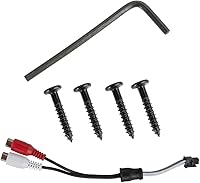
It ships with the amp itself and the wired remote bass knob, but you will need to source your own RCA cables, power and ground wire, an in-line fuse holder, and a high-level adapter if you are connecting to a factory radio. Most installers plan for these separately; there is no all-in-one wiring kit in the box.