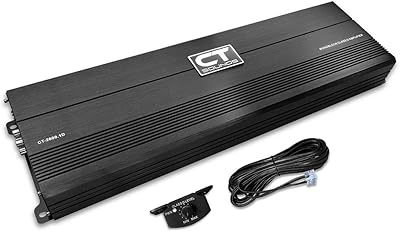
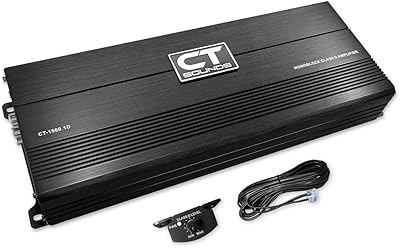
Overview

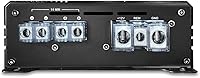
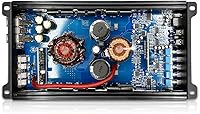
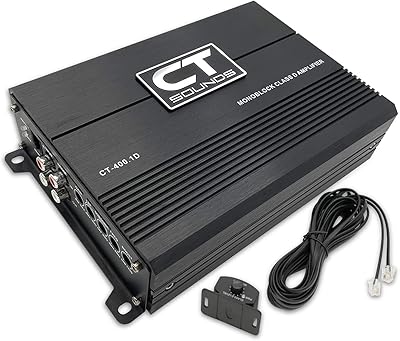
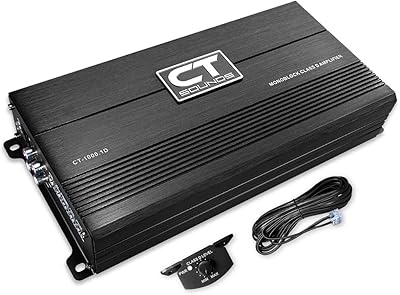
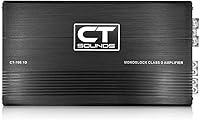
The CT Sounds CT-700.1D Monoblock Amplifier sits in a sweet spot that not many competitors occupy at this price: genuinely useful output from a chassis small enough to tuck almost anywhere. Class D efficiency is the real story here — it draws less current from your vehicle's electrical system than older AB designs, which matters if you're working with a factory alternator or a stock battery. This amp is purpose-built for single subwoofer installs, whether you're mounting it in a sedan trunk, under a rear seat, or squeezing it into a tight custom build. The size is deceptive in the best way.
Features & Benefits

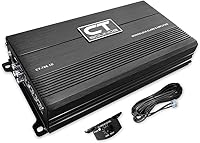
The power figures tell only part of the story. Running a 1-ohm load pulls the full 700 watts RMS — meaningful headroom for a hungry 12-inch sub — while 2-ohm wiring at 380 watts is the more thermally conservative choice for daily driving. The MOSFET PWM power supply keeps output steady even as voltage dips during hard acceleration, and the proprietary cooling design means this compact amplifier stays composed on hot summer drives without needing a fan. The included bass remote knob is a small but genuinely useful touch, letting you trim the low end from the driver seat without crawling into the trunk.

Best For

This mono amp is a natural fit for anyone building their first subwoofer system who doesn't want to overspend chasing watts they can't actually use. Its Class D efficiency makes it well-suited for vehicles running stock electrical — no big alternator upgrade required for a single sub setup. The compact footprint, just under 11 inches long, opens up install locations that larger amps simply can't access: under-seat mounts, shallow trunk builds, or custom enclosures. For a single subwoofer build running at 1 or 2 ohms, the CT-700.1D punches well above what you'd expect from this price range.

User Feedback

Owners of the CT-700.1D tend to land in one of two camps: those genuinely impressed by how much bass output they got from such a small box, and those who came in expecting high-end headroom and found the amp better suited to everyday listening than competition-level pressure. Ease of installation gets consistent praise — terminals are clearly labeled, the layout is logical, and first-timers report a clean install without too many headaches. Reliability feedback is largely positive for daily drivers, though a small number noted the gain range felt limited when pairing with lower-sensitivity subwoofers. Matched expectations tend to leave buyers well satisfied.

Pros

  • Puts out genuinely strong bass for a compact amp in this price range.
  • Class D design draws less current, making it kinder to stock vehicle electrical systems.
  • The small chassis opens up install locations that larger amps can't reach.
  • Four-way protection circuitry adds real peace of mind for long-term daily use.
  • Wiring terminals are clearly labeled, making the install approachable for beginners.
  • The included bass remote knob lets you adjust low-end output without leaving your seat.
  • Runs cool even during extended listening sessions thanks to the thermal management design.
  • Flexible impedance options mean you can tune output to match your subwoofer's wiring configuration.
  • Frequency response reaching 320 Hz gives you some flexibility beyond pure subwoofer duty.

Cons

  • Gain adjustment range is narrower than some competitors, which can complicate pairing with low-sensitivity subs.
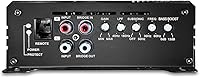
  • No built-in speaker-level inputs, so vehicles without RCA preamp outputs need an adapter.
  • At maximum output, voltage demands may still stress older or weaker factory electrical setups.
  • The mono-only design means there is no path to bridged stereo or multi-channel expansion.
  • Wiring hardware is not included in the box, adding cost to what looks like an affordable entry price.
  • Build quality feels appropriate for the price tier but does not match higher-end amplifier brands.
  • The CT-700.1D lacks a subsonic filter adjustment, which limits tuning control for ported enclosure builds.
  • Limited published signal-to-noise ratio data makes it harder to evaluate audio cleanliness on paper.

Ratings

The scores below reflect an AI-driven analysis of verified buyer reviews for the CT Sounds CT-700.1D Monoblock Amplifier, collected from global markets and processed to filter out incentivized, bot-generated, and duplicate submissions. Each category is scored based on aggregated real-world user experiences, weighing both consistent praise and recurring frustrations in equal measure. Nothing has been softened — where buyers ran into genuine limitations, those patterns are reflected honestly alongside the genuine strengths.

Value for Money
91%
Buyers consistently describe this mono amp as one of the most dollar-efficient ways to add serious bass to a daily driver. The combination of 700 watts RMS and a sub-$150 price point is genuinely hard to match at this tier, and most owners feel they got more than they paid for once the sub was up and running.
A handful of buyers noted that once you factor in purchasing a wiring kit and RCA cables separately, the total install cost climbs noticeably above the sticker price. For buyers who expected a more complete package, that gap can make the value feel slightly less compelling.
Bass Output
88%
For a compact Class D amp at this price, the low-end punch it delivers into a 1-ohm load genuinely surprises most first-time installers. Owners running a ported 12-inch enclosure in a sedan regularly describe the bass as deeper and tighter than they anticipated, making highway listening particularly satisfying.
Buyers who pushed the amp hard at maximum gain with less efficient subwoofers found the output approaching its ceiling faster than expected. Those coming from higher-wattage setups or running dual subs noted the amp felt underpowered for anything beyond moderate daily listening volumes.
Thermal Performance
86%
The proprietary heat dissipation design holds up well in real-world use — owners who run the amp for hours during long road trips report it staying comfortably warm rather than uncomfortably hot. The fanless design means no additional noise in the cabin, which daily commuters especially appreciated.
In enclosed trunk builds with restricted airflow, a small number of users reported the amp triggering thermal protection during extended high-volume sessions on hot summer days. Ensuring adequate ventilation around the heatsink fins is critical and not always intuitive for first-time installers.
Ease of Installation
87%
Terminal labeling is clear and the overall layout is logically organized, which made the install process approachable even for buyers tackling their first amp setup. Several owners noted they completed the full install in under two hours without professional help, calling the process straightforward and low-stress.
The amp does not accept speaker-level inputs natively, which caught some buyers off guard when connecting to factory head units. Those without prior car audio experience occasionally struggled with gain calibration, wishing the manual included more detailed setup guidance for beginners.
Build Quality
74%
26%
The chassis feels solid for its weight class and the heatsink construction looks purposeful rather than decorative. Most owners felt the physical build matched or slightly exceeded expectations for a product at this price point, with no reports of loose terminals or rattling components out of the box.
Up close, the fit and finish shows clear cost-cutting compared to mid-tier brands — the casing materials feel thin under hand pressure and the aesthetic is purely utilitarian. Long-term durability beyond the two-year mark is harder to confirm, as owner feedback thins out significantly after that window.
Gain Range & Tuning Flexibility
62%
38%
For owners pairing this compact amplifier with a mid-sensitivity subwoofer and a modern aftermarket head unit, the available gain range is sufficient to dial in a clean, well-controlled bass response without much trial and error.
The gain adjustment window is narrower than competing amps in the same price bracket, and buyers running low-sensitivity drivers or high-output source units found it difficult to achieve an ideal match without distortion artifacts. The absence of a subsonic filter adjustment is an additional tuning limitation for ported enclosure builds.
Protection Circuitry
83%
The four-way protection system has saved more than a few installs from wiring mistakes and voltage fluctuations, based on owner accounts. Buyers who accidentally introduced a brief short during install reported the amp entering protection mode cleanly and recovering without permanent damage.
Some owners found the low-voltage protection threshold trips a bit aggressively on vehicles with aging batteries, causing the amp to cut out momentarily during engine start or heavy accessory load. Resetting from protection mode isn't always intuitive without consulting the manual.
Compact Footprint
89%
At just over 11 inches long, the CT-700.1D genuinely opens up install locations that full-size amps cannot access — under rear seats, inside shallow custom enclosures, and along narrow trunk walls. Owners working with space-constrained vehicles like compact cars and small SUVs found this a decisive advantage.
The compact dimensions come with a trade-off in terminal spacing, which some buyers with thicker gauge wiring found slightly awkward to terminate cleanly. Those accustomed to the roomier layout of full-size amps noted the wiring area felt cramped during install.
Bass Remote Knob
78%
22%
Having a physical bass knob on the dash or center console is a convenience that owners who commute across varied terrain genuinely use — being able to dial back the low end in a parking garage or crank it up on a highway is more useful day-to-day than most buyers anticipated before owning it.
The included knob's build quality is noticeably budget-grade, with a couple of owners reporting the potentiometer feeling loose or inconsistent after several months of regular use. The cable length, while adequate for most installs, was too short for a few larger vehicle configurations.
Noise Floor & Signal Clarity
69%
31%
For bass-focused listening at moderate-to-loud volumes, the signal coming through this amp is clean enough that most owners never noticed an issue. Paired with a decent subwoofer and properly shielded RCA cables, the audible noise floor sits at an acceptable level for daily use.
Owners who invested in higher-quality subwoofers or played at lower volumes in quiet environments occasionally picked up a faint ground hum or hiss that was difficult to eliminate through grounding adjustments alone. The amp does not publish an official signal-to-noise ratio figure, making pre-purchase evaluation harder for discerning buyers.
Compatibility
81%
19%
The flexible impedance range — stable from 4 ohms down to 1 ohm — means this amp plays well with most common consumer subwoofer configurations without requiring exotic wiring. Owners running a wide variety of 10-inch and 12-inch drivers in both sealed and ported enclosures reported consistent, stable performance.
The lack of speaker-level or high-level inputs is a real compatibility gap for buyers who are upgrading from a factory head unit and haven't budgeted for a line output converter. It also limits the amp's appeal for older vehicle builds where aftermarket head units aren't part of the plan.
Reliability Over Time
76%
24%
The majority of owners who have run this mono amp for one to two years of regular daily driving report no functional issues, with the protection circuitry appearing to do its job of extending component lifespan under normal stress conditions.
A recurring thread in longer-term feedback involves units that developed intermittent output loss or protection-mode lockouts after the first year, particularly in installs with less-than-ideal ventilation or marginal electrical systems. Whether this represents a component longevity issue or an install condition problem is difficult to isolate from user reports alone.
Packaging & Unboxing
71%
29%
The amp arrives well-protected with adequate foam padding, and the bass knob accessory is securely packaged alongside it. Buyers generally noted the unboxing experience was clean and that the unit showed no cosmetic damage on arrival, even after longer shipping routes.
The documentation included in the box is minimal — a basic spec sheet rather than a proper installation guide — which left some first-time buyers piecing together setup steps from online forums rather than the manufacturer. A more thorough printed manual would meaningfully reduce the friction of the first install experience.

Suitable for:

The CT Sounds CT-700.1D Monoblock Amplifier is a strong match for budget-conscious car audio enthusiasts who want real, usable bass output without overcomplicating their build or straining their vehicle's electrical system. It's particularly well-suited to first-time installers — the layout is straightforward, the terminals are clearly organized, and the included bass knob means you can fine-tune low-end response from the driver's seat after installation. Anyone working with limited space will appreciate how much the compact chassis opens up install options: shallow trunk walls, under-seat platforms, and custom enclosures that a full-size amp simply couldn't fit. Single-subwoofer setups running at 1 or 2 ohms will get the most out of this amp, especially paired with an efficient 10-inch or 12-inch driver on a daily-driver vehicle.
Not suitable for:

The CT Sounds CT-700.1D Monoblock Amplifier is not the right call for builders chasing competition-level sound pressure or running power-hungry subwoofers that demand consistent high-current output over long sessions. If you're planning a multi-sub setup or want to bridge two channels for a larger enclosure, this amp's monoblock-only design closes that door entirely. Audiophiles who prioritize ultra-low noise floors or need a wide gain range to match high-sensitivity speakers may find the tuning flexibility limiting. Vehicles with weak electrical systems already struggling under load are also a questionable pairing — while Class D is efficient, there's still a floor below which any 700-watt amp will cause voltage sag. If your build goals extend beyond a single daily-driver sub, this compact amplifier is likely to feel like a ceiling rather than a foundation.
Specifications

  • RMS Power (1Ω): Delivers 700 watts RMS at a 1-ohm load measured at 14.4V, suitable for high-demand single subwoofer configurations.
  • RMS Power (2Ω): Outputs 380 watts RMS at a 2-ohm load measured at 14.4V, a practical choice for thermally conservative daily driving.
  • RMS Power (4Ω): Produces 200 watts RMS at a 4-ohm load measured at 14.4V, appropriate for less sensitive subwoofer drivers.
  • Amplifier Class: Class D monoblock topology offers higher efficiency than traditional Class AB designs, reducing heat and current draw from the vehicle's electrical system.
  • Power Supply: MOSFET pulse-width modulated power supply maintains stable output voltage under varying electrical load conditions.
  • Frequency Response: Operates across a range of 0 to 320 Hz, covering standard subwoofer duty and extending into the upper bass region.
  • Operating Voltage: Designed to run on a 12V DC vehicle electrical system, with ratings measured at the standard 14.4V charging voltage.
  • Protection Circuitry: Four-way protection covers high voltage, low voltage, over-current, and high-temperature conditions to safeguard both the amp and connected components.
  • Heat Management: Proprietary heat dissipation design channels thermal energy away from core components without requiring an active cooling fan.
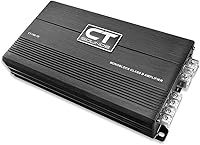
  • Dimensions: The chassis measures 11 × 5.63 × 2.19 inches, keeping the physical footprint compact enough for under-seat and shallow trunk installations.
  • Weight: The unit weighs 6.31 pounds, making it straightforward to handle and position during a single-person installation.
  • Mounting Type: Freestanding design allows flexible placement without requiring a dedicated mounting bracket, though surface-mounting is also supported.
  • Included Accessory: A wired bass remote knob is included in the box, enabling driver-seat adjustment of the low-frequency gain without accessing the amplifier directly.
  • Model Number: The official manufacturer model number is CT-700.1D, used for warranty registration, support requests, and compatibility verification.
  • Brand: Manufactured and sold by CT Sounds, a brand focused on budget-to-mid-range car audio amplifiers and subwoofer systems.
  • Manufacturer Status: As of the latest available product data, this model has not been discontinued by the manufacturer.

Related Reviews

CT Sounds CT-400.1D Monoblock Amplifier
77%
91%
Value for Money
86%
Power Output
88%
Thermal Management
71%
Build Quality
84%
Ease of Installation
More
CT Sounds CT-2000.1D Monoblock Amplifier
77%
88%
Value for Money
74%
Power Output
71%
Build Quality
69%
Thermal Management
86%
Ease of Installation
More
CT Sounds CT-1000.1D Monoblock Car Amplifier
77%
88%
Value for Money
79%
Power Output
84%
Thermal Management
72%
Build Quality
71%
Installation Ease
More
CT Sounds CT-1500.1D Class D Car Audio Amplifier
82%
94%
Power Output
86%
Build Quality
91%
Ease of Installation
72%
Thermal Performance
88%
Sound Quality
More
CT Sounds CT-80.4D 4-Channel Car Amplifier
74%
91%
Value for Money
78%
Power Output Accuracy
84%
Installation Ease
61%
Heat Management
67%
Build Quality
More
CT Sounds CT-150.4D 4-Channel Car Amplifier
75%
83%
Value for Money
78%
Sound Quality
61%
Build Quality
86%
Ease of Installation
77%
Thermal Management
More
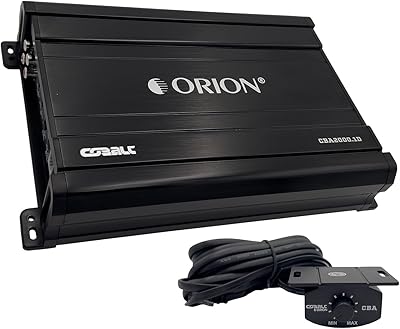
Orion CBA2000.1D Monoblock Car Amplifier
72%
83%
Value for Money
78%
Bass Output
41%
Power Accuracy
62%
Thermal Management
59%
Build Quality
More
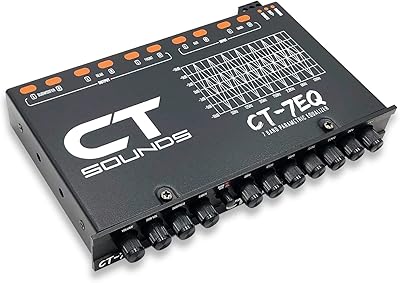
CT Sounds CT-7EQ 7-Band Car Audio Equalizer
76%
88%
Sound Quality Improvement
91%
Value for Money
84%
Ease of Installation
74%
Build Quality
58%
Faceplate Readability
More
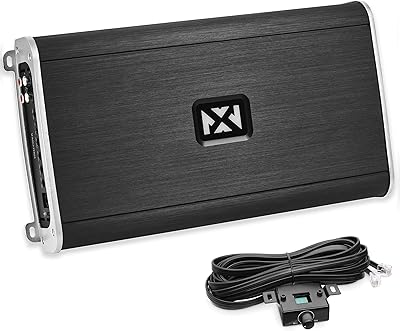
NVX VAD27001 Monoblock Class D Amplifier
79%
91%
Power Output Accuracy
88%
Build Quality
72%
Thermal Management
69%
Installation Experience
86%
Bass Control & Tuning
More
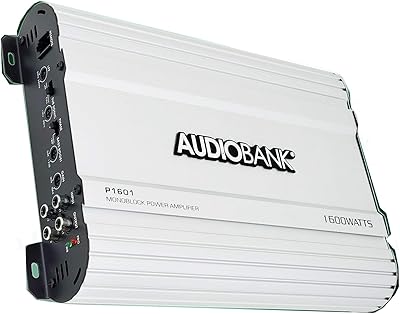
Audiobank P1601 Monoblock Car Amplifier
73%
84%
Value for Money
57%
Power Output Accuracy
88%
Installation Experience
61%
Thermal Management
76%
Bass Quality
More

FAQ

A single 10-inch or 12-inch subwoofer is the ideal pairing for this mono amp, especially when wired to present a 1-ohm or 2-ohm load. A well-matched sub in that range will take full advantage of the available output without pushing the amplifier into thermal stress during everyday use.

For most daily-driver setups with a single subwoofer, a stock electrical system should hold up reasonably well, thanks to the Class D design drawing less current than older amp topologies. That said, if your vehicle already shows signs of electrical strain — lights dimming at idle, slow cranking — it's worth adding a capacitor or upgrading to a higher-output alternator before installation.

It can drive two subwoofers if they are wired together to present a single combined load of 1 or 2 ohms, but this is a monoblock amp with a single output channel, so there is no way to independently control or bridge two separate channels. Make sure the combined impedance stays within the supported range before wiring dual subs.

The CT Sounds CT-700.1D Monoblock Amplifier ships with only the bass remote knob included — a wiring kit is not in the box. You will need to purchase power cable, ground cable, RCA cables, a remote turn-on wire, and an inline fuse holder separately before installation.
For a 700-watt RMS amp at 1 ohm, most installers recommend a minimum of 4-gauge power and ground cable to handle current draw safely. If your power wire run from the battery is longer than 15 feet, stepping up to 2-gauge is worth considering to minimize voltage drop.

The CT-700.1D requires RCA-level input, so if your head unit only has speaker-level outputs, you will need a line output converter (LOC) to step the signal down to a compatible level. These are inexpensive and widely available, and most install shops can wire one in quickly.

Most Class D amps in this category, including this one, use an indicator light that shifts color or turns off entirely when protection circuitry activates. If your subwoofer suddenly goes silent and the amp's LED has changed state, check for over-temperature, a wiring short, or a significant voltage drop at the amp's power terminals.

Yes — the freestanding chassis doesn't rely on gravity-fed cooling, so mounting it upside down or on a vertical surface is generally fine as long as airflow around the heatsink fins isn't obstructed. Avoid pressing the amp flat against carpet or foam padding, as that will restrict the heat dissipation the design depends on.

In a sedan or mid-size SUV with a single 12-inch subwoofer in a ported enclosure, this compact amplifier will produce a very noticeable bass level at moderate-to-loud listening volumes — enough to satisfy most daily-driver preferences. If you're looking for competition-level output that genuinely pressurizes the cabin, you'll eventually want more power, but for street use this setup is hard to outvalue at this price point.

Start with the gain turned all the way down, then play a bass-heavy track at about 75–80 percent of your head unit's maximum volume. Slowly raise the amp gain until you hear the bass start to distort, then back it off slightly from that point. Using a multimeter or oscilloscope to match the amp's input sensitivity to your head unit's output voltage is more accurate, but the listening method works well for most everyday builds.

Where to Buy