Overview

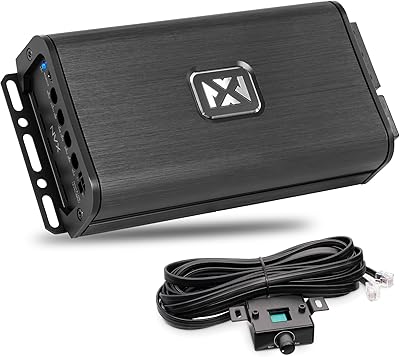
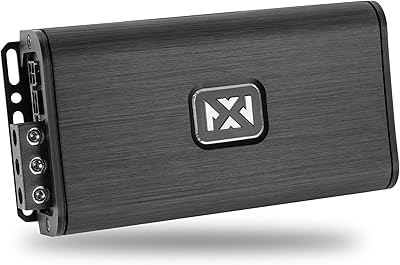
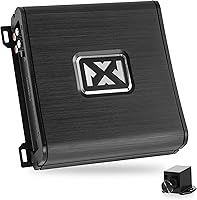
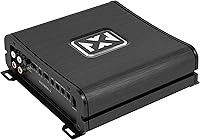
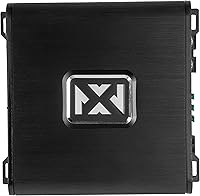
The NVX VAD10001 v2 Monoblock Class D Amplifier sits in an interesting spot in the car audio market — capable enough for serious subwoofer builds, priced realistically enough that you don't have to agonize over the decision. It's been on sale since 2019, which means there's a real body of owner experience behind it. Before anything else, it's worth clarifying the power ratings: 1000W RMS at 1 ohm is the number that actually matters for your subwoofer's performance — the 2000W peak figure is a momentary ceiling, not sustained output. The compact aluminum chassis weighs under five pounds, which matters when fitting it into a truck cab or under a seat. The marine-grade circuit board also separates it from most competitors at this price.
Features & Benefits

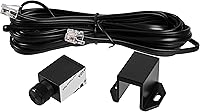
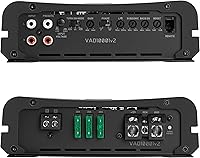
The VAD10001 v2 packs a lot of practical controls into a small footprint. The variable bass boost — adjustable from flat to +12 dB at 45 Hz — means you can add punch or keep things tight without wiring in a separate EQ unit. What genuinely stands out in day-to-day use is the included remote bass knob; being able to adjust bass level from the driver's seat, without touching the amp itself, is something you'll use constantly once you have it. A variable low-pass crossover keeps your sub working where it should, and the 3-way protection circuitry covers thermal, overload, and short-circuit scenarios. Platinum-plated RCA inputs and a solid heat sink round out a feature set that punches above its class.

Best For

This mono amp earns its place in a few specific scenarios. If you're building a dedicated sub stage for a daily driver or truck and want real output without paying audiophile prices, it hits a sweet spot most budget amps can't match. The marine-grade construction makes it a legitimate option for boat, pontoon, UTV, or motorcycle installs — environments where moisture and vibration will eventually break lesser amps. It's also well-suited to anyone upgrading from the feeble sub output on a factory or aftermarket receiver; the jump in low-end presence is substantial. And if you've ever wanted on-the-fly bass control without adding a separate processor, the included remote knob makes that possible out of the box.

User Feedback

Across a wide range of buyers, the pattern is fairly consistent: most are satisfied with the real-world output once wired correctly, though a handful note that squeezing maximum performance at 1 ohm requires a proper electrical system — upgraded wiring, a solid ground, and sometimes a stiffening capacitor. The remote bass knob gets consistent praise for feeling solid and being genuinely useful. Heat management comes up occasionally; users running it hard in enclosed spaces mention the amp gets warm, which is normal for the power class but worth planning for. On the downside, a few buyers found the manual thin on detail, especially for first-time installers. On balance, long-term durability reviews skew positive, and marine or UTV owners tend to be particularly pleased.

Pros

  • Marine-grade conformal coating makes this mono amp a rare option that handles moisture, humidity, and vibration with confidence.
  • The remote bass knob is genuinely well-built and adds real convenience — adjusting sub level from the driver's seat without pulling over is something you'll use daily.
  • Stable across 1, 2, and 4 ohm loads, giving you flexibility to match a wide range of subwoofer configurations.
  • Built-in variable bass boost eliminates the need for a separate EQ unit for most everyday setups.
  • Three-way protection circuitry guards against thermal overload and short circuits, reducing the risk of costly failures during hard use.
  • At under five pounds with a compact footprint, it fits in tight spaces where larger amps simply won't go.
  • Platinum-plated RCA inputs are a quality detail that most amps at this price skip entirely.
  • The VAD10001 v2 has been on the market long enough that real-world reliability data is available — not just spec-sheet promises.
  • A variable low-pass crossover lets you tune the sub's upper frequency limit cleanly without extra hardware.
  • LED status indicator makes it easy to confirm the amp is powered and operational at a glance.

Cons

  • The owner's manual is thin on detail, which can leave less experienced installers guessing during setup.
  • Achieving full rated output at 1 ohm demands a properly upgraded electrical system — factory wiring usually isn't enough.
  • The amp can run noticeably warm in enclosed or poorly ventilated install locations during sustained high-volume use.
  • No built-in subsonic filter, which means low-frequency rumble below your subwoofer's usable range isn't actively controlled.
  • Bass boost tops out at 45 Hz, which may not suit users whose subwoofer and cabinet are tuned to a lower resonant frequency.
  • Crossover and gain controls are small and close together on the panel, making fine adjustments fiddly once the amp is mounted out of easy reach.
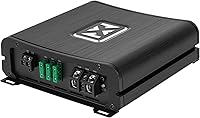
  • No included wiring kit, so new buyers need to budget separately for power cable, ground wire, and fuse hardware.
  • Peak power marketing can mislead casual buyers — the headline wattage figure is not what the amp delivers under normal listening conditions.

Ratings

Our AI-generated scores for the NVX VAD10001 v2 Monoblock Class D Amplifier are built by analyzing thousands of verified global buyer reviews, with spam, bot-generated, and incentivized feedback actively filtered out before any scoring takes place. The result is a balanced picture that reflects what real owners experience after installation — including the trade-offs and recurring frustrations that marketing copy tends to leave out. Both the genuine strengths and the legitimate pain points are reflected transparently in every category below.
Value for Money
88%
Most buyers feel this mono amp punches well above its price bracket, especially when compared to similarly rated competitors that cost significantly more. Owners who upgraded from a factory receiver output consistently report that the performance jump felt disproportionately large relative to the investment.
A small number of buyers who expected true plug-and-play performance were caught off guard by the additional cost of a proper wiring kit and potential electrical upgrades, which can add meaningfully to the total out-of-pocket expense.
Power Output
83%
Buyers running the VAD10001 v2 into a properly wired, single subwoofer setup at 2 ohms report genuinely satisfying bass output that holds up during extended listening sessions without obvious compression or loss of punch.
A recurring theme in user feedback is that achieving rated 1-ohm performance requires a capable alternator, fresh battery, and correctly gauged wiring — owners who didn't upgrade their electrical system often reported underwhelming results and blamed the amp rather than the installation.
Build Quality
86%
The aluminum alloy chassis feels noticeably more solid than what buyers typically encounter at this price point, and the platinum-plated RCA inputs have drawn specific praise for maintaining a snug, corrosion-free connection even after months of road vibration.
A few owners noted that the gain and crossover adjustment knobs feel slightly loose or imprecise, which makes dialing in fine settings a bit fiddly — particularly once the amp is mounted in a tight or partially obscured location.
Marine & Environment Durability
84%
Marine and UTV owners consistently validate the conformal coating claim in practice, reporting that the amp held up through salt air, humidity, and off-road dust exposure where cheaper amps had previously failed within a single season.
While the circuit board protection is genuine, the external chassis and terminal areas are not additionally sealed, so installation in truly exposed locations — like an open boat deck without a cover — still requires some protective planning from the installer.
Installation Experience
71%
29%
The compact footprint makes physical placement straightforward, and buyers with prior amplifier installation experience typically report a clean, uncomplicated wiring process with sensible terminal placement and clearly labeled controls.
The included manual is widely described as thin and underdeveloped, leaving first-time installers without enough practical guidance — several buyers mentioned needing to rely on online forums or YouTube tutorials to complete a confident installation.
Bass Control & Tuning
89%
The variable bass boost gives users meaningful flexibility to shape the low-end response without an external processor, and the range from flat to +12 dB at 45 Hz covers the sweet spot for most popular subwoofer and enclosure combinations.
The amp lacks a built-in subsonic filter, which is a real omission for buyers running ported enclosures — without one, ultra-low frequencies below the box tuning point go unmanaged, potentially stressing the driver without producing audible output.
Remote Bass Knob
87%
The included remote knob is one of the most consistently praised accessories in buyer feedback — it feels solid rather than cheap, and the ability to adjust bass level from the driver's seat without pulling over is something owners describe as immediately indispensable.
The connecting cable length may fall short for some larger vehicle installs like full-size trucks or SUVs where the amp is mounted far from the driver's seat, and sourcing an extension cable is an added inconvenience that buyers didn't anticipate.
Thermal Management
74%
26%
Under moderate listening conditions the heat sink does its job quietly and effectively, and many owners report that the amp runs only mildly warm even after hours of highway driving at reasonable volume levels.
In confined under-seat installs with limited airflow, or during sustained high-volume sessions, the amp runs noticeably hot — thermal protection has triggered for some buyers in poorly ventilated setups, causing temporary shutdowns that interrupted listening until the unit cooled.
Signal Clarity
81%
19%
Buyers using quality source units report a clean, low-noise signal path, with the platinum-plated RCA inputs contributing to a connection that resists the background hiss that plagues cheaper amp inputs over time.
Some owners running longer RCA cable runs or lower-quality head units noted a faint ground loop hum, which is more a function of installation variables than the amp itself but is worth flagging for buyers with complex signal chains.
Crossover Performance
79%
21%
The variable low-pass crossover does a solid job of keeping the subwoofer focused on bass-range content, and most buyers found the adjustment range sufficient to integrate the sub cleanly with a variety of full-range speaker setups.
Without a corresponding high-pass output or subsonic filter, the crossover suite is functional but incomplete for buyers who want a more comprehensive tuning toolkit built into the amp itself rather than handled externally.
Impedance Flexibility
86%
Stability across 1, 2, and 4 ohms gives buyers genuine flexibility when pairing this amp with different subwoofer configurations, including dual-voice-coil drivers wired to various impedance combinations — a feature that extends its compatibility well beyond single-coil setups.
Running at 1 ohm amplifies the electrical demand on the vehicle system considerably, and buyers who aren't prepared for that reality may find performance inconsistent, particularly in older vehicles with aging charging systems.
Indicator & Diagnostics
68%
32%
The LED status light gives a quick visual confirmation that the amp is receiving power and operating normally, which is genuinely useful during initial setup when you're toggling connections and confirming signal flow.
A single LED provides very limited diagnostic information — buyers troubleshooting protection mode trips or signal issues get no useful feedback from the amp itself and must rely entirely on process-of-elimination testing to identify the root cause.
Accessories & Packaging
72%
28%
The remote bass knob is a meaningful inclusion that adds immediate practical value, and the packaging is solid enough that units consistently arrive undamaged — a detail that matters more than it sounds for a heavy aluminum chassis shipped long distances.
The absence of any wiring hardware is a common frustration for buyers who assumed the amp would arrive installation-ready; the manual's lack of depth compounds this, leaving new buyers with a capable amp but an incomplete path to getting it running.

Suitable for:

The NVX VAD10001 v2 Monoblock Class D Amplifier is a strong fit for anyone building a dedicated subwoofer system and working with a realistic, mid-range budget. It makes particular sense for car and truck owners stepping up from a receiver's built-in sub output, where even a modest dedicated amp makes an immediately audible difference. Beyond typical vehicle installs, it genuinely earns its place in marine and UTV applications — the conformally coated circuit board handles humidity and vibration better than most amps in this price range, making it a practical choice for boats, side-by-sides, and powersports builds. Riders and boaters who've burned through cheaper amps in wet or dusty environments will appreciate that this one was actually engineered for those conditions. The included remote bass knob also makes it well-suited to anyone who wants dynamic, on-the-fly bass control without adding a separate processor to the signal chain.
Not suitable for:

Buyers chasing absolute peak performance for a dedicated listening setup or competition audio build will likely find this mono amp falls short of their expectations. Getting the most out of this amp at its lowest impedance setting demands a properly upgraded electrical system — heavier wiring, a solid chassis ground, and potentially a secondary battery or capacitor — so it's not a plug-and-play solution for anyone expecting full output from a stock vehicle electrical setup. Audiophiles who prioritize surgical precision in their low-frequency tuning may want a unit with more granular crossover and EQ controls than this amp provides. The documentation has also been noted as sparse, which makes it a less-than-ideal choice for first-time amp installers who rely heavily on written instructions. In short, the NVX VAD10001 v2 Monoblock Class D Amplifier rewards buyers who already know their way around a car audio installation; it's less forgiving for those learning as they go.
Specifications

  • Amplifier Type: Single-channel (monoblock) Class D amplifier designed exclusively for subwoofer applications.
  • Peak Power: Maximum peak power output is rated at 2000W, representing a momentary ceiling rather than sustained output.
  • RMS at 1 Ohm: Continuous RMS output is 1000W into a 1-ohm load, requiring proper wiring and a capable vehicle electrical system.
  • RMS at 2 Ohms: Continuous RMS output drops to 760W when driving a 2-ohm subwoofer load.
  • RMS at 4 Ohms: Continuous RMS output is 420W into a 4-ohm load, suitable for standard single-voice-coil subwoofers.
  • Impedance Range: Stable across 1, 2, and 4-ohm loads, providing compatibility with a wide range of subwoofer configurations.
  • Bass Boost: Variable bass boost is adjustable from 0 to +12 dB centered at 45 Hz, controllable via the onboard dial or the included remote knob.
  • Crossover: Variable low-pass crossover filters high-frequency content, keeping the subwoofer focused on bass-range reproduction only.
  • Circuit Board: The PCB is conformally coated to marine-grade standards, protecting internal components against moisture, humidity, and corrosion.
  • Protection: Three-way protection circuitry guards against thermal overload, electrical overload, and speaker short-circuit conditions.
  • Inputs: Accepts signal via platinum-plated RCA level inputs, which resist oxidation and help maintain consistent signal integrity over time.
  • Heat Management: A heavy-duty aluminum alloy heat sink draws and dissipates thermal energy during sustained high-volume use.
  • Indicator Light: An onboard LED status indicator confirms that the amplifier is powered and operating normally.
  • Remote Accessory: A remote subwoofer bass knob is included in the box, allowing bass level adjustment from the driver's seat without accessing the amp directly.
  • Operating Voltage: Designed to operate on a standard 12V DC vehicle electrical system.
  • Dimensions: The amplifier measures 10.94 x 9.33 x 3.19 inches, enabling installation in tight under-seat or trunk locations.
  • Weight: Unit weight is 4.7 pounds, making handling and mounting straightforward for a single installer.
  • Material: The chassis is constructed from aluminum alloy, balancing structural rigidity with efficient heat dissipation.
  • Vehicle Compatibility: Rated for use in cars, trucks, marine vessels, UTVs, and motorcycles, covering both enclosed and open-air environments.
  • Market Availability: The VAD10001 v2 has been commercially available since February 2019, providing an established track record in the field.

Related Reviews

NVX VADM1v2 Monoblock Amplifier
82%
88%
Power Output
93%
Compact Form Factor
71%
Thermal Management
86%
Tuning Controls
74%
High-Level Input Usability
More
NVX VADM4 v2 4-Channel Amplifier
84%
93%
Power Accuracy
91%
Compact Form Factor
89%
Marine & Weather Durability
88%
Thermal Management
84%
Crossover Flexibility
More
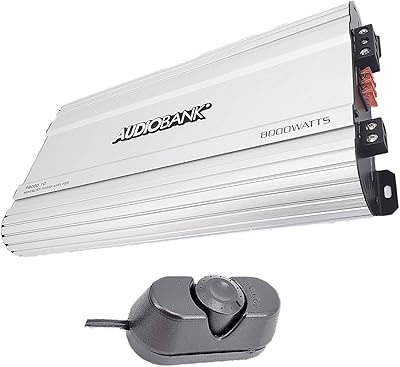
Audiobank P8001 Monoblock Car Amplifier
63%
74%
Value for Money
31%
Power Accuracy
81%
Ease of Installation
57%
Build Quality
53%
Thermal Management
More
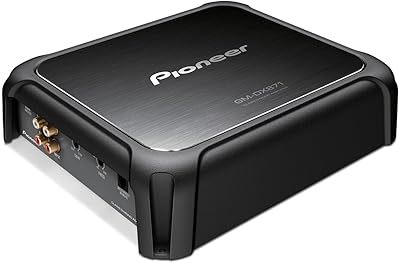
Pioneer GM-DX871
Pioneer GM-DX871
78%
78%
Power Output & Performance
83%
Build Quality
91%
Compact Form Factor
69%
Installation Experience
86%
Low-Pass Filter Range
More
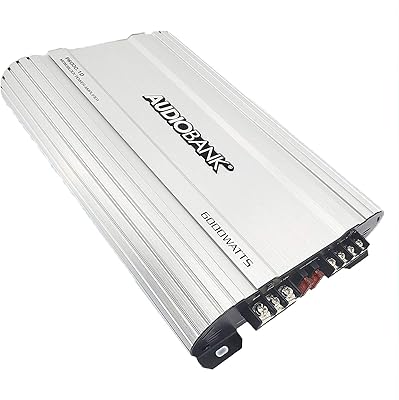
Audiobank P6001 Monoblock Car Amplifier
61%
74%
Value for Money
38%
Power Accuracy
56%
Build Quality
52%
Thermal Management
78%
Installation Ease
More
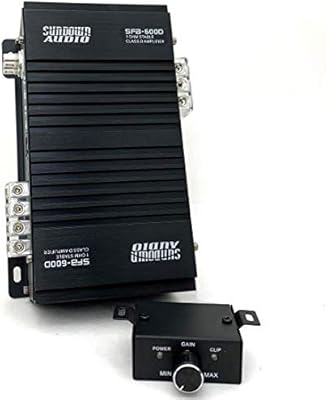
Sundown Audio SFB-600D Monoblock Amplifier
78%
78%
Sound Quality
67%
Power Output Accuracy
82%
Build Quality
84%
Value for Money
88%
1-Ohm Stability
More
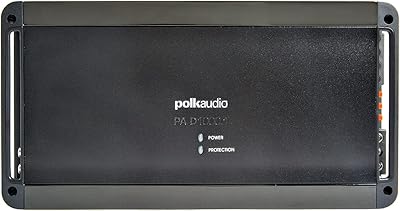
Polk Audio PA D1000.1 Class D Monoblock Amplifier
86%
94%
Power Output
88%
Build Quality
90%
Bass Performance
78%
Ease of Installation
91%
Thermal Protection
More
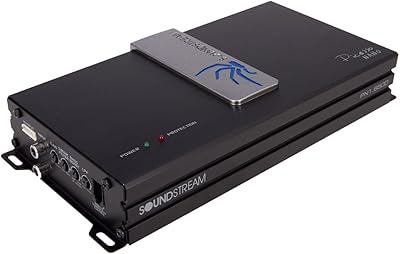
Soundstream PN1.650D Monoblock Picasso Nano Class-D Amplifier
84%
88%
Sound Quality
91%
Ease of Installation
85%
Power Output
87%
Build Quality
76%
Thermal Performance
More
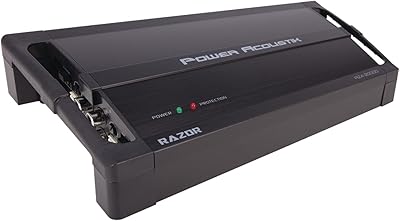
Power Acoustik RZ1-3500D Monoblock Car Amplifier
71%
84%
Bass Output
81%
Value for Money
88%
Installation Ease
69%
Thermal Management
47%
Wattage Accuracy
More
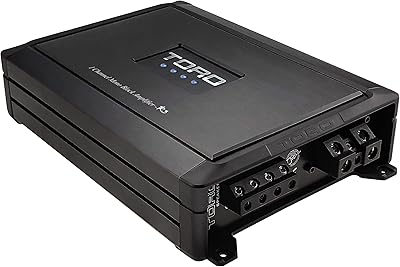
TORO TECH R3 Monoblock Car Amplifier
77%
88%
Power Accuracy
83%
Bass Output Quality
81%
Installation Ease
62%
Thermal Management
76%
Build Quality
More

FAQ

For installations running at 1 ohm and drawing close to maximum output, a 4-gauge power and ground wire is the standard recommendation. If you're planning a longer-than-average cable run from the battery, stepping up to 2-gauge is worth considering to minimize voltage drop. Skimping on wire gauge is the most common reason buyers don't get the output they were expecting.

Yes, and this is one area where this mono amp genuinely stands out from the competition. The conformally coated marine-grade circuit board means the internal components are protected against moisture, salt air, and humidity that would corrode a standard car amp fairly quickly. Just make sure the mounting location still has adequate airflow, since even marine-rated amps need ventilation.

Peak power is a brief burst figure measured under ideal lab conditions — it's not what the amp delivers while you're actually listening to music. RMS is the continuous, sustained power output, and that's the number that matters for real-world performance. The NVX VAD10001 v2 Monoblock Class D Amplifier delivers 1000W RMS, but only at 1 ohm with a properly wired, healthy electrical system.
Absolutely. The amp is stable at 1, 2, and 4 ohms, so a standard 2-ohm sub is well within its range. At 2 ohms you'll see around 760W RMS, which is still plenty of output for most builds. Just match your subwoofer's impedance to the appropriate setting and make sure your gain is calibrated correctly.

The remote knob connects via a small cable that runs from a dedicated port on the amp — no separate power wiring required. Route the cable along the same path as your signal cables, keeping it away from power wires to avoid interference. Most installers tuck it under the center console or mount it somewhere within easy reach of the driver's seat.

It can run warm, particularly if it's mounted in a confined space with limited airflow. The built-in heat sink handles normal use well, but if you're planning a sealed enclosure install or an under-seat location with poor ventilation, leave some gap around the unit. Thermal protection will kick in and temporarily shut the amp down before any damage occurs, but repeated thermal cycling is worth avoiding by planning your airflow in advance.

It depends on your vehicle's existing electrical system. If your alternator is stock and your battery is more than a couple of years old, running the amp at full tilt can cause voltage sag, which you'll hear as the bass pulling down your headlights or general audio quality dropping under heavy hits. A capacitor helps with short transient demands; a proper secondary battery or high-output alternator is the better long-term solution if you're running the amp hard regularly.

No, the VAD10001 v2 does not include a dedicated subsonic filter. If your subwoofer enclosure is ported and tuned to a specific frequency, it's worth considering an external processor or head unit with a subsonic filter built in — frequencies below your box's tuning point can over-excite the driver without you hearing much useful output, which wastes power and adds unnecessary mechanical stress.

This is a monoblock design, meaning it already operates as a bridged single-channel unit by nature. There's no additional bridging configuration available. If you want more output or plan to run multiple subwoofers, the typical approach is to wire your subs in a combined impedance that the amp supports, or add a second amp to a separate subwoofer.

The remote bass knob and its connecting cable are included, but a wiring kit is not part of the package. You'll need to source your own power cable, ground wire, inline fuse, and RCA cables separately. Many buyers pick up a dedicated amp wiring kit at the same time as the amp itself to keep the install straightforward.