






Overview

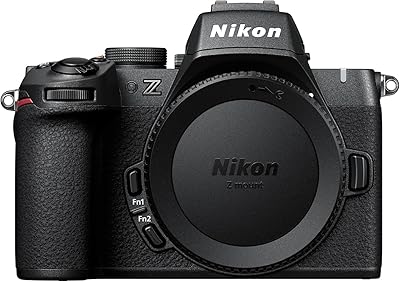
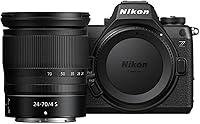
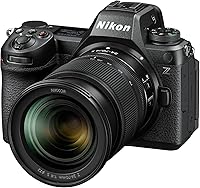
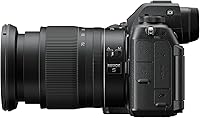
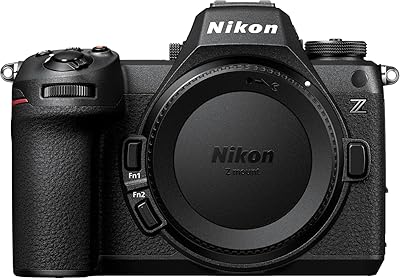
The Nikon Z6 III 24-70mm Mirrorless Camera Kit sits in a genuinely useful spot in Nikon's Z-series lineup — capable enough for professional work, yet not as specialized as the flagship Z9. It represents Nikon's clearest answer yet to hybrid shooters who want one body that handles demanding stills and serious video without compromise. The bundled 24-70mm f/4 S lens is a smart practical choice: sharp across the frame, compact enough for travel, and it covers the focal lengths most photographers actually reach for day to day. At this price tier, buyers rightly expect top-tier performance across autofocus, video specs, and build quality — and largely, that expectation is met.

Features & Benefits

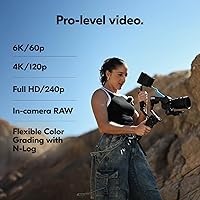
The Z6 III kit's most talked-about capability is its 6K/60p internal RAW video, which means filmmakers can capture cinema-grade footage straight to the card without routing through an external recorder. Slow-motion options — including 4K at 120p and Full HD at 240p — give videographers real creative flexibility. On the stills side, the EVF is genuinely impressive: at 4,000 nits it stays legible in harsh midday sun, and its 120fps refresh makes tracking fast subjects feel natural rather than laggy. The autofocus, powered by Deep Learning subject recognition, detects subjects as small as 3% of the frame — a meaningful advantage for wildlife and event work. The Expeed 7 processor enables Pre-Release Capture, saving frames from just before you press the shutter.

Best For

This full-frame mirrorless system makes the most sense for shooters who operate across multiple disciplines. Wedding and event photographers will appreciate the autofocus reliability paired with a zoom range that covers portraits, room shots, and candid moments without a lens swap. Travel and documentary work is another natural fit — the kit stays relatively compact for a full-frame setup, and the stabilization handles handheld shots in tight spaces. Hybrid creators producing client video benefit most from the internal RAW recording, which reduces post-production complexity. It is less ideal for sports shooters who need a faster maximum aperture or weather sealing on the kit lens itself.

User Feedback

Owners of this Nikon kit tend to be enthusiastic about the EVF — particularly how well it holds up outdoors, where lesser viewfinders wash out completely. The autofocus improvements over the previous generation feel immediately noticeable in practice, especially for subject tracking. That said, battery life under heavy video loads draws consistent criticism; long 6K sessions can drain the EN-EL15c faster than expected, making a spare battery feel necessary. The 24-70mm f/4 S earns respect for optical sharpness, but the absence of weather sealing is a recurring complaint. Menu navigation gets mixed reviews — cleaner than older Nikons, though still a learning curve for those arriving from Sony or Canon systems.

Pros

  • Internal 6K/60p RAW video recording removes the need for an external recorder on professional shoots.
  • The EVF remains clearly visible in bright sunlight, which is a genuine everyday advantage over most rivals.
  • Autofocus tracks subjects down to near-darkness and covers nine subject types with impressive reliability.
  • Up to 8 stops of sensor-shift stabilization makes handheld shooting far more forgiving in tricky conditions.
  • Pre-Release Capture means you stop missing split-second moments that happen just before you press the shutter.
  • The 24-70mm f/4 S lens is optically sharp and compact, making it a practical everyday walkaround option.
  • ISO performance extends to extreme ranges, giving low-light shooters real flexibility without excessive noise.
  • Continuous shooting at 120fps JPEG gives action photographers a serious buffer for fast-moving subjects.
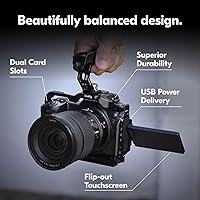
  • The articulating touchscreen makes shooting from low angles or overhead positions genuinely practical.
  • Wireless connectivity and HDMI output cover both on-set monitoring and remote transfer workflows.

Cons

  • Battery life under sustained 6K video recording drains noticeably fast, making a spare battery essential kit.
  • The included 24-70mm f/4 lens lacks weather sealing, which is frustrating given the body's durability expectations.
  • Menu depth still presents a learning curve, particularly for shooters coming from Sony or Canon systems.
  • The f/4 maximum aperture limits shallow depth-of-field control and low-light flexibility without a faster prime.
  • At this price level, some buyers will find the lack of a built-in flash or pop-up option an inconvenience.
  • High-resolution 6K files generate large storage demands quickly, requiring fast, high-capacity cards.
  • Continuous RAW shooting at sustained speeds can cause the buffer to fill faster than some rivals at this tier.
  • The body weight with lens, while reasonable, adds up quickly when paired with additional Z-mount glass for travel.

Ratings

The scores below reflect an AI-driven analysis of verified global user reviews for the Nikon Z6 III 24-70mm Mirrorless Camera Kit, with spam, bot-generated, and incentivized feedback actively filtered out to ensure accuracy. This synthesis covers thousands of real-world buyer experiences across stills photography, hybrid video work, travel, and professional event use. Both the standout strengths and the recurring frustrations are represented honestly, giving you a clear picture before you commit.

Video Capability
96%
Buyers consistently describe the internal 6K RAW recording as a workflow revelation — no external recorder, no extra cables, just clean cinema-grade footage straight to the card. The slow-motion options at 4K/120p and Full HD/240p add genuine creative flexibility that videographers previously had to spend considerably more to access.
A small number of professional video users note that the 10-minute continuous recording limit in certain modes can interrupt longer unscripted takes, which is frustrating during documentary shoots or live-event capture where stopping to reset is not practical.
Viewfinder Quality
94%
Outdoor shooters, particularly wedding photographers working midday in harsh sunlight, repeatedly praise the EVF for staying sharp and bright where rival viewfinders turn dim and difficult to read. The 120fps refresh rate also makes tracking fast subjects feel natural rather than like watching a slightly delayed screen.
A handful of users coming from optical viewfinders find the EVF rendering of very dark scenes slightly artificial, and in rare cases the auto-brightness adjustment can lag momentarily when stepping from shade into direct sun.
Autofocus Performance
91%
The improvement over the previous generation is immediately felt in real shooting conditions — faces as small as a fraction of the frame get locked and held, and subject switching in busy scenes is noticeably more confident. Wildlife and event photographers in particular report far fewer missed critical moments compared to earlier Z bodies.
Eye detection on subjects wearing glasses or in profile occasionally loses lock faster than users expect, and in very busy multi-subject scenes the camera's subject selection logic can feel unpredictable when you need control over exactly which subject takes priority.
Image Quality
89%
The 24.5MP full-frame sensor produces files with excellent dynamic range and fine detail, which holds up well when lifting shadows in post — a frequent requirement for wedding and event photographers dealing with mixed lighting. Color science is widely praised as natural and accurate, requiring minimal correction for skin tones straight out of camera.
At the highest extended ISO settings, noise becomes visibly aggressive and the files require more processing than competing Sony sensors at equivalent sensitivities, which is a real-world limitation for journalists or event shooters who need clean images in near-darkness.
Image Stabilization
88%
Travel shooters and documentary creators frequently highlight the 8-stop sensor stabilization as the feature that most changed how they work handheld — walking shots that previously required a gimbal now come out usably smooth at moderate speeds. Focus Point VR adds an extra layer of precision when shooting long focal lengths without a tripod.
In the most demanding handheld video scenarios — rapid panning or walking quickly over uneven terrain — some residual wobble and occasional stabilization correction artifacts are visible, meaning a gimbal is still recommended for high-end production work rather than treated as fully optional.
Battery Life
61%
39%
For a typical stills-focused shooting day with moderate review and wireless usage, the EN-EL15c battery gets most photographers through a full session without needing a swap, and the USB charging support means topping up from a power bank between shoots is straightforward.
Under sustained 6K video recording, battery endurance drops sharply — multiple buyers describe running through a full charge in under two hours of active recording, which makes carrying two or three spares essentially mandatory for any serious video production day. This is the most consistently raised complaint across buyer feedback.
Kit Lens Quality
79%
21%
The included 24-70mm f/4 S earns genuine respect for optical sharpness — center and edge resolution are both strong, distortion is well corrected, and the lens covers the focal range most photographers use the vast majority of the time, making it a fully usable everyday option rather than a throwaway bundle piece.
The f/4 maximum aperture is a real limitation for portrait photographers who want to separate subjects from backgrounds, and the absence of weather sealing on the lens is a persistent complaint given that the body itself is weather-resistant — the mismatch leaves the system vulnerable in light rain or dusty conditions.
Build Quality
86%
The body feels dense and well-assembled in hand, with control layout and button feedback that reflects Nikon's decades of ergonomic refinement — experienced photographers pick it up and feel at home within minutes. The magnesium alloy construction inspires confidence during active fieldwork.
Some buyers feel the grip could be slightly deeper for extended handheld use with heavier Z-mount lenses, and a few note that the card door and port covers feel less solid than the rest of the body, which is a minor but noticeable inconsistency at this price tier.
Menu & Usability
72%
28%
Nikon has meaningfully simplified the menu structure compared to older DSLR bodies in the Z series, and users upgrading from the Z6II or Z7II find most settings exactly where they expect them. My Menu customization helps frequent users get to their most-used controls quickly once the initial setup is done.
Shooters arriving from Sony or Canon systems consistently describe a steeper-than-expected learning curve, with some settings buried in submenu layers that take real time to locate. The sheer depth of customization options is powerful but can feel overwhelming during the first few weeks of ownership.
Connectivity
83%
The combination of Wi-Fi, Bluetooth, and HDMI covers nearly every professional monitoring and transfer workflow without requiring third-party adapters. Wedding and commercial photographers appreciate being able to tether wirelessly to a tablet or laptop for live client review without trailing cables across a set.
Transfer speeds over Wi-Fi are adequate but not fast enough for bulk RAW file offloading at the end of a busy shooting day — most professional users still rely on a card reader for serious data transfer, making the wireless feature more useful for occasional remote control than as a primary delivery method.
Slow-Motion Video
87%
The 4K/120p and Full HD/240p slow-motion modes are consistently praised by content creators and commercial videographers for delivering smooth, detailed footage at speeds that were previously only accessible on more expensive dedicated cinema cameras. Social media and commercial editors find the 240fps Full HD option particularly useful for stylized product and lifestyle content.
Full HD slow motion at 240fps involves a visible quality trade-off compared to 4K modes, with slightly softer resolution that can be noticeable on larger screens — users expecting the same image quality at 240fps as at 4K will need to adjust their expectations for that specific mode.
Low Light Performance
84%
ISO performance up to around 6400 to 12800 is consistently described as clean and confident across user feedback, with well-preserved detail and manageable noise for professional delivery — a clear advantage for event and reception photographers working in dimly lit venues without flash.
Beyond ISO 25600, noise character becomes less pleasing and requires more aggressive noise reduction in post, which can soften fine detail in a way that is noticeable in large prints or heavily cropped images — limiting the practical usable range compared to the camera's maximum specification on paper.
Value for Money
74%
26%
When buyers factor in the internal 6K RAW recording, the EVF quality, and the included lens, the overall value proposition relative to building a comparable video-capable full-frame kit from scratch is genuinely strong — particularly for hybrid creators who would otherwise need to budget for a separate video camera.
At this price level, the battery limitation and the non-weather-sealed kit lens feel like meaningful gaps that require additional spending to address, which leads some buyers to question whether the total cost of building a complete working kit is as competitive as the initial sticker price suggests.
Burst & Capture Speed
88%
The Pre-Release Capture feature genuinely changes how sports and wildlife shooters approach unpredictable moments — knowing the camera is already saving frames before you consciously react removes a major source of missed shots that has historically frustrated photographers in fast action environments.
Sustained RAW burst shooting at high speeds fills the buffer faster than some users expect, and once the buffer is full, write speed to card becomes the bottleneck — making card selection critical and occasionally leading to forced pauses during extended action sequences.

Suitable for:

The Nikon Z6 III 24-70mm Mirrorless Camera Kit is built for photographers and videographers who refuse to choose between high-quality stills and serious video capability. Hybrid content creators — think solo filmmakers, YouTube documentarians, or corporate video producers — will find the internal 6K RAW recording genuinely useful, removing the need to carry an external recorder on every shoot. Wedding and event photographers benefit particularly from the fast, deep-learning-powered autofocus and the 24-70mm focal range, which covers the ceremony, portraits, and reception without a single lens change. Travel shooters and documentary-style creators will appreciate that the kit stays manageable in size while delivering full-frame image quality in low light. Advanced enthusiasts upgrading from an older Nikon DSLR or early Z-series body will also feel the jump in performance almost immediately, especially in autofocus responsiveness and EVF clarity.

Not suitable for:

The Nikon Z6 III 24-70mm Mirrorless Camera Kit is a harder sell for buyers whose priorities don't align closely with hybrid shooting. Sports and wildlife photographers who spend long sessions tracking unpredictable subjects in variable weather may find the f/4 kit lens limiting — both in light-gathering and in the absence of weather sealing on the glass itself. Shooters who work exclusively in video and need built-in ND filters, longer battery endurance out of the box, or a cinema-body form factor will likely find dedicated video cameras a better fit. Budget-conscious enthusiasts who primarily shoot casual photography won't extract enough value from the camera's advanced video and speed features to justify the investment. Anyone deeply embedded in the Sony or Canon ecosystem should also factor in the cost of adapting or replacing lenses before committing to the Nikon Z mount.

Specifications

  • Sensor: The camera uses a 24.5MP full-frame CMOS sensor, delivering high-resolution files with strong dynamic range across a wide variety of lighting conditions.
  • Processor: Nikon's Expeed 7 engine handles all image processing, enabling high-speed burst shooting, advanced subject recognition, and efficient 6K video encoding simultaneously.
  • Video Recording: Internal video options include 6K/60p N-RAW, oversampled 4K UHD, 4K at 120p, and Full HD at 240p for slow-motion capture, all recorded directly to the memory card.
  • Viewfinder: The electronic viewfinder offers 5,760k-dot resolution, a peak brightness of 4,000 nits, a 120fps refresh rate, and a color gamut equivalent to DCI-P3.
  • Autofocus: The hybrid phase-detection AF system covers 299 points, detects subjects down to -10EV, and uses Deep Learning to recognize up to nine subject types including people, animals, and vehicles.
  • Stabilization: Sensor-shift image stabilization provides up to 8 stops of compensation, with Focus Point VR support for enhanced handheld shooting accuracy at longer focal lengths.
  • ISO Range: Native ISO sensitivity runs from 100 to 64000, with an extended range reaching the equivalent of approximately ISO 204800 for extreme low-light scenarios.
  • Burst Speed: Continuous shooting reaches 120fps in JPEG mode and 20fps in RAW, with Pre-Release Capture saving frames from the moments before shutter activation.
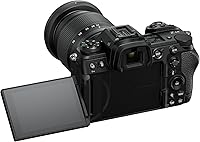
  • Display: A 3.2″ articulating capacitive touchscreen with 1024x768 pixel resolution allows flexible shooting from a range of angles, including low-to-ground and overhead positions.
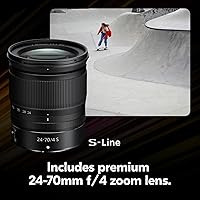
  • Included Lens: The kit includes the NIKKOR Z 24-70mm f/4 S, an optically sharp standard zoom built from 14 elements in 11 groups, covering wide-angle through short telephoto focal lengths.
  • Mount: The camera uses the Nikon Z mount, compatible with the full range of NIKKOR Z native lenses as well as F-mount lenses via the optional FTZ adapter.
  • Memory Card: The body accepts SD cards with a minimum write speed of 60 MB/s and a V60 video speed class rating to handle sustained high-bitrate video recording.
  • Connectivity: Built-in options include Wi-Fi, Bluetooth, USB, and HDMI output, supporting wireless transfer, remote control, and direct monitoring via external displays.
  • Shutter Speed: Electronic shutter speed ranges from 1/16000 second at the fast end down to 30 seconds, with a flash sync speed of 1/200 second.
  • Battery: The EN-EL15c Lithium-Ion battery powers the camera, though intensive 6K video sessions will significantly reduce per-charge endurance compared to stills-only use.
  • Weight: With the 24-70mm f/4 S lens attached, the total system weight is approximately 2.58 pounds, which is compact relative to comparable full-frame hybrid rigs.
  • Warranty: Nikon provides a one-year manufacturer warranty covering defects in materials and workmanship for USA model purchases through authorized retailers.

Related Reviews
Nikon Z6 III
Nikon Z6 III
81%
96%
Video Capability
93%
Autofocus Performance
97%
Electronic Viewfinder
89%
Image Stabilization
41%
Card Slot Configuration
More
Sony Alpha 7 IV
Sony Alpha 7 IV
80%
94%
Autofocus Performance
92%
Image Quality
89%
Video Capabilities
83%
In-Body Image Stabilization
58%
Battery Life
More
Canon EOS R5 Mirrorless Camera
81%
97%
Image Quality
95%
Autofocus Performance
82%
Video Capability
93%
Build Quality & Durability
88%
In-Body Image Stabilization
More
Tamron 17-70mm f/2.8 Di III-A Zoom Lens
82%
91%
Optical Sharpness
93%
Aperture Versatility
84%
Autofocus Performance
86%
Image Stabilization
82%
Build Quality & Durability
More
Nikon Z 8
Nikon Z 8
84%
94%
Autofocus Performance
96%
Image Quality
88%
Video Capabilities
93%
Build Quality & Weather Sealing
91%
Burst Speed & Continuous Shooting
More
Nikon Z 30 Mirrorless Camera
89%
89%
Ease of Use
94%
Video Quality (4K)
91%
Autofocus Performance
82%
Build Quality
88%
Live Streaming Features
More
Nikon Z 6II Full-Frame Mirrorless Camera
82%
91%
Autofocus Performance
93%
Low-Light Image Quality
88%
Video Capability
89%
Build Quality & Ergonomics
58%
Battery Life
More
Nikon Z 7II Full-Frame Mirrorless Camera
81%
96%
Image Quality
71%
Autofocus Performance
93%
Build Quality
54%
Battery Life
89%
Ergonomics & Handling
More
Nikon Z50 II Mirrorless Camera
81%
91%
Autofocus Performance
88%
Image Quality
86%
Video Capability
84%
Portability & Build
89%
Color Presets & Creative Tools
More
Sony Alpha 7R III Mirrorless Camera
78%
96%
Image Quality
91%
Autofocus Performance
89%
Build Quality & Ergonomics
53%
Battery Life
58%
Menu System & Usability
More

FAQ

It records 6K/60p N-RAW footage directly to the memory card — no external recorder needed. This is one of the Z6 III kit's standout advantages over many competitors at a similar price point, making it a genuinely practical option for solo filmmakers who travel light.

The 24-70mm f/4 S is optically very capable — sharp from edge to edge and well-corrected for distortion. The honest caveat is the f/4 maximum aperture, which limits how much background blur you can achieve and how well it handles very dim environments without pushing ISO. For travel, events, and general use it earns its place, but portrait and low-light specialists will likely want to add a faster prime lens down the line.

Most users who have handled both cameras describe the jump as immediately obvious, particularly when tracking moving subjects or shooting in low ambient light. The -10EV detection floor means the AF hunts far less in dim rooms or near-darkness, which is a real practical gain over the previous generation.

Yes, with the optional FTZ II adapter you can mount virtually any F-mount NIKKOR lens on the Z body. Autofocus compatibility varies by lens generation, so it is worth checking Nikon's compatibility chart for your specific glass before assuming full AF support.

Under sustained 6K recording, battery drain is noticeably faster than during stills shooting — this is a consistent point of feedback from users working long video sessions. Bringing at least one spare EN-EL15c is essentially mandatory if you plan to shoot extended event coverage or documentary footage in a single day.

The Z6 III body itself carries Nikon's weather-sealing, but the included 24-70mm f/4 S lens does not share that protection. If weather resistance matters to your shooting environment, you would need to pair the body with a fully sealed Z-mount lens to get a fully protected kit.

Yes, the Nikon Z6 III 24-70mm Mirrorless Camera Kit is production-ready from day one for most hybrid professional workflows, including weddings, corporate video, and documentary projects. You may want to add a faster memory card, a spare battery, and potentially a second lens depending on your specialty, but the core system is fully capable for paid work without further upgrades.

This is one area where the Z6 III genuinely stands out. The 4,000-nit peak brightness means the viewfinder remains clearly readable even in direct sunlight — a scenario where many rival EVFs look dim and washed out. Users who shoot a lot outdoors consistently cite this as one of the most practical day-to-day improvements over competing systems.

You need SD cards rated at V60 video speed class or higher with a sustained write speed of at least 60 MB/s. For 6K N-RAW specifically, hitting the minimum spec is important — using a slower card risks dropped frames or recording errors mid-shoot. Investing in reputable, high-spec cards is not optional at this level.

It is a substantial leap in almost every measurable area — autofocus, video, EVF quality, and burst speed included. The main adjustment is adapting to an EVF-based workflow and learning the Z-mount lens system. If you are bringing F-mount glass along via the FTZ adapter, the transition is smoother, and most users find they adapt quickly to the body ergonomics since Nikon has kept the handling familiar.