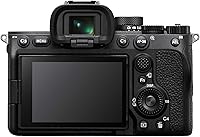
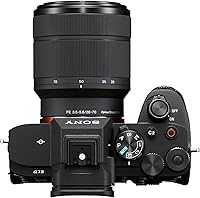
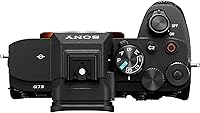
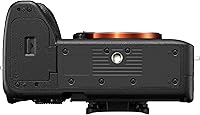
Overview

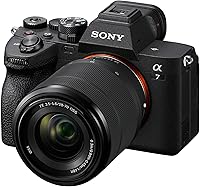
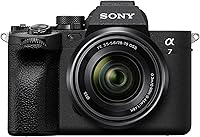
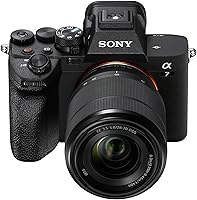
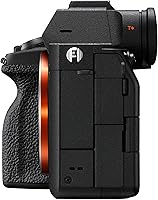
The Sony Alpha 7 IV sits at an interesting crossroads — it is the camera built for creators who cannot afford to choose between photography and video. Compared to its predecessor, the resolution jump to 33 megapixels is meaningful, not just a spec bump; it translates into files with real cropping headroom and finer detail in large prints. At this price tier, you are not buying a casual camera — this is a deliberate, long-term investment for someone serious about their craft. The included 28-70mm kit lens gets you shooting immediately, though most buyers treat it as a temporary starting point rather than a permanent solution.

Features & Benefits

The 33MP back-illuminated sensor is the heart of this machine, delivering files packed with detail and impressive dynamic range — enough to recover shadows in high-contrast scenes without obvious noise penalties. For video work, 4K 60p 10-bit with full pixel readout is a genuine differentiator at this tier; footage holds up in color grading far better than cameras relying on pixel binning. The 759-point autofocus system locks on fast and stays locked — eye-tracking reliability on humans and animals is genuine, not a marketing checkbox. Five-axis stabilization handles handheld shooting well in lower light, and dual card slots add a layer of professional workflow security that working photographers genuinely appreciate.

Best For

Portrait and wedding photographers will feel right at home with this full-frame hybrid camera — the eye-tracking alone removes real anxiety when working with fast-moving subjects. Hybrid creators splitting time between stills and cinematic video will find it covers both disciplines without obvious compromises. Enthusiasts stepping up from APS-C or an older full-frame body will notice an immediate quality leap. Travel and documentary shooters benefit from the flexibility a single versatile body provides on long trips. That said, if your primary work involves fast action or wildlife, the 10fps continuous shooting ceiling will likely push you toward bodies built specifically with speed as the priority.

User Feedback

Owners are vocal about the autofocus — most report it as the strongest argument for buying this Sony mirrorless over alternatives in its class. Tracking holds through unpredictable motion, and subject recognition rarely fails in real conditions. On the other side, battery life comes up repeatedly as a frustration; plan on carrying spares for a full shooting day. Video users flag heat buildup during extended recording sessions as something to actively manage. The menu system still divides opinion — improved over older bodies, but it demands patience from first-time Sony shooters. The kit lens is functional for getting started but rarely stays on the camera once owners begin exploring Sony's broader glass lineup.

Pros

  • Eye-tracking autofocus is among the most reliable in this camera class for portrait and event work.
  • 33MP sensor delivers files with serious cropping headroom and strong dynamic range for post-processing flexibility.
  • 4K 60p 10-bit footage holds up through heavy color grading without falling apart.
  • Five-axis stabilization makes handheld shooting in low light genuinely practical without a tripod.
  • Dual card slots provide professional-grade backup redundancy for critical shoots.
  • S-Cinetone color profile produces cinematic output straight from the camera, reducing post-production time.
  • Weather-sealed magnesium body handles outdoor and event shooting conditions with confidence.
  • Wide ISO range keeps the A7 IV competitive in available-light and evening shooting scenarios.
  • USB-C charging allows convenient top-ups from a power bank during travel between locations.
  • A broad, mature lens ecosystem means long-term investment in glass retains its value.

Cons

  • Battery life requires carrying multiple spares for any full-day shooting commitment.
  • Heat buildup during extended video recording limits use in warm environments or long interview setups.
  • The menu system has a steep initial learning curve for photographers new to Sony bodies.
  • CFexpress Type A cards are still expensive and less accessible than standard SD cards.
  • The bundled kit lens underperforms in low light and is rarely a long-term keeper for serious shooters.
  • Wi-Fi transfer speeds are too slow for practical bulk RAW file delivery to a computer.
  • Buyers who only shoot stills pay a premium for video features they may never use.
  • At 955g with a lens attached, the kit causes noticeable wrist fatigue during extended handheld sessions.
  • 10fps burst rate is a real ceiling for anyone whose work includes fast-action or wildlife subjects.
  • App-based remote control and image transfer feel dated compared to competing wireless implementations.

Ratings

The scores below were generated by AI after analyzing thousands of verified buyer reviews for the Sony Alpha 7 IV from global marketplaces, with spam, bot-submitted, and incentivized feedback actively filtered out. The result is an honest, balanced picture of where this full-frame hybrid camera genuinely excels and where real-world ownership reveals friction. Both the strengths that justify the investment and the pain points owners encounter are reflected transparently in every category.

Autofocus Performance
94%
Eye-tracking on humans and animals is consistently described as the standout feature by working photographers — it locks fast and rarely drops during unpredictable movement. Wedding and portrait shooters in particular report a noticeable reduction in missed shots during ceremonies and candid moments.
A small but vocal group of users note occasional hesitation when tracking subjects against busy, high-contrast backgrounds. It is not a dealbreaker, but it does mean you cannot fully set-and-forget the AF in every challenging scenario.
Image Quality
92%
The 33MP sensor delivers files with genuine cropping headroom and clean shadow recovery, which landscape and commercial photographers find highly practical in post-processing. Dynamic range holds up well in mixed lighting, and fine detail rendering is competitive at this sensor tier.
At very high expanded ISO settings, noise management becomes more noticeable and the files require more careful handling in editing software. For most real-world shooting conditions this is rarely an issue, but it surfaces in extremely low-light documentary work.
Video Capabilities
89%
4K 60p with full pixel readout and 10-bit 4:2:2 color gives hybrid creators footage that holds up through serious color grading without falling apart. The S-Cinetone profile means usable cinematic output straight from camera, which saves significant time for solo video producers.
Heat buildup during extended video recording sessions is a recurring complaint, particularly when shooting indoors or in warm climates. Users doing long interviews or event coverage report needing to pause and allow the body to cool, which is a real operational limitation.
In-Body Image Stabilization
83%
The 5-axis stabilization gives handheld shooters genuine confidence in low-light environments — travel photographers report usable shots at shutter speeds where they would otherwise need a tripod. It works well with both the kit lens and longer primes when walking or shooting from unstable positions.
Active Mode for video, while useful, introduces a visible crop that some users find frustrating when they want full-frame field of view in moving footage. Stabilization is also less convincing when paired with heavier telephoto lenses over 200mm.
Battery Life
58%
42%
The NP-FZ100 battery is a proven, widely compatible cell that charges via USB-C, which is genuinely convenient for travel shooters who can top up from a power bank between locations. Most users agree it performs adequately for lighter shooting days or studio sessions.
For a full day of event photography or sustained video recording, a single charge is consistently reported as insufficient. The majority of working photographers own two or three spares as a matter of necessity, which adds to the total cost of ownership in a way buyers should factor in before purchasing.
Build Quality & Ergonomics
88%
The magnesium alloy body feels solid and substantial in hand without crossing into uncomfortably heavy territory for a full day of shooting. Weather sealing gives outdoor and event photographers real confidence working in light rain or dusty conditions.
A few users with smaller hands find the grip depth slightly awkward over long shoots, and the body weight of 955g with a lens attached can fatigue the wrist during extended handheld work. It is not a design flaw, but it is worth considering for shooters used to lighter systems.
Menu System & Usability
67%
33%
Sony has made measurable improvements to the menu layout compared to older Alpha bodies — the touchscreen navigation is faster, and frequently used settings are more logically grouped. Experienced Sony users transitioning from an older body will find the learning curve manageable.
First-time Sony shooters frequently describe the menu depth as overwhelming, and several advanced video settings are buried in non-intuitive locations. It takes dedicated time to configure the custom buttons and menus to a point where the camera feels truly responsive to individual workflows.
Continuous Shooting Speed
71%
29%
10fps continuous shooting covers a wide range of photography disciplines well — portrait, wedding, and street photographers consistently find it more than adequate for their needs. Buffer performance at this speed is solid enough to handle real shooting bursts without frustrating delays.
Sports and wildlife photographers are the clear exception; 10fps simply does not keep pace with fast-action subjects like birds in flight or athletes at peak movement. This is a known limitation and one of the clearest indicators that the A7 IV is not a dedicated action camera.
Kit Lens Value
61%
39%
The 28-70mm f/3.5 zoom lens bundled with the kit gets new owners shooting across a useful focal range from day one, and the optical stabilization complements the body's IBIS. For someone completely new to the Sony E-mount system, it provides a functional starting point.
Most buyers describe the kit lens as a temporary placeholder rather than a long-term solution. Its maximum aperture limits low-light performance and background separation, and many users report upgrading to a faster prime or higher-quality zoom within months of purchase.
Card Slot & Storage Flexibility
91%
Dual card slots with CFexpress Type A and UHS-II SD support give professional photographers real backup redundancy for critical shoots like weddings or commercial jobs. The ability to simultaneously write RAW to one slot and JPEG to the other suits busy editorial workflows efficiently.
CFexpress Type A cards remain relatively expensive and less widely available than standard SD cards, which adds an initial setup cost for users who want to take full advantage of the faster slot. Budget-conscious buyers may find themselves relying on the SD slot alone initially.
Low-Light Performance
86%
The back-illuminated sensor structure and wide ISO range allow for genuinely clean results in dimly lit interiors and evening outdoor settings — event photographers working without flash find this camera handles available light with confidence. Subject detail holds well at mid-high ISO ranges that would challenge older sensors.
Pushed to its absolute expanded ISO limits, the files show noise patterns that require heavier noise reduction in post, which can soften fine detail. It is still competitive in this class, but it does not set a new benchmark the way some initial marketing language implied.
Wireless Connectivity
74%
26%
Built-in Wi-Fi and Bluetooth allow for reasonably quick image transfers to a smartphone via the Sony Imaging Edge Mobile app, which travel and social media-focused photographers find useful for quick sharing without a cable. Remote shooting via the app works reliably for basic studio or product setups.
The transfer speeds over Wi-Fi are not fast enough for bulk RAW file delivery, and the app interface has drawn criticism for feeling dated and occasionally unstable on certain Android devices. It covers basic needs but does not match the polished wireless experience of some competing systems.
Viewfinder Quality
85%
The 0.78x magnification electronic viewfinder offers a bright, detailed view that makes manual focus confirmation and composition in bright outdoor conditions noticeably easier than smaller EVFs found on competing bodies. Portrait photographers appreciate the accurate color reproduction for evaluating exposure in the field.
In very fast-moving situations, a small number of users detect a brief lag that is absent in optical viewfinders — this is more perceptible to photographers transitioning from DSLRs than to those already accustomed to mirrorless systems. It is a minor point but worth flagging for longtime DSLR users.
Value for Money
78%
22%
For hybrid shooters who genuinely need both high-resolution stills and professional-grade video from a single body, the price reflects a real breadth of capability that would otherwise require two separate systems. Buyers who work across multiple disciplines tend to feel the investment pays off over time.
Photographers who shoot exclusively stills — and do not touch the video features — often find the pricing harder to justify against alternatives that offer comparable image quality at a lower price point. The value equation depends heavily on how fully a buyer actually utilizes the hybrid feature set.

Suitable for:

The Sony Alpha 7 IV is built for creators who live in the space between photography and video and refuse to compromise on either. Wedding and portrait photographers will find the eye-tracking autofocus genuinely changes how confidently they work — tracking subjects through unpredictable moments without constant manual intervention. Hybrid shooters who produce YouTube content, short films, or commercial work alongside still photography get a body that handles both disciplines at a professional level without needing a second camera. Enthusiasts upgrading from an APS-C system or an aging full-frame DSLR will notice a meaningful step up in image quality, low-light handling, and overall versatility. Travel and documentary creators who need one capable body that covers wide-ranging shooting conditions — interiors, outdoor light, run-and-gun video — will find the A7 IV a reliable daily companion. If you plan to use this camera seriously for years and want a body that grows with your skills and glass collection, the investment makes real sense.

Not suitable for:

If your primary shooting discipline is fast action — wildlife, motorsport, athletics — the Sony Alpha 7 IV will likely leave you wanting more. The 10fps continuous shooting ceiling is genuinely limiting when tracking unpredictable, fast-moving subjects, and competitors in a similar price range offer meaningfully higher burst rates for action-focused work. Video professionals planning long uninterrupted recording sessions should be aware of the heat management limitations; this is not a body you can run for hours in a warm environment without planning around it. Buyers on a tighter budget who shoot exclusively stills should also reconsider — the hybrid video capability commands a premium, and if you will never use it, there are cameras offering comparable still image quality at a lower price point. First-time camera buyers may also find the menu complexity and the ongoing cost of glass, extra batteries, and CFexpress cards more overwhelming than anticipated when totaling the real cost of ownership.

Specifications

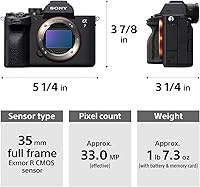
  • Sensor: 33MP full-frame Exmor R back-illuminated CMOS sensor delivering high dynamic range and clean detail across a wide range of lighting conditions.
  • Processor: BIONZ XR image processing engine, the same generation used in Sony's professional Alpha 1 body, enabling faster readout and improved noise handling.
  • Video Resolution: Records up to 4K 60p 10-bit 4:2:2 with full pixel readout, and also supports 4K 30p using 7K oversampling with no pixel binning for exceptional detail.
  • Autofocus: 759-point Fast Hybrid AF system with Real-time Eye AF for humans and animals, covering approximately 94% of the image area.
  • Stabilization: 5-axis in-body image stabilization (IBIS) with up to 5.5 stops of compensation, compatible with Sony OSS lenses for combined optical and sensor-shift stabilization.
  • ISO Range: Native ISO range of 100–51200, expandable to ISO 50–204800 for extreme low-light situations.
  • Burst Speed: Continuous shooting at up to 10fps with full AF and AE tracking, using either the mechanical or electronic shutter.
  • Shutter Speed: Mechanical shutter range of 30 seconds to 1/8000s, with flash sync speed of 1/250s.
  • Card Slots: Dual memory card slots: Slot 1 accepts CFexpress Type A or SD UHS-II; Slot 2 accepts SD, SDHC, and SDXC cards up to UHS-II speed class.
  • Display: 3-inch tilting LCD touchscreen with a maximum display resolution of 3840 x 2160, suitable for live view shooting and menu navigation.
  • Viewfinder: 0.78x magnification electronic viewfinder (EVF) with high-resolution OLED panel for accurate composition and exposure preview in bright outdoor conditions.
  • Kit Lens: Includes a 28-70mm f/3.5-5.6 OSS zoom lens covering a standard wide-to-short-telephoto range with built-in optical stabilization.
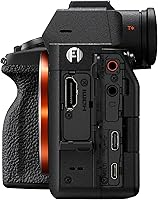
  • Connectivity: Built-in Wi-Fi and Bluetooth for wireless image transfer and remote control via the Sony Imaging Edge Mobile app, plus HDMI and USB-C for wired output and charging.
  • Color Profiles: Supports S-Cinetone, S-Log2, S-Log3, and standard picture profiles, giving hybrid shooters broad flexibility for both cinematic and naturalistic color output.
  • Video Format: Records in XAVC HS (H.265) and XAVC S (H.264) formats, with XAVC S-I (intra-frame) available for lower-compression, edit-friendly footage.
  • File Formats: Captures stills in JPEG, RAW (ARW), and HEIF formats, with 14-bit RAW output available for maximum dynamic range preservation in post-processing.
  • Body Weight: Body weighs approximately 659g without battery and card, or 955g as a complete kit with battery, card, and the included 28-70mm lens attached.
  • Battery: Powered by the NP-FZ100 lithium-ion battery, rated for approximately 520 shots per charge under CIPA standard testing conditions.
  • Mount & Build: Sony E-mount (full-frame) with a magnesium alloy body construction and dust- and moisture-resistant sealing throughout.
  • Warranty: Covered by a 1-year limited manufacturer warranty from Sony, with registration available through Sony's official support portal for additional service options.

Related Reviews
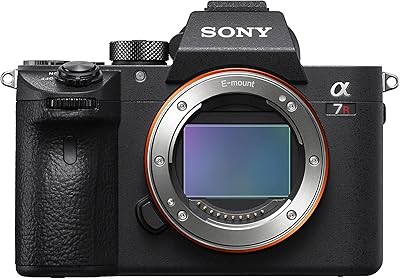
Sony Alpha 7R IV Full Frame Mirrorless Camera
83%
96%
Image Quality
92%
Autofocus Performance
89%
Build Quality & Durability
91%
Low-Light Performance
83%
Battery Life
More
Sony Alpha 6700
Sony Alpha 6700
82%
93%
Autofocus Performance
91%
Video Quality
89%
Image Quality & Sensor
86%
Image Stabilization
58%
Battery Life
More
Sony Alpha 7R III Mirrorless Camera
87%
96%
Image Quality
94%
Autofocus Performance
88%
Battery Life
91%
Build Quality
92%
Low-Light Performance
More
Sony Alpha a6000 Mirrorless Digital Camera
84%
96%
Autofocus Speed
91%
Image Quality
63%
Battery Life
88%
Portability/Weight
84%
Build Quality
More
Sony Alpha 7CR Full-Frame Camera
87%
96%
Image Quality
94%
Autofocus Performance
88%
Build Quality
92%
Portability
91%
Video Recording Quality
More
Sony XAV-AX6000 7-Inch Multimedia Receiver
85%
88%
Ease of Installation
91%
Audio Quality
87%
Touchscreen Responsiveness
85%
Display Clarity
90%
Connectivity Options
More
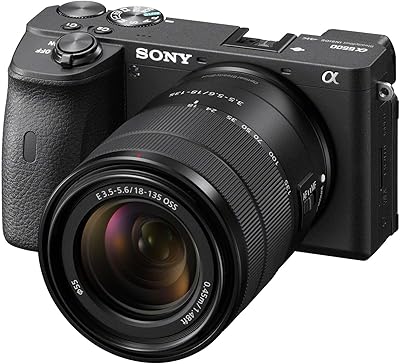
Sony Alpha 7C Full-Frame Mirrorless Camera
87%
92%
Autofocus Performance
89%
Low-Light Performance
86%
Image Stabilization
91%
4K Video Quality
87%
Build Quality
More
Sony XAV-AX4000 7-Inch Multimedia Receiver
85%
91%
Value for Money
87%
Audio Quality & DSP Performance
93%
Installation & Setup Ease
88%
Connectivity & Integration
85%
Usability & Interface
More
Sony Alpha a5100 16-50mm Mirrorless Camera
84%
91%
Image Quality
88%
Autofocus Performance
89%
Video Recording Quality
94%
Portability & Size
85%
Ease of Use
More
Sony Alpha a6100 16-50mm
79%
94%
Autofocus Performance
88%
Image Quality
81%
Video Quality
87%
Autofocus in Video
52%
Battery Life
More

FAQ

It depends on how seriously you want to pursue photography. As an entry point into the hobby, there are more affordable and simpler cameras that would serve a beginner better. The Sony Alpha 7 IV is genuinely aimed at enthusiasts and working professionals who will push its capabilities — the menu depth, the cost of lenses, and the overall system investment assume a certain level of commitment.

It is the most consistently mentioned limitation by owners, and it is worth taking seriously. On a heavy shooting day — events, weddings, extended video — one battery will not get you through. Most working photographers keep two or three spares charged and rotate them. The USB-C charging does help in a pinch if you can plug into a power bank between sessions.

It can, particularly during extended 4K 60p recording in warm environments or enclosed indoor spaces. For short video bursts or interview-style setups with breaks, most users do not encounter problems. For long uninterrupted shoots in hot conditions, it is worth planning around the limitation — some videographers use a small external fan or simply schedule breaks into their workflow.

The 28-70mm f/3.5 kit lens is functional and covers a useful focal range, but it is a starter option at best. Its variable maximum aperture limits low-light performance and background separation noticeably. Most buyers upgrade to a faster prime or a higher-quality zoom within the first few months, so it is worth factoring lens costs into your total budget from the outset.

Yes, and this is one of the strongest points of this full-frame hybrid camera for video creators. Eye-tracking stays locked during slow and moderate movement very reliably, which is a significant asset for solo videographers shooting interviews, talking-head content, or documentary work without a dedicated camera operator. Very fast or erratic movement can occasionally cause brief hesitation, but for the majority of video use cases it performs impressively.

Not directly — the A7 IV uses the Sony E-mount, so A-mount lenses require the Sony LA-EA5 adapter to work. That adapter does maintain autofocus functionality with compatible A-mount lenses, but it is an additional purchase to factor in. Native E-mount glass will always give you the best performance with this body.

For 4K 60p 10-bit recording, you will need a card in Slot 1 rated for CFexpress Type A or a UHS-II SD card with sufficient write speed — a minimum of V60 rated SD cards, though V90 is the safer choice for sustained 4K 60p. CFexpress Type A cards offer the highest throughput but are more expensive. For most stills shooting, a solid UHS-II SD card in either slot works fine.

Expect a noticeable adjustment period — probably a few weeks of deliberate practice before the body feels fully intuitive. The menu system is deep and organized differently from Canon or Nikon logic, and the custom button layout will take time to optimize for your workflow. The good news is that once you have it configured to your preferences, it is a very capable system. Many switchers recommend setting aside dedicated time to work through the menus before any important shoot.

Yes, the A7 IV shoots in Sony ARW RAW format at 14-bit depth. These files are supported by Adobe Lightroom, Capture One, and Sony's own Imaging Edge desktop software, among others. Capture One has historically had particularly strong Sony RAW support if color accuracy and fine detail rendering in post are priorities for your workflow.

The magnesium alloy body has dust and moisture-resistant sealing that holds up well in light rain and humid conditions — outdoor event photographers and travel shooters regularly use it in less-than-ideal weather without issue. It is not waterproof and should not be submerged or used in heavy downpours without additional protection. Also keep in mind that weather resistance is only as strong as the weakest point in your setup, so your lens needs to be similarly sealed for full protection.