Overview

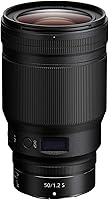
The Nikon NIKKOR Z 50mm f/1.2 S Prime Lens is Nikon's clearest statement yet about what a flagship standard prime should be for the Z-mount system. Announced in 2020 as part of the premium S-line lineup, it arrived as Nikon was building out a serious native lens ecosystem for its mirrorless bodies. The f/1.2 maximum aperture isn't just a bragging-rights number — at this level, backgrounds don't merely blur, they dissolve in a way that's difficult to achieve even stopped down with slower glass. This is a heavy, substantial piece of kit, and that's by design. It's built for photographers and videographers who work professionally and expect their tools to perform without compromise.
Features & Benefits

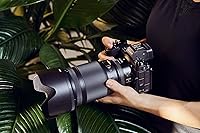
What sets the NIKKOR Z f/1.2 apart from Nikon's already-excellent 50mm f/1.8 S isn't just that extra stop of light — it's what that aperture does to the rendering character of the image. Nikon built this lens with 17 elements across 15 groups, incorporating aspherical and ED glass to control aberration and maintain sharpness across the entire frame, not just at the center. The autofocus is driven by four independent linear motors, which translates to noticeably fast and accurate tracking even on moving subjects. The housing is weather-sealed with a fluorine-coated front element, and the customizable control ring lets shooters assign exposure or focus functions without ever touching the camera body.

Best For

This 50mm prime makes the most sense in the hands of portrait and wedding photographers who prioritize image quality above all else. The wide aperture and optical rendering produce the kind of subject separation that flatters faces and makes studio work look effortlessly polished. Wedding photographers in particular benefit from the near-silent autofocus in venues where discretion matters. Street shooters who don't mind the weight — it clocks in at 2.4 pounds — will find the low-light capability genuinely useful after dark. Videographers get smooth, quiet focus pulls with minimal focus breathing, making it viable for run-and-gun work or more controlled cinematic setups. Casual shooters, though, should look elsewhere.

User Feedback

Among verified buyers, the consensus around rendering quality and bokeh character is overwhelmingly positive — professionals consistently describe the out-of-focus transitions as smooth and three-dimensional in a way that cheaper glass can't match. The autofocus draws strong marks in difficult lighting, with working photographers noting reliable performance at receptions and indoor events. The most repeated criticism centers on size and weight: at 2.4 pounds, this S-line lens is noticeably bulkier than competing 50mm options, and some buyers question whether the optical gains over the f/1.8 S justify the significant price difference. Long-term owners, however, tend to hold onto it — durability and resale value both come up favorably in extended ownership discussions.

Pros

  • The f/1.2 aperture produces background separation and bokeh quality that noticeably outclasses slower 50mm options.
  • Four independent autofocus drive units deliver fast, accurate tracking even in mixed or low-contrast lighting.
  • Edge-to-edge sharpness holds up well even wide open, thanks to aspherical and ED glass in the optical formula.
  • Weather-sealed construction with a fluorine-coated front element makes it dependable in rain or dusty outdoor conditions.
  • Near-silent autofocus is a real advantage for wedding photographers and video work where noise would be intrusive.
  • The customizable control ring adds genuine workflow flexibility without requiring menu navigation on the camera body.
  • Long-term owners consistently report strong build durability and respectable resale value within the used lens market.
  • Low-light performance allows confident handheld shooting in venues where other lenses would force a tripod or flash.

Cons

  • At 2.4 pounds, this S-line lens causes noticeable fatigue during long handheld shoots or heavy travel days.
  • Visible vignetting at f/1.2 requires correction in post or stopping down slightly, which some photographers find inconvenient.
  • The price gap over the Z 50mm f/1.8 S is hard to justify unless you regularly need the extra stop of light.
  • Physical size creates an awkward balance on smaller Z-series bodies, particularly the Z5 or Z30.
  • Barrel distortion at wider apertures, while correctable, is present enough to matter in architectural or product work.
  • No optical image stabilization is built in, so handheld video work depends entirely on in-body stabilization quality.
  • The large front element diameter increases the cost and bulk of compatible filters significantly.
  • Users switching from DSLR systems may find the learning curve around Z-mount lens ergonomics adds to the adjustment period.

Ratings

The Nikon NIKKOR Z 50mm f/1.2 S Prime Lens earns high marks across most categories, based on AI analysis of verified global buyer reviews with spam, bot-submitted, and incentivized feedback actively filtered out. Scores reflect the full picture — where this S-line prime genuinely excels and where real-world frustrations surfaced among working professionals and serious enthusiasts alike. Both the standout strengths and the honest trade-offs are represented transparently below.
Optical Image Quality
97%
Reviewers consistently describe the rendering as among the finest they have used on any mirrorless system — center sharpness at f/1.2 is exceptional, and the way tones transition from sharp to soft is noticeably more refined than competing fast primes. Portrait photographers in particular highlight the three-dimensional quality that makes subjects pop off backgrounds in a way that post-processing cannot replicate.
Some technically demanding users note measurable barrel distortion and chromatic aberration at the extreme corners when shooting wide open, which requires correction in post for pixel-peeping work. These are minor by the standards of any f/1.2 lens, but buyers expecting absolute perfection without software correction should be aware.
Bokeh Character
96%
The out-of-focus rendering draws some of the most enthusiastic feedback of any category — buyers describe background blur as smooth, round, and free of the harsh onion-ring artifacts found in some competing designs. Wedding photographers specifically mention that busy venue backgrounds simply dissolve, making the subject feel beautifully isolated without heavy editing.
At closer focus distances, busy backgrounds with strong geometric patterns can occasionally produce slightly nervous bokeh, though this is an edge case most photographers will rarely encounter. A small number of reviewers feel the bokeh character, while excellent, does not quite match the mythological rendering of certain legacy 50mm designs.
Autofocus Performance
91%
The four-unit linear motor system is consistently praised for locking onto subjects quickly and holding focus through movement — event photographers report reliable acquisition in dim reception lighting without the hunting behavior common in older lens designs. Paired with Z9 or Z8 bodies, eye and subject detection work smoothly without any perceptible lag.
In very low contrast or extremely dark environments, a small number of users report occasional hesitation before initial lock, particularly when the scene has little tonal differentiation. This is less about the lens and more about the limits of contrast-detection-based systems, but buyers expecting DSLR-style phase detection consistency in absolute darkness may notice it.
Low-Light Capability
94%
Photographers working in poorly lit venues — churches, reception halls, candlelit dinners — consistently highlight the practical advantage of f/1.2, which allows ISO settings two full stops lower than an f/2.8 lens in the same scenario. The resulting images carry noticeably less noise and retain cleaner shadow detail, which matters significantly in professional deliverables.
At the very widest aperture in low light, depth of field becomes extremely shallow, which demands precise focus placement and can result in higher rates of slightly out-of-focus frames during fast-moving events. Photographers not accustomed to managing focus at f/1.2 may experience a learning curve before their keeper rate improves.
Build Quality
93%
The construction feels immediately premium — reviewers describe the barrel as solid and confidence-inspiring, with no flex, rattle, or play in any of the controls. Long-term owners report that even after years of professional use the lens shows no functional degradation, and the overall build inspires the kind of trust that justifies investing in a lens at this price tier.
The sheer mass of the lens is a byproduct of its robust construction, and a handful of buyers mention that the size makes it impractical as a walk-around lens for casual days when they want to travel lighter. The lens hood, while effective, adds considerable length and can feel ungainly in tight shooting spaces.
Weather Sealing
88%
Professional photographers working outdoor events report shooting confidently through drizzle, high humidity, and dusty conditions without any issues, and the fluorine-coated front element visibly repels water droplets in a way that makes field cleaning quick and easy. The sealing instills real confidence for paid assignments where gear failure is not an option.
Nikon does not publish a specific IP rating for this lens, which leaves some buyers uncertain about exactly how much moisture exposure is safe. A small number of users would prefer clearer guidance on the limits of protection, particularly for tropical or coastal environments with saltwater spray.
Video Usability
86%
Videographers praise the near-silent focus transitions and notably low focus breathing, which are critical for narrative and documentary work where audible motor noise or visible framing shifts would require reshoots. The customizable control ring provides smooth manual exposure adjustments that feel natural during live recording without jarring jumps.
The lens lacks optical image stabilization, so handheld video work depends entirely on the in-body stabilization of the camera body, which varies in quality across the Z lineup. On bodies with weaker IBIS, like the Z5, handheld footage at f/1.2 can show subtle wobble that stabilized competitors avoid.
Portability & Size
51%
49%
For buyers who understood what they were purchasing, the physical size is accepted as the necessary cost of the optical performance on offer — studio and event photographers who shoot from a fixed position or a bag report that the weight is a non-issue in their working context. The balance on larger Z bodies like the Z8 is described as genuinely comfortable.
At 2.4 pounds, this S-line lens is substantially heavier than any other 50mm option in the Z lineup, and buyers who carry it for extended street or travel sessions frequently mention noticeable fatigue. On compact Z bodies the front-heavy imbalance is a genuine ergonomic issue, and multiple reviewers specifically warn newcomers to hold and feel the lens before committing.
Autofocus Noise
89%
The linear motor system operates quietly enough that wedding photographers report using it during ceremonies and quiet speeches without any audible distraction from the focus mechanism. Video shooters with on-camera microphones similarly note that focus noise is rarely, if ever, picked up in recordings.
In absolute silence — during a pause in music at a ceremony, for instance — a faint mechanical whisper is occasionally audible to the photographer at close range, though reviewers almost universally agree it is inaudible to subjects or on recorded audio. This is a very minor concern at the level of performance this lens delivers.
Sharpness Wide Open
92%
One of the more technically impressive aspects buyers highlight is that center sharpness at f/1.2 is genuinely usable for professional work — not just acceptable, but sharp enough that stopping down for portrait work is a creative choice rather than a technical necessity. Studio photographers note the lens holds detail in fine hair and fabric texture even at maximum aperture.
Corner sharpness at f/1.2, while better than many competing fast primes, does fall off in ways that matter for flat subjects like documents or product photography. Buyers using this lens outside its intended portrait and event context for subjects that extend to the frame edges may find they need to stop down to f/2 or f/2.8 for consistent results.
Value for Money
67%
33%
Photographers who rely on this lens professionally and bill clients for their work consistently describe it as a justifiable investment — the image quality is visibly different from less expensive alternatives in ways that clients notice and that support premium pricing in delivered work. Long-term resale value also holds reasonably well compared to competing premium primes.
For enthusiasts and semi-professional photographers, the price premium over the Z 50mm f/1.8 S is difficult to rationalize outside of very specific shooting scenarios. A meaningful portion of buyers in reviews acknowledge they could achieve ninety percent of the results with the f/1.8 S, and several express post-purchase uncertainty about whether the last increment of quality justified the significant cost difference.
Vignetting Control
72%
28%
Many portrait photographers actually appreciate the moderate light falloff at f/1.2 as a natural framing tool that draws attention toward the center of the image and adds a subtle filmic quality to wide-open exposures. For this use case, the vignetting is seen as a character trait rather than a flaw.
Photographers shooting for commercial clients who require clean, even illumination across the frame — such as product or real estate work — report that vignetting at wide apertures requires correction in every image, adding post-processing time to workflows. Even at f/2.8 a slight residual falloff is visible on careful inspection, which distinguishes it from optically corrected competitors.
Customization & Controls
83%
The assignable control ring and lens-side function buttons receive consistent praise from photographers who prefer to keep their shooting hand on the camera body while making adjustments — assigning aperture to the control ring allows a natural, tactile shooting experience that speeds up workflow in fast-changing environments like event photography.
The control ring has no physical detents in its default smooth-rotation mode, which some users find slippery and difficult to set precisely under pressure. Photographers accustomed to clicked aperture rings may need an adjustment period before the system feels natural, and a few reviewers suggest the button placement could be more intuitive for left-handed operators.
Distortion Correction
74%
26%
For the intended use cases of portrait, event, and documentary photography, barrel distortion at typical subject distances is rarely visible and almost never noticeable in delivered images without deliberate comparison. Most professional photographers in these genres report it as a complete non-issue in real-world shooting.
Photographers who test this lens on flat subjects or architectural lines find measurable barrel distortion that requires lens profile correction to resolve cleanly. In-camera corrections handle this automatically for JPEGs and video, but raw shooters who do not apply lens profiles will see the distortion in wide-open shots near the frame edge.

Suitable for:

The Nikon NIKKOR Z 50mm f/1.2 S Prime Lens is built for photographers and videographers who earn a living — or are deeply serious about their craft — and won't accept optical compromises. Wedding and event photographers will immediately appreciate the combination of fast, near-silent autofocus and an aperture wide enough to shoot confidently in poorly lit reception halls or candlelit venues without pushing ISO into noisy territory. Portrait photographers, whether working in the studio or on location, will find the subject-background separation at f/1.2 produces a quality of rendering that slower lenses simply cannot replicate — skin tones look rich, backgrounds fall apart beautifully, and the overall image has a three-dimensional quality that clients notice. Studio photographers chasing maximum tonal gradation in a standard focal length will find this 50mm prime delivers micro-contrast and edge sharpness that holds up under serious scrutiny. Videographers who need smooth, quiet focus pulls on a fast prime for cinematic work will also find this S-line lens a strong fit, provided they're comfortable with its physical footprint.
Not suitable for:

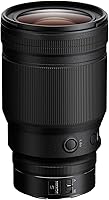
The Nikon NIKKOR Z 50mm f/1.2 S Prime Lens is a poor match for anyone who shoots casually, travels light, or is working within a tight budget. At 2.4 pounds, it is a substantial piece of glass — shooters who already carry a full kit will feel its presence by the end of a long day, and those coming from compact mirrorless setups may find the size imbalance genuinely uncomfortable. Photographers who already own the Z 50mm f/1.8 S and shoot mostly in decent light will struggle to justify the significant price jump for gains that are meaningful but incremental in everyday conditions. Beginners or hobbyists who won't regularly push the optical ceiling of this lens are unlikely to recoup the value it offers. Anyone shooting on a crop-sensor Z-mount body should also pause — the full rendering character of this lens is designed for full-frame, and the effective field of view shifts in ways that undercut its intended use as a classic standard prime.
Specifications

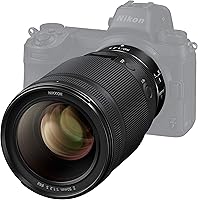
  • Focal Length: Fixed 50mm focal length designed for standard field-of-view shooting on full-frame Nikon Z-mount mirrorless cameras.
  • Max Aperture: Maximum aperture of f/1.2 enables significant light gathering and extreme background separation in a single-frame capture.
  • Min Aperture: Minimum aperture of f/16 provides sufficient depth-of-field range for landscape and stopped-down studio applications.
  • Lens Mount: Native Nikon Z mount, compatible with all current and future Nikon Z-series full-frame and APS-C mirrorless camera bodies.
  • Optical Formula: 17 elements arranged in 15 groups, incorporating aspherical and Extra-low Dispersion (ED) glass elements for aberration control.
  • Autofocus System: Four independent linear autofocus drive units operate in a multi-focus configuration for rapid, precise subject acquisition and tracking.
  • Aperture Blades: Nine rounded aperture blades produce smooth, circular bokeh rendering across a wide range of shooting apertures.
  • Weather Sealing: Full weather-sealed construction with dust and moisture resistance rated for professional use in variable outdoor conditions.
  • Front Element: Fluorine-coated front element resists water droplets, dust, grease, and fingerprint smudging for easier field maintenance.
  • Weight: The lens weighs approximately 2.4 pounds (1090g), reflecting its heavy-duty optical and mechanical construction.
  • Dimensions: Overall dimensions measure 5.91 inches in length by 3.52 inches in diameter when mounted without a body cap.
  • Filter Thread: 82mm front filter thread accepts standard circular polarizers, ND filters, and UV protective filters.
  • Control Ring: A fully customizable control ring can be assigned to aperture, ISO, or exposure compensation directly on the lens barrel.
  • Lens Series: Part of Nikon's S-line designation, which identifies lenses meeting the highest optical and mechanical standards within the Z system.
  • Angle of View: Provides a 47-degree angle of view on full-frame Z-mount bodies, consistent with the classic 50mm standard prime perspective.
  • Min Focus Distance: Minimum focusing distance is approximately 1.48 feet (0.45 meters), allowing moderately close subject framing without extension tubes.
  • Image Stabilization: No optical image stabilization is built into the lens; stabilization relies entirely on in-body systems available on compatible camera bodies.
  • Model Number: Official Nikon model number is 20095, corresponding to the USA-market version of this S-line prime lens.

Related Reviews
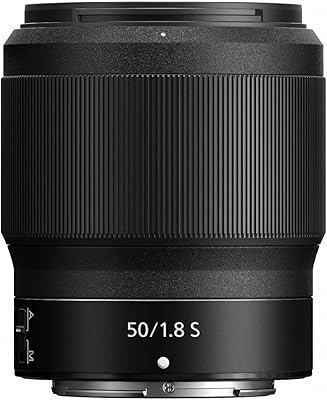
Nikon NIKKOR Z 50mm f/1.8 S Prime Lens
86%
97%
Optical Sharpness
93%
Bokeh Quality
89%
Autofocus Performance
91%
Low-Light Capability
88%
Build Quality
More
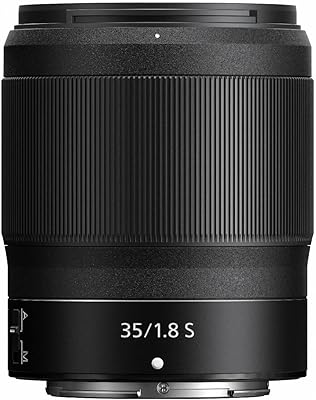
Nikon NIKKOR Z 35mm f/1.8 S Lens
86%
96%
Optical Sharpness
93%
Autofocus Performance
91%
Bokeh & Background Rendering
89%
Build Quality & Weather Sealing
92%
Low-Light Performance
More
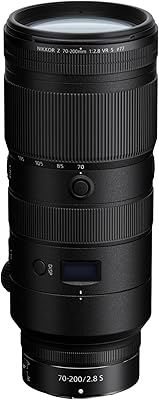
Nikon NIKKOR Z 70-200mm f/2.8 S Telephoto Zoom Lens
84%
96%
Optical Sharpness
93%
Autofocus Performance
91%
Image Stabilization
94%
Build Quality
89%
AF Motor Noise
More
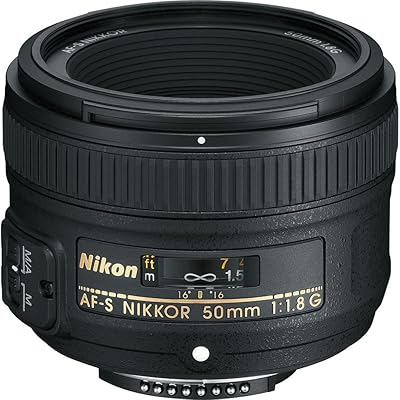
Nikon NIKKOR 50mm f/1.8G Prime Lens
83%
93%
Image Sharpness
88%
Bokeh & Background Separation
71%
Autofocus Speed
91%
Low-Light Performance
82%
Build Quality & Durability
More
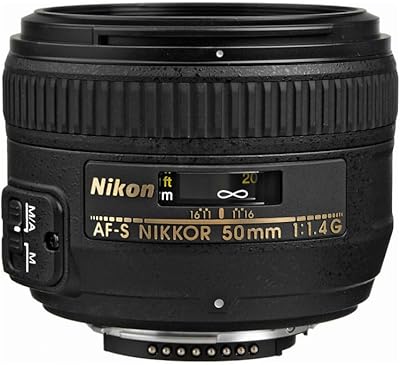
Nikon NIKKOR 50mm f/1.4G Prime Lens
82%
91%
Image Sharpness
78%
Autofocus Performance
93%
Bokeh Quality
88%
Low-Light Performance
63%
Value for Money
More
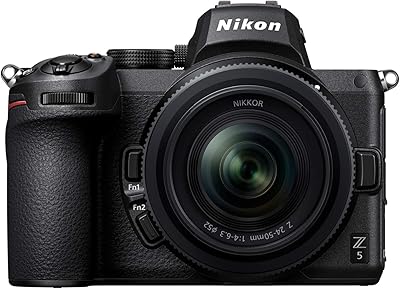
Nikon Z5 Full-Frame Mirrorless Camera
81%
92%
Image Quality
88%
Low-Light Performance
83%
Autofocus Performance
91%
In-Body Image Stabilization
86%
Build Quality & Ergonomics
More
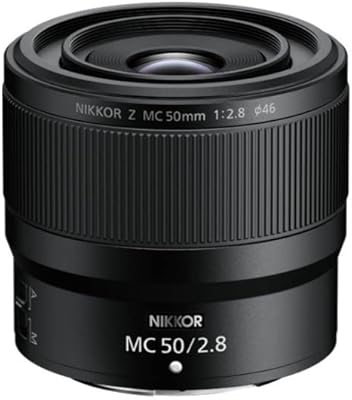
Nikon NIKKOR Z MC 50mm Macro Lens
84%
93%
Image Sharpness
91%
Macro Performance
72%
Autofocus Performance
84%
Build Quality & Durability
89%
Size & Portability
More
Nikon NIKKOR Z 20mm f/1.8 S Lens
86%
94%
Optical Sharpness
91%
Build Quality
88%
Autofocus Performance
89%
Flare & Ghosting Control
67%
Value for Money
More
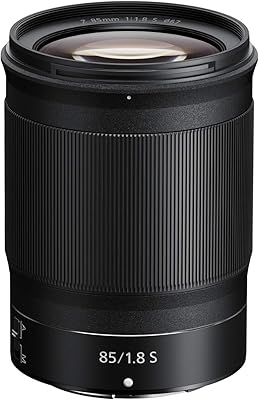
Nikon NIKKOR Z 85mm f/1.8 S Lens
86%
96%
Optical Sharpness
93%
Bokeh Quality
88%
Autofocus Performance
91%
Build Quality
84%
Weather Sealing
More
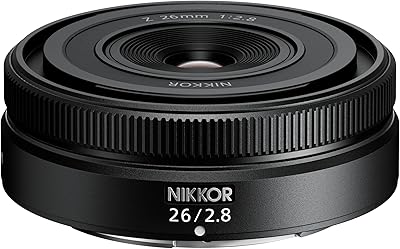
Nikon NIKKOR Z 26mm f/2.8 Pancake Lens
85%
94%
Portability & Size
88%
Image Quality & Sharpness
85%
Build Quality & Durability
92%
Value for Money
90%
Compatibility with Nikon Z Series
More

FAQ

The Z-mount is a native mirrorless mount, so you cannot physically attach it to an F-mount DSLR body even with an adapter — adapters work the other way, allowing F-mount lenses on Z bodies. This 50mm prime is exclusively for Nikon Z-series mirrorless cameras.

The f/1.8 S is an outstanding lens and a smarter buy for most photographers. The NIKKOR Z f/1.2 earns its premium through a measurably different rendering character at wide apertures — the background transitions are smoother, the three-dimensionality is more pronounced, and low-light capability is genuinely improved. If you regularly shoot in difficult light or sell your work based on image quality, the gap matters. If you shoot mostly outdoors in good light, the f/1.8 will serve you extremely well at a fraction of the cost.

Yes, the four-unit linear autofocus system is among the fastest available in any native Z-mount prime. It handles moving subjects reliably, particularly when paired with Z6 III, Z8, or Z9 bodies that have advanced subject detection. In lower light, occasional hesitation is possible, but overall tracking performance is strong for a lens of this type.

You will see some light falloff toward the corners at f/1.2, which is normal and expected for any lens at its maximum aperture. Most photographers either correct it in Lightroom or Capture NX-D with one click, or embrace it as part of the wide-open look. It clears up significantly by f/2 and is essentially gone by f/2.8.

It will physically mount and function perfectly on any Z-series body, including the Z5 and Z5 II. That said, the size and weight balance is noticeably front-heavy on smaller, lighter bodies. Many photographers add a grip or use a lens support collar for extended handheld shooting. It works, but it's not the most ergonomically natural pairing.

The Nikon NIKKOR Z 50mm f/1.2 S Prime Lens carries professional-grade weather sealing, and working photographers report confidence shooting in light rain, high humidity, and dusty environments. The fluorine-coated front element also repels water beads effectively. It is not waterproof, so submersion or sustained heavy rain without a rain cover is still risky, but for typical outdoor professional use it performs reliably.

This S-line lens is well-regarded for video use. The linear motors are nearly silent during focus transitions, which matters if you are recording with an on-camera or boom microphone. Focus breathing — the slight change in framing when focus shifts — is minimal compared to many fast primes, making it usable for narrative or documentary work where breathing would be distracting.

The front element takes standard 82mm threaded filters. No proprietary or special filters are required — any quality 82mm circular polarizer, ND filter, or UV protector will thread on normally. Given the large front element diameter, 82mm filters can be pricier than smaller sizes, so it is worth factoring that into your accessory budget.

It mounts and works correctly on APS-C Z bodies, but the effective field of view shifts to approximately 75mm equivalent due to the crop factor. That changes the character of the lens considerably — you lose the classic 50mm perspective and the wide-open look is slightly altered. It is functional, but this S-line lens is clearly optimized for full-frame use.

The fluorine coating actually makes cleaning easier — oils and fingerprints wipe off with less effort than uncoated glass. Use a clean microfiber cloth or lens tissue with a small amount of lens cleaning solution, and wipe gently in a circular motion from the center outward. Avoid abrasive materials, and never use paper towels or clothing fabric directly on the glass surface.

Where to Buy