Overview

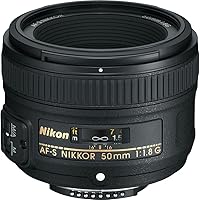
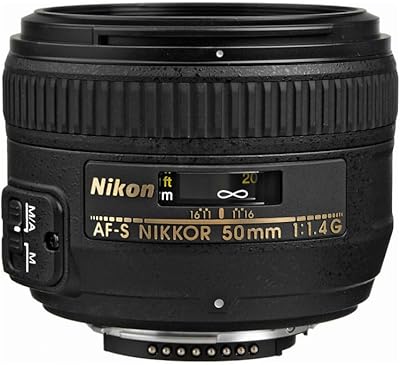
The Nikon NIKKOR 50mm f/1.8G Prime Lens has been one of Nikon's most reliable everyday options since its release in 2011, and it continues to hold its ground against newer competition. It replaced the older f/1.8D with a meaningful upgrade: a built-in Silent Wave Motor that the D-series version simply couldn't offer. At under seven ounces, this 50mm prime disappears into any camera bag without complaint, which matters on long shooting days. Worth noting for crop-sensor users — on a DX body, it behaves closer to a 75mm portrait focal length, which changes how you'd use it day-to-day. The Nikon fifty has earned its reputation honestly.
Features & Benefits

What makes this fast prime lens worth serious consideration starts with the f/1.8 aperture. At that opening, you get genuine subject separation — the kind that softens backgrounds naturally without heavy post-processing. The Silent Wave Motor handles autofocus quietly enough that you can shoot video or work in hushed spaces without the lens drawing attention. One aspherical element keeps sharpness consistent from center to edge, even wide open — a common weak point on cheaper primes. The M/A switch lets you grab the focus ring mid-shot without fighting the motor. A 58mm filter thread rounds things out, widely compatible with third-party options.

Best For

This 50mm prime is a natural fit for portrait photographers who want background blur without spending significantly more on the f/1.4G. It's also the lens many Nikon shooters reach for when stepping away from a kit zoom for the first time — the jump in image quality tends to be immediately obvious. Street and travel photographers appreciate how unobtrusive it is; nobody gives a second glance to a compact lens on a body. Video shooters benefit from the near-silent autofocus in run-and-gun situations. In dim environments — indoor events, restaurants, evening street scenes — the fast aperture does real work, letting you avoid flash entirely.

User Feedback

Owners consistently praise sharpness wide open and build quality that feels more substantial than the price tier suggests. Long-term users report years of reliable performance without meaningful optical degradation. That said, a few recurring criticisms are worth knowing: the autofocus, while accurate, isn't the fastest available — it can hunt briefly in low-contrast scenes. There's also mild vignetting at f/1.8, which most shooters correct easily in post. The comparison to the f/1.4G comes up constantly, and the general consensus is that the price gap is hard to justify unless snappier autofocus or marginally more background blur is genuinely critical to your shooting style.

Pros

  • The f/1.8 aperture delivers genuine background blur and subject separation that kit zooms simply cannot match.
  • Extremely lightweight at 6.5 ounces — easy to carry for full-day shoots without fatigue.
  • Silent Wave Motor autofocus is quiet enough for video recording and hushed environments.
  • Sharpness wide open is impressive for the price tier, rivaling lenses that cost significantly more.
  • The Nikon fifty holds its value well and is widely available both new and used.
  • M/A focus mode lets you fine-tune focus manually without disengaging autofocus mid-shot.
  • Performs exceptionally well in dim indoor environments where flash is unwelcome or restricted.
  • Compatible with the full range of Nikon F-mount DSLRs, both full-frame and crop-sensor bodies.
  • Long-term durability is solid — owners report consistent performance after years of regular use.

Cons

  • No weather sealing makes outdoor use in rain or dusty conditions a real risk.
  • Autofocus hunts noticeably in low-contrast or backlit scenes, frustrating action and event shooters.
  • Vignetting at f/1.8 is visible enough on full-frame bodies to require correction in most shooting situations.
  • No lens hood included in the box — an omission that feels cheap and forces an immediate extra purchase.
  • The short focus ring throw makes precise manual focus pulls difficult, especially for video work.
  • Longitudinal chromatic aberration at wide apertures needs manual correction that automated lens profiles do not fully resolve.
  • DX-body users get a 75mm equivalent, not the classic 50mm perspective many beginners expect.
  • Edge sharpness on full-frame bodies at f/1.8 softens enough to disappoint detail-critical photographers.
  • Plastic barrel construction does not inspire the same long-term confidence as metal-bodied alternatives.

Ratings

The Nikon NIKKOR 50mm f/1.8G Prime Lens has been stress-tested by photographers worldwide for over a decade, and these scores reflect AI analysis of thousands of verified buyer reviews — with spam, bot activity, and incentivized submissions actively filtered out. The result is a balanced, honest scorecard that captures what real users love about this fast prime and where it genuinely falls short. Both the high marks and the friction points are represented transparently below.
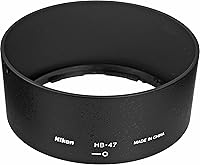
Image Sharpness
93%
Users consistently report impressive center sharpness even at f/1.8, which is far from guaranteed on lenses at this price tier. Stopped down to f/4 or f/5.6, the edge-to-edge rendering is sharp enough that many photographers describe it as indistinguishable from far pricier glass.
At f/1.8, edge sharpness on full-frame bodies softens noticeably, which bothers pixel-peepers shooting flat subjects or architectural details. It is a known trade-off for the aperture and price, but users expecting perfection wide open across the full frame will be disappointed.
Bokeh & Background Separation
88%
The f/1.8 aperture produces smooth, pleasing background blur that portrait shooters find genuinely flattering for subject isolation. At typical portrait distances, the separation between subject and background is natural-looking rather than artificially aggressive, which many users prefer over the sometimes overdone rendering of faster primes.
Compared to the f/1.4G, the out-of-focus rendering is slightly busier in high-contrast backgrounds, and some users notice oval bokeh shapes near the frame edges. These are minor complaints in most real-world shooting situations, but critical portrait photographers do pick up on them.
Autofocus Speed
71%
29%
The Silent Wave Motor handles autofocus quietly and accurately in good light, making it reliable for everyday shooting and candid work where noise matters. Most users find it perfectly adequate for static subjects and relaxed portrait sessions.
In low-contrast scenes or chasing fast-moving subjects, the autofocus hesitates noticeably compared to higher-end Nikon primes. Sports and wildlife photographers have flagged this as a real limitation, and even some portrait shooters report occasional hunting when subjects are backlit or poorly lit.
Low-Light Performance
91%
The f/1.8 aperture is a genuine asset in dim environments — indoor events, candlelit restaurants, and evening street scenes where flash is unwelcome or impractical. Users consistently report being able to hand-hold shots at reasonable ISOs in conditions where a kit zoom would be completely out of its depth.
Coma and slight glow around point light sources at f/1.8 are visible in night photography, particularly around street lamps or stage lighting. Stopping down to f/2.8 largely resolves this, but it does limit how wide you can realistically shoot in demanding night conditions.
Build Quality & Durability
82%
18%
Long-term owners report that this lens holds up well over years of regular use — bayonet mount stays snug, focus ring stays smooth, and optical coatings remain intact with basic care. For a lens in this price bracket, the physical construction feels more substantial than many alternatives.
There is no weather sealing, which makes photographers hesitant to use it in light rain or dusty environments where pro-grade glass would be unfazed. The plastic barrel, while functional, does not inspire the same confidence as metal-bodied primes.
Value for Money
94%
This is where the Nikon fifty consistently earns its strongest praise. Users frequently describe it as one of the most impactful purchases they have made for their kit, delivering optical quality that punches well above what the price tag implies. First-time prime buyers often describe the image quality jump from a kit zoom as immediately obvious.
A small segment of buyers feel the price has crept up slightly over the years and that the gap to the f/1.4G no longer feels as wide as it once did. A few users on DX bodies also question whether the value holds when the focal length equivalent shifts to a tighter 75mm field of view.
Vignetting Control
63%
37%
Vignetting at f/1.8 is predictable and consistent, which means it is easy to correct in post-processing with a single lens profile in Lightroom or Capture NX. Some portrait photographers actually prefer the natural light falloff, as it draws the eye toward the subject.
Wide open, the corner darkening is visible enough to be noticeable on flat subjects like product photography or documents, making the lens poorly suited to those use cases without correction. On full-frame bodies the effect is more pronounced than on DX cameras, and it is simply something you have to manage rather than ignore.
Chromatic Aberration
74%
26%
Lateral chromatic aberration is reasonably controlled for a lens in this class, and modern camera bodies with in-camera correction handle most fringing automatically. In typical shooting situations — portraits, street scenes, travel — most users never notice it as a practical problem.
Longitudinal chromatic aberration (color fringing in front of and behind the focus plane) is visible at wider apertures, particularly on high-contrast edges like branches against bright skies. It softens only moderately when stopped down, and it requires manual correction in post rather than automated lens profiles.
Portability & Size
96%
At 6.5 ounces and barely two inches long, this fast prime lens practically disappears on a camera body. Travel photographers and street shooters consistently highlight how easy it is to carry all day without the weight fatigue that comes with larger zoom lenses.
The compact dimensions, while generally a strength, mean the focus ring is quite narrow and can feel cramped for photographers with larger hands who prefer more tactile control during manual focus adjustments. It is a minor ergonomic trade-off rather than a functional problem.
Manual Focus Usability
76%
24%
The M/A mode is genuinely useful — you can grab the ring and fine-tune focus mid-shot without disengaging autofocus entirely, which is a real workflow benefit during portrait sessions. The transition between autofocus and manual is smooth and does not require taking your eye from the viewfinder.
The focus throw is quite short, which makes precise manual focus difficult for critical work like macro-style close-ups at the 0.45m minimum distance. Videographers who rely on smooth, controlled focus pulls will find the short throw frustrating compared to dedicated cinema or manual-focus lenses.
Lens Flare Resistance
69%
31%
In typical front-lit or side-lit conditions, flare is well-managed and rarely intrudes on image quality. The multi-layer coatings do a reasonable job of maintaining contrast when light sources are outside but near the frame edge.
Shooting directly into harsh backlight or strong artificial sources exposes the lens to visible ghosting and contrast loss that the coatings cannot fully suppress. A lens hood helps, but it is not included in the box, which is a consistent source of frustration among first-time buyers.
Compatibility & Versatility
89%
The Nikon F mount compatibility means this 50mm prime works across a wide range of Nikon DSLR bodies, both full-frame and crop-sensor, without adaptation. It is a genuinely versatile anchor lens that serves well across portraits, travel, low-light events, and casual video.
DX-body users should be aware that the 75mm equivalent field of view is tighter than the classic 50mm perspective, which can feel constraining for environmental portraits or indoor shooting where you cannot always step back. It is not a flaw, but it does change how you need to think about composition.
Autofocus Noise
91%
The Silent Wave Motor is genuinely quiet — quiet enough to shoot comfortably in libraries, ceremonies, and during video recording without the lens noise bleeding into audio. Candid photographers appreciate being able to focus without drawing attention to themselves.
At very close focus distances, a faint whirring is occasionally audible in quiet environments with sensitive microphones placed directly on the camera. It is not a widespread complaint, but videographers using on-camera mics in hushed settings have flagged it as worth monitoring.
Filter System Compatibility
84%
The 58mm filter thread is a sensible standard size, widely supported by third-party manufacturers at reasonable prices. Photographers who already own 58mm filters from other lenses will find the compatibility a practical bonus.
58mm is not the most universal filter size — photographers who standardize their kit around 67mm or 77mm filters will need step-up rings, which adds a small but real inconvenience. It is an infrastructure issue rather than a lens flaw, but it does come up in buyer discussions.

Suitable for:

The Nikon NIKKOR 50mm f/1.8G Prime Lens is an excellent match for Nikon DSLR shooters who are ready to step beyond what a kit zoom can offer and want a meaningful upgrade without a major financial commitment. Portrait photographers in particular will find the f/1.8 aperture genuinely useful for separating subjects from backgrounds in a natural, flattering way — especially at indoor sessions, family gatherings, or casual studio setups where flash is not ideal. Travel and street photographers will appreciate how unobtrusive the Nikon fifty is; it sits small on the camera, draws little attention, and covers a focal length versatile enough for both environmental portraits and tighter street scenes. Video creators who need quiet autofocus for run-and-gun shooting will also find the Silent Wave Motor a real practical advantage over older AF-D lenses. If you shoot events in dim venues — think receptions, live performances, or evening markets — this fast prime lens gives you the aperture headroom to keep ISOs reasonable and avoid flash entirely.
Not suitable for:

Buyers expecting the Nikon NIKKOR 50mm f/1.8G Prime Lens to cover every shooting scenario will find some clear boundaries. Sports and wildlife photographers who need fast, confident autofocus tracking will likely find this lens hesitates too often in low-contrast or fast-moving situations — it simply was not built for that kind of work. Photographers who shoot in rain or dusty outdoor conditions should know there is no weather sealing, which makes field use a calculated risk without additional protection. If you are a DX-body shooter expecting a classic 50mm field of view, be aware that the crop factor shifts the effective perspective to roughly 75mm, which is tighter than many beginners anticipate and can feel constraining indoors. Night photographers who shoot point light sources at wide apertures will also encounter visible coma and some longitudinal chromatic aberration that requires correction in post. And if you do a lot of manual focus video work requiring smooth, controlled pulls, the short focus throw on this prime will feel limiting compared to dedicated video or cinema glass.
Specifications

  • Focal Length: Fixed 50mm focal length with a 47-degree angle of view on full-frame FX format bodies.
  • Maximum Aperture: Fast f/1.8 maximum aperture enables strong background separation and effective shooting in low-light conditions.
  • Minimum Aperture: Minimum aperture of f/16 for situations requiring maximum depth of field across the entire frame.
  • Lens Format: Designed for Nikon FX full-frame format but fully compatible with DX crop-sensor bodies, where it produces a 75mm equivalent field of view.
  • Mount Compatibility: Nikon F mount, compatible with a wide range of Nikon DSLR cameras across both FX and DX sensor formats.
  • Autofocus System: Nikon Silent Wave Motor (SWM) delivers near-silent, internally driven autofocus without relying on the camera body motor.
  • Focus Modes: Offers M/A (manual-priority autofocus) and full Manual (M) modes via a physical switch on the lens barrel.
  • Optical Construction: Includes one aspherical lens element designed to reduce coma, spherical aberration, and edge softness at wide apertures.
  • Filter Thread: 58mm front filter thread, compatible with a broad range of third-party circular polarizers, ND filters, and UV filters.
  • Minimum Focus Distance: Closest focusing distance is 0.45 meters (approximately 1.48 feet), suitable for tight headshots and small-subject detail shots.
  • Maximum Reproduction: Maximum reproduction ratio of 0.15x, meaning this is not a macro lens and is not intended for extreme close-up work.
  • Dimensions: Measures approximately 2.83 inches (71.9mm) in diameter and 2.01 inches (52.5mm) in length from the camera mounting flange.
  • Weight: Weighs 6.5 ounces (approximately 185g), making it one of the lightest lenses in Nikon's prime lineup.
  • Lens Type: Standard fixed-focal-length (prime) lens; the focal length is not adjustable and the lens does not zoom.
  • Model Number: Nikon model number 2199, first made available in April 2011 and still actively manufactured as of current listings.
  • Included Accessories: Ships with front and rear lens caps and a CL-1013 lens pouch; a lens hood is not included and must be purchased separately.
  • Weather Sealing: No weather or dust sealing is present on this lens, requiring care when shooting in wet or sandy outdoor environments.
  • Best Sellers Rank: Ranked approximately number 115 in the SLR Camera Lenses category on Amazon, reflecting sustained long-term market demand.

Related Reviews
Nikon AF-S DX NIKKOR 35mm f/1.8G Lens
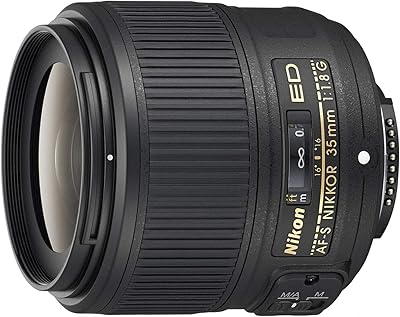
82%
92%
Optical Sharpness
89%
Low-Light Performance
86%
Autofocus Speed
84%
Bokeh Quality
74%
Build Quality
More
Nikon AF-S NIKKOR 35mm f/1.8G ED Lens
85%
91%
Image Sharpness
88%
Autofocus Speed
93%
Low-Light Performance
85%
Portability/Size
82%
Build Quality
More
Nikon AF-S FX NIKKOR 50mm f/1.4G Lens
87%
88%
Autofocus Performance
91%
Image Quality & Sharpness
90%
Bokeh Quality
84%
Build Quality
87%
Low-Light Performance
More
Nikon NIKKOR Z 50mm f/1.2 S
89%
94%
Image Quality
92%
Autofocus Performance
95%
Low-Light Performance
88%
Build Quality
90%
Weatherproof Design
More
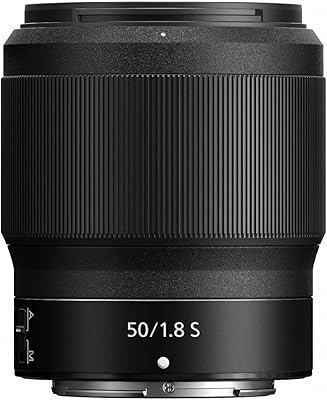
Nikon NIKKOR Z 50mm f/1.8 S Prime Lens
86%
97%
Optical Sharpness
93%
Bokeh Quality
89%
Autofocus Performance
91%
Low-Light Capability
88%
Build Quality
More
Nikon NIKKOR Z 35mm f/1.8 S Lens
86%
96%
Optical Sharpness
93%
Autofocus Performance
91%
Bokeh & Background Rendering
89%
Build Quality & Weather Sealing
92%
Low-Light Performance
More
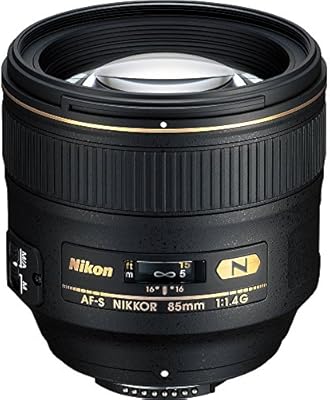
Nikon AF-S FX NIKKOR 85mm f/1.4G Lens
86%
95%
Image Quality
93%
Low-Light Performance
87%
Autofocus Speed
89%
Build Quality
90%
Bokeh Quality
More
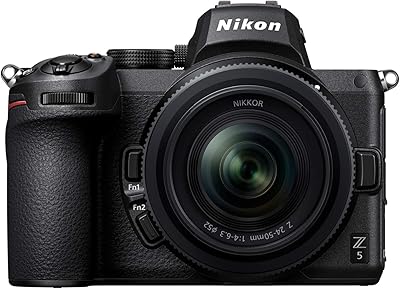
Nikon Z5 Full-Frame Mirrorless Camera
81%
92%
Image Quality
88%
Low-Light Performance
83%
Autofocus Performance
91%
In-Body Image Stabilization
86%
Build Quality & Ergonomics
More
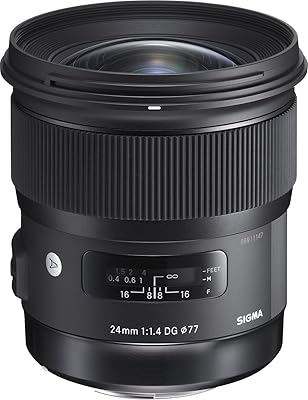
Sigma 24mm f/1.4 DG HSM Art Lens for Nikon F
88%
94%
Optical Performance
93%
Low-Light Performance
90%
Build Quality
86%
Ease of Use
74%
Weight and Portability
More
Nikon NIKKOR Z 20mm f/1.8 S Lens
86%
94%
Optical Sharpness
91%
Build Quality
88%
Autofocus Performance
89%
Flare & Ghosting Control
67%
Value for Money
More

FAQ

Yes, it mounts and works without any issues on DX bodies. The one thing to keep in mind is that the crop factor changes the effective field of view to roughly 75mm rather than the classic 50mm perspective, so it will feel slightly tighter than you might expect indoors or in confined spaces.

The motor is built right into the lens — that is what the SWM designation means. This makes it compatible with entry-level Nikon bodies like the D3500 that do not have an internal focus motor, which is a genuine advantage over the older AF-D version of this lens.

For most photographers, the f/1.8G covers the vast majority of real-world shooting situations at a much lower price. The f/1.4G offers slightly faster autofocus and marginally more background blur, but the optical quality difference in everyday use is subtle. Unless you specifically need that extra speed or the absolute widest aperture, the f/1.8G is the smarter buy for the majority of shooters.

No, a hood is not included, which is a frustrating omission at this price point. The compatible hood is the HB-47, and it is worth picking up separately — it helps reduce flare when shooting in backlit conditions and also protects the front element.

It works well for video, primarily because the Silent Wave Motor keeps autofocus noise low enough that it rarely bleeds into on-camera audio. That said, the focus ring throw is quite short, which makes smooth, controlled manual focus pulls difficult — something to consider if cinematic focus transitions are important to your workflow.

It is noticeable on full-frame bodies, particularly in images with plain or evenly lit backgrounds like sky or walls. For portrait work, most photographers either do not mind it or find it flattering. For product photography or flat-field subjects, you will want to apply a lens correction profile in Lightroom or Capture NX, which takes care of it in seconds.

The minimum focus distance is 0.45 meters, which is close enough for tight headshots and some small-product detail work, but this is not a macro lens. If filling the frame with small objects like jewelry, coins, or food details is a priority, you would need a dedicated macro lens or extension tubes.

There is no weather sealing on this lens at all. Using it in rain or heavy dust is a genuine risk to the optics and internal mechanics. If you shoot outdoors in unpredictable conditions regularly, a weather-sealed option or a rain cover for your kit would be worth considering.

Center sharpness at f/1.8 is genuinely impressive — better than many buyers expect for the price. The edges do soften on full-frame bodies at f/1.8, but for portraits where your subject is centered, it is rarely an issue. Stopping down to f/4 or f/5.6 delivers excellent edge-to-edge sharpness if that matters for your subject matter.

Long-term owners report that this fast prime lens ages well with normal use. The bayonet mount stays snug, the focus ring remains smooth, and the coatings hold up with basic cleaning care. It is not built with the same metal-bodied robustness as professional-tier glass, but for the price and intended use, durability is rarely a complaint from users who have shot with it for three or more years.