Overview

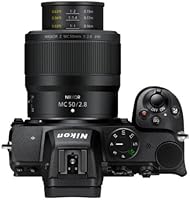
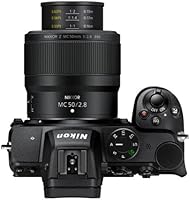
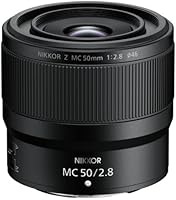
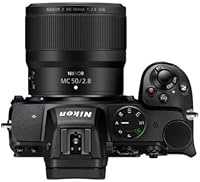
The Nikon NIKKOR Z MC 50mm Macro Lens arrived in mid-2021 as Nikon's answer to Z-mount shooters who wanted serious close-up capability without a dedicated, single-purpose kit. What makes it interesting is the dual identity — it's a true macro lens with 1:1 magnification, but the 50mm focal length also happens to be one of the most natural, intuitive perspectives you can shoot with. That combination sets it apart from many macro options on the market. Priced at a mid-to-premium level, it targets hobbyists, food photographers, nature enthusiasts, and anyone on the Z system who wants one compact lens rather than a bag full of compromises.
Features & Benefits

The standout capability here is true 1:1 magnification — you can fill the frame with a coin, a flower's stamen, or the texture of worn leather with striking clarity. The f/2.8 maximum aperture helps in tricky indoor lighting and produces a genuinely pleasing background blur at closer distances. The front-focusing design is a practical win: the barrel stays compact, the weight stays under 10 oz, and it never feels like a burden on your camera. As a native Z-mount lens, autofocus integrates fully with your body, though in true macro mode you'll want realistic expectations — macro autofocus is inherently deliberate rather than fast.

Best For

This compact macro prime genuinely suits a range of shooters, but a few in particular will get the most from it. Close-up hobbyists — think garden photographers chasing bee-on-flower shots — will appreciate the 1:1 ratio without hauling a heavy macro system. Food and product photographers will find the focal length natural for table-level work. Travel shooters who dislike swapping lenses will value having one versatile prime that covers street candids and extreme close-ups alike. That said, if you shoot exclusively at macro distances, the short working distance at full 1:1 is worth understanding before you buy — the front element ends up very close to your subject.

User Feedback

With a 4.4-star average across roughly 60 reviews, the Z MC 50mm earns consistent praise for close-up sharpness and how naturally it transitions between macro and everyday shooting. Many owners note they genuinely reach for it as a walkabout lens, not just a specialist tool. On the critical side, some reviewers find autofocus in true macro mode slower than expected, and a handful feel the price stretches the budget for primarily hobby use. The working distance at full magnification also comes up regularly — subjects sit very close to the front element, which can be tricky with shy or mobile subjects like insects in natural settings.

Pros

  • True 1:1 magnification captures life-size detail that a standard prime simply cannot replicate.
  • The 50mm focal length doubles as a natural everyday prime, reducing the need for multiple lenses.
  • At just over 9 oz, this compact macro prime is light enough to leave mounted all day without fatigue.
  • Native Z-mount integration means full autofocus, eye-detection, and in-body stabilization work out of the box.
  • Sharpness at close focus distances consistently impresses, even by the standards of dedicated macro shooters.
  • Background blur at f/2.8 is smooth enough for clean subject isolation in food and product photography.
  • The focus ring is well-damped and linear, making manual focus during macro work feel controlled and repeatable.
  • Quiet autofocus motor suits discreet shooting and basic video capture without intrusive mechanical noise.
  • Optical distortion is well-managed, making it reliable for product and architectural detail shots.
  • Body firmware updates keep the lens current as Nikon adds new features to Z-series cameras.

Cons

  • Working distance at full 1:1 magnification is short, making lighting and subject approach genuinely tricky.
  • Autofocus hunts noticeably when searching for a close subject, which disrupts video recordings with ambient audio.
  • Bokeh rendering at f/2.8 is pleasant but lacks the character of lenses designed specifically for portrait work.
  • Longitudinal chromatic aberration appears in high-contrast macro scenes and requires correction in post-processing.
  • The price is difficult to justify for shooters who only need macro capability occasionally or casually.
  • Vignetting at maximum aperture is visible and may require correction when shooting subjects against plain backgrounds.
  • Manual focus precision at minimum focus distance is limited by a relatively short focus throw for fine adjustments.
  • Some users on first-generation Z bodies experienced autofocus inconsistencies before firmware updates resolved them.
  • Hand-held shooting at full macro magnification demands strong technique, as even minor movement causes visible blur.

Ratings

The Nikon NIKKOR Z MC 50mm Macro Lens has been evaluated through a structured AI analysis of verified global buyer reviews, with spam, incentivized, and bot-generated feedback actively filtered out before scoring. The results reflect a genuinely balanced picture — recognizing where this compact macro prime earns its reputation and where real-world users consistently run into friction. Both the strengths and the sticking points are represented transparently in the scores below.
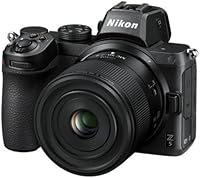
Image Sharpness
93%
Users consistently describe the close-up rendering as exceptional — fine textures in flower petals, circuit board traces, and food details come through with impressive clarity. Even at f/2.8, the center sharpness holds up well, and stopping down to f/5.6 or f/8 brings edge-to-edge crispness that satisfies even critical reviewers.
A small number of users note slight softness when shooting wide open at closer-than-macro distances, though this is a minor optical trade-off common to fast macro primes rather than a defect. Corner sharpness at maximum aperture draws occasional criticism from those pixel-peeping full-frame bodies.
Macro Performance
91%
The true 1:1 magnification is the headline feature, and it delivers. Owners shooting insects, jewelry, and textured surfaces report that the life-size reproduction ratio translates directly into detailed, dramatic images that would be impossible without dedicated macro glass. The focus throw at close distances gives enough control for precise compositions.
The working distance at full 1:1 magnification is short — the front element ends up only a few centimeters from the subject, which makes lighting tricky and can startle living subjects like insects. This is a known characteristic of 50mm macros and not unique to this lens, but it catches first-time macro shooters off guard.
Autofocus Performance
72%
28%
For general-purpose shooting at normal distances, the autofocus is responsive and integrates smoothly with Nikon Z bodies, including eye-detection and subject-tracking modes. Users shooting food, portraits, and street scenes report no meaningful hesitation or hunting under decent light.
In true macro mode, autofocus slows down noticeably — this is a physics-driven limitation rather than a flaw, but reviewers expecting DSLR-macro speed will be surprised. A handful of users report occasional focus breathing and hunting when subjects shift slightly at close distances, making manual focus assist a practical necessity for precision macro work.
Build Quality & Durability
84%
The barrel feels solid and well-damped, with a quality that matches its price tier. The focus ring turns smoothly with just the right amount of resistance, and the overall construction leaves owners confident taking it outdoors for garden and nature sessions.
Some users expected more robust weather sealing documentation at this price point, with a few noting uncertainty about how well it handles moisture in the field. The plastic-feel sections of the barrel attract occasional criticism from buyers comparing it to older Nikon F-mount metal-bodied lenses.
Size & Portability
89%
At just over 9 oz and a compact 2.6-inch length, this Nikon macro lens genuinely earns its walkaround credentials. Multiple reviewers note they leave it mounted on their Z body as a default lens precisely because it adds almost no bulk — a rarity for macro-capable glass.
Compared to non-macro 50mm primes, it is still slightly longer and heavier, which some minimalist travel shooters notice. Those coming from very compact pancake-style primes may find the size a step up, even if it is objectively small for its category.
Everyday Versatility
81%
19%
A surprisingly high number of owners report using the Z MC 50mm as their go-to everyday lens rather than relegating it to macro-only duties. The 50mm perspective feels natural for street photography, casual portraits, and food shots at restaurants — situations where pulling out a specialized lens would feel awkward.
Wide-open bokeh, while pleasant, does not quite match the rendering of dedicated portrait primes at a similar focal length. Users who prioritize background separation for portrait work sometimes find the out-of-focus transitions a touch clinical compared to lenses tuned specifically for that purpose.
Value for Money
74%
26%
For Z-mount shooters who want both macro and standard prime capability in a single purchase, the overall cost-per-use calculus works out reasonably well. Owners who have replaced two separate lenses with this one frequently cite it as justified at its price tier.
For buyers who only need occasional close-up capability, the investment feels steep relative to third-party alternatives or adding a macro extension tube to an existing prime. Some reviewers with lighter macro needs feel the price reflects Nikon branding as much as optical performance.
Bokeh Quality
78%
22%
Background blur in macro shots is smooth and non-distracting, which matters when isolating small subjects against cluttered natural environments. At moderate distances, the circular aperture produces soft, rounded highlights that look natural in portrait-style shooting.
At closer focus distances, some users observe slightly busy bokeh transitions where the out-of-focus rendering feels less silky than premium portrait glass. Longitudinal chromatic aberration in the bokeh — colored fringing ahead of and behind the focus plane — shows up in high-contrast macro scenes, though it is correctable in post-processing.
Low-Light Capability
82%
18%
The f/2.8 aperture gives enough light-gathering ability for indoor macro setups and available-light food photography without forcing high ISO settings. Studio and kitchen shooters in particular appreciate being able to work under standard household or restaurant lighting without flash.
Compared to f/1.8 or f/2.0 primes at the same focal length, f/2.8 leaves a gap in truly dim environments, and macro work specifically requires stopping down for depth of field — which further reduces the effective light entering the lens. A ring flash or diffused LED is still a practical necessity for serious close-up work in low light.
Optical Distortion & Aberration Control
86%
Distortion is well-controlled for a lens used in food and product photography, where straight edges and flat planes can expose barrel or pincushion distortion quickly. Chromatic aberration in standard shooting conditions is minimal and handles cleanly in Nikon's in-body correction profiles.
At full macro magnification, lateral chromatic aberration can become visible along high-contrast edges when shooting with no in-body correction applied — relevant for users shooting tethered or exporting raws without lens profiles. Vignetting at f/2.8 is present but unremarkable for the category.
Manual Focus Experience
83%
The focus ring is well-weighted and linear, which makes manual focus pulling through macro distances feel deliberate and controlled. Videographers and photographers using focus stacking for extreme close-up work report that the ring behavior is predictable enough for repeatable results.
The focus throw is relatively short for extreme precision at 1:1, meaning small ring movements at minimum focus distance cause disproportionate focus shifts. Users who need very fine manual focus control for scientific or product macro photography often supplement with a focusing rail rather than relying on the ring alone.
Autofocus Noise
88%
During normal shooting, the lens focuses quietly enough for video use and unobtrusive street or wildlife photography. The stepping motor keeps noise well below what older screw-drive lenses produce, and most users shooting video note it is not an issue with the camera microphone.
During macro autofocus hunting — when the lens searches back and forth to lock onto a close subject — the motor becomes audibly noticeable. This is less a design flaw than a byproduct of the focus range it covers, but videographers recording ambient audio should be aware of it.
Compatibility & Body Integration
91%
As a native Z-mount lens, it takes full advantage of Nikon body features: subject detection, animal eye AF, in-body image stabilization coordination, and automatic lens correction all work without any adapters or workarounds. Firmware updates through the camera body keep it current as Nikon adds new features.
A small number of users on first-generation Z bodies report occasional autofocus inconsistencies that were resolved after firmware updates — a reminder that native lens performance can still depend on keeping both camera and lens firmware current. No DSLR or F-mount compatibility exists without an adapter, which some switchers initially overlook.

Suitable for:

The Nikon NIKKOR Z MC 50mm Macro Lens is a strong match for Z-series mirrorless shooters who want one lens that genuinely earns its place in the bag every single day, not just on dedicated macro outings. Food photographers will find the 50mm perspective natural for overhead and 45-degree table shots, while the close-focus capability handles ingredient details and plating textures that a standard prime simply cannot reach. Nature enthusiasts and garden photographers benefit from the 1:1 magnification when working with flowers, insects, and small natural subjects — though they should plan their approach with the short working distance in mind. Hobbyist photographers who are just getting into macro will appreciate that this compact macro prime does not demand a completely separate shooting workflow; it behaves like a normal lens until you need it to behave like a macro. Travelers and minimalists who resent carrying multiple primes will find the dual-purpose nature genuinely useful rather than a marketing claim, since the 50mm field of view handles street, casual portraits, and documentary moments without any awkwardness.
Not suitable for:

Buyers who shoot primarily fast-moving subjects — wildlife in motion, sports, or active children — should think carefully before committing to this Nikon macro lens as their main option, since autofocus in close-focus range is deliberate by nature and not built for tracking erratic motion at short distances. Photographers on a tight budget who only need occasional close-up shots may find the investment hard to justify when extension tubes or a third-party macro option could cover lighter use cases at a lower cost. Portrait specialists who prioritize exceptionally smooth, painterly bokeh may be disappointed, as the optical rendering at f/2.8 is competent but not in the same league as dedicated portrait primes tuned specifically for background separation. Users on older or entry-level Z bodies should verify firmware compatibility before purchasing, as some early bodies required updates to fully support the lens's autofocus behavior. Finally, anyone expecting to shoot hand-held macro at 1:1 under natural light consistently will need patience and good technique — at that magnification, even minor movement is amplified, and the short working distance makes adding a diffuser or ring light a practical necessity rather than an optional extra.

Specifications

  • Focal Length: Fixed 50mm focal length provides a natural, eye-level angle of view equivalent to approximately 50mm on full-frame Z-series bodies.
  • Maximum Aperture: The maximum aperture of f/2.8 allows for effective shooting in moderate to low light and produces background blur at close and standard distances.
  • Minimum Aperture: The minimum aperture of f/16 enables greater depth of field for macro scenes where full front-to-back sharpness across a small subject is required.
  • Magnification: Achieves true 1:1 life-size magnification at minimum focus distance, reproducing subjects at their actual size on the camera sensor.
  • Minimum Focus Distance: The minimum focus distance is approximately 6.3 inches (0.16m), measured from the focal plane to the subject at maximum 1:1 magnification.
  • Lens Construction: The optical formula consists of 11 elements arranged in 8 groups, including elements designed to manage chromatic aberration across the focus range.
  • Aperture Blades: Seven rounded aperture blades contribute to the near-circular bokeh highlights visible when shooting at wider aperture settings.
  • Compatible Mount: Designed exclusively for the Nikon Z-mount, enabling full electronic communication with all current Z-series mirrorless camera bodies without an adapter.
  • Focus System: Front-focusing internal design keeps the overall barrel length constant during focusing, contributing to the compact form factor and minimizing size changes.
  • Autofocus: Driven by a stepping motor (STM-type) that supports quiet, continuous autofocus suitable for both still photography and video recording.
  • Filter Thread: Accepts 46mm screw-in filters at the front element, compatible with standard circular polarizers, ND filters, and UV protectors of that diameter.
  • Weight: Weighs approximately 9.1 oz (258g), making it one of the lightest native Z-mount macro lenses available for the system.
  • Dimensions: Measures approximately 2.6 inches (66mm) in length with a barrel diameter of approximately 74.5mm, keeping the profile compact for a macro prime.
  • Angle of View: Provides a diagonal angle of view of approximately 47 degrees on a full-frame Z-mount body, matching standard human perspective closely.
  • Image Stabilization: The lens itself does not include optical stabilization; it relies on the in-body image stabilization (IBIS) system present in compatible Nikon Z bodies.
  • Weather Sealing: Nikon describes the lens as having a dust- and drip-resistant construction, with sealing at the lens mount and key barrel joints for outdoor use.
  • Lens Hood: The HB-98 bayonet-style lens hood is included in the retail package and helps reduce flare and protect the front element during shooting.
  • Date Introduced: The lens was officially introduced in June 2021 as part of Nikon's expanding native Z-mount lens lineup for mirrorless systems.
  • Model Number: The official Nikon model number is 20103, sold as a USA model with Nikon USA warranty coverage included at retail.
  • Manufacturer: Designed and manufactured by Nikon Corporation, distributed in the United States under the Nikon USA brand with domestic warranty support.

Related Reviews
Nikon Z5 Full-Frame Mirrorless Camera
81%
92%
Image Quality
88%
Low-Light Performance
83%
Autofocus Performance
91%
In-Body Image Stabilization
86%
Build Quality & Ergonomics
More
Nikon NIKKOR Z 24-200mm VR Zoom Lens
80%
93%
Zoom Range Versatility
88%
Image Stabilization (VR)
71%
Optical Sharpness
82%
Autofocus Performance
84%
Build Quality & Handling
More
Nikon NIKKOR Z DX 16-50mm VR
87%
88%
Image Quality
85%
Build Quality
92%
Portability/Size
90%
Image Stabilization (VR)
78%
Autofocus Speed
More
Nikon Z fc Mirrorless Camera with 16-50mm Lens
78%
88%
Image Quality
82%
Video Performance
84%
Autofocus System
93%
Design & Build Quality
71%
Kit Lens (16-50mm VR)
More
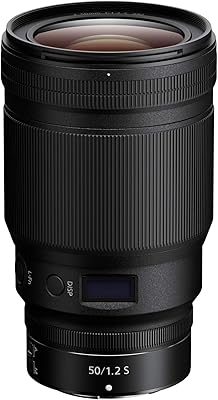
Nikon NIKKOR Z 50mm f/1.2 S
89%
94%
Image Quality
92%
Autofocus Performance
95%
Low-Light Performance
88%
Build Quality
90%
Weatherproof Design
More
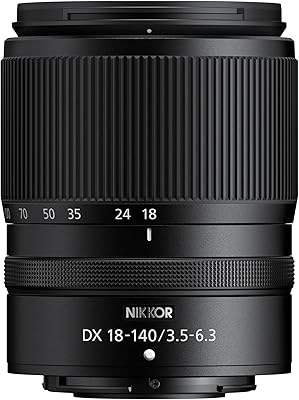
Nikon NIKKOR Z DX 18-140mm VR Lens
79%
93%
Focal Range Versatility
76%
Image Sharpness
88%
Autofocus Performance
91%
Portability & Size
84%
Video Capability
More
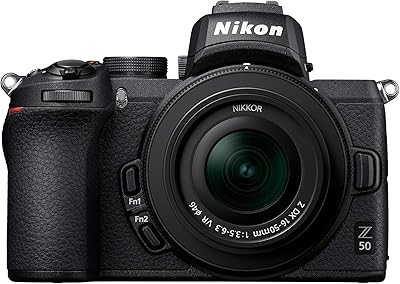
Nikon Z 50 Mirrorless Camera with 16-50mm Lens
85%
92%
Portability and Weight
89%
Video Quality (4K UHD)
84%
Autofocus Performance
91%
Ease of Use
77%
Battery Life
More
Nikon NIKKOR Z 50mm f/1.8 S Prime Lens
86%
97%
Optical Sharpness
93%
Bokeh Quality
89%
Autofocus Performance
91%
Low-Light Capability
88%
Build Quality
More
Nikon NIKKOR Z 100-400mm VR S Telephoto Lens
84%
93%
Autofocus Performance
91%
Image Sharpness
89%
Vibration Reduction Effectiveness
88%
Build Quality & Weather Sealing
74%
Value for Money
More
Nikon NIKKOR Z 35mm f/1.8 S Lens
86%
96%
Optical Sharpness
93%
Autofocus Performance
91%
Bokeh & Background Rendering
89%
Build Quality & Weather Sealing
92%
Low-Light Performance
More

FAQ

No, the Z MC 50mm is designed exclusively for the Nikon Z-mount and will not physically attach to an F-mount DSLR body. If you want to use it with a DSLR, you would need a Z-series mirrorless body. Conversely, you can use the FTZ adapter to mount older F-mount lenses on a Z body, but that adapter does not work in reverse.

For general-purpose shooting at normal distances — street scenes, food, casual portraits — the autofocus is responsive and practical. The slowdown happens specifically when you are working at very close focus distances in true macro mode, which is a physical characteristic of macro lenses in general rather than a flaw in this one. If your macro subjects are static, like flowers or objects on a table, the speed is perfectly adequate.

At full 1:1 magnification, the front element ends up roughly 1.5 to 2 inches from the surface of your subject. This short working distance is the main practical limitation of a 50mm macro versus a longer 100mm or 105mm macro, which gives you more breathing room. It works fine for stationary subjects but can be frustrating when shooting insects or any subject that reacts to the lens approaching.

It works for video, particularly for controlled scenarios like food or product filming where subjects are not moving unpredictably. The stepping motor keeps autofocus noise low enough that it will not be picked up by an external microphone under normal conditions. The main caveat is that continuous autofocus during macro video can hunt if the subject shifts slightly, so many videographers manually focus or use a follow-focus rig for close-up video work.

You can absolutely shoot macro with natural light, and many food and garden photographers do exactly that. The challenge is that at 1:1 magnification, the lens is very close to the subject, which can cast a shadow from the barrel itself. Soft window light or a small LED panel positioned to the side usually solves this. A ring light or twin-flash system is worth considering if you shoot insects or small objects frequently in controlled conditions.

It is actually a surprisingly practical first prime because the 50mm focal length is genuinely useful for everyday shooting — it does not force you into macro mode every time you pick it up. If you are curious about macro photography but also want a capable standard prime for travel or general use, this compact macro prime covers both without requiring a second lens. That said, if you have no interest in close-up photography at all, a lighter and less expensive 50mm prime might serve you better.

Yes, it mounts and operates on all current Z-mount bodies including APS-C models like the Z30 and Z50. On an APS-C sensor, the effective field of view becomes roughly equivalent to a 75mm lens, which shifts the perspective slightly toward short telephoto rather than standard. The 1:1 magnification capability remains the same regardless of sensor size, though the crop factor does change the framing at any given distance.

Extension tubes with an existing prime can get you close-up capability at a lower cost, but you lose infinity focus — meaning you can only shoot at close distances and cannot use the lens for general photography without removing the tube. The Z MC 50mm retains full focus range from close to infinity, so you can switch between macro and everyday shooting without touching the lens setup. For casual macro exploration, tubes are a reasonable experiment; for regular use, a dedicated macro lens is far more practical.

Yes, and a number of product and scientific photographers specifically use this Nikon macro lens for focus stacking workflows. The linear manual focus ring gives predictable, repeatable control between frames, which is exactly what focus stacking software requires. For the highest-precision stacking, a motorized focusing rail gives finer incremental control than the focus ring alone, but the lens itself is well-suited to the technique.

The HB-98 bayonet lens hood is included in the box, which handles flare reduction and provides some front-element protection in the field. Whether to add a 46mm UV filter is a personal preference — it adds a layer of front glass that some photographers prefer to avoid for optical purity, while others consider it inexpensive insurance against scratches. If you shoot outdoors frequently, the lens hood alone is a reasonable baseline and the dust-and-drip-resistant construction provides additional confidence.

Where to Buy

B&H Photo-Video-Audio
In stock $666.95
Willoughby's Photo Emporium
In stock $569.00
Onestop Digital
In stock $632.51
Pitman Photo Supply
In stock $646.95
Abe's of Maine
In stock $649.00