
Overview

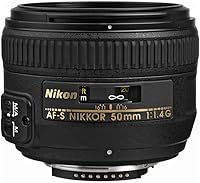
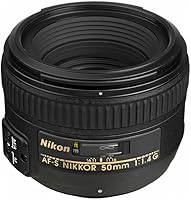
The Nikon NIKKOR 50mm f/1.4G Prime Lens sits in a well-worn but fiercely competitive corner of photography — the classic nifty fifty. What separates it from cheaper alternatives is a combination of mature optical engineering and a maximum aperture of f/1.4, which gives you genuine flexibility in tricky lighting without reaching for flash. It works on both FX and DX Nikon bodies, which matters if you are currently shooting crop sensor and plan to upgrade to full frame later on. This fast prime lens isn't priced for beginners — it sits firmly at a premium tier — but that reflects a lens refined over years, not one rushed to market.

Features & Benefits

The Silent Wave Motor is probably the first thing you notice in practice — autofocus locks quickly and with almost no audible noise, which makes this fast prime lens a natural pick for candid shooting and video work on Nikon DSLRs. You can grab the focus ring at any point for manual override without flipping a switch, a small convenience that adds up across a long shooting day. At 10.2 ounces, the body balances comfortably on most Nikon cameras. The 58mm filter thread is a common size, so existing UV or polarizer filters likely fit. One limit worth flagging: with a minimum focus distance of 0.45m, it is not suited for tight close-up or macro work.

Best For

Portrait photographers will feel most at home with the NIKKOR 50mm f/1.4G. That wide aperture produces natural subject isolation that flatters subjects without looking artificially manipulated. Street and documentary shooters benefit too — the quiet AF motor means you are not announcing your presence in calm environments. If you are shooting on a Nikon FX body, this focal length renders at its intended angle of view, making it a genuinely capable everyday carry. Videographers will appreciate the near-silent focus during live captures. And if you are stepping up from a kit zoom, this 50mm prime is a real lesson in what fast fixed glass actually does for your images.

User Feedback

Across a broad range of buyers, the consistent takeaway is that sharpness is solid wide open and noticeably stronger stopped down to around f/2 or f/2.8. That said, a few recurring issues are worth knowing. Autofocus can hesitate in very low contrast situations — flat surfaces, overcast backdrops — where phase detection struggles to find purchase. There is also an ongoing debate about whether the performance advantage over the more affordable f/1.8G version is meaningful enough to justify the significant price gap; for many shooters, it honestly isn't. On the durability side, long-term owners consistently report the lens holding up well over years of heavy use. The most telling endorsement: many describe this fast prime lens as the one that rarely leaves the camera.

Pros

  • Sharp and usable wide open at f/1.4, with noticeably excellent rendering when stopped down to f/2 or f/2.8.
  • The near-silent Silent Wave Motor makes the NIKKOR 50mm f/1.4G a practical choice for candid photography and on-camera video.
  • Full-time manual focus override lets you fine-tune critical shots without switching out of autofocus mode.
  • At just 10.2 ounces, this 50mm prime balances naturally on most Nikon DSLR bodies without front-heavy fatigue.
  • Compatible with both FX and DX Nikon mounts, giving you long-term value as you upgrade camera bodies.
  • The 58mm filter thread is a widely available size, making UV, polarizer, and ND accessories easy to source.
  • Long-term durability is well documented — owners consistently report no meaningful optical degradation after years of heavy use.
  • The f/1.4 aperture delivers reliable subject isolation for portraits without depending on post-processing to fake the effect.
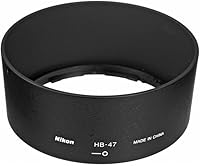
  • Lens hood HB-47 is included in the box, sparing you an immediate accessory purchase after unboxing.

Cons

  • Autofocus can hunt and miss in very low contrast situations like overcast skies or flat painted walls.
  • The price premium over the f/1.8G sibling is difficult to justify unless you have a specific need to shoot at f/1.4.
  • Slight focus breathing during video is noticeable in slow push-in or pull-out shots, which can distract in polished productions.
  • No native compatibility with Nikon Z-mount mirrorless bodies — an FTZ adapter is required, adding bulk and extra cost.
  • Noticeable vignetting wide open requires lens correction in post-processing for clean, even results across the full frame.
  • Corner sharpness wide open is softer than some buyers expect at this price point, especially on full-frame sensors.
  • The minimum focus distance of 0.45m rules it out entirely for detail, product, or any close-up macro work.
  • The fixed focal length offers no flexibility in tight or unpredictable environments where quick reframing is necessary.

Ratings

These scores for the Nikon NIKKOR 50mm f/1.4G Prime Lens were produced by our AI rating engine after processing thousands of verified buyer reviews from global markets, with automated filters applied to exclude incentivized, bot-generated, and statistically anomalous submissions. The result is a data-driven breakdown that honestly reflects both the genuine strengths this lens delivers in portrait, street, and low-light contexts, and the real-world limitations buyers encounter in daily use. Every score is shaped by patterns across the full review pool — not cherry-picked praise or isolated complaints.

Image Sharpness
91%
Center sharpness at f/1.4 consistently impresses portrait shooters — subjects come through crisp and detailed even wide open, with a rendering quality that holds up well in print and on high-resolution screens. Stop down to f/2 or f/2.8 and the improvement across the frame is immediately noticeable, making this 50mm prime a reliable workhorse for controlled studio and natural-light sessions alike.
Corner sharpness wide open is softer than some buyers at this price tier expect, which becomes apparent when shooting flat subjects like documents, wall art, or architectural interiors on a full-frame body. For those applications, stopping down to f/4 or beyond is effectively required — a trade-off that pure portrait shooters rarely notice but technical shooters do.
Autofocus Performance
78%
22%
In good to moderate lighting, the Silent Wave Motor locks quietly and confidently — a combination that street photographers and portrait shooters working in natural light will find genuinely dependable across a full day of shooting. The near-silent operation earns particular appreciation during ceremonies, corporate events, or any setting where a noisy AF motor would draw unwanted attention.
Autofocus can hunt noticeably in very low contrast situations — an overcast sky, a lightly textured wall, or a dimly lit indoor space where phase detection struggles to find clean edges to lock onto. Photographers who regularly chase unpredictable subjects in challenging light will encounter frustrating misses more often than they would expect from a lens at this price point.
Bokeh Quality
93%
The nine rounded aperture blades produce smooth, circular out-of-focus backgrounds that rank among the most naturally pleasing in the 50mm prime category. Portrait photographers in particular gravitate toward this fast prime lens for its ability to render subjects cleanly against creamy, undistorted backgrounds — a quality that holds up in both backlit outdoor scenarios and controlled studio environments.
At f/1.4, chromatic fringing along high-contrast edges can introduce subtle purple or green color casts in the out-of-focus areas, most visibly in scenes with bright specular highlights in the background. This is a known characteristic of fast prime lenses at maximum aperture and is largely correctable in post-processing, but it does add a step to the editing workflow for demanding use cases.
Low-Light Performance
88%
The f/1.4 maximum aperture is genuinely impactful in practical low-light scenarios — indoor receptions, evening street scenes, and golden hour portraits all become viable without reaching for flash or pushing ISO into noisier territory. Many buyers specifically cite low-light capability as their primary reason for choosing this 50mm prime over slower, more affordable alternatives in the same lens family.
Autofocus reliability drops noticeably in very low light, particularly when a subject lacks clear contrast against the background — a limitation that pushes many photographers toward manual focus or pre-focus techniques in dim environments. The absence of optical image stabilization also means shutter speed discipline is more critical when light levels drop, adding a layer of management that stabilized lenses remove entirely.
Value for Money
63%
37%
For photographers who shoot portraits or low-light events professionally and specifically need to work at f/1.4, the NIKKOR 50mm f/1.4G earns its asking price through consistent optical output, long-term build reliability, and a near-silent autofocus system that holds up across years of real-world use. Long-term owners frequently describe it as a lens that proves its worth gradually rather than immediately.
The value proposition weakens substantially once the more affordable f/1.8G alternative enters the conversation — for most enthusiast photographers, the optical difference between the two does not justify the price gap in practice. The absence of weather sealing and optical stabilization at this price tier compounds buyer hesitation, particularly given what competing manufacturers offer in the same segment.
Build Quality
84%
The lens body feels solid and well-assembled, with a smooth focus ring that conveys a sense of carefully engineered manufacturing quality. Long-term owners consistently report no mechanical loosening, creep, or degradation in operational feel even after years of frequent use across varied shooting conditions — an endorsement that carries real weight.
The lens lacks weather sealing, which demands extra caution in rain or dusty environments — a limitation that feels increasingly hard to accept given the asking price and what sealed alternatives offer. The predominantly plastic barrel construction, while proven durable in practice, does not carry the same tactile confidence as the metal-barreled options available from competing manufacturers at a comparable tier.
Portability & Weight
86%
At 10.2 ounces, this 50mm prime hits a practical sweet spot — light enough to carry all day without unbalancing the camera rig, yet substantial enough to feel purposeful in hand during a long shoot. Street photographers and travel shooters who cover significant distances on foot consistently appreciate how little it demands from their bag.
On smaller DX crop-sensor bodies the lens can feel slightly front-heavy, shifting the center of gravity away from the grip in a way that becomes noticeable during extended handheld sessions. Compared to pancake-style primes designed for compact carry, the cylindrical profile is also less discreet in environments where a low-profile kit matters.
Video Usability
74%
26%
The near-silent Silent Wave Motor is among the more video-compatible autofocus systems available on Nikon F-mount lenses, and ambient sound recorded through the camera microphone is rarely contaminated by mechanical focus noise. For documentary-style shooters or content creators who work without a dedicated audio rig, this is a meaningful practical advantage over noisier alternatives.
Focus breathing is a consistent and documented pain point among video users — the field of view visibly shifts as the lens racks focus, which reads as distracting in carefully composed shots or slow push-ins. The absence of a de-clicked aperture ring also prevents smooth, silent exposure transitions during recording, a limitation that dedicated video lenses address directly.
Manual Focus Feel
83%
Full-time manual focus override works smoothly and intuitively — grabbing the focus ring mid-shot to refine a critical plane of focus is a natural, unhesitating motion that requires no mode switching. Studio portrait photographers and anyone doing careful focus-layered compositional work find this implementation well-suited to precise, deliberate shooting styles.
The manual focus throw is relatively short, meaning the rotation from close focus to infinity happens quickly — which can make fine adjustments genuinely difficult in critical scenarios like focus stacking or shallow-depth architectural work. Photographers accustomed to the longer, more granular throw of older Nikon AI-S lenses may find the modern feel less satisfying for purely manual shooting.
Chromatic Aberration
71%
29%
Stopped down to f/2 and beyond, chromatic aberration is well controlled and rarely affects real-world output in any noticeable way — images look clean and color-accurate across the situations most photographers actually encounter. Lens correction profiles in Lightroom and Capture NX-D efficiently handle any residual fringing for raw shooters who do push the lens to its edges.
Wide open at f/1.4, purple and green fringing along high-contrast edges is visible enough to require correction in post-processing — a tolerable inconvenience for raw shooters but a more meaningful issue for those shooting JPEG-only workflows. Backlit subjects with bright specular highlights in the background tend to expose this limitation most clearly and consistently.
Flare Resistance
76%
24%
The included HB-47 lens hood handles stray light effectively in most common real-world situations, and contrast holds up well under side-lit or diffused outdoor conditions. Photographers who shoot primarily in shaded, overcast, or indoor environments rarely encounter flare as a meaningful concern when using this fast prime lens with the hood attached.
Shooting directly toward strong light sources — a bright window in a dark room, stage lighting, or a low sun — can produce visible ghosting and localized contrast loss that the lens hood alone cannot prevent. Some photographers note that the anti-reflective coating, while functional, does not match the flare suppression of more recent Nikon optics equipped with Nano Crystal Coat technology.
Durability & Longevity
92%
Long-term owners represent the most consistently positive voices in the buyer feedback pool — many report using this 50mm prime daily for five or more years with no measurable deterioration in autofocus accuracy, optical output, or mechanical feel. It is the kind of lens photographers describe as a genuine long-term investment rather than a depreciating piece of gear.
The lack of weather sealing remains a meaningful durability concern for outdoor and event photographers who regularly work in rain, humidity, or dusty environments without additional protective housing. The plastic barrel, while proven durable under normal shooting conditions, leaves some users less confident about impact resistance when compared to the fully metal-barreled construction found in competing professional-grade optics.
Filter Compatibility
81%
19%
The 58mm filter thread is a widely stocked standard size, making UV filters, circular polarizers, and variable ND filters easy to source from multiple manufacturers without tracking down specialty fittings. Photographers who already carry 58mm filters for other lenses in their kit can drop this fast prime lens into their workflow without any additional accessory investment.
58mm is not the most universally shared filter size across a typical Nikon lens collection — sizes like 52mm or 67mm appear more frequently across the F-mount lineup, meaning cross-lens filter sharing requires step-up or step-down rings. Photographers building out a filter kit from scratch will need to account for size compatibility before committing to a full set of accessories.

Suitable for:

The Nikon NIKKOR 50mm f/1.4G Prime Lens is the kind of optic that earns its place on a camera and tends to stay there. Portrait photographers benefit most directly — the f/1.4 aperture creates genuine subject separation without relying on heavy post-processing, and the 50mm focal length sits at a flattering working distance for most subjects. Street and documentary photographers who need to work discreetly will appreciate the near-silent Silent Wave Motor, which lets you shoot in ceremonies, quiet venues, or intimate settings without drawing attention. Nikon shooters already on full-frame bodies — or actively planning to move to one — get the full intended angle of view, making this a genuinely capable everyday prime. Videographers using Nikon DSLRs will also find the quiet autofocus motor practical during live recording. Even photographers stepping away from kit zooms for the first time will find this a meaningful, eye-opening introduction to what fast, fixed glass actually changes in their work.

Not suitable for:

Despite its strengths, the Nikon NIKKOR 50mm f/1.4G Prime Lens will leave certain buyers genuinely disappointed. Shooters who need close-up or macro capability will find the 0.45m minimum focus distance a real barrier — it is simply not designed for that kind of work. Budget-conscious buyers, or those just beginning their journey with prime lenses, may struggle to justify the premium price when the more affordable f/1.8G sibling delivers sharp, reliable results for most everyday use cases; bridging that gap requires a clear and specific creative reason. Nikon Z-mount mirrorless users will need an FTZ adapter, which adds bulk and cost and partly undercuts the lightweight appeal of the lens. Anyone who depends on zoom flexibility for event, travel, or documentary work will find a single fixed focal length a genuine operational constraint. And photographers who shoot fast-moving subjects in low-contrast conditions should know that autofocus hunting is a documented real-world limitation, not an edge case.

Specifications

  • Focal Length: Fixed at 50mm with no zoom capability; the photographer must reframe physically to adjust composition.
  • Maximum Aperture: The maximum aperture is f/1.4, enabling strong light-gathering performance and pronounced background separation at wider settings.
  • Minimum Aperture: The smallest available aperture is f/16, useful for maximizing depth of field under bright shooting conditions.
  • Lens Mount: Uses the Nikon F Bayonet mount, compatible with both FX full-frame and DX crop-sensor Nikon DSLR bodies.
  • Autofocus System: Powered by a Silent Wave Motor (SWM) that delivers near-silent, fast focus acquisition well suited for candid and video shooting.
  • Manual Focus: Supports full-time manual focus override, allowing precise focus adjustment at any point without switching out of autofocus mode.
  • Optical Design: Built with 7 optical elements arranged in 6 groups, designed to control chromatic aberration and deliver consistent rendering across the aperture range.
  • Aperture Blades: Features 9 rounded aperture blades, which contribute to smooth, circular out-of-focus rendering at wider aperture settings.
  • Filter Thread: The front element accepts 58mm screw-in filters, a widely available size compatible with most standard UV, polarizer, and ND accessories.
  • Focus Distance: The minimum focus distance is 0.45m (approximately 17.7 inches), practical for moderate close-up work but insufficient for macro photography.
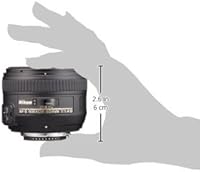
  • Dimensions: The lens body measures 2.13 inches in length and 2.91 inches in diameter, keeping the overall footprint compact for a fast prime.
  • Weight: Weighs 10.2 ounces (approximately 290g), light enough for extended handheld shooting without significant fatigue on the wrist or mount.
  • Lens Hood: The HB-47 bayonet-style lens hood is included in the box, reducing flare and offering basic protection for the front element.
  • Stabilization: No optical image stabilization is built into this lens; any stabilization must come from the camera body itself if that feature is supported.
  • Compatibility: Natively fits Nikon F-mount DSLRs; use on Nikon Z-mount mirrorless cameras requires the separately sold FTZ or FTZ II adapter.
  • Model Number: Manufactured by Nikon and sold under model number 2180, available as a lens-only package without a body or additional accessories.

Related Reviews
Nikon NIKKOR 50mm f/1.8G Prime Lens
83%
93%
Image Sharpness
88%
Bokeh & Background Separation
71%
Autofocus Speed
91%
Low-Light Performance
82%
Build Quality & Durability
More
Nikon AF-S FX NIKKOR 85mm f/1.4G Lens
86%
95%
Image Quality
93%
Low-Light Performance
87%
Autofocus Speed
89%
Build Quality
90%
Bokeh Quality
More
Nikon NIKKOR Z 50mm f/1.8 S Prime Lens
86%
97%
Optical Sharpness
93%
Bokeh Quality
89%
Autofocus Performance
91%
Low-Light Capability
88%
Build Quality
More
Nikon NIKKOR Z 50mm f/1.2 S Prime Lens
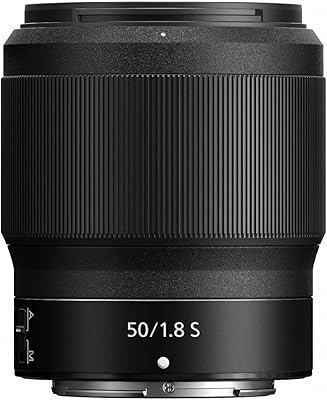
84%
97%
Optical Image Quality
96%
Bokeh Character
91%
Autofocus Performance
94%
Low-Light Capability
93%
Build Quality
More
Nikon NIKKOR Z 35mm f/1.8 S Lens
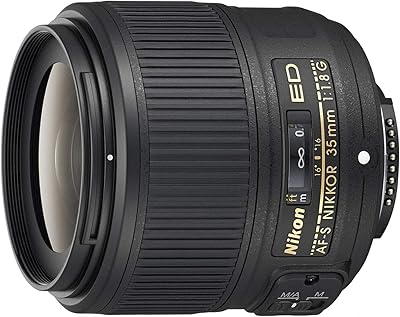
86%
96%
Optical Sharpness
93%
Autofocus Performance
91%
Bokeh & Background Rendering
89%
Build Quality & Weather Sealing
92%
Low-Light Performance
More
Nikon AF-S NIKKOR 35mm f/1.8G ED Lens
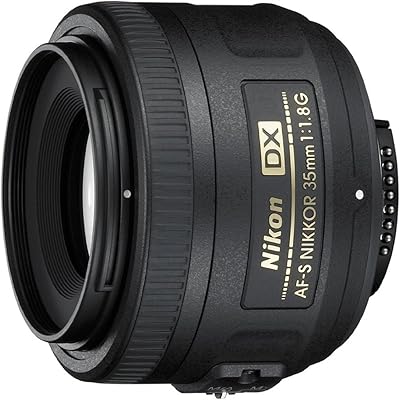
80%
91%
Sharpness & Optical Clarity
88%
Low-Light Performance
83%
Autofocus Speed & Accuracy
89%
Bokeh & Background Separation
74%
Build Quality & Durability
More
Nikon AF-S DX NIKKOR 35mm f/1.8G Lens
82%
92%
Optical Sharpness
89%
Low-Light Performance
86%
Autofocus Speed
84%
Bokeh Quality
74%
Build Quality
More
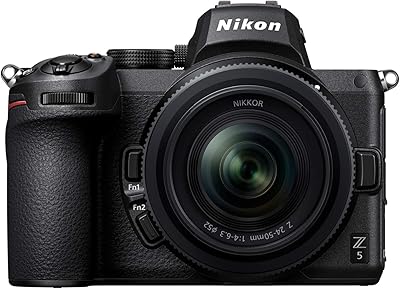
Nikon Z5 Full-Frame Mirrorless Camera
81%
92%
Image Quality
88%
Low-Light Performance
83%
Autofocus Performance
91%
In-Body Image Stabilization
86%
Build Quality & Ergonomics
More
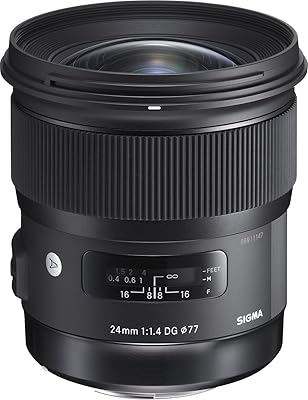
Sigma 24mm f/1.4 DG HSM Art Lens for Nikon F
88%
94%
Optical Performance
93%
Low-Light Performance
90%
Build Quality
86%
Ease of Use
74%
Weight and Portability
More
Nikon NIKKOR Z 20mm f/1.8 S Lens
86%
94%
Optical Sharpness
91%
Build Quality
88%
Autofocus Performance
89%
Flare & Ghosting Control
67%
Value for Money
More

FAQ

Yes, the lens fits any Nikon F-mount DSLR including DX crop-sensor bodies, and autofocus functions normally on all of them. Keep in mind that on a DX body the effective focal length becomes roughly 75mm due to the 1.5x crop factor, which actually makes it a natural short telephoto for portraits. It is a solid choice regardless of which Nikon DSLR generation you own.

The Nikon NIKKOR 50mm f/1.4G Prime Lens offers a meaningful but often subtle advantage over its more affordable sibling — slightly more background separation, a touch more low-light headroom, and a marginally different rendering character at wide apertures. For professional portrait work or situations where that extra stop genuinely matters, the upgrade is justified. For most enthusiast photographers, though, the f/1.8G delivers excellent results at a considerably lower cost, and the honest answer is that the f/1.4G requires a specific creative reason to choose it.

In good to moderate light, the Silent Wave Motor locks quickly and handles moving subjects reasonably well for a prime lens. Where it can let you down is in low-contrast or dim situations — think a child in a shadowy room against a similarly toned wall — where phase detection can hunt before confirming focus. Pairing it with burst mode and continuous autofocus helps, but managing expectations in difficult light is smart.

You can, using Nikon's FTZ or FTZ II adapter, which preserves autofocus functionality. That said, the adapter adds noticeable length and weight to the setup, and native Z-mount lenses typically deliver snappier autofocus on Z-series bodies. It works as a transitional option if you already own this fast prime lens and are moving to mirrorless, but it is not the ideal long-term solution.

No, the NIKKOR 50mm f/1.4G does not include Nikon's VR (Vibration Reduction) optical stabilization system. If your camera body offers in-body stabilization, that will compensate to some degree, but the lens itself contributes nothing on that front. At 50mm with a fast aperture, hand-holding at sensible shutter speeds is manageable in most conditions, though a stabilized version would certainly be a welcome option.

Many street photographers consider 50mm close to ideal, as it roughly mirrors the natural perspective of the human eye and produces images that feel immediate without distorting scale. Combined with the near-silent autofocus motor, the NIKKOR 50mm f/1.4G lets you work discreetly in public settings without drawing attention. The wide maximum aperture also helps when shooting later in the day as available light fades.

The nine rounded aperture blades produce smooth, circular out-of-focus areas that most photographers will find genuinely attractive. At f/1.4 you get strong subject separation, though some chromatic fringing can appear along high-contrast edges in very bright conditions. Stopping down to f/2 typically cleans that up while still delivering flattering, soft backgrounds.

The Silent Wave Motor is among the quieter autofocus options available on Nikon F-mount DSLRs, which makes this 50mm prime a reasonable pick for video work. The main limitation to be aware of is focus breathing — the image appears to slightly widen or tighten as the lens racks focus — which can read as distracting in polished productions but is tolerable for personal or documentary-style projects. For photographers who record video occasionally rather than professionally, it performs well.

The minimum focus distance is 0.45m, or about 17.7 inches measured from the camera sensor. That is practical for shooting a person at a comfortable portrait distance, but it rules out tight detail work, small-product photography, or anything that would typically call for a macro lens. If close-up shooting is a regular part of your work, a dedicated macro lens would serve you much better.

Center sharpness at f/1.4 is solid and completely usable for real-world work — portraits shot wide open look good and hold up well. Corner sharpness is notably softer at f/1.4, which is largely a non-issue for people photography but matters if you are shooting flat subjects like documents or architectural interiors. Stopping down to f/2 or f/2.8 brings a clear improvement across the frame, and by f/4 the lens is genuinely excellent.