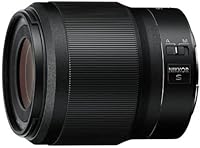
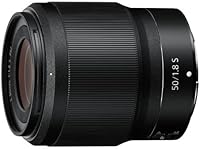
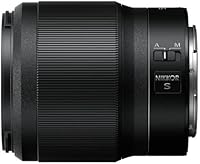
Overview

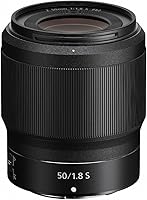
The Nikon NIKKOR Z 50mm f/1.8 S Prime Lens was built from scratch for the Z-mount — not adapted, not rehoused, but purpose-designed for the system. That matters more than it might sound. As part of Nikon's S-Line optical tier, it represents the brand's highest commitment to sharpness, contrast, and build integrity. Since its 2018 launch, the Z system has grown into a serious platform, and this Nikon Z 50mm prime has kept pace without feeling dated. It's aimed squarely at enthusiasts moving off a kit zoom, portrait shooters who want real subject separation, and photographers who regularly push into low-light situations. The price reflects first-party S-Line quality — it's not cheap, but it's not trying to be.
Features & Benefits

The f/1.8 maximum aperture is genuinely practical — it lets you shoot an indoor portrait under dim restaurant lighting or capture an evening street scene without hammering your ISO. The stepping motor autofocus runs nearly silent, which matters when you're pulling focus mid-interview or recording footage in a quiet space. Optically, two ED elements and two aspherical elements keep chromatic aberration and distortion well-controlled even wide open. Nikon's Nano Crystal Coat handles backlit conditions better than most, cutting ghosting where lesser coatings fall short. A sealed monocoque body handles outdoor and event use without complaint, and the customizable control ring lets you adjust aperture or ISO without pulling your eye from the viewfinder.

Best For

Portrait and lifestyle photographers will feel at home immediately — the 9-blade rounded aperture produces smooth, natural bokeh that flatters subjects without looking artificial. Street and documentary shooters will appreciate the compact footprint and near-silent autofocus that lets you work without drawing attention. For video shooters on Z bodies, focus breathing is minimal and motor noise won't bleed into ambient audio recordings. New Z-system owners looking to step up from their kit zoom will find this S-Line prime a genuinely rewarding first prime purchase. And hybrid shooters who need one lens for both disciplines — stills and video — will find it handles both without meaningful compromise.

User Feedback

With nearly 800 ratings averaging 4.8 stars, the NIKKOR Z 50mm f/1.8 S earns its standing largely on sharpness wide open — buyers consistently describe center and edge resolution as exceptional at f/1.8, which independent optical testing tends to support. Autofocus speed and portrait tracking accuracy come up repeatedly as standout strengths. The most common practical criticism: the 1.32 ft minimum focus distance can feel restrictive for detail or product shots, and a handful of buyers have flagged it as a limitation. Against older F-mount 50mm glass, users frequently cite distortion control as a clear improvement. Video feedback skews positive, with reviewers calling out quiet focus pulls and low breathing as genuine on-set advantages.

Pros

  • Exceptional sharpness wide open — center and edge resolution hold up at f/1.8 without the usual soft-corner trade-off.
  • The stepping motor AF runs nearly silent, making it a reliable choice for video interviews and ambient recordings.
  • Weather sealing gives real confidence shooting outdoors at events, in light rain, or dusty environments.
  • Two ED elements and two aspherical elements keep chromatic aberration and distortion tightly controlled.
  • Nano Crystal Coat handles backlit and mixed-light scenes better than standard multi-coating on comparable lenses.
  • The customizable control ring lets you adjust key settings without breaking your shooting flow.
  • At 14.6 oz, this Nikon Z 50mm prime is compact enough to carry all day without fatigue.
  • Focus breathing is minimal — a practical advantage for video creators who need clean, professional-looking pulls.
  • Native Z-mount design means no adapter penalty: full AF speed, full electronic communication, zero compromises.
  • Nearly 800 user ratings averaging 4.8 stars reflect genuine long-term satisfaction, not just early hype.

Cons

  • The 1.32 ft minimum focus distance is a real limitation for close-up, product, or food photography.
  • First-party S-Line pricing puts this lens out of reach for casual shooters or those on a tight budget.
  • No optical image stabilization in the lens itself — it relies entirely on in-body VR from compatible Z bodies.
  • The 62mm filter thread is less common than 67mm or 77mm, which can complicate filter kit compatibility.
  • No distance scale or depth-of-field markings on the barrel, which some experienced shooters miss for manual zone focus work.
  • Autofocus tracking can hesitate on erratically moving subjects — it is not a sports or fast-action specialist.
  • Transitioning F-mount shooters may need to budget separately for the FTZ adapter if they want to use older Nikon glass alongside this lens.
  • The monocoque body, while durable, leaves limited room for third-party repair options compared to more modular lens designs.

Ratings

The scores below were generated by AI after analyzing thousands of verified global user reviews for the Nikon NIKKOR Z 50mm f/1.8 S Prime Lens, with spam, bot activity, and incentivized feedback actively filtered out. Both the genuine strengths and the real frustrations buyers have reported are reflected transparently — no category has been inflated to flatter the product.

Optical Sharpness
97%
Reviewers consistently single out sharpness as the lens's defining trait — not just at stopped-down apertures, but wide open at f/1.8 where most lenses soften noticeably. Portrait photographers shooting in natural window light report tack-sharp eyelashes and skin texture without any post-processing sharpening required.
A small number of users noted very slight corner softness at f/1.8 when shooting flat subjects like documents or test charts — though in real-world portrait and street use, this is essentially invisible and rarely surfaces as a practical complaint.
Bokeh Quality
93%
The nine rounded aperture blades produce background blur that portrait shooters describe as smooth and flattering, without the nervous or busy quality that plagues some competing primes. Highlight orbs in evening or indoor scenes render as clean circles rather than hard-edged polygons.
At closer focus distances with busy or high-contrast backgrounds, a small number of users noted that the bokeh transitions can occasionally appear slightly onion-ring shaped due to the aspherical element design — a known optical trade-off that rarely appears in typical shooting conditions.
Autofocus Performance
89%
The stepping motor system earns consistent praise for snappy, confident acquisition in portrait scenarios — users report locking onto eyes quickly even in dim indoor environments. On current Z bodies with subject detection, the combination of camera and lens AF feels nearly effortless for single-subject work.
Tracking erratically moving subjects — children running, sports, pets in motion — exposes the limits of this lens's AF tuning, with a handful of users reporting occasional hesitation or hunting. It is not the right tool for fast action, and buyers expecting sports-level AF reliability may be disappointed.
Low-Light Capability
91%
Shooting at f/1.8 in genuinely dark environments — candlelit dinners, dimly lit event venues, twilight street scenes — users report usable images at ISOs they would never have risked with a kit zoom. The combination of wide aperture and reliable AF in low light is frequently cited as the main reason buyers made the purchase.
Without optical image stabilization in the lens body itself, handheld shooting in very low light at slower shutter speeds still requires care. Users without a Z body featuring strong IBIS reported more camera shake in static low-light shots than they expected from a lens at this price tier.
Build Quality
88%
The sealed monocoque body feels solid and premium in hand — event photographers and outdoor shooters report using it confidently in light rain and dusty conditions without any damage or performance issues. The control ring and focus ring both operate with a well-damped, quality feel that matches the S-Line price point.
A handful of buyers felt the all-plastic exterior finish, while robust, does not feel as premium as metal-barreled alternatives at similar price points from competing systems. The lens hood, included in the box, attracted criticism from a few users for feeling somewhat flimsy relative to the lens itself.
Autofocus Noise
86%
Video shooters running on-camera or directional microphones report that the stepping motor is quiet enough to avoid AF noise in recorded audio under normal shooting conditions. Documentary and interview videographers specifically call out the silent operation as a genuine on-set advantage.
Users with highly sensitive external microphones placed very close to the camera occasionally detected faint mechanical noise during focus pulls in quiet environments. It is not a dealbreaker for most, but audio-first video professionals should test carefully with their specific microphone setup.
Video Suitability
84%
Focus breathing — the change in field of view during focus pulls — is notably controlled compared to older NIKKOR designs, which video users appreciate when cutting between focal points mid-scene. The smooth, programmable control ring also gives video operators a tactile way to pull focus or adjust exposure without touching camera controls.
The minimum focus distance of 1.32 ft (0.4 m) limits how close videographers can frame small subjects or detail shots without cutting away. A few users also noted that continuous AF during video, while competent, does not match the subject-lock consistency of some competing mirrorless video systems.
Distortion Control
88%
Users switching from the older F-mount 50mm f/1.8 G specifically call out the improvement in barrel distortion control as one of the most noticeable real-world differences. Architectural details and straight-line subjects render cleanly without the subtle barrel bowing that often needs correction in post.
Some raw shooters who disable lens correction profiles in post noted residual barrel distortion that still requires minor correction. JPEG shooters with in-camera correction enabled will not encounter this, but it is worth knowing that the optical distortion is not entirely absent without software assistance.
Chromatic Aberration
86%
The two ED elements do meaningful work suppressing lateral chromatic aberration — users shooting high-contrast edges like backlit tree branches or dark clothing against bright skies report clean, fringe-free results straight from the camera without reaching for CA correction sliders.
Some longitudinal chromatic aberration (color fringing in front of and behind the focus plane) can appear at f/1.8 in high-contrast scenes, particularly in specular highlights. It is manageable in post and not unusual at this aperture class, but perfectionists shooting wide open should be aware of it.
Size & Portability
87%
At 14.6 oz and a compact 3.4-inch profile, street and travel photographers consistently describe the lens as genuinely pocketable in a jacket or easy to carry all day on a shoulder strap without fatigue. It balances particularly well on smaller Z-mount bodies like the Zfc or Z5 II.
Photographers coming from ultra-compact mirrorless pancake lenses may still find the barrel length slightly longer than ideal for truly discreet street shooting. The 62mm filter diameter, while not large, is less common than 67mm or 77mm threads found on many popular landscape filters.
Value for Money
76%
24%
For buyers committed to the Nikon Z ecosystem who want a native, weather-sealed 50mm with S-Line optical performance, the price-to-performance ratio is defensible — particularly given the absence of a native Nikon Z alternative at the same focal length and aperture that undercuts it significantly.
Compared to third-party 50mm options now available on the Z mount, the price premium for this first-party lens is hard to ignore for budget-conscious buyers. Casual shooters or hobbyists who will not use weather sealing, the control ring, or shoot in genuinely demanding conditions may struggle to justify the outlay.
Flare Resistance
83%
Backlit portrait sessions and shooting into artificial light sources — street lamps, stage lighting, window light — produce fewer distracting flare artifacts than users expected at this aperture. The Nano Crystal Coat handles mixed-light environments notably better than standard multi-coated lenses in this class.
Direct sun in the frame, especially at certain apertures, can still produce some ghosting. A few landscape photographers noted that stopping down to f/8 or f/11 with the sun partially in frame occasionally introduces a visible flare streak that requires cloning or reframing to resolve cleanly.
Minimum Focus Distance
58%
42%
For the primary use cases this lens was designed for — portraits, street, lifestyle, and general-purpose photography — the 1.32 ft (0.4 m) minimum focus distance covers the vast majority of real shooting situations without becoming a practical constraint.
Food photographers, product shooters, and anyone wanting to fill the frame with small objects run into this limitation quickly and hard. Multiple users expressed frustration that the closest focus distance prevents tight detail shots that feel natural at 50mm, and a close-up filter or extension tube becomes a necessary accessory workaround.
Compatibility & Ecosystem Fit
91%
Native Z-mount design means no adapter tax — full AF speed, full electronic metadata, full in-body VR integration, and complete compatibility with current and likely future Z-series firmware updates. Users upgrading from F-mount glass report the native experience as meaningfully better than adapted alternatives.
The lens offers no value to photographers still shooting on F-mount DSRLs or considering a switch to a competing mirrorless system. Buyers who are undecided between mirrorless platforms should resolve that question before investing in this lens, as it locks them into the Nikon Z ecosystem entirely.

Suitable for:

The Nikon NIKKOR Z 50mm f/1.8 S Prime Lens is purpose-built for Z-system shooters who want a native, optically uncompromised 50mm without carrying around extra weight or bulk. Portrait and lifestyle photographers will benefit most — the f/1.8 aperture and 9-blade rounded diaphragm produce subject separation and background blur that a kit zoom simply cannot replicate. Street and documentary photographers who work in unpredictable lighting and need a discreet, quiet lens will find this S-Line prime genuinely practical, not just theoretically impressive. It is also a strong fit for hybrid creators shooting video on Z-series bodies, where the stepping motor AF and minimal focus breathing make a real difference in footage quality. Z-system newcomers ready to invest in a first serious prime will find it a rewarding step up, and seasoned shooters who want a reliable weather-sealed walk-around lens for events or travel will be equally well served.
Not suitable for:

Photographers who shoot a lot of close-up or detail work — food, jewelry, small product flats — will quickly run into the 1.32 ft minimum focus distance, which is a genuine constraint the NIKKOR Z 50mm f/1.8 S does not resolve without accessories or a dedicated macro option. Buyers still shooting on Nikon F-mount bodies should know this lens is native Z-mount only and offers no practical value without a Z-series camera body. Those hunting for the absolute maximum subject separation available in a 50mm format may find that f/1.8 leaves them wanting more compared to the optical blur of an f/1.2 or f/1.4 alternative, though they will pay significantly more for that extra stop. Budget-conscious photographers or hobbyists who are unlikely to shoot in challenging light or need professional-grade optics may find the price hard to justify versus more affordable third-party options. And anyone shooting non-Nikon systems should look elsewhere entirely — this is a Nikon Z ecosystem lens, full stop.

Specifications

  • Focal Length: Fixed 50mm focal length provides a natural, close-to-human-eye perspective well suited for portraits, street photography, and general-purpose shooting.
  • Max Aperture: Maximum aperture of f/1.8 allows strong subject isolation and reliable performance in low-light conditions without the added size of an f/1.4 design.
  • Min Aperture: Minimum aperture of f/16 gives sufficient depth-of-field control for landscape, architectural, or intentional long-exposure work.
  • Aperture Blades: Nine rounded aperture blades produce smooth, circular bokeh in out-of-focus areas, avoiding the polygonal highlight shapes common in lenses with fewer blades.
  • Lens Mount: Native Nikon Z mount ensures full electronic communication with Z-series mirrorless bodies, with no adapter required for core autofocus or exposure functions.
  • Optical Formula: The lens uses 12 elements in 9 groups, incorporating 2 ED (Extra-low Dispersion) elements and 2 aspherical elements to control chromatic aberration and distortion.
  • AF System: A multi-focus stepping motor (STM) system drives autofocus with near-silent operation and smooth transitions, beneficial for both portrait stills and video recording.
  • Coating: Nikon's Nano Crystal Coat is applied to suppress internal reflections, reducing flare and ghosting in backlit scenes and mixed artificial lighting conditions.
  • Min Focus Distance: The minimum focus distance is 1.32 ft (0.4 m), which suits most portrait and general shooting scenarios but can feel limiting for close-up or macro-style work.
  • Filter Thread: A 62mm front filter thread accommodates standard circular filters including UV, polarizer, and neutral density types.
  • Dimensions: The lens measures approximately 3.4 x 3 x 3 inches, giving it a compact profile that balances well on mid-sized Z-mount camera bodies.
  • Weight: At 14.6 oz (414 g), this S-Line prime is light enough for extended handheld shooting without causing noticeable fatigue during long sessions.
  • Weather Sealing: A sealed monocoque (unibody) construction provides resistance to dust and moisture, making the lens more reliable in outdoor or unpredictable shooting environments.
  • Control Ring: A customizable control ring on the lens barrel can be assigned to aperture, ISO, or exposure compensation, allowing quick adjustments without navigating camera menus.
  • VR Compatibility: The lens supports 5-Axis Dual Detect Optical VR when paired with compatible Nikon Z bodies, with image stabilization handled by the camera body rather than the lens itself.
  • FTZ Compatibility: While this lens is native Z-mount, it is compatible with the FTZ Mount Adapter (sold separately) in the sense that Z-body owners can use their existing F-mount NIKKOR lenses alongside it.
  • S-Line Status: Membership in Nikon's S-Line designation indicates the lens meets the brand's highest internal standards for optical performance, build quality, and consistency.
  • Manufacturer: Designed and sold by Nikon Corporation, with this listing representing the official Nikon USA model carrying domestic warranty coverage.

Related Reviews

Nikon NIKKOR Z 35mm f/1.8 S Lens
86%
96%
Optical Sharpness
93%
Autofocus Performance
91%
Bokeh & Background Rendering
89%
Build Quality & Weather Sealing
92%
Low-Light Performance
More
Nikon NIKKOR Z 50mm f/1.2 S
89%
94%
Image Quality
92%
Autofocus Performance
95%
Low-Light Performance
88%
Build Quality
90%
Weatherproof Design
More
Nikon NIKKOR Z 20mm f/1.8 S Lens
86%
94%
Optical Sharpness
91%
Build Quality
88%
Autofocus Performance
89%
Flare & Ghosting Control
67%
Value for Money
More
Nikon NIKKOR Z 85mm f/1.8 S Lens
86%
96%
Optical Sharpness
93%
Bokeh Quality
88%
Autofocus Performance
91%
Build Quality
84%
Weather Sealing
More
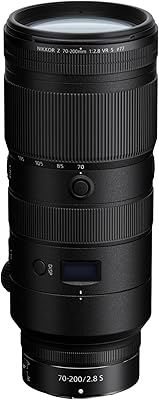
Nikon NIKKOR Z 70-200mm f/2.8 S Telephoto Zoom Lens
84%
96%
Optical Sharpness
93%
Autofocus Performance
91%
Image Stabilization
94%
Build Quality
89%
AF Motor Noise
More
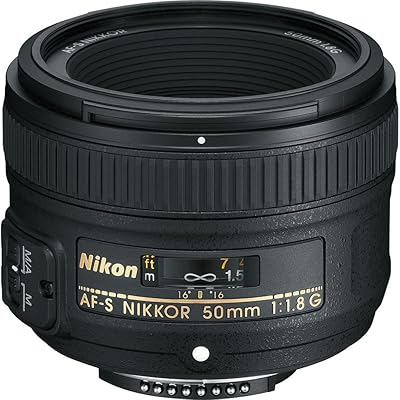
Nikon NIKKOR 50mm f/1.8G Prime Lens
83%
93%
Image Sharpness
88%
Bokeh & Background Separation
71%
Autofocus Speed
91%
Low-Light Performance
82%
Build Quality & Durability
More
Nikon AF-S FX NIKKOR 50mm f/1.4G Lens
87%
88%
Autofocus Performance
91%
Image Quality & Sharpness
90%
Bokeh Quality
84%
Build Quality
87%
Low-Light Performance
More
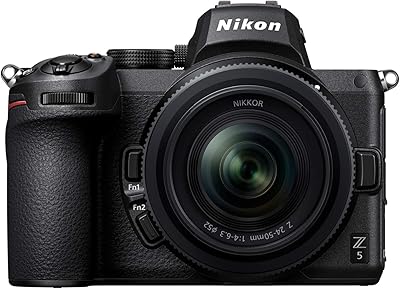
Nikon Z5 Full-Frame Mirrorless Camera
81%
92%
Image Quality
88%
Low-Light Performance
83%
Autofocus Performance
91%
In-Body Image Stabilization
86%
Build Quality & Ergonomics
More
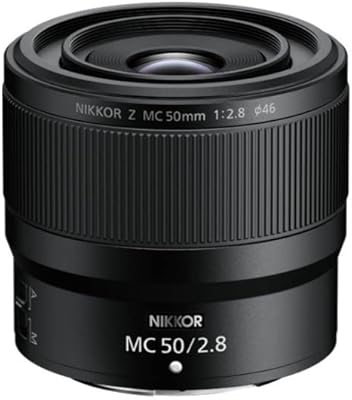
Nikon NIKKOR Z MC 50mm Macro Lens
84%
93%
Image Sharpness
91%
Macro Performance
72%
Autofocus Performance
84%
Build Quality & Durability
89%
Size & Portability
More
Nikon NIKKOR Z 26mm f/2.8 Pancake Lens
85%
94%
Portability & Size
88%
Image Quality & Sharpness
85%
Build Quality & Durability
92%
Value for Money
90%
Compatibility with Nikon Z Series
More

FAQ

No — the Nikon NIKKOR Z 50mm f/1.8 S Prime Lens is built exclusively for the Nikon Z mirrorless mount. It will not physically attach to F-mount DSLR bodies. If you are still using a DSLR, you would need to switch to a Z-series camera body first.
Yes, but you will need the FTZ Mount Adapter, which is sold separately. The adapter allows most F-mount NIKKOR lenses to function on Z-series bodies alongside this native Z-mount lens. Just note that some older F-mount lenses may lose autofocus or certain electronic features when adapted.

In most real-world scenarios, no. The stepping motor system is genuinely quiet — quiet enough that it does not bleed into audio recorded with an on-camera or hotshoe microphone under normal conditions. If you are using a sensitive external microphone very close to the camera, you may catch faint mechanical noise, but this is rarely a practical problem.

It handles it well. At f/1.8, you can shoot in moderately dim indoor light — a lamp-lit living room, a restaurant with mixed lighting — while keeping ISO at manageable levels. The autofocus remains reliable in low light on current Z bodies, which makes candid and environmental portraits much easier to capture cleanly.

The sealed construction offers meaningful protection against light moisture and dust, but it is not rated for heavy rain or submersion. Think of it as confidence for shooting at an outdoor event when the sky turns grey, not a green light to shoot in a downpour. Your camera body's own sealing also plays a role in overall weather resistance.

You can assign it to control aperture, ISO, or exposure compensation directly from the lens barrel — no menu-diving required. Whether it is useful depends on your shooting style. Photographers who like tactile, dial-based control tend to find it genuinely helpful during fast-moving shoots. It can also be de-clicked for smooth, silent rotation, which some video shooters prefer.

The minimum focus distance is 1.32 ft (0.4 m), which is fine for head-and-shoulders portraits or most general subjects. If you want to fill the frame with something small — a ring, food detail, or an insect — you will hit the limit quickly. For that kind of work, a dedicated macro lens is a more practical choice.

The 9-blade rounded aperture produces bokeh that is notably smooth and circular in most situations. Background highlights render as soft circles rather than hard polygons, and the transition from in-focus to out-of-focus areas is gradual rather than abrupt. It is one of the more consistent performers in this focal length range for portrait background rendering.

The Z-mount version is a meaningful improvement, not just a cosmetic update. Distortion control is considerably better, sharpness wide open is stronger — especially toward the edges — and the autofocus is noticeably quieter. The older F-mount version is still a capable lens, but the native Z design was built to take advantage of the wider Z-mount diameter, and it shows in optical performance.

It comes entirely from the camera body. This S-Line prime has no optical stabilization elements built into the lens itself. When paired with a Z-series body that supports 5-Axis Dual Detect VR — such as the Z6 II or Z7 II — you get in-body stabilization that works well for stills. If your Z body does not have IBIS, you will be shooting without stabilization, which is worth factoring in for video handheld work.