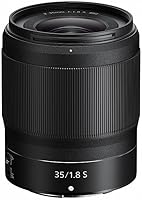
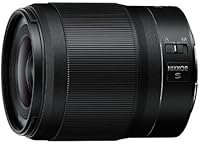
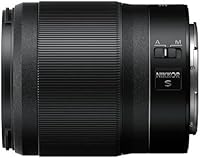
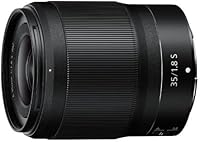
Overview

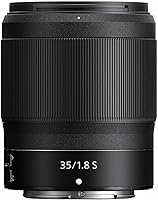
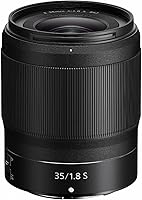
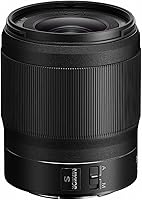
The Nikon NIKKOR Z 35mm f/1.8 S Lens is a native Z-mount prime built from the ground up for Nikon's full-frame mirrorless system — no adapters, no compromises. It carries the S-Line designation, which is Nikon's way of flagging their highest optical standard, and you can feel that intent the moment you pick it up. At 35mm, you get a field of view that sits comfortably between wide and normal — versatile enough for tight interiors, street scenes, and even relaxed portraits. The build quality is serious, and so is the price. But for shooters committed to the Z system, this lens is hard to argue against.
Features & Benefits

The ultra-quiet stepping motor is one of the first things video shooters will appreciate — focus transitions are smooth and nearly inaudible, which matters when your microphone is live. The f/1.8 aperture handles low-light situations without forcing you to crank ISO, and background separation is genuinely pleasing, helped along by a 9-blade rounded diaphragm that keeps bokeh soft and circular. Nikon's Nano Crystal Coat does real work in backlit scenes, cutting flare without the muddy contrast you sometimes see in lesser coatings. The customizable control ring and weather sealing round out a feature set that feels thoughtfully designed rather than spec-sheet padded.

Best For

Street photographers will find the 35mm field of view natural and unobtrusive, and the fast, quiet autofocus keeps up with unpredictable moments without drawing attention. Portrait photographers get meaningful subject separation without the flatness that longer lenses can introduce. For video on Z-series bodies, the silent focus pulls paired with in-body stabilization make this a genuinely capable run-and-gun option. Travel shooters looking to carry one prime that handles mixed light and varied subjects will feel well covered. And if you are migrating from a Nikon DSLR system, this Z-mount lens is a strong first native purchase that shows exactly what the platform can do.

User Feedback

Owners are consistently vocal about corner-to-corner sharpness wide open, with many noting it outperforms older F-mount glass they used for years. Autofocus reliability gets frequent praise from both photographers and videographers. The price comes up often — it is a real investment — but the majority of long-term owners feel the native performance gap over adapted lenses justifies it. Weight and size get positive mentions too; people are surprised how compact it feels given its optical complexity. The one recurring wish is for a slightly shorter minimum focus distance, which at 0.25 m can feel limiting for close-up detail work.

Pros

  • Corner-to-corner sharpness wide open puts it ahead of most adapted alternatives on the Z mount.
  • Near-silent autofocus is a genuine advantage for video work and quiet shooting environments.
  • Weather sealing adds real-world confidence for outdoor, event, and travel photographers.
  • The f/1.8 aperture handles low-light scenes without forcing ISO into noisy territory.
  • Nine rounded aperture blades produce smooth, natural bokeh that holds up even when stopping down.
  • Nano Crystal Coat keeps contrast clean and flare controlled in backlit or harsh lighting conditions.
  • The customizable control ring gives shooters a fast, tactile way to adjust settings without leaving the lens.
  • Compact and light for its optical class — surprisingly easy to carry on long shooting days.
  • Full native Z-mount integration means eye-detect AF and in-body stabilization work exactly as designed.
  • Holds resale value well, softening the long-term cost for photographers who upgrade regularly.

Cons

  • Minimum focus distance of 0.25 m limits usefulness for close-up detail and casual macro work.
  • The price is a significant barrier, especially compared to adapted third-party 35mm options.
  • Locked entirely to the Nikon Z ecosystem with no cross-system compatibility.
  • Slight focus breathing during close focus pulls is noticeable enough to matter in careful video work.
  • The control ring lacks click stops and can be accidentally nudged during casual handling.
  • Autofocus can hunt briefly in flat, low-contrast lighting conditions before acquiring a lock.
  • Some longitudinal color fringing in out-of-focus areas is visible at f/1.8 in high-contrast scenes.
  • Shooters wanting f/1.4 maximum aperture for extreme low-light or depth-of-field work have no native Z option at 35mm from Nikon.
  • Cosmetic scratching on the barrel finish appears after sustained bag carry, which can bother condition-conscious owners.
  • For photographers who shoot casually or infrequently, the performance gap over cheaper alternatives may not justify the investment.

Ratings

The Nikon NIKKOR Z 35mm f/1.8 S Lens scores here reflect AI-driven analysis of verified global buyer reviews, with spam, bot-generated, and incentivized feedback actively filtered out before scoring. Ratings cover everything from optical sharpness to everyday handling, giving you an honest picture of where this 35mm prime genuinely excels and where it falls slightly short. Both the strengths that make owners loyal and the friction points that give buyers pause are reflected transparently below.
Optical Sharpness
96%
Corner-to-corner clarity is the single most celebrated quality owners mention. Even shot wide open at f/1.8, images hold detail across the full frame — something users migrating from older F-mount glass notice immediately. Street and portrait shooters regularly cite this as the reason they stopped reaching for other lenses.
At this level of sharpness, any minor front- or back-focus issues caused by the camera body become more visible, not less. A small number of users found they needed to fine-tune autofocus calibration to get the full benefit of the optics.
Autofocus Performance
93%
The stepping motor is fast, reliable, and nearly silent — a combination that stills photographers and video shooters both appreciate. Tracking moving subjects in street or event settings feels confident, and focus acquisition in low light is noticeably better than older adapted alternatives on the Z mount.
In very low contrast scenes — think overcast flat lighting or subjects against similarly toned backgrounds — the autofocus can hunt briefly before locking. It is not a frequent issue, but it surfaces just enough that some video users prefer manual focus pulls in tricky lighting.
Bokeh & Background Rendering
91%
Nine rounded aperture blades produce smooth, circular out-of-focus highlights that hold their shape even when stopping down slightly. Portrait and product photographers appreciate that background elements dissolve naturally rather than producing nervous or edgy blur, which can be distracting in busy environments.
At the 35mm focal length, background separation is inherently more moderate than what a 50mm or 85mm prime delivers at the same aperture. Shooters expecting portrait-level background melt from a 35mm may need to adjust expectations around subject-to-background distance.
Build Quality & Weather Sealing
89%
The S-Line construction feels premium without being ostentatiously heavy. Weather sealing gives outdoor photographers real confidence during light rain or dusty conditions — event photographers especially mention shooting through unexpected weather without anxiety. The bayonet mount locks with a satisfying, precise action.
The barrel is primarily metal and high-grade plastic, and while it holds up well in daily use, it does not feel quite as tank-like as some competing primes from other manufacturers at a similar price. A few users noted minor cosmetic scratching after sustained bag carry.
Low-Light Performance
92%
The f/1.8 aperture paired with Nikon Z bodies and their in-sensor stabilization creates a low-light combination that handles indoor available light, evening street scenes, and venue photography without forcing ISO into noisy territory. Users frequently call this lens their go-to for anything after golden hour.
While the lens itself performs admirably, the f/1.8 ceiling means photographers used to f/1.4 glass will notice a roughly one-third stop gap in the most demanding low-light situations. It is a minor limitation, but it is real for those pushing the absolute edge of available-light work.
Video Suitability
88%
Silent autofocus is a genuine advantage on set or in run-and-gun documentary work where lens noise bleeding into on-camera audio is a real concern. Focus transitions are smooth enough for narrative work, and the custom control ring gives videographers a tactile way to pull focus manually when needed.
Breathing — the slight change in field of view during focus shifts — is present, though well controlled compared to older designs. Dedicated video producers doing close focus pulls may still find it noticeable enough to want optical compensation in post.
Value for Money
71%
29%
Owners who commit to the Z system generally conclude the native optical and autofocus performance justifies the cost over adapted F-mount alternatives. The lens holds its resale value well, which softens the initial outlay for photographers who upgrade equipment regularly.
The price is a genuine barrier. Adapted third-party 35mm lenses can be had for significantly less, and casual shooters or those new to full-frame may struggle to feel the difference in everyday use. For budget-conscious Z-mount users, it is a difficult recommendation to make without hesitation.
Size & Portability
87%
For a weather-sealed S-Line prime with this optical formula, the physical footprint is genuinely compact. Travel photographers and street shooters repeatedly mention how well it balances on the Z6 and Z7 bodies without front-heaviness, and the 13.1 oz weight rarely becomes an issue on long shooting days.
It is still noticeably larger than some third-party 35mm options available for the Z mount. Shooters prioritizing absolute minimal kit size may find lighter alternatives worth considering, even if they sacrifice some optical performance in the trade.
Flare & Contrast Resistance
86%
Nano Crystal Coat earns its reputation in backlit shooting conditions. Shooting into artificial light sources at night or toward a setting sun produces far less washed-out contrast than users experienced with older Nikon glass. Architectural and street photographers working in harsh urban lighting cite this as a practical, everyday benefit.
In extreme situations — shooting directly at a bright point light source at certain angles — faint flare artifacts can still appear. It is not unique to this lens, but users expecting complete flare immunity may occasionally be disappointed in the most demanding lighting setups.
Minimum Focus Distance
62%
38%
The 0.25 m minimum focus distance is adequate for standard portrait and street work, allowing reasonably close framing of small subjects without needing extension tubes or a macro lens for casual close-ups. Most everyday shooting scenarios fall comfortably within this range.
This is the most cited limitation among owners. Photographers who like using a 35mm for food, product details, or close environmental elements find 0.25 m restrictive enough to reach for a different lens. It is a real and recurring frustration that keeps this score meaningfully below the lens's other categories.
Autofocus Noise
94%
The stepping motor is as close to silent as most users will ever need. Even in quiet indoor environments — libraries, ceremonies, intimate portraits — the focus operation is effectively inaudible. This matters more than many photographers realize until they switch from a noisier lens mid-shoot.
A small subset of users have reported occasional faint mechanical sounds under specific focusing conditions, particularly during long continuous focus tracking sessions. It is rare enough to not be a pattern, but worth knowing for anyone shooting in absolute silence environments.
Custom Control Ring Usability
83%
The assignable control ring is a thoughtful addition for photographers who like keeping their hands on the lens during shooting. Mapping it to aperture and spinning through exposure changes without moving a thumb to the camera body becomes second nature surprisingly quickly.
The ring lacks click stops in its default configuration, which means it can be accidentally nudged during handling. Some users who carry the camera loosely in hand find settings drift without noticing, requiring a check before critical shots.
Compatibility & System Integration
91%
Being a native Z-mount lens means full communication with the camera body — subject tracking, eye-detect autofocus, and in-body stabilization all function at their designed capability. Users upgrading from adapted DSLR glass consistently remark how much more integrated the shooting experience feels.
The lens is locked to the Nikon Z ecosystem, which is not a drawback for committed Z shooters but is worth stating plainly. Anyone considering a future system switch or shooting across multiple brands will find no cross-compatibility value here.
Chromatic Aberration Control
84%
Lateral and longitudinal chromatic aberration are well managed for a fast prime at this focal length. High-contrast edges in backlit foliage or architectural details stay clean in most shooting conditions, and what minimal fringing appears is easily corrected in post with the lens profile applied automatically in most editing software.
At f/1.8 in high-contrast scenes, some longitudinal color fringing in out-of-focus areas is visible on close inspection. It is not unusual for a fast prime, but photographers who deliver files with minimal post-processing may occasionally notice it in difficult lighting.

Suitable for:

The Nikon NIKKOR Z 35mm f/1.8 S Lens is built for photographers and videographers who are serious about the Z system and want a native prime that extracts maximum performance from their body. Street and documentary shooters will appreciate the natural 35mm perspective combined with fast, whisper-quiet autofocus that does not telegraph itself in quiet or candid environments. Portrait photographers who find 50mm or 85mm too isolating will enjoy the spatial context this focal length retains while still delivering real subject separation at f/1.8. Video creators shooting on Z6 or Z7 bodies get silent focus pulls and full compatibility with in-body stabilization, making handheld footage substantially more usable. Travel photographers looking to carry a single versatile prime through mixed lighting and unpredictable weather will find the weather sealing and optical quality a reliable combination. Anyone upgrading from the F-mount ecosystem will notice immediately how much more cohesive the autofocus and stabilization integration feels with a native lens versus an adapted alternative.
Not suitable for:

Photographers who shoot primarily on non-Nikon systems or who regularly switch between camera brands will find no flexibility here — this Z-mount lens is purpose-built for one ecosystem and offers no cross-platform value. Budget-conscious shooters, especially those new to full-frame mirrorless, may find it difficult to justify the cost when third-party adapted options exist at considerably lower price points, even if native performance does lag behind. If close-up detail work is a regular part of your shooting — food, small products, tight environmental details — the 0.25 m minimum focus distance will frustrate you often enough to push you toward a dedicated macro lens instead. Photographers chasing the absolute shallowest depth of field for editorial or artistic portrait work may find f/1.8 slightly limiting compared to f/1.4 or f/1.2 primes, even accounting for the optical quality gains elsewhere. Casual shooters who do not push lenses hard enough to feel the difference between good and exceptional glass may simply not extract enough value from this investment to make the price feel reasonable.

Specifications

  • Focal Length: Fixed 35mm focal length provides a natural, slightly wide perspective well suited to street, travel, and environmental portrait photography.
  • Maximum Aperture: A maximum aperture of f/1.8 allows strong background separation and reliable performance in low-light conditions without pushing camera ISO.
  • Lens Mount: Designed exclusively for the Nikon Z bayonet mount, enabling full native communication with all Z-series mirrorless camera bodies.
  • Optical Formula: The lens comprises 11 elements arranged in 9 groups, including 2 ED elements and 3 aspherical elements for high clarity and minimal distortion.
  • Aperture Blades: Nine rounded aperture blades produce smooth, circular out-of-focus highlights across a wide range of shooting apertures.
  • Autofocus Motor: An ultra-quiet stepping motor (STM) drives autofocus operation, making focus transitions near-silent for both stills and video applications.
  • Anti-Reflective Coating: Nikon Nano Crystal Coat is applied to suppress internal reflections, flare, and ghosting in high-contrast or backlit scenes.
  • Weather Sealing: The lens barrel incorporates weather sealing to provide protection against light moisture and dust during outdoor and event shooting.
  • Custom Control Ring: A physical control ring on the barrel can be assigned to aperture, exposure compensation, ISO, or other camera functions via body settings.
  • Filter Thread: The front element accepts standard 62mm screw-in filters, including UV, circular polarizer, and neutral density types.
  • Min. Focus Distance: The minimum focus distance is 0.25 m (approximately 0.82 ft), suitable for standard close-up work but not dedicated macro photography.
  • Stabilization: The lens is fully compatible with 5-Axis Dual Detect Optical VR when paired with Nikon Z-series bodies that include in-body image stabilization.
  • Dimensions: The lens measures approximately 3.4 inches in length and 2.9 inches in diameter, making it compact relative to its optical specification.
  • Weight: At 13.1 oz (approximately 370 g), the lens balances well on full-frame Z-series bodies without causing noticeable front-heaviness.
  • S-Line Designation: Carrying Nikon's S-Line badge, this lens meets the brand's highest standard for optical resolution, contrast, and overall image quality.
  • Model Origin: This is a Nikon USA model (model number 20081), backed by Nikon's official US warranty and authorized dealer network.
  • Lens Type: This is a single focal length prime lens classified as a standard or normal prime, not a zoom or macro-specific design.
  • Compatibility: Compatible exclusively with Nikon Z-mount mirrorless cameras; use with F-mount DSLR bodies requires a separate mount adapter and is not recommended for full performance.

Related Reviews
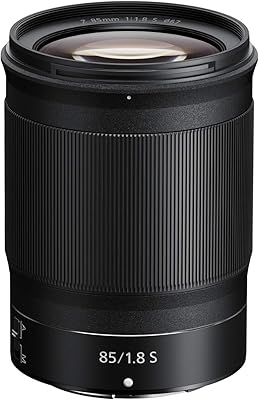
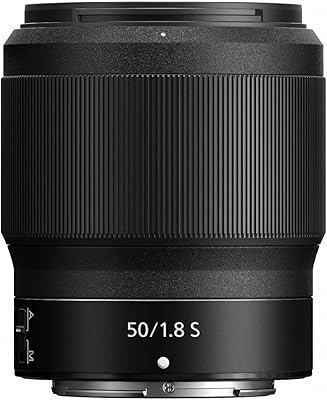
Nikon NIKKOR Z 50mm f/1.8 S Prime Lens
86%
97%
Optical Sharpness
93%
Bokeh Quality
89%
Autofocus Performance
91%
Low-Light Capability
88%
Build Quality
More
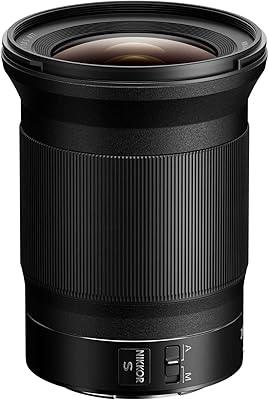
Nikon NIKKOR Z 20mm f/1.8 S Lens
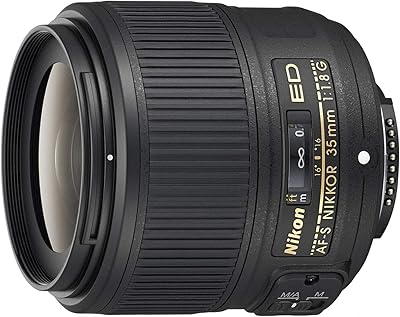
86%
94%
Optical Sharpness
91%
Build Quality
88%
Autofocus Performance
89%
Flare & Ghosting Control
67%
Value for Money
More
Nikon NIKKOR Z 85mm f/1.8 S Lens
86%
96%
Optical Sharpness
93%
Bokeh Quality
88%
Autofocus Performance
91%
Build Quality
84%
Weather Sealing
More
Nikon AF-S DX NIKKOR 35mm f/1.8G Lens
82%
92%
Optical Sharpness
89%
Low-Light Performance
86%
Autofocus Speed
84%
Bokeh Quality
74%
Build Quality
More
Nikon AF-S NIKKOR 35mm f/1.8G ED Lens
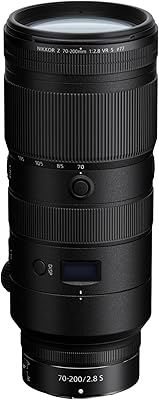
85%
91%
Image Sharpness
88%
Autofocus Speed
93%
Low-Light Performance
85%
Portability/Size
82%
Build Quality
More
Nikon NIKKOR Z 70-200mm f/2.8 S Telephoto Zoom Lens
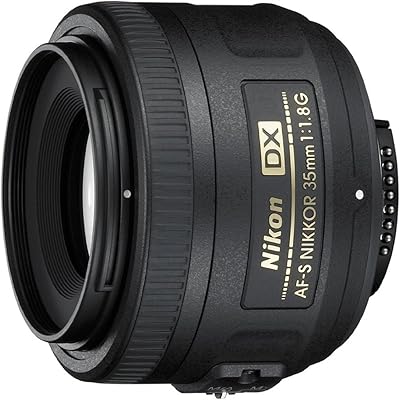
84%
96%
Optical Sharpness
93%
Autofocus Performance
91%
Image Stabilization
94%
Build Quality
89%
AF Motor Noise
More
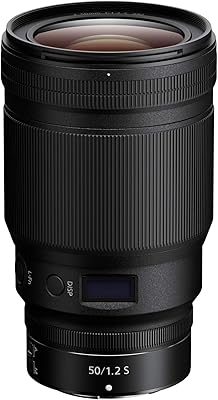
Nikon NIKKOR Z 50mm f/1.2 S
89%
94%
Image Quality
92%
Autofocus Performance
95%
Low-Light Performance
88%
Build Quality
90%
Weatherproof Design
More
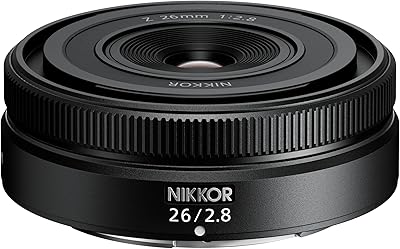
Nikon NIKKOR Z 26mm f/2.8 Pancake Lens
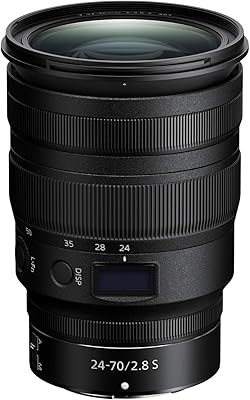
85%
94%
Portability & Size
88%
Image Quality & Sharpness
85%
Build Quality & Durability
92%
Value for Money
90%
Compatibility with Nikon Z Series
More
Nikon NIKKOR Z 24-70mm f/2.8 S Zoom Lens
87%
93%
Autofocus Speed & Accuracy
91%
Video Performance
94%
Optical Image Quality
96%
Build Quality
89%
Weather Sealing
More
Nikon AF-S FX NIKKOR 85mm f/1.4G Lens
86%
95%
Image Quality
93%
Low-Light Performance
87%
Autofocus Speed
89%
Build Quality
90%
Bokeh Quality
More

FAQ

Yes, it mounts natively on APS-C Z-series bodies like the Z50 and Zfc, but the crop factor effectively makes it behave like a roughly 52mm equivalent lens. It will still deliver excellent sharpness and autofocus performance, just with a tighter field of view than you'd get on a full-frame body.

Quite well. The stepping motor is fast enough to track moderately active subjects, and the near-silent operation means it won't startle animals or distract children mid-shot. In low-contrast indoor lighting, there can be brief hesitation before lock, but for typical family or pet shooting situations it performs reliably.

The weather sealing is real and functional, though it is worth understanding it offers protection against light rain, humidity, and dust rather than full submersion or heavy downpour. Most outdoor and event photographers find it genuinely reassuring when conditions turn unexpectedly, but you should still exercise reasonable caution in truly severe weather.

Yes, the front thread is a standard 62mm, so any 62mm screw-in filter you already own — circular polarizers, ND filters, UV protectors — will fit directly without any adapter needed.

The native Z-mount design gives you noticeably faster and more accurate autofocus, full compatibility with eye-detect and animal-detect AF, and better stabilization integration with the body. Adapted F-mount lenses can work well for static subjects but often struggle with tracking, and you lose some of the seamless body-lens communication that makes the Z system work at its best.

Many users find it genuinely useful once they assign it to aperture or exposure compensation, since it allows quick adjustments without moving a thumb to the camera body. The downside is it has no click detents by default, so it can be nudged slightly during casual handling — something worth being aware of if you are particular about accidental setting changes.

The out-of-focus rendering is smooth and pleasant, with circular highlights thanks to the nine rounded blades. Background separation is naturally less extreme than what an f/1.4 prime produces at the same distance, but for a 35mm focal length the results are genuinely attractive for portraits and environmental shots where you want some context behind the subject.

There is mild barrel distortion at 35mm, as is typical for this focal length, but it is well controlled and most editing software automatically applies the correct lens profile to correct it. For casual architectural work it is not an issue at all, though dedicated architectural photographers shooting for precision output may want to apply manual correction for absolute accuracy.

The lens ships with front and rear lens caps, a bayonet lens hood (HB-90), and a soft pouch. No filter is included, and there is no hard case in the standard retail package.

There is some focus breathing — a slight shift in field of view as focus distance changes — but it is well controlled compared to older lens designs. For run-and-gun or documentary video it is unlikely to distract viewers, but if you are doing careful narrative close-up focus pulls and want the cleanest possible result, it is worth testing in your specific shooting style before committing to it as your primary video lens.

Where to Buy