Overview

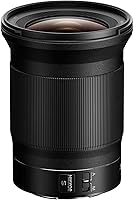
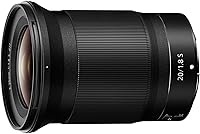
The Nikon NIKKOR Z 20mm f/1.8 S Lens sits near the top of Nikon's S-Line designation — a tier reserved for optics that meet the highest optical and mechanical standards in the Z-mount ecosystem. At f/1.8, this wide-angle prime opens up real creative possibilities in low light: think blue-hour landscapes, dimly lit interiors, or a clear night sky packed with stars. It's built for photographers who won't compromise on corner sharpness or build quality. Landscape shooters, astrophotographers, and anyone who regularly works in unpredictable weather will find a lot to appreciate here. The price reflects its class, and that's worth acknowledging upfront rather than glossing over.

Features & Benefits

The multi-focusing system is one of this lens's more underappreciated qualities — it locks onto subjects quickly and operates nearly silently, which matters whether you're rolling video or stalking wildlife at dawn. Optically, the combination of ED glass and aspherical elements keeps chromatic aberration firmly in check even wide open, and the Nano Crystal Coat does a solid job controlling flare when you're shooting into artificial light or a bright sky. The weather sealing feels genuinely reassuring on cold, damp mornings in the field. A custom control ring on the barrel lets you assign aperture or exposure compensation without hunting through menus. Nine rounded aperture blades produce surprisingly smooth, circular out-of-focus rendering for a 20mm focal length.

Best For

This S-Line lens is a natural fit for astrophotographers — the f/1.8 aperture gathers enough light to render stars as tight points rather than smears, and the optical quality holds in the corners of a full-frame sensor where cheaper lenses often fall apart. Landscape and architecture photographers will value the edge-to-edge sharpness that stays consistent even when stopping down. For travel, the focal length covers street scenes, interiors, and broad establishing shots without feeling limiting. Videographers on Z-series bodies benefit from silent autofocus and a smooth control ring that doesn't introduce jarring steps. Environmental portrait photographers get the perspective to tell a fuller story while keeping their subject clearly anchored in the frame.

User Feedback

Buyers who've put this wide-angle prime through real-world use consistently praise its sharpness at wide-open apertures, well-controlled distortion, and the kind of build that inspires confidence on a cold, windy ridge. Photographers upgrading from the older F-mount 20mm generally feel the switch is justified, pointing to improved corner performance and better integration with in-body stabilization. On the critical side, the lens is not particularly compact — a few users expected something smaller given the focal length, and the included lens hood attracts mild complaints about its bulk. Autofocus earns mostly positive remarks, though a small number of reviewers mention occasional hesitation in extremely dim conditions rather than ordinary low-light shooting.

Pros

  • Sharpness at f/1.8 is genuinely impressive, especially across the full frame into the corners.
  • Weather sealing holds up in cold, wet outdoor conditions without hesitation.
  • Autofocus is fast and nearly silent, making it practical for video work and candid shooting.
  • The Nano Crystal Coat handles backlit and artificial-light scenes with well-controlled flare.
  • Low distortion makes it a reliable choice for architecture and interior work without heavy post-processing corrections.
  • The custom control ring is a meaningful ergonomic addition that speeds up shooting in the field.
  • Nine rounded aperture blades produce smooth, circular bokeh that holds up well for a wide-angle focal length.
  • Compatibility with 5-axis in-body stabilization unlocks handheld shooting in low-light scenarios where a tripod isn't practical.
  • Build quality matches the S-Line reputation — it feels dense and precise without unnecessary bulk.
  • Photographers upgrading from the F-mount 20mm report a clear optical improvement that justifies the transition.

Cons

  • The premium price point is a significant barrier for photographers not shooting professionally or semi-professionally.
  • Physical dimensions are larger than many buyers expect from a 20mm prime, making one-bag travel slightly less practical.
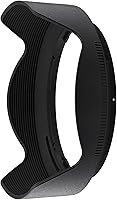
  • The included lens hood is bulky and attracts repeated complaints about its size relative to the lens itself.
  • Autofocus can hesitate in near-darkness — not typical low light, but genuinely extreme dim conditions.
  • No meaningful savings over buying body and lens separately as a kit; pricing flexibility is limited.
  • Casual or occasional wide-angle shooters are unlikely to recoup the investment through actual image quality gains.
  • The filter thread size of 77mm means additional cost if your existing filter set is sized differently.
  • At just over a pound, the weight becomes noticeable during long handheld sessions or multi-lens travel days.

Ratings

The scores below for the Nikon NIKKOR Z 20mm f/1.8 S Lens were generated by our AI system after analyzing verified purchase reviews from buyers worldwide, with spam, incentivized, and bot-flagged submissions actively filtered out before scoring. This wide-angle prime earns strong marks in most technical categories, though a few real-world trade-offs keep it from a perfect run across the board. Both the strengths that make it a standout in its class and the friction points that give genuine buyers pause are reflected honestly here.

Optical Sharpness
94%
Buyers consistently describe sharpness wide open at f/1.8 as a genuine differentiator — not just technically impressive on a chart, but visibly better in the field compared to alternatives. Landscape and astrophotography users in particular note that corner performance on full-frame sensors holds up in ways cheaper lenses simply don't.
A small number of buyers shooting at the extreme edges of a high-resolution sensor report very minor softness at f/1.8 that clears up by f/2.8. It's not a widespread complaint, but perfectionists using high-megapixel bodies may notice it under demanding inspection.
Build Quality
91%
The lens feels dense and precisely engineered in a way that builds confidence before you even take a shot. Photographers who've used it in rain, cold, and dusty trail conditions report no issues, and the weather sealing behaves like a genuine protective feature rather than a marketing claim.
The lens hood, while functional, draws consistent criticism for feeling oversized and somewhat awkward to attach or remove one-handed in the field. A handful of buyers also note the overall size is slightly larger than they expected from a 20mm prime.
Autofocus Performance
88%
For most real-world shooting — moving subjects in mixed light, quick street candids, video work on Z-series bodies — the multi-focusing system is fast and nearly inaudible. Videographers in particular appreciate that it doesn't introduce hunting artifacts or audible motor noise into recorded clips.
In genuinely extreme low-light conditions, a subset of buyers report brief hesitation before the lens locks focus. This is notably different from ordinary dim-light shooting where it performs well, but it's a real pattern worth noting for anyone shooting in near-darkness regularly.
Flare & Ghosting Control
89%
The Nano Crystal Coat earns consistent praise from photographers who shoot toward light sources — urban night scenes, backlit landscapes, or event photography under stage lighting. Most users describe ghosting artifacts as minimal compared to uncoated or standard-coated alternatives at this aperture.
A few buyers shooting with very strong, direct artificial point sources report residual ghosting in specific scenarios, particularly when multiple light sources appear near the frame edge. It's not a consistent complaint, but it surfaces enough to indicate the coating has real but not absolute limits.
Value for Money
67%
33%
For professional and advanced enthusiast photographers who genuinely use a fast wide-angle prime regularly, the optical and mechanical quality deliver a per-use cost that holds up over time. Those who've compared it to third-party alternatives tend to see the premium as justified once they examine edge sharpness and flare behavior carefully.
For casual or occasional shooters, the pricing is genuinely hard to justify against more affordable alternatives that cover most everyday wide-angle needs. This is the most frequently cited friction point in reviews, and it's a legitimate concern for anyone not extracting high-level performance from the lens on a regular basis.
Low-Light Capability
92%
The f/1.8 aperture combined with strong wide-open optical quality makes this a reliable tool for astrophotography, evening travel shots, and indoor environmental work where flash isn't appropriate. Stars render tightly, Milky Way shots resolve with clarity in the frame corners, and noise from pushing ISO is mitigated by needing less of it.
The lens itself performs excellently in low light, but buyers without a Z-series body that supports 5-axis stabilization lose a meaningful part of the system's low-light advantage. The lens has no optical stabilization of its own, so handheld performance at very slow shutter speeds depends entirely on the camera body.
Distortion Control
86%
Architecture and interior photographers note that barrel distortion is impressively low for a 20mm lens, often requiring minimal correction in post-processing compared to competing wide primes. This translates directly into cleaner straight lines on building edges and door frames without heavy geometric adjustments.
Distortion isn't completely absent — some buyers doing precise architectural documentation mention they still apply a small correction in Lightroom or Capture NX-D. In-camera corrections handle it automatically on supported bodies, but those working with raw files and strict geometric requirements will need to account for it.
Bokeh Quality
81%
19%
For a wide-angle lens, the nine rounded aperture blades produce background blur that looks surprisingly smooth and pleasing, which comes up frequently in reviews from environmental portrait photographers. At close focus distances and open apertures, subject separation holds up in a way that makes the lens versatile beyond pure landscape work.
Bokeh at 20mm is physically limited by the focal length — buyers expecting the kind of background separation a 50mm or 85mm prime delivers will be disappointed regardless of the aperture. The rendering is good for its class, but expectations need to be calibrated to what wide-angle optics can realistically achieve.
Size & Portability
72%
28%
Compared to other lenses in the same optical performance tier, the Z 20mm f/1.8 is reasonably compact and balances well on mid-sized Z-series bodies. Travel photographers who use it as a primary wide prime report that it fits comfortably in a shoulder bag alongside one or two other lenses.
Buyers who expected a smaller, more discreet wide prime based on focal length alone frequently mention being surprised by the physical footprint. It is not a pocketable or ultralight lens, and those building a minimal travel kit with strict weight limits will need to account for its 1.11-pound contribution to the bag.
Video Usability
87%
The silent autofocus and smooth, dampened control ring make this S-Line lens a practical choice for Z-series video shooters who need to pull focus or adjust exposure without disrupting a recording. Wildlife documentary-style shooters and event videographers mention the quiet operation specifically as a deciding factor.
The lack of a hard focus stop at infinity can be a minor inconvenience for videographers who rely on manual focus marks for repeatable pulls. A small number of video users also note that focus breathing — a slight shift in focal length as focus distance changes — is present, which can be a consideration for professional scripted production work.
Weather Sealing
88%
Outdoor photographers across landscape, nature, and travel use cases describe the sealing as genuinely reliable rather than a checkbox spec. Reports of the Z 20mm f/1.8 being used in sustained rain and dusty desert conditions without any ill effects come up repeatedly and consistently across the review base.
The weather sealing protects against splashes and dust ingress but does not make the lens submersion-proof or safe in heavy, sustained downpours for extended periods. A small number of buyers who pushed it into truly extreme wet conditions recommend pairing it with a rain sleeve for full-day outdoor sessions in heavy weather.
Compatibility & Ecosystem
90%
Native Z-mount integration means full electronic communication with all current Nikon Z-series bodies, including eye-detection autofocus and in-body stabilization coordination, without any adapter or compatibility workaround. The 77mm filter thread also aligns with a widely used filter ecosystem, reducing the cost of adding polarizers or ND filters.
This lens only natively serves Nikon Z-mount users, so photographers still on F-mount or considering a mirrorless transition are looking at additional adapter investment to use it in the interim. The FTZ adapter makes F-mount bodies compatible, but it adds length and removes the native-mount handling advantages.
Chromatic Aberration Control
87%
Buyers who pixel-peep their files closely — particularly those shooting high-contrast edges in architectural or landscape work — report that lateral chromatic aberration is minimal and often corrected entirely by in-camera profiles or a single click in Lightroom. The combination of ED glass elements handles fringing well for a fast wide prime.
A small number of reviewers using the lens on very high-resolution full-frame sensors note trace longitudinal chromatic aberration wide open in high-contrast scenarios, which requires targeted correction in post. It clears up when stopping down to f/2.8 or narrower, so it's primarily a concern for photographers who need to shoot wide open in demanding lighting.

Suitable for:

The Nikon NIKKOR Z 20mm f/1.8 S Lens is purpose-built for photographers who push into demanding conditions and expect their glass to keep up. Astrophotographers in particular will find the f/1.8 aperture and strong corner sharpness make a real difference when capturing the Milky Way across a full-frame sensor — no soft, smeared stars at the edges. Landscape and architecture photographers who routinely work in rain, mist, or dusty environments will appreciate the weather sealing, which isn't a marketing checkbox here but a genuinely robust construction. Travel photographers looking for one wide prime that handles street scenes, interiors, and sweeping vistas without switching lenses will get strong mileage from the Z 20mm f/1.8. Videographers working on Z-series bodies benefit from the silent autofocus and customizable control ring, which allows smooth, menu-free adjustments mid-shoot. Environmental portrait photographers who want subject and setting to coexist in a single, sharp frame will find the focal length and rendering quality well-suited to that storytelling approach.

Not suitable for:

The Nikon NIKKOR Z 20mm f/1.8 S Lens is not the right choice for every Z-mount shooter, and being honest about that matters. If you primarily shoot portraits in controlled studio conditions or work mostly indoors with reliable lighting, the optical performance here goes well beyond what those scenarios demand — and the premium cost reflects capabilities you simply won't use. Hobbyist photographers who are still developing their eye and technique are unlikely to extract meaningful value from the optical precision this lens offers compared to a more affordable wide-angle alternative. The physical size and weight are also worth noting: this is not a discreet, pocketable lens, and travelers who prioritize a minimal kit may find it tips their bag in the wrong direction. Buyers locked into the F-mount ecosystem and not yet committed to a Z-series body should resolve that transition first before investing at this level. Those prone to shooting exclusively in bright, controlled daylight conditions may find the fast aperture largely redundant in their workflow.

Specifications

  • Focal Length: Fixed 20mm focal length designed for full-frame Z-mount mirrorless cameras, though it can also be used on APS-C Z-mount bodies with a cropped field of view.
  • Maximum Aperture: Opens to f/1.8, allowing strong light-gathering performance in low-light conditions such as night sky and indoor shooting.
  • Minimum Aperture: Stops down to f/16 for scenarios requiring maximum depth of field, such as landscape or architectural work in bright sunlight.
  • Lens Mount: Nikon Z-mount, compatible with all current Nikon Z-series full-frame and APS-C mirrorless camera bodies.
  • Aperture Blades: Nine rounded aperture blades produce circular out-of-focus highlights and smooth background rendering across the aperture range.
  • Optical Construction: Built with 3 ED (Extra-low Dispersion) glass elements and 3 aspherical elements to suppress chromatic aberration and maintain edge-to-edge sharpness.
  • Coating: Nano Crystal Coat is applied to reduce ghosting and flare, particularly in backlit or artificial-light shooting conditions.
  • Autofocus System: Multi-focusing system uses multiple focus groups simultaneously for fast, quiet, and precise autofocus performance suited to both stills and video.
  • Control Ring: A dedicated customizable control ring on the lens barrel can be assigned to aperture, exposure compensation, or manual focus via camera settings.
  • Weather Sealing: Sealed construction at key points protects against dust and moisture intrusion during outdoor use in challenging environmental conditions.
  • Minimum Focus Distance: Achieves focus as close as 0.2m (approximately 0.66 ft), allowing moderately close-up compositions without a dedicated macro lens.
  • Filter Thread: 77mm front filter thread accepts standard circular filters including polarizers and ND filters commonly used in landscape photography.
  • Stabilization: Compatible with 5-axis in-body image stabilization on supported Nikon Z-series bodies; the lens itself does not include optical stabilization.
  • Dimensions: Measures 4.27 x 3.33 x 3.33 inches, making it a mid-sized prime that balances optical performance with reasonable portability.
  • Weight: Weighs approximately 1.11 pounds (around 505g), which is noticeable but typical for a fast, weather-sealed prime of this optical caliber.
  • S-Line Designation: Carries Nikon's S-Line designation, indicating it meets the brand's highest internal standards for optical resolution, aberration control, and build quality.
  • Compatibility: Works with over 360 F-mount Nikkor lenses and teleconverters when used with the Nikon FTZ or FTZ II mount adapter.
  • Model Number: Official Nikon model number is 20093, sold as the USA model with a Nikon USA warranty.

Related Reviews
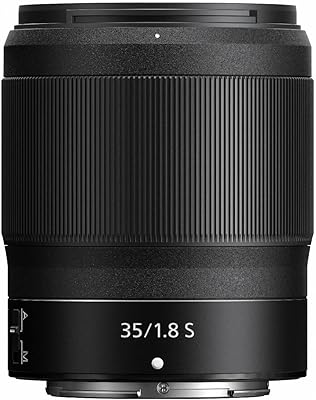
Nikon NIKKOR Z 35mm f/1.8 S Lens
86%
96%
Optical Sharpness
93%
Autofocus Performance
91%
Bokeh & Background Rendering
89%
Build Quality & Weather Sealing
92%
Low-Light Performance
More
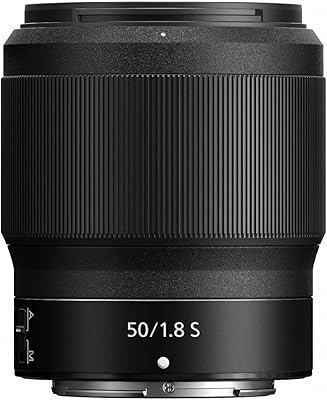
Nikon NIKKOR Z 50mm f/1.8 S Prime Lens
86%
97%
Optical Sharpness
93%
Bokeh Quality
89%
Autofocus Performance
91%
Low-Light Capability
88%
Build Quality
More
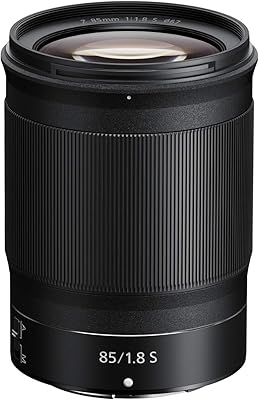
Nikon NIKKOR Z 85mm f/1.8 S Lens
86%
96%
Optical Sharpness
93%
Bokeh Quality
88%
Autofocus Performance
91%
Build Quality
84%
Weather Sealing
More
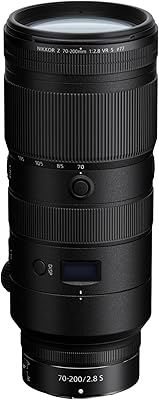
Nikon NIKKOR Z 70-200mm f/2.8 S Telephoto Zoom Lens
84%
96%
Optical Sharpness
93%
Autofocus Performance
91%
Image Stabilization
94%
Build Quality
89%
AF Motor Noise
More
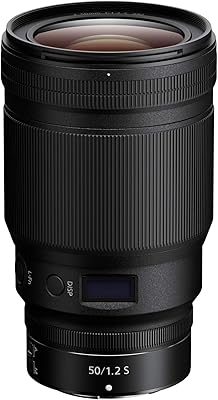
Nikon NIKKOR Z 50mm f/1.2 S
89%
94%
Image Quality
92%
Autofocus Performance
95%
Low-Light Performance
88%
Build Quality
90%
Weatherproof Design
More
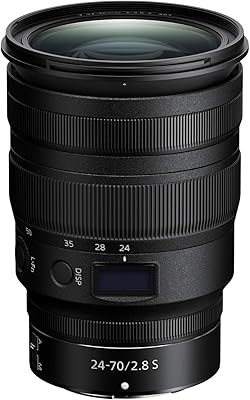
Nikon NIKKOR Z 24-70mm f/2.8 S Zoom Lens
87%
93%
Autofocus Speed & Accuracy
91%
Video Performance
94%
Optical Image Quality
96%
Build Quality
89%
Weather Sealing
More
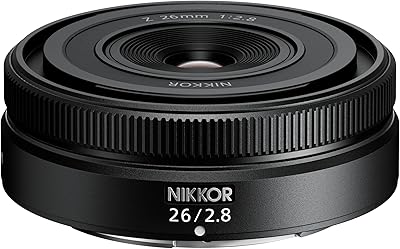
Nikon NIKKOR Z 26mm f/2.8 Pancake Lens
85%
94%
Portability & Size
88%
Image Quality & Sharpness
85%
Build Quality & Durability
92%
Value for Money
90%
Compatibility with Nikon Z Series
More
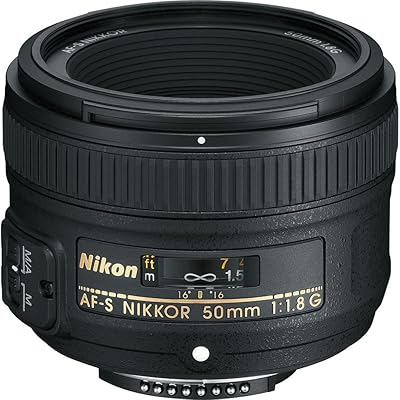
Nikon AF-S FX NIKKOR 50mm f/1.4G Lens
87%
88%
Autofocus Performance
91%
Image Quality & Sharpness
90%
Bokeh Quality
84%
Build Quality
87%
Low-Light Performance
More
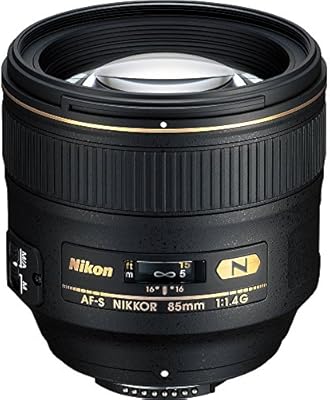
Nikon AF-S FX NIKKOR 85mm f/1.4G Lens
86%
95%
Image Quality
93%
Low-Light Performance
87%
Autofocus Speed
89%
Build Quality
90%
Bokeh Quality
More
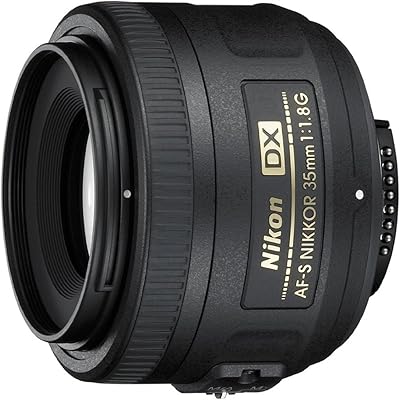
Nikon AF-S NIKKOR 35mm f/1.8G ED Lens
85%
91%
Image Sharpness
88%
Autofocus Speed
93%
Low-Light Performance
85%
Portability/Size
82%
Build Quality
More

FAQ

Yes, it mounts and functions on any Z-mount body. On an APS-C sensor camera, the crop factor effectively makes it behave like a 30mm equivalent, so you lose some of the ultra-wide character. It will still focus and expose correctly, but the field of view will feel less expansive than on a full-frame body.

It is genuinely well-suited for it. The f/1.8 aperture gathers a meaningful amount of light, and the optical formula keeps stars reasonably sharp and round even in the corners of a full-frame sensor — which is where cheaper wide-angle lenses tend to fall apart for night sky work. Coma and chromatic aberration are well-controlled for this focal length and aperture class.

Yes, the front filter thread is 77mm, which is a common size shared by many popular lenses. If you already own 77mm circular polarizers or ND filters, they will fit directly without an adapter.

It operates very quietly, which matters when you're recording with an on-camera or close microphone. The multi-focusing system tracks subjects smoothly and the custom control ring allows manual focus pulls without touching a menu. For run-and-gun video work, it holds up well.

No, the optical stabilization comes from the camera body rather than the lens itself. On compatible Z-series bodies with 5-axis in-body stabilization, the two systems communicate and work together, which is effective for handheld shooting — but the stabilization lives in the body, not the glass.

Most photographers who make the switch notice a real improvement, particularly in corner sharpness wide open and autofocus integration. The native Z-mount connection also means full electronic communication without any adapter dependency. If you're doing serious landscape, astro, or architecture work, the optical gains are tangible.

It's more than a spec sheet checkbox — the construction feels solid and the seals are placed at meaningful points across the barrel. Photographers regularly report using the Z 20mm f/1.8 in rain and dusty environments without issues. That said, weather sealing reduces risk, it doesn't make any lens waterproof.

Via your camera's menu, you can assign the ring to aperture, exposure compensation, ISO, or manual focus, depending on the camera body you're using. It rotates smoothly and is well-damped, making it useful for incremental adjustments without breaking your shooting position.

The Nano Crystal Coat does a solid job here. Ghosting and flare are well-controlled for a lens you might point directly toward light sources during nighttime city shooting or concerts. It's not completely immune — no lens is — but the coating performs noticeably better than uncoated or basic-coated alternatives in those situations.

Yes, a lens hood ships in the box. It does its job optically, but it adds a fair amount of bulk to an already medium-sized lens, and some users find it awkward to handle with one hand. A small number of buyers leave it off for travel to keep the kit more manageable, though it does provide useful physical protection for the front element.

Where to Buy

B&H Photo-Video-Audio
In stock $1,046.95
Willoughby's Photo Emporium
In stock $899.00
Onestop Digital
In stock $1,014.45
The Camera Exchange
In stock $1,046.95
pictureline
In stock $1,046.95
Nelson Photo & Video
In stock $1,046.95