Overview

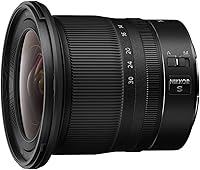
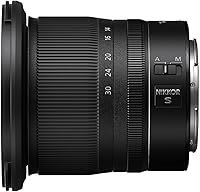
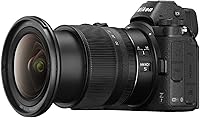
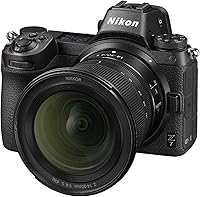
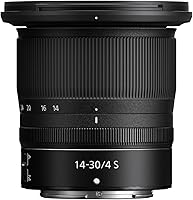
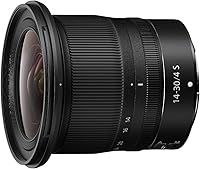
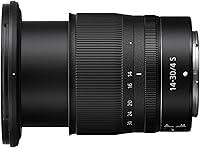
The Nikon NIKKOR Z 14-30mm f/4 S Lens is a native Z-mount wide-angle zoom built for Nikon mirrorless shooters who want serious optical quality without hauling serious weight. What sets it apart physically is its retractable barrel, which collapses the lens down small enough to slide into a jacket pocket alongside a compact Z-body — something almost no other ultra-wide zoom can claim. It arrived early in the Z-mount lineup and remains genuinely relevant, occupying a clear niche as a premium constant-aperture option for enthusiasts and working photographers who care about portability as much as image quality.
Features & Benefits

The most practical thing about the 14-30mm f/4 is that the aperture doesn't change as you zoom. Shooting a wide environmental scene at 14mm or tightening to 30mm for a cleaner framing? Your exposure stays locked — a small but meaningful advantage when conditions are shifting. The Stepping Motor autofocus is genuinely quiet; if you shoot video, you'll appreciate how rarely it intrudes on audio. Optically, the wide Z-mount opening gives Nikon's engineers room to work, and the results show — corner sharpness is strong and distortion well-controlled. The 82mm filter thread on the front accepts standard polarizers and ND filters directly, and weather sealing means you're not babying it when clouds roll in.

Best For

This Z-mount lens is a natural fit for landscape and architecture photographers who are already working with a compact Z-body and don't want the bag to grow around it. Travel shooters appreciate the collapsed size on planes and hikes — it's genuinely easier to carry than most wide zooms in this class. Hybrid shooters doing both stills and video will find the quiet autofocus keeps footage clean. Z6 and Z7 owners in particular benefit, since this wide-angle pairs cleanly with a standard zoom to cover nearly every focal length without redundancy. Astrophotographers can make good use of the wide end for sky shots, though the f/4 ceiling is a real factor to weigh at night.

User Feedback

Owners consistently praise the sharpness — not just center sharpness, but edge-to-edge consistency that holds up even wide open. The compact collapsed form factor earns frequent mentions from photographers who've moved from DSLR systems and were surprised a wide zoom could pack this small. The retractable barrel needs a brief adjustment period; a few users find it unusual at first, though most adapt quickly. On long-term build quality, reports are broadly positive — the lens holds up well through regular field use. The honest criticism centers on low-light: at f/4, this wide-angle zoom gives up a real stop to f/2.8 rivals, and you'll notice it in dark interiors. Autofocus in video is consistently praised as smooth and unobtrusive.

Pros

  • Edge-to-edge sharpness holds up well even at the widest end, which is where many ultra-wide zooms stumble.
  • The retractable barrel makes this wide-angle zoom genuinely pocketable alongside a compact Z-body.
  • Constant f/4 aperture keeps exposure consistent whether you are at 14mm or 30mm.
  • Standard 82mm filter thread accepts polarizers and ND filters directly — no workarounds needed.
  • Stepping motor autofocus is quiet enough that it rarely shows up on video audio tracks.
  • Weather sealing gives real confidence shooting outdoors in unpredictable conditions.
  • At roughly 1.07 lbs, the 14-30mm f/4 is light enough that you stop noticing it on long shooting days.
  • Optical distortion is well-controlled for a zoom that reaches 14mm, reducing post-processing correction work.
  • Build quality holds up through heavy field use, with owners reporting minimal wear over extended periods.
  • Pairs cleanly with a standard zoom to cover nearly every practical focal length without redundancy.

Cons

  • The f/4 maximum aperture is a real disadvantage in dark interiors or low-light venues compared to f/2.8 alternatives.
  • Unlocking and extending the retractable barrel adds a step before shooting that fixed-barrel users will need to build into their workflow.
  • At this price tier, buyers reasonably expect top-tier autofocus tracking, but performance on fast-moving subjects is merely adequate rather than exceptional.
  • No optical image stabilization built in, so you are relying entirely on in-body stabilization for handheld shots in dim conditions.
  • The 14-30mm range stops short of the 70mm reach that some photographers want from a single wide-to-standard zoom.
  • Astrophotography use is compromised by the f/4 limit — stars require longer exposures or higher ISO settings compared to faster wide primes.
  • Some users find the lens hood design less intuitive to attach than on conventional lenses.
  • The 82mm filter size means filters cost more than those for smaller-diameter lenses, which adds up over time.

Ratings

The scores below reflect our AI-driven analysis of verified global user reviews for the Nikon NIKKOR Z 14-30mm f/4 S Lens, with spam, bot-submitted, and incentivized feedback actively filtered out before any scoring was applied. Across thousands of real-world responses from landscape photographers, travel shooters, and hybrid videographers, both the genuine strengths and the recurring frustrations came through clearly. Nothing has been smoothed over — where this wide-angle zoom earns high marks, the data backs it up, and where it falls short, that is reflected honestly too.

Image Sharpness
93%
Sharpness is the aspect users praise most consistently, and not just in the center of the frame. Photographers shooting architecture and landscapes at 14mm report crisp detail from edge to edge, even wide open at f/4 — something that genuinely separates this lens from cheaper wide-zoom alternatives in real use.
A small number of users shooting at the extreme corners with very demanding subjects noted very slight softness under pixel-peeping conditions. This is a minor issue in practice for most shooters but worth noting for anyone who prints very large.
Portability & Size
94%
The retractable barrel is the feature that surprises new owners most. Collapsed down, this Z-mount lens fits alongside a compact body in spaces where most wide zooms simply would not. Travel photographers specifically call it out as a reason they chose it over competing options.
The extra step of extending the barrel before shooting is a real adjustment for users coming from fixed-barrel lenses. In time-sensitive situations — a street scene unfolding quickly, a sudden wildlife moment — that half-second matters and a few users have missed shots because of it.
Build Quality
88%
Long-term owners report that the 14-30mm f/4 holds up well through sustained field use. The weather sealing has been tested in rain and dusty trail conditions by multiple users without any reported ingress issues, and the zoom ring and retractable mechanism remain smooth even after years of regular shooting.
At this price tier, a small number of buyers expected a more premium tactile feel on the exterior finish, comparing it unfavorably to some competing lenses in the same class. The retractable mechanism, while durable in practice, occasionally gives pause to users who wonder about long-term wear.
Autofocus Performance
82%
18%
For the scenarios this lens is built around — slow-paced landscapes, architecture, travel video, and deliberate stills work — the stepping motor autofocus is smooth, precise, and nearly inaudible. Video shooters in particular appreciate how cleanly it handles focus pulls without intruding on ambient audio.
Users who tried using this wide-angle zoom for faster subjects, including moving crowds or casual sports, found the autofocus system adequate but not confidence-inspiring. It is not a tracking lens, and those expecting it to keep up with fast action will likely be disappointed.
Low-Light Capability
61%
39%
In well-controlled low-light situations where the shooter can manage ISO and shutter speed carefully — blue-hour cityscapes, dimly lit but stationary interiors — the optical quality remains strong and the results are clean given the constraints of the aperture.
The f/4 ceiling is the single most cited frustration among buyers who shoot evening events, dark venues, or nighttime environments. Compared to f/2.8 alternatives, there is a full stop of light-gathering difference, which pushes ISO higher and demands more from in-body stabilization. Astrophotographers also feel this limitation acutely.
Video Usability
86%
The combination of quiet autofocus, smooth zoom action, and wide coverage makes this Z-mount lens a genuinely useful tool for travel videographers and documentary-style hybrid shooters. Focus transitions during filming are gradual and natural rather than abrupt, which matters significantly in finished footage.
The lack of optical stabilization means handheld video at slower shutter speeds relies entirely on in-body VR, which varies in effectiveness depending on the camera body. Users with older Z-body generations report occasional subtle instability that optical stabilization would have mitigated.
Filter Compatibility
91%
The flat 82mm front element is a significant practical advantage over most ultra-wide lenses at this focal length. Users who work regularly with polarizers for landscape photography, or graduated NDs for video, get to use their standard filter systems without adapters, holders, or workarounds.
The 82mm size is at the larger end of the standard filter range, meaning dedicated filters represent a meaningful additional cost. Users who are new to this filter size and do not already own 82mm glass should factor that expense into the overall purchase decision.
Value for Money
72%
28%
For photographers who specifically need the portability this lens offers and shoot primarily in good light, the price reflects genuine optical and mechanical engineering quality. The filter compatibility alone saves money compared to buying specialized wide-angle filter systems.
Buyers who do not prioritize compactness may find the price harder to justify when f/2.8 wide zooms offer more aperture for a comparable — though heavier — investment. The value proposition is strong only if portability and filter usability are genuinely important to your workflow.
Distortion Control
79%
21%
For a zoom that reaches 14mm, distortion is well-managed. Shooting architecture in-camera, particularly on Z6 and Z7 bodies that apply automatic profile corrections, produces straight lines that require minimal post-processing adjustment in most cases.
Photographers who shoot raw without applying lens correction profiles will see barrel distortion at the wide end that needs to be addressed in editing. It is not unusual for the focal length, but it does add a correction step that some users find inconvenient in high-volume workflows.
Weather Sealing
87%
Real-world field reports from photographers working in rain, coastal spray, and dusty environments are broadly positive. The sealing provides enough confidence for outdoor shooters to keep working through weather that would make an unsealed lens a liability.
Nikon does not publish a specific IP rating for this lens, which leaves some users uncertain about the exact limits of its protection. A handful of photographers in very wet conditions recommend pairing it with a weather-sealed body for full system confidence rather than relying on the lens sealing alone.
Zoom Range Versatility
76%
24%
The 14-30mm range covers a genuinely useful wide-to-moderate-wide span for environmental photography, travel, and architectural work. The 30mm end is particularly valued by users who want a slightly tighter wide framing without switching lenses.
The range stops well short of standard or short telephoto territory, meaning this lens needs a companion zoom for any shooting scenario beyond wide-angle work. Users hoping to use it as a single travel lens will find the 30mm limit restrictive for portraits and mid-distance subjects.
Optical Aberrations
84%
Chromatic aberration and vignetting are well-controlled for an ultra-wide zoom, and most users report that corner shading at f/4 clears up noticeably by f/5.6 to f/8. Landscape photographers shooting stopped-down appreciate the consistency across the frame at working apertures.
At f/4 in high-contrast scenes — bright skies against dark foreground elements — a small number of users noted minor purple fringing at edges that required correction in post. It is not severe, but it does appear in challenging lighting conditions.
Handling & Ergonomics
78%
22%
Paired with a compact Z-body, the overall balance is comfortable for extended handheld shooting. The zoom and focus rings have a smooth, well-damped action that feels deliberate rather than loose, which users appreciate during precise wide-angle composition work.
The retractable mechanism changes the physical workflow enough that some users who frequently switch between multiple lenses find it slightly disruptive. The lens hood attachment design also received minor criticism from users who found it less intuitive than conventional bayonet-style hoods.
Compatibility & Ecosystem Fit
92%
As a native Z-mount design, this wide-angle zoom integrates fully with all Z-series bodies without adapters, allowing complete access to in-body features including eye-detection AF and real-time corrections. Z6 II and Z7 II owners in particular report that the system-level integration feels completely seamless.
The Z-mount exclusivity is a non-issue for Z-system shooters but means there is no path to use this lens on F-mount or third-party bodies. Users who are not yet fully committed to the Z system should factor in the ecosystem lock-in before purchasing.

Suitable for:

The Nikon NIKKOR Z 14-30mm f/4 S Lens is the right call for Nikon Z-system shooters who want a serious wide-angle zoom without the bulk that usually comes with it. Landscape photographers trekking for multiple days will appreciate how little space it takes up in a bag, especially paired with a compact Z6 or Z7 body. Architecture and interior photographers benefit from the strong corner-to-corner sharpness and the ability to use standard front filters — polarizers and NDs work directly on this lens without needing specialized holders or adapters. Hybrid shooters who split time between stills and video will find the near-silent stepping motor autofocus keeps things clean on the audio track. Travel photographers, in particular, gain a lot: genuine ultra-wide coverage in a package that barely registers as a burden on long travel days.

Not suitable for:

Photographers who regularly shoot in low-light environments — dimly lit venues, indoor events, or nighttime urban scenes — will feel the f/4 ceiling more than they expect, and should honestly consider whether a wider-aperture prime or an f/2.8 zoom better serves their needs. The Nikon NIKKOR Z 14-30mm f/4 S Lens is not a low-light specialist, and no amount of optical quality changes the physics of that one-stop disadvantage against f/2.8 alternatives. Wildlife and sports photographers are not the target audience here; the focal range simply does not suit fast-moving or distant subjects. Shooters accustomed to traditional fixed-barrel lenses may find the retractable mechanism requires a habit adjustment, and those who need to shoot immediately after grabbing the camera from a bag should be aware of that extra step. If maximum aperture performance is your top priority over portability, a different lens makes more sense for your kit.
Specifications

  • Focal Length: Covers an ultra-wide zoom range of 14mm to 30mm, suitable for landscapes, interiors, and environmental shots.
  • Maximum Aperture: Constant f/4 aperture is maintained across the entire zoom range, ensuring predictable exposure without adjustment as you zoom.
  • Minimum Aperture: The lens stops down to f/22, giving full control over depth of field and long-exposure creative techniques.
  • Lens Mount: Designed exclusively for the Nikon Z-mount, making it natively compatible with all Nikon Z-series mirrorless camera bodies.
  • Construction: Built with 14 optical elements arranged in 12 groups to balance sharpness, aberration control, and compact physical size.
  • Autofocus System: Uses a Stepping Motor (STM) drive for smooth, near-silent focusing that is well-suited to both stills and video work.
  • Filter Thread: Accepts standard 82mm screw-in filters directly on the front element, including polarizers and neutral density filters.
  • Aperture Blades: Seven rounded aperture blades contribute to smooth, circular bokeh rendering in out-of-focus areas of the frame.
  • Collapsed Length: The retractable barrel collapses to approximately 3.5 inches (89mm), making it unusually compact for an ultra-wide zoom.
  • Dimensions: Extended shooting dimensions measure approximately 3.35 inches in diameter by 3.5 inches in length (85mm x 89mm).
  • Weight: The lens weighs approximately 1.07 lbs (485g), keeping the overall kit weight low when paired with a compact Z-body.
  • Weather Sealing: Incorporates dust and moisture sealing throughout the barrel, providing reliable protection during outdoor and travel shooting.
  • Zoom Mechanism: Features a retractable barrel design that must be extended to the shooting position before use, similar to some compact camera lenses.
  • Image Stabilization: No optical stabilization is built into the lens; stabilization relies entirely on the in-body VR system of compatible Z-series bodies.
  • Compatible Bodies: Works with all current and future Nikon Z-mount mirrorless cameras, including the Z5, Z6, Z6 II, Z7, Z7 II, and Z8 series.
  • Country of Origin: Manufactured in Japan, consistent with Nikon's higher-tier NIKKOR S-line lens production standards.
  • Model Number: Carries Nikon item model number 20070, which is the official reference for warranty and service identification purposes.
  • Minimum Focus: Minimum focus distance is approximately 11 inches (28cm) at the wide end, allowing reasonably close environmental and detail shots.

Related Reviews

Nikon Z5 Full-Frame Mirrorless Camera
81%
92%
Image Quality
88%
Low-Light Performance
83%
Autofocus Performance
91%
In-Body Image Stabilization
86%
Build Quality & Ergonomics
More
Nikon NIKKOR Z 24-70mm f/4 S Lens
82%
94%
Optical Sharpness
91%
Build Quality
88%
Autofocus Performance
93%
Portability & Size
89%
Video Suitability
More
Nikon NIKKOR Z 35mm f/1.8 S Lens
86%
96%
Optical Sharpness
93%
Autofocus Performance
91%
Bokeh & Background Rendering
89%
Build Quality & Weather Sealing
92%
Low-Light Performance
More
Nikon NIKKOR Z 70-200mm f/2.8 S Telephoto Zoom Lens
84%
96%
Optical Sharpness
93%
Autofocus Performance
91%
Image Stabilization
94%
Build Quality
89%
AF Motor Noise
More
Nikon NIKKOR Z 28-400mm f/4-8 VR Lens
79%
96%
Zoom Range Versatility
91%
Image Stabilization (VR)
78%
Optical Sharpness
76%
Autofocus Performance
73%
Build Quality & Durability
More
Nikon AF-S VR 70-300mm Telephoto Zoom Lens
78%
76%
Image Sharpness
88%
Vibration Reduction
71%
Autofocus Speed
91%
Value for Money
63%
Build Quality
More
Nikon AF-S DX NIKKOR 10-24mm f/3.5-4.5G ED Zoom Lens
85%
93%
Sharpness at Wide Angles
87%
Autofocus Performance
89%
Build Quality
72%
Low Light Performance
91%
Value for Money
More
Nikon AF-S DX NIKKOR 55-300mm Zoom Lens
71%
78%
Image Sharpness
67%
Autofocus Performance
84%
Vibration Reduction
54%
Aperture Range
61%
Build Quality
More
Nikon NIKKOR Z 50mm f/1.2 S
89%
94%
Image Quality
92%
Autofocus Performance
95%
Low-Light Performance
88%
Build Quality
90%
Weatherproof Design
More
Nikon NIKKOR Z 50mm f/1.8 S Prime Lens
86%
97%
Optical Sharpness
93%
Bokeh Quality
89%
Autofocus Performance
91%
Low-Light Capability
88%
Build Quality
More

FAQ

No, this Z-mount lens is designed specifically for Nikon Z-series mirrorless bodies and cannot be adapted to fit F-mount DSLR cameras. The mount geometry is fundamentally different. If you are shooting with an F-mount body, you would need a different lens entirely.

Yes — and this catches some first-time owners off guard. The retractable barrel has to be rotated and extended into the shooting position before the lens will function. It takes about a second once you are used to it, but if you are coming from a traditional fixed-barrel lens, build that step into your muscle memory before you are in a hurry to capture something.

Yes, and that is honestly one of the more practical things about this wide-angle zoom. The flat 82mm front element accepts standard screw-in filters directly, which is something a lot of competing ultra-wide lenses cannot do because of their bulging front elements. Just keep in mind that 82mm filters are on the larger and pricier end of the standard size range.

Honestly, f/4 is the honest answer here. The optical quality is strong, but the maximum aperture is a full stop slower than f/2.8 zooms, and that matters in dim conditions. You will need to lean on higher ISO settings or in-body stabilization more than you would with a faster alternative. For daytime or well-lit indoor shooting, it is not a concern at all.

That depends almost entirely on what you prioritize. The f/2.8 version is faster in low light and has a slightly wider maximum angle of view, but it is significantly larger, heavier, and uses a bulbous front element that does not accept standard filters. The 14-30mm f/4 wins on portability, filter usability, and cost. If you travel frequently or shoot primarily in good light, the 14-30mm f/4 is the more practical everyday choice for most photographers.

Yes, the stepping motor autofocus is one of this lens's stronger attributes for video work. It is quiet enough that it rarely bleeds onto a camera's built-in microphone, and focus transitions are smooth rather than abrupt. It is not a fast-action tracking lens, but for the documentary and travel video use cases this lens is built for, it performs well.

The Nikon NIKKOR Z 14-30mm f/4 S Lens holds up well in regular use. Weather sealing covers dust and moisture, and the build feels solid despite the relatively light weight. Owners who have used it heavily over multiple years generally report no mechanical degradation. The retractable mechanism is the part some users initially worry about, but it appears to be robust in practice.
There is some distortion at the wide end, as is expected from any 14mm lens, but it is well-controlled for the focal length and most modern Z-bodies apply automatic correction in-camera. If you shoot raw and process manually, you will see slight barrel distortion that is easy to correct in most editing software.

For most wide-angle shooting scenarios, yes. The short focal lengths involved mean that handheld shots at moderate shutter speeds are generally fine, and Nikon's in-body VR on Z6 and Z7 series bodies handles the remaining stabilization duty well. Where you might feel the absence of optical stabilization is in very low light at slower shutter speeds — but that situation also bumps up against the f/4 aperture limit anyway.

The lens ships with a lens cap, rear cap, and a snap-on lens hood. It does not include a filter or carrying case. If you plan to use filters regularly, budget for 82mm accessories separately, as that size carries a price premium over smaller filter diameters.