Overview

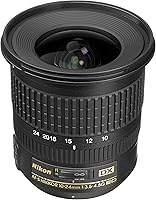
The Nikon NIKKOR 10-24mm f/3.5-4.5G ED Wide-Angle Lens is Nikon's dedicated ultra-wide zoom built specifically for DX-format DSLR shooters, and it has held its ground as a premium optic in this category since its release in 2009. On a crop-sensor body, the focal range translates to a 15-36mm full-frame equivalent — wide enough to pull in sweeping landscapes but not so extreme that every shot becomes a novelty. That kind of practical versatility is rare at this end of the focal length spectrum. Ultra-wide photography does come with trade-offs: you will manage distortion, and low-light shooting gets trickier as you zoom in. Still, for Nikon DX shooters serious about wide-angle work, few native options match its longevity and relevance.
Features & Benefits

The Silent Wave Motor is one of the first things you notice in practice — autofocus is quiet enough for discreet street shooting and reliable enough for fast-moving travel scenarios, though it is not the absolute fastest AF system available. ED glass keeps color fringing well under control across the zoom range, which matters when you are printing large or pushing contrast in post. Aspherical elements do meaningful work at 10mm, where lesser lenses fall apart with coma and smearing toward the edges. The close-focusing capability — down to roughly 0.8 feet — is a genuine bonus, and the 77mm filter thread means your existing polarizers and NDs fit without any adapter fuss.

Best For

This wide-angle zoom is a natural fit for landscape and nature photographers who want to fill the frame with towering skies and detailed foregrounds in a single shot. Real estate and architectural shooters will appreciate how 10mm handles a cramped room without the distortion becoming unworkable. Travel photographers carrying a single bag tend to keep the 10-24mm Nikkor as their wide anchor, pairing it with a mid-range zoom rather than juggling multiple primes. DX body owners on a D5600 or D7500 looking to step beyond kit glass will find this a significant optical upgrade. Street photographers also benefit from the quiet autofocus, which draws far less attention in candid situations.

User Feedback

Across more than 500 owner reviews, this DX wide-angle lens holds a 4.6-star average — a score that reflects consistently strong satisfaction built over many years. The recurring praise focuses on sharpness at mid-apertures like f/8, solid build quality that holds up after years of regular use, and autofocus that rarely hunts or misses. On the critical side, barrel distortion at 10mm is a consistent mention — it is correctable in Lightroom or Capture NX, but you need to factor that step into your workflow. The variable aperture also draws some frustration from photographers shooting in dim environments. Compared to third-party alternatives from Tokina and Sigma, long-term owners frequently cite the native Nikon mount and optical consistency as the reason they stayed with this lens.

Pros

  • Silent Wave Motor keeps autofocus quiet enough for candid and documentary shooting without disrupting your subject.
  • ED glass controls chromatic aberration effectively, producing clean color across the full zoom range.
  • Aspherical elements keep edge sharpness and coma noticeably better than many competing wide zooms.
  • The 109-degree field of view at 10mm opens up creative compositions that simply are not possible with standard lenses.
  • A close-focus distance of around 0.8 feet is unusually short for a wide zoom, adding unexpected compositional flexibility.
  • The 77mm filter thread accepts standard screw-on polarizers and NDs with no need for adapters.
  • Build quality has proven durable — long-term owners consistently report the lens holds up well after years of regular use.
  • At 1.01 pounds, this DX wide-angle lens is light enough to carry all day without fatigue.
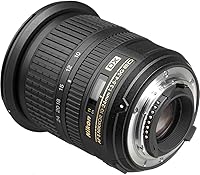
  • Native Nikon F mount ensures full autofocus and exposure communication with compatible DX bodies.
  • A top-1,000 sales rank in SLR lenses after more than 15 years on the market speaks to sustained real-world approval.

Cons

  • Barrel distortion at 10mm is visible and requires post-processing correction for architectural or interior shots with straight lines.
  • The variable aperture — f/3.5 at 10mm dropping to f/4.5 at 24mm — creates exposure inconsistency when zooming in dim conditions.
  • Autofocus, while quiet, is not the fastest available; action photographers may find it hunts in low-contrast situations.
  • Strictly limited to Nikon DX (crop-sensor) bodies — unusable on full-frame FX cameras without severe vignetting.
  • Third-party alternatives from Tokina and Sigma offer overlapping focal ranges at a meaningfully lower cost.
  • No built-in optical stabilization, which matters when shooting handheld in dim interiors at slower shutter speeds.
  • The wide-angle perspective exaggerates foreground elements aggressively, which requires compositional discipline to manage.
  • At this price tier, the absence of weather sealing is a genuine omission for photographers shooting outdoors in unpredictable conditions.

Ratings

The scores below for the Nikon NIKKOR 10-24mm f/3.5-4.5G ED Wide-Angle Lens were generated by our AI system after analyzing hundreds of verified owner reviews sourced globally, with spam, bot-generated, and incentivized feedback actively filtered out. The results reflect the full picture — where this wide-angle zoom genuinely earns its reputation and where real buyers consistently run into friction. Both strengths and limitations are weighted transparently so you can make a confident, informed decision.
Optical Sharpness
88%
Owners repeatedly call out center sharpness at mid-apertures like f/7.1 and f/8 as a genuine standout, particularly for landscape shots where fine detail in foliage and rock texture needs to hold up under close inspection. The ED glass elements do meaningful work here, keeping color fringing under control even in high-contrast scenes like backlit architecture.
Corner sharpness at 10mm wide open draws occasional criticism, particularly from photographers printing large or pixel-peeping at 100 percent. Stopping down to at least f/5.6 brings the edges into line, but that is an extra constraint when light is already limited.
Autofocus Performance
82%
18%
The Silent Wave Motor earns consistent praise for its near-silent operation, which makes a real difference for street photographers working close to subjects or documentary shooters trying to stay unobtrusive. Locking focus in bright outdoor conditions is fast enough for most everyday shooting scenarios without hunting.
In low-contrast or dim environments, the autofocus can hesitate and hunt before committing, which frustrated a portion of reviewers shooting indoors without additional lighting. It is also not among the fastest AF systems in its class, so fast-moving subjects like children or wildlife can occasionally be a challenge.
Build Quality
86%
Long-term owners are notably vocal about durability — multiple reviewers mention using the lens for five or more years across demanding travel and outdoor conditions with no structural issues. The barrel feels solid without being unnecessarily heavy, and the zoom and focus rings move with a reassuring, well-damped action.
The absence of weather sealing is a recurring point of frustration, especially given the price tier and the outdoor use cases this lens is marketed toward. A handful of reviewers specifically mention avoiding using it in light rain or dusty environments as a precaution, which limits its versatility in the field.
Distortion Control
67%
33%
Aspherical elements keep distortion more manageable than many competing ultra-wide lenses, and at focal lengths of 15mm and beyond the results are genuinely clean and usable without correction. For landscape and nature shooting where organic shapes dominate, the distortion is rarely a practical problem.
Barrel distortion at 10mm is the most commonly cited technical criticism across the entire review pool — it is visible in any shot containing strong straight lines like door frames, building edges, or horizon lines near the frame edge. Post-processing correction is effective but adds a mandatory workflow step that some photographers find tedious.
Low-Light Capability
63%
37%
At 10mm and f/3.5, there is enough light-gathering capability for dusk landscapes and interior shooting with a tripod, and the wide angle naturally allows slower shutter speeds than a telephoto would. Some real estate photographers report getting usable handheld interior shots in well-lit rooms without needing additional lighting.
The variable aperture is a genuine frustration for photographers who shoot in mixed or dim light — losing light as you zoom to 24mm means you are constantly recalibrating exposure. Reviewers comparing this DX wide-angle lens to constant-aperture third-party alternatives like the Tokina 11-20mm f/2.8 frequently cite this as the deciding factor against it in low-light work.
Chromatic Aberration
84%
ED glass does its job effectively across the zoom range, and reviewers shooting high-contrast scenes — think bright window frames against dark interiors or white architecture against blue sky — note that color fringing stays well controlled without heavy post-processing. The results hold up at typical web and print output sizes without needing correction at all.
At 10mm in very high-contrast conditions, some lateral chromatic aberration appears at the extreme corners, which becomes more visible when printing large. It is correctable in software, but experienced photographers accustomed to premium prime lenses may find it a minor but noticeable step down.
Value for Money
74%
26%
For Nikon DX shooters who want a native-mount ultra-wide zoom with strong optical performance and reliable autofocus, the price reflects a genuinely capable lens that has held its value and relevance over many years. Buyers who shoot landscapes or real estate regularly report feeling the investment paid off quickly in image quality improvements over kit glass.
At this price point, the lack of weather sealing and optical image stabilization is harder to accept compared to some newer third-party alternatives that offer one or both at a lower cost. Budget-conscious buyers who are not committed to wide-angle shooting as a primary discipline may find the case for this investment harder to make convincingly.
Vignetting
71%
29%
At mid-apertures from f/5.6 onward, corner light falloff becomes negligible for most practical shooting purposes, and many landscape photographers actually welcome a mild natural vignette at the wide end to draw the eye toward the center of the frame. Lens correction profiles in Lightroom handle the rest cleanly.
Shooting wide open at 10mm produces noticeable corner darkening that is visible even on screen without zooming in. Photographers shooting real estate or interior work who need evenly lit frames straight from the camera will consistently need to apply correction in post, adding time to an already processing-heavy workflow.
Zoom Range Versatility
83%
The span from 10mm to 24mm covers more practical ground than many competing ultra-wide zooms that top out around 17mm or 18mm, giving travel photographers and documentary shooters meaningful range without reaching for a second lens. At 24mm on a DX body the equivalent field of view is close enough to a classic street focal length to stay genuinely useful.
Photographers coming from a standard kit zoom may find the 10-24mm range feels narrow in everyday shooting — it is a specialist tool, not an all-day walking-around lens. At 24mm on a DX sensor you are still shooting fairly wide, which limits its usefulness for anything beyond wide-angle or mild wide shooting.
Close-Focus Capability
79%
21%
A minimum focus distance of around 0.8 feet is genuinely unusual for an ultra-wide zoom and gives creative shooters the ability to move close to foreground subjects — flowers, rocks, objects — while still capturing a dramatic wide background behind them. Several landscape photographers specifically cite this as a feature that influenced their purchase decision.
At such close distances and wide angles, perspective distortion becomes very pronounced, which means the close-focus capability works best for deliberate artistic effect rather than natural-looking imagery. Photographers expecting macro-style detail shots at 10mm close focus may find the extreme distortion limits its practical usefulness.
Filter Usability
77%
23%
The 77mm screw-on filter thread is a practical choice that matches the filter size used across many other Nikon lenses, meaning most photographers can use their existing polarizers and ND filters without buying new ones. Reviewers who shoot long-exposure landscapes particularly appreciate not needing a bulky filter holder system.
At 10mm, circular polarizers produce uneven sky gradation across such a wide field of view — an inherent optical physics limitation that no lens in this focal range fully escapes. A few reviewers mention the front element rotates during zoom, which requires readjusting polarizer orientation when changing focal length.
Size and Weight
85%
At just over one pound, this wide-angle zoom is easy to carry in a camera bag alongside other lenses without adding meaningful fatigue on long shooting days. Travel photographers specifically mention appreciating the compact footprint when packing light for landscape trips.
The lens hood, while useful for flare control, adds meaningful length when attached, which some reviewers find awkward when storing the camera in a bag. A small number of users wish the overall barrel were slightly narrower to sit more comfortably on smaller DX bodies like the D3500.
Compatibility and Integration
91%
As a native Nikon F-mount lens, autofocus, exposure metering, and in-camera lens correction all work without friction on any compatible DX DSLR, which third-party alternatives with adapted mounts cannot always match. Owners consistently report that integration with their camera body feels completely native and reliable from day one.
The DX-only limitation is a real long-term consideration — photographers who plan to upgrade to a full-frame DSLR or a mirrorless Nikon Z body will find this lens becomes significantly less useful or requires an adapter. It is a constraint that does not affect current DX shooters but matters for anyone planning their system’s future.
Long-Term Durability
89%
The pattern across long-term reviews is notably consistent: owners who have used this DX wide-angle lens for three to seven years typically report no degradation in optical performance or mechanical reliability. The zoom and focus rings remain smooth after extended use, which is a meaningful indicator of solid internal construction.
Without weather sealing, long-term durability in demanding outdoor conditions depends heavily on how carefully the photographer protects the lens from moisture and dust. A small number of reviewers report minor issues with the zoom ring feeling slightly looser after several years of frequent use, though this appears to be the exception rather than the pattern.

Suitable for:

The Nikon NIKKOR 10-24mm f/3.5-4.5G ED Wide-Angle Lens was built for Nikon DX-format DSLR shooters who are serious about wide-angle photography and want a native-mount optic that does not cut corners. Landscape and nature photographers will get the most out of the 109-degree field of view, which lets you anchor a sweeping sky above a detailed foreground without stitching multiple frames. Real estate and interior photographers working in tight rooms will find the 10mm end genuinely useful — it captures a full space in a single shot without the grotesque fish-eye distortion that cheaper alternatives produce. Travel photographers who prefer one strong wide-angle lens over a bag full of primes will appreciate how the 10-24mm Nikkor covers enough ground to stay useful all day. Street and documentary shooters benefit from the quiet autofocus motor, which lets you work without drawing the attention a louder lens might. DX body owners on cameras like the D5600 or D7500 looking for a meaningful optical step up from their kit glass will find this a rewarding upgrade.
Not suitable for:

If you shoot primarily on a full-frame Nikon body, this DX wide-angle lens is essentially off the table — it is engineered exclusively for crop-sensor cameras and will vignette heavily on an FX sensor. Photographers who regularly shoot in low-light environments without a tripod may find the variable aperture limiting; losing that half-stop as you zoom in is a real inconvenience when light is already scarce. Anyone expecting straight lines straight out of camera at 10mm will be disappointed — barrel distortion at the wide end is noticeable and requires a post-processing correction step that not every shooter wants to build into their workflow. Budget-conscious buyers who are not yet committed to wide-angle shooting as a discipline may find the investment hard to justify, especially when capable third-party alternatives from Tokina or Sigma exist at lower price points. The Nikon NIKKOR 10-24mm f/3.5-4.5G ED Wide-Angle Lens is also not the right tool for portrait work, sports, or any shooting style that benefits from compression — it is a specialist optic that rewards photographers who know exactly why they need it.

Specifications

  • Focal Length: Covers a 10-24mm zoom range, equivalent to approximately 15-36mm on a full-frame body when used on a Nikon DX crop-sensor camera.
  • Max Aperture: Maximum aperture of f/3.5 is available at the 10mm end of the zoom range.
  • Min Aperture: Maximum aperture narrows to f/4.5 at the 24mm end, reflecting the variable aperture design.
  • Lens Mount: Nikon F mount, engineered exclusively for DX-format (crop-sensor) DSLR bodies and not recommended for full-frame FX cameras.
  • Autofocus: Silent Wave Motor (SWM) drives autofocus operation, producing quiet and generally reliable focusing performance across compatible Nikon DX bodies.
  • Lens Elements: Optical construction incorporates ED (Extra-low Dispersion) glass elements alongside aspherical elements to reduce chromatic aberration, coma, and edge distortion.
  • Picture Angle: Delivers a picture angle ranging from 109 degrees at 10mm down to 61 degrees at 24mm.
  • Min Focus Distance: Minimum focusing distance is approximately 0.8 feet (24cm), which is unusually short for an ultra-wide zoom lens.
  • Filter Thread: Accepts 77mm screw-on filters, including standard polarizers and neutral density filters, without requiring any adapter.
  • Dimensions: The lens body measures 3.43 inches in length by 3.27 inches in diameter, making it compact for its focal range.
  • Weight: Weighs 1.01 pounds (approximately 460g), which is manageable for all-day handheld shooting.
  • Manufacturer: Designed and manufactured by Nikon, a company with a long-established reputation in professional optics.
  • Release Date: First made available in April 2009, and has remained in active production continuously since then.
  • Model Number: Nikon model number 2181; Amazon Standard Identification Number (ASIN) is B0026FCKC8.
  • Filter Type: Compatible with screw-on filter accessories only; no drop-in or rear filter slot is present.
  • Sales Ranking: Holds a Best Sellers Rank of approximately #1,014 in the SLR Camera Lenses category on Amazon.
  • User Rating: Carries an average rating of 4.6 out of 5 stars based on more than 508 verified owner ratings.
  • Stabilization: No optical image stabilization (VR) is built into this lens; stabilization relies entirely on the camera body or shooting technique.
  • Weather Sealing: No weather or dust sealing is included in the lens construction, so caution is advised in wet or dusty environments.
  • Discontinuation: As of the most recent product listing data, this lens has not been discontinued by Nikon and remains available new.

Related Reviews
Tamron 10-24mm f/3.5-4.5 SP Di II LD Aspherical (IF) Lens for Nikon
85%
87%
Image Quality
82%
Autofocus Speed
80%
Build Quality
91%
Portability
70%
Low-Light Performance
More
Nikon AF-S VR 70-300mm Telephoto Zoom Lens
78%
76%
Image Sharpness
88%
Vibration Reduction
71%
Autofocus Speed
91%
Value for Money
63%
Build Quality
More
Nikon AF-S DX NIKKOR 55-300mm Zoom Lens
71%
78%
Image Sharpness
67%
Autofocus Performance
84%
Vibration Reduction
54%
Aperture Range
61%
Build Quality
More
Nikon Z5 Full-Frame Mirrorless Camera
81%
92%
Image Quality
88%
Low-Light Performance
83%
Autofocus Performance
91%
In-Body Image Stabilization
86%
Build Quality & Ergonomics
More
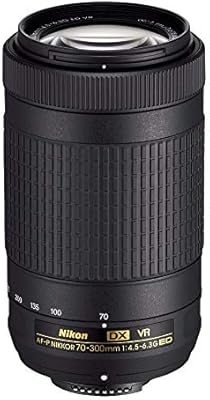
Nikon AF-P DX NIKKOR 70-300mm Telephoto Lens
78%
91%
Autofocus Performance
78%
Image Sharpness
86%
Vibration Reduction (VR)
47%
Camera Compatibility
72%
Build Quality & Handling
More
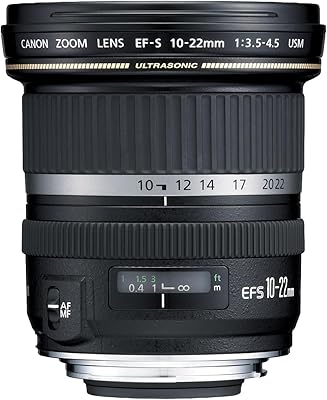
Canon EF-S 10-22mm f/3.5-4.5 USM Wide-Angle Lens
80%
88%
Image Sharpness
91%
Autofocus Performance
84%
Build Quality
63%
Distortion Control
67%
Chromatic Aberration
More
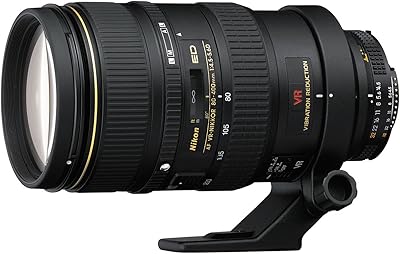
Nikon 80-400mm f/4.5-5.6D VR Telephoto Lens
70%
83%
Optical Quality
51%
Autofocus Speed
81%
Vibration Reduction
72%
Build Quality
78%
Value for Money
More
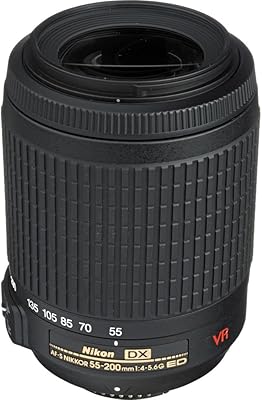
Nikon 55-200mm f/4-5.6G VR Telephoto Zoom Lens
78%
91%
Value for Money
78%
Image Sharpness
88%
Vibration Reduction
73%
Autofocus Speed
62%
Build Quality
More
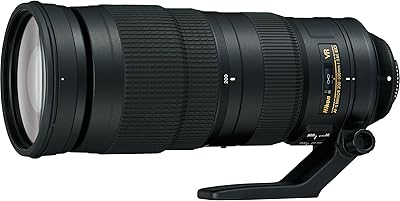
Nikon AF-S FX NIKKOR 200-500mm f/5.6E ED Vibration Reduction Zoom Lens
83%
91%
Image Quality
88%
Vibration Reduction
82%
Autofocus Speed
85%
Build Quality
78%
Ease of Use
More
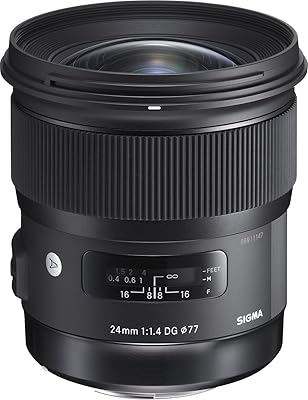
Sigma 24mm f/1.4 DG HSM Art Lens for Nikon F
88%
94%
Optical Performance
93%
Low-Light Performance
90%
Build Quality
86%
Ease of Use
74%
Weight and Portability
More

FAQ

Technically it will mount, but it is not designed for full-frame use. On an FX body, you will get heavy vignetting at most focal lengths because the image circle is only large enough to cover a DX sensor. Some shooters use it in DX crop mode on a full-frame body, but that defeats the purpose of owning a full-frame camera. This is genuinely a DX-only lens.

It is noticeable, especially when photographing subjects with strong straight lines like building facades or horizon lines. That said, it is entirely correctable in post-processing software. Lightroom and Nikon’s Capture NX-D both have built-in lens profiles for this lens that apply distortion correction automatically in one click. If you shoot JPEGs in-camera on a compatible Nikon body, some distortion correction may be applied automatically as well.

The Silent Wave Motor is reliable and quiet, which makes it excellent for street and documentary shooting where discretion matters. It is not the fastest AF system around, and it can hunt a little in very low-contrast or dim situations. For casual motion and street work it performs well, but if you are regularly shooting fast action sports, a lens optimized for that purpose would serve you better.

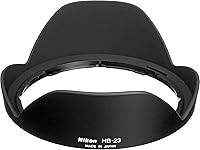
Yes, Nikon includes the HB-23 bayonet lens hood in the box. It is designed specifically for this lens and helps reduce flare when shooting into bright light sources like the sun, which is a common scenario for landscape photographers using this wide-angle zoom.

Yes, the 77mm filter thread accepts standard screw-on circular polarizers with no adapter needed. Keep in mind that at 10mm the field of view is so wide that a polarizer may produce uneven sky gradation across the frame, which is a general limitation of using polarizers on ultra-wide lenses rather than a flaw specific to this DX wide-angle lens.

The Tokina 11-20mm f/2.8 has a meaningful advantage in low-light situations thanks to its constant f/2.8 aperture, which this lens cannot match. However, the 10-24mm Nikkor offers a longer reach at 24mm, which adds more everyday usability, and many users prefer the native Nikon mount for seamless communication with their camera body. If low-light shooting is your priority, the Tokina is worth serious consideration. If you want more versatility across a wider zoom range, the Nikon is the stronger all-rounder.

It is one of the better options available for real estate shooting on a Nikon DX body. At 10mm you get enough coverage to capture a full room in a single frame, and the image quality is clean enough for professional listing photos. You will want to correct distortion in post to keep walls and door frames from bowing, but that is standard practice in architectural photography regardless of which wide-angle lens you use.

Some light falloff in the corners is present when shooting wide open at 10mm, which is common for lenses in this focal range. Stopping down to f/5.6 or f/8 largely eliminates it. Most editing software can correct residual vignetting quickly using the lens profile, and for landscapes shot at smaller apertures it is rarely a practical concern.

It works with all current and recent Nikon DX-format DSLR bodies that use the Nikon F mount, including the D3500, D5600, D7500, D500, and older models like the D90 and D7200. Full autofocus and exposure control are supported across compatible bodies without needing any firmware tricks or manual workarounds.

For DX DSLR shooters, yes — the optics are still competitive and the native Nikon mount is a genuine advantage over third-party alternatives. That said, if you are considering moving to a mirrorless system like Nikon Z in the near future, it is worth factoring that into your decision since this lens requires a mount adapter to work on Z-series bodies. For someone staying with a DX DSLR, the longevity of this wide-angle zoom in the market is a good sign rather than a red flag.