Overview

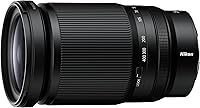
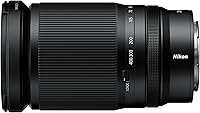
The Nikon NIKKOR Z 28-400mm f/4-8 VR Lens arrived in early 2024 answering a request Z-mount shooters had been making for years: one lens capable of handling cityscapes, portraits, and distant wildlife without turning your bag into a burden. Covering a 14.2x zoom range, it replaces what would otherwise be two or three separate lenses. At roughly 1.6 lbs, it earns the title of lightest in its class — and that genuinely matters when you're on your feet all day. The price is substantial, but measured against building out a comparable multi-lens kit, the math becomes more reasonable for many photographers.
Features & Benefits

What makes this all-in-one Z-mount lens stand out isn't just the focal range — it's how thoughtfully it handles the practical side of shooting. The 5.0-stop VR system works confidently on its own, and when paired with a compatible Z body, Synchro VR can push stabilization to 5.5 stops — a real advantage for handheld work at longer focal lengths. The lens also focuses surprisingly close at the wide end, useful for detail shots you wouldn't typically expect a zoom to manage. For video, the linear MF drive delivers smooth, predictable focus pulls rather than the jumpy response that frustrates videographers on lesser glass.

Best For

This superzoom lens was clearly built with the traveling photographer in mind — someone who wants genuine reach without managing multiple bodies or bags. It also suits casual wildlife and sports shooters who can accept a variable aperture in exchange for not swapping glass in the field. Video creators will find the zoom and focus control satisfying for run-and-gun work. That said, if you're shooting fast erratic subjects in low light at full telephoto, f/8 is a real constraint, not a minor footnote. Buyers who prize versatility and convenience over chasing absolute optical perfection will feel right at home with the 28-400mm.

User Feedback

With a strong overall rating across over a hundred reviews, this superzoom lens earns consistent praise for its convenience, VR reliability, and sharpness through the mid-range focal lengths. Experienced users are candid about the trade-offs: some softness and chromatic aberration appear at the extreme telephoto end, which is expected for a lens of this design — not a defect, just physics. Autofocus handles casual wildlife and street shooting well, though it can struggle tracking fast, unpredictable subjects. The recurring note in critical reviews isn't buyer's remorse; it's simply an honest acknowledgment that one lens can't cover every scenario without compromise.

Pros

  • Covers an extraordinary focal range in a single lens, eliminating the need to carry and swap multiple pieces of glass.
  • At roughly 1.6 lbs, this superzoom lens is meaningfully lighter than comparable multi-lens kits covering the same range.
  • VR stabilization performs reliably in real handheld shooting conditions, helping recover sharp frames at longer focal lengths.
  • Native Z-mount integration ensures full autofocus, EXIF, and in-camera correction support without adapters.
  • Close-focus capability at the wide end opens up detail and near-subject shots most travel zooms simply cannot attempt.
  • Linear MF drive makes smooth, cinematic focus pulls accessible without additional follow-focus hardware.
  • The 14.2x zoom range genuinely handles landscapes, portraits, wildlife, and street in a single outing.
  • Compatible Z bodies unlock Synchro VR, pushing stabilization to a level that makes handheld telephoto work far more consistent.
  • Ranked among the top sellers in its lens category, with a strong satisfaction rate across a broad, verified buyer base.

Cons

  • At maximum telephoto, f/8 is a hard aperture ceiling that limits usability in anything short of good natural light.
  • Autofocus tracking struggles with fast, erratic subjects — burst sports and birds in unpredictable flight expose real limitations.
  • Chromatic aberration at longer focal lengths requires attention in post, especially for raw shooters without automatic correction profiles.
  • Bokeh rendering is inconsistent across the zoom range and can appear restless around specular highlights at telephoto settings.
  • Zoom ring creep has been noted by some users when carrying the lens pointed downward for extended periods.
  • Synchro VR — a headline feature — is locked out on entry-level Z bodies, creating an uneven experience across the system.
  • Corner sharpness at the wide end falls off noticeably, which matters for architecture and landscape photographers who pixel-peep edges.
  • The price is a significant commitment for a lens that still carries optical trade-offs inherent to the superzoom category.
  • Background separation is modest compared to what a fast prime or dedicated telephoto would deliver at similar focal lengths.

Ratings

The Nikon NIKKOR Z 28-400mm f/4-8 VR Lens has been scored across key performance and usability categories by our AI system, which analyzed verified global buyer reviews while actively filtering out incentivized, bot-generated, and duplicate feedback. Scores reflect the real distribution of praise and frustration found across hundreds of ownership experiences — not a sanitized average. Both the strengths that make this all-in-one Z-mount lens genuinely compelling and the limitations that give thoughtful buyers pause are represented transparently below.
Zoom Range Versatility
96%
Owners consistently describe this as the lens that finally lets them leave the rest of their bag at the hotel. Being able to frame a wide environmental shot and then pull to a distant bird or athlete without touching a second body is something reviewers return to repeatedly as the core reason they bought it.
At the extreme telephoto end, the effective reach comes with noticeable optical trade-offs — some users note that images at maximum zoom require more post-processing sharpening than they anticipated, particularly in lower-contrast scenes.
Image Stabilization (VR)
91%
The in-lens stabilization draws strong praise from handheld shooters who report confidently capturing sharp frames at focal lengths where camera shake would normally be a serious obstacle. Travelers shooting in dim museum interiors or at dusk find the VR system notably reliable without needing to brace against a wall.
Users with older or entry-level Z bodies cannot access the Synchro VR mode, meaning stabilization maxes out at the lens-only level. A handful of reviewers also note occasional hunting or micro-jitter during slow panning video shots.
Optical Sharpness
78%
22%
Through the middle of the focal range — roughly wide through short telephoto — users describe results as genuinely impressive for a superzoom design. Portrait and street shots in good light frequently require minimal correction, and reviewers upgrading from kit lenses are often pleasantly surprised.
Sharpness predictably softens toward the 400mm end, and corner performance at wide angles shows some falloff. Chromatic aberration appears in high-contrast edges at longer focal lengths, which is a known characteristic of superzoom optics rather than a manufacturing defect.
Autofocus Performance
76%
24%
For stationary and moderately moving subjects — wildlife perched in trees, pedestrians, slower sports action — autofocus locks quickly and holds well. Reviewers shooting casual outdoor events and travel portraits report reliable acquisition in decent light.
Fast and erratic subjects expose the AF system's limitations more clearly. Tracking a bird in unpredictable flight or a sprinting athlete draws criticism from users who expected performance closer to Nikon's prime or fast-aperture zoom offerings at similar price points.
Build Quality & Durability
73%
27%
The lens feels solid in hand for its weight class, and users describe the zoom and focus rings as smooth without feeling cheap. Several long-term owners report no issues after extended outdoor use including hikes and travel in varied climates.
Weather sealing details draw some skepticism in user discussions, with buyers uncertain about how confidently it can handle rain without additional body-side protection. A few users flagged minor creep in the zoom ring during extended downward-facing carry.
Weight & Portability
93%
For a lens covering this focal range, the weight genuinely surprises users in the best possible way. Photographers who previously carried two or three lenses on day trips describe the 28-400mm as a meaningful quality-of-life improvement, noting less fatigue during long shooting sessions.
Compared to a standard 50mm or a compact prime, this lens is still a physical commitment — new shooters occasionally underestimate its size on a smaller Z body. Balance on very compact bodies can feel front-heavy during extended one-handed shooting.
Video Usability
81%
19%
The linear manual focus drive is a genuine differentiator for video shooters, delivering smooth, cinematic focus pulls without the stepping or lurching that plagues many zoom lenses in this category. Run-and-gun videographers report that the zoom range reduces the need for physical repositioning during shoots.
Breathing at some focal lengths has been flagged by more attentive video users as a minor but noticeable issue during focus pulls on close subjects. Autofocus speed during video can occasionally hesitate before committing to a subject in lower light.
Close-Focus Capability
79%
21%
The ability to focus down to roughly 20cm at the wide end opens up creative options most buyers do not expect from a travel zoom. Food photographers and detail-oriented travelers find genuine utility here for capturing textures and small subjects without switching to a dedicated macro lens.
The close-focus advantage is specific to the wide-angle position — at longer focal lengths, minimum focus distance increases substantially, limiting the close-up versatility that some users assume carries across the entire range.
Low-Light Performance
62%
38%
With VR doing meaningful work, handheld shots in moderately dim conditions — indoor venues, shaded outdoor spaces — come out usable more often than the variable aperture spec might suggest on paper. Users pairing it with higher-ISO-capable Z bodies report reasonable results.
At maximum telephoto, the f/8 aperture is a hard ceiling that cannot be VR'd away. In any genuinely low-light scenario at long reach — evening sports, dusk wildlife — the lens simply cannot gather enough light, and image quality suffers regardless of stabilization quality.
Bokeh & Background Separation
61%
39%
At wider apertures in the mid-range focal lengths, background separation is pleasant enough for casual portraits and travel shots. Users shooting at around 100mm in good light describe backgrounds as clean and undistracting without being clinical.
The variable aperture and superzoom design mean bokeh quality is inconsistent across the range. At telephoto, the rendering can appear slightly nervous or edgy around specular highlights, which is a known trade-off for this lens category rather than a unique flaw.
Distortion & Aberration Control
71%
29%
In-camera and software corrections handle geometric distortion reasonably well at the wide end, and most reviewers shooting with automatic corrections enabled report clean straight lines in architectural shots. Vignetting is manageable and corrects cleanly in post.
Chromatic aberration in high-contrast edges at longer focal lengths requires attention in post-processing, particularly for users who shoot in challenging backlit conditions. Raw shooters without automatic lens correction profiles applied will notice these issues more acutely.
Value for Money
74%
26%
When measured against buying two or three quality Z-mount lenses to cover the same range, the all-in-one convenience calculation works in this lens's favor for many buyers. Frequent travelers and one-bag shooters consistently describe the purchase as justified when accounting for the combined cost alternative.
As a standalone investment, the price is substantial for a lens with a variable aperture that reaches f/8 at the long end. Buyers expecting prime-lens sharpness or fast-aperture performance at this price point will feel underserved — expectation management is critical before purchase.
Ease of Use
88%
The intuitive zoom range and smooth controls make this a genuinely approachable lens for photographers of varying experience levels. Nikon Z system owners report that it integrates naturally with body controls and menu systems without requiring adjustments to established shooting workflows.
New users occasionally need time to develop intuition for when the aperture limitation will impact their shots — particularly when zooming from wide to telephoto mid-scene without checking exposure readouts. This is a learning curve tied to the variable aperture design.
Compatibility & System Integration
89%
Native Z-mount integration means full electronic communication with Nikon bodies, including accurate EXIF data, in-camera corrections, and access to autofocus modes without adapters or workarounds. Users switching from F-mount with adapters describe native mount performance as a noticeable step forward.
Synchro VR — one of the headline stabilization features — is locked to specific compatible body models, which creates a split experience across the Z system user base. Owners of entry-level bodies should verify compatibility before treating Synchro VR as a guaranteed benefit.

Suitable for:

The Nikon NIKKOR Z 28-400mm f/4-8 VR Lens was built for photographers who refuse to let gear logistics dictate their shooting. It is the ideal companion for travelers who want to pack light without sacrificing creative range — think safari trips, city breaks, or national park hikes where swapping lenses isn't practical or safe. Wildlife enthusiasts and birders who shoot in decent daylight will find the reach genuinely useful, especially paired with a stabilized Z body that can activate Synchro VR. Nikon Z owners upgrading from a basic kit lens will experience a dramatic jump in versatility without needing to invest in an entirely new system. Video shooters who need smooth zoom transitions and controlled focus pulls in a single manageable package will also find this all-in-one Z-mount lens worth serious consideration. Hobbyists who want to explore a wide range of photography styles — portrait, landscape, street, casual sports — before committing to specialist glass will get more practical use from this lens than almost any alternative at a similar investment level.
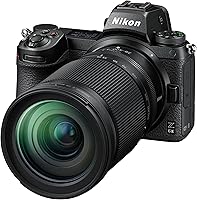
Not suitable for:

The Nikon NIKKOR Z 28-400mm f/4-8 VR Lens is the wrong tool for photographers whose work demands fast, consistent aperture at long focal lengths. If you regularly shoot indoor sports, nocturnal wildlife, or any fast-moving subject under dim conditions, reaching maximum telephoto at f/8 will frustrate you quickly — no amount of stabilization compensates for a shutter speed that cannot freeze motion in low light. Professional photographers or advanced enthusiasts who expect prime-level sharpness and controlled bokeh throughout the entire zoom range will run into the inherent optical compromises that any superzoom design requires. The 28-400mm is also not the right pick for photographers who already own a well-rounded Z-mount kit, since the convenience argument weakens considerably when you have fast primes and dedicated telephoto glass already covering your bases. Buyers who intend to use Synchro VR should confirm their specific body supports it before purchasing, as entry-level Z cameras do not unlock that feature. Finally, anyone whose shooting style leans heavily on subject isolation and creamy background rendering will find the variable aperture and superzoom construction limiting, particularly at focal lengths where faster dedicated lenses would deliver a noticeably different look.
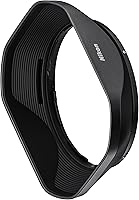
Specifications

  • Focal Length: This lens covers a continuous zoom range from 28mm wide-angle through 400mm super-telephoto, delivering a 14.2x zoom ratio in a single barrel.
  • Maximum Aperture: The maximum aperture varies from f/4 at the wide end to f/8 at full telephoto, which is standard for a superzoom of this range but requires awareness in low-light situations.
  • Mount: Designed exclusively for the Nikon Z-mount system, offering full native electronic communication with all compatible Z-series mirrorless camera bodies.
  • VR Stabilization: The built-in Vibration Reduction system provides up to 5.0 stops of shake compensation when used independently of the camera body.
  • Synchro VR: When paired with a compatible Nikon Z body, Synchro VR combines in-lens and in-body stabilization to achieve up to 5.5 stops of combined compensation.
  • Min Focus Distance: At the widest zoom position, the lens can focus as close as 0.2m, allowing for detail-oriented shots that many travel zooms cannot achieve.
  • Reproduction Ratio: A maximum reproduction ratio of 0.35x at 28mm provides meaningful close-up capability without requiring a dedicated macro lens for casual use.
  • Dimensions: The lens measures approximately 5.57″ in length with a barrel diameter of approximately 3.33″, keeping it compact relative to its zoom range.
  • Weight: At approximately 1.6 lbs (725g), this is the lightest lens in its superzoom class, making all-day handheld use genuinely practical.
  • Manual Focus: A linear MF drive system translates focus ring rotation into smooth, proportional focus movement, making it especially well-suited for video focus pulls.
  • Autofocus: Full autofocus support is included, compatible with Nikon Z-series AF modes including eye-detection and subject tracking on supported body models.
  • Lens Type: Classified as a telephoto superzoom, this lens is designed to replace a multi-lens kit for photographers who prioritize versatility and portability.
  • Filter Thread: The lens accepts standard 77mm screw-in filters, a common size that makes polarizers and ND filters readily available from most accessory brands.
  • Launch Date: This lens became available in March 2024, making it a relatively recent addition to the Nikon Z native lens lineup.
  • Market Ranking: It currently holds a top-15 position in the Mirrorless Camera Lenses category on Amazon, reflecting strong adoption since launch.
  • Model Number: The official Nikon model number for this lens is 20125, useful for verifying authenticity and sourcing compatible accessories or service documentation.
  • Lens Construction: The optical formula includes aspherical and ED (Extra-low Dispersion) elements designed to control chromatic aberration and distortion across the zoom range.
  • Zoom Lock: A zoom lock switch is included to prevent unintentional barrel extension during transport or when carrying the camera pointed downward.

Related Reviews
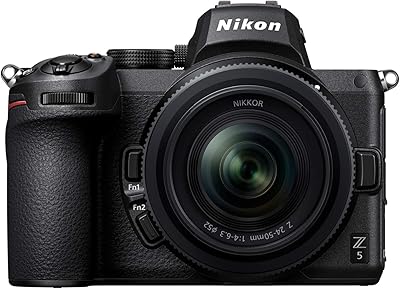
Nikon Z5 Full-Frame Mirrorless Camera
81%
92%
Image Quality
88%
Low-Light Performance
83%
Autofocus Performance
91%
In-Body Image Stabilization
86%
Build Quality & Ergonomics
More
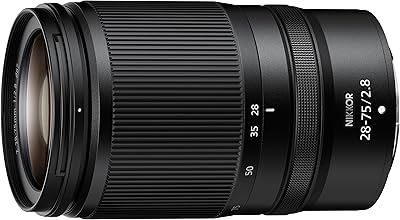
Nikon NIKKOR Z 28-75mm f/2.8 Zoom Lens
85%
83%
Image Sharpness
78%
Build Quality
86%
Autofocus Performance
91%
Video Usability
94%
Portability & Weight
More
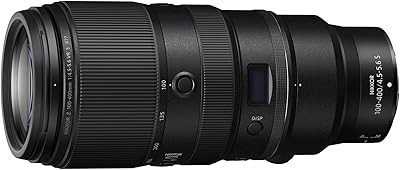
Nikon NIKKOR Z 100-400mm VR S Telephoto Lens
84%
93%
Autofocus Performance
91%
Image Sharpness
89%
Vibration Reduction Effectiveness
88%
Build Quality & Weather Sealing
74%
Value for Money
More
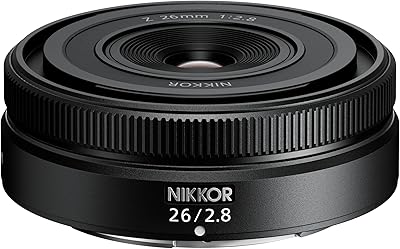
Nikon NIKKOR Z 26mm f/2.8 Pancake Lens
85%
94%
Portability & Size
88%
Image Quality & Sharpness
85%
Build Quality & Durability
92%
Value for Money
90%
Compatibility with Nikon Z Series
More
Nikon NIKKOR Z 35mm f/1.8 S Lens
86%
96%
Optical Sharpness
93%
Autofocus Performance
91%
Bokeh & Background Rendering
89%
Build Quality & Weather Sealing
92%
Low-Light Performance
More
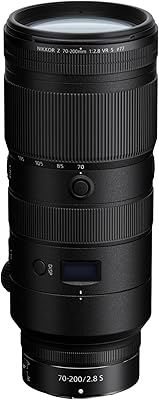
Nikon NIKKOR Z 70-200mm f/2.8 S Telephoto Zoom Lens
84%
96%
Optical Sharpness
93%
Autofocus Performance
91%
Image Stabilization
94%
Build Quality
89%
AF Motor Noise
More
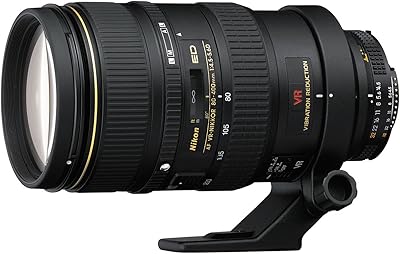
Nikon 80-400mm f/4.5-5.6D ED VR Zoom Lens
84%
88%
Image Quality
92%
Vibration Reduction (VR) Performance
75%
Autofocus Speed
86%
Build Quality
80%
Portability for Telephoto Lens
More
Nikon AF-P DX NIKKOR 70-300mm Telephoto Lens
78%
91%
Autofocus Performance
78%
Image Sharpness
86%
Vibration Reduction (VR)
47%
Camera Compatibility
72%
Build Quality & Handling
More
Nikon AF-S VR 70-300mm Telephoto Zoom Lens
78%
76%
Image Sharpness
88%
Vibration Reduction
71%
Autofocus Speed
91%
Value for Money
63%
Build Quality
More
Nikon AF-S DX NIKKOR 55-300mm Zoom Lens
71%
78%
Image Sharpness
67%
Autofocus Performance
84%
Vibration Reduction
54%
Aperture Range
61%
Build Quality
More

FAQ

No — this lens is built exclusively for the Nikon Z-mount and will not physically attach to F-mount DSLR bodies. If you want to use it, you need a Nikon Z-series mirrorless camera body. There is no adapter that goes the other direction from Z-mount lens to F-mount body.

Synchro VR combines the stabilization built into this lens with the in-body image stabilization (IBIS) found in select Nikon Z bodies, pushing the effective compensation higher than either system achieves alone. Not every Z body supports it — entry-level models like the Zfc or Z30 typically do not, while bodies like the Z6 III and Z8 do. Check Nikon's compatibility list for your specific body before assuming you will have access to the full stabilization ceiling.

It depends entirely on your shooting conditions. In good daylight — outdoor events, wildlife in open fields, travel photography — f/8 at 400mm is perfectly workable, especially with the VR system doing its job. The issue becomes real in dim conditions or when you need to freeze fast motion, because f/8 forces you into slower shutter speeds or higher ISO settings that affect image quality. If you plan to shoot wildlife at dusk or indoor sports at telephoto, this aperture limitation is worth taking seriously.

Honestly, a dedicated 400mm prime or a fast telephoto zoom will outperform the 28-400mm at the long end in terms of sharpness, background rendering, and autofocus speed. That trade-off is the price of having 14x zoom range in one barrel — no superzoom design escapes it entirely. Through the mid-range focal lengths in good light, though, the results are genuinely solid and will satisfy most non-professional users. Think of this lens as optimizing for flexibility rather than peak optical performance at any single focal length.

It handles video better than most zoom lenses in this category, primarily because of the linear MF drive, which makes manual focus pulls smooth and predictable. Autofocus during video is reliable for slower or stationary subjects but can hesitate on fast or erratic movement. Some users have noted minor focus breathing during close-focus pulls, which may matter to more discerning video producers. For run-and-gun travel or documentary-style shooting, it performs very well.

Nikon describes the lens as having dust- and drip-resistance, but it is not rated to the same level of environmental protection as Nikon's professional-tier lenses. In light rain or dusty conditions most users report no issues, but submerging it or shooting in heavy downpours without a rain cover is not advisable. Your camera body's sealing level also plays a role — the full system is only as protected as its weakest link.

The filter thread is 77mm, which is a very common size in photography. Standard polarizing and ND filters from brands like B+W, Hoya, and Tiffen are all widely available in this size. Stacking multiple filters is technically possible but may introduce vignetting at the wide end, so if you plan to use a combination of filters regularly, look for slim-profile versions.

For perched birds, slower-moving animals, or subjects with predictable movement paths, autofocus is reliable and accurate. Where it begins to show limitations is with fast, erratic subjects — a bird changing direction mid-flight or a sprinting animal — where tracking can occasionally lose the subject or hesitate before re-acquiring. If serious wildlife photography of unpredictable fast subjects is your primary use, a faster and more specialized telephoto lens will serve you better.

For most hobbyists, the jump from a kit lens to this all-in-one Z-mount lens will feel substantial. The reach alone opens up shooting scenarios that a standard kit lens simply cannot access, and the improved stabilization makes handheld shooting in varied light much more forgiving. The main consideration is whether you are ready for the price commitment — but if you want one lens to handle the majority of what you shoot across travel, nature, and everyday life, it is a very capable single-purchase solution.

Some users have reported minor zoom creep — the barrel slowly extending under its own weight when the lens is pointed downward for an extended time. Nikon does include a zoom lock switch specifically to address this, which locks the lens at the 28mm position for transport. Using the lock during carry is a good habit, and once you develop it, zoom creep stops being a practical problem for most shooting situations.

Where to Buy

B&H Photo-Video-Audio
In stock $1,146.95
Full Compass Systems
In stock $1,449.95
Deville Camera & Video
In stock $999.99
Willoughby's Photo Emporium
In stock $1,049.00
Bluewater Photo & Video
In stock $1,099.95