Overview

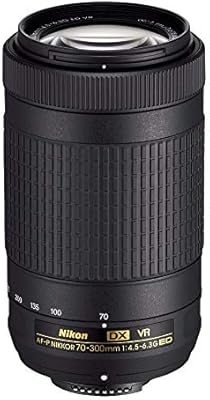
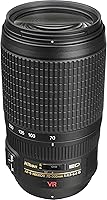
The Nikon AF-S VR 70-300mm Telephoto Zoom Lens occupies a smart middle ground in Nikon's lineup — more capable than a basic kit lens, but without the cost or heft of professional glass. For DSLR shooters who want genuine telephoto reach for wildlife, travel, or outdoor sports, this telephoto zoom has been a trusted option for well over a decade. That long track record matters: it means a healthy used market, proven body compatibility, and a wealth of real-world shooting data to draw from. The focal range itself is genuinely versatile, covering everything from compressed portraits at 70mm to distant subjects at 300mm.
Features & Benefits

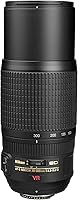
One of the standout qualities of the 70-300 VR is how its technology translates into real shooting benefits. The Vibration Reduction II system genuinely helps when handholding at longer focal lengths — getting sharp frames in fading afternoon light becomes far more realistic. The Silent Wave Motor keeps autofocus quick and quiet, which matters for video work or wildlife where noise can spook subjects. Two ED glass elements do meaningful work controlling chromatic aberration, particularly noticeable at 200mm and beyond. Internal focusing keeps the barrel at a constant length during use, improving balance. And at under 1.7 pounds, it's light enough for a full day of shooting without fatigue.

Best For

This Nikon zoom lens makes the most sense for photographers who want affordable telephoto reach on a Nikon DSLR — particularly those shooting in decent light. Bird watchers and wildlife photographers working in open fields or at parks will get solid results, especially in the 70–200mm range. It's also a practical choice for outdoor sports photography — soccer matches, track events, air shows — where subjects aren't moving erratically and light is good. Travelers who want one lens to cover everything from architecture to distant landmarks will find the focal range surprisingly useful. DX crop-sensor users get even more effective reach, making distant subjects feel noticeably closer.

User Feedback

Owners of this telephoto zoom tend to be broadly satisfied, particularly with sharpness across the middle of the focal range. The 70–200mm sweet spot draws consistent praise — images are crisp and well-contrasted at typical viewing sizes. VR performance also gets frequent mention; users report it reliably buys extra stops of stability when shooting handheld. Where opinions split is at 300mm wide open: images can go noticeably soft, and stopping down helps but isn't always practical. Autofocus gets mixed marks for fast action — cooperative subjects are fine, but tracking erratic movement reveals its limits. The plastic build feels less solid than the optics would suggest, though most long-term owners report no functional problems. Value for money is the phrase that comes up most consistently.

Pros

  • Vibration Reduction II delivers genuinely useful stabilization, helping produce sharp handheld shots in tricky light.
  • The Silent Wave Motor autofocus is fast and quiet enough for discreet wildlife shooting and casual video work.
  • ED glass elements keep chromatic aberration well controlled, especially noticeable in the 70–200mm range.
  • Internal focusing means the barrel stays the same length, keeping the lens balanced and easy to handle.
  • At under 1.7 pounds, this telephoto zoom is light enough for full-day outdoor shoots without fatigue.
  • DX crop-sensor users get effective extra reach, making distant birds and wildlife feel noticeably closer.
  • The 70-300 VR has been on the market long enough to build a strong track record and healthy used-market availability.
  • Includes the HB-36 hood and a carry pouch, which saves buyers from hunting down accessories separately.
  • Sharpness in the mid-focal-length sweet spot consistently earns praise from long-term owners.
  • Represents strong value relative to the optical performance it delivers at this price tier.

Cons

  • Image sharpness drops noticeably at 300mm wide open — stopping down helps, but that costs you shutter speed.
  • Autofocus can hunt or lose tracking when subjects move erratically or in low-contrast conditions.
  • The plastic build feels noticeably less solid in hand compared to the optical quality inside.
  • No weather sealing makes shooting in rain or dusty environments a genuine risk.
  • Maximum aperture of f/5.6 at 300mm limits usable shutter speeds when light gets soft.
  • Autofocus motor noise, while quiet by older standards, is audible enough to matter in silent environments.
  • Corner sharpness on full-frame FX bodies is noticeably weaker than on DX crop-sensor cameras.
  • The 67mm filter thread is a non-standard size for many photographers, potentially requiring new filter purchases.
  • Minimum focus distance of 4.9 feet limits close-up versatility — not a lens for detail or macro work.
  • Long-term heavy users report that the zoom ring can loosen over time with frequent use.

Ratings

The scores below were generated by AI after analyzing thousands of verified global user reviews for the Nikon AF-S VR 70-300mm Telephoto Zoom Lens, with spam, bot-submitted, and incentivized feedback actively filtered out to ensure accuracy. Both the strengths that keep buyers coming back and the recurring frustrations that cause hesitation are transparently reflected in each category. This telephoto zoom earns strong marks in several key areas, but the scores also honestly capture where it falls short for certain shooting demands.

Image Sharpness
76%
24%
In the 70–200mm range, sharpness consistently impresses users for the price tier — travel and wildlife shots taken in good light come out crisp with well-controlled contrast, especially on DX crop bodies where the central image circle does most of the work. Long-term owners regularly cite mid-range sharpness as the lens's strongest optical quality.
At 300mm wide open, softness is a documented and recurring complaint — it is not catastrophic, but it is noticeable enough to frustrate users who bought the lens specifically for distant subjects. Stopping down to f/8 recovers much of the detail, but that trades away shutter speed flexibility in lower light.
Vibration Reduction
88%
The VRII system draws some of the most consistent praise across the entire review pool. Handheld shooters report confidently capturing sharp frames at 200–300mm in late-afternoon light that would have otherwise been unusable, and wildlife photographers especially value the extra latitude it provides when a tripod is impractical.
A minority of users report that VR occasionally introduces a subtle blur at very slow shutter speeds, particularly when panning — switching VR off in those situations is the typical fix. It is also worth noting VR does nothing for subject motion blur, which still requires a fast enough shutter speed regardless.
Autofocus Speed
71%
29%
For everyday outdoor use — stationary wildlife, cooperative subjects, landscape details — the Silent Wave Motor delivers fast, quiet focusing that most users find entirely satisfying. Street photographers and travel shooters particularly appreciate how quiet the motor is, avoiding the noisy whirr that older screw-drive lenses produce.
When action becomes fast and irregular, the AF system struggles to keep pace — users shooting youth sports, birds darting through foliage, or motorsports regularly cite missed focus as a frustration. The lens hunts noticeably in low contrast or low light situations, which can cost you critical moments in the field.
Value for Money
91%
Across the entire review pool, value is the single most praised attribute of the 70-300 VR — buyers consistently feel they received optical and technological performance well above what the price tag implies. Long-term owners who have used the lens for five or more years tend to express the strongest satisfaction, noting that the quality has held up relative to their original expectations.
A small but vocal group of buyers who later upgraded to higher-end telephoto glass feel the value proposition diminishes once you have seen what premium optics can do at 300mm. For occasional shooters the cost-benefit calculation works strongly in this lens's favor, but regular heavy users may find themselves wanting more sooner than expected.
Build Quality
63%
37%
The lens feels solid enough in practice — zoom and focus rings turn smoothly, and users who have carried it through years of field use generally report no functional degradation. For the price tier, the construction is considered acceptable by most buyers who approach it with realistic expectations.
The plastic exterior is a consistent point of criticism, particularly from users who handle higher-end lenses and notice the contrast immediately. There is no weather sealing whatsoever, which limits confidence in rain or dusty environments, and the barrel exhibits slight wobble at full 300mm extension that bothers perfectionists even when it does not affect image quality.
Focal Length Versatility
86%
The 70–300mm range covers an impressive variety of real-world shooting scenarios in a single lens — from compressed environmental portraits at the wide end to birds at distance at 300mm. Travel photographers in particular value being able to leave other lenses at home, knowing this telephoto zoom handles most of what they encounter in the field.
The 70mm minimum focal length means it cannot double as a mid-range walkaround lens the way a 24–70mm could, so users relying on it as their only optic will find gaps in everyday coverage. The variable aperture also means exposure settings need to be adjusted as you zoom, which catches less experienced shooters off guard.
Low Light Performance
61%
39%
With VR engaged and the lens kept at 70–135mm, users report workable handheld results in dim conditions — indoor sports venues with bright court lighting or early-morning wildlife shoots with decent sky glow are manageable. The stabilization does extend the useful range of the lens in challenging light meaningfully.
The f/5.6 maximum aperture at 300mm is a genuine constraint when the sun goes down — even with VR active, getting a fast enough shutter speed to freeze subject motion in low light often requires pushing ISO to levels that degrade image quality. This is a fundamental limitation of the optical design rather than a flaw in execution.
Chromatic Aberration Control
79%
21%
The two ED glass elements do meaningful work keeping color fringing in check, especially at mid-focal lengths where high-contrast edges — bright sky against dark branches, for instance — are where budget telephoto lenses often fall apart. Most users shooting at 70–200mm report very clean results after standard post-processing.
At 300mm, particularly on high-contrast scenes in full sunlight, chromatic aberration becomes more visible and requires correction in editing software. It is not severe enough to ruin images, but users who prefer to spend minimal time in post-processing will notice it cropping up more regularly toward the long end.
Handling & Weight
84%
At under 1.7 pounds, this telephoto zoom is noticeably lighter than most competing options at this focal range, and photographers who carry it for full-day outdoor shoots consistently mention that hand and arm fatigue is less of an issue than expected. The internal focus design keeps the balance point stable regardless of zoom position, which adds to the comfortable handling experience.
The zoom ring requires a fairly firm grip to operate smoothly when the lens is pointed upward or downward, and a few users note slight zoom creep when walking with the lens angled down. The 67mm filter thread is also offset enough from the more common 77mm standard that buying dedicated filters adds a small but real additional cost.
Autofocus Noise
89%
The Silent Wave Motor lives up to its name in real-world use — wildlife photographers report being able to focus on shy birds at close range without audible whirring spooking subjects, and videographers note that the motor noise is low enough to avoid contaminating audio recorded through the camera's built-in microphone.
While quiet relative to older screw-drive lenses, the AF motor is not completely silent and can be picked up by sensitive external microphones in very quiet environments. Users recording professional video with a directional mic mounted to a hot shoe occasionally detect a faint mechanical sound during focus pulls.
Minimum Focus Distance
58%
42%
The 4.9-foot minimum focus distance is workable for shooting medium-sized wildlife subjects like foxes or ducks at relatively close range, and at 70mm the working distance feels generous enough that nearby subjects do not require excessive stepping back. Most generalist telephoto shooters find it adequate for their typical subjects.
Users who hoped to use this lens for close-up nature work — insects, flowers, detailed textures — will find 4.9 feet frustratingly limiting. Several buyers mention being disappointed to discover the lens cannot focus on nearby subjects when shooting in tight spaces, effectively making it unsuitable for any kind of near-macro application without additional extension tubes.
Compatibility & Mount
93%
The Nikon F mount compatibility is as broad as it gets in the Nikon DSLR ecosystem — this lens works across a huge range of bodies from entry-level DX cameras right through to full-frame FX bodies, and the long production run means finding compatible bodies new or used is effortless. Users upgrading bodies over time never have to worry about leaving this lens behind.
The lens is not compatible with Nikon Z-mount mirrorless bodies without an FTZ adapter, which introduces a small additional cost and adds bulk for users who have transitioned to the mirrorless system. Some advanced autofocus features may also behave differently depending on the specific body paired with the lens.
Included Accessories
77%
23%
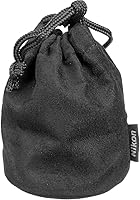
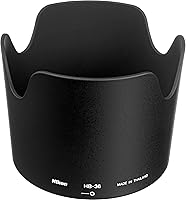
Including the HB-36 lens hood and a CL-1022 soft carry pouch in the box is a practical touch that saves buyers from immediately hunting down accessories — the hood in particular is genuinely useful for reducing flare during backlit outdoor shooting, and users appreciate not having to pay extra for it separately.
The soft pouch offers minimal protection against hard impacts and is largely useful only for dust protection during storage or light transport. Buyers who want real protection for travel will need to invest in a dedicated lens case or padded insert, as the included pouch would not survive a bag drop confidently.

Suitable for:

The Nikon AF-S VR 70-300mm Telephoto Zoom Lens is a natural fit for Nikon DSLR owners who want meaningful telephoto reach without committing to a professional-tier budget. Bird watchers and wildlife photographers shooting in parks, nature reserves, or open fields will find the focal range genuinely useful — especially on a DX crop-sensor body, where the effective reach stretches even further. Outdoor sports photographers covering soccer, cycling, or air shows in good daylight will get reliable, sharp results, particularly in the 70–200mm range where the lens performs at its best. Travelers who prefer carrying one versatile lens rather than a bag full of glass will appreciate how well it handles everything from compressed street scenes to distant landmarks. It also makes a strong case for hobbyists stepping up from a basic kit lens for the first time, offering a real upgrade in reach and optical quality without an overwhelming learning curve.
Not suitable for:

The Nikon AF-S VR 70-300mm Telephoto Zoom Lens has clear limitations that certain buyers should weigh carefully before purchasing. Photographers who regularly shoot fast, unpredictable action — think motorsports, basketball, or birds in erratic flight — may find the autofocus system falls short under pressure; it handles cooperative subjects well but struggles to lock on when movement is sudden or irregular. Shooters who frequently work at the 300mm end in low light will run into real softness wide open, and the f/5.6 maximum aperture at that focal length limits available shutter speed in already challenging conditions. Those expecting weather sealing or a robust metal construction will be disappointed — the plastic build is functional but not confidence-inspiring in harsh environments. Professionals or advanced shooters with high standards for edge-to-edge sharpness and consistent wide-open performance across the full zoom range will likely find this telephoto zoom outgrown fairly quickly.
Specifications

  • Focal Length: The lens covers a 70–300mm zoom range, making it suitable for a wide variety of telephoto applications from portrait compression to distant wildlife.
  • Max Aperture: Maximum aperture ranges from f/4.5 at 70mm to f/5.6 at 300mm, which is typical for this class of telephoto zoom.
  • Autofocus System: A Silent Wave Motor (AF-S) drives autofocus, enabling fast and near-silent focusing performance across the zoom range.
  • Stabilization: Vibration Reduction II (VRII) is built in, providing up to approximately 4 stops of camera-shake compensation during handheld shooting.
  • Optical Design: Two Extra-Low Dispersion (ED) glass elements are included to reduce chromatic aberration and maintain contrast and resolution at longer focal lengths.
  • Focus System: Internal Focus (IF) design means the physical barrel length stays constant during autofocus, keeping balance and handling consistent throughout use.
  • Focus Modes: Two focus modes are available: M/A (autofocus with manual override) and M (full manual), switchable via a dedicated side switch.
  • Mount Compatibility: The lens uses a Nikon F mount and is fully compatible with both FX full-frame and DX crop-sensor Nikon DSLR bodies.
  • Min Focus Distance: Minimum focusing distance is 4.9 feet (approximately 1.5 meters), limiting the lens for close-up or near-macro work.
  • Filter Thread: The front element accepts 67mm screw-on filters, which is a less common size and may require dedicated filter purchases.
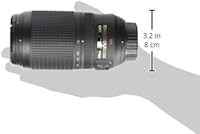
  • Dimensions: The lens measures 5.67 x 3.15 x 3.15 inches when set to the 70mm position.
  • Weight: Total weight is 1.64 pounds (approximately 745 grams), which is relatively manageable for a 300mm telephoto zoom.
  • Diaphragm Blades: The lens uses a 9-blade rounded diaphragm, contributing to smoother, more circular out-of-focus highlights in background blur.
  • Lens Construction: The optical formula consists of 17 elements arranged in 12 groups, incorporating the two ED glass elements for aberration control.
  • In The Box: Package includes the lens body, front and rear caps, HB-36 bayonet lens hood, and a CL-1022 soft pouch for storage and transport.
  • Manufacturer: Designed and manufactured by Nikon, a Japanese optics company with decades of experience producing camera lenses for professional and consumer markets.
  • Model Number: Official Nikon model number is 2161, which can be used to verify authenticity and cross-reference compatible accessories.
  • Packaging: This listing ships in white box bulk packaging rather than full retail packaging, which does not affect the lens itself but excludes a retail box.

Related Reviews

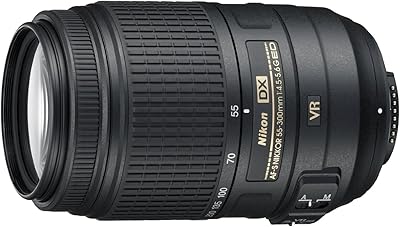
Nikon AF-S DX NIKKOR 55-300mm Zoom Lens
71%
78%
Image Sharpness
67%
Autofocus Performance
84%
Vibration Reduction
54%
Aperture Range
61%
Build Quality
More
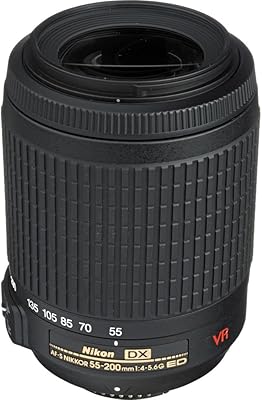
Nikon 55-200mm f/4-5.6G VR Telephoto Zoom Lens
78%
91%
Value for Money
78%
Image Sharpness
88%
Vibration Reduction
73%
Autofocus Speed
62%
Build Quality
More
Nikon AF-P DX NIKKOR 70-300mm Telephoto Lens
78%
91%
Autofocus Performance
78%
Image Sharpness
86%
Vibration Reduction (VR)
47%
Camera Compatibility
72%
Build Quality & Handling
More
Nikon NIKKOR Z 100-400mm VR S Telephoto Lens
84%
93%
Autofocus Performance
91%
Image Sharpness
89%
Vibration Reduction Effectiveness
88%
Build Quality & Weather Sealing
74%
Value for Money
More
Nikon AF-S FX NIKKOR 24-70mm f/2.8E ED VR Lens
86%
94%
Image Quality
91%
Vibration Reduction (VR)
88%
Autofocus Performance
90%
Build Quality
86%
Ease of Use
More
Nikon AF-S DX NIKKOR 10-24mm f/3.5-4.5G ED Zoom Lens
85%
93%
Sharpness at Wide Angles
87%
Autofocus Performance
89%
Build Quality
72%
Low Light Performance
91%
Value for Money
More
Nikon AF-S FX NIKKOR 200-500mm f/5.6E ED Vibration Reduction Zoom Lens
83%
91%
Image Quality
88%
Vibration Reduction
82%
Autofocus Speed
85%
Build Quality
78%
Ease of Use
More
Panasonic LUMIX S 70-300mm Telephoto Lens
80%
89%
Image Sharpness
92%
Optical Image Stabilization
78%
Macro Performance
91%
Build Quality & Weather Sealing
71%
Autofocus Speed & Accuracy
More
Nikon NIKKOR 50mm f/1.8G Prime Lens
83%
93%
Image Sharpness
88%
Bokeh & Background Separation
71%
Autofocus Speed
91%
Low-Light Performance
82%
Build Quality & Durability
More
Nikon AF-S FX NIKKOR 50mm f/1.4G Lens
87%
88%
Autofocus Performance
91%
Image Quality & Sharpness
90%
Bokeh Quality
84%
Build Quality
87%
Low-Light Performance
More

FAQ

The Nikon AF-S VR 70-300mm Telephoto Zoom Lens uses the standard Nikon F mount, so it physically fits a wide range of Nikon bodies going back many years. That said, full functionality — including autofocus and Vibration Reduction — requires a compatible digital body that supports AF-S lenses. On older film bodies without an AF motor, autofocus will not work, though the lens can still be used manually.
Yes, in practical use the VR system makes a real difference, particularly at 200–300mm where camera shake becomes most visible. Most shooters find they can comfortably handhold at shutter speeds two to three stops slower than they otherwise could. It is most helpful in late afternoon or overcast outdoor conditions, though it is not a substitute for a fast shutter speed when your subject is moving.

At 300mm stopped down to around f/8, sharpness is quite good for the price point. Wide open at f/5.6 and 300mm, however, softness is a known characteristic of this lens — it is one of the trade-offs at this price tier. If you regularly shoot at full extension and need maximum sharpness, stopping down by at least one stop is recommended.

It depends on the situation. For birds perched or moving predictably — herons wading, raptors circling overhead — the autofocus handles things well. For fast, erratic flight like small songbirds darting through trees, the autofocus can struggle to keep up. It is a capable starting point for bird photography, but serious birders who shoot a lot of flight action may eventually want faster glass.

Absolutely, and many people consider a DX body the ideal pairing for the 70-300 VR. The 1.5x crop factor effectively gives you a 105–450mm equivalent focal range, which is excellent for wildlife and distant subjects. Sharpness tends to be stronger on DX as well, since the camera is only using the central portion of the image circle where the lens performs at its best.

The front thread is 67mm, which is not as universally common as 52mm or 77mm but is widely available from all major filter brands. If you already own a set of filters in a different size, step-up or step-down adapter rings are an inexpensive solution. Just note that very thick filter rings can cause vignetting at 70mm.

No, this telephoto zoom does not have weather sealing. It can handle light mist at a distance, but shooting in rain or particularly dusty environments carries real risk of moisture or debris entering the barrel. If you regularly shoot outdoors in unpredictable conditions, pairing it with a rain cover for your camera and lens is a sensible precaution.

M/A mode keeps the autofocus active but lets you grab the focus ring at any time to make a manual adjustment without flipping a switch. In practice it is genuinely convenient — if the lens focuses on the wrong subject, you can nudge focus manually mid-shot without breaking your grip. It is especially useful in wildlife and sports scenarios where moments move quickly.

Not necessarily. White box or bulk packaging typically means the lens was sold without a retail box, often as part of a kit or as a grey-market import. The lens itself should be brand new and fully functional, but it may not come with a local Nikon warranty. It is worth confirming the seller's return policy before purchasing if warranty coverage matters to you.

The step up is meaningful in a few ways. The 70-300 VR reaches considerably further at 300mm, the Vibration Reduction system is more effective, and the optical quality — particularly chromatic aberration control — is noticeably better. The 55–200mm is a perfectly usable starter lens, but if you find yourself consistently wishing for more reach or sharper results at longer distances, this Nikon zoom lens is a logical and well-regarded upgrade.

Where to Buy