








Overview

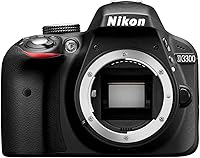
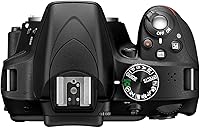
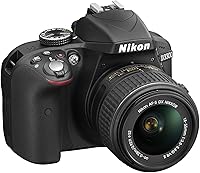
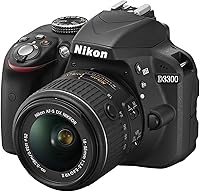
The Nikon D3300 is one of those rare entry-level DSLRs that genuinely delivers on its promises without asking you to stretch your budget to the breaking point. It sits in an accessible mid-range price bracket, making it a realistic first step for anyone ready to move beyond a smartphone. The body is compact and light at 460 grams, comfortable to carry all day without your neck paying the price by evening. What really opens up the long-term value, though, is the Nikon F-mount system — it gives you access to a vast library of lenses as your skills and ambitions grow.

Features & Benefits

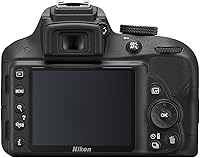
The 24.2MP APS-C sensor is the real engine here, turning out sharp, detailed shots with good dynamic range in most everyday lighting situations. The ISO range runs to 12800 natively and can push to 25600 when things get dark, though expect some grain at those upper limits — that is honest, not a dealbreaker. Continuous shooting hits 5 frames per second, which handles a kid running across a yard or a dog catching a frisbee without much fuss. The 11-point autofocus with 3D tracking adds genuine tracking ability for moving subjects, and the 3-inch LCD paired with 95% viewfinder coverage makes composing shots feel natural rather than guesswork.

Best For

This entry-level Nikon is a smart choice for anyone starting their photography journey who actually wants to understand what aperture, shutter speed, and ISO do — rather than just firing away on auto. Students and hobbyists will appreciate the guided menus that explain settings in plain language. Travel photographers will find the lightweight body genuinely practical; pair it with a compact prime lens and the whole kit stays manageable. Parents shooting school plays or weekend sports days will get solid results from both stills and 1080p video. If you want a trusted starting point from a reputable brand, this fits the brief well.

User Feedback

Owners of the D3300 regularly highlight image quality and approachability as its strongest suits — many first-time DSLR users describe it as the camera that finally made photography click for them. Battery life holds up well through a full day of casual shooting, which earns consistent praise. On the critical side, the lack of built-in Wi-Fi frustrates users who expect easy wireless transfers, and the fixed LCD screen — no tilt, no swivel — limits shooting from awkward angles. Several reviewers also mention that the kit lens starts to feel restrictive within a few months, nudging them toward prime lenses. Menu depth can initially overwhelm complete beginners.

Pros

  • The 24.2MP sensor produces impressively sharp, detailed images in good lighting conditions.
  • Nikon D3300 buyers gain access to a vast F-mount lens ecosystem, including affordable used glass.
  • The guided shooting modes make learning aperture, shutter speed, and ISO genuinely approachable.
  • At 460 grams, the body is light enough to carry all day without fatigue.
  • Battery life comfortably covers a full day of casual shooting on a single charge.
  • The optical viewfinder is crisp and responsive, making it a pleasure to shoot through.
  • RAW file support gives users room to edit and improve shots after the fact.
  • 5fps continuous shooting handles everyday action like kids and pets without missing the moment.
  • The compact body pairs well with small prime lenses for a practical, travel-friendly kit.
  • Build quality feels solid and well-constructed for the price tier.

Cons

  • No built-in Wi-Fi means transferring images requires a cable or card removal every single time.
  • The fixed LCD screen cannot tilt or swivel, making low-angle and overhead shots awkward to frame.
  • Autofocus does not work continuously during video recording, limiting usable footage of moving subjects.
  • The kit lens starts to feel restrictive fairly quickly as shooting skills improve.
  • Noise becomes clearly visible in images shot above ISO 3200.
  • No weather sealing makes shooting outdoors in rain or dusty conditions a genuine risk.
  • The menu system can feel layered and inconsistent once you move past the beginner modes.
  • No touchscreen functionality, which feels like a noticeable omission compared to newer rivals.
  • Buffer limitations mean sustained burst shooting runs out sooner than the headline 5fps figure implies.
  • Newer competitors at a similar price now offer more autofocus points and better subject tracking coverage.

Ratings

The Nikon D3300 has been put through its paces by tens of thousands of buyers worldwide, and our AI-driven scoring system has analyzed that verified feedback — actively filtering out incentivized reviews and bot activity — to surface what real owners actually experience day to day. The scores below reflect both where this beginner DSLR genuinely shines and where it shows its age or limitations, giving you a transparent, balanced picture before you decide.

Image Quality
88%
Owners consistently describe being surprised by how sharp and detailed their shots look straight out of the camera, especially in good daylight. The 24.2MP APS-C sensor captures enough detail that beginners can crop and still have usable images, which matters when you are still learning to frame shots precisely.
At higher ISO settings — particularly beyond 3200 — noise becomes noticeable and fine detail starts to soften. Users shooting indoor birthday parties or evening events without flash often find themselves disappointed with results compared to what they see on brighter days.
Low Light Performance
71%
29%
For a camera in this class, the D3300 handles moderately dim environments reasonably well, and many users report usable shots at ISO 1600 for indoor family gatherings or restaurant settings. The expanded ISO range gives beginners a practical safety net when lighting turns tricky.
Push it past ISO 3200 and grain becomes hard to ignore, particularly in shadow areas. Users expecting clean, noise-free indoor shots without additional lighting are frequently let down, and the fixed LCD makes reviewing those shots in bright conditions harder than it should be.
Autofocus Performance
79%
21%
The 11-point AF system with 3D tracking handles everyday moving subjects — kids, pets, casual sports — well enough that beginners rarely miss the shot entirely. Users shooting family events particularly appreciate how reliably the camera locks onto faces in decent light.
The AF coverage feels narrow compared to newer competitors, and tracking complex or fast-erratic movement reveals its limitations quickly. Video users face a more significant frustration: continuous autofocus during recording is essentially absent, requiring manual focus adjustments mid-clip.
Ease of Use
84%
The guided mode that explains each setting in plain language is one of the most praised features among first-time DSLR owners. Many users describe it as the thing that finally made aperture and shutter speed concepts click after years of shooting blind on a smartphone.
Once users graduate past the guided modes, the menu system can feel layered and inconsistent in its logic. Absolute beginners with no prior camera experience sometimes report spending considerable time simply finding basic settings they need frequently.
Build Quality & Ergonomics
76%
24%
The body feels solid and well-constructed for its price tier, and the grip is comfortable enough for extended handheld sessions. At 460 grams, it sits in a sweet spot — substantial enough to feel serious in your hands without fatiguing your wrist on a long day out.
The all-plastic construction gives some users pause about long-term durability, especially those planning outdoor or travel use. There is no weather sealing, so shooting in light rain or dusty environments carries a real risk that owners of this camera are right to be cautious about.
Video Capability
63%
37%
The 1080p at 60fps output looks genuinely good for casual video use — school plays, travel clips, and family moments all come out sharp and smooth enough to share confidently. Users who want a single device for photos and occasional video find it gets the job done acceptably.
The absence of continuous autofocus during video recording is a recurring complaint and a real limitation for anyone wanting clean, cinematic footage. Users quickly discover they need to pre-focus before rolling, and the fixed LCD screen makes shooting from creative angles significantly harder than on competing models.
Battery Life
82%
18%
A full day of casual shooting — a few hundred shots, some menu browsing, occasional video clips — is well within reach on a single charge, and most users are satisfied with what they get from a day trip or family outing. Spare batteries are affordable and easy to find.
Heavy video shooters or users who rely heavily on live view find the charge depletes noticeably faster. Cold weather also impacts performance, which matters for travel photographers shooting outdoors in winter conditions.
Connectivity
41%
59%
The wired connection options work reliably when you need them, and users who are comfortable transferring files via cable or card reader report no issues with the workflow once they settle into a routine.
The lack of built-in Wi-Fi is the single most consistent complaint from buyers who purchased this camera expecting modern convenience. In an era where nearly every competing camera at this price level ships with wireless transfer, having to physically remove the memory card every time feels like a genuine step backward.
Kit Lens Performance
67%
33%
The bundled AF-S DX NIKKOR 18-55mm lens covers a practical zoom range that handles portraits, interiors, and outdoor scenes with reasonable sharpness in the center of the frame. For a beginner still learning composition, it is a workable and versatile starting point.
Experienced users and those who progress quickly find the kit lens limiting within a few months — corner sharpness falls off, the variable aperture restricts low-light shooting, and image stabilization is noticeable but not class-leading. Most owners eventually invest in a prime lens to unlock what the sensor is actually capable of.
Value for Money
81%
19%
Considering the image quality, lens ecosystem access, and learning-friendly features packed in, this entry-level Nikon represents solid value for buyers who want a real DSLR experience without paying for features they will not use yet. The Nikon F-mount also means lenses hold their value and remain reusable if you upgrade later.
Compared to some newer competitors at similar price points, the D3300 lacks Wi-Fi and a touchscreen, which are now considered standard. Buyers who factor those modern conveniences into their decision may feel the value equation tips against it, especially as used and refurbished newer models close the price gap.
Portability
83%
The compact, relatively light body makes this beginner DSLR genuinely practical for travel — it fits in a mid-sized camera bag alongside a spare lens and accessories without drama. Users who carry it around cities or on hikes consistently mention that it never feels like a burden.
It is still a DSLR, which means it is larger and thicker than mirrorless alternatives at a similar price. Users who want to keep things truly compact, especially for street photography or flying carry-on only, will find the form factor limiting compared to modern mirrorless options.
Lens Ecosystem
91%
Access to the Nikon F-mount is one of the most compelling long-term arguments for this camera. Decades of lenses — from affordable vintage primes to professional-grade glass — are all compatible, giving buyers a clear upgrade path that protects their initial investment considerably.
While the ecosystem is vast, navigating it as a beginner can be overwhelming. Not all F-mount lenses work fully with this body — some older manual lenses lose autofocus functionality — and newer Nikon Z-mount lenses require an adapter, which adds cost and bulk.
Display & Viewfinder
66%
34%
The optical viewfinder with 95% coverage is crisp and responsive, and most users prefer shooting through it over live view once they get comfortable. It gives the shooting experience a tactile, real-camera feel that beginners find genuinely motivating.
The fixed 3-inch LCD is the weak point here. No tilt, no articulation, and no touch functionality means composing low-angle shots of kids or overhead crowd shots requires awkward guesswork. In bright sunlight, the screen washes out enough to make accurate exposure checking frustrating.
Shooting Speed
74%
26%
Five frames per second is adequate for everyday action — a child blowing out birthday candles, a dog leaping for a toy, or casual sports sideline shots. Most users in this category are not trying to shoot professional sports, and for their needs it holds up well.
More ambitious users who try to capture fast-moving subjects like wildlife or competitive sports will feel the ceiling quickly. Buffer limitations also mean sustained bursts are shorter than the headline number suggests, which catches beginners off guard during their first action-heavy shoot.

Suitable for:

The Nikon D3300 is genuinely well-suited to anyone making their first serious step into photography — particularly students, hobbyists, and curious beginners who want to understand how a camera actually works rather than just pointing and shooting on auto. If you are a parent who wants to capture kids' sports days, school events, and family trips with noticeably better results than a smartphone delivers, this beginner DSLR gives you that upgrade without demanding a steep learning curve. Travel photographers who prioritize keeping their kit light and manageable will appreciate the compact body, and the Nikon F-mount means you are buying into an ecosystem where affordable used lenses are easy to find as your interests develop. Budget-conscious buyers who want a proven, reliable brand name behind their first interchangeable-lens camera will find the value proposition here difficult to argue with. It is also a strong choice for anyone who plans to shoot primarily in good daylight or controlled indoor conditions, where the sensor and kit lens combination consistently delivers sharp, pleasing results.

Not suitable for:

Buyers who expect modern wireless convenience should approach the Nikon D3300 with clear eyes — there is no built-in Wi-Fi, which means transferring photos requires physically removing the memory card or connecting a cable, and that friction adds up quickly if you are used to instant sharing from a smartphone. Content creators or vloggers looking for a reliable video camera will run into real limitations: the lack of continuous autofocus during recording means keeping a moving subject sharp on video requires manual intervention, which is genuinely difficult for beginners. Anyone who wants to shoot from creative angles — overhead crowd shots, low ground-level frames — will feel the absence of an articulating or tilt screen acutely, since the fixed LCD offers no flexibility whatsoever. Users stepping up from a mirrorless system or a more recent competing DSLR may find the feature set feels dated, particularly given that similarly priced rivals now include touchscreens, Wi-Fi, and improved autofocus coverage. Serious action or wildlife photographers who need fast, reliable subject tracking across the entire frame will find the 11-point AF system too limited for their demands.

Specifications

  • Sensor: The camera uses a 24.2MP APS-C CMOS sensor without an optical low-pass filter, which helps maximize fine detail in every shot.
  • ISO Range: Native ISO runs from 100 to 12800, with expansion available up to 25600 for low-light situations where some noise is acceptable.
  • Autofocus System: An 11-point phase-detection AF system with 3D tracking and one cross-type center point handles subject acquisition and basic motion tracking.
  • Continuous Shooting: The camera shoots at up to 5 frames per second in continuous mode, with a buffer that supports short bursts before slowing.
  • Video Recording: Full HD 1080p video is recorded at up to 60fps in MOV or MPEG-4 format, though continuous autofocus during recording is not supported.
  • LCD Screen: A fixed 3″ LCD monitor with approximately 921,000 dots provides a clear view for image review, though it cannot tilt or swivel.
  • Viewfinder: The optical pentamirror viewfinder offers approximately 95% frame coverage with 0.85x magnification.
  • Lens Mount: The Nikon F-mount bayonet system allows compatibility with a wide range of Nikon and third-party F-mount lenses.
  • Memory: A single SDHC card slot supports cards up to 32GB in capacity.
  • Image Formats: Still images can be saved as JPEG, RAW (NEF), or simultaneous JPEG and RAW for maximum post-processing flexibility.
  • Body Weight: The body alone weighs approximately 460 grams without a lens, battery, or memory card installed.
  • Battery: A Lithium-Ion EN-EL14a rechargeable battery powers the camera, rated for approximately 700 shots per charge under standard conditions.
  • Flash: A built-in pop-up flash is included with a guide number of roughly 12 meters at ISO 100, and the flash sync speed is 1/200s.
  • Connectivity: The camera connects via USB 2.0 for wired file transfer; there is no built-in Wi-Fi or Bluetooth.
  • Shutter Speed: The mechanical shutter operates from 30 seconds down to approximately 1/4000s, plus a Bulb mode for long exposures.
  • White Balance: White balance options include Auto, Daylight, Cloudy, Flash, Fluorescent, Incandescent, Shade, and manual preset for accurate color in varied lighting.
  • Video Frame Rate: Video can be recorded at 1080p (60fps, 50fps, 30fps, 25fps, 24fps) or 720p (60fps, 50fps) to suit different editing and playback needs.
  • Form Factor: The D3300 is a compact DSLR body designed to be accessible for beginners while maintaining a traditional grip-and-control layout.

Related Reviews
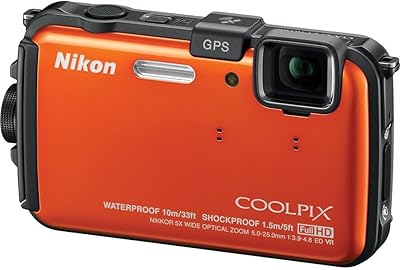
Nikon COOLPIX AW100
Nikon COOLPIX AW100
83%
88%
Overall Durability
85%
Image Quality
90%
Ease of Use
91%
Waterproof Performance
83%
Video Quality
More
Nikon COOLPIX P510
Nikon COOLPIX P510
84%
94%
Zoom Performance
89%
Image Quality
83%
Battery Life
88%
Ease of Use
60%
Autofocus in Low Light
More
Nikon COOLPIX P950
Nikon COOLPIX P950
76%
96%
Zoom Range & Reach
88%
Image Stabilization
67%
Autofocus Performance
83%
Image Quality in Daylight
54%
Low Light & High ISO Performance
More
Nikon L105 Digital Camera
79%
92%
Ease of Use
89%
Value for Money
85%
Zoom Performance
80%
Build Quality
93%
Portability
More
Nikon ACULON A30 10x25 Binoculars
75%
84%
Optical Clarity (Daylight)
51%
Low-Light Performance
93%
Portability & Size
81%
Build Quality & Durability
74%
Focus Mechanism
More
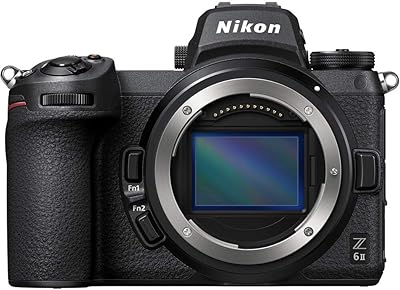
Nikon Z 6II Mirrorless Camera
87%
94%
Image Quality
91%
Autofocus Performance
93%
Low-Light Performance
88%
Build Quality
85%
Battery Life
More
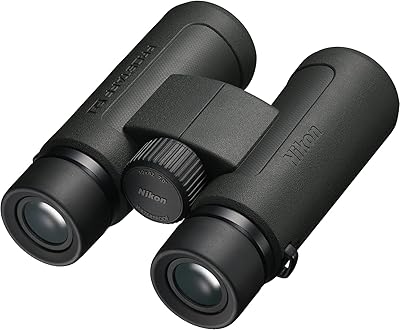
Nikon PROSTAFF P3 10x42 Binocular
86%
92%
Image Clarity
89%
Build Quality
86%
Ease of Use
93%
Weather Resistance
77%
Portability
More
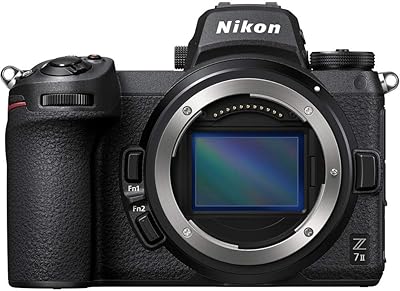
Nikon Z 7II Mirrorless Camera
86%
94%
Image Quality
93%
Autofocus Performance
90%
Video Quality (4K)
68%
Battery Life
89%
Build Quality
More
Nikon COOLPIX P1100 Superzoom Camera
82%
96%
Optical Zoom Performance
89%
Image Quality
82%
Ease of Use
77%
Battery Life
88%
Build Quality
More
Nikon Z 8
Nikon Z 8
84%
94%
Autofocus Performance
96%
Image Quality
88%
Video Capabilities
93%
Build Quality & Weather Sealing
91%
Burst Speed & Continuous Shooting
More

FAQ

It depends on what you need it for. As a learning tool and a camera for everyday photography in decent light, this entry-level Nikon still delivers genuinely good image quality. Where it shows its age is in connectivity — no Wi-Fi — and features like a fixed screen and limited video autofocus that newer models have improved. If you find it at a fair price and your priority is image quality over modern conveniences, it holds up well.

Many older Nikon F-mount lenses will physically mount on the D3300, but full compatibility depends on the specific lens. Lenses that lack a built-in autofocus motor — some older AF lenses — will not autofocus on this body; you would need to focus manually. AI and AI-S manual lenses work but without any metering support. G and D series AF-S lenses with their own motor work fully and are your safest bet.

Not directly, no. The D3300 does not have built-in Wi-Fi or Bluetooth. You can transfer images by removing the SD card and using a card reader, or by connecting the camera to a computer via USB cable. Nikon did sell a WU-1a wireless adapter that plugs into the USB port, which adds basic wireless transfer capability — it is worth tracking one down if wireless sharing is important to you.

Indoors in reasonable light — a well-lit living room or a restaurant with decent overhead lighting — the camera performs adequately up to around ISO 1600. Beyond that, noise becomes noticeable, particularly in shadow areas. For consistently clean indoor shots without flash, a fast prime lens like a 35mm or 50mm f/1.8 makes a significant difference compared to the kit lens.

Not really. The guided mode is genuinely well-designed — it explains what each setting does in plain language on the screen as you adjust it, which takes a lot of the intimidation out of manual controls. That said, once you move past the basics and explore the full menu system, it can feel a bit layered and inconsistent. Give yourself a few weeks of regular shooting and most of it becomes second nature.

For casual video — family moments, travel clips, short social content — the 1080p output looks sharp and clean in good light. The honest limitation is autofocus: it does not track subjects automatically while recording, so if someone walks toward or away from the camera, you will need to adjust focus manually. For scripted or stationary shots it is fine; for dynamic, run-and-gun video it requires more effort than most beginners expect.

The camera uses SDHC cards up to 32GB — it does not support SDXC cards. A Class 10 card is recommended for smooth video recording and burst shooting. Brands like SanDisk and Lexar in the 16GB to 32GB range are popular choices among owners and reliably handle the camera's write speed without issues.

Under typical shooting conditions — a mix of viewfinder shooting, some LCD review, and occasional flash — you can reasonably expect around 600 to 700 shots per charge. If you use live view heavily or record a lot of video, that number drops noticeably. Carrying a spare battery on longer outings is a sensible precaution, and the spares are affordable and easy to find.

The step up from the D3300 in Nikon's beginner lineup was the D3400 and later the D3500, both of which added Bluetooth connectivity for easier phone transfers. Beyond that, the D5000 series adds an articulating LCD screen and more autofocus points, which makes a meaningful difference for video and flexible shooting angles. If wireless transfer or a tilting screen matters to you, those models are worth the comparison.

Yes, the camera fully supports RAW (NEF) files, either on their own or alongside a JPEG simultaneously. RAW files give you significantly more control over exposure, white balance, and detail recovery during editing. Software like Adobe Lightroom, Capture One, or even Nikon's own free ViewNX-i can open and process the files without any issues — it is a well-supported format across all major editing platforms.