Overview

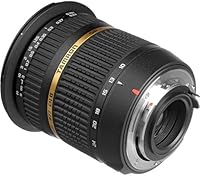
The Tamron SP 10-24mm f/3.5-4.5 Di II Wide-Angle Lens has been a reliable third-party alternative for Nikon APS-C shooters for well over a decade, and it still holds its ground today. On a crop-sensor body, the focal range translates to a 15-36mm equivalent — wide enough to capture sweeping landscapes or cramped cathedral interiors without distortion becoming completely unmanageable. It sits in a competitive middle ground: more affordable than Nikon's own ultra-wide options, yet not a budget throwaway. The build feels solid without being heavy, and its compact footprint has earned it a loyal following among photographers who need reliable wide coverage without lugging something enormous.

Features & Benefits

The built-in AF micromotor is arguably the most practical feature here — it means owners of entry-level Nikon bodies like the D3500 or D5600 get full autofocus without any workarounds. The 10-24mm Di II uses LD and aspherical elements to keep chromatic aberration reasonably controlled, especially through the 14-18mm range where it performs best. The 0.24m minimum focus distance is a genuine bonus, letting you pull environmental details into wide compositions that would otherwise look flat. One honest caveat: the variable aperture narrows fast as you zoom in, so low-light shooting at 24mm demands real compromise. The 77mm filter thread is a welcome standardization for photographers with an existing filter kit.

Best For

This Tamron wide-angle zoom is a strong fit for travel and street photographers working with a Nikon crop-sensor body who need genuine wide coverage in a manageable package. It also suits architecture and real estate interiors well — the rectilinear rendering holds up respectably, provided you stay aware of corner behavior at the wide end. Landscape photographers will appreciate how easily a 10mm shot pulls sky, terrain, and foreground into a single dramatic frame. And for anyone shooting on a D3500, D5500, or similar entry-level Nikon, the built-in AF motor isn't a nice-to-have — it's essential for autofocus to function at all.

User Feedback

With a 4.2-star average across nearly 400 ratings, the 10-24mm Di II earns consistent respect as a capable workhorse lens — not a class leader, but dependable. Buyers frequently praise autofocus reliability and center-frame sharpness through the mid-range. The criticisms are equally consistent: barrel distortion at 10mm needs correction in post, vignetting shows up noticeably wide-open, and the absence of full-time manual focus override frustrates photographers who like nudging focus without switching modes. Corner sharpness wide-open is a recurring complaint at the shortest focal lengths. Compared to the Tokina 11-20mm, users generally favor this ultra-wide Tamron for price-to-coverage value; against Nikon's own 10-20mm AF-P, it tends to lose on autofocus speed.

Pros

  • Built-in AF motor enables autofocus on entry-level Nikon bodies that lack an in-body drive motor.
  • The 10-24mm Di II delivers a genuinely wide field of view that opens up landscape and architectural shots significantly.
  • Center-frame sharpness through the 14-18mm sweet spot is consistently strong for the price tier.
  • At 14.3 ounces, this ultra-wide Tamron is compact enough for all-day travel shooting without strain.
  • The 77mm filter thread aligns with many photographers existing filter setups, avoiding extra purchases.
  • A 0.24m minimum focus distance lets you incorporate close foreground elements into wide environmental compositions.
  • LD and aspherical glass elements keep chromatic aberration reasonably controlled for most practical shooting scenarios.
  • Autofocus is reliable and accurate enough for landscape, architecture, and travel work where speed is not critical.
  • Offers genuine competition to pricier first-party options, giving APS-C shooters a credible wide-zoom on a tighter budget.

Cons

  • Barrel distortion at 10mm is pronounced and requires post-processing correction for architectural or horizon-heavy shots.
  • Vignetting wide-open is noticeable, particularly at the shortest focal lengths — stopping down to f/5.6 or beyond helps significantly.
  • No full-time manual focus override makes precise focus adjustments mid-shoot more disruptive than it should be.
  • Corner sharpness falls off considerably at wide-open apertures, which is a real concern for technically demanding subjects.
  • The variable aperture narrows to f/4.5 by 24mm, limiting flexibility in lower-light environments without a tripod.
  • Autofocus speed lags behind Nikon's own 10-20mm AF-P in fast or unpredictable shooting conditions.
  • The micromotor AF system is noisier than ultrasonic alternatives, which can be a minor issue when shooting video.
  • Long-term availability of replacement parts or service support for an older lens design is not guaranteed.

Ratings

Our AI-generated scores for the Tamron SP 10-24mm f/3.5-4.5 Di II Wide-Angle Lens were produced by analyzing hundreds of verified global user reviews, with spam, bot activity, and incentivized feedback actively filtered out. Both the genuine strengths and the recurring pain points are reflected transparently in each category score below. Whether this lens earns a place in your bag ultimately depends on your shooting style and body — and these ratings are designed to help you figure that out honestly.

Image Sharpness
73%
27%
Through the center of the frame, particularly in the 14-18mm range, the 10-24mm Di II delivers crisp, well-defined detail that holds up well in landscape and travel shots. Photographers shooting cityscapes or mountain vistas at f/8 frequently describe results as punchy and satisfying for web and large print use.
Corner sharpness is a consistent weak point, especially at 10mm wide-open, where edge detail visibly softens in a way that bothers pixel-peepers and architecture photographers alike. Stopping down to f/8 or beyond helps considerably, but it is a limitation you need to plan around rather than ignore.
Autofocus Performance
76%
24%
The built-in micromotor makes this ultra-wide Tamron one of the most practical AF options available for entry-level Nikon bodies that lack an in-body drive motor — something photographers on D3500s and D5600s genuinely rely on. For static subjects like interiors, landscapes, and travel scenes, focus acquisition is accurate and consistent.
AF speed is noticeably slower than Nikon's own AF-P lenses, and the micromotor produces an audible whirring sound that can be distracting in quiet environments or when shooting video. Fast or unpredictable subjects will expose the motor's limits quickly.
Distortion Control
58%
42%
Distortion is manageable through much of the zoom range, and from around 14mm onward the lens holds lines reasonably well for travel and environmental shots. Users shooting open landscapes rarely find barrel distortion a meaningful problem in those middle focal lengths.
At 10mm, barrel distortion is pronounced enough to be a genuine workflow consideration — horizon lines bow noticeably, and architectural verticals need correction in post before images look professional. It is fixable, but it adds a step that competing lenses handle more gracefully in-camera.
Value for Money
82%
18%
Relative to first-party Nikon ultra-wide zooms covering similar territory, this Tamron wide-angle zoom delivers a compelling amount of lens for the price, particularly for APS-C shooters who do not want to invest in a full-frame system. Reviewers on a tighter budget consistently rate it as one of the better-value wide zooms available for the Nikon crop ecosystem.
As the market has matured and Nikon released the more capable 10-20mm AF-P, the value proposition of the 10-24mm Di II has become less clear-cut. Buyers comparing it directly to newer options may find that the price gap has narrowed enough that spending a bit more gets meaningfully better results.
Vignetting
54%
46%
At stopped-down apertures of f/8 and beyond, vignetting becomes minimal and largely a non-issue for most shooting scenarios, including landscapes and architecture. Many users correct any residual corner darkening in a single Lightroom click using the built-in lens profile.
Wide-open at 10mm, corner darkening is heavy enough to be visible without any post-processing correction, which is a real inconvenience for available-light shooters who want to keep exposure adjustments minimal. It is one of the more noticeable vignetting profiles among lenses in this class.
Build Quality
71%
29%
The lens feels solid in hand with a reasonably tight barrel that does not wobble or feel plasticky, which gives it a credible feel for enthusiast-level use. Travel photographers who have carried it through varied weather conditions generally report no mechanical issues after extended use.
There is no weather sealing, which limits confidence in damp or dusty field conditions. Compared to Tamron's own newer SP lenses with moisture-resistant construction, the 10-24mm Di II feels like a product of an earlier era in terms of environmental durability.
Chromatic Aberration
69%
31%
The LD glass elements do a reasonable job of keeping lateral chromatic aberration in check through most of the zoom range, and reviewers shooting high-contrast scenes like backlit foliage report only minor fringing that cleans up easily in editing software. For a wide-angle zoom at this price, CA control is better than average.
At 10mm with high-contrast edges — tree branches against bright sky, for instance — some purple fringing appears that the lens profile does not fully eliminate automatically. It is a minor issue for most users but worth noting for photographers shooting a lot of high-contrast wide scenes.
Low-Light Usability
61%
39%
At 10mm and f/3.5, the lens captures enough light for handheld wide shots in moderately dim conditions like golden hour or dimly lit cathedrals, especially on Nikon bodies with solid high-ISO performance. Landscape photographers using a tripod report no meaningful complaints in low-light situations.
The variable aperture is a real limitation — as soon as you zoom past 16mm, you lose a meaningful amount of light, and shooting in dim indoor spaces or at dusk handheld becomes a genuine challenge. Photographers who regularly need wide-angle coverage in low light will find this lens asks a lot of them in return.
Manual Focus Experience
47%
53%
The focus ring itself turns smoothly and covers the focus range in a reasonable arc, which makes deliberate manual focusing during landscape work or long-exposure shots manageable enough when you have time to dial things in carefully.
The absence of full-time manual focus override is the single most criticized usability limitation of this ultra-wide Tamron — you cannot nudge focus while the camera is in AF mode without switching systems entirely. For photographers used to lenses that support FTM, this feels like a significant step backward in day-to-day handling.
Portability
84%
At 14.3 oz and with a compact barrel, this lens packs and carries well — it slides into a camera bag without dominating the kit, and photographers who carry it all day on travel or hiking trips rarely cite weight as a fatigue factor. Its footprint on a mirrorless-style APS-C body is proportionally sensible.
The 77mm filter thread does push the front diameter slightly larger than some competing lenses, which can feel a touch front-heavy on very compact bodies like the D3500. It is a minor ergonomic note rather than a serious practical complaint for most users.
Focal Range Versatility
78%
22%
The 10-24mm range covers more ground than most competing ultra-wide zooms, and the long end at 24mm is genuinely useful for tighter environmental shots, documentary-style travel frames, and urban street scenes where 10mm would feel overwhelming. Having that range in a single lens reduces the need to switch glass mid-shoot.
The trade-off for that extended range is the variable aperture, and at 24mm you are working at f/4.5 — a compromise that a faster constant-aperture zoom like the Tokina 11-20mm f/2.8 does not force on you. Versatility comes at a light-gathering cost that is worth understanding before buying.
Filter Compatibility
86%
The 77mm filter thread is a practical advantage that many buyers explicitly mention as a deciding factor — it matches the filter size of many mid-range and professional Nikon lenses, meaning existing polarizers, ND filters, and UV protectors can transfer over without buying adapters. This is not a small thing for photographers already invested in a filter system.
The front element does not rotate during focusing, which is correct behavior for a polarizer — but the large 77mm thread size does mean any circular polarizer you buy for this lens will be on the pricier side compared to smaller thread equivalents.
Close Focus Performance
74%
26%
The 0.24m minimum focus distance opens up interesting compositional options — photographers can get surprisingly close to foreground elements like rocks, flowers, or street textures while still capturing a wide environmental context behind them. This is particularly appreciated by landscape and travel shooters who want more dynamic layering in their frames.
Close-up sharpness at maximum aperture follows the same pattern as the rest of the lens — center performance is strong, but corners and edges soften noticeably. Stopping down when shooting at close range is advisable if corner-to-corner detail matters in the shot.

Suitable for:

The Tamron SP 10-24mm f/3.5-4.5 Di II Wide-Angle Lens is a well-matched choice for APS-C Nikon DSLR shooters who want genuine ultra-wide reach without paying flagship lens prices. Landscape photographers will find the 10mm end particularly rewarding — it pulls expansive skies and sweeping foregrounds into a single cohesive frame in a way that mid-range zooms simply cannot. Architecture enthusiasts and real estate photographers also benefit here, since the lens covers tight interior spaces with enough rectilinear integrity to be useful, especially after a quick distortion correction in post. Travel photographers running a D5600, D7500, or similar crop-sensor body will appreciate how compact and light this zoom feels on a day-long shoot. Critically, anyone using an entry-level Nikon body in the D3xxx or D5xxx range — which lack an in-body AF motor — will find the built-in micromotor makes this lens one of the few practical ultra-wide autofocus options available to them at this price point.

Not suitable for:

Photographers who prioritize clean wide-open performance across the full frame — especially in the corners — will likely walk away frustrated by this lens. The Tamron SP 10-24mm f/3.5-4.5 Di II Wide-Angle Lens shows noticeable corner softness and vignetting when shot wide-open at shorter focal lengths, which means it is a poor fit for astrophotographers or anyone regularly shooting high-contrast scenes at maximum aperture. The variable aperture also narrows quickly as you zoom toward 24mm, making this a tough tool for dim indoor events or nighttime street work where consistent exposure control matters. Manual focus purists will find the absence of full-time manual override — something both Tokina and Nikon offer on competing lenses — a genuine daily annoyance rather than a minor inconvenience. If your shooting style demands fast, precise manual focus pulls without switching AF modes, you should look elsewhere before committing.
Specifications

  • Focal Length: Covers 10-24mm, translating to a 15-36mm equivalent field of view on Nikon APS-C bodies.
  • Maximum Aperture: Variable maximum aperture of f/3.5 at 10mm, narrowing to f/4.5 at 24mm.
  • Minimum Aperture: Minimum aperture ranges from f/22 at the wide end to f/29 at the telephoto end.
  • Lens Mount: Designed for Nikon F (DX) mount, compatible with APS-C crop-sensor Nikon DSLR bodies.
  • AF Motor: Features a built-in micromotor-type autofocus drive, enabling AF on Nikon bodies without an in-body focus motor.
  • Manual Focus: Manual focus is available by switching modes, but full-time manual override while in AF mode is not supported.
  • Lens Elements: Optical construction incorporates LD (Low Dispersion) and aspherical elements to reduce chromatic aberration and distortion.
  • Filter Thread: Accepts 77mm diameter screw-in filters, a standard size compatible with many professional filter systems.
  • Minimum Focus: Closest focusing distance is 0.24m (approximately 9.45 inches) from the focal plane.
  • Dimensions: The lens measures 3.31 inches in length and 3.27 inches in diameter.
  • Weight: Weighs 14.3 oz (approximately 405g), making it a manageable option for travel and outdoor use.
  • Lens Family: Part of Tamron's SP Di II line, a range specifically engineered and optimized for APS-C sensor cameras.
  • Model Number: Official Tamron model designation is B001NII for the Nikon F mount version.
  • User Rating: Holds a 4.2 out of 5 star average rating based on nearly 400 verified user reviews on Amazon.
  • Availability: This lens has not been discontinued by the manufacturer and remains available as a current product.

Related Reviews
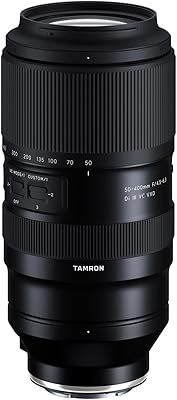
Tamron 50-400mm f/4.5-6.3 Telephoto Zoom Lens
82%
83%
Image Quality
81%
Autofocus Performance
93%
Zoom Range Versatility
58%
Low-Light Capability
76%
Build Quality
More
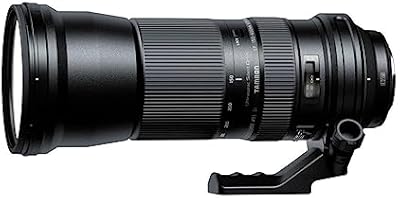
Tamron SP 150-600mm F/5-6.3 Di VC USD Lens for Nikon DSLR
86%
90%
Optical Performance
88%
Autofocus Speed
85%
Build Quality
92%
Vibration Compensation (VC)
68%
Weight & Ergonomics
More
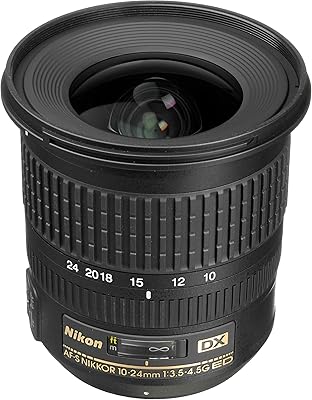
Nikon NIKKOR 10-24mm f/3.5-4.5G ED Wide-Angle Lens
80%
88%
Optical Sharpness
82%
Autofocus Performance
86%
Build Quality
67%
Distortion Control
63%
Low-Light Capability
More
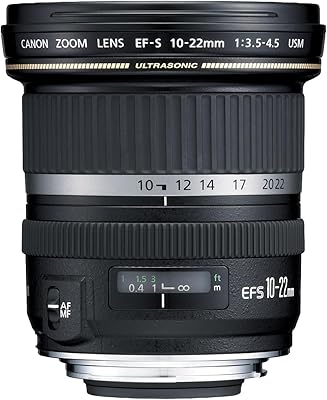
Canon EF-S 10-22mm f/3.5-4.5 USM Wide-Angle Lens
80%
88%
Image Sharpness
91%
Autofocus Performance
84%
Build Quality
63%
Distortion Control
67%
Chromatic Aberration
More
Tamron 18-300mm F/3.5-6.3 Zoom Lens

81%
91%
Autofocus Speed & Accuracy
96%
Zoom Range Versatility
74%
Image Sharpness
88%
Optical Image Stabilization
61%
Low-Light Performance
More
Tamron 70-300mm Di III RXD Telephoto Lens
79%
83%
Image Sharpness
88%
Autofocus Performance
79%
Build Quality
93%
Value for Money
57%
Low-Light Performance
More
Canon EF-S 10-18mm STM Wide-Angle Lens
75%
83%
Image Sharpness
86%
Autofocus Performance
81%
Image Stabilization
58%
Distortion & Vignetting
54%
Low-Light Capability
More
Nikon Z5 Full-Frame Mirrorless Camera
81%
92%
Image Quality
88%
Low-Light Performance
83%
Autofocus Performance
91%
In-Body Image Stabilization
86%
Build Quality & Ergonomics
More
Tamron SP 17-50mm F/2.8 VC Zoom Lens
76%
84%
Center Sharpness
91%
Aperture Performance
67%
Autofocus Speed
78%
Vibration Compensation
73%
Build Quality
More
Canon EF-S 55-250mm IS II Telephoto Lens
78%
86%
Optical Sharpness
88%
Image Stabilization
67%
Autofocus Speed & Accuracy
92%
Value for Money
61%
Build Quality & Durability
More

FAQ

Yes, and this is actually one of the strongest reasons to consider this lens if you own an entry-level Nikon body. The D3500 and D5600 lack an in-body autofocus motor, which means they rely entirely on the lens to drive AF. The built-in micromotor in the 10-24mm Di II handles that job, so you get full autofocus functionality without any workarounds.

It is noticeable, especially on shots with strong horizontal lines like horizons or building facades. That said, it is fairly standard for ultra-wide lenses in this range and is easily corrected in Lightroom or Capture NX-D using the lens profile. If you are shooting freehand landscapes or open scenes, it rarely becomes a visible problem. For architecture, plan on spending a few seconds in post to straighten things out.

It can work in a pinch, but it is not ideal. The variable aperture means you are limited to f/3.5 at 10mm, which is acceptable for wide star shots, but the corner softness and vignetting wide-open can degrade the edges of a night sky image noticeably. If astrophotography is a serious priority, a faster prime or a constant-aperture wide zoom would serve you better.

Physically it will mount, but it is not designed for full-frame sensors. The image circle this lens projects is sized for APS-C, so on a full-frame body like a D750 or D800 you will see heavy vignetting across the frame and it will not produce usable images. It is strictly a crop-sensor lens.

The Tokina has a clear edge in aperture — f/2.8 constant is meaningfully faster in low light and gives you more creative depth-of-field control. The Tamron SP 10-24mm f/3.5-4.5 Di II Wide-Angle Lens, on the other hand, covers a wider focal range on the long end and is typically less expensive. If low-light performance and a wider aperture matter to you, the Tokina wins. If range and value are your priorities, this Tamron is the stronger choice.

Yes, the filter thread is 77mm, which is a popular professional standard. If you already own 77mm polarizers, ND filters, or UV filters, they will mount directly without any adapters needed. That is a practical advantage over lenses with less common filter sizes.

The micromotor AF is adequate for still subjects, interiors, and landscapes, but it is not built for speed. If you plan on tracking birds in flight, fast-moving people, or any action-style shooting, the AF system will likely feel sluggish. For its intended use cases — architecture, travel, and scenics — it handles focus acquisition reliably without much complaint.

Through the center of the frame, especially from around 14mm to 18mm, sharpness is genuinely good for a lens at this price point. The corners tell a different story — at wide-open apertures and at 10mm, edge sharpness falls off in a way that is visible on close inspection. Stopping down to f/8 brings a significant improvement across the frame. It is a practical workhorse optically, not a technically flawless optic.

No. This ultra-wide Tamron does not support full-time manual focus override, which means you cannot simply grab the focus ring and adjust while the camera is in AF mode. You need to physically switch to manual focus mode first. For photographers accustomed to lenses that support FTM — like many Canon L lenses or Nikon's AF-S line — this can feel like a real step backward in everyday usability.

It is a solid option for real estate work on a crop-sensor Nikon body. The 10mm end gives you the room coverage you need to make tight spaces look spacious, and the minimum focus distance of 0.24m helps when you are photographing countertops or bathroom details up close. Just expect to apply distortion correction in post, and keep in mind that corner sharpness benefits from stopping down to f/8 or so when shooting interiors.