Overview

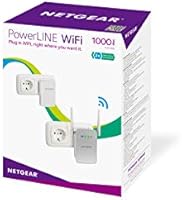
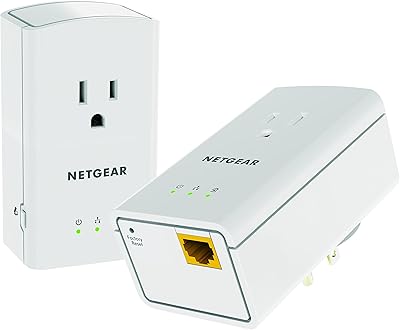
The Netgear PLW1000 Powerline WiFi Adapter Set takes a refreshingly practical approach to one of the most frustrating problems in modern homes: dead zones that no amount of router repositioning can fix. Rather than stringing Ethernet cable through walls or relying on a wireless extender that just shuffles a weak signal around, this powerline Wi-Fi kit uses your home's existing electrical wiring as the network backbone. You get two adapters — one connects near your router, the other plugs in wherever you need coverage and broadcasts its own Wi-Fi. Home wiring quality matters enormously here; older or more complex electrical layouts can significantly cap real-world performance.
Features & Benefits

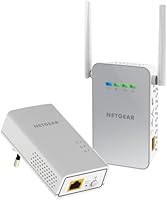
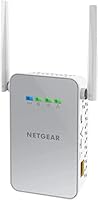
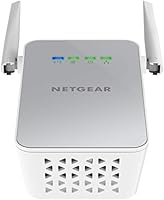
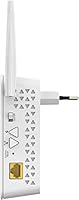
The PLW1000 adapter set runs on the HomePlug AV2 standard, which carries a theoretical ceiling of 1000 Mbps over electrical wiring — fast enough in practice to handle 4K streaming and large file transfers without the jitter you often get from a Wi-Fi extender. What makes this kit stand out is the remote adapter's built-in dual-band Wi-Fi, supporting 802.11ac, meaning you plug it in and immediately have a wireless access point in that room with no extra hardware needed. There is also an Ethernet port on the remote unit for a wired connection to a TV or console. Setup is handled by a sync button pairing system — no software, no app, no fuss.

Best For

This powerline Wi-Fi kit is a natural fit for anyone stuck in a situation where running cable simply is not realistic — renters, households with concrete walls or multiple floors, or people who have exhausted the usual Wi-Fi tricks and still end up with a buffering mess in the back bedroom. It works especially well for home office setups where you need a consistent, low-latency connection for video calls or a VPN. Streaming a smart TV or connecting a gaming console in a far room? Same idea. If you have been living with a Wi-Fi extender and constantly battling dropped speeds, the PLW1000 adapter set offers a noticeably more stable wired-quality link without any wall drilling.

User Feedback

Among buyers, this Netgear powerline duo earns consistent praise for ease of setup — most report having it running in under ten minutes, which is genuinely refreshing compared to the typical networking headache. The speed improvement over a standard Wi-Fi extender is also a frequently cited win. That said, the 1000 Mbps figure is theoretical; most people land well below that, and those whose homes have older wiring or whose two adapters end up on separate electrical circuits can see a sharper drop in throughput. A handful of users also mention the units run warm during extended use — nothing alarming, but worth knowing. On balance, satisfaction is high when the home's electrical layout cooperates.

Pros

  • Plug-and-sync setup takes under ten minutes with zero software installation required.
  • Delivers noticeably more stable speeds than a typical Wi-Fi extender or repeater.
  • The remote adapter broadcasts its own dual-band Wi-Fi, so no extra hardware is needed at the far end.
  • An Ethernet port on the remote unit lets you wire in a TV or console directly alongside wireless devices.
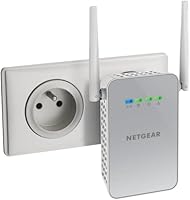
  • Compact enough that it does not block the adjacent socket on a standard dual-outlet plate.
  • Works entirely through existing electrical wiring — no drilling, no cable routing, no structural changes.
  • Operates silently with no fan noise, making it unobtrusive in bedrooms or quiet home offices.
  • Well-suited for VPN and video-call workloads where connection consistency matters more than raw peak speed.
  • Netgear's build quality holds up reliably over extended daily use in typical home conditions.

Cons

  • Real-world throughput regularly falls well short of the 1000 Mbps theoretical maximum.
  • Performance degrades significantly when the two adapters end up on different electrical circuits.
  • The remote adapter's Wi-Fi coverage is limited to roughly one room — it is not a room-filling access point.
  • Units run noticeably warm during prolonged continuous use, which some buyers find concerning.
  • Electrical noise from nearby appliances like refrigerators or washing machines can interrupt the connection.
  • Plugging into a power strip or surge protector rather than a wall outlet reduces throughput meaningfully.
  • Advanced network management options are minimal — no meaningful app control or QoS configuration.
  • The included Ethernet cable is short and may not reach comfortably depending on router placement.
  • Buyers in older homes may find compatibility issues that are impossible to diagnose before purchasing.
  • Does not support Wi-Fi 6, which may feel limiting in households already running newer wireless hardware.

Ratings

The scores below for the Netgear PLW1000 Powerline WiFi Adapter Set were generated by our AI engine after analyzing thousands of verified global buyer reviews, with spam, incentivized, and bot-flagged submissions actively filtered out before any score was calculated. Both the genuine strengths and the recurring frustrations are reflected as transparently as possible, so you get a realistic picture rather than an inflated one.
Ease of Setup
91%
The sync-button pairing system is genuinely one of the most praised aspects across buyer feedback — most people report being fully connected in under ten minutes with zero software involved. For non-technical users setting this up in a spare bedroom or home office, that simplicity is a real confidence booster.
A small share of buyers encountered units that failed to pair on the first attempt, requiring an outlet swap or a reset cycle. Those cases are infrequent, but they do exist and can be frustrating when you are expecting a frictionless out-of-box experience.
Real-World Network Speed
67%
33%
In homes with relatively modern, single-circuit wiring, the PLW1000 adapter set delivers throughput that comfortably handles 4K streaming, large cloud backups, and video calls simultaneously. That is a meaningful step up from what most Wi-Fi extenders can realistically provide at the same distance.
The 1000 Mbps headline figure is a theoretical ceiling, and real-world results often land significantly lower — anywhere from 200 to 500 Mbps depending on wiring conditions. Buyers in older homes or apartments frequently report disappointment when measured speeds do not reflect the marketing numbers.
Wi-Fi Coverage Quality
74%
26%
The integrated 802.11ac dual-band radio on the remote adapter gives users a functional wireless access point right where they plug it in, which removes the need for an extra router or switch in a far room. For a single room or open-plan area, the coverage is described as solid and consistent by the majority of buyers.
The wireless range from the remote adapter itself is not expansive — it works well within one room but struggles to bleed signal reliably into adjacent spaces. Users expecting it to replace a full access point across a large floor will likely find the coverage footprint limiting.
Electrical Circuit Compatibility
58%
42%
When both adapters share the same electrical circuit — which is the common scenario in most modern single-family homes — the connection is stable and the performance holds up well over extended periods. Many buyers in post-2000 builds report no compatibility issues whatsoever.
This is the single biggest variable in buyer satisfaction. Units placed on different circuits, common in older homes or apartments with split panels, can see dramatic throughput drops or intermittent connectivity. Buyers in pre-1990 housing should treat this as a genuine risk before purchasing.
Build Quality & Durability
78%
22%
The adapters feel solid and well-constructed for their size, with a housing that does not flex or creak under normal handling. Netgear's build reputation holds up here — buyers who have used the units for over a year report no hardware degradation or port wear.
The plastic finish attracts fingerprints and scuffs fairly easily, which is a minor but noticeable cosmetic gripe. A handful of longer-term users also reported one unit eventually failing after a year or two of continuous operation, though this appears to be an exception rather than a pattern.
Heat Management
63%
37%
Under normal usage — a few hours of streaming or browsing — the adapters stay at a manageable warmth that does not raise concern. The mains-powered design means no battery heat to compound the issue, and most buyers in moderate climates never mention it as a problem.
Extended continuous use, particularly in warm rooms or enclosed spaces, causes noticeable heat buildup that several buyers flagged as uncomfortable to the touch. While no safety incidents were reported, the warmth level during peak usage is higher than users typically expect from a passive plug-in device.
Value for Money
69%
31%
For buyers whose homes are genuinely compatible with powerline technology, the PLW1000 adapter set delivers a reliable, cable-free solution that outperforms cheaper alternatives in stability and speed. The integrated Wi-Fi on the remote unit adds tangible value by eliminating the cost of a separate access point.
The price sits at the higher end of the powerline adapter market, and buyers who discover their home wiring limits performance after purchase tend to feel the investment was not justified. The lack of a meaningful trial or return window at some retailers compounds that frustration.
Physical Footprint & Outlet Impact
82%
18%
The compact dimensions mean the adapter does not fully block an adjacent outlet on a standard dual-socket plate, which is a small but genuinely appreciated design consideration. Buyers in tight spaces — behind entertainment units or cramped office corners — frequently call this out as a practical win.
The adapter still protrudes enough from the wall to create clearance issues with some furniture placed flush against it. A few buyers noted that in European-style outlet configurations the fit was tighter than expected, occasionally requiring an extension lead.
Connection Stability
79%
21%
Once paired and running on a compatible circuit, the PLW1000 adapter set is widely praised for staying connected without the random drops that plague many Wi-Fi extenders. Home office users running VPNs and video calls over several hours consistently describe the connection as dependable.
Some buyers report occasional disconnections that require unplugging and re-plugging one or both units to resolve — an inconvenience that seems tied more to electrical noise on the line than to a firmware flaw. Power strips and surge protectors are known to amplify this issue.
Compatibility with Existing Devices
86%
The dual-band 802.11ac radio plays well with a wide range of devices — smart TVs, laptops, gaming consoles, and streaming sticks all connect without driver issues or configuration headaches. The Ethernet port on the remote unit adds another layer of flexibility for older hardware.
A small number of buyers with very old 802.11b or 802.11g-only devices noted occasional negotiation hiccups, though these cases are increasingly rare in modern households. The adapter does not support the newer Wi-Fi 6 standard, which may matter to buyers with a fully Wi-Fi 6 ecosystem.
Package Completeness
83%
The kit includes everything needed to get running immediately — both adapters, the necessary cables, and straightforward printed guidance. Buyers appreciate not having to source additional accessories just to complete a basic installation.
The included Ethernet cable is functional but short, which can be a mild inconvenience if the router is positioned away from a nearby outlet. A slightly longer cable or an included cable management clip would make the overall out-of-box experience feel more polished.
Firmware & Software Experience
71%
29%
The fact that no software is required for standard operation is a genuine strength — plug, sync, and go. For the majority of home users who just want the internet to work in another room, this zero-software approach is exactly right.
Buyers who wanted to dig into advanced settings — channel selection, QoS, or device prioritization — found the management options thin compared to a proper access point. Netgear's companion app support for this unit is also limited, leaving power users underserved.
Noise & Interference
76%
24%
The adapters operate silently with no fan or audible hum under typical loads, which matters when they are deployed in a bedroom or quiet study. Buyers in these environments consistently note that the hardware itself introduces no acoustic disturbance.
The adapters can be sensitive to electrical noise from appliances on the same circuit — refrigerators, microwaves, and washing machines can momentarily degrade throughput. Plugging directly into a wall outlet rather than a power strip mitigates this, but it constrains where the unit can realistically be placed.

Suitable for:

The Netgear PLW1000 Powerline WiFi Adapter Set is a strong pick for anyone who has exhausted the usual Wi-Fi tricks and still cannot get a reliable signal to a specific room. Renters are an especially natural fit — no drilling, no cable runs, no landlord conversations required, just two plugs and a sync button. It works particularly well in homes built after the 1990s where the electrical wiring is on a single circuit and relatively clean, giving the powerline signal a solid path to travel. Home office workers who need a stable connection for video calls, VPN tunnels, or large file uploads will appreciate the consistency this kit delivers compared to a typical wireless extender. Households dealing with thick concrete walls, multiple floors, or long distances between the router and a smart TV or gaming console will also find this a genuinely practical solution. If your goal is a tidier, more dependable alternative to a repeater without the complexity of installing a proper access point, this powerline Wi-Fi kit covers that ground well.
Not suitable for:

The Netgear PLW1000 Powerline WiFi Adapter Set is not the right tool for everyone, and the most important disqualifier is home wiring. Buyers in pre-1990 properties, apartments with split electrical panels, or any setup where the two adapters would need to operate on separate circuits should approach this with real caution — performance in those conditions can drop sharply and unpredictably. If you are expecting to hit anywhere close to the 1000 Mbps headline speed in everyday use, you are likely to be disappointed; that figure is a theoretical ceiling, not a practical target. Users who need wide wireless coverage across multiple rooms from the remote adapter will also find its Wi-Fi footprint too limited for that purpose. Tech-savvy buyers who want granular control over channel selection, QoS settings, or device prioritization will find the management options frustratingly thin. And if your home already has strong, consistent Wi-Fi throughout, there is simply no problem here for this kit to solve.
Specifications

  • Powerline Standard: The adapters use the HomePlug AV2 standard, which is currently the most widely adopted specification for high-speed data transmission over residential electrical wiring.
  • Max Data Rate: The theoretical maximum powerline throughput is 1000 Mbps, though actual speeds in real homes will vary based on wiring age, circuit layout, and electrical noise.
  • Wi-Fi Standard: The remote adapter broadcasts dual-band 802.11ac Wi-Fi and is also backward compatible with 802.11b, 802.11g, and 802.11n devices.
  • Wi-Fi Bands: The integrated wireless radio supports both the 2.4 GHz and 5 GHz frequency bands, allowing devices to connect on whichever band suits them best.
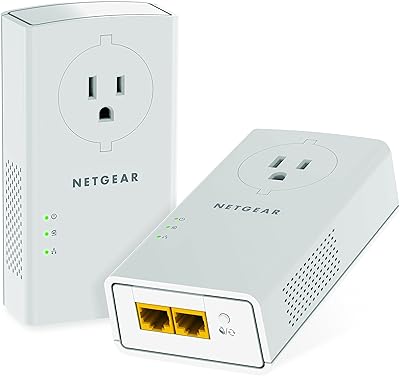
  • Wired Interface: Each adapter includes one RJ-45 Ethernet port for a direct wired connection to a router, desktop, smart TV, or gaming console.
  • Data Protocol: Wired connectivity complies with the IEEE 802.3 Ethernet standard, ensuring broad compatibility with routers, switches, and network-enabled devices.
  • Dimensions: Each adapter unit measures 1.5 x 3.43 x 4.76 inches, a compact footprint designed to minimise outlet obstruction on a standard wall plate.
  • Weight: The combined package weighs approximately 392 g (around 13.8 oz), reflecting the solid but lightweight construction of both adapter units.
  • Power Source: Both adapters draw power directly from the wall outlet and require no batteries or external power adapters beyond the standard mains plug.
  • Pairing Method: Initial setup uses a physical sync button on each adapter, allowing the two units to establish an encrypted connection without any software or app installation.
  • Encryption: The powerline link between the two adapters uses 128-bit AES encryption to secure data transmitted through the home's electrical wiring.
  • Model Number: The official model designation is PLW1000-100PES, which identifies this specific kit variant within Netgear's powerline product line.
  • Manufacturer: The PLW1000 is designed and manufactured by Netgear, a US-based networking hardware company with a long track record in home and business connectivity products.
  • Compatible Devices: The kit is compatible with desktops, laptops, smart TVs, streaming sticks, gaming consoles, and any other device with a standard RJ-45 Ethernet port or Wi-Fi capability.
  • First Available: This product was first made available for purchase in January 2016 and remains an active, non-discontinued product in Netgear's lineup.
  • UPC: The Universal Product Code for this kit is 606449109863, which can be used to verify the authentic retail listing.
  • Box Contents: The retail package includes two powerline adapter units, Ethernet cables for initial connection, and printed setup documentation.
  • Software Required: No software installation or account creation is required for standard operation; the entire setup is handled through the physical sync button pairing process.

Related Reviews

NETGEAR Powerline Adapter Kit PLP2000-100PAS
74%
91%
Ease of Setup
67%
Real-World Speed Performance
78%
Network Reliability & Stability
74%
Build Quality & Durability
88%
Pass-Through Outlet Design
More
Netgear XAVB5001 Powerline Network Adapter Kit
70%
88%
Ease of Setup
51%
Real-World Speed Performance
73%
Connection Stability
58%
Electrical Outlet Compatibility
67%
Value for Money
More
Netgear XAVB1301 Powerline 200Mbps Mini Adapter Kit
71%
91%
Ease of Setup
62%
Real-World Speed Performance
78%
Connection Stability
86%
Physical Design & Footprint
77%
Security Features
More
Netgear XETB1001 Powerline Network Adapter Kit
68%
88%
Ease of Setup
51%
Real-World Speed
67%
Connection Stability
58%
Value for Money
74%
Compatibility
More
NETGEAR Powerline AV+ 200 Adapter Kit XAVB2501
82%
86%
Performance
92%
Ease of Setup
82%
Connectivity Reliability
78%
Speed Stability
88%
Value for Money
More
NETGEAR Powerline 500 N300 WiFi Adapter Kit
66%
88%
Ease of Setup
54%
Real-World Throughput
61%
WiFi Coverage Extension
49%
Electrical Circuit Compatibility
73%
Build Quality & Design
More
NETGEAR XAVB2101 Powerline Network Adapter Kit
71%
91%
Ease of Setup
61%
Real-World Speed Performance
88%
Physical Design & Form Factor
72%
Network Stability
67%
Value for Money
More
NETGEAR R6120 AC1200 Dual Band WiFi Router
74%
92%
Ease of Setup
89%
Value for Money
74%
Wi-Fi Coverage
51%
Wired Ethernet Performance
76%
Wireless Speed
More
NETGEAR Powerline 500 XAVB5421
82%
88%
Performance for Streaming and Gaming
91%
Ease of Setup
62%
Connection Stability in Larger Homes
86%
Value for Money
89%
Extra Power Outlet Functionality
More
Tenda PH3 Powerline Network Adapter Set
69%
93%
Ease of Setup
67%
Real-World Speed Performance
82%
Connection Stability
61%
Wiring Compatibility
74%
Build Quality
More

FAQ

The honest answer is that it depends on your home's wiring. The Netgear PLW1000 Powerline WiFi Adapter Set works best in homes built after roughly 1990 where both adapters can share the same electrical circuit. If your wiring is older or your home has a split panel with multiple circuits, performance can vary quite a bit — some buyers get excellent results, others see disappointing speeds. If you are unsure, it is worth checking whether your target outlets share the same breaker before committing.
That instinct is right to question. The 1000 Mbps figure is a theoretical maximum under ideal lab conditions — in a real home you can realistically expect anywhere from 150 to 500 Mbps depending on your wiring quality, distance between adapters, and how much electrical noise is present on the line. That said, even the lower end of that range is more than sufficient for 4K streaming, video calls, and most everyday online tasks.

No, and that is genuinely one of the nicest things about this kit. You plug the first adapter in near your router, connect it with an Ethernet cable, plug the second adapter in wherever you need coverage, and press the sync buttons on both units within two minutes of each other. That is it — no app, no account, no driver installation required.

It really should go directly into a wall outlet. Surge protectors and power strips contain filtering components that actively interfere with the powerline signal, and many buyers who plug into them report significantly reduced speeds or intermittent connectivity. Direct wall outlet is the consistent recommendation from both Netgear and experienced users.

Realistically, expect solid coverage within one room and perhaps modest bleed into an immediately adjacent space. The integrated Wi-Fi radio is functional but not powerful enough to act as a full access point covering a large floor area. If you need wider wireless coverage, you would want to pair the Ethernet port on the remote adapter with a separate router or access point rather than relying on the built-in radio alone.

Yes, it is a known characteristic of this kit. The adapters do run warm during sustained use — warm enough that you will notice it if you handle them, but not at a level that indicates a malfunction or safety risk under normal circumstances. What helps is making sure they have reasonable airflow around them and are not boxed in behind furniture in a warm room.

Absolutely — that is actually the better option for gaming if you can manage it. The remote adapter has an Ethernet port on it, so you can run a short cable directly to your console or smart TV for a wired connection that is more stable and lower latency than the wireless option. You can even use both simultaneously: one device wired, others connecting over Wi-Fi from the same remote adapter.

For most users, yes — and by a meaningful margin. A Wi-Fi extender rebroadcasts an already weakened signal, which tends to compound the problem rather than fix it. This powerline Wi-Fi kit transmits data through the electrical wiring instead, so the signal arriving at the remote adapter is clean and independent of the Wi-Fi dead zone. The result is generally more consistent speeds and fewer random drops, particularly for stationary devices.

If they lose sync, re-pairing is straightforward: press the sync button on each adapter within two minutes of each other and they will re-establish the connection. It takes about the same amount of time as the initial setup and does not require any tools or software.

This is worth thinking through carefully before purchasing. Older buildings often have wiring that does not carry the powerline signal cleanly, and apartment buildings can present an additional wrinkle: if your electrical circuit shares a panel with neighbouring units, there is a small risk of the signal crossing over to adjacent flats, though the built-in AES encryption protects your data. More practically, older aluminium wiring or heavily loaded circuits tend to produce lower throughput. If your building is pre-1970 construction, managing your expectations — or testing with a return option available — is a sensible approach.

Where to Buy