Overview

The Actiontec PWR514K01 Powerline Network Adapter Kit takes a straightforward approach to a problem that trips up a lot of households: getting a reliable wired connection to rooms where Wi-Fi just won't cooperate. It works by pushing data through the electrical wiring already inside your walls, turning any standard outlet into a network access point. The receiver end includes a built-in 4-port hub, so you can connect several devices at once without a separate switch. One important thing to understand upfront: the 500 Mbps rating is a theoretical ceiling, not a guarantee. Actual speeds depend heavily on the age and condition of your home's wiring.
Features & Benefits

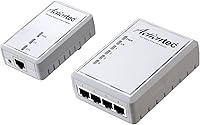
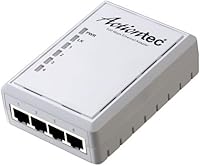
The most practical feature here is the 4-port Ethernet hub built into the receiving adapter — plug in your TV, gaming console, streaming box, and TiVo all at once without cluttering the room with an additional switch. Setup is genuinely simple: plug both adapters into wall outlets, press the pairing button, and you're connected. No discs, no drivers, no fuss. The kit also uses 128-bit AES encryption with a pushbutton key exchange, which is a step up from an open wireless network, though keep in mind powerline is still a shared medium by nature. The compact housing — just over four inches tall — keeps wall-outlet blocking to a minimum.

Best For

This wired networking kit is an especially good fit for anyone putting together a home theater setup where several devices live in one spot and all need a stable connection. Gamers who want to cut their ping without running cables through walls or ceilings will also appreciate it. Renters and anyone reluctant to drill holes for structured cabling will find the plug-in approach refreshing. It also solves the dead-zone problem — basements, detached garages, rooms at the far end of a house — where wireless signals fade or disappear entirely. If you're already on an older 200 Mbps powerline kit and feeling the squeeze, this offers a meaningful speed bump without changing your setup routine.

User Feedback

Among buyers, the plug-and-play experience is the most consistently praised aspect — people report being up and running within minutes. The four-port hub also earns regular compliments for saving users from buying a separate switch. On the downside, the gap between advertised and actual speeds is a recurring frustration. Homes with older electrical systems or circuits that carry heavy loads tend to see the biggest performance drop. A smaller number of users ran into trouble after pairing the Actiontec hub adapter with units from other brands — same-brand pairing is strongly recommended. With a 3.8 out of 5 rating across nearly 300 reviews, the overall picture is positive but clearly conditional on your home's wiring.

Pros

  • Plug-and-play setup gets most users connected in under five minutes with no software required.
  • The built-in 4-port hub eliminates the need for a separate switch in a home theater setup.
  • Delivers noticeably lower and more consistent latency than Wi-Fi for online gaming.
  • Solves dead-zone problems in basements and garages where wireless signals simply do not reach.
  • Works with any Ethernet-enabled device regardless of operating system or platform.
  • 128-bit AES encryption with pushbutton pairing is more secure than an open wireless network.
  • Compact form factor avoids blocking the adjacent outlet on a standard duplex receptacle.
  • A practical mid-range option for renters who cannot modify walls or run permanent cabling.

Cons

  • Real-world speeds fall significantly short of the 500 Mbps theoretical maximum in most homes.
  • Performance degrades noticeably on older electrical circuits or when heavy appliances share the same line.
  • No pass-through outlet means permanently losing one wall socket wherever the adapter is installed.
  • Cross-brand pairing with other powerline adapters is unreliable and frequently fails altogether.
  • Users in multi-unit buildings may face unpredictable performance due to shared building wiring.
  • No diagnostic feedback on the device makes troubleshooting a failed pairing frustrating and slow.
  • Long-term reliability is inconsistent, with a subset of users reporting unit failure within the first year.
  • Only one adapter in the kit includes the hub, limiting flexibility in how the network is extended.

Ratings

The scores below were generated by our AI engine after analyzing verified buyer reviews for the Actiontec PWR514K01 Powerline Network Adapter Kit from multiple global sources, with spam, bot-submitted, and incentivized feedback actively filtered out. Each category reflects the full spectrum of real user experiences — not just the highlights — so both the strengths and the frustrations are represented honestly. Where buyers consistently agreed, the scores reflect that consensus; where opinions were divided, the numbers and commentary tell the whole story.
Ease of Setup
91%
Buyers across skill levels — from complete networking novices to IT professionals — consistently report being connected within minutes of opening the box. There are no drivers to hunt down, no configuration portals to navigate, and the pushbutton pairing process works reliably on the first attempt for the vast majority of users.
A small number of buyers found that outlets on certain circuits simply refused to pair, requiring them to try different outlet locations around the home. Without any diagnostic feedback from the device, troubleshooting that situation felt like guesswork to those users.
Multi-Device Connectivity
88%
The built-in 4-port hub on the receiving adapter is the feature buyers talk about most positively. Being able to connect a gaming console, smart TV, streaming box, and TiVo all from a single wall adapter — without buying a separate switch — is a genuine convenience that home theater users appreciate immediately.
Four ports covers most living room setups but can feel limiting for users with more complex AV racks or home office corners where five or six wired devices are common. There is no way to expand the port count without adding external hardware.
Real-World Throughput
57%
43%
In homes with newer, well-maintained electrical wiring and outlets on the same circuit, users report throughput comfortably sufficient for 4K streaming and online gaming with noticeably lower latency than their previous Wi-Fi connections. For those users, the wired reliability alone justified the purchase.
The 500 Mbps figure is a theoretical maximum that almost no real-world installation reaches. Buyers on older homes report speeds that are sometimes a fraction of that ceiling, and heavy electrical loads from appliances on nearby circuits can drag performance down further during peak household usage.
Connection Stability
74%
26%
Compared to wireless, this wired networking kit delivers far more consistent latency, which gamers and video call users specifically call out as a meaningful improvement. Streaming sessions that previously stuttered due to Wi-Fi congestion tend to run cleanly once the powerline connection is in place.
Stability is directly tied to the quality and age of the home's electrical system. Users in older properties or apartments with shared wiring infrastructure report occasional drops and speed inconsistencies that do not occur in newer builds, making this a variable rather than guaranteed benefit.
Value for Money
69%
31%
For renters or anyone who cannot run Ethernet cable through walls, this powerline adapter kit offers a genuinely practical middle ground between a weak Wi-Fi extender and an expensive cabling job. The included 4-port hub adds tangible value that a basic two-adapter kit at a similar price would not provide.
Buyers who end up with slower-than-expected speeds on older wiring feel the price is harder to justify. At this price tier, some shoppers note that a quality mesh Wi-Fi node can cover the same use case without the circuit-dependency risk, which makes the value proposition feel uneven depending on your home.
Build Quality & Durability
72%
28%
The housing feels solid enough for a device that stays plugged in permanently, and the compact footprint means it does not aggressively block adjacent outlets on a standard duplex receptacle. Several long-term buyers mention units still functioning without issue after two or more years of continuous use.
The all-plastic construction does not feel particularly premium, and the white finish shows scuff marks over time in high-traffic outlet locations. A small number of users reported unit failures within the first year, though this appears to be a minority experience rather than a systemic problem.
Security
66%
34%
The inclusion of 128-bit AES encryption with a simple pushbutton key exchange puts this ahead of an open wireless network in terms of access control. For users sharing a home with neighbors on separate units, having encrypted traffic on the powerline adds a layer of protection they would not otherwise have.
Powerline technology is inherently a shared-medium protocol, meaning the encrypted signal still travels through wiring that may extend beyond a single unit in older multi-family buildings. Security-conscious users in apartment complexes or condos should research their building's wiring topology before assuming full isolation.
Cross-Brand Compatibility
48%
52%
Within an all-Actiontec setup, pairing is reliable and consistent. Users who buy a second Actiontec kit to extend their network to an additional room report straightforward pairing with no conflicts.
Mixing the Actiontec hub adapter with powerline units from other manufacturers is a known source of frustration. Several buyers who already owned adapters from competing brands found the devices would not pair reliably or at all, effectively requiring a full ecosystem replacement to use this kit properly.
Port & Outlet Footprint
78%
22%
The physical size of the adapter is reasonable for what it does — at just over four inches tall, it plugs into a standard outlet without physically blocking the second receptacle in most duplex configurations. That consideration matters when outlet space is already at a premium near an entertainment center.
Like most powerline adapters, this unit does not include a pass-through outlet, so it does permanently consume one socket. In locations where every outlet is already spoken for, that trade-off requires either a power strip or some creative rearranging.
Latency Performance
79%
21%
For gaming specifically, the latency improvement over Wi-Fi is the reason many buyers make the switch. Users running competitive online games report ping times that are more consistent and generally lower than what their 5 GHz wireless connection was delivering from a room away.
While latency is better than wireless on average, it does not match a direct Gigabit Ethernet run to a router. Users in the same room as their router would see no benefit, and latency can still vary slightly depending on how busy the home's electrical system is at any given moment.
Device Compatibility
83%
Because the connection is standard Ethernet, anything with an RJ45 port works without any configuration — game consoles, smart TVs, network-attached storage, IP cameras, desktop computers, and streaming devices all connect transparently. There is no platform dependency or firmware quirk to navigate.
Devices that rely solely on Wi-Fi and lack an Ethernet port are obviously excluded from this solution entirely. It is also worth noting that the hub side of this kit is limited to 100 Mbps per port in practice, which can be a bottleneck for users trying to push high-bandwidth transfers simultaneously across multiple ports.
Package Contents & Documentation
71%
29%
The kit ships as a ready-to-use pair with everything needed for a basic installation included. The quick-start guide covers the pairing process clearly enough that most users never need to visit Actiontec's support pages to get up and running.
Documentation beyond initial setup is thin. Users who encounter performance issues or pairing failures with specific outlet locations have little to go on from the included materials, and the troubleshooting guidance available online is not particularly comprehensive for edge cases.
Long-Term Reliability
67%
33%
A meaningful portion of long-term buyers report the kit running without interruption for multiple years in whole-home setups, which speaks to reasonable hardware durability when the operating environment — stable circuits, consistent outlet connections — cooperates.
The failure rate appears to climb in environments with frequent electrical fluctuations or power surges. A noticeable subset of reviewers mention one adapter dying before the other, which leaves the kit unusable and requires purchasing a replacement rather than being able to swap in a single unit easily.

Suitable for:

The Actiontec PWR514K01 Powerline Network Adapter Kit is a strong fit for anyone who needs a stable wired connection in a room where running physical Ethernet cable is impractical or impossible. Renters and apartment dwellers who cannot drill through walls or ceilings will find the plug-in approach a genuinely workable solution. It is particularly well-suited for home theater corners where a gaming console, smart TV, set-top box, and streaming device all need a reliable connection simultaneously — the built-in 4-port hub handles exactly that scenario without requiring a separate switch. Households dealing with dead Wi-Fi zones in basements, detached garages, or far-end bedrooms will also benefit, provided the home's electrical wiring is relatively modern and in good condition. Gamers looking to shave latency without committing to a full cabling project will find the connection stability a meaningful upgrade over a wireless connection from two rooms away.

Not suitable for:

The Actiontec PWR514K01 Powerline Network Adapter Kit is not the right choice for buyers expecting to consistently hit anywhere near the advertised 500 Mbps throughput, especially in older homes where electrical circuits carry heavy loads or where wiring runs are long and dated. Anyone living in a multi-unit building — an apartment complex or older condo — should research carefully before buying, as shared electrical infrastructure can undermine both performance and the theoretical security benefits of the AES encryption. Users who already own powerline adapters from another brand should be aware that cross-brand pairing is unreliable; this kit works best as a self-contained Actiontec pair. Those who need Gigabit throughput for large file transfers or simultaneous high-bandwidth use across all four ports will find the 100 Mbps practical ceiling per port a hard limitation. If your router is already in the same room as your devices, or if your home has strong Wi-Fi coverage throughout, this wired networking kit adds no meaningful benefit.

Specifications

  • Brand: Manufactured by Actiontec, a networking hardware company with a long history in powerline and DSL equipment.
  • Model Number: The exact model identifier for this kit is PWR514K01, which designates the 4-port hub variant in Actiontec's powerline lineup.
  • Theoretical Speed: This kit is rated for up to 500 Mbps throughput, a figure that represents the maximum under ideal laboratory conditions rather than typical real-world performance.
  • Ethernet Ports: The receiving adapter includes a built-in 4-port Ethernet hub, allowing up to four wired devices to connect simultaneously from a single wall outlet.
  • Dimensions: Each adapter measures 2.2 x 3 x 4.2 inches, a compact footprint designed to minimize interference with adjacent outlets on a standard duplex receptacle.
  • Weight: Each unit weighs 6.4 ounces, making the kit lightweight and easy to reposition between outlets during initial setup or troubleshooting.
  • Encryption: Network traffic is protected using 128-bit AES encryption, with security pairing initiated via a physical pushbutton on the adapter — no software configuration required.
  • Setup Method: The kit uses a fully plug-and-play pairing process that requires no installation discs, drivers, or web-based configuration portals.
  • Data Protocol: Communication between adapters uses the Ethernet data link protocol over the home's existing AC electrical wiring infrastructure.
  • Power Source: Both adapters draw power directly from a standard AC wall outlet and do not require a separate power supply or USB connection.
  • Color: The adapters are finished in white, a neutral tone designed to blend with typical residential wall outlet surroundings.
  • Compatible Devices: This wired networking kit works with any device equipped with a standard RJ45 Ethernet port, regardless of manufacturer, operating system, or device category.
  • Languages: Product documentation and quick-start materials are provided in both English and French.
  • Security Method: Pushbutton pairing generates and distributes encryption keys automatically between adapters, eliminating the need for manual password entry during the security setup process.
  • First Available: This kit was first listed for sale in April 2013, making it a mature product with an established user base and a documented real-world performance history.
  • BSR Ranking: At the time of evaluation, this kit held a Best Sellers Rank of number 304 in the Powerline Network Adapters category on Amazon.
  • Pass-Through Outlet: Neither adapter in this kit includes a pass-through AC outlet, meaning each unit permanently occupies one wall socket at its installed location.
  • Cross-Brand Pairing: This kit is designed and optimized to operate as a same-brand Actiontec pair; reliable interoperability with powerline adapters from other manufacturers is not guaranteed.

Related Reviews
Actiontec PWR511K01 500Mbps Powerline Network Adapter Kit
67%
88%
Ease of Setup
61%
Real-World Speed Performance
74%
Connection Stability
53%
Build Quality & Durability
67%
Value for Money
More
Netgear XAVB5001 Powerline Network Adapter Kit
70%
88%
Ease of Setup
51%
Real-World Speed Performance
73%
Connection Stability
58%
Electrical Outlet Compatibility
67%
Value for Money
More
Netgear XETB1001 Powerline Network Adapter Kit
68%
88%
Ease of Setup
51%
Real-World Speed
67%
Connection Stability
58%
Value for Money
74%
Compatibility
More
Linksys Powerline AV 1-Port Network Adapter Kit (PLEK400)
84%
93%
Setup & Installation
85%
Performance (Speed/Connectivity)
88%
Build Quality & Design
81%
Reliability & Stability
90%
Compatibility with Devices
More
D-Link Powerline AV Network Adapter Kit DHP-307AV
81%
83%
Performance
90%
Ease of Setup
78%
Reliability
70%
Speed Consistency
88%
Security (Encryption)
More
NETGEAR Powerline Adapter Kit PLP2000-100PAS
74%
91%
Ease of Setup
67%
Real-World Speed Performance
78%
Network Reliability & Stability
74%
Build Quality & Durability
88%
Pass-Through Outlet Design
More
Zyxel PLA5456 AV2000 Powerline Adapter Kit
74%
91%
Ease of Setup
67%
Real-World Throughput
74%
Network Stability
61%
Hardware Reliability
88%
Port Configuration
More
NETGEAR Powerline AV+ 200 Adapter Kit XAVB2501
82%
86%
Performance
92%
Ease of Setup
82%
Connectivity Reliability
78%
Speed Stability
88%
Value for Money
More
TP-Link TL-PA411KIT Powerline Network Adapter Kit
78%
94%
Ease of Setup
61%
Real-World Speed Performance
83%
Build Quality & Durability
88%
Compatibility
91%
Physical Footprint
More
D-Link DHP-601AV Powerline Adapter Starter Kit
85%
88%
Performance for Gaming
92%
Ease of Setup
85%
Speed and Reliability
90%
Value for Money
87%
Compatibility with Devices
More

FAQ

Almost certainly not in everyday use. The 500 Mbps figure is a theoretical maximum measured under controlled lab conditions. In a real home, you can expect actual throughput to be a fraction of that — how much depends heavily on the age and condition of your electrical wiring, the distance between adapters, and how many appliances share the same circuit. Newer homes with clean wiring tend to perform better; older properties with overloaded circuits will see the biggest gap between the advertised figure and what you actually get.

Not at all. You plug one adapter into an outlet near your router and connect it with an Ethernet cable, plug the second adapter into an outlet in the room you want to extend the network to, press the pairing button on each unit, and you are done. There is no software to install and no configuration interface to navigate. Most people are up and running in under five minutes.

Probably not reliably. While powerline adapters technically share underlying standards, mixing brands in practice leads to pairing failures or inconsistent connections more often than not. This wired networking kit is designed to work as a matched Actiontec pair. If you want to expand your network to additional rooms, your safest bet is to buy another Actiontec unit rather than trying to integrate adapters from another manufacturer.

This is worth thinking through carefully. In many apartment buildings — especially older ones — the electrical wiring runs through shared infrastructure that extends beyond your individual unit. Powerline signals can potentially travel beyond your walls in that scenario. The kit uses 128-bit AES encryption to protect your traffic, but it is still a shared-medium technology by nature. If you are in a newer building with clearly separated circuits per unit, the risk is lower, but there is no way to know for certain without understanding your building's wiring layout.

In most standard duplex outlets, the adapter's footprint is compact enough that the neighboring socket remains accessible. That said, it does permanently consume one outlet socket since neither adapter includes a pass-through port. If outlet space near your entertainment center is already tight, factor that in before buying.

Powerline adapters must be on the same electrical circuit — or at least circuits that share the same phase on your home's electrical panel — to communicate with each other. If the two outlets you choose are on entirely different circuits, the adapters will not pair and you will get no connection at all. This is one of the most common setup frustrations, and trying a different outlet combination usually resolves it.

For devices that have Ethernet ports, this powerline adapter kit generally delivers more consistent latency and a more stable connection than a Wi-Fi extender, which still relies on a wireless hop that introduces variability. The trade-off is that powerline performance depends on your wiring quality in a way that Wi-Fi does not. If your home has reliable electrical circuits, this is usually the better option for gaming consoles and smart TVs. If your wiring is old or your circuits are heavily loaded, a good Wi-Fi extender might actually outperform it.

The hub adapter in this kit has four Ethernet ports, so you can connect four devices directly without any additional hardware. If you need more than four connections at the receiving end, you can plug a separate unmanaged network switch into one of the ports to expand the available connections, though that adds cost and one more piece of hardware to manage.

It depends on what you need it for. The hardware is mature, which means the firmware is stable and real-world performance is well-documented. For connecting a home theater setup or solving a dead-zone problem in a basement or garage, it still does the job. If you need Gigabit speeds for demanding workloads, more modern kits with higher specifications would serve you better. For casual streaming, gaming, and multi-device AV setups in a home with decent wiring, it remains a practical and proven option.

Yes, it can. High-power appliances — microwaves, refrigerators, air conditioners — can introduce electrical noise onto your home's wiring that interferes with powerline signals. Running the adapters on outlets that are physically and electrically distant from major appliances tends to produce the most stable results. If you notice your connection slowing down or dropping at specific times of day, consider whether a nearby appliance on the same circuit could be the cause.