Overview

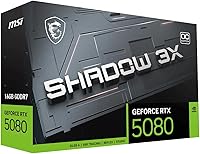
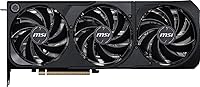
The MSI RTX 5080 Shadow 3X Graphics Card arrives as MSI's answer to enthusiasts who want the full RTX 5080 experience without the bulk of a reference blower or a two-slot cooler that runs hot and loud. It sits in a compelling position within the current lineup — not the absolute top-tier flagship, but close enough in real-world output that most buyers won't feel the gap. What immediately sets it apart is the SFF-Ready Enthusiast certification, a meaningful distinction for compact PC builders who've historically had to compromise on GPU performance to fit their cases. Build quality out of the box feels substantial, and the triple-fan cooler signals serious thermal intent from the start.
Features & Benefits

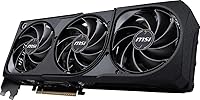
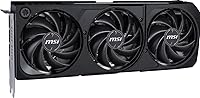
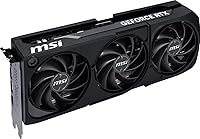
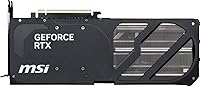
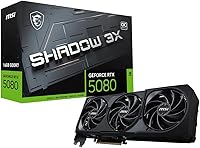
The triple-fan Shadow 3X cooler is the headline feature here, and it earns that attention. Three fans spread across a large heatsink keep temperatures in check even during extended gaming sessions, which directly translates to lower noise — buyers report this card running noticeably quieter than single or dual-fan alternatives at equivalent loads. Underneath, a nickel-plated copper base plate pulls heat away from both the GPU die and VRAM quickly, giving the cooler more to work with. The reinforced backplate adds rigidity and includes an airflow cutout that helps exhaust heat in tight SFF cases. With a 2655 MHz boost clock and 16GB of GDDR6X on a 256-bit bus, there is genuine headroom for 4K workloads and ray tracing without memory becoming a bottleneck.

Best For

This Shadow 3X card makes most sense for 4K enthusiast gamers who run demanding titles with ray tracing enabled and expect high frame rates rather than just passable ones. It is also an unusually good fit for compact PC builders — the SFF-Ready certification is not just a badge; it reflects real engineering choices around the card's dimensions and exhaust design that allow it to work in smaller chassis without cooking itself. Content creators doing GPU-accelerated rendering or heavy video work will appreciate the 16GB VRAM ceiling. And for upgraders sitting on RTX 3000-series or early 4000-series cards, this triple-fan GPU represents the kind of generational performance jump that actually justifies the investment.

User Feedback

Across its 121 ratings, MSI's RTX 5080 offering holds a 4.4-star average — a score that reflects genuine satisfaction rather than a small sample fluke. The most consistent praise centers on thermal performance under load: buyers repeatedly note the card stays cool and quiet in ways that single or dual-fan alternatives simply do not. SFF users specifically call out how well it fits and exhausts in compatible compact cases, validating the engineering behind the certification. On the critical side, a handful of reviewers flag the power connector demands as something to plan for carefully, and a few mention needing to verify case clearance before installation. Afterburner stability draws mostly positive comments, with users reporting solid headroom for modest overclocking without instability.

Pros

  • The triple-fan cooler keeps temperatures genuinely low under sustained 4K gaming loads, not just at idle.
  • Noise levels under full load are noticeably quieter than dual-fan or blower-style RTX 5080 alternatives.
  • SFF-Ready certification is backed by real dimensional engineering, making compact builds actually viable.
  • 16GB of GDDR6X handles large 4K texture packs and GPU-accelerated creative workloads without hitting a ceiling.
  • MSI Afterburner gives overclockers granular control over fan curves, clocks, and voltage with proven stability.
  • The nickel-plated copper base plate pulls heat from both the GPU die and VRAM simultaneously, not just the core.
  • The reinforced backplate resists GPU sag and includes an airflow cutout that helps exhausts work in tight cases.
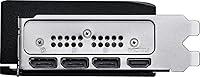
  • PCIe 5.0 x16 and four display outputs (3x DisplayPort, 1x HDMI) provide genuinely future-proofed connectivity.
  • Build quality feel is premium out of the box, with no flex or cheap plastics reported across buyer feedback.
  • A 4.4-star average across 121 verified ratings reflects consistent satisfaction rather than a handful of outliers.

Cons

  • Power connector requirements are demanding; buyers need to audit their PSU and cable situation before purchasing.
  • At nearly 12 inches long, case clearance must be verified carefully — assumptions have burned several buyers.
  • The price tier is steep, and the value case weakens considerably if your display or workload cannot max out the hardware.
  • Upgraders from mid-range RTX 4000-series cards may find the real-world performance jump smaller than expected.
  • Older PCIe 4.0 motherboards cannot deliver the full bandwidth this card is designed to use.
  • 1080p and standard 1440p gamers will find most of this card's capability sitting completely unused.
  • MSI Afterburner, while powerful, has a learning curve that casual users may find frustrating or overwhelming.
  • At 2.2 pounds, the card puts meaningful stress on the PCIe slot in cases without dedicated GPU support brackets.

Ratings

The scores below were generated by our AI rating engine after analyzing verified global buyer reviews for the MSI RTX 5080 Shadow 3X Graphics Card, with automated filtering applied to remove suspected bot activity, incentivized submissions, and duplicate accounts. The result reflects a balanced synthesis of what real owners consistently praise and where they run into friction — no sugarcoating, no omissions.

Thermal Performance
93%
Buyers running sustained 4K gaming sessions report that this Shadow 3X card holds temperatures in a range that most dual-fan alternatives simply cannot match under comparable load. The nickel-plated copper base plate draws heat away from both the GPU die and VRAM quickly, and reviewers note that performance does not degrade during long overnight render jobs or marathon gaming sessions.
A small number of reviewers in poorly ventilated cases or hot ambient environments report temperatures climbing higher than expected, suggesting the cooler performs best when the chassis itself provides adequate airflow. Buyers in warm climates without case intake fans should factor this into their build planning.
Noise Level
88%
Under gaming loads where comparable blower or dual-fan cards become audible across the room, this triple-fan GPU stays noticeably quieter — a point buyers raise repeatedly in reviews. The ability to set a custom fan curve in Afterburner lets noise-sensitive users dial things down even further without sacrificing meaningful thermal headroom.
At absolute maximum fan speed during stress testing or poorly tuned fan curves, the card is not silent, and a handful of reviewers who left fan control on auto report occasional unexpected spin-ups that are jarring during quiet moments in games or media playback.
4K Gaming Performance
91%
Reviewers targeting 4K at high refresh rates with ray tracing enabled consistently report that this card handles even the most demanding titles without the frame-rate dips that plagued previous generation cards at similar settings. DLSS support adds another layer of headroom, making the experience feel genuinely future-proofed for the next few years of game releases.
Buyers upgrading from mid-range RTX 4000-series cards occasionally express that the jump at standard rasterization in less demanding titles feels smaller than the price difference implies, particularly at 1440p where the card is underutilized relative to its capability.
SFF Compatibility
84%
SFF builders who verified case compatibility before purchasing report that the card fits and exhausts impressively well for its performance tier, and the backplate airflow cutout earns specific praise in compact chassis where every exhaust path matters. The SFF-Ready Enthusiast certification genuinely reflects real engineering choices rather than being a hollow badge.
Case clearance at 11.93 inches is tight enough that several buyers encountered fitment issues because they did not cross-reference their specific case model against the certification list before ordering. The certification narrows the compatible case pool considerably, which is frustrating if your existing case falls just outside it.
Overclocking Headroom
82%
18%
Reviewers who use Afterburner report that the Shadow 3X cooler provides enough thermal margin to push meaningfully beyond the 2655 MHz stock boost without hitting the throttle ceiling that limits competing designs. Real-world testers describe stable operation at modest manual overclocks with no instability or unexpected crashes during extended sessions.
The gains above stock are real but incremental rather than transformative, and buyers expecting dramatic performance jumps from overclocking may find the returns modest relative to the effort of tuning. Afterburner also has a learning curve that discourages casual users from unlocking this potential at all.
Build Quality
89%
Buyers consistently describe the card as feeling premium out of the box, with no flex in the PCB, solid fan blade construction, and a backplate that adds genuine rigidity rather than just aesthetics. The overall impression is of a product built to last, not one that cut corners to hit a price point.
At 2.2 pounds, the card puts noticeable stress on the PCIe slot in tower builds without a GPU support bracket, and MSI does not include one in the box. A small number of reviewers flag this as an oversight at this price tier, where a bracket should be standard.
VRAM Adequacy
86%
Content creators doing GPU-accelerated compositing and 3D rendering report that 16GB of GDDR6X is enough headroom to handle complex scenes and high-resolution video timelines that would stall cards with less memory. For 4K gaming, the buffer handles current texture packs comfortably with room to spare.
A handful of reviewers looking ahead note that as game texture budgets grow, 16GB may feel constrained within a few years — particularly compared to the RTX 5090 tier which offers significantly more VRAM for workloads that can leverage it. For current use this is a minor concern, but long-term buyers should weigh it.
Connectivity & Display Output
87%
Buyers running triple-monitor setups report that the three DisplayPort outputs and single HDMI port cover virtually every realistic multi-display configuration without adapters, and all four outputs support 4K natively. The PCIe 5.0 interface also means the card is slot-ready for the next generation of motherboards.
Users on older PCIe 4.0 platforms will not extract the full bandwidth the interface was designed to deliver, though real-world gaming performance impact is minimal at present. The single HDMI output can also be a constraint for buyers running a mixed DisplayPort and HDMI monitor setup with more than one HDMI display.
MSI Afterburner Software
78%
22%
Experienced overclockers and power users rate Afterburner as the most capable GPU tuning software available, and reviewers praise its real-time monitoring overlay and granular fan curve editor specifically. For buyers who want to extract every last frame from this triple-fan GPU, it is a genuinely powerful tool.
The interface has not been substantially modernized in years, and newer buyers frequently report confusion navigating voltage control or misreading sensor graphs without a tutorial. A few reviewers also note occasional compatibility hiccups after Windows updates that require reinstallation to resolve.
Installation Experience
74%
26%
Most reviewers describe the physical installation as straightforward for anyone with prior GPU swap experience — the card seats cleanly and the backplate cutout makes cable routing slightly easier than fully sealed alternatives. The triple-slot design is wide but predictable in cases with adequate clearance.
Power connector planning is the single most common installation complaint, with multiple reviewers flagging that the connector orientation and required cable type caught them off guard. Buyers with pre-existing cable management setups in tight cases report a more frustrating installation than expected.
Value for Money
76%
24%
Buyers who need strong 4K performance in a compact chassis with low noise report feeling that the combined thermal, SFF, and overclocking package justifies the investment versus cheaper alternatives that compromise on at least one of those axes. The cooler quality and build premium are consistently cited as what separates this from less expensive RTX 5080 variants.
Buyers who are not maximizing the SFF compatibility or overclocking features tend to feel the value proposition is thinner, since raw gaming performance at this tier is broadly similar across competing RTX 5080 designs that cost less. The price premium is earned for specific use cases, not universally.
Driver & Software Stability
81%
19%
The majority of reviewers report stable daily operation across both gaming and creative workloads without driver-related crashes or artifacting, and NVIDIA's driver support for the RTX 5080 architecture is regarded as mature for a relatively recent launch. Afterburner OC profiles save and reload reliably for users who have set them up correctly.
A small subset of reviewers encountered driver instability specifically when pushing overclocks to the edge of the card's limits, and a few note that early driver releases after the RTX 5080 launch had occasional quirks that required rolling back temporarily. These issues appear largely resolved in current driver versions.
Case Clearance Practicality
69%
31%
Buyers who did their homework on case compatibility before purchasing report that the card fits as expected and the SFF-Ready certification makes the research process easier than evaluating a non-certified card of similar length. The card's documented dimensions make pre-purchase planning straightforward for careful builders.
At nearly 12 inches long and triple-slot wide, this is not a forgiving card for builders with older or non-certified compact cases, and clearance surprises are the most frequently mentioned negative across reviews. Several buyers had to return the card or purchase a new case, making this a genuine pre-purchase checklist item rather than an afterthought.
Power Efficiency
71%
29%
Under mixed or light workloads, reviewers note that the card scales power draw down noticeably, and idle temperatures and fan behavior are well-managed without user intervention. The triple-fan cooler helps the card run cooler at a given power level than smaller cooler designs, which indirectly improves efficiency under sustained load.
At full gaming or rendering load, power draw is substantial and demands a high-capacity PSU along with quality cabling — this is not a card for buyers running a budget power supply. Some reviewers express that the power appetite relative to the performance delta over the previous generation feels less efficient than anticipated.

Suitable for:

The MSI RTX 5080 Shadow 3X Graphics Card is built for a specific kind of buyer, and if you fit the profile, it is hard to argue against. Enthusiast gamers running 4K monitors at high refresh rates will find this card handles demanding titles with ray tracing and DLSS without breaking a sweat, even during long sessions. It is an especially strong pick for small form factor builders — the SFF-Ready Enthusiast certification reflects real engineering decisions around card dimensions and exhaust design, not just a marketing label, meaning compatible compact cases get genuinely good thermal results. Content creators doing GPU-accelerated video encoding, 3D rendering, or heavy compositing work will also benefit from the 16GB GDDR6X buffer, which provides enough headroom to avoid the memory ceiling that trips up smaller cards on complex scenes. Overclockers get a serious tool here too: Afterburner integration with a cooler this capable means you can push beyond stock clocks and monitor every variable in real time without worrying about thermal throttling killing your headroom.
Not suitable for:

The MSI RTX 5080 Shadow 3X Graphics Card is a poor match for buyers who cannot fully leverage what a card at this performance tier actually requires. If your gaming is primarily done at 1080p or 1440p on a standard 60Hz display, you will be paying a significant premium for capability that your monitor and use case simply cannot consume. Budget-conscious builders or anyone upgrading from a mid-range RTX 4000-series card may find the performance delta disappointing relative to the investment. The card's physical size — nearly 12 inches long — also demands careful case planning; it is SFF-compatible under the right conditions, but assuming it will fit without checking your specific chassis clearance against the specs is a mistake several buyers have already made. Additionally, anyone running an older PCIe 4.0 or 3.0 motherboard should verify compatibility and understand they will not extract the full bandwidth potential the PCIe 5.0 interface is designed to deliver. If your workload is light gaming, basic productivity, or streaming at modest resolutions, this triple-fan GPU is simply more card than you need.
Specifications

  • GPU Chip: Powered by the NVIDIA GeForce RTX 5080 processor built on NVIDIA's latest architecture.
  • VRAM: Equipped with 16GB of GDDR6X memory for handling large 4K textures, ray tracing, and GPU-accelerated creative workloads.
  • Memory Bus: A 256-bit memory bus provides substantial bandwidth to keep the GPU fed during demanding rendering and gaming tasks.
  • Boost Clock: The GPU boosts to 2655 MHz out of the box, with additional headroom available through MSI Afterburner overclocking.
  • Cooling System: A triple-fan Shadow 3X cooler with a large heatsink and nickel-plated copper base plate manages thermals across both the GPU die and VRAM simultaneously.
  • Backplate: A reinforced metal backplate adds structural rigidity and features an airflow cutout that allows exhaust heat to pass through in tight chassis installations.
  • Display Outputs: Three DisplayPort outputs and one HDMI port support multi-monitor configurations and high-refresh displays up to 3840x2160 resolution.
  • Interface: Uses a PCIe 5.0 x16 slot interface, delivering maximum available bandwidth on compatible modern motherboards.
  • SFF Certification: Carries the SFF-Ready Enthusiast designation, indicating compatibility with a curated range of small form factor cases that meet specific clearance requirements.
  • OC Software: MSI Afterburner is included for real-time GPU monitoring, custom fan curve configuration, and manual clock and voltage adjustment.
  • Card Length: The card measures 11.93 inches in length, requiring careful case clearance verification before installation.
  • Card Width: At 4.76 inches wide, this is a triple-slot card that occupies significant vertical space in the chassis.
  • Card Thickness: The card's slot profile measures across three expansion slots, so adjacent slot availability on the motherboard must be accounted for.
  • Weight: The card weighs 2.2 pounds, which places meaningful load on the PCIe slot and may benefit from a GPU support bracket in tower builds.
  • Max Resolution: Supports display output at up to 3840x2160 (4K UHD) natively across all connected monitors.
  • Model Number: The official MSI model identifier is V531-003R, useful for verifying compatibility documentation and warranty registration.
  • Base Plate Material: The nickel-plated copper base plate conducts heat away from the GPU and memory modules faster than aluminum alternatives.
  • Manufacturer: Designed and manufactured by MSI (Micro-Star International), a long-established GPU and PC hardware brand.

Related Reviews
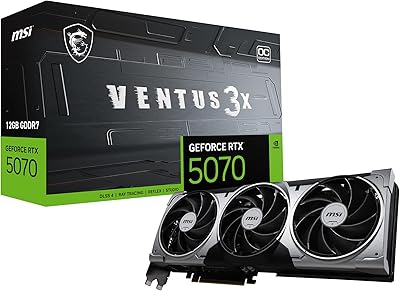
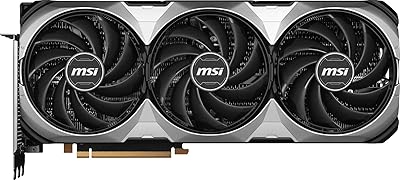
MSI RTX 5070 Ventus 3X OC 12GB
82%
88%
Gaming Performance
86%
Thermal Management
83%
Noise Levels
84%
Build Quality
79%
Value for Money
More
MSI GeForce RTX 4080 SUPER 16GB VENTUS 3X OC Graphics Card
84%
96%
Gaming Performance
91%
Cooling Efficiency
65%
Power Consumption
89%
Build Quality
94%
4K/8K Gaming Compatibility
More
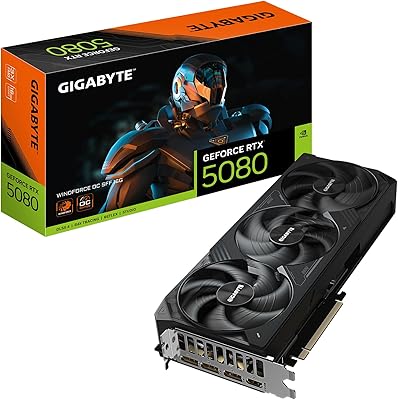
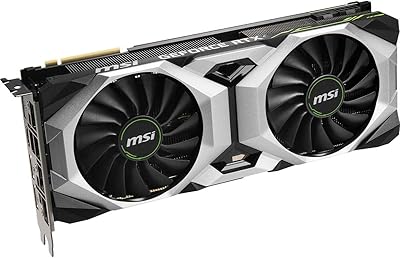
GIGABYTE GeForce RTX 5080 WINDFORCE OC SFF 16G
78%
93%
Gaming Performance
91%
DLSS 4 & AI Features
89%
SFF Compatibility & Fit
86%
Thermal Performance
84%
Noise Levels
More
ASUS Prime RTX 5080 16GB Graphics Card
80%
93%
Gaming Performance
91%
Thermal Management
88%
Noise Level
89%
SFF Compatibility
67%
Value for Money
More
MSI GeForce RTX 2080 Super 8GB GDDR6 Graphics Card
87%
94%
Performance
89%
Cooling Efficiency
91%
4K Gaming Experience
92%
Ray Tracing Capability
87%
VR Compatibility
More
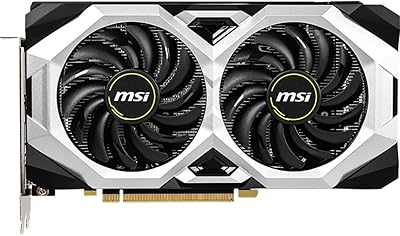
MSI GeForce RTX 2060 VENTUS 6G OC Graphics Card
86%
91%
Performance at 1080p
87%
Performance at 1440p
90%
Ray Tracing and DLSS Support
89%
VR Performance
88%
Cooling and Noise Levels
More
MSI RTX 4060 Ventus 2X Graphics Card
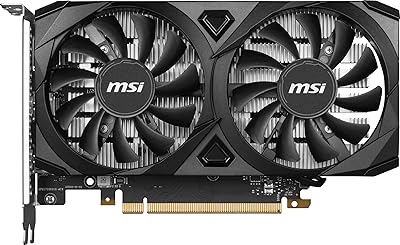
82%
88%
1080p Gaming Performance
83%
Thermal Management
91%
Noise Level
71%
1440p Gaming Performance
63%
VRAM Adequacy
More
MSI GeForce RTX 3050 VENTUS 2X 6G OC Graphics Card
83%
89%
Gaming Performance (1080p/1440p)
92%
Cooling Performance
85%
Build Quality
91%
Price-to-Performance Ratio
88%
Ease of Installation
More
MSI RTX 3070 Ventus 2X OC GPU
79%
91%
1440p Gaming Performance
78%
Thermal Management
83%
Noise Level
62%
VRAM Adequacy
74%
Value for Money
More
MSI GeForce RTX 5060 Ti 16G VENTUS 2X OC Plus Graphics Card
87%
92%
Gaming Performance
89%
Cooling Efficiency
87%
Build Quality
91%
Compatibility with Modern Systems
88%
Price-to-Performance Ratio
More

FAQ

The SFF-Ready Enthusiast certification is based on real dimensional specs and MSI's cooperation with case manufacturers to verify fit. That said, you still need to cross-check your specific case against the card's 11.93-inch length and triple-slot width before buying. Look for cases that explicitly list SFF-Ready Enthusiast GPU compatibility in their specs — that is where the certification actually pays off.

Buyers consistently report that the triple-fan cooler keeps noise levels noticeably lower than dual-fan or blower designs running the same workload. It is not silent, but most reviewers describe it as unobtrusive rather than distracting during extended gaming sessions. Setting a custom fan curve in Afterburner can push noise down further if acoustics are a priority for you.

NVIDIA and MSI recommend at least an 850W power supply for RTX 5080-class cards, though many builders running this Shadow 3X card with a full enthusiast system opt for 1000W to leave headroom. You should also check that your PSU has the correct power connector configuration or that you have a compatible adapter — this is one area where buyers have run into trouble.

Yes, PCIe is backward compatible, so the card will work in a PCIe 4.0 slot. You will not get the full bandwidth that a PCIe 5.0 slot provides, but in practical gaming and rendering workloads the real-world performance difference is minimal for most users right now.

Afterburner lets you manually adjust GPU clock speeds, memory speeds, fan curves, and voltage, plus monitor temperatures and usage in real time. For casual users the default out-of-box settings are perfectly solid, so you do not have to touch it. For overclockers, it is genuinely the most capable GPU tuning tool available and reviewers report the Shadow 3X cooler gives you meaningful thermal headroom to push clocks beyond stock without throttling.

It handles both well. The 16GB of GDDR6X is enough buffer for complex 3D scenes and high-resolution video timelines that would stall smaller cards. Applications like DaVinci Resolve, Blender, and Adobe Premiere all benefit from the RTX architecture and that VRAM ceiling, making this a practical choice for creators who also game.

The card does not include a dedicated anti-sag bracket in the box. At 2.2 pounds with a triple-fan cooler, sag is a real concern in tower cases, especially over time. An aftermarket GPU support bracket is a worthwhile few-dollar addition if your case does not have one built in.

Yes. The three DisplayPort outputs plus one HDMI port mean you can run up to four displays at once, and three-monitor setups are straightforward with no adapters required. All outputs support 4K resolution, so a triple 4K monitor workstation is achievable with the right display hardware.

The RTX 5090 sits above this card in raw performance, particularly in memory bandwidth and VRAM capacity, so workloads like extreme 8K rendering or the most demanding ray tracing scenarios will show a gap. For 4K gaming and typical creative workloads, the difference is far smaller and most buyers in this tier find the Shadow 3X card hits a very capable sweet spot without the flagship premium.

In standard open-air builds it is mostly a structural feature, but in compact SFF cases with limited exhaust routing, the cutout allows hot air trapped behind the card to escape through the back of the GPU rather than recirculating inside the case. SFF buyers specifically call this out as a meaningful thermal benefit in smaller chassis where every exhaust path matters.

Where to Buy