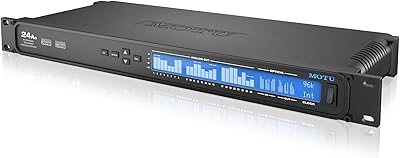
Overview

The MOTU MIDI Express 128 USB MIDI Interface has occupied a specific, well-earned corner of the professional studio market since its release in 2005 — and that staying power says something. This isn't a device aimed at beginners or home producers with a single keyboard. It was built for musicians and engineers who manage sprawling hardware rigs: multiple synthesizers, drum machines, samplers, all talking to each other and to a DAW simultaneously. The 8x8 expandable architecture with 128 MIDI channels is the core proposition here. If you need that kind of routing depth, few alternatives have matched it this long.

Features & Benefits

What sets the Express 128 apart in practical use is the sheer scale of its routing capability. Eight discrete MIDI inputs and eight outputs run simultaneously, letting you route signal to and from a wide range of hardware without creating a bottleneck in your signal chain. USB connectivity is a welcome modernization — no parallel ports, no serial adapters, no hunting for obsolete cables. The expandable design means the interface can grow alongside your rig rather than becoming a ceiling. One important caveat: official support is confirmed for Windows, so macOS users should verify current driver compatibility before purchasing.

Best For

This rack unit is clearly built for one type of buyer: the hardware-heavy studio owner. If you are running three or four synthesizers, a dedicated drum machine, a few samplers, and some vintage outboard gear, complex MIDI routing stops being a nice feature and becomes a necessity. It also suits live performers who rely on multiple hardware instruments triggered precisely from a central sequencer. Recording engineers pulling legacy gear into a modern DAW workflow will find the channel headroom genuinely useful. It is not the right pick for someone with a laptop and one keyboard — that buyer would be overpaying for capability they will never use.

User Feedback

With 57 ratings and a 3.7 out of 5 average, the feedback picture is mixed but instructive. Users who needed exactly what this MIDI interface offers — reliable, high-channel-count routing across a large hardware rig — tend to rate it highly, praising its rock-solid build and consistent timing performance. The criticism clusters around software. Driver support on newer operating systems is a recurring sore point, and some buyers found the initial setup more involved than expected. These are not signs of a bad product so much as a specialized one. Once configured correctly, most users report it running without issue for years — but getting there can test your patience.

Pros

  • Eight discrete MIDI inputs and eight outputs allow simultaneous routing across a large number of hardware devices without signal conflicts.
  • The 128-channel capacity is exceptionally high for a single interface, making it one of the most capable options in its class.
  • USB connectivity modernizes what was historically a serial-port-dependent category, simplifying cable management considerably.
  • The expandable architecture means the interface can scale alongside a growing studio rig rather than becoming a bottleneck.
  • Rack-mountable form factor integrates cleanly into permanent studio installations without taking up desk space.
  • Users who get it configured correctly consistently report reliable, stable performance over years of heavy use.
  • Build quality draws frequent praise from long-term owners, with the hardware feeling appropriately solid for a professional studio environment.
  • For producers upgrading from legacy MIDI interfaces, this rack unit offers a practical path to USB without sacrificing channel count.

Cons

  • Driver support on newer operating systems — particularly recent macOS versions — is inconsistent and requires verification before purchasing.
  • Initial setup can be genuinely complex and time-consuming, especially for buyers without prior rack gear experience.
  • The 3.7 out of 5 average rating across 57 reviews suggests a meaningful portion of buyers encountered real frustrations.
  • No official macOS compatibility is listed, which immediately eliminates a large segment of the potential buyer pool.
  • Customer support and firmware update availability for a product first released in 2005 may be limited going forward.
  • The physical dimensions (24 x 12 x 5 inches) and 4.4-pound weight make this impractical for portable or mobile setups.
  • Buyers who encounter driver issues report that troubleshooting can be a significant time investment with limited community resources.
  • The age of the product line means long-term software support from MOTU cannot be taken for granted as operating systems continue to evolve.

Ratings

Our AI rating system analyzed verified global user reviews for the MOTU MIDI Express 128 USB MIDI Interface, actively filtering out incentivized, bot-generated, and unverified feedback to surface what real buyers actually experience. The scores below reflect a balanced picture — where this rack unit genuinely excels for complex hardware rigs, and where it falls short for certain buyers and system configurations. Both the strengths and the friction points are represented transparently across each category.

MIDI Routing Capability
93%
For users managing large hardware rigs, the 8x8 architecture with 128 channels is the primary reason to buy this interface, and it delivers on that promise consistently. Studio owners routing signal across multiple synthesizers, drum machines, and samplers simultaneously report very few bottlenecks or channel conflicts in regular use.
The depth of routing capability is genuinely wasted on smaller setups, and buyers who purchased it for a two or three device rig often feel they overpaid. There is no simplified mode for lighter use cases — you get the full complexity whether you need it or not.
Build Quality
88%
Long-term owners frequently praise the physical construction, describing the chassis as solid and appropriately heavy for a permanent rack installation. Several users report running the unit for five or more years without any hardware failure, which is a strong signal for a product in daily studio use.
A handful of buyers noted that port connectors can feel slightly stiff initially, requiring careful cable insertion to avoid strain. The unit's size and weight also make it impractical for anyone who needs to move gear between venues regularly.
MIDI Timing Accuracy
84%
Users running tight, multi-device sequences consistently report that MIDI timing holds up well even under load, which is critical for producers layering drum machines with hardware sequencers. The USB implementation performs within acceptable tolerances for both recording and live playback scenarios.
A small subset of users noted occasional jitter when running a very high number of active channels simultaneously, though this appears to be an edge case rather than a standard complaint. Those running time-critical setups alongside resource-heavy DAW sessions reported slightly less consistency.
Driver Stability
51%
49%
On Windows systems that match the supported configuration, many users report that once drivers are correctly installed, the interface runs stably for extended periods without requiring frequent reinstallation. For buyers on a compatible, static Windows setup, the driver experience is largely unremarkable in a positive sense.
Driver compatibility is the single most recurring pain point across user reviews, particularly on macOS and newer Windows versions following OS updates. Several buyers reported losing functionality entirely after a system update, with limited official support to resolve the issue — a significant risk given the product's age.
Setup & Initial Configuration
57%
43%
Buyers with prior experience setting up rack-based MIDI gear generally find the configuration process logical and manageable once the drivers are in place. The port layout is clear and consistent with industry conventions, making physical cabling straightforward for experienced users.
Non-technical buyers and those new to multi-port MIDI interfaces frequently describe the setup process as more complex than expected, with several reporting hours spent troubleshooting before achieving a stable configuration. The lack of modern guided setup software is a notable gap for a product still actively sold.
macOS Compatibility
38%
62%
Some users on older macOS versions — particularly those who have intentionally avoided recent OS updates — report functional operation with legacy drivers. For those running a frozen, stable macOS environment in a dedicated studio machine, the compatibility situation is more manageable.
Current macOS versions are not officially supported, and buyers who assumed compatibility based on the USB connection alone frequently encountered non-functional installs. This is a hard dealbreaker for Mac-based studios and represents a significant limitation for a product still listed as active.
Value for Money
66%
34%
For the specific buyer who genuinely needs 128 channels and 8x8 MIDI routing, the unit offers a level of capability that few alternatives match, making the investment reasonable relative to the use case. Long-term durability further strengthens the value case for studio owners planning a permanent installation.
Buyers who discover post-purchase that their setup does not require this level of channel count tend to feel the cost was not justified. The driver issues also factor into value perception — if significant time is lost troubleshooting compatibility, the effective cost in effort rises considerably.
Expandability
81%
19%
The expandable architecture is a genuine long-term asset for studios planning to grow their hardware inventory over time. Being able to integrate this rack unit into a larger system without replacing it outright is a meaningful practical benefit that experienced studio builders recognize immediately.
Expansion requires compatible additional hardware, which adds cost and setup complexity. There is limited documentation for non-standard expansion configurations, and users attempting to combine multiple units sometimes report needing to experiment to achieve stable multi-unit operation.
Physical Design & Form Factor
79%
21%
The standard rack-mountable form factor fits naturally into professional studio environments and keeps the unit securely positioned in a permanent installation. The front panel layout is clean and functional, making port identification straightforward even in low-light studio conditions.
At 24 x 12 x 5 inches and 4.4 pounds, this is not a compact or portable unit by any measure, and it is entirely unsuitable for mobile rigs or shared spaces where gear needs to be set up and broken down regularly. Desk or tabletop placement is also awkward given the unit's dimensions.
Software Integration
62%
38%
On supported systems, the Express 128 integrates with major DAW platforms including Ableton Live and Cubase as a standard MIDI device, requiring no proprietary plugin layer for basic operation. Experienced DAW users find the integration straightforward once the OS-level driver is stable.
The absence of a modern companion app or updated configuration utility is a recurring frustration, especially compared to newer interfaces that offer browser-based or app-based routing editors. Users accustomed to visual patch management tools will find the experience comparatively bare.
Long-term Reliability
83%
Hardware-level reliability over multi-year use is one of the most consistent positive themes across long-term user reviews. Buyers who have owned the unit for three or more years and maintained a stable OS environment report very few instances of unexpected failure or performance degradation.
Long-term software reliability is a different story — OS updates on both Windows and macOS have disrupted driver functionality for multiple users over the product's lifespan, and there is no guarantee of continued driver development from MOTU for such a mature product.
Customer Support
48%
52%
MOTU has a known presence in the professional audio community and maintains a support infrastructure that experienced users can navigate for legacy products. For buyers who know exactly what to search for, community forums and archived documentation can fill some gaps.
Official support responsiveness for a product released in 2005 is understandably limited, and several buyers reported slow or unhelpful responses when seeking driver assistance for newer OS versions. The support experience is inconsistent enough that it adds meaningful risk to the purchase decision.
Compatibility with Modern DAWs
69%
31%
On a correctly configured Windows system, the interface communicates reliably with modern DAW software that supports standard MIDI device inputs. Most major platforms — Logic, Live, Cubase, Pro Tools — will recognize it as a MIDI input/output source without requiring proprietary plugins.
DAW compatibility is only as reliable as the underlying OS driver, so any instability at the driver level cascades directly into DAW performance. Users who have experienced mid-session driver drops report that recovering without restarting the DAW entirely is not always possible.
Documentation & Onboarding
44%
56%
The physical interface itself is intuitive enough for experienced MIDI engineers who already understand port-based routing — labels are clear and the layout follows standard conventions. For that buyer, detailed documentation is less necessary.
The included documentation has not kept pace with modern OS environments, and buyers looking for step-by-step guidance for current Windows or macOS versions are largely left to figure things out independently. This is a notable gap that disproportionately affects buyers who are new to multi-port MIDI interfaces.

Suitable for:

The MOTU MIDI Express 128 USB MIDI Interface is purpose-built for studio musicians and producers who have outgrown simple two-device setups and now manage full hardware rigs. If your studio includes four or more synthesizers, a dedicated hardware sequencer, drum machines, and samplers all needing simultaneous, reliable MIDI communication, this rack unit was designed with exactly that workflow in mind. Recording engineers who regularly bridge vintage outboard gear into a modern DAW environment will find the 128-channel headroom genuinely useful rather than excessive. Live performers who depend on precise, multi-device MIDI triggering night after night will also appreciate its reputation for timing consistency under load. It is equally well suited for producers upgrading from older serial or parallel port MIDI interfaces who need USB connectivity without giving up the channel count that complex rigs demand.

Not suitable for:

The MOTU MIDI Express 128 USB MIDI Interface is a poor fit for anyone who does not already have — or actively plan to build — a large hardware MIDI setup. A producer working entirely in-the-box with a single controller keyboard is paying for routing capacity they will never come close to using, and simpler, less expensive interfaces would serve them far better. macOS users should approach with real caution: while the interface has confirmed Windows support, driver compatibility on current macOS versions is not guaranteed and has been a sticking point for some buyers. This rack unit also requires a meaningful amount of technical comfort to configure properly, so anyone expecting a plug-and-play experience is likely to be frustrated. Budget-conscious buyers building a starter studio should look elsewhere; the value proposition here only makes sense when the full channel capacity is genuinely needed.

Specifications

  • Brand: Manufactured by MOTU (Mark of the Unicorn), a well-established American company specializing in professional audio and MIDI hardware.
  • Model: The unit is officially designated as the MIDI EXPRESS 128, a rack-mountable USB MIDI interface in MOTU's product lineup.
  • MIDI Inputs: The interface provides 8 independent MIDI input ports for receiving signal from external hardware devices simultaneously.
  • MIDI Outputs: Eight dedicated MIDI output ports allow simultaneous signal routing to multiple synthesizers, samplers, drum machines, or other MIDI-capable hardware.
  • MIDI Channels: The interface supports a total of 128 MIDI channels across its input and output ports, enabling large-scale multi-device configurations.
  • Connectivity: Connection to a host computer is handled via USB, eliminating the need for legacy serial or parallel port adapters.
  • Expandability: The architecture supports expansion, allowing integration with additional units or larger studio systems through daisy-chaining configurations.
  • Compatible Devices: The interface is officially listed as compatible with Windows-based personal computers; macOS compatibility should be verified directly with MOTU before purchasing.
  • Supported OS: Windows is the confirmed supported operating system according to the manufacturer listing; macOS driver availability varies and is not guaranteed for current versions.
  • Form Factor: The unit is designed as a rack-mountable device suitable for permanent installation in a professional studio rack enclosure.
  • Dimensions: Physical dimensions measure 24 x 12 x 5 inches, making it a full-sized rack unit appropriate for standard rack installations.
  • Weight: The unit weighs 4.4 pounds, reflecting a solid, all-metal build quality typical of professional rack hardware.
  • Release Date: The product was first made available in October 2005 and has remained in continuous production without being discontinued by the manufacturer.
  • Discontinued: As of the available product data, the MIDI EXPRESS 128 has not been discontinued by MOTU and remains an active product in their catalog.
  • ASIN: The Amazon Standard Identification Number for this unit is B0002J1PNK, useful for locating the correct listing when shopping online.

Related Reviews

MOTU MIDI Express XT 8x8 MIDI Interface
71%
83%
Build Quality
88%
MIDI Routing
47%
Driver Stability
61%
Value for Money
86%
Port Density
More
MOTU Micro Express USB MIDI Interface
78%
91%
MIDI Routing Reliability
61%
Driver & OS Compatibility
84%
SMPTE Sync Performance
83%
Build Quality
89%
Port Count & Capacity
More
MOTU 8pre USB Audio Interface
80%
86%
Preamp Quality
91%
Build Quality
88%
Channel Count & I/O
79%
Value for Money
61%
CueMix DSP Software
More
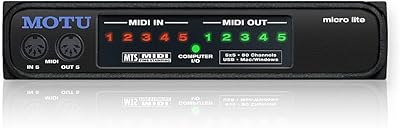
MOTU Micro Lite 5-Port USB MIDI Interface
80%
88%
Ease of Setup
74%
Driver Stability
91%
MIDI Routing Capability
86%
MIDI Timing & Latency
77%
Build Quality
More
MOTU 24Ao USB AVB Audio Interface
80%
93%
Channel Density
87%
AVB Network Performance
79%
Driver Stability
58%
Setup & Configuration
74%
Value for Money
More
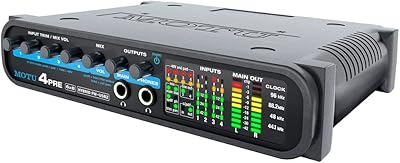
MOTU 4pre USB Audio Interface
68%
81%
Preamp Quality
63%
Driver Stability
58%
Connectivity Options
66%
Value for Money
77%
Build Quality
More
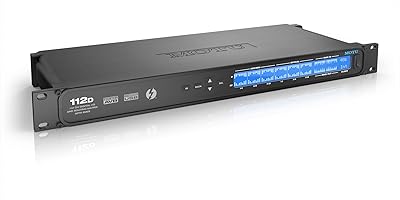
MOTU 112D Thunderbolt USB Audio Interface
81%
91%
Driver Stability
94%
Channel Count & I/O
87%
AVB Networking
89%
Thunderbolt Performance
88%
Connector Ecosystem
More
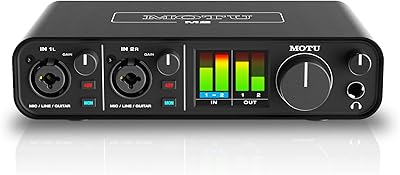
MOTU M2
MOTU M2
92%
96%
Audio Conversion Quality
98%
Visual Monitoring
93%
Build Construction
91%
Driver Stability
94%
Loopback Functionality
More
MOTU MicroBook IIc USB Audio Interface
70%
78%
Build Quality
83%
Sound Quality
58%
Mic Preamp Quality
54%
Ease of Setup
67%
Driver Stability
More
MOTU UltraLite-mk5
MOTU UltraLite-mk5
89%
96%
Audio Conversion Quality
92%
Preamp Transparency
94%
Driver Stability
91%
Latency Performance
88%
Software Interface (CueMix 5)
More

FAQ

Officially, the listing confirms Windows compatibility. macOS support is not guaranteed and has been a real sticking point for some buyers. Before purchasing, check MOTU's website directly for current driver availability for your specific macOS version — do not assume it will work out of the box on a modern Mac.

With 8 MIDI inputs and 8 MIDI outputs, you can connect up to 8 devices sending data in and 8 devices receiving data simultaneously. Each port carries up to 16 MIDI channels, which is where the 128-channel total comes from. In practice, that is more than enough for even large hardware rigs.

Honest answer: it depends. If you are comfortable installing drivers, configuring MIDI routing in your DAW, and troubleshooting connectivity issues, you will likely get there without too much pain. If you are expecting a plug-and-play experience similar to a basic USB audio interface, you may find the initial configuration more involved than anticipated. Budget some time for setup, especially on newer operating systems.

Yes, once drivers are correctly installed and the interface is recognized by your operating system, it should appear as a MIDI device in any major DAW that supports standard MIDI routing. Popular options like Ableton Live, Logic Pro, and Cubase can all work with it in principle, though macOS users must confirm driver support first.

The expandable design refers to the ability to integrate this rack unit alongside other MOTU interfaces or compatible hardware in a larger system. It is not a modular unit where you slot in additional port cards yourself, but rather a device that is designed to coexist and cooperate within a more complex, multi-unit studio setup.

Honestly, for three or four devices it may be more than you need — though it will certainly handle them without breaking a sweat. If you are confident your rig will grow, or if precise multi-device MIDI timing is critical to your workflow, the headroom is worth having. If your setup is unlikely to expand beyond four devices, a simpler interface might give you the same result at a lower cost.

Build quality is one of the most consistently praised aspects in user feedback. The unit feels substantial and appropriately solid for a piece of permanent studio rack equipment. Multiple long-term owners report running it for years without hardware failure, which is reassuring for a product in this category.

Driver compatibility with newer operating systems is the most frequently mentioned frustration. Some users encounter issues after OS updates that require reinstalling or locating updated drivers, and support resources for a product that has been around since 2005 can be limited. It is worth keeping a driver backup and checking MOTU's support pages periodically if you rely on this unit heavily.

MIDI timing reliability is another area where satisfied users tend to speak positively. Users running complex, multi-device rigs generally report consistent and accurate timing. USB MIDI does introduce some degree of latency compared to dedicated hardware MIDI interfaces with direct timing clocks, but in practice the Express 128 performs well within acceptable limits for both studio recording and live use.

According to the product listing, it has not been discontinued by MOTU. That said, it has been on the market since 2005, and the long-term trajectory of firmware updates and OS-level driver support is something to keep in mind. It is not a product in active development the way newer interfaces might be, so factor that into your decision if you plan to use it for many years on evolving operating systems.

Where to Buy