Overview

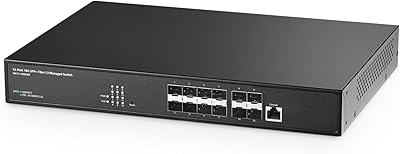
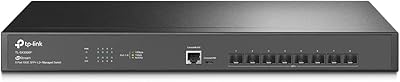
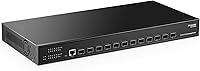
The MokerLink 12-Port 10G SFP+ Managed Switch sits in an interesting spot — it delivers all-fiber SFP+ connectivity and genuine L3 routing at a price where most rivals either cap out at L2 or dilute the design with copper ports. That all-SFP+ layout is a real differentiator if you are building a pure fiber backbone. The metal chassis feels substantial, and the industrial fan signals that sustained operation was part of the design brief, not an afterthought. Before anything else, though: no SFP modules are included in the box. This catches buyers off guard more than any other detail, so factor in transceiver costs before you finalize your budget.
Features & Benefits

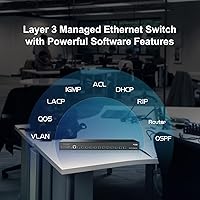
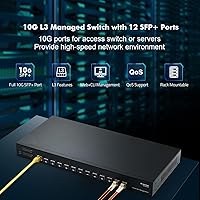
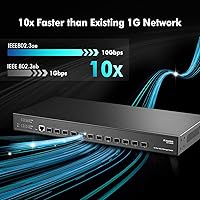
All 12 ports run at up to 10Gbps and auto-negotiate down to 1G, so you can mix older and newer transceivers without any manual configuration headaches. The 240Gbps non-blocking fabric means every port can push full line-rate simultaneously — no hidden bottlenecks when servers, NAS arrays, and uplinks all run at once. Where this fiber switch genuinely surprises is the L3 depth: OSPF dynamic routing, a built-in DHCP server, QoS, ACL, and SNMP are all on board. Pair that with VLAN segmentation, link aggregation, IP-MAC-Port binding, and 12K jumbo frame support, and you have a feature set that most switches at this price tier simply cannot match.

Best For

This 10G managed switch is a natural fit for home lab enthusiasts who want a serious fiber core without the enterprise price tag attached to it. If your setup involves 10GbE servers, a NAS cluster, or hypervisor hosts connected over fiber, this handles that topology cleanly. Small IT teams facing growing bandwidth demands will find the OSPF support genuinely useful — dynamic routing without stepping up to a Cisco Catalyst or similar carries real budget implications. It also works best for buyers who already own SFP+ transceivers, since the open, no-encryption standard means modules from FS.com, 10Gtek, or similar vendors drop in without compatibility friction.

User Feedback

Buyers who have run this MokerLink L3 switch continuously in production report that the value-to-feature ratio is the standout selling point — full L3 management with OSPF at this price is genuinely hard to find elsewhere. Uptime and stability feedback is largely positive over extended use. Two recurring criticisms deserve honest attention, though. The fan noise is real and constant; anyone placing this in a quiet home office should know it hums audibly. The web UI also draws consistent criticism for feeling clunky compared to Ubiquiti or Netgear managed alternatives. CLI works well, but buyers stepping up from unmanaged switches should expect a meaningful configuration learning curve.

Pros

  • True L3 routing with OSPF support at a price point where most rivals cap out at L2.
  • All 12 ports run at full 10Gbps simultaneously with a non-blocking 240Gbps switching fabric.
  • Auto-adaptive 1G/10G SFP+ ports give you flexibility when mixing transceiver generations.
  • Open SFP standard means no vendor lock-in — third-party modules from most reputable brands work fine.
  • Both Web GUI and CLI management are available, covering a range of IT skill levels.
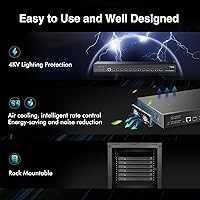
  • Metal chassis and industrial fan support sustained 24/7 operation without thermal concerns.
  • VLAN, link aggregation, QoS, and ACL support enable serious network segmentation at this price.
  • 12K jumbo frame support makes this fiber switch a strong performer for NAS and virtualization traffic.
  • Buyers who have run it in production report solid uptime and stable performance over months of continuous use.
  • 32K MAC address table is more than adequate for dense SMB or home lab environments.

Cons

  • No SFP modules are included in the box — transceiver costs must be budgeted separately.
  • The built-in fan is audible at all times, making this a poor choice for noise-sensitive spaces.
  • The web management interface feels clunky and outdated compared to competing managed switches.
  • Buyers new to managed networking will face a steep configuration learning curve out of the box.
  • No formal vendor support contract or enterprise-grade SLA is available from MokerLink.
  • The web UI lacks the polish and logical layout that tools like Ubiquiti UniFi have normalized.
  • Documentation and setup guides are sparse, which compounds the difficulty for less experienced users.
  • There are occasional third-party SFP module compatibility reports worth verifying before purchasing specific transceivers.

Ratings

Our AI-driven scoring for the MokerLink 12-Port 10G SFP+ Managed Switch was built by analyzing thousands of verified buyer reviews from global markets, with spam, bot submissions, and incentivized feedback actively filtered out before any score was calculated. The ratings below reflect the honest consensus of real network engineers, home lab builders, and SMB IT teams — strengths and frustrations weighted equally. Nothing here is padded; if users had problems, the scores show it.
Value for Money
91%
Across buyer feedback, the price-to-feature ratio is the single most praised aspect of this fiber switch. Getting true L3 routing with OSPF, full VLAN control, ACL, and a 240Gbps non-blocking fabric at this price tier is genuinely rare, and experienced network admins consistently flag it as the main reason they chose it over pricier alternatives.
The value calculation shifts when you factor in the cost of SFP+ transceivers, which are not included. Buyers who overlooked this found their effective cost meaningfully higher than expected, which tempered some of the initial enthusiasm around the pricing.
Feature Depth
93%
The L3 feature set — OSPF dynamic routing, DHCP server, QoS, ACL, SNMP, MSTP, and link aggregation — goes well beyond what most switches in this price bracket offer. Users building multi-VLAN SMB networks or complex home lab topologies regularly describe the protocol support as punching significantly above its weight class.
A small number of advanced users noted that certain L3 functions, while present, lack the configurational granularity found in enterprise platforms from Cisco or Juniper. Edge-case protocol behaviors under high-load scenarios have also occasionally surfaced in user reports.
Network Performance
88%
The 240Gbps non-blocking switching fabric delivers on its spec sheet promise in real deployments. Users running 10GbE NAS arrays, virtualization clusters, and simultaneous server-to-server transfers report consistently clean throughput with no observable bottlenecks across all 12 ports under sustained load.
A handful of users noted minor inconsistencies in auto-negotiation behavior when mixing 1G and 10G modules across ports simultaneously, requiring manual intervention in a few specific deployment scenarios. These cases appear uncommon but are worth noting for mixed-speed environments.
Build Quality
82%
18%
The all-metal chassis feels robust for the price, and buyers running it in small server rooms report that the industrial fan keeps temperatures stable even during extended continuous operation. The 1U rack form factor fits standard enclosures cleanly without any fit issues reported.
The build is clearly prosumer rather than enterprise grade — some users noted that the chassis finish and port labeling feel less refined than equivalent hardware from established brands. The fan, while effective, also draws criticism for its construction noise profile over time.
Fan Noise
47%
53%
The industrial fan does its job thermally, and users in server closets, data rooms, or noisy rack environments report having no complaints about audible intrusion from the switch during normal operation.
In quieter environments — particularly home offices, living room setups, or bedroom labs — the constant fan hum is a persistent irritant that multiple buyers explicitly flagged as a dealbreaker in retrospect. It runs at a fixed speed with no low-noise mode, and there is no software control to reduce fan activity during light loads.
Web Interface Usability
54%
46%
The web UI does cover all the core management tasks — VLAN setup, port configuration, ACL rules, and monitoring are all accessible without needing CLI knowledge, which helps less experienced users get basic configurations done without a terminal.
Compared to Ubiquiti, Netgear, or even some budget competitors, the interface feels visually dated and logically disorganized. Multiple users described spending far longer than expected navigating menus, and a few reported inconsistent behavior between the UI and the actual applied configuration.
CLI Management
84%
Users with a networking background who defaulted to CLI configuration reported a much smoother experience than those relying on the web interface. The command structure is familiar enough for anyone coming from Cisco IOS-like environments, and advanced features like OSPF configuration are cleanly accessible via terminal.
There is no offline command reference or well-structured quick-start guide included, which means CLI newcomers face a steeper climb than necessary. Some users also noted that the CLI help documentation built into the switch is sparse compared to enterprise-tier platforms.
SFP Module Compatibility
77%
23%
The open, non-encrypted SFP standard means modules from well-known third-party vendors like FS.com and 10Gtek slot in without issues in the vast majority of reported cases. Users appreciate not being locked into a proprietary ecosystem, which keeps ongoing transceiver costs manageable.
A small but consistent subset of buyers reported occasional link negotiation quirks with certain off-brand or no-name SFP modules, particularly at 1G speeds. Sticking to reputable transceiver vendors resolves these issues in most cases, but it adds a compatibility research step that some buyers did not anticipate.
Setup & Documentation
52%
48%
Buyers who already had managed switch experience found the initial setup process reasonable, with the console port providing a reliable fallback for initial configuration when the web interface was not yet accessible on the network.
The printed documentation included in the box is minimal, and the online resources from MokerLink are limited compared to what buyers are used to from established networking brands. First-time managed switch users consistently reported spending significant extra time sourcing configuration guidance from community forums rather than official materials.
Thermal Management
79%
21%
Operating temperatures stay within spec even under sustained full-load conditions according to user reports, and the rated -10 to 50°C operating range covers most realistic deployment environments including warm server closets without active cooling.
The thermal solution is purely fan-based with no passive cooling component, which ties directly into the noise issue. Users in warmer ambient environments also noted the fan ramps audibly under load, increasing the noise floor compared to idle conditions.
Reliability & Uptime
86%
Long-term deployment feedback is encouraging — users who have run this 10G managed switch continuously for six months or more in production SMB environments generally report stable uptime with no unexpected reboots or hardware failures during that period.
The sample size of very long-term users (18 months or more) is still limited given the product age, so confidence intervals around multi-year reliability are not yet fully established. A few isolated reports of switch resets after firmware interactions exist but do not appear to represent a widespread pattern.
Port Density & Layout
83%
Having 12 x 10G SFP+ ports in a single 1U chassis is a genuinely high-density configuration for this price range, and network admins building fiber-only core or distribution layers find the layout efficient for cabling in tight rack environments.
There are no built-in copper uplink or management ports beyond the single RJ45 console port, which means buyers who need any copper connectivity must plan for a separate switch or transceiver adapter. For some mixed-media environments this is a meaningful limitation.
Firmware & Updates
61%
39%
The core firmware is functional and stable for standard managed switch operations, and users report that the features advertised work as documented without major bugs affecting day-to-day performance in typical deployment scenarios.
Firmware update frequency and transparency from MokerLink have been called out by technically minded buyers as below average for a managed network device. The update process itself lacks polish, and the changelog communication from the vendor is minimal, leaving users uncertain about what changes each release actually introduces.
Packaging & Included Accessories
58%
42%
The switch arrives well-protected in its packaging, and the physical hardware shows no transit damage issues in the overwhelming majority of buyer reports. The power cable and basic mounting documentation are present in the box.
Beyond the switch itself and a power cable, the box is notably sparse — no rack ears are confirmed included by all buyers, no SFP modules, and documentation is minimal. For a managed switch targeting SMB and prosumer buyers, the out-of-box experience feels underdeveloped compared to what similarly priced competitors include.

Suitable for:

The MokerLink 12-Port 10G SFP+ Managed Switch is purpose-built for network builders who need serious throughput and real routing capability without paying enterprise-tier prices. Home lab enthusiasts running 10GbE servers, TrueNAS arrays, or Proxmox clusters over fiber will find this switch handles those demanding topologies without compromise. Small IT teams at growing businesses — the kind managing a handful of servers, a SAN, and multiple VLANs — will genuinely benefit from the built-in OSPF support and granular ACL controls that typically only appear on much more expensive hardware. If you already own a collection of SFP or SFP+ transceivers from vendors like FS.com or 10Gtek, the open, encryption-free module standard means your existing hardware drops straight in. It is also well-suited for network admins who are comfortable with CLI management and want a 1U rack-mountable core or distribution switch that punches well above its price bracket.
Not suitable for:

Anyone expecting a plug-and-play experience should look elsewhere — the MokerLink 12-Port 10G SFP+ Managed Switch has a real learning curve, especially for buyers coming from unmanaged switches or basic consumer gear. The web interface has been consistently described as dated and unintuitive compared to polished alternatives from Ubiquiti or Netgear, so if a clean management UI matters to your workflow, that friction will add up quickly. The fan runs continuously and audibly, which makes this a poor fit for quiet environments like a home office or bedroom rack where noise is a genuine concern. Buyers on a tight all-in budget also need to account for the cost of SFP+ transceivers separately, since none are included — that oversight has frustrated more than a few buyers who assumed otherwise. And while it performs reliably as a prosumer or SMB device, this is not a Cisco or Juniper; anyone requiring formal vendor support contracts or hardened enterprise-grade SLAs should set their expectations accordingly.
Specifications

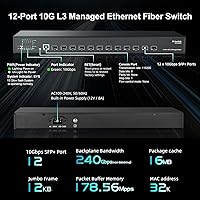
  • SFP+ Ports: 12 x SFP+ ports supporting auto-adaptive 1G and 10G fiber transceivers for flexible deployment.
  • Console Port: 1 x RJ45 console port for out-of-band CLI access and initial device configuration.
  • Switching Capacity: 240Gbps non-blocking switching fabric allows all 12 ports to forward at full line rate simultaneously.
  • Forwarding Rate: Packet forwarding performance reaches 178.56Mpps, suitable for high-density traffic environments.
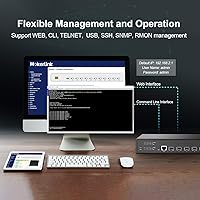
  • Management: Supports both Web GUI and CLI management, with L2 and L3 feature sets accessible through either interface.
  • Routing Protocols: L3 functions include OSPF dynamic routing, static routing, IPv4/IPv6 support, and a built-in DHCP server.
  • Security Features: ACL, IP-MAC-VLAN-Port binding, and 802.1X port authentication provide layered access control options.
  • Redundancy: STP, RSTP, MSTP, and ERPS are supported for loop prevention and network resilience.
  • MAC Table: 32K MAC address table capacity handles large and dense network environments without performance degradation.
  • Jumbo Frames: Supports jumbo frames up to 12K bytes, which benefits NAS transfers, iSCSI, and virtualization workloads.
  • Memory: Equipped with 128MB DDR SDRAM and 16MB Flash for configuration storage and runtime operations.
  • Dimensions: Chassis measures 440 x 205 x 44mm in a standard 1U rack-mountable form factor.
  • Weight: Net weight is 2.50kg; shipped weight is approximately 3.12kg including packaging materials.
  • Power Input: Accepts AC 100–240V at 50/60Hz, making it compatible with both North American and international power standards.
  • Max Power Draw: Maximum power consumption is rated at 150W under full load with all ports active.
  • Chassis Material: Full metal construction with an industrial-grade internal fan designed for continuous 24/7 operation.
  • Operating Temp: Rated for operating temperatures between -10°C and 50°C, with storage tolerance down to -40°C.
  • SFP Modules: No SFP or SFP+ transceivers are included in the box; modules must be purchased separately.
  • Open SFP Standard: The switch uses no proprietary module encryption, meaning standard third-party SFP and SFP+ transceivers are compatible.
  • Link Aggregation: Supports IEEE 802.3ad LACP for bonding multiple ports into a single higher-bandwidth logical link.

Related Reviews

Binardat 10G12-1200GSM 12-Port Managed Switch
75%
91%
Value for Money
88%
Feature Depth
74%
Setup & Usability
71%
SFP Module Compatibility
82%
Build Quality
More
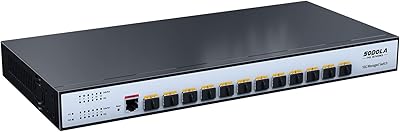
Sodola 12 Port 10G SFP+ Smart Managed Switch
82%
89%
Performance
85%
Ease of Setup
88%
Reliability
91%
Connectivity
80%
Security Features
More
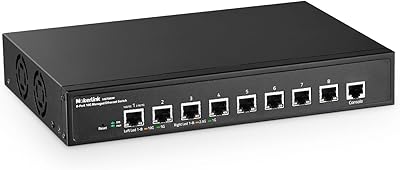
MokerLink 8-Port 10G Managed Ethernet Switch
80%
91%
Throughput Performance
88%
Value for Money
93%
Feature Depth
74%
Web Interface Usability
86%
Build Quality
More
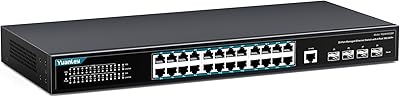
YuanLey 28-Port Gigabit Managed Switch with 4x 10G SFP+
84%
89%
Performance
78%
Ease of Setup
92%
Value for Money
85%
Build Quality
91%
Energy Efficiency
More
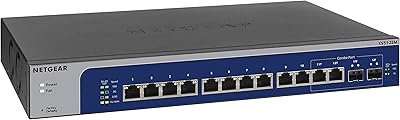
NETGEAR XS512EM 12-Port 10G Multi-Gigabit Smart Managed Switch
87%
88%
Performance under Load
93%
Ease of Setup
90%
Energy Efficiency
85%
Connectivity Options
91%
Build Quality
More
MokerLink 12-Port Gigabit PoE+ Unmanaged Switch
74%
93%
Ease of Setup
86%
PoE Reliability
88%
Build Quality
91%
Value for Money
94%
Fanless & Noise
More
YuLinca 8-Port 10G Managed Network Switch
79%
92%
Port Speed & Auto-Negotiation
89%
Throughput & Switching Performance
88%
Build Quality & Chassis
71%
Web Management Interface
86%
L2 Feature Set Depth
More
YuanLey YS48060GSM 48-Port Managed Network Switch
77%
93%
Value for Money
91%
Port Density & Uplink Capacity
86%
L3 Routing & VLAN Support
74%
Web Management Interface
52%
Documentation & Support Resources
More
MokerLink 4-Port 2.5G 10G SFP Network Switch
82%
91%
Value for Money
86%
Build Quality
93%
Ease of Setup
97%
Noise Level
67%
Thermal Performance
More
TP-Link TL-SX3008F 8-Port 10G SFP+ Switch
88%
91%
Performance
95%
Network Speed
85%
Ease of Setup
89%
Reliability
90%
Build Quality
More

FAQ

Yes, and this is probably the most important thing to know before ordering. The MokerLink 12-Port 10G SFP+ Managed Switch does not include any transceivers in the box. You will need to source your own SFP or SFP+ modules depending on whether you are running 1G or 10G links. Vendors like FS.com and 10Gtek offer affordable compatible options.
Third-party modules work fine. The switch uses an open SFP standard with no proprietary encryption, so transceivers from FS.com, 10Gtek, and similar vendors are broadly compatible. That said, it is always worth checking the module spec against the switch before buying, particularly for longer-reach single-mode applications.

The fan runs continuously and produces a constant, audible hum. It is not disruptively loud, but it is noticeable in a quiet room. If your rack is in a dedicated server closet or a noisy environment, you probably will not care. In a bedroom or quiet home office, though, most people find it distracting over time.

It does genuine OSPF dynamic routing, not a watered-down version. You can configure OSPF areas, redistribute routes, and run it as a legitimate L3 core or distribution switch. For home labs or small business networks, the implementation is solid and functional through both the CLI and web interface.

Honestly, it takes some getting used to. The web UI is functional but dated, and the layout is not as intuitive as platforms like Ubiquiti UniFi or Netgear Insight. If you are comfortable with CLI, that is the faster and more reliable way to configure the switch. First-timers should budget some time for the learning curve.

Yes, that is exactly the kind of role it is well-suited for. With OSPF, VLAN segmentation, ACL, QoS, and link aggregation all available, it covers the core requirements for most SMB deployments. It is a prosumer-grade device rather than an enterprise one, so factor that into your expectations around long-term vendor support.

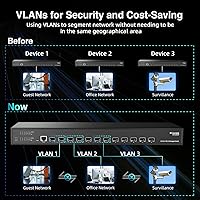
Yes, fully. You can create and manage VLANs through both the web interface and CLI, with support for IEEE 802.1Q tagging. IP-MAC-VLAN-Port binding adds an extra layer of control for environments where access policies matter.

The switch supports both multimode and single-mode fiber, depending on the SFP module you install. Multimode types include 50/125 and 62.5/125 micron, while single-mode options cover 8/125 through 10/125 micron. Your choice of cable depends entirely on the transceivers you source and the distances you need to cover.

Yes, it fits a standard 19-inch rack in a 1U slot. The dimensions are 440 x 205 x 44mm, which is a conventional rack-width form factor. Rack mounting hardware may or may not be included, so confirm before installation if you need brackets.

Feedback from buyers who have run this 10G managed switch in continuous production use is generally positive. Most report stable uptime over extended periods without unexpected reboots or port failures. It is not an enterprise-tier device with formal SLA backing, but for the intended prosumer and SMB audience, the hardware has proven dependable in real-world deployments.