Overview

The MaxUSee F360x50 Refractor Telescope is one of those kits that shows up under a kid's name on a holiday wish list, and it's easy to see why. This isn't built for serious backyard astronomers chasing faint galaxies; it's aimed squarely at children and first-timers who just want to point something at the moon and feel a little awe. MaxUSee built its reputation on approachable optics rather than cutting-edge glass, and that philosophy shows here. The price sits firmly in budget territory, which makes sense once you realize this is a two-in-one kit: the telescope ships alongside a small set of binoculars, plus a moon and star map that turns a few nights outside into something closer to a guided lesson.
Features & Benefits

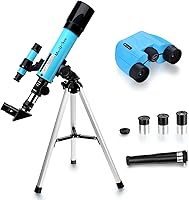
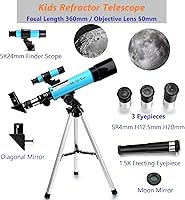
Specs aside, this telescope kit handles the basics well for its class. The 50mm aperture and 360mm focal length aren't going to reveal Saturn's rings in fine detail, but they pull in enough light for genuinely bright, easy-to-find views of the moon and brighter planets. Three eyepieces, plus an erecting eyepiece, let you step through roughly 18X up to 135X magnification, though that top end works best in steady, well-aligned conditions rather than a shaky tripod on grass. A 5x24 finder scope takes the guesswork out of aiming. The included 8x21 binoculars, with FMC-coated lenses and a Bak4 prism, turn into a genuinely useful daytime companion for birding or sports. An altazimuth mount and manual focus keep the learning curve short, and at just over two pounds, the whole setup travels easily.

Best For

This stargazing set makes the most sense as a first telescope rather than a forever telescope. It's a strong pick for kids and tweens who are curious about the night sky but haven't earned a serious investment yet, and for parents who want to test that interest without much financial risk. The bundled binoculars add real value for families who also like birdwatching, ballgames, or general outdoor sightseeing, so it doesn't sit unused once the novelty of moon-watching fades. Campers and road-trippers will appreciate how little space it takes up. If you're shopping for a precision instrument capable of resolving deep-sky detail, look elsewhere; if you're after a thoughtful STEM gift that encourages curiosity, this fits the bill nicely.

User Feedback

Look through enough reviews and a pattern emerges. Most buyers say assembly takes only a few minutes, even without much hands-on experience, which matters a lot when you're setting this up with an excited kid waiting nearby. Parents in particular tend to describe this beginner telescope as a confidence-builder, something that made stargazing click for their children without overwhelming them. On the flip side, some reviewers note that the higher-magnification eyepieces demand a steadier hand and more patience than expected, and a few mention that images get noticeably softer at the top of the zoom range. The extra binoculars come up often as a pleasant surprise rather than an afterthought. Taken together, the feedback lands around a solid four-star average, which feels fair for what this is.

Pros

  • Quick, beginner-friendly assembly means kids can start using this telescope kit within minutes.
  • Three interchangeable eyepieces offer a wide magnification range from casual viewing to closer lunar detail.
  • The 5x24 finder scope makes locating the moon or bright stars noticeably easier.
  • Bundled 8x21 binoculars add genuine daytime value for birdwatching, sports, and sightseeing.
  • Lightweight, compact design travels well for camping trips or backyard stargazing nights.
  • Included moon and star map helps turn first-time use into an actual learning experience.
  • Manual focus and a simple altazimuth mount keep the learning curve short for newcomers.
  • Parents consistently describe this stargazing set as a confidence-building first telescope for children.
  • A two-year warranty offers reassurance that's uncommon at this budget price point.
  • Solid four-star average across thousands of ratings reflects consistent buyer satisfaction.

Cons

  • Image clarity softens noticeably at the higher end of the 135X magnification range.
  • Eyepiece swaps require some patience and practice before views feel sharp and steady.
  • The altazimuth mount feels a bit flimsy during extended high-magnification viewing sessions.
  • Not suitable for buyers hoping to resolve fine planetary or deep-sky detail.
  • Smaller eyepieces can be fiddly for younger children's hands to manage alone.
  • Included binoculars, while useful, are a modest pair rather than premium daytime optics.
  • Tripod footing may wobble slightly on uneven outdoor terrain or soft ground.
  • Serious hobbyists will likely outgrow the MaxUSee F360x50 Refractor Telescope within months.
  • Setup instructions, while simple, assume some comfort with basic optical adjustments.
  • The included moon and star map is a nice touch but fairly basic in depth.

Ratings

These scores reflect an AI-driven analysis of verified MaxUSee F360x50 Refractor Telescope reviews collected from buyers worldwide, with spam, bot activity, and incentivized feedback filtered out before scoring. Each category below highlights both the genuine strengths and the real friction points reported by everyday stargazers, so you can judge this telescope kit on its actual merits rather than marketing claims.
Optical Clarity (Low-Mid Magnification)
84%
Users consistently praise bright, sharp views of the moon's craters and surface detail at lower eyepiece settings, especially during clear evening sessions in suburban backyards. The 50mm aperture pulls in enough light to make first-time stargazing genuinely satisfying for casual viewers.
Once you push past the mid-range eyepiece, contrast and sharpness start to fade, and atmospheric shimmer becomes more noticeable. A few reviewers found colors looked slightly washed out compared to pricier scopes.
High-Magnification Performance
58%
42%
When conditions are calm and the mount sits on stable ground, the SR4mm eyepiece does pull planets in a bit closer than expected for this price tier, which excites first-time users chasing extra detail.
Most buyers report images getting noticeably blurrier and dimmer near 135X, making it hard to hold a steady, focused view. This is a common limitation for entry-level refractors rather than a manufacturing defect.
Ease of Setup & Assembly
89%
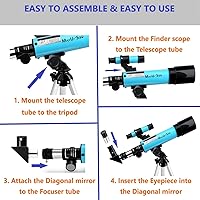
Parents repeatedly mention having this telescope kit ready to use within minutes, with no tools or technical know-how required. The intuitive mount and clearly labeled eyepieces make it approachable for first-time telescope owners.
A handful of buyers wished the included instructions covered eyepiece swapping in more detail. Younger children may still need an adult's hands for trickier focus adjustments early on.
Mount Stability
63%
37%
The altazimuth mount moves smoothly enough for casual tracking of the moon across the sky, and its light weight makes repositioning effortless during a backyard session. Most users find it adequate for low-magnification viewing.
Several reviewers noticed wobble on soft grass or uneven patios, particularly once magnification increases. It isn't built for long, vibration-free sessions the way a heavier, weighted tripod would be.
Finder Scope Accuracy
81%
19%
The 5x24 finder scope earns consistent praise for speeding up the process of locating the moon or a bright star before switching to the main eyepiece. Buyers say it removes a lot of beginner guesswork.
Alignment between the finder scope and main tube can drift slightly during transport, so a quick recheck before each session helps. A few users found the small window a bit dim under heavy light pollution.
Included Binoculars Quality
79%
21%
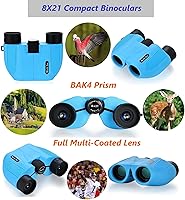
The bundled 8x21 binoculars surprise a lot of buyers with their daytime clarity, thanks to FMC-coated lenses and a Bak4 prism that keep colors fairly true during birdwatching or sporting events. Many call them a genuinely useful bonus.
They're noticeably smaller and less rugged than dedicated standalone binoculars, so don't expect them to replace a serious pair. Low-light performance also lags behind larger-aperture models.
Portability & Weight
91%
At just over two pounds, this stargazing set is genuinely easy to toss in a car trunk or backpack for camping trips and family travel. Reviewers frequently highlight how little setup space it needs compared to bulkier telescopes.
The lightweight build that makes it portable also means it's less sturdy outdoors in windy conditions. A small minority of buyers wished for slightly more heft to help anchor it during use.
Beginner-Friendliness
86%
First-time users, especially kids, find the controls intuitive enough to start exploring the sky during their very first session. The included moon and star map gives structure to early use instead of leaving beginners guessing.
Switching between the three eyepieces takes a little trial and error before users settle on a preferred setup. Some younger children needed a parent's guidance to get comfortable with focusing.
Value for Money
83%
Given the budget price point, buyers feel they're getting a lot in one box: a telescope, finder scope, three eyepieces, and a usable pair of binoculars. Many describe it as a low-risk way to test a child's interest in astronomy.
A few reviewers note the value proposition drops if you're hoping for performance closer to mid-range telescopes. It's priced fairly for what it is, but it isn't a long-term upgrade path.
Educational Extras (Moon & Star Map)
77%
23%
The included moon and star map turns casual stargazing into something closer to a guided activity, which parents say helps keep kids engaged beyond the first night out. It's a thoughtful touch for a budget kit.
The map itself is fairly basic and won't satisfy older kids looking for deeper detail. Some buyers end up supplementing it with free astronomy apps for a richer experience.
Durability for Kids' Use
69%
31%
The telescope tube and mount hold up reasonably well to the occasional bump typical of younger users still learning to handle equipment carefully. Many parents report months of regular use without major issues.
Some components, particularly the smaller eyepieces, feel delicate enough that careless handling could damage them over time. Close supervision is recommended during setup and use with younger children.
Eyepiece Variety
80%
20%
Having three eyepieces plus an erecting eyepiece gives users a meaningful range of magnification without needing separate purchases. Buyers appreciate starting low and working their way up as confidence grows.
The quality gap between the lowest and highest magnification eyepieces is noticeable, with the higher-power option feeling like the weakest link. A few users wished for a sturdier middle-ground choice.
Warranty & Customer Support
74%
26%
The two-year warranty gives buyers a reasonable safety net at this price point, and several reviewers mention responsive support when reaching out with questions. It adds confidence uncommon among budget telescopes.
A handful of users found the response process a bit slow during high-demand periods like the holidays. Documentation on how to actually file a warranty claim could be clearer upfront.
Overall Buyer Satisfaction
85%
With a strong four-star average across thousands of ratings, most buyers walk away satisfied with this telescope kit for exactly what it promises: an accessible, fun introduction to astronomy. Parents especially highlight the joy of a child's first moon viewing.
Satisfaction dips slightly among buyers who expected sharper detail at higher magnifications or sturdier hardware. It's best understood as an entry point rather than a long-term astronomy tool.

Suitable for:

The MaxUSee F360x50 Refractor Telescope is best suited for families taking their first real step into amateur astronomy, especially households with curious kids or tweens who want hands-on contact with the night sky rather than just pictures in a book. It works well for parents who want to test a child's interest in stargazing without committing to an expensive setup that might end up gathering dust in a closet. Travelers and campers will appreciate how light and compact the kit is, since it packs down easily for a weekend trip or a clear night away from city lights. Anyone who also enjoys casual birdwatching, outdoor concerts, or sporting events gets extra mileage out of the included binoculars, which double the kit's everyday usefulness. It's also a sensible pick for gift-givers looking for a STEM-themed present that feels more substantial than a typical toy.
Not suitable for:

The MaxUSee F360x50 Refractor Telescope isn't the right call for hobbyists who already own intermediate gear or who are chasing sharp, detailed views of planets and deep-sky objects. Anyone expecting crisp clarity at the higher magnification settings will likely come away disappointed, since image quality does soften noticeably toward the top of the zoom range. Buyers who want a rugged, heavy-duty mount built for long-term outdoor use should also look elsewhere, since the lightweight altazimuth mount is designed for portability and casual sessions rather than precision tracking. People who dislike a bit of trial and error with eyepiece swaps may find the learning curve mildly frustrating at first. Serious adult astronomy enthusiasts will likely outgrow this kit within a few months and should think of it as a stepping stone rather than a long-term investment.
Specifications

  • Brand: This telescope kit is manufactured by MaxUSee, a brand focused on entry-level optics for families.
  • Model Number: The official model number for this unit is F36050-821.
  • Aperture: The objective lens diameter measures 50mm, which determines how much light the telescope gathers.
  • Focal Length: The optical tube has a focal length of 360mm, giving the scope its F360 designation.
  • Optical Tube Length: The main telescope tube measures 12 inches (about 30.5 cm) in length.
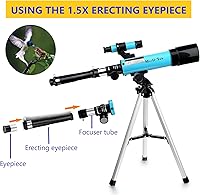
  • Eyepieces: Three eyepieces are included (H20mm, H12.5mm, and SR4mm) along with a 1.5X erecting eyepiece for upright viewing.
  • Magnification Range: Combining the included eyepieces allows magnification from roughly 18X up to 135X.
  • Finder Scope: A 5x24 finder scope is mounted on the tube to help locate objects before switching to higher magnification.
  • Mount Type: The telescope uses a lightweight altazimuth mount for simple up-down and side-to-side movement.
  • Focus Type: Focusing is done manually via a focus knob on the optical tube.
  • Included Binoculars: An 8x21 pair of compact binoculars is bundled in, featuring FMC-coated lenses and a Bak4 prism.
  • Product Dimensions: The packaged product measures 17.3 inches by 11 inches by 18.5 inches (D x W x H).
  • Item Weight: The complete telescope kit weighs approximately 2.2 lbs, or about 1 kg.
  • Included Accessories: A printed moon and star map is included to help guide early stargazing sessions.
  • Warranty: The product is backed by a two-year manufacturer warranty with available customer support.

Related Reviews

HEXEUM AZ50070 70mm Refractor Telescope
73%
78%
Optical Clarity
88%
Value for Money
57%
Tripod Stability
66%
Ease of Assembly
63%
Finderscope Usability
More
PISEZ 90800 90mm Refractor Telescope
68%
83%
Optical Clarity
81%
Value for Money
72%
Ease of Setup
68%
Magnification Range
61%
Tripod Stability
More
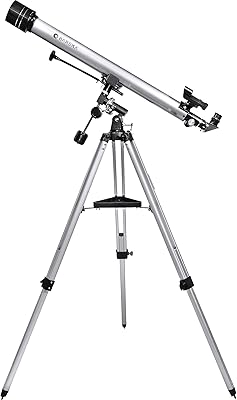
Barska Starwatcher Refractor Telescope 60mm
80%
91%
Value for Money
88%
Ease of Setup
93%
Portability
85%
Performance (Planetary Viewing)
62%
Performance (Deep-Sky Viewing)
More
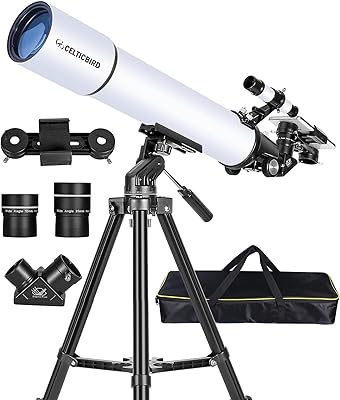
CELTICBIRD 90700 90mm Refractor Telescope
70%
83%
Optical Clarity
76%
Mount Precision
88%
Tripod Stability
81%
Ease of Assembly
62%
Finderscope Usability
More
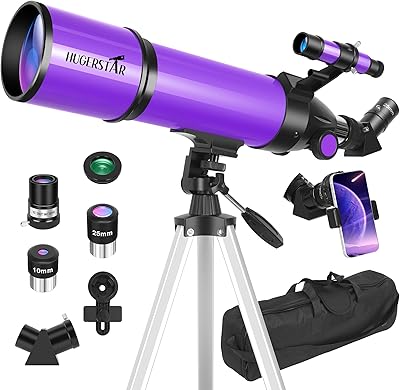
HUGERSTAR 80600 Refractor Telescope
70%
78%
Optical Clarity
88%
Ease of Setup
61%
Tripod Stability
83%
Value for Money
84%
Portability
More
Barska Starwatcher 70mm Refractor Telescope
66%
72%
Optical Clarity
58%
Magnification Performance
54%
Build Quality
84%
Ease of Setup
88%
Portability & Storage
More
Celticbird 80mm 800mm Refractor Telescope
75%
83%
Optical Clarity
91%
Ease of Assembly
78%
Mount Usability
61%
Tripod Stability
58%
Included Eyepiece Quality
More
Hawkko 90900 Refractor Telescope
75%
83%
Optical Clarity
76%
Build Quality
69%
Mount Smoothness
88%
Ease of Setup
71%
Magnification Range
More
SVBONY SV503 80mm ED Refractor Telescope
81%
91%
Optical Clarity
88%
Focuser Quality
86%
Chromatic Aberration Control
89%
Build Quality & Materials
83%
Value for Money
More
SVBONY SV503 102mm ED Refractor Telescope
82%
88%
Optical Performance
93%
Focuser Quality
84%
Chromatic Aberration Control
91%
Build Quality
86%
Astrophotography Suitability
More

FAQ

Yes, that's exactly the market the MaxUSee F360x50 Refractor Telescope is built for. It's simple enough that a child can learn the basics of aiming and focusing without much help, and the included moon and star map gives them something structured to do right out of the box. Just don't expect professional-grade detail; think of it as a fun introduction rather than a serious instrument.
You'll get genuinely nice views of the moon's craters and surface texture, plus bright planets like Jupiter or Saturn as small, recognizable shapes rather than crisp close-ups. Deep-sky objects like distant galaxies are out of reach at this aperture. For casual, low-pressure stargazing, though, it delivers more than enough to keep curiosity alive.

Most buyers report having this stargazing set assembled and pointed at the sky within about 10 to 15 minutes, even without prior telescope experience. The mount and tube connect with straightforward hardware, and there's no software or electronics to configure.

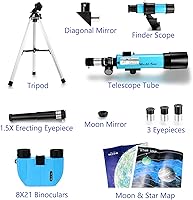
You get the telescope tube, the altazimuth mount, three eyepieces plus an erecting eyepiece, a 5x24 finder scope, a pair of 8x21 binoculars, and a moon and star map. Everything needed for a first session is included, so there's no need to buy extra accessories right away.

Not really. The three included eyepieces already cover a wide range from low to fairly high magnification, which is plenty for moon-watching and casual planet viewing. Some users do eventually upgrade individual eyepieces once they get more serious, but it's not necessary to enjoy this telescope kit out of the box.

They're a genuinely useful add-on rather than filler. The 8x21 binoculars use FMC-coated lenses and a Bak4 prism, which keeps daytime images reasonably bright and clear for things like birdwatching or outdoor events. They won't compete with dedicated premium binoculars, but for a bundled extra, they pull their weight.

It's stable enough for casual use, but some reviewers notice a bit of wobble at the higher end of the zoom range, especially on soft or uneven ground. For best results, set it up on a flat, firm surface and avoid bumping the tripod once you've found your target.

This telescope kit tends to work best for kids around 8 and up, since younger children may struggle with the smaller eyepieces and fine focus adjustments. That said, plenty of parents use it as a shared activity with younger kids, handling the trickier parts themselves.

The telescope comes with a two-year warranty, so manufacturer support is available if something goes wrong early on. It's worth keeping the original packaging and documentation just in case you need to reach out for a replacement part or troubleshooting help.

As a general rule, start with the lowest magnification eyepiece to locate and center your target, then switch to a higher one for a closer look. Jumping straight to the highest magnification often makes it harder to find anything, since the field of view narrows significantly.