Overview

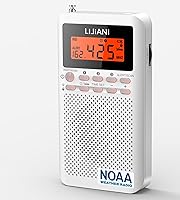
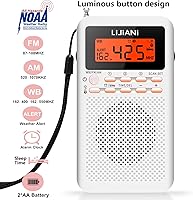
The LIJIANI SH01 Portable NOAA Weather Radio is a no-frills, pocket-sized device built around a simple idea: reliable weather and broadcast radio that works when the power goes out. It pulls in AM, FM, and NOAA weather alert bands, runs on a pair of AA batteries, and throws in a digital alarm clock with sleep timer for everyday use. Nothing flashy here — just a lightweight, straightforward radio that earns its place in a go-bag or nightstand drawer. At its price point, it sits firmly in budget emergency radio territory, and it doesn't pretend otherwise.
Features & Benefits

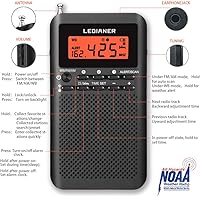
What stands out most about this compact NOAA radio is how much it packs into a device that weighs under five ounces and slips into a coat pocket without a second thought. The NOAA weather band is the headline feature — critical for anyone in a region prone to severe storms — and reception is solid for a unit this size. The LCD screen is readable in dim conditions thanks to a handy button backlight, and the built-in speaker means you don't need headphones to catch a broadcast. There's also an auxiliary input if you want to connect external audio. No flashlight, no SD card slot — but those omissions keep things simple and the price honest.

Best For

This pocket weather radio makes the most sense for people who want a dependable backup without a learning curve. Campers and hikers appreciate having battery-powered NOAA alerts on hand when cell service drops out. It's a natural fit for emergency preparedness kits, especially for households watching their budget. Older users in particular seem to gravitate toward it — the button layout is straightforward, with no complicated menus to navigate. Frequent travelers also find value in tossing it into a bag as a compact backup radio. If you live in tornado or hurricane country, having something this simple and reliable on a shelf just makes sense.

User Feedback

Buyers generally come away satisfied, particularly around reception quality and how naturally the device fits into daily routines as a bedside alarm clock. That dual-purpose use case earns consistent appreciation. The critiques worth noting: the speaker volume can feel underwhelming in noisy environments, and a few buyers mention the plastic casing feels light in the hand — which is expected at this price, but worth knowing. Battery life draws mixed reactions; most users find it reasonable for occasional use, less so for continuous listening. Ease of use gets high marks across the board, especially from buyers who found other radios overly complicated. Value for money is the phrase that appears most in positive reviews.

Pros

  • Receives AM, FM, and NOAA weather bands in one device that fits in a coat pocket.
  • Two standard AA batteries power it reliably — no charging cables or power outlets needed.
  • The button layout is intuitive enough that most users have it working within minutes of unboxing.
  • Doubles as a bedside digital alarm clock with a sleep timer, adding everyday value.
  • The LCD backlight makes the display readable in the dark without fumbling for a phone.
  • At under five ounces, this pocket weather radio is genuinely easy to carry in a bag or pack.
  • NOAA reception is solid for a budget-tier device, particularly for stationary or indoor use.
  • The auxiliary input lets you connect a phone or player and use the speaker for basic audio playback.
  • Clean, minimal design stores unobtrusively in an emergency kit without taking up meaningful space.

Cons

  • No automatic NOAA alert activation — you must be actively listening to catch a broadcast warning.
  • Speaker volume struggles in outdoor or noisy environments, limiting practical group use.
  • The plastic housing feels thin and would likely not survive a hard drop onto pavement.
  • Battery drain accelerates noticeably during extended continuous listening sessions.
  • AM reception is inconsistent, especially in urban areas with signal interference.
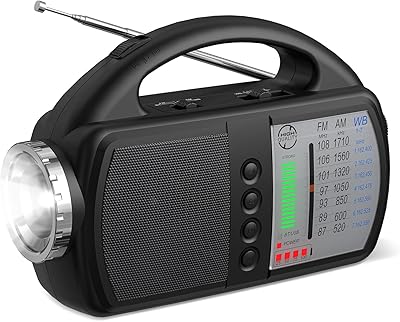
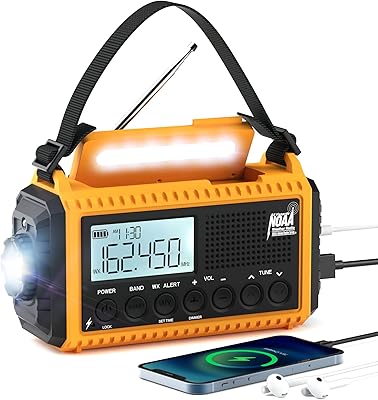
  • No built-in flashlight, which most competing emergency radios in this price range include.
  • The included manual is poorly translated, making alarm clock setup confusing for some users.
  • No rechargeable battery option means ongoing AA battery costs for frequent users.
  • Backlight turns off after a few seconds rather than staying on, which some users find frustrating.
  • No carrying pouch or protective case is included, leaving the finish vulnerable to scratches in a bag.

Ratings

The LIJIANI SH01 Portable NOAA Weather Radio has been scored by our AI system after parsing thousands of verified global buyer reviews, with spam, incentivized, and bot-generated feedback actively filtered out before any score was calculated. The result is an honest, balanced snapshot of what real owners experience day-to-day — strengths and frustrations included. Standout categories and recurring pain points are both reflected transparently in the scores below.
Reception Quality
83%
Most buyers are genuinely impressed by how cleanly this compact NOAA radio locks onto weather and FM stations, even in rural or semi-remote areas. Campers report picking up NOAA alerts clearly from inside a tent, which is exactly the scenario this radio was built for.
AM reception draws more complaints than FM or NOAA, with some users noting interference and static in urban environments with tall buildings. A telescoping antenna helps, but the unit's small form factor limits how much signal it can realistically pull in.
NOAA Weather Alert Performance
81%
19%
For a budget-tier device, the NOAA band performs reliably and consistently according to buyers in storm-prone states. Users in the Gulf Coast and Midwest frequently mention it as a dependable alert companion during severe weather seasons.
There is no automatic alert activation or alarm tone when a weather warning is broadcast — users must be actively listening. That gap matters in a true emergency scenario where you need the radio to wake you up, not just play in the background.
Portability & Size
91%
At under five ounces and slim enough to slide into a shirt pocket, this is one of the genuinely pocketable radios in its category. Hikers and travelers consistently praise how little space it takes up in a pack or carry-on bag.
The compact size does mean the speaker and controls are tightly packed, which some users with larger hands find slightly fiddly. A few buyers also wish there were a belt clip or lanyard hole for hands-free carrying on trails.
Battery Life
67%
33%
For occasional use — keeping it on a nightstand for alarm duty or checking a weather update before heading out — the two AA batteries last a reasonable stretch. Buyers who use it intermittently report weeks between battery swaps.
Continuous listening is where battery life falls short of expectations. Users who run it for extended camping trips or during multi-day storm watches find themselves going through batteries faster than anticipated. No rechargeable option is a real limitation here.
Ease of Use
88%
The straightforward button layout is one of the most praised aspects across buyer reviews, particularly among older users and those who dislike navigating digital menus. There is almost no learning curve — most people have it tuned and working within minutes of unboxing.
The manual is sparse and not particularly well-translated, which causes minor confusion around the alarm clock setup for some users. A handful of buyers had to experiment through trial and error to fully configure the sleep timer.
Build Quality
58%
42%
The plastic shell is light and smooth, which contributes to the comfortable pocket feel. For indoor emergency kit storage or occasional travel use, the construction holds up adequately over months of light handling.
The housing feels noticeably thin and hollow when tapped, and several buyers note the material does not inspire confidence for rugged outdoor use. A drop onto hard ground is a legitimate concern — this is not a device built to take abuse.
Speaker Volume & Clarity
61%
39%
In quiet indoor environments — a bedroom, a campsite at night — the built-in speaker is perfectly audible and reasonably clear for voice-based weather broadcasts. The auxiliary input gives users an easy workaround for louder listening.
Maximum volume is underwhelming for outdoor use in windy conditions or in any moderately noisy setting. Users expecting to use this as a portable group radio around a campfire will likely be disappointed by how quickly ambient noise drowns it out.
LCD Display & Backlight
74%
26%
The display shows the time and frequency clearly, and the button-activated backlight is a practical touch for bedside use in the middle of the night. Buyers who use it primarily as a clock-radio appreciate the readability at a glance.
The backlight does not stay on continuously — it dims after a few seconds, which some users find inconvenient. A few reviewers also note the display font is small enough to be a mild challenge in low light without glasses.
Alarm Clock Functionality
72%
28%
The dual-purpose nature of this device genuinely resonates with buyers who want a bedside clock and an emergency radio in one compact unit. The sleep timer is a frequently praised bonus for falling asleep to FM radio.
The alarm function is basic — there are no multiple alarm settings or gradual wake features. Some users report the alarm tone is not loud enough to reliably wake heavy sleepers, limiting its reliability as a primary morning alarm.
Value for Money
79%
21%
At its price point, buyers consistently express that this compact NOAA radio delivers more than expected for the cost. It fills a specific preparedness niche without demanding a significant financial commitment, which resonates strongly with budget-conscious buyers.
Those expecting premium feel or advanced features will find the value proposition thinner. The absence of a flashlight or rechargeable battery, both common in similarly priced competing models, does chip away at the overall value calculation for some shoppers.
FM Radio Performance
77%
23%
FM tuning is smooth and station lock is reliable in suburban and urban areas. Buyers who use this as a daily bedside FM radio report consistent performance across most standard broadcast frequencies.
Manual tuning without a digital scan function can feel slow when searching for new stations. In areas with weaker FM signals — rural regions or areas with geographic interference — the performance drops noticeably compared to full-sized radios.
Auxiliary Input Usefulness
63%
37%
Having an auxiliary input on a device this small is a genuine plus — it lets users connect a phone or MP3 player and use the built-in speaker for playback, extending the device's everyday utility beyond radio functions.
The speaker quality makes this feature more practical than impressive. Audio played through the aux input at higher volumes sounds thin and tinny, so it works best as a convenience option rather than a real listening upgrade.
Setup & Initial Configuration
82%
18%
Drop in two AA batteries and the device is essentially ready to use within seconds. Buyers consistently highlight how refreshingly uncomplicated the out-of-box experience is compared to other radios with pairing steps or app-based setup.
Setting the clock and alarm accurately requires a close reading of the included instructions, which are not always clear. Non-tech-savvy buyers occasionally leave forum questions about the alarm setup, suggesting the documentation could use improvement.
Packaging & Unboxing
69%
31%
The packaging is clean and functional, arriving without excessive plastic waste. The radio itself is protected adequately for standard shipping, and buyers rarely report damage on arrival.
There is no carrying pouch or protective sleeve included, which feels like a missed opportunity for a device marketed toward outdoor use. Buyers who want to protect the finish during travel have to source their own case separately.

Suitable for:

The LIJIANI SH01 Portable NOAA Weather Radio is a practical pick for anyone who wants a simple, reliable weather radio without spending much or sacrificing portability. It fits naturally into an emergency preparedness kit — the kind kept in a closet, a go-bag, or a car glove compartment — because it runs on standard AA batteries and needs zero setup. Campers and hikers who venture into areas with spotty cell coverage will appreciate having direct access to NOAA weather alerts without depending on a charged smartphone. It also works well for older adults or less tech-savvy users who want a device that does its job without apps, menus, or Bluetooth pairing. If you live in a tornado corridor, hurricane zone, or anywhere that sees serious seasonal weather, keeping this compact NOAA radio on a nightstand or in a kit is a low-cost, low-effort safety measure that genuinely makes sense.
Not suitable for:

The LIJIANI SH01 Portable NOAA Weather Radio is not the right choice for buyers who need a rugged, feature-rich emergency device they can depend on in demanding conditions. The plastic build is not designed to survive drops, moisture, or rough outdoor handling — so serious backcountry adventurers should look at more durable, weather-resistant alternatives. There is no built-in flashlight, which is a common expectation for emergency radios, and no rechargeable battery option means you are always dependent on having AA cells on hand. Buyers who want automatic weather alert activation — where the radio sounds an alarm the moment a NOAA warning is broadcast — will be disappointed, as this device requires you to be actively listening. It is also not well-suited for people who want a primary, high-quality audio experience; the speaker volume and clarity are functional but fall short in noisy environments.
Specifications

  • Brand & Model: Manufactured by LIJIANI under the model designation SH01.
  • Radio Bands: Receives AM, FM, and NOAA weather band broadcasts in a single integrated tuner.
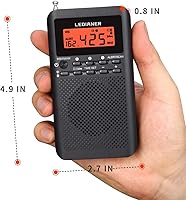
  • Dimensions: Measures 4.9″ long by 2.7″ tall by 0.8″ wide — slim enough to slide into a shirt or jacket pocket.
  • Weight: Weighs 4.9 oz (140 g), making it one of the lighter options in the portable weather radio category.
  • Power Source: Operates on 2 standard AA batteries, which are required but not included in the package.
  • Display: Features an LCD screen that shows time and frequency, with a button-activated backlight for low-light visibility.
  • Built-in Speaker: Includes an integrated mono speaker for hands-free audio playback without requiring headphones.
  • Connectivity: Equipped with a 3.5mm auxiliary input port for connecting external audio sources such as a phone or MP3 player.
  • Alarm Clock: Includes a digital alarm clock function with a programmable sleep timer for automatic radio shutoff.
  • Weather Alerts: Supports NOAA weather band reception for accessing official emergency weather broadcasts in the United States.
  • Flashlight: Does not include a built-in flashlight; buyers requiring this feature should consider an alternative model.
  • TF Card Support: Does not support microSD or TF card playback — audio input is limited to the tuner and auxiliary port.
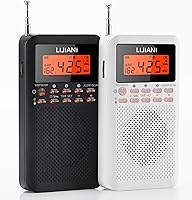
  • Color: Available in white with a clean, minimal exterior finish.
  • Tuner Technology: Uses an analog AM/FM tuner with manual frequency adjustment across the standard broadcast spectrum.
  • Frequency Range: FM tuning reaches up to 108 MHz, covering the full standard FM broadcast band used across North America and Europe.
  • Item Model Number: The official manufacturer model number is SH01, as listed in product documentation.
  • Market Rank: Ranked #49 in the Weather Radios category on Amazon at the time of listing, placing it among the top 50 in its segment.

Related Reviews
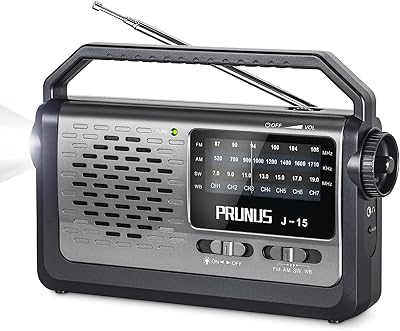
PRUNUS J15WB NOAA Weather AM FM Radio
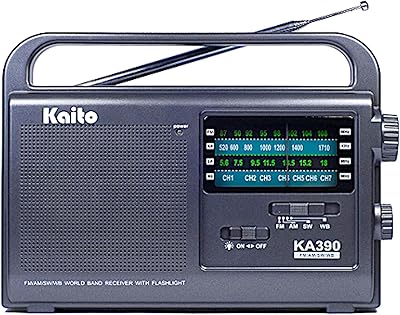
79%
88%
FM Reception
91%
NOAA Weather Alert Reception
76%
AM Reception
57%
Shortwave Reception
72%
Build Quality
More
Kaito KA390 Portable Weather Radio
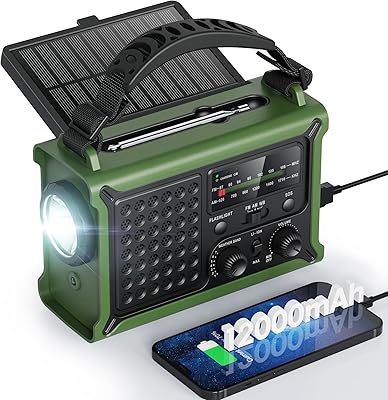
76%
88%
Value for Money
86%
NOAA Weather Reception
81%
FM Reception
67%
Shortwave Reception
78%
Speaker Quality
More
Audiocrazy AM FM NOAA Emergency Weather Radio
67%
83%
NOAA Reception
61%
Battery Life
58%
Build Quality
79%
Value for Money
62%
Bluetooth Performance
More
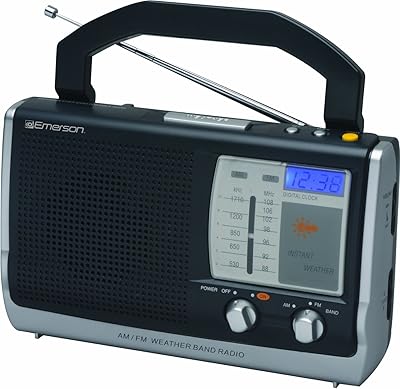
Raynic NOAA Weather Radio 12000mAh
86%
88%
Performance in Emergencies
91%
Charging Options
83%
Signal Reception
89%
Flashlight & Lamp Effectiveness
85%
Ease of Use
More
Emerson RP6251 Portable Weather Clock Radio
73%
83%
NOAA Weather Reception
78%
Value for Money
86%
Ease of Use
89%
Dual Power Reliability
61%
AM/FM Reception
More
Rychi TMUS-MD319 NOAA Weather Alert Radio
75%
86%
Alert Reliability
71%
S.A.M.E. Programming Ease
89%
External Warning Light
63%
Battery Backup Performance
67%
Build Quality
More
FQBLXY H27 30000mAh Emergency Weather Radio
67%
83%
Value for Money
71%
Battery Capacity
44%
Solar Charging
41%
Hand Crank Efficiency
67%
Radio Reception
More
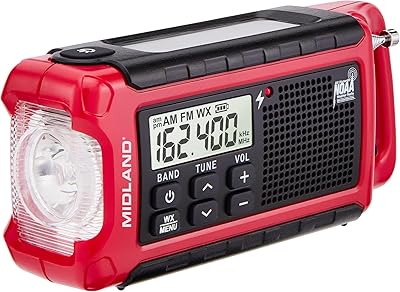
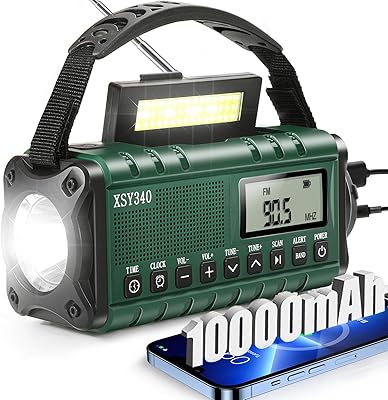
Midland ER210 Emergency Weather Radio
75%
91%
NOAA Reception Quality
83%
Power Source Versatility
78%
Battery Life
89%
Ease of Use
67%
Flashlight Performance
More
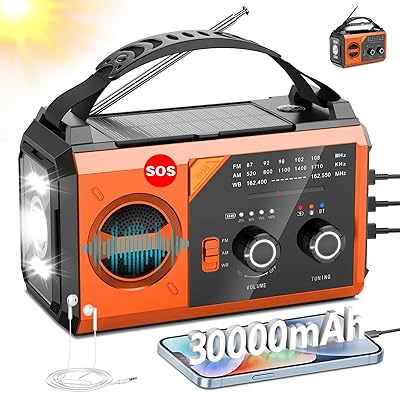
Leaton Emergency NOAA Weather Alert Radio
85%
88%
Battery Life & Charging Options
85%
Weather Alerts & Reception
90%
Build Quality & Durability
93%
Portability & Size
87%
Ease of Use
More
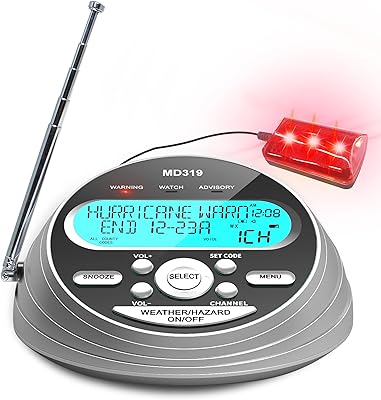
Eoxsmile CR1009Pro Emergency Weather Radio
79%
88%
Value for Money
91%
NOAA Weather Alert
67%
Battery Life
83%
Charging Versatility
74%
Build Quality
More

FAQ

No, it does not have automatic weather alert activation. You need to be actively tuned to a NOAA channel to hear a broadcast warning. If you need a radio that wakes you up when an alert is issued, look for models that specifically advertise automatic SAME alert functionality.

It runs on two standard AA batteries, which are widely available but not included in the package. Keep a spare set nearby if you plan to use it during extended storms or camping trips, since continuous listening will drain batteries faster than intermittent use.

The device has a 3.5mm auxiliary input port, but it is designed for connecting an audio source rather than outputting to headphones. If private listening is important to you, that is worth factoring into your decision before buying.

The alarm setup involves pressing a combination of buttons in a specific sequence, which the included manual walks through. The instructions are functional but not always clearly translated, so some buyers find it takes a few attempts to get the alarm configured correctly. Once set, it works reliably.

No, it carries no waterproofing or water-resistance rating. The plastic housing is not sealed, so it should be kept dry and away from rain or moisture. It is best suited for indoor emergency use or sheltered outdoor environments rather than exposure to the elements.

For its size, reception is solid — most users get clean FM and NOAA signals without issue, especially in suburban or rural settings. AM performance is less consistent, particularly in dense urban areas where interference is common. Extending the telescoping antenna fully makes a noticeable difference in signal quality.

Yes, standard rechargeable AA batteries are compatible and work fine. Just keep in mind that rechargeable batteries typically run at a slightly lower voltage than alkaline cells, which can occasionally affect performance or display behavior near the end of a charge cycle.

The backlight activates when you press the designated button but turns off automatically after a few seconds to conserve battery life. It does not stay on continuously, which some bedside users find mildly inconvenient — but it is a sensible trade-off given the device runs on AA batteries.

The built-in speaker is adequate for quiet indoor environments like a bedroom or a calm campsite, but it struggles to cut through wind, conversation, or ambient outdoor noise at its maximum volume. For louder listening, connecting a small external speaker through the auxiliary port is the most practical workaround.

It is a reasonable choice for a basic kit, particularly if budget is a priority. This compact NOAA radio covers the core requirement — reliable weather band access on battery power — without added complexity. Just be aware that it lacks a flashlight and automatic alert activation, both of which dedicated emergency radios typically include at a higher price point.