Overview

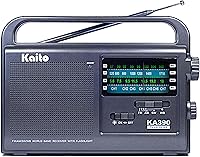
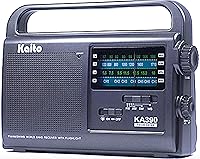
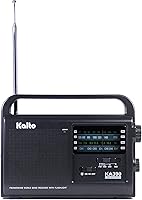
The Kaito KA390 Portable Weather Radio is a compact, affordable option for anyone who wants emergency coverage and everyday listening in a single device. It spans AM, FM, shortwave, and all seven NOAA weather channels — a combination that is genuinely hard to find at this price. Built from water-resistant ABS plastic, it feels sturdy without being heavy, light enough for a go-bag but solid enough for a workshop shelf. Expecting hi-fi sound quality would be the wrong approach here. This is a utility-first radio built for reliability and range, not audiophile listening — and within those expectations, it delivers.

Features & Benefits

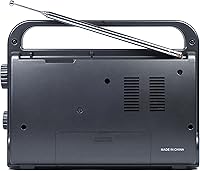
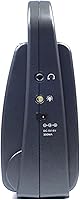
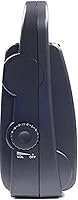
What stands out most about this weather radio is how much is packed into a 15-ounce frame. The telescopic antenna, which extends nearly three feet, makes a real difference in FM and shortwave reception compared to fixed-antenna alternatives. Cycling through NOAA channels is straightforward — a quick dial turn gets you to live weather alerts without fumbling through menus. The built-in LED flashlight earns its place during power outages, and the 3-inch speaker is loud enough for a noisy garage. A 3.5mm earphone jack handles private listening, and dual power options — three D batteries or an optional AC adapter — keep it genuinely flexible.

Best For

This portable multi-band radio fits naturally into an emergency preparedness kit — stash one alongside flashlights and first-aid supplies, and you have a reliable weather alert source when cell service fails. Rural and off-grid users will get the most from the shortwave capability, pulling in international broadcasts and distant AM stations that smartphone apps simply cannot replicate. It is also a strong pick for garage or workshop listeners who need volume over finesse. People who dislike touchscreen interfaces will appreciate the tactile knob-and-dial controls. If you want broad coverage without committing to a premium brand, this is a grounded, practical choice.

User Feedback

Buyers consistently cite clear speaker output and dependable NOAA reception as the standout strengths — particularly welcome given the price. FM and shortwave hold up well in suburban and rural environments. The recurring criticisms are worth knowing before purchase: three D-size batteries are required but not included, and drain under extended use is faster than some expect. The AC adapter, while compatible, is also sold separately — a detail that catches some buyers off guard. In dense urban areas, shortwave selectivity can suffer from RF interference. The analog tuning dial rewards patience rather than quick spins. Most owners land on a verdict of strong overall value, not a substitute for a dedicated shortwave unit.

Pros

  • Covers AM, FM, shortwave, and all 7 NOAA weather channels in one compact unit.
  • The 32-inch telescopic antenna noticeably improves reception compared to fixed-antenna radios in its class.
  • NOAA weather alerts are reliable and easy to access — just a dial turn away during storms or emergencies.
  • The built-in LED flashlight adds real utility during power outages, making it a genuine two-in-one emergency tool.
  • The 3-inch speaker is loud enough for noisy garages and outdoor settings, which is impressive for the size.
  • Water-resistant and impact-resistant ABS casing holds up to outdoor and workshop use without feeling fragile.
  • Works on D-size batteries or an AC adapter, giving flexibility for both home use and off-grid situations.
  • Simple analog controls make this weather radio accessible to users of all ages and technical comfort levels.
  • At 15 ounces, it is light enough to toss in an emergency bag without adding meaningful weight.
  • The 3.5mm earphone jack lets you monitor alerts privately without disturbing anyone around you.

Cons

  • Three D-size batteries are required but not included — an easy thing to overlook until you open the box.
  • The AC adapter is also sold separately, so truly ready-to-use setup costs more than the sticker price suggests.
  • Shortwave reception in urban areas can be frustrating due to RF interference from nearby electronics and infrastructure.
  • The analog tuning dial requires slow, deliberate adjustment to lock onto a station cleanly — no digital assist here.
  • Battery drain under sustained use is faster than many buyers expect, especially with the speaker at higher volume.
  • No memory presets or scanning function means you manually retune every time you switch between saved stations.
  • The KA390 is closer in size to a desktop unit than a pocket radio, so true on-the-go portability is limited.
  • Sound quality, while loud, lacks depth — music listening is functional rather than enjoyable.
  • NOAA coverage is restricted to the US and Canada, so international travelers get no weather alert benefit abroad.
  • No digital display or signal strength indicator makes it harder to know when you have truly dialed in a station.

Ratings

The scores below reflect our AI-driven analysis of verified global buyer reviews for the Kaito KA390 Portable Weather Radio, with spam, incentivized, and bot-flagged submissions actively filtered out before scoring. Each category is weighted against real-world usage patterns reported by confirmed purchasers, not marketing claims. Both the standout strengths and the recurring frustrations are represented transparently so you can make a confident, informed decision.

Value for Money
88%
Buyers repeatedly note that the KA390 delivers a feature set that would cost considerably more from a specialty electronics brand. Getting AM, FM, shortwave, NOAA weather alerts, a flashlight, and a loud speaker in a single affordable unit strikes most owners as a genuinely fair deal.
The value calculation shifts slightly when buyers realize the batteries and AC adapter are both sold separately, adding hidden upfront cost. For users who stock up on D-size batteries frequently, the running cost becomes a recurring consideration.
NOAA Weather Reception
86%
Scanning through all seven NOAA channels is quick and reliable, which is exactly what you need when a storm is closing in and you want alerts without fuss. Owners in hurricane-prone and tornado-corridor regions specifically call out how dependable this function is during severe weather events.
Coverage is restricted to the US and Canada, which limits the radio's appeal for international buyers or travelers. A small number of users in mountainous or heavily built-up areas note that even NOAA signals can be patchy without careful antenna adjustment.
FM Reception
81%
19%
With the telescopic antenna extended fully, FM reception is solid across most suburban and rural environments. Users who keep this radio in the garage or workshop report picking up local stations clearly even with machinery running nearby.
In dense urban areas with many overlapping FM signals, some users report minor bleeding between adjacent stations that requires precise dial positioning to resolve. The lack of a digital tuner means there is no fine-tuning assist to help lock a weak signal cleanly.
Shortwave Reception
67%
33%
For rural listeners and shortwave beginners, the KA390 opens up a surprisingly wide range of international broadcasts and distant AM signals that would otherwise require a much more expensive dedicated receiver. The extended antenna makes a real and noticeable difference in signal quality.
Urban buyers are the most vocal critics here — RF interference from apartment buildings, electronics, and city infrastructure can make shortwave listening genuinely frustrating. This is not unique to this radio, but buyers expecting clean shortwave in a city setting will likely be disappointed.
Speaker Quality
78%
22%
The 3-inch speaker punches well above expectations for a radio this size and price — workshop and garage owners are consistently surprised by how loud and intelligible it is even over background noise. Voice-heavy content like news and talk radio comes through clearly at most volume settings.
Music listening reveals the speaker's limitations quickly — bass is thin and sound staging is flat, which is understandable at this price point but worth knowing. Volume at maximum can introduce minor distortion, so most users land at about 70 to 80 percent for the best balance.
Build Quality
74%
26%
The ABS plastic casing feels sturdier than the price suggests, and users who toss this radio in a truck, workshop, or camping bag report that it handles bumps and drops without cracking or losing functionality. The water-resistant surface also holds up well in humid or lightly wet environments.
The radio does not feel premium — the dial and button action are functional rather than satisfying, and some buyers note the telescopic antenna feels a little loose after extended use. It is durable enough for the intended use cases, but not something you would expect to last a decade of hard daily use.
Ease of Use
83%
The knob-and-dial interface is immediately intuitive for anyone who has ever used an analog radio — no manual required for basic operation. Seniors and users who are tired of app-dependent devices specifically appreciate being able to switch bands and adjust volume without navigating a screen.
Precise station locking on AM and especially shortwave demands a slow, patient hand. There is no digital display to confirm your frequency, so you are working by ear alone, which can be tedious for listeners who want to return to a specific shortwave station reliably.
Battery Performance
61%
39%
D-size batteries provide enough capacity for several hours of listening at moderate volume, and the option to switch to an AC adapter means the battery drain is a non-issue when used at home near an outlet. Having dual power options is a genuine plus for emergency kit planning.
At higher speaker volumes or with the flashlight running simultaneously, battery drain accelerates faster than many buyers expect. The fact that batteries are not included — and D-cells are bulkier and costlier than AA or AAA — compounds the frustration for buyers who did not plan ahead.
Portability
72%
28%
At 15 ounces, this portable multi-band radio is light enough to carry in a go-bag or day pack without feeling like a burden. Its rectangular form factor fits comfortably on a shelf, a workbench, or in the side pocket of a large backpack.
It is not a pocketable radio by any stretch — the 7.9-inch length makes it closer in size to a small hardback book. Hikers and commuters looking for something that slips into a jacket pocket will need to look at smaller, more compact alternatives.
Flashlight Utility
76%
24%
Having a working LED flashlight built into an emergency radio is a practical combination that owners genuinely appreciate when the power goes out. It is bright enough to navigate a dark room, read a label, or find supplies during an outage without reaching for a separate torch.
The flashlight is a useful bonus, not a replacement for a dedicated torch — beam distance and brightness fall short of standalone flashlights in the same price range. Using it extensively while the radio is also running will noticeably accelerate battery drain.
AM Reception
79%
21%
AM performance is one of the more consistent strengths reported by buyers, with local and regional stations coming in reliably day and night. Listeners who follow sports, talk radio, and news programming on AM find the KA390 dependable for daily use.
Nighttime AM reception can occasionally pull in distant interfering stations that bleed into preferred local frequencies, which is a band-wide phenomenon but more noticeable without a digital tuner to assist with selectivity. Urban electrical noise can also degrade AM clarity indoors.
Antenna Performance
77%
23%
The telescopic antenna extending to 32″ gives this radio a clear reception advantage over compact rivals with fixed or shorter antennas. Buyers who have compared it directly to smaller emergency radios note a meaningful improvement in both FM and shortwave signal strength.
The antenna needs to be fully extended and oriented carefully to achieve the best results — it is not a set-and-forget solution. A few long-term owners report the antenna hinge loosening slightly over time, which can make it harder to hold a stable angle during listening sessions.
Earphone Jack
82%
18%
The standard 3.5mm jack works reliably with any common headphones or earbuds, and plugging in automatically silences the speaker — a clean, expected behavior that users appreciate in shared spaces or late-night listening. Audio through headphones is clearer and more detailed than through the built-in speaker.
There is only one audio output option and no volume memory between headphone and speaker sessions, so switching back and forth requires readjusting the volume dial each time. Some users also note that the jack can feel slightly loose with certain plug sizes, though audio dropout is rarely reported.
Setup & Out-of-Box Experience
66%
34%
The physical setup is genuinely simple — extend the antenna, insert batteries, and turn the dial. There are no software updates, pairing processes, or account registrations, which makes the first few minutes with this radio entirely painless for non-technical users.
The out-of-box experience is let down by the missing batteries and the separately sold AC adapter, which can leave buyers unable to use the radio immediately after unboxing. The included manual is basic, and shortwave band guidance for new listeners is essentially absent.

Suitable for:

The Kaito KA390 Portable Weather Radio is a natural fit for anyone who treats preparedness as a practical habit rather than a hobby. If you keep an emergency kit at home or in the car, this radio earns its place alongside the batteries and first-aid supplies — it can pull in life-saving NOAA weather alerts when cell towers are down and the power is out. Rural households and off-grid listeners will get particular mileage from the shortwave capability, which opens up distant AM stations and international broadcasts that streaming apps cannot touch. Seniors or less tech-savvy users who are put off by smartphones and smart speakers will appreciate the straightforward knob-and-dial interface — there are no apps to update and no accounts to manage. It also works well as a rugged workshop or garage companion, where its loud speaker and durable casing handle rough environments far better than a phone propped on a shelf.

Not suitable for:

The Kaito KA390 Portable Weather Radio is not the right choice for buyers who want a serious shortwave listening experience in a city environment. Dense urban areas generate significant radio frequency interference, and this radio — like most at its price — will struggle to pull clean shortwave signals without careful antenna positioning and patience. Audiophiles or anyone who values rich, detailed sound reproduction will find the 3-inch speaker acceptable at best. It is also worth noting that the radio does not include the batteries it needs to run, and the AC adapter — while compatible — is sold separately, which means out-of-the-box use requires an extra purchase or spare D-cells on hand. Travelers or campers hoping for a truly pocketable radio should know this unit is closer in size to a hardback book than a handheld device. And for anyone who needs digital scanning, memory presets, or Bluetooth connectivity, this analog-tuned radio will feel like a step back.

Specifications

  • Brand & Model: Manufactured by Kaito under the model designation KA390.
  • Band Coverage: Receives AM, FM, shortwave, and all 7 NOAA weather alert channels.
  • NOAA Coverage: NOAA weather channel reception is supported for the United States and Canada only.
  • Antenna: Integrated telescopic antenna extends up to 32″ for improved sensitivity on FM and shortwave bands.
  • Speaker: Features a 3-inch dynamic speaker designed to deliver clear, high-volume audio output.
  • Audio Output: Includes a 3.5mm earphone jack for private listening via standard headphones or earbuds.
  • Flashlight: Built-in LED flashlight is integrated into the unit for use during power outages or low-light situations.
  • Power Source: Runs on 3 x D-size batteries (not included) or an optional 5V/6V AC/DC power adapter (not included).
  • Body Material: Constructed from ABS plastic rated as both impact-resistant and water-resistant for indoor and outdoor durability.
  • Dimensions: Unit measures 7.9 inches long by 2.6 inches wide by 5.9 inches tall.
  • Weight: Complete unit weighs 15 ounces without batteries installed.
  • Color: Available in black.
  • Tuner Type: Uses analog tuning technology with a manual dial for station selection across all supported bands.
  • Connectivity: Auxiliary (3.5mm) audio output is the sole external connectivity option; no Bluetooth or digital outputs are included.
  • In the Box: Package includes the radio unit, an owner's manual, and a power adapter note — the AC adapter itself must be purchased separately.
  • First Available: This model was first listed for sale in May 2017 and has not been discontinued by the manufacturer.

Related Reviews
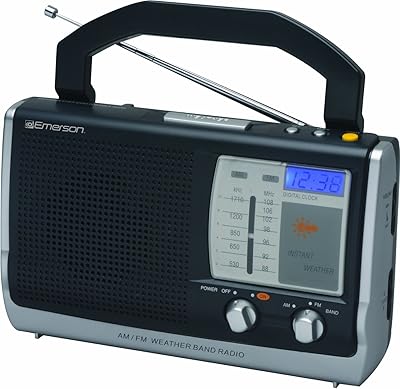
Emerson RP6251 Portable Weather Clock Radio
73%
83%
NOAA Weather Reception
78%
Value for Money
86%
Ease of Use
89%
Dual Power Reliability
61%
AM/FM Reception
More
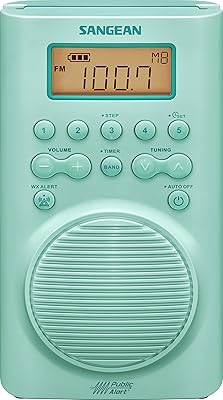
Sangean H205TQ Portable AM/FM/Weather Alert Radio
85%
88%
Build Quality & Durability
81%
Sound Quality
90%
Ease of Use
72%
FM Reception
85%
Battery Life
More
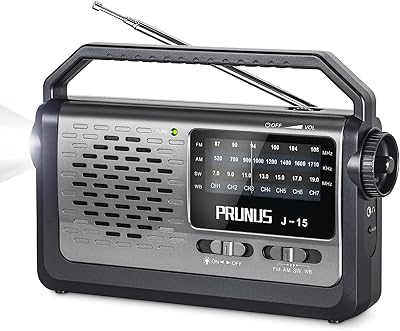
PRUNUS J15WB NOAA Weather AM FM Radio
79%
88%
FM Reception
91%
NOAA Weather Alert Reception
76%
AM Reception
57%
Shortwave Reception
72%
Build Quality
More
Kaito KA500 Solar Dynamo NOAA Weather Radio
73%
88%
Power Versatility
84%
NOAA Weather Alert Reception
54%
Solar Charging Performance
67%
Hand-Crank Generator
79%
AM and FM Reception
More
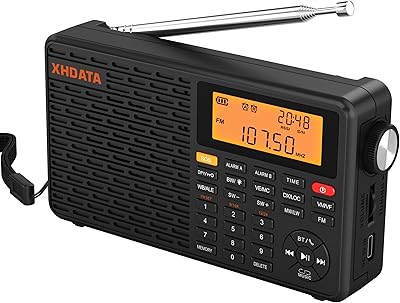
XHDATA D109WB Portable Shortwave Weather Radio
72%
78%
Reception Quality
61%
Build Quality
83%
NOAA Weather Alert
71%
Bluetooth Performance
84%
Value for Money
More
Eton Scorpion II Portable Emergency Weather Radio
74%
91%
Portability & Form Factor
83%
Hand Crank Functionality
88%
NOAA Weather Band Reception
79%
FM Radio Performance
58%
AM Radio Reception
More
C. Crane CCRadio-2E Enhanced Portable AM FM Weather and 2-Meter Ham Band Radio
85%
94%
Battery Life
89%
AM Reception
90%
NOAA Weather Alerts
70%
Portability
85%
Durability
More
ByronStatics AM66 Portable Radio
84%
85%
Reception & Sound Quality
90%
Ease of Use
88%
Portability & Size
80%
Build Quality
92%
Power Options (AC/Battery)
More
LIJIANI SH01 Portable NOAA Weather Radio
75%
83%
Reception Quality
81%
NOAA Weather Alert Performance
91%
Portability & Size
67%
Battery Life
88%
Ease of Use
More
LEOTEC Portable AM FM Bluetooth Radio
77%
91%
Ease of Use
83%
FM Reception Quality
61%
AM Reception Quality
72%
Bluetooth Functionality
68%
Speaker Volume & Clarity
More

FAQ

You will need to pick up three D-size batteries separately — they are not included in the box. The optional AC adapter is also sold separately, so if you want to use the radio straight out of the box, grab a set of D batteries beforehand.

The AM, FM, and shortwave bands will work internationally, but the NOAA weather alert channels are only broadcast in the US and Canada. If you are traveling abroad, you will get general radio coverage but no local weather alert functionality.

Shortwave performance in dense urban environments can be inconsistent. City buildings, electronics, and power lines create radio frequency interference that can muddy weaker shortwave signals. Extending the antenna fully and positioning the radio near a window generally helps, but do not expect the same clean reception you would get in a suburban or rural setting.

The casing is water-resistant, not waterproof. It can handle light splashes and humid workshop conditions, but you should not leave it out in the rain or submerge it. Think of it as splash-tolerant rather than weather-sealed.

Battery life depends heavily on how loud you run the speaker and how often the flashlight is used. At moderate volume, most users report several hours of continuous play, but heavy use drains D-size batteries faster than some buyers expect. Keeping a spare set on hand is a good habit, especially if you are storing this in an emergency kit.

The analog dial requires a slow, deliberate touch to land cleanly on a station. There is no digital display or automatic scanning to assist you, so locking in a weak AM or shortwave frequency takes patience. FM stations are generally easier to dial in than shortwave.

NOAA weather channels are dedicated radio frequencies operated by the US National Oceanic and Atmospheric Administration that broadcast continuous, automated weather forecasts and emergency alerts 24 hours a day. They are particularly valuable during severe storms, hurricanes, or any situation where you need real-time updates without relying on internet or cell service. The Kaito KA390 Portable Weather Radio covers all seven of these channels.

Yes, there is a standard 3.5mm earphone jack on the unit. Any regular headphones or earbuds with a 3.5mm plug will work. Plugging in headphones typically cuts audio to the built-in speaker automatically.

It is a reasonable entry point for shortwave beginners, mainly because the controls are simple and the price keeps the risk low. Just go in knowing that shortwave listening has a learning curve — finding good stations takes some trial and error, and reception quality varies by time of day, location, and atmospheric conditions.

It works well as a backup light source for basic tasks like reading a map, moving around a dark room, or checking on supplies. It is not going to replace a dedicated torch, but having it built into the radio means one less thing to search for when the lights go out. Just keep those D batteries fresh so you have both functions ready when you need them.

Where to Buy