Overview

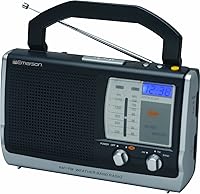
The Emerson RP6251 Portable Weather Clock Radio is a straightforward, no-frills device designed for people who want practical weather awareness and a functioning clock in one compact unit. It has been on the market since 2008 — a long run for any electronics product — and that staying power says something real about its reliability. The unit runs on standard AC power or four AA batteries, which matters when the lights go out. Dual power flexibility is genuinely useful here, not just a spec-sheet checkbox. The slide-rule tuning dial and LCD clock display give it a classic, approachable look. Just know going in: this is a utility device, not a hi-fi radio.
Features & Benefits

The biggest draw of this weather clock radio is its NOAA weather band — it pulls in government weather alerts for your local area without any internet connection required. That matters during a storm when your phone is dead or the Wi-Fi is down. AM and FM coverage round things out for everyday listening, though the speaker is compact, so don't expect room-filling sound. The built-in cord storage is a small but smart design touch that makes the unit tidier and easy to move around. At roughly 8.9 by 5.4 inches, the Emerson clock radio fits on a nightstand without taking over, and the LCD clock display means it genuinely pulls double duty all day.

Best For

This portable emergency radio is a strong pick for anyone who lives in a region where severe weather is a real concern — thunderstorm corridors, tornado-prone areas, coastal zones that see hurricanes. It's also a natural fit for older users or anyone who simply prefers physical dials and buttons over scrolling through menus on a screen. Campers and cabin owners who regularly lose power will appreciate the battery backup. It works well as part of a home emergency kit, especially in spaces where internet or cell coverage can't be counted on. If you want a smart speaker or audiophile radio, this isn't it — but that's not who it's made for.

User Feedback

With a 4.3-star rating across over 90 reviews, the Emerson clock radio earns its marks primarily for doing exactly what it promises. Buyers consistently praise the reliable NOAA reception and the convenience of not needing a power outlet to keep it running. Where complaints surface, they tend to center on two things: AM and FM reception can be spotty in rural or heavily obstructed areas, and the audio quality is functional at best — thin and tinny rather than warm or full. A number of buyers are clear that they bought it as a backup emergency radio, not a daily driver, and for that purpose it holds up. The slide-rule dial also gets mixed reactions — some find it charming, others find it hard to tune precisely.

Pros

  • NOAA weather band delivers real local alerts without needing internet, a phone, or a data plan.
  • Runs on both AC power and four AA batteries, so it stays useful when the grid goes down.
  • Compact enough to fit on a nightstand, desk, or shelf without dominating the space.
  • The LCD clock means you get two practical devices in one without extra clutter.
  • Simple, physical controls make this weather clock radio easy for older users to operate confidently.
  • Built-in AC cord storage keeps things tidy and makes it easier to move the unit around.
  • Has maintained a 4.3-star rating over many years, suggesting consistent real-world reliability.
  • No subscription, no app, no setup — plug it in or load batteries and it works immediately.
  • Solid pick for emergency preparedness kits where low-tech dependability matters most.

Cons

  • AM and FM reception can be noticeably weak in rural areas or locations far from broadcast towers.
  • The analog slide-rule dial is difficult to tune precisely, especially for specific AM stations.
  • Audio quality is thin and utilitarian — not suitable for extended or enjoyable everyday listening.
  • No digital tuning means no station presets, so you re-tune manually every single time.
  • Four AA batteries are required but not included, adding an immediate out-of-pocket cost.
  • The speaker volume may feel insufficient in louder environments or larger rooms.
  • No alarm function is included, which limits its usefulness as a true bedside clock replacement.
  • Design and feature set have not been updated since 2008, so it lacks any modern conveniences.

Ratings

The Emerson RP6251 Portable Weather Clock Radio has been scored across key performance categories by our AI system, which analyzed verified global user reviews while actively filtering out incentivized, bot-generated, and spam feedback to ensure the scores reflect genuine buyer experiences. Strengths and real-world frustrations are weighted equally, so what you see here is an honest picture of where this portable emergency radio earns its keep and where it falls short.

NOAA Weather Reception
83%
Users in suburban and semi-rural areas consistently report clear, stable NOAA weather band reception that works reliably even during storm conditions when internet and cell service can be spotty. For its core safety purpose, this weather clock radio delivers where it counts most.
A handful of buyers in more remote locations note that NOAA signal strength can vary depending on proximity to broadcast towers. There is no alert override feature, so the radio only broadcasts weather information when it is actively on and tuned to the correct frequency.
Value for Money
78%
22%
For buyers who want a functional clock and a weather alert radio without spending much, the Emerson clock radio covers both needs reliably at a budget-friendly price point. Most reviewers feel the device more than justifies what they paid, particularly when factoring in its years of continued operation.
A few buyers who expected richer audio or more precise tuning feel the price should have bought something slightly more refined. Batteries are not included, which is a minor but recurring irritation given the product positions battery power as a key feature.
Ease of Use
86%
The physical slide-rule dial and straightforward button layout make this radio genuinely approachable for older users or anyone who finds modern touchscreen devices confusing. Multiple reviewers specifically mentioned gifting it to elderly relatives who were comfortable using it immediately without any instruction.
Getting the analog dial to land precisely on a station requires some patience, and users who are accustomed to digital preset tuning find the process tedious over time. There is no channel memory, so re-tuning is required every time the radio is powered on.
Dual Power Reliability
89%
The ability to flip between AC power and four AA batteries without any configuration is a standout real-world benefit, especially during power outages when this radio is most likely needed. Buyers who have used it during extended storms specifically praise this flexibility as the main reason they chose this model.
The four AA batteries required are not included in the box, which means buyers need to plan ahead for the battery-backup use case. Battery life under continuous use has not been independently verified, so runtime during a prolonged outage is uncertain.
AM/FM Reception
61%
39%
In urban environments with strong local broadcast signals, AM and FM reception is functional for everyday listening — news, talk radio, and weather updates come through without issue when towers are nearby. Most city-based buyers report no major reception complaints for standard daily use.
Rural and semi-rural users are notably more critical, with several describing AM pickup as weak and FM stations as prone to drift and static. The analog tuner compounds the problem since there is no way to lock onto a signal digitally, making marginal reception worse than it would be on a digital tuner.
Audio Quality
53%
47%
For voice-heavy content like NOAA alerts, weather reports, and talk radio, the built-in speaker produces clear enough audio to understand everything being said in a quiet room. That narrowly focused use case is where it performs best.
Anyone expecting to enjoy music through this radio will be disappointed — the sound is thin, lacking bass, and noticeably distorts at higher volumes. It is a utility speaker in every sense, and buyers who tested it for music listening are among the most critical voices in user feedback.
Build Quality
67%
33%
The unit feels solid enough for a bedside or shelf device, and the plastic housing has held up for most long-term owners over multiple years of use. The cord storage compartment in particular is a thoughtful detail that adds to the overall impression of considered construction.
The casing is entirely plastic, and a few buyers describe it as feeling lighter and less durable than expected. The slide-rule dial mechanism is the part most frequently mentioned as feeling fragile, particularly after extended daily use.
Portability
74%
26%
At under two pounds and with a built-in AC cord that tucks away neatly, this portable emergency radio is genuinely easy to move between a bedroom, kitchen, or car without any hassle. The compact footprint means it does not impose on limited counter or nightstand space.
The dimensions, while compact, make it slightly awkward to pack into a tight emergency bag compared to smaller handheld weather radios on the market. It is portable in a household sense more than a hiking or backpacking sense.
Clock Functionality
71%
29%
The LCD clock display is consistently visible and serves well as a bedside or desk timepiece, effectively replacing the need for a separate clock in smaller spaces. Buyers who wanted to consolidate two devices into one appreciate not having an extra power cord on a crowded nightstand.
There is no alarm function, which surprises some buyers who assume a clock radio would naturally include one. The LCD display is also not backlit brightly enough for some users to read comfortably across a dark room at night.
Setup & Out-of-Box Experience
81%
19%
There is essentially no setup required — plug it in or load batteries and it works immediately. That simplicity is a genuine advantage for buyers who do not want to consult a manual or configure anything before using it.
The manual is minimal, and some users report initial confusion about which frequencies to tune for their local NOAA weather channel. A simple reference card showing regional NOAA frequencies would meaningfully improve the first-use experience.
Design & Aesthetics
58%
42%
The black and silver color scheme is neutral and inoffensive, blending into most home environments without drawing attention. The classic slide-rule aesthetic appeals to buyers who prefer traditional radio styling over modern minimalist designs.
The overall look is dated, and buyers with modern home decor find it visually out of place. The design has not been updated since the product launched in 2008, and it shows — nothing about the physical appearance signals that this is a contemporary product.
Cord Management
76%
24%
The built-in cord storage compartment is a practical feature that buyers consistently mention as a small but meaningful quality-of-life detail. It keeps the radio tidy whether it is sitting on a shelf or being moved to another room.
The storage compartment works best with a specific amount of cord wrapped inside — too little and the cord hangs loose, too much and the compartment lid does not close properly. It is a convenient feature but not as polished in execution as it could be.

Suitable for:

The Emerson RP6251 Portable Weather Clock Radio is built for pragmatic buyers who prioritize function and reliability over bells and whistles. It makes the most sense for households in storm-prone regions — tornado alleys, hurricane coasts, areas that see harsh winters — where having a low-tech, always-ready weather alert source is a genuine safety measure rather than a novelty. Older adults who find touchscreen devices frustrating will appreciate the straightforward slide-rule dial and simple button layout. It is also a smart addition to any emergency preparedness kit, particularly in safe rooms or basements where internet access is unreliable or nonexistent. Campers, cabin owners, and anyone who regularly deals with power outages will find the dual AC and battery operation genuinely practical rather than just a secondary feature. If your goal is a no-fuss bedside clock that doubles as a weather radio without requiring a Wi-Fi password or a monthly subscription, this weather clock radio fits the brief cleanly.

Not suitable for:

The Emerson RP6251 Portable Weather Clock Radio is the wrong choice if you are looking for a primary everyday radio with strong audio performance or wide-area AM and FM reception. The speaker is built for utility, not enjoyment — anyone expecting warm, room-filling sound from this portable emergency radio will be disappointed quickly. Buyers in rural or remote areas should also be cautious, as AM and FM signal pickup can be noticeably weak without a strong local broadcast tower nearby. If you prefer digital tuning with preset station memory, the analog slide-rule dial will feel imprecise and frustrating to use daily. Tech-forward buyers who want Bluetooth, app integration, or smart home compatibility should look elsewhere entirely. This is not a device for audiophiles, heavy daily listeners, or anyone who wants their radio to do more than cover the basics reliably.

Specifications

  • Brand: Manufactured by Emerson Radio Corp, a brand with decades of history in consumer electronics.
  • Model Number: The unit is identified by model number RP6251.
  • Dimensions: The radio measures 8.9″ long by 5.4″ tall by 2.4″ deep, making it a compact tabletop unit.
  • Weight: The unit weighs 1.98 pounds, light enough to move between rooms or pack for a trip.
  • Radio Bands: Supports AM, FM, and NOAA weather band reception for local government weather alerts.
  • Tuning Type: Uses an analog slide-rule tuning dial for manual station selection across all supported bands.
  • Display: Features an LCD clock display that shows the current time continuously during operation.
  • Power Source: Operates on standard 120V AC household current or four AA batteries for portable, off-grid use.
  • AC Cord: Includes a built-in AC power cord with an integrated cord storage compartment for a tidy setup.
  • Battery Requirement: Requires four AA batteries for battery-powered operation; batteries are not included in the box.
  • Max Frequency: Covers FM frequencies up to 108 MHz, in line with the standard North American FM broadcast band.
  • Color: Available in a black and silver finish that suits most home or desk environments.
  • Speaker: Equipped with a single built-in speaker sized for voice and talk radio clarity rather than high-fidelity music.
  • NOAA Coverage: Receives NOAA Weather Radio broadcasts, which provide area-specific alerts issued by the National Weather Service.
  • Release Year: First made available in October 2008 and has remained in continuous production since then.
  • Manufacturer Status: The product has not been discontinued by the manufacturer as of the latest available information.
  • Amazon Rating: Holds a 4.3-out-of-5-star rating based on over 90 customer reviews on Amazon.
  • Portability: Designed for portable use with its lightweight build, battery option, and cord storage for easy relocation.

Related Reviews
Sangean H205TQ Portable AM/FM/Weather Alert Radio
85%
88%
Build Quality & Durability
81%
Sound Quality
90%
Ease of Use
72%
FM Reception
85%
Battery Life
More
GPX R633B Portable Shortwave AM/FM Clock Radio
71%
83%
Value for Money
61%
Shortwave Reception
77%
AM/FM Performance
86%
Ease of Use
58%
Build Quality
More
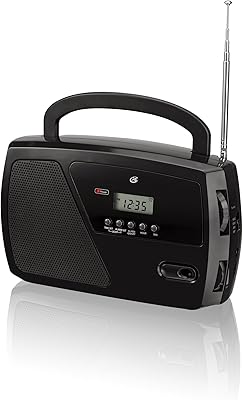
PRUNUS J15WB NOAA Weather AM FM Radio
79%
88%
FM Reception
91%
NOAA Weather Alert Reception
76%
AM Reception
57%
Shortwave Reception
72%
Build Quality
More
XHDATA D109WB Portable Shortwave Weather Radio
72%
78%
Reception Quality
61%
Build Quality
83%
NOAA Weather Alert
71%
Bluetooth Performance
84%
Value for Money
More
Kaito KA390 Portable Weather Radio
76%
88%
Value for Money
86%
NOAA Weather Reception
81%
FM Reception
67%
Shortwave Reception
78%
Speaker Quality
More
Eton Scorpion II Portable Emergency Weather Radio
74%
91%
Portability & Form Factor
83%
Hand Crank Functionality
88%
NOAA Weather Band Reception
79%
FM Radio Performance
58%
AM Radio Reception
More
Emerson ER100301 Bluetooth Alarm Clock Radio
76%
93%
Ease of Setup
96%
Auto Time-Setting
88%
Alarm Reliability
84%
Display Readability
67%
Display Dimmer
More
C. Crane CCRadio-2E Enhanced Portable AM FM Weather and 2-Meter Ham Band Radio
85%
94%
Battery Life
89%
AM Reception
90%
NOAA Weather Alerts
70%
Portability
85%
Durability
More
LIJIANI SH01 Portable NOAA Weather Radio
75%
83%
Reception Quality
81%
NOAA Weather Alert Performance
91%
Portability & Size
67%
Battery Life
88%
Ease of Use
More
XHDATA D808 Portable Multiband Radio
78%
91%
Reception Quality
93%
Band Coverage
86%
DSP Performance
67%
SSB Usability
82%
Display & Interface
More

FAQ

You do have to tune it in manually to the correct NOAA weather frequency for your area — it does not have an automatic alert feature that interrupts other listening. Once tuned to your local NOAA channel, it will broadcast continuous weather information and any active alerts. It works well as a dedicated weather monitor if you leave it set to that band.

Yes, that is genuinely one of its strongest practical points. When AC power goes out, you can switch to four AA batteries and the radio keeps running without missing a beat. Just make sure you have fresh batteries on hand before storm season, since they are not included.

It takes a little patience compared to digital tuning. You physically slide a pointer along a frequency scale to find a station, and it can be tricky to land precisely on weaker signals. That said, most people get used to it quickly, and NOAA weather channels tend to be strong enough that finding them is not a problem.

It is adequate for a bedroom or small office but do not expect it to fill a large living room. The speaker is built for clear voice reproduction — weather reports, news, and talk radio come through well — but it loses some quality at higher volumes and is not designed for music listening.

The Emerson RP6251 Portable Weather Clock Radio displays the time on its LCD screen, so it works well as a bedside clock. However, it does not include a built-in alarm function, so if waking up to an alarm is important to you, you would need a separate device for that.

In urban and suburban areas with strong local AM broadcasters, reception is generally acceptable. In rural locations or areas with geographic obstructions, AM signal pickup can be noticeably weak. An external antenna is not supported, so your location plays a big role in the experience.

It is a solid choice for that use case. The physical dial and buttons require no menu navigation or screen interaction, and the dual power setup means there are no complicated charging routines to learn. Several buyers have specifically mentioned purchasing it for older family members who found it intuitive right out of the box.

It works reasonably well for keeping the unit tidy. The compartment lets you wrap up excess cord length when you want to move the radio or keep a nightstand clean. It is a small detail, but buyers who use the radio in multiple locations tend to appreciate it.

Yes, Emerson has not discontinued it. The fact that it has been on the market continuously since 2008 and still maintains solid ratings suggests it fills a reliable niche. Replacement parts are not typically a concern for a product like this, but the unit itself is still available new.

AM and FM are standard broadcast bands you use for music, talk shows, and local news. The NOAA weather band is a separate set of frequencies used exclusively by the National Weather Service to broadcast continuous weather conditions and emergency alerts for specific local areas. Having all three on one radio means you can use it as an everyday listener and a safety monitor without needing separate devices.

Where to Buy